Another wheel day (and so on).
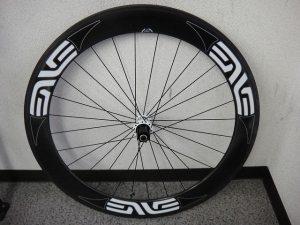
I received a rear wheel with an ENVE 1-65 rim from a customer.
They wanted a tightly-built rear wheel and deliberately chose 28H (which is unusual for this rim height),
but apparently it feels a bit soft to them.
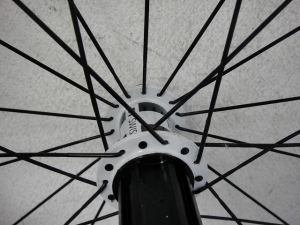
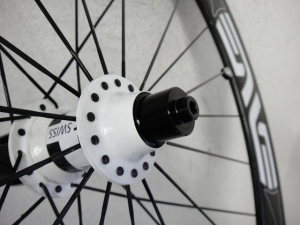
The spokes before rebuild were CX-RAY on both sides,
laced in 4x pattern.
The spoke tension on the freewheel side was quite high,
so under the condition of "these spokes and this lacing pattern,"
if I were to build it, it would come out pretty much the same.
The rim had shifted very slightly toward the freewheel side,
so I could tighten up only the non-freewheel side,
but not enough to really correct the left-right tension difference.
(The shift wasn't that bad.)
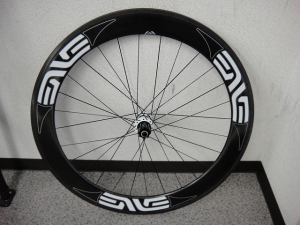
Rebuilt it.
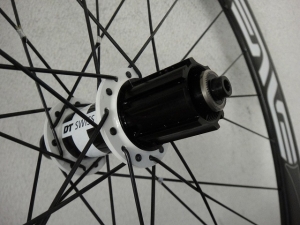
DT180 hub, 28H, half-comp 4x lace with nipple wraps.
Both before and after rebuild, the non-freewheel side spokes are CX-RAY,
but after rebuild the tension increased by about 20% (measured before wrapping).
With the rim height, it reached such a tight state that I thought "maybe we don't need wraps?"
But since the customer said "just make it super rigid!" I went ahead and did it.
Also, the DT hub has a flange width of just over 53mm, which is fairly narrow
(somewhere between a standard rear hub and current American Classic rear hub),
so if you only look at the deformation amount on either side of the spoke crossing,
you can naturally build a rear wheel with little left-right tension difference.
What's really important in a rear wheel is lateral stiffness,
and you shouldn't be fooled by the apparent small left-right difference in spoke tension.
Apart from wrapping, by utilizing different spoke gauges and different radii on each side,
you can only achieve a rear wheel with the lateral stiffness comparable to a standard hub.
The 28H really helped. With 24H 4x lacing, you can't get this kind of tension.
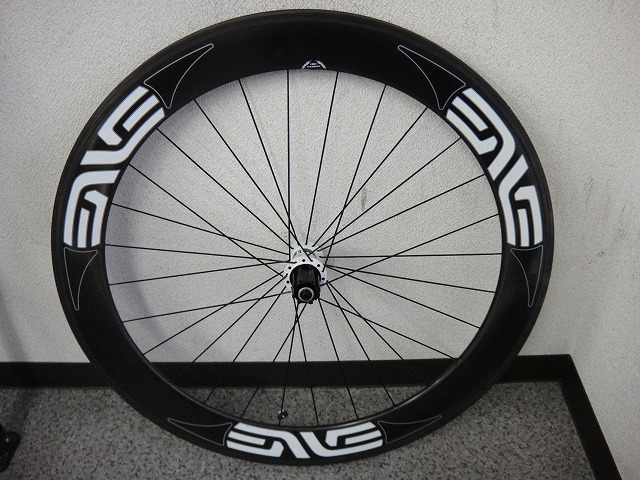
I received a rear wheel with an ENVE 1-65 rim from a customer.
They wanted a tightly-built rear wheel and deliberately chose 28H (which is unusual for this rim height),
but apparently it feels a bit soft to them.
The spokes before rebuild were CX-RAY on both sides,
laced in 4x pattern.
The spoke tension on the freewheel side was quite high,
so under the condition of "these spokes and this lacing pattern,"
if I were to build it, it would come out pretty much the same.
The rim had shifted very slightly toward the freewheel side,
so I could tighten up only the non-freewheel side,
but not enough to really correct the left-right tension difference.
(The shift wasn't that bad.)
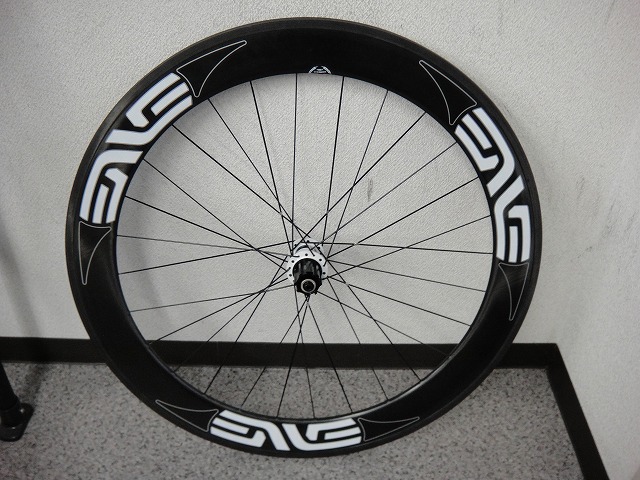
Rebuilt it.
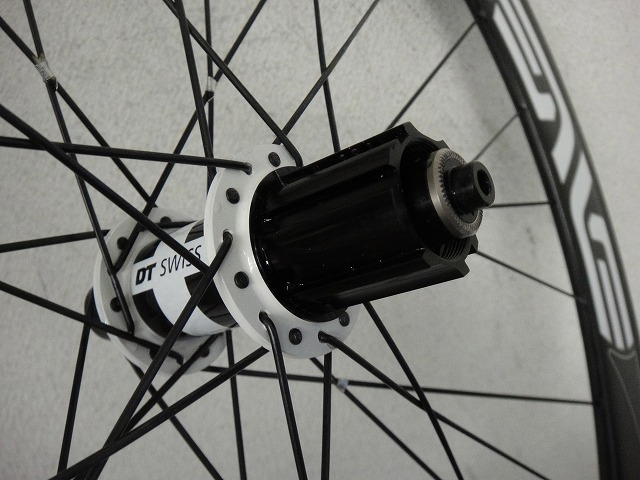
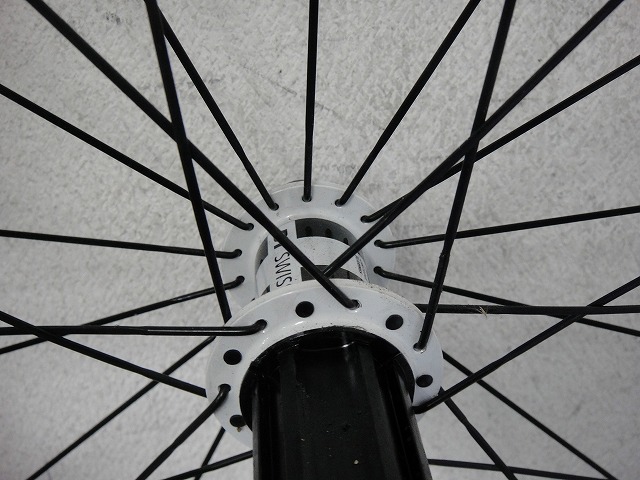
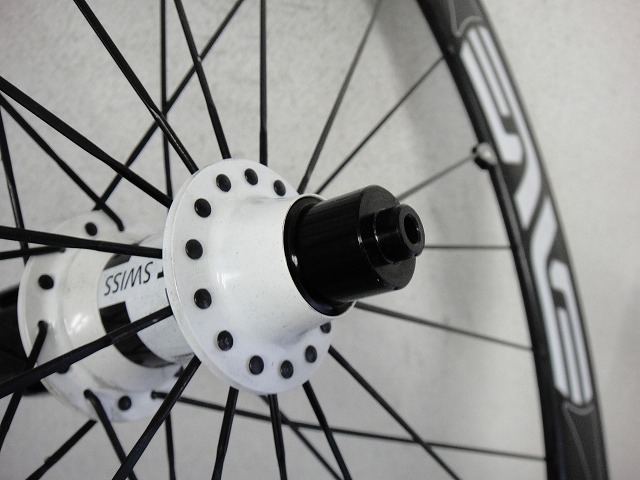
DT180 hub, 28H, half-comp 4x lace with nipple wraps.
Both before and after rebuild, the non-freewheel side spokes are CX-RAY,
but after rebuild the tension increased by about 20% (measured before wrapping).
With the rim height, it reached such a tight state that I thought "maybe we don't need wraps?"
But since the customer said "just make it super rigid!" I went ahead and did it.
Also, the DT hub has a flange width of just over 53mm, which is fairly narrow
(somewhere between a standard rear hub and current American Classic rear hub),
so if you only look at the deformation amount on either side of the spoke crossing,
you can naturally build a rear wheel with little left-right tension difference.
What's really important in a rear wheel is lateral stiffness,
and you shouldn't be fooled by the apparent small left-right difference in spoke tension.
Apart from wrapping, by utilizing different spoke gauges and different radii on each side,
you can only achieve a rear wheel with the lateral stiffness comparable to a standard hub.
The 28H really helped. With 24H 4x lacing, you can't get this kind of tension.