Another wheel day (and so on).
But first.
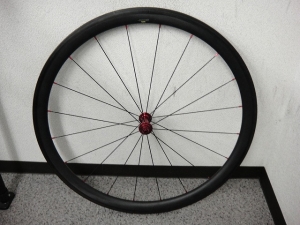
I received a pair of front and rear wheels with carbon WO rims from a customer.
The rear wheel definitely needs rebuilding anyway,
but its specifications are determined by the front wheel service, so I'm doing that first.
The front wheel has lateral and radial runout plus centering issues,
but the radial runout is supposedly particularly bad.
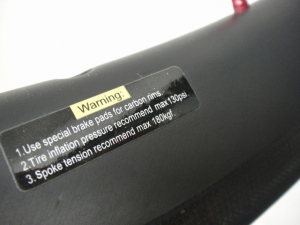
↑The rim can apparently handle up to 180 kgf of tension,
but I'm definitely not taking it that far.
(Other components wouldn't survive it anyway.)

The front hub is from the same maker as that mysterious super-wide flange hub I mentioned,
but with normal flange width.
It's laced with black CX-RAY in an outpoke radial pattern.
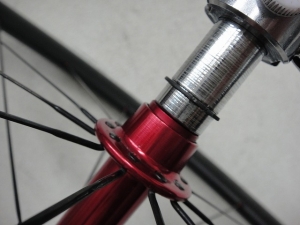
When I hold a centering gauge on the rim's loose side...
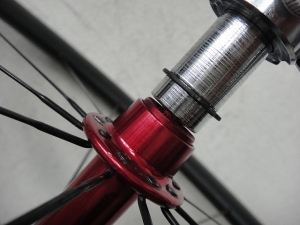
↑...there's this much gap on the other side.
Significantly off-center.
But what was really bad, just as the customer said, was the radial runout.
I worked carefully to dial it out cleanly.
The spoke tension was already pretty tight from the start,
but I worked with a slight increase in tension, so the overall tension went up just a bit.
The customer mentioned that if the work required disassembling the wheel
or replacing spokes, they'd want to switch to silver CX-RAY,
but if the existing spokes could stay, that would be fine.
Turns out I didn't need to replace any spokes.
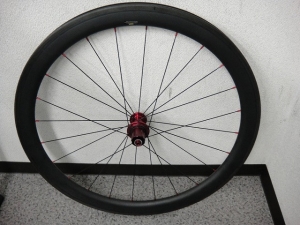
Now for the rear wheel.
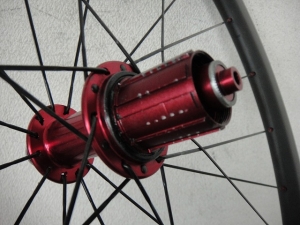
A 24H rear hub that looks like a Leaf hub,
laced with all-black CX-RAY in a 46-pattern (4-cross on one side, 6-cross on the other).
It apparently rubs on the drive side when the bike bounces,
but since the drive side is tensioned tightly,
I can't increase the non-drive side tension any further.
I'm usually harsh on non-drive-side radial lacing patterns,
but this rear wheel actually had pretty decent tension.
I mean, for that lacing pattern.
When I disassembled the rear wheel,
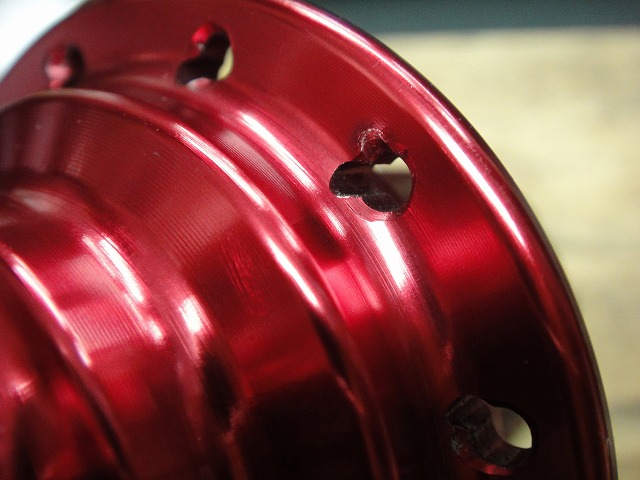
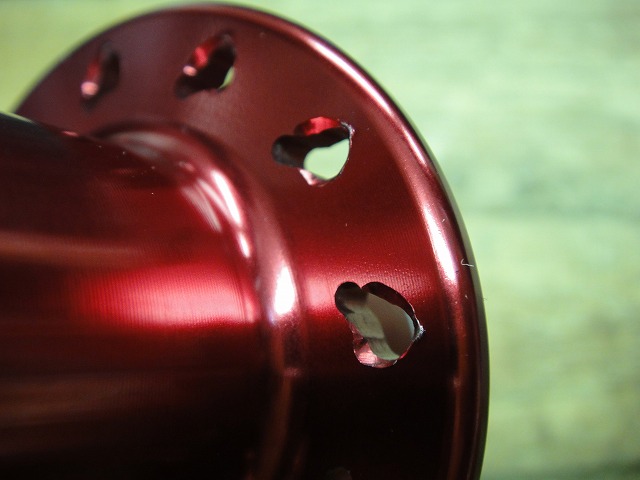
I looked at how the spokes bit into the hub flanges.
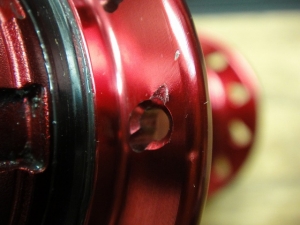
↑Drive-side inpoke

↑Drive-side outpoke
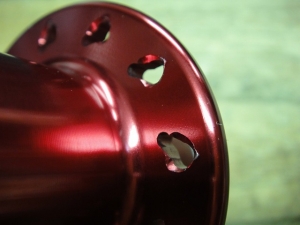
↑Non-drive side
You can see the bite depth on the non-drive side wasn't very significant.
There are differences in the angle of entry into the rim,
but generally speaking, spoke tension correlates with bite depth.

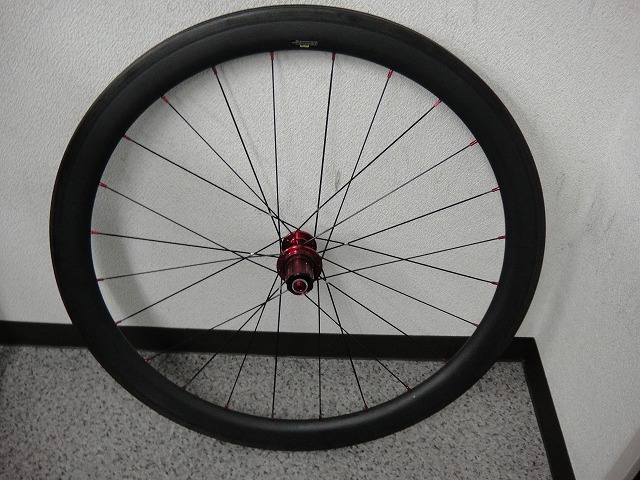
Rebuilt.
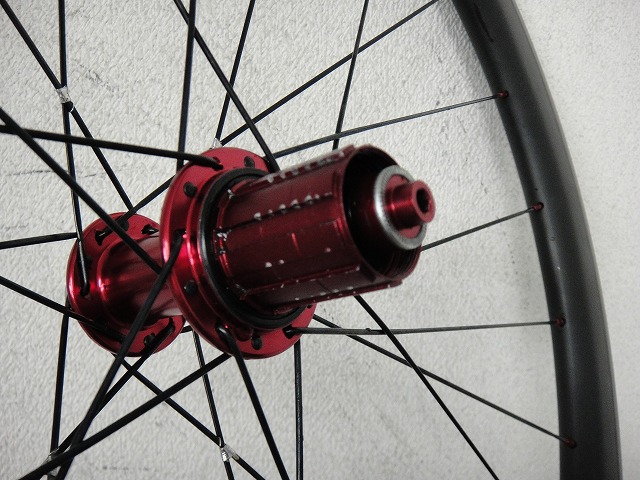
Since the front wheel has black spokes, I'm matching the rear with black spokes too.
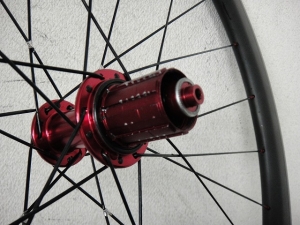
I went with a 24H half-comp 46-pattern with spoke connectors.
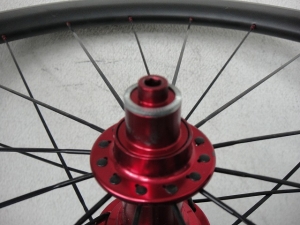
Before rebuilding
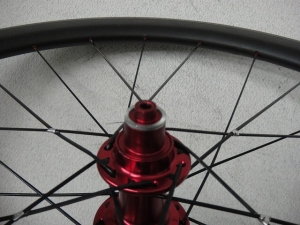
After rebuilding
The deformation when squeezing spokes from both sides has dramatically decreased.
The drive-side deformation is about the same,
but the non-drive-side deformation is massively reduced.
When the non-drive-side spoke lateral deformation decreases,
it becomes much less prone to drive-side rub.
But first.

I received a pair of front and rear wheels with carbon WO rims from a customer.
The rear wheel definitely needs rebuilding anyway,
but its specifications are determined by the front wheel service, so I'm doing that first.
The front wheel has lateral and radial runout plus centering issues,
but the radial runout is supposedly particularly bad.
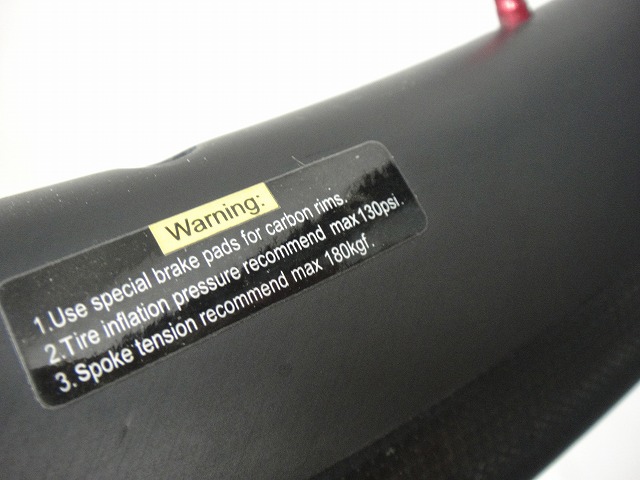
↑The rim can apparently handle up to 180 kgf of tension,
but I'm definitely not taking it that far.
(Other components wouldn't survive it anyway.)
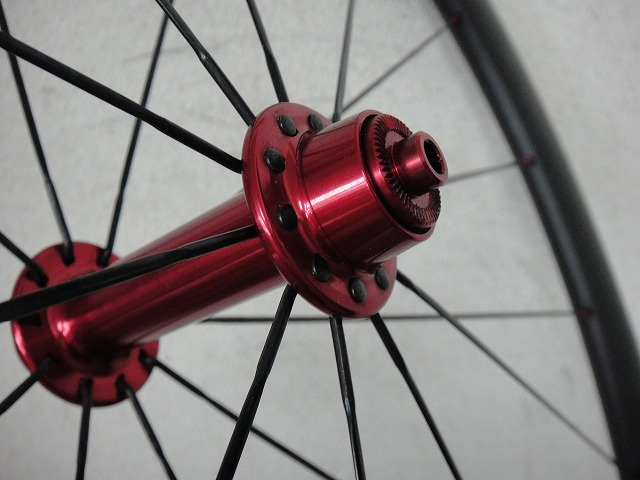
The front hub is from the same maker as that mysterious super-wide flange hub I mentioned,
but with normal flange width.
It's laced with black CX-RAY in an outpoke radial pattern.

When I hold a centering gauge on the rim's loose side...
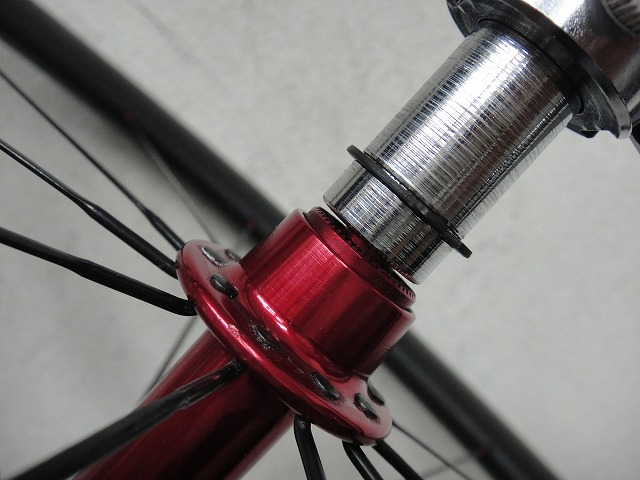
↑...there's this much gap on the other side.
Significantly off-center.
But what was really bad, just as the customer said, was the radial runout.
I worked carefully to dial it out cleanly.
The spoke tension was already pretty tight from the start,
but I worked with a slight increase in tension, so the overall tension went up just a bit.
The customer mentioned that if the work required disassembling the wheel
or replacing spokes, they'd want to switch to silver CX-RAY,
but if the existing spokes could stay, that would be fine.
Turns out I didn't need to replace any spokes.

Now for the rear wheel.
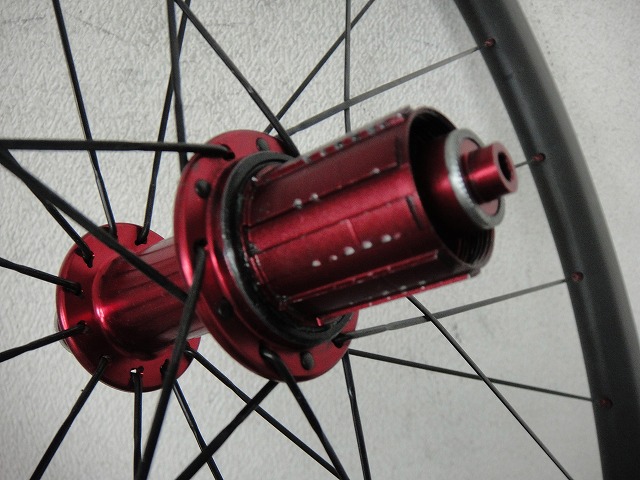
A 24H rear hub that looks like a Leaf hub,
laced with all-black CX-RAY in a 46-pattern (4-cross on one side, 6-cross on the other).
It apparently rubs on the drive side when the bike bounces,
but since the drive side is tensioned tightly,
I can't increase the non-drive side tension any further.
I'm usually harsh on non-drive-side radial lacing patterns,
but this rear wheel actually had pretty decent tension.
I mean, for that lacing pattern.
When I disassembled the rear wheel,
I looked at how the spokes bit into the hub flanges.
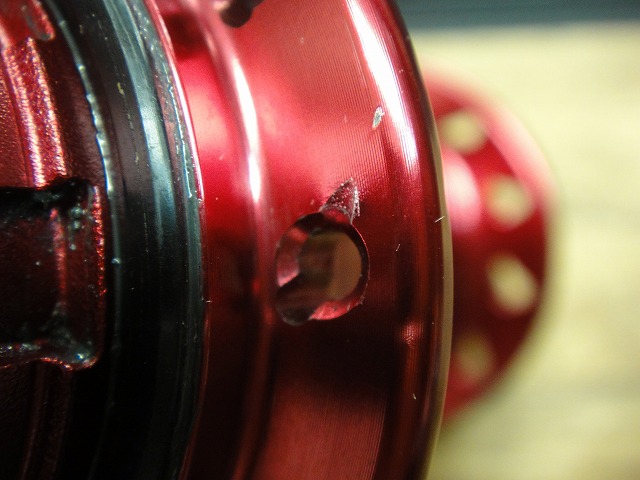
↑Drive-side inpoke
↑Drive-side outpoke
↑Non-drive side
You can see the bite depth on the non-drive side wasn't very significant.
There are differences in the angle of entry into the rim,
but generally speaking, spoke tension correlates with bite depth.
Rebuilt.
Since the front wheel has black spokes, I'm matching the rear with black spokes too.
I went with a 24H half-comp 46-pattern with spoke connectors.
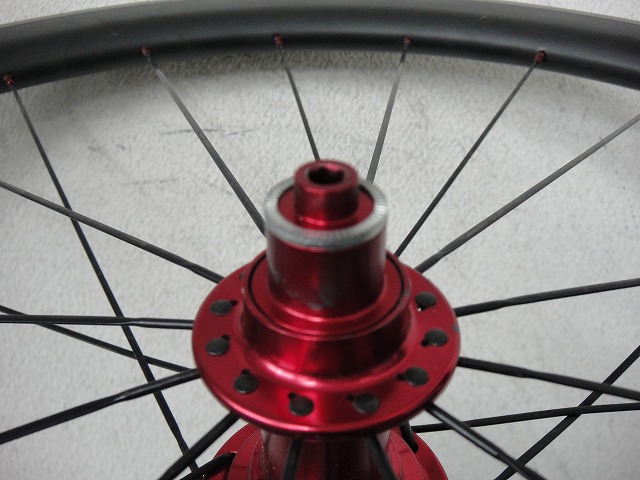
Before rebuilding
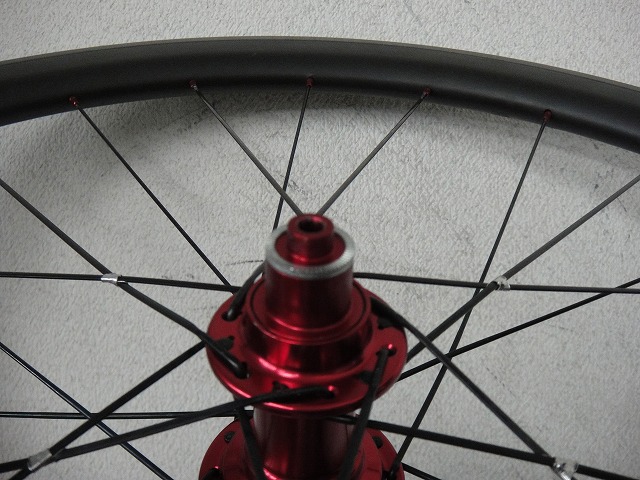
After rebuilding
The deformation when squeezing spokes from both sides has dramatically decreased.
The drive-side deformation is about the same,
but the non-drive-side deformation is massively reduced.
When the non-drive-side spoke lateral deformation decreases,
it becomes much less prone to drive-side rub.