Another wheel day (you know how it goes).
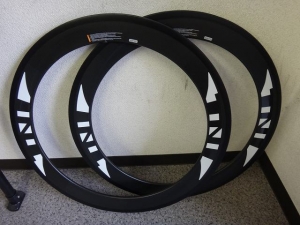
I built the Nomu Lab Wheel 2.6.
Though honestly, I've never actually built a "2.6" wheel before.
It's not a limited edition like the Nomu Lab 33, or the 1 3.3.7, or the 4.1.
Building with a Tni "ROAD38 rim" makes it a 2, and with a "ROAD50 rim" it's a 2.5,
but this one uses a "ROAD60" rim.
True to its name, it's a 60mm deep rim, and the unusual spec is
a 26-inch tubular rim.
Since it's pretty much the same rim as the 2.5
and it's 26-inch, I figured 2.6 works fine—just decided that now.
The rim has steady supply regardless of demand,
so it's not exactly a limited edition.
As I'll explain later, unlike the ROAD38 or 50,
the stickers aren't three at 120° phase spacing
but two at 180° phase spacing, and there's a reason for that.

The lineup only comes in 16H for the front rim and 24H for the rear.
16H feels a bit low even for a front wheel, but if the spokes are short enough,
you can build it with butted spokes.
The 2.6 has shorter spoke length than the Nomu Lab wheel 3 (a 700C 80mm rim),
so we get the advantage of easier stiffness from the smaller diameter rim.
Conversely, it's pretty absurd to go with low-profile rims and few spokes.
Not naming any manufacturers, but...
Just because 16H spokes test well in wind tunnels doesn't mean
you should obsess over 16-spoke counts regardless of rim height.
That shows you don't understand wheels at all.
"Spoke drag" exists, but it's not important enough to sacrifice rim stiffness over.
Just to be clear though:
"16H low-profile front wheels are sketchy" applies to steel spokes.
With aluminum or carbon spokes, the resistance to deformation from the material and cross-section
is incomparable to steel, so there's no problem—in fact, it's usually overly stiff for most riders.
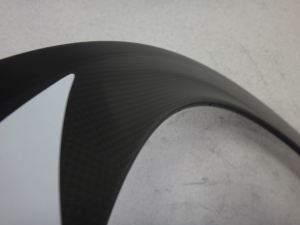
About why the stickers are two per side (in two spots):
The rim sidewall has what looks like aero dimpling
at two locations in 180° phase spacing.
They probably didn't want to put stickers over those.
On the ROAD38 rim, recent batches had a minor spec change with reinforcement around the valve hole.
This ROAD60 rim has similar reinforcement, so I thought it was a newer rim,
but Equinox rims can be dated pretty reliably from the part number.
According to that, this is a 2013-manufactured rim.
Makes sense—they don't sell all that often.
And 26-inch tubulars for triathlon were big way longer ago than that anyway.
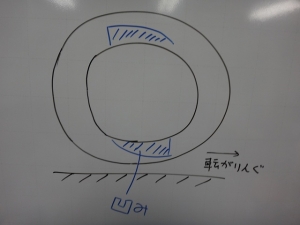
↑The aero(?) dimpling looks like this.
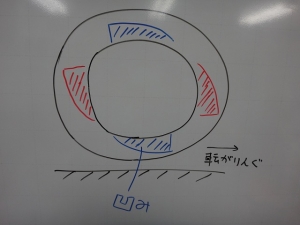
↑The opposite side has the same dimple shape offset 90°, but
if the relationship is like the diagram above, it means no distinction between sides
but aerodynamically it would be pointless.
If the blue side dimple sheds air smoothly,
the red side would capture it, creating opposing effects.
This is actually why I dislike JIS-laced rear wheels.
When you look at the tension direction of inpoke-laced spokes,
I sense this same kind of twist.
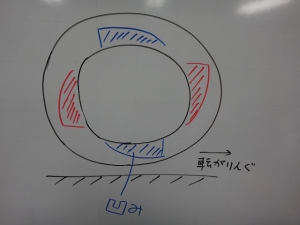
↑Actually it works like this.
So there's definitely a left-right distinction.
The rear rim has a freewheel-side directional specification,
so that reveals the manufacturer's intended dimple direction
(same as the diagram above).
For the rear wheel, as long as I don't mess up the build,
customers won't reverse it, but
the front wheel could realistically be installed backward.
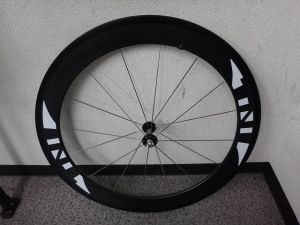
Front wheel's done.
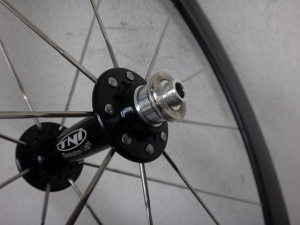
Evo-Lite hub 16H, CX-RAY outpoke radial lacing.
I briefly thought if we had stock Evo hubs in 16H, that would've been better.
Evo hubs have slitted flanges so you can use CX spokes.
If this were a heavy rider's TT front wheel,
I wouldn't use CX-RAY, but the customer is quite light
(and crazy fast on climbs), and the application is hill climb racing,
so I think this choice is better.
The logo on the hub shell helped too.
When mounted on the fork with the logo facing forward and readable from above,
I built it so the rim's dimple orientation aligns.
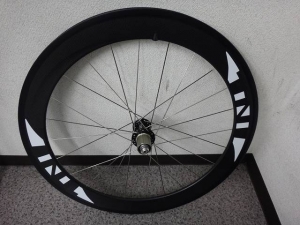
Rear wheel's done too.
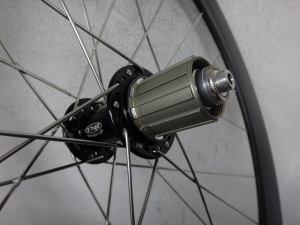
Evo-Lite hub 24H, semi-comp lacing.
Spoke tension-wise, I didn't crank it super tight,
but with the short spoke length, it finished with a pretty firm feel.
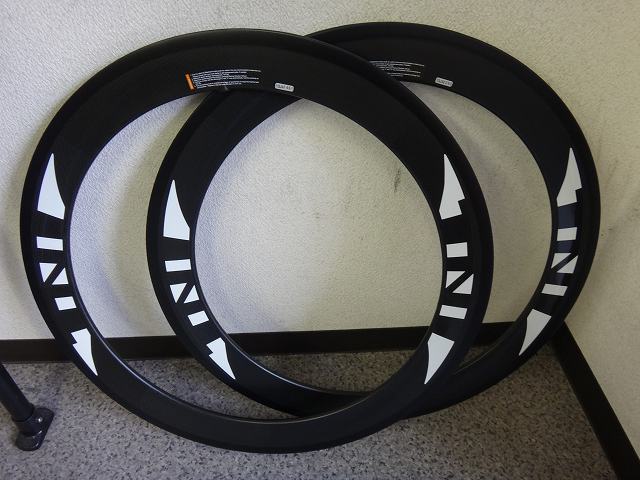
I built the Nomu Lab Wheel 2.6.
Though honestly, I've never actually built a "2.6" wheel before.
It's not a limited edition like the Nomu Lab 33, or the 1 3.3.7, or the 4.1.
Building with a Tni "ROAD38 rim" makes it a 2, and with a "ROAD50 rim" it's a 2.5,
but this one uses a "ROAD60" rim.
True to its name, it's a 60mm deep rim, and the unusual spec is
a 26-inch tubular rim.
Since it's pretty much the same rim as the 2.5
and it's 26-inch, I figured 2.6 works fine—just decided that now.
The rim has steady supply regardless of demand,
so it's not exactly a limited edition.
As I'll explain later, unlike the ROAD38 or 50,
the stickers aren't three at 120° phase spacing
but two at 180° phase spacing, and there's a reason for that.
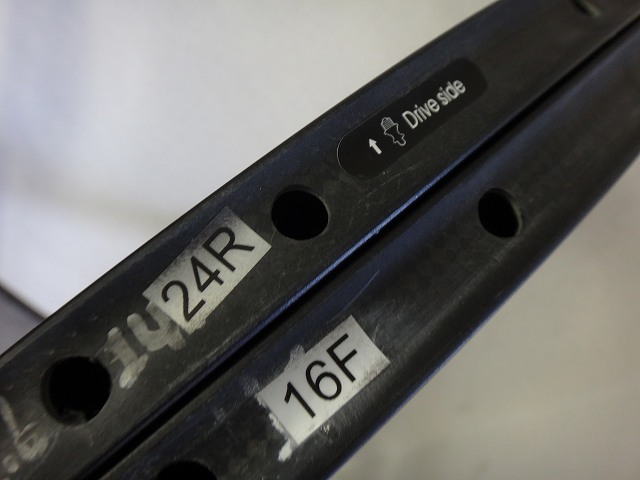
The lineup only comes in 16H for the front rim and 24H for the rear.
16H feels a bit low even for a front wheel, but if the spokes are short enough,
you can build it with butted spokes.
The 2.6 has shorter spoke length than the Nomu Lab wheel 3 (a 700C 80mm rim),
so we get the advantage of easier stiffness from the smaller diameter rim.
Conversely, it's pretty absurd to go with low-profile rims and few spokes.
Not naming any manufacturers, but...
Just because 16H spokes test well in wind tunnels doesn't mean
you should obsess over 16-spoke counts regardless of rim height.
That shows you don't understand wheels at all.
"Spoke drag" exists, but it's not important enough to sacrifice rim stiffness over.
Just to be clear though:
"16H low-profile front wheels are sketchy" applies to steel spokes.
With aluminum or carbon spokes, the resistance to deformation from the material and cross-section
is incomparable to steel, so there's no problem—in fact, it's usually overly stiff for most riders.
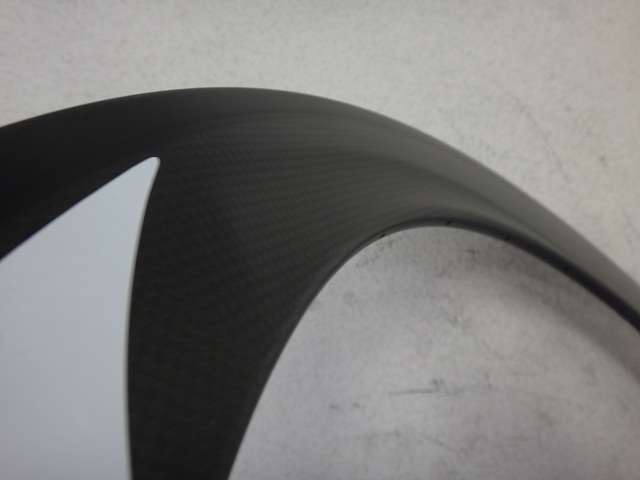
About why the stickers are two per side (in two spots):
The rim sidewall has what looks like aero dimpling
at two locations in 180° phase spacing.
They probably didn't want to put stickers over those.
On the ROAD38 rim, recent batches had a minor spec change with reinforcement around the valve hole.
This ROAD60 rim has similar reinforcement, so I thought it was a newer rim,
but Equinox rims can be dated pretty reliably from the part number.
According to that, this is a 2013-manufactured rim.
Makes sense—they don't sell all that often.
And 26-inch tubulars for triathlon were big way longer ago than that anyway.
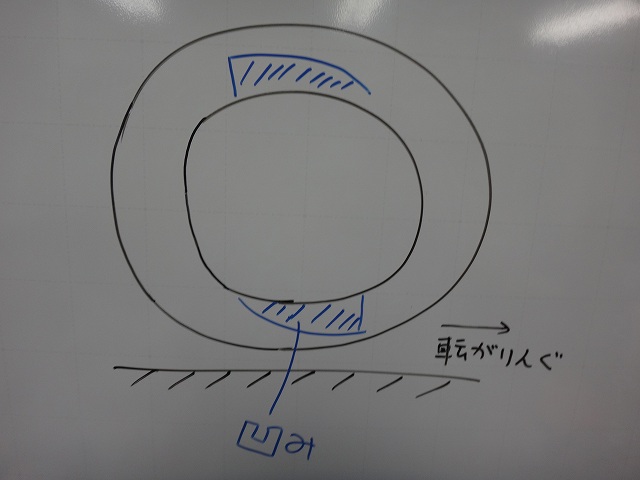
↑The aero(?) dimpling looks like this.
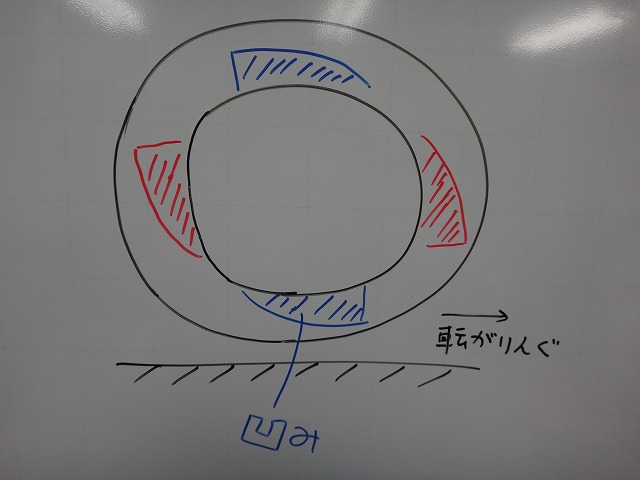
↑The opposite side has the same dimple shape offset 90°, but
if the relationship is like the diagram above, it means no distinction between sides
but aerodynamically it would be pointless.
If the blue side dimple sheds air smoothly,
the red side would capture it, creating opposing effects.
This is actually why I dislike JIS-laced rear wheels.
When you look at the tension direction of inpoke-laced spokes,
I sense this same kind of twist.
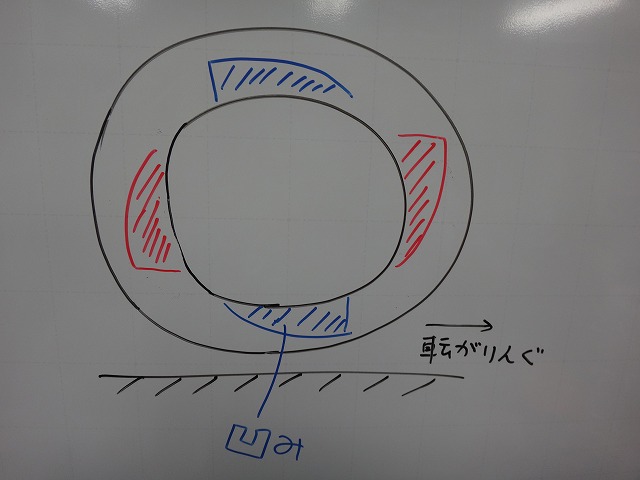
↑Actually it works like this.
So there's definitely a left-right distinction.
The rear rim has a freewheel-side directional specification,
so that reveals the manufacturer's intended dimple direction
(same as the diagram above).
For the rear wheel, as long as I don't mess up the build,
customers won't reverse it, but
the front wheel could realistically be installed backward.
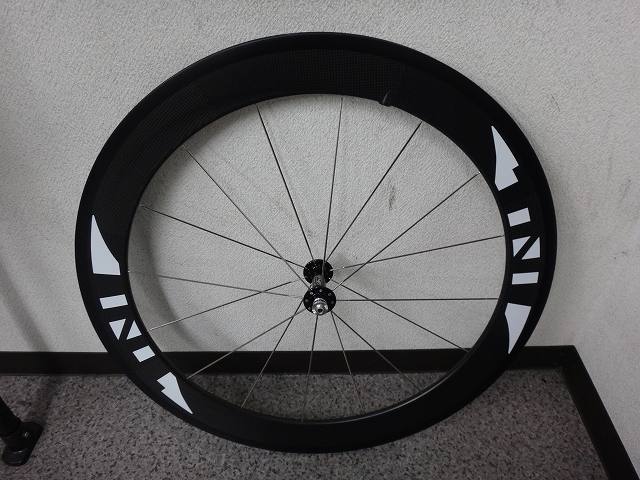
Front wheel's done.

Evo-Lite hub 16H, CX-RAY outpoke radial lacing.
I briefly thought if we had stock Evo hubs in 16H, that would've been better.
Evo hubs have slitted flanges so you can use CX spokes.
If this were a heavy rider's TT front wheel,
I wouldn't use CX-RAY, but the customer is quite light
(and crazy fast on climbs), and the application is hill climb racing,
so I think this choice is better.
The logo on the hub shell helped too.
When mounted on the fork with the logo facing forward and readable from above,
I built it so the rim's dimple orientation aligns.
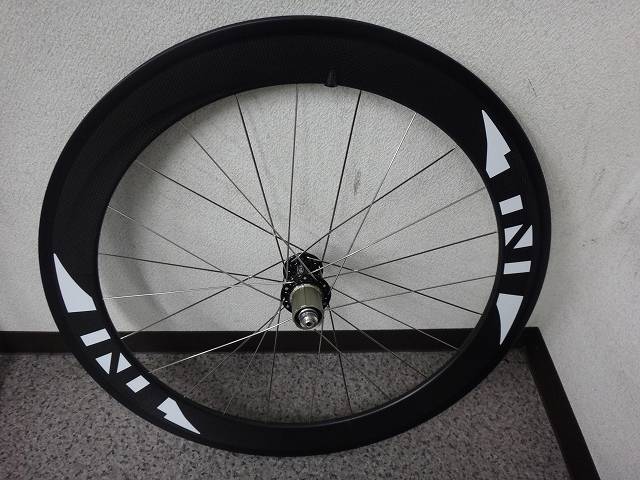
Rear wheel's done too.
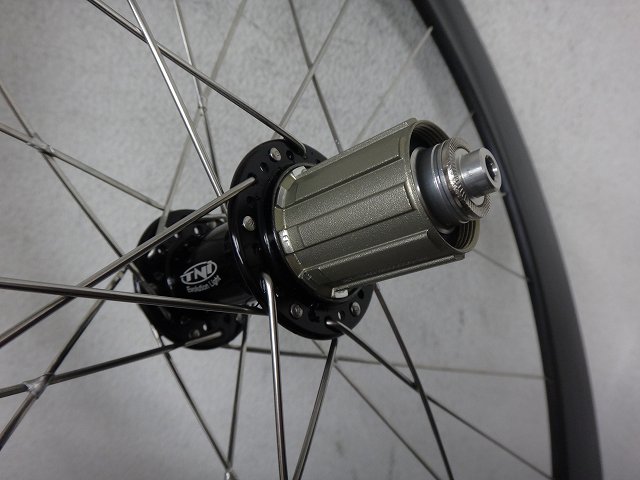
Evo-Lite hub 24H, semi-comp lacing.
Spoke tension-wise, I didn't crank it super tight,
but with the short spoke length, it finished with a pretty firm feel.