Another day of wheelbuilding (and so on).
But first, a couple of things.
First up:
The column count in my Excel spoke length calculation spreadsheet has now exceeded 3,000 columns because of this work.
It's meaningless to anyone but me, but it's a milestone.
My spoke calculation formula uses one column per spoke length type.
So basically,
for wheels without a dish (normal front wheels or dual-threaded track hubs), I use 1 column,
and for wheels with a dish (normal rear wheels or disc brake front wheels),
I use 2 columns.
For the various Nomu Lab wheels where I've memorized spoke lengths by heart,
known hub + Open Pro rim combinations, and known rim + PowerTap G3 hub combinations,
I don't use the calculation formula, so these wheels don't add new columns.
Next, point two.
About the Nomu Lab 2.6 wheel I built yesterday—
before I could contact the customer about it being finished
or the customer saw it on this blog themselves,
someone who knows the customer told them "that's probably your wheel,"
they told me when I handed it over today.
I may have written too much identifying information about a very identifiable wheel.
They weren't angry about it or anything,
but I'm thinking I should be more careful going forward.
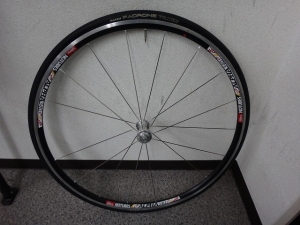
I received two front wheels from a customer who teaches English at a cram school.
This front wheel has a White Industries H2 hub
and a ZTR Alpha 340 rim, which unusually is 18H.
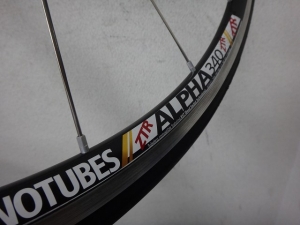
The ALPHA logo is a small sticker, so this is an early model with thinner rim holes on the inner side (therefore lighter weight).
Even if it's not an early model, whenever this rim needs truing or similar work,
I have to examine every single rim hole closely.
These rims often have cracks running front-to-back in the rim holes.
If I touch it without noticing, I can't deny the possibility that I might have caused the crack.
This one was fine, but apparently the customer doesn't need the rim anyway.

Two spokes are missing, but I didn't ask how that happened,
so I don't know.
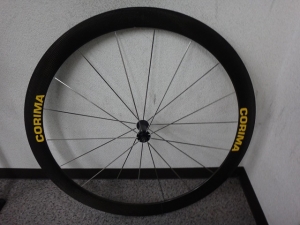
The other front wheel is a Colima Aero.
Since we're rebuilding it as a matched pair, naturally this one is also 18H.
Aero isn't a generic term for aero rims—
it's a product name: "AERO."
Unrelated to this, but the other day a customer was wearing
a really classy Seiko leather-strap dress watch (SARB065),
and when I asked "Is that a Presage?"
they said "It's mechanical."
I could obviously tell it was mechanical at a glance, so I meant to ask about
the grade like "Presage" or "Brightz,"
but the conversation felt like it wasn't connecting, and it turned out
"Mechanical" was the actual grade name.
It's my fault for not catching on immediately, but it's confusing.
Don't give product names that sound like generic terms, I say.
The SARB065 has a 6R15 movement, not a 4R series,
which is the same internals as the Brightz SDGM001 which costs more and ranks higher,
and the dial is very similar too, so it's an incredibly good value model(shameless promotion).
About why they wanted to rebuild the wheel—
I thought it was simply that they wanted a White Industries hub
and there was nothing wrong with the Colima hub, but
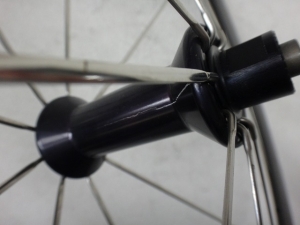
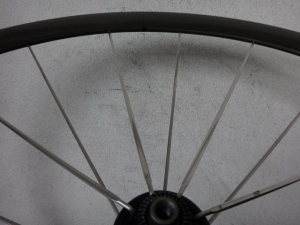
↑oh dear...
N-no, I need to change the subject quick.
Colima rims often have hole offset that's what this blog calls
"reverse rim," but this one was a "normal rim."
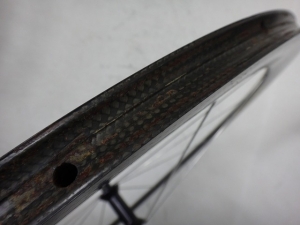
The hole offset is intense, and the rim interior is filled with polyurethane foam (probably),
with the path for the nipples severely constrained,
so it's actually impossible to build it with the wrong hole offset.
So this rim is definitely correct hole offset.
At 18H, that's 9H per side, so unless you're doing something twisted,
radial lacing is the only option.
With radial lacing, there's no chance of getting the right and left drop wrong during initial build,
so as long as you watch the hole offset you're good.
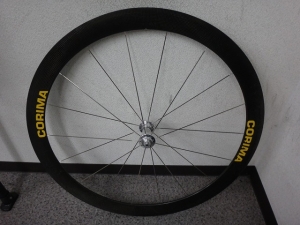
Built.
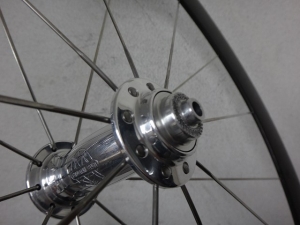
The Colima's original spokes were CX, and since the hub flange uses a hook design rather than through holes,
flat aero spokes could be used.
If I'd cut these CX spokes with a spoke cutter, I probably could've gotten the right length
for the H2 hub, but CX spokes won't fit through the H2 hub.
The ZTR wheel's original spokes were CX-RAY, but
reusing these for the aero rim with H2 hub would require
different lengths than what we have.
In other words, spoke reuse wasn't an option either way.
So we went with new 18H CX-RAY outpoke radial lacing.
But first, a couple of things.
First up:
The column count in my Excel spoke length calculation spreadsheet has now exceeded 3,000 columns because of this work.
It's meaningless to anyone but me, but it's a milestone.
My spoke calculation formula uses one column per spoke length type.
So basically,
for wheels without a dish (normal front wheels or dual-threaded track hubs), I use 1 column,
and for wheels with a dish (normal rear wheels or disc brake front wheels),
I use 2 columns.
For the various Nomu Lab wheels where I've memorized spoke lengths by heart,
known hub + Open Pro rim combinations, and known rim + PowerTap G3 hub combinations,
I don't use the calculation formula, so these wheels don't add new columns.
Next, point two.
About the Nomu Lab 2.6 wheel I built yesterday—
before I could contact the customer about it being finished
or the customer saw it on this blog themselves,
someone who knows the customer told them "that's probably your wheel,"
they told me when I handed it over today.
I may have written too much identifying information about a very identifiable wheel.
They weren't angry about it or anything,
but I'm thinking I should be more careful going forward.
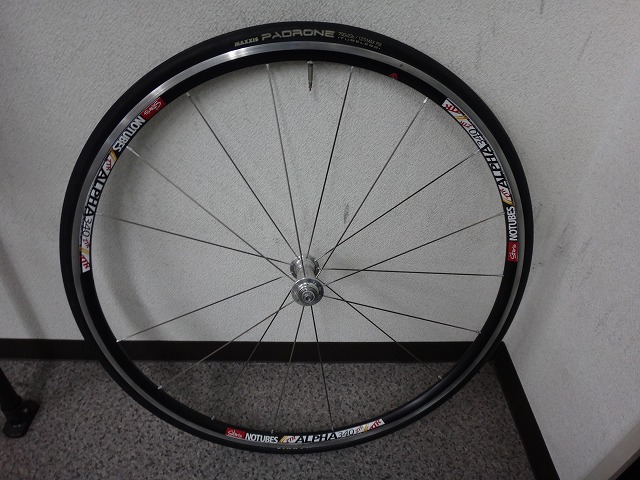
I received two front wheels from a customer who teaches English at a cram school.
This front wheel has a White Industries H2 hub
and a ZTR Alpha 340 rim, which unusually is 18H.
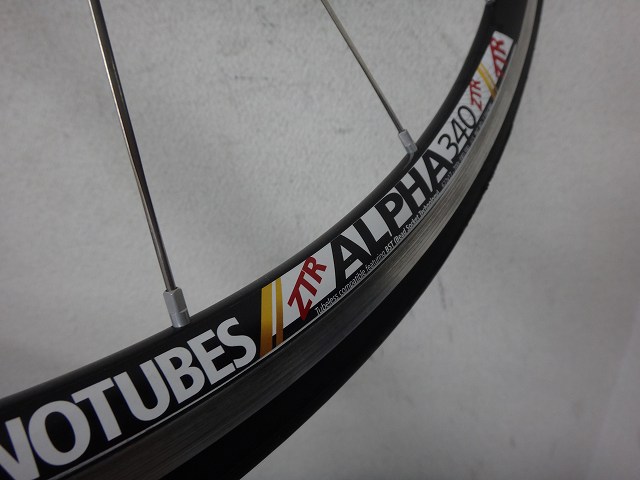
The ALPHA logo is a small sticker, so this is an early model with thinner rim holes on the inner side (therefore lighter weight).
Even if it's not an early model, whenever this rim needs truing or similar work,
I have to examine every single rim hole closely.
These rims often have cracks running front-to-back in the rim holes.
If I touch it without noticing, I can't deny the possibility that I might have caused the crack.
This one was fine, but apparently the customer doesn't need the rim anyway.

Two spokes are missing, but I didn't ask how that happened,
so I don't know.
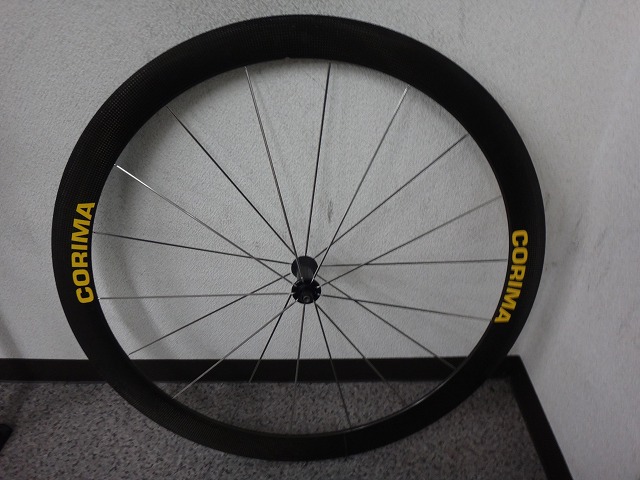
The other front wheel is a Colima Aero.
Since we're rebuilding it as a matched pair, naturally this one is also 18H.
Aero isn't a generic term for aero rims—
it's a product name: "AERO."
Unrelated to this, but the other day a customer was wearing
a really classy Seiko leather-strap dress watch (SARB065),
and when I asked "Is that a Presage?"
they said "It's mechanical."
I could obviously tell it was mechanical at a glance, so I meant to ask about
the grade like "Presage" or "Brightz,"
but the conversation felt like it wasn't connecting, and it turned out
"Mechanical" was the actual grade name.
It's my fault for not catching on immediately, but it's confusing.
Don't give product names that sound like generic terms, I say.
The SARB065 has a 6R15 movement, not a 4R series,
which is the same internals as the Brightz SDGM001 which costs more and ranks higher,
and the dial is very similar too, so it's an incredibly good value model
About why they wanted to rebuild the wheel—
I thought it was simply that they wanted a White Industries hub
and there was nothing wrong with the Colima hub, but
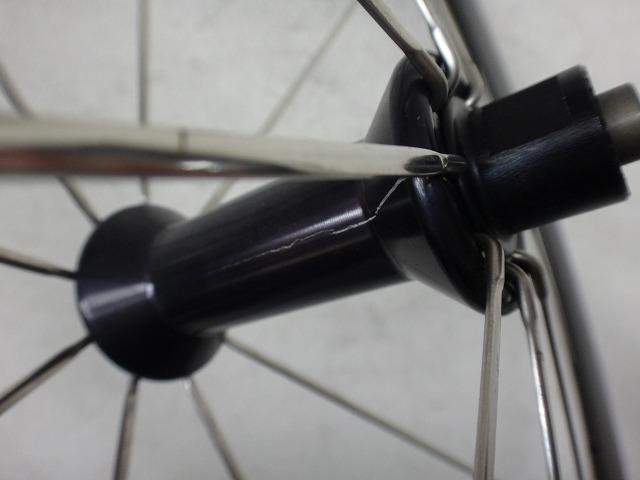
↑oh dear...

N-no, I need to change the subject quick.
Colima rims often have hole offset that's what this blog calls
"reverse rim," but this one was a "normal rim."
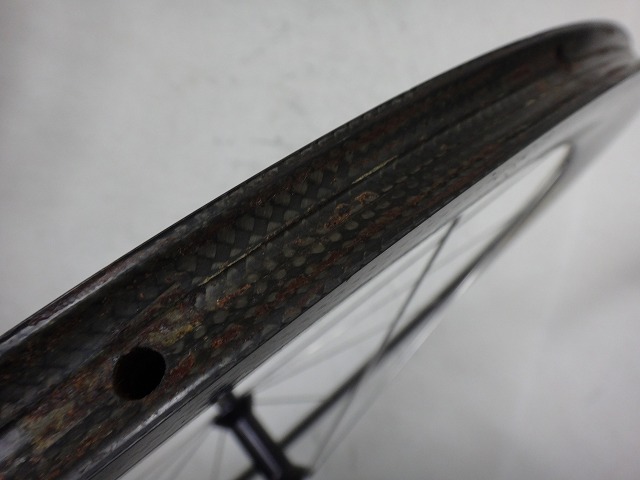
The hole offset is intense, and the rim interior is filled with polyurethane foam (probably),
with the path for the nipples severely constrained,
so it's actually impossible to build it with the wrong hole offset.
So this rim is definitely correct hole offset.
At 18H, that's 9H per side, so unless you're doing something twisted,
radial lacing is the only option.
With radial lacing, there's no chance of getting the right and left drop wrong during initial build,
so as long as you watch the hole offset you're good.

Built.
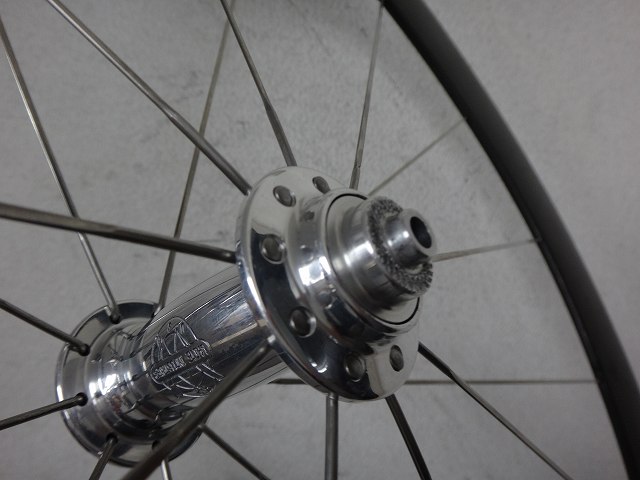
The Colima's original spokes were CX, and since the hub flange uses a hook design rather than through holes,
flat aero spokes could be used.
If I'd cut these CX spokes with a spoke cutter, I probably could've gotten the right length
for the H2 hub, but CX spokes won't fit through the H2 hub.
The ZTR wheel's original spokes were CX-RAY, but
reusing these for the aero rim with H2 hub would require
different lengths than what we have.
In other words, spoke reuse wasn't an option either way.
So we went with new 18H CX-RAY outpoke radial lacing.