A customer brought in a 7800 carbon wheelset for us to work on.
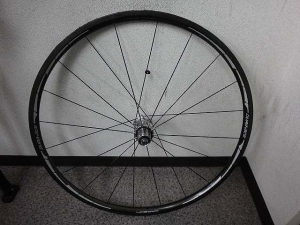
Just the rear wheel.

One spoke is broken at the base.
It's not broken at the thread start... that's not how this wheel is built.
This wheel has the spoke heads on the rim side
and nipples on the hub side.
Spare spokes for this wheel are no longer available.
So another shop told the customer it couldn't be fixed, and they brought it to us.
The successor 7850 wheel even has some discontinued parts now,
so there's nothing we can do about it.
2006 debut, and the customer bought this wheel
back in 2006 or 2007 — such an ancient relic that it's only natural parts aren't available!
(This has nothing to do with what I wrote in the CX-RAY straight spoke article two posts back, by the way.)
When it arrived, a tubular tire was still mounted on the wheel.
For this particular wheel, that was critically important.
What a stroke of luck!

The spoke head washer remained inside the rim!
If we'd removed the tire, we might have lost it,
so recovering it was fortunate.
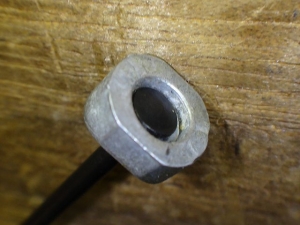
This wheel uses asymmetrical spoke sizing —
the non-freewheel side spokes are roughly equivalent to CX-RAY weight,
while the freewheel side is thicker.
We had some spokes of nearly equivalent weight but slightly longer,
so we cut them to the right length.
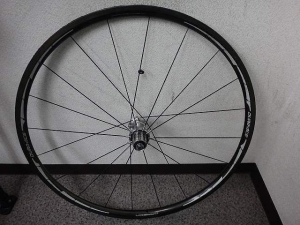
Fixed!
If you were to replace this with the current equivalent,
that would be the 9000 C24 tubular,
but it does have some advantages over the oval-profile build,
so it's not simply a straight upgrade.
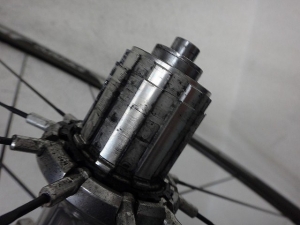
Won't fit 9-speed sprockets —
10-speed "only" aluminum freewheel body.
This annoying design was pure marketing pressure — "If you want to use Duraace wheels, upgrade your groupset to 10-speed."
But by the 7900 wheel, the aluminum freewheel body gave way to a grooved titanium freewheel body (8/9/10-speed compatible) that was lighter than both the earlier titanium bodies and this aluminum one.
What's left in the end is
the annoying workaround that you need a 1mm low spacer
behind the smallest cog for 10-speed sprockets
on every freewheel body except this one.
Honestly, making these kinds of ad-hoc decisions — what was that about?
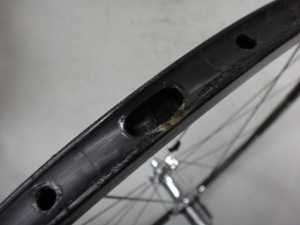
On the rim's outer edge, opposite the valve hole, there's a "balloon removal hole,"
which is normally sealed with a cover afterwards.
Very early batches used thin aluminum,
later ones used a bonded carbon cover
(you see the same covering on LEW-family rims like ENVE and Easton as well),
but the tubular tape was so aggressive that when the previous tire was peeled off and discarded,
the cover got taken with it.
If they'd used rim cement for bedding, this wouldn't have happened.
The "balloon" is a vinyl bladder left inside the carbon product
from the molding (pressurization) process.
You don't need to remove it, and removing it won't
affect product strength
(you get only a tiny weight saving).
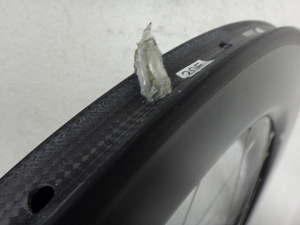
↑This is the rim from Nomu Lab Wheel No. 3,
and this rim is the type that retains the balloon.
There's no actual harm, but when you shake the rim,
you hear pieces of balloon rattling around, so I decided to remove some of it.

↑What was rattling around inside the rim was the fragment on the right in the image above,
but to remove it, I had to dig out the fragment on the left.
Balloons are usually transparent or a pale purple color.
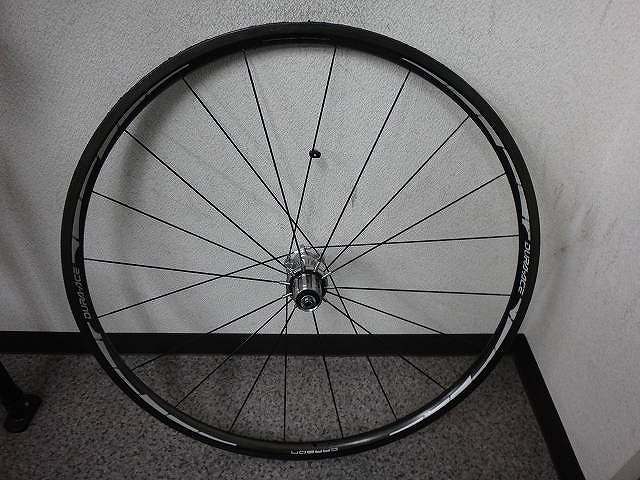
Just the rear wheel.
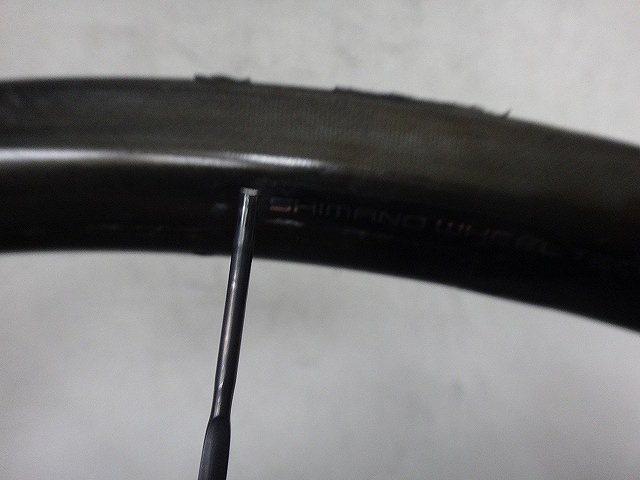
One spoke is broken at the base.
It's not broken at the thread start... that's not how this wheel is built.
This wheel has the spoke heads on the rim side
and nipples on the hub side.
Spare spokes for this wheel are no longer available.
So another shop told the customer it couldn't be fixed, and they brought it to us.
The successor 7850 wheel even has some discontinued parts now,
so there's nothing we can do about it.
2006 debut, and the customer bought this wheel
back in 2006 or 2007 — such an ancient relic that it's only natural parts aren't available!
(This has nothing to do with what I wrote in the CX-RAY straight spoke article two posts back, by the way.)
When it arrived, a tubular tire was still mounted on the wheel.
For this particular wheel, that was critically important.
What a stroke of luck!
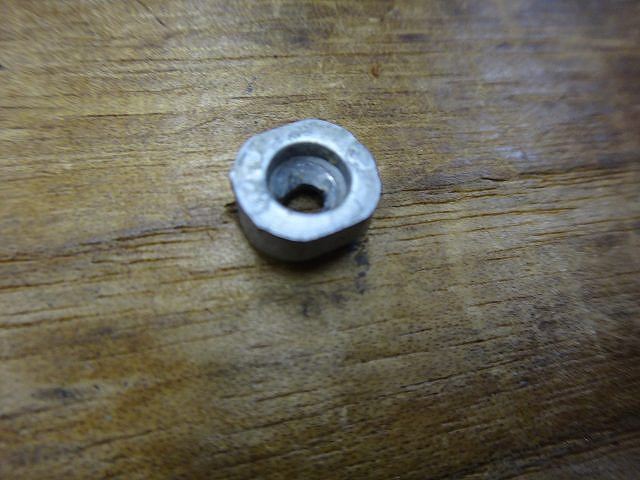
The spoke head washer remained inside the rim!
If we'd removed the tire, we might have lost it,
so recovering it was fortunate.
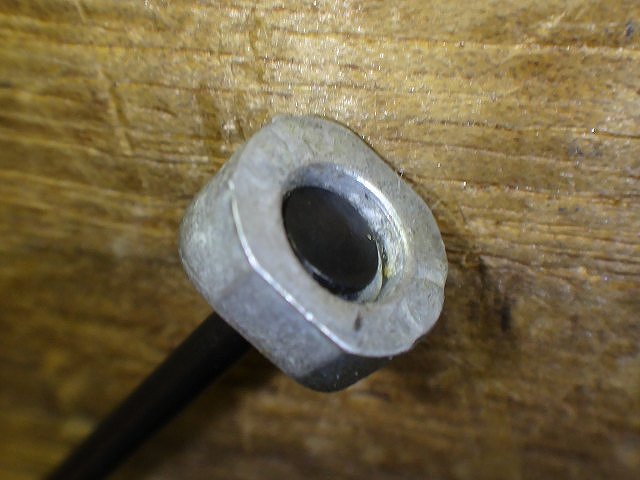
This wheel uses asymmetrical spoke sizing —
the non-freewheel side spokes are roughly equivalent to CX-RAY weight,
while the freewheel side is thicker.
We had some spokes of nearly equivalent weight but slightly longer,
so we cut them to the right length.
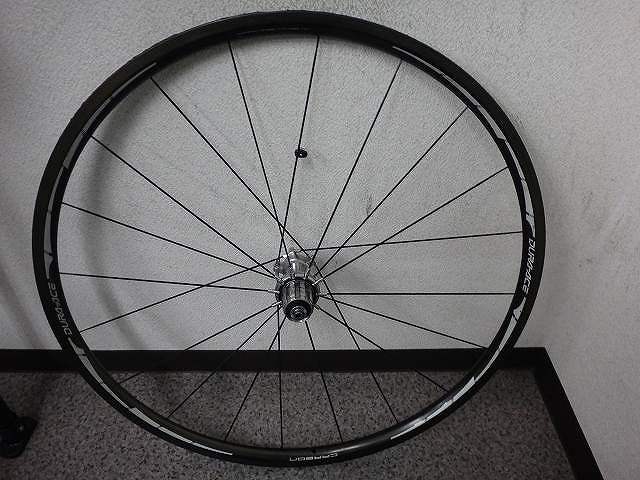
Fixed!
If you were to replace this with the current equivalent,
that would be the 9000 C24 tubular,
but it does have some advantages over the oval-profile build,
so it's not simply a straight upgrade.
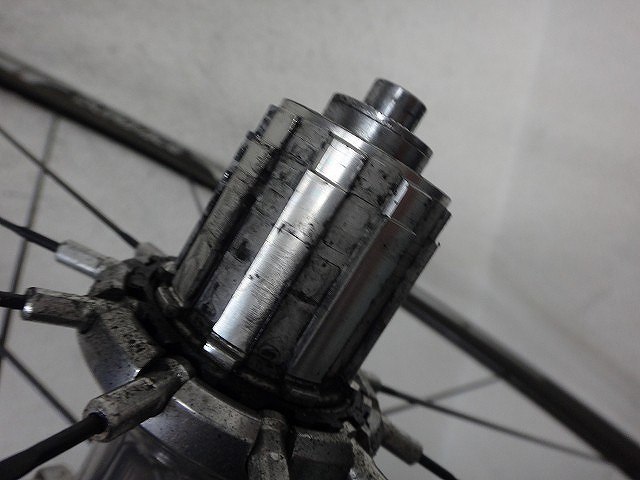
Won't fit 9-speed sprockets —
10-speed "only" aluminum freewheel body.
This annoying design was pure marketing pressure — "If you want to use Duraace wheels, upgrade your groupset to 10-speed."
But by the 7900 wheel, the aluminum freewheel body gave way to a grooved titanium freewheel body (8/9/10-speed compatible) that was lighter than both the earlier titanium bodies and this aluminum one.
What's left in the end is
the annoying workaround that you need a 1mm low spacer
behind the smallest cog for 10-speed sprockets
on every freewheel body except this one.
Honestly, making these kinds of ad-hoc decisions — what was that about?
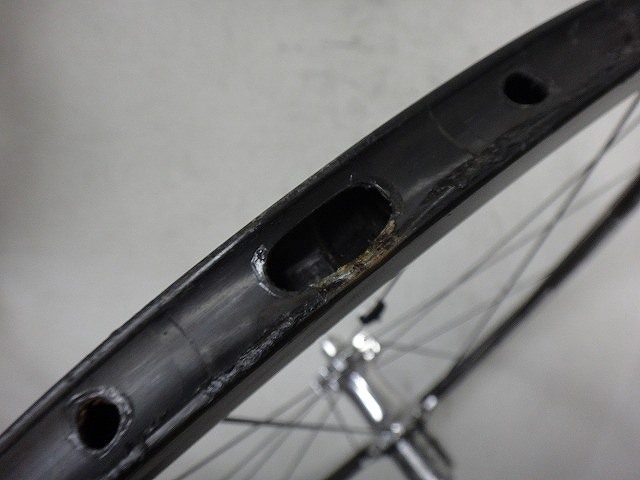
On the rim's outer edge, opposite the valve hole, there's a "balloon removal hole,"
which is normally sealed with a cover afterwards.
Very early batches used thin aluminum,
later ones used a bonded carbon cover
(you see the same covering on LEW-family rims like ENVE and Easton as well),
but the tubular tape was so aggressive that when the previous tire was peeled off and discarded,
the cover got taken with it.
If they'd used rim cement for bedding, this wouldn't have happened.
The "balloon" is a vinyl bladder left inside the carbon product
from the molding (pressurization) process.
You don't need to remove it, and removing it won't
affect product strength
(you get only a tiny weight saving).

↑This is the rim from Nomu Lab Wheel No. 3,
and this rim is the type that retains the balloon.
There's no actual harm, but when you shake the rim,
you hear pieces of balloon rattling around, so I decided to remove some of it.

↑What was rattling around inside the rim was the fragment on the right in the image above,
but to remove it, I had to dig out the fragment on the left.
Balloons are usually transparent or a pale purple color.