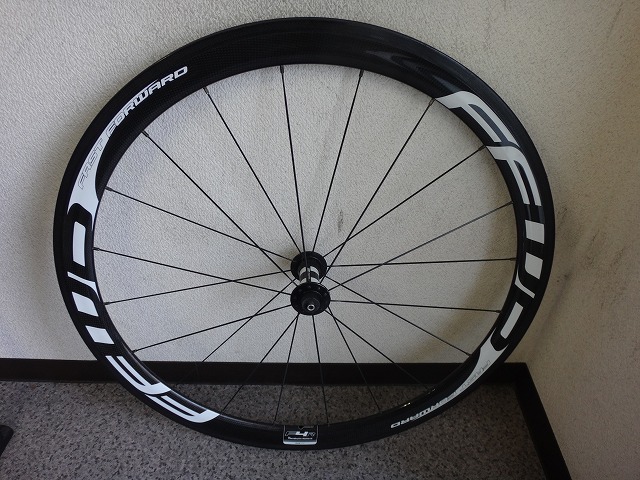
A customer dropped off an F4R for me to work on.
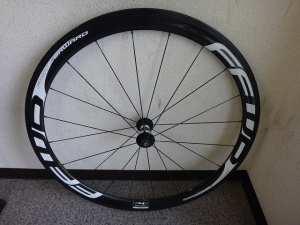
The front wheel was perfectly centered with almost no runout.
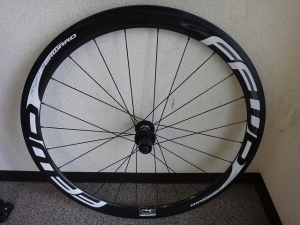
The rear wheel had some centering issues, but I deliberately made it worse first, then corrected it while truing the wheel.

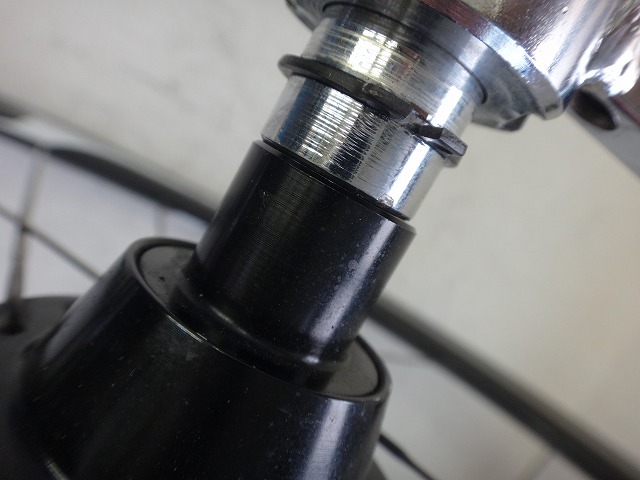
↑When I measured from the non-drive side and applied that measurement to the drive side,
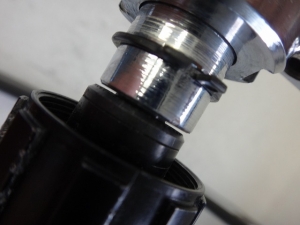
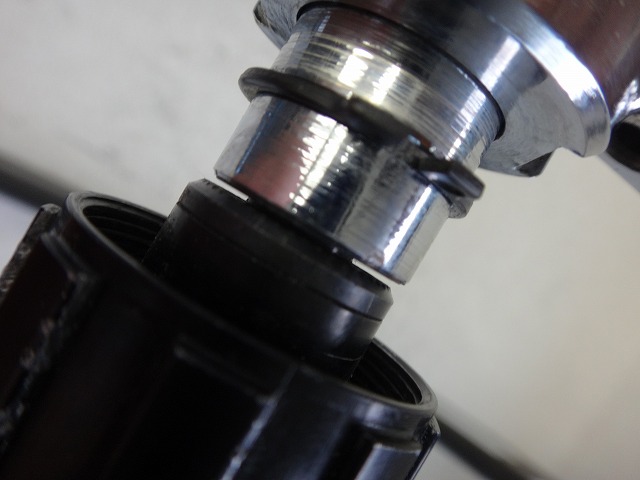
↑there was a gap like this.
The rim was shifted toward the drive side.
The front wheel wasn't like that, but
the rear wheel clearly had low spoke tension,
so I first tightened the drive side spokes, then
did the truing and centering by tightening the non-drive side.
I showed this to the customer, and at the maximum offset,
the gap between the hub and gauge exceeded the thickness of a one-yen coin.
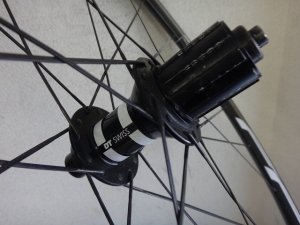
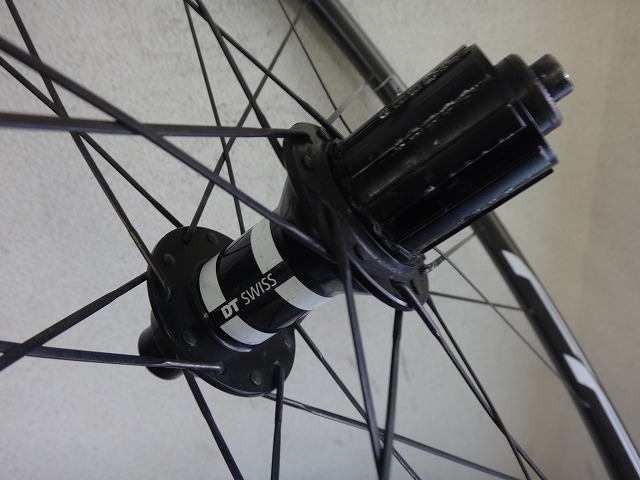
The hub color was almost the same as DT's 350, so I thought it might be a 240S, but
it turned out to actually be a 350.
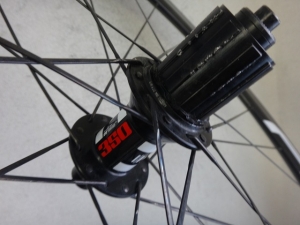
But the logo was red—it was a special edition FFWD hub.
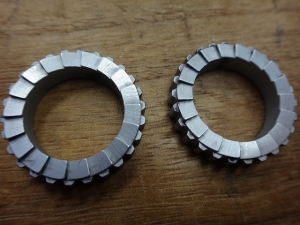
Since it's been used for about a year,
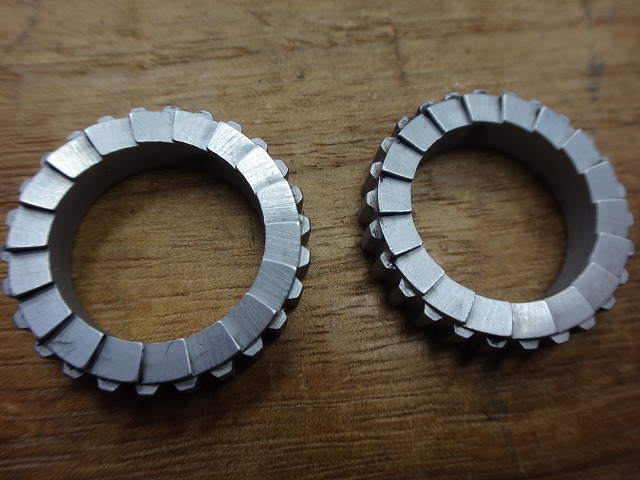
I took the opportunity to grease up the star ratchet,
and I noticed something interesting.
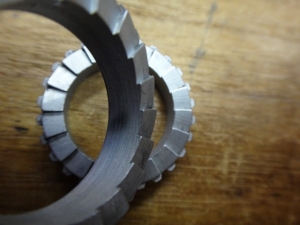
The ratchet components were of the type without lightening holes.
Previously, I'd written that maybe different years transitioned
from no lightening holes to having them,
but it seems that depending on the hub grade, this type still exists.
Because this F4R is a 2014 model handled by the Japanese distributor—
it's not an old bike.
With Shimano's freehub bodies,
there's a model called "SL" with fine lightening holes in the freehub body,
but even the non-SL freehub body has U-shaped
lightening holes in the ratchet components.
It's possible that only the ratchet that comes stock on the 350 hub
is the type without lightening holes.

The front wheel was perfectly centered with almost no runout.
The rear wheel had some centering issues, but I deliberately made it worse first, then corrected it while truing the wheel.
↑When I measured from the non-drive side and applied that measurement to the drive side,
↑there was a gap like this.
The rim was shifted toward the drive side.
The front wheel wasn't like that, but
the rear wheel clearly had low spoke tension,
so I first tightened the drive side spokes, then
did the truing and centering by tightening the non-drive side.
I showed this to the customer, and at the maximum offset,
the gap between the hub and gauge exceeded the thickness of a one-yen coin.
The hub color was almost the same as DT's 350, so I thought it might be a 240S, but
it turned out to actually be a 350.

But the logo was red—it was a special edition FFWD hub.
Since it's been used for about a year,
I took the opportunity to grease up the star ratchet,
and I noticed something interesting.
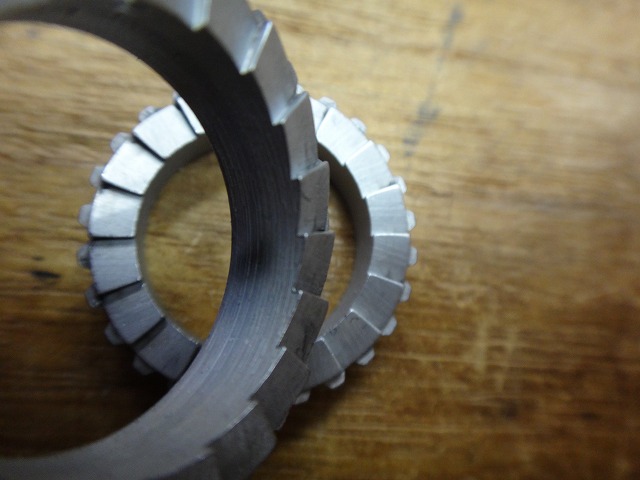
The ratchet components were of the type without lightening holes.
Previously, I'd written that maybe different years transitioned
from no lightening holes to having them,
but it seems that depending on the hub grade, this type still exists.
Because this F4R is a 2014 model handled by the Japanese distributor—
it's not an old bike.
With Shimano's freehub bodies,
there's a model called "SL" with fine lightening holes in the freehub body,
but even the non-SL freehub body has U-shaped
lightening holes in the ratchet components.
It's possible that only the ratchet that comes stock on the 350 hub
is the type without lightening holes.