A customer brought in a Spinergy REV-X wheel for me to work on.
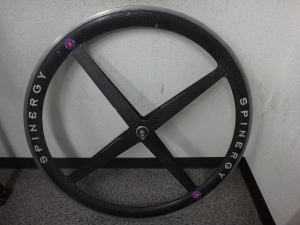
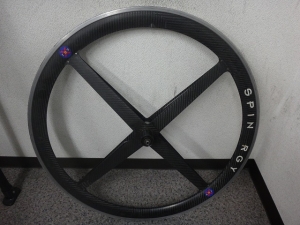
It's a wheel made with 8 blades (4 pairs) in a tension structure.
(The MTB version of this has 12 blades (6 pairs))
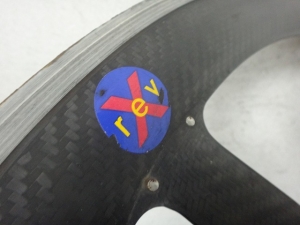
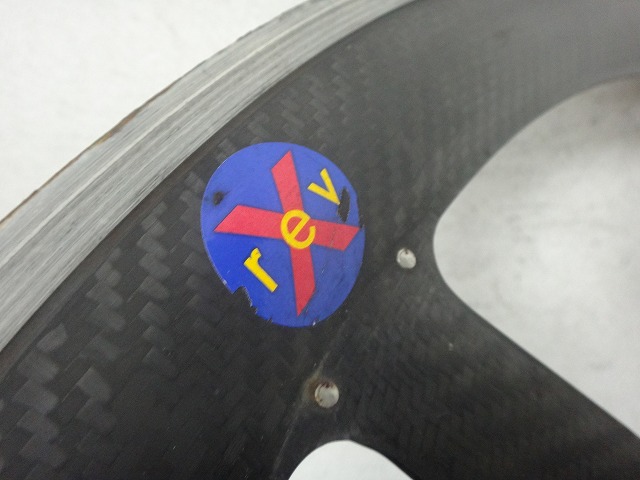
This is an early model, and later they started putting large triangular stickers on the blades, but this model was basically divided into three variants: the one with a blue sticker was called "Standard," the one with reinforced blades and a red sticker was called "Super Stiff," and the one with lightweight hub axles (※) and a yellow sticker was called "Extra Lite." Then finally they released a unified spec version with Extra Lite hub axles and Super Stiff blades.
※: The front hub has an aluminum axle, the rear hub has a titanium axle.
I was going to write "Extra Lite" as "Ekisutora Raito," but since the model name is XtraLite and not ExtraLite, I went with Extra.
Of course, you can't true this wheel, but the customer asked me to do whatever inspections I could.
There was slight lateral runout at one spot on both the front and rear, but given the age of the wheel, that's quite minimal.
The front wheel center was slightly off, but there's nothing that can be done about that.
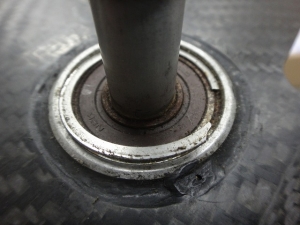
Starting with the front wheel—if you were to replace the bearings or axle, you'd remove this snap ring.
There's a notch on one end of the snap ring for easy access.
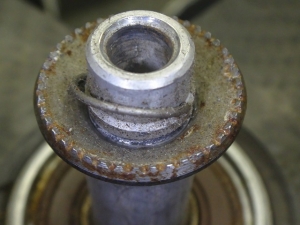
The end nut has a C-clip snap ring fitted into it, and by lifting it up you can remove it.
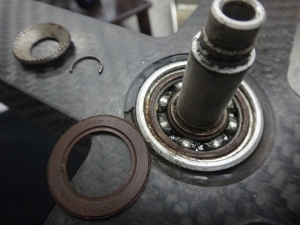
Since we're just greasing the bearings, technically you don't need to remove either of them, but I'm showing it for reference.
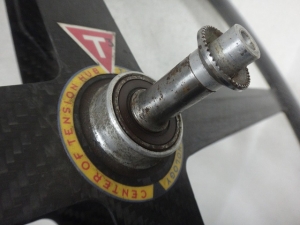
On the rear hub it says "Center of Tension Hub," but that simply means there's no dish.
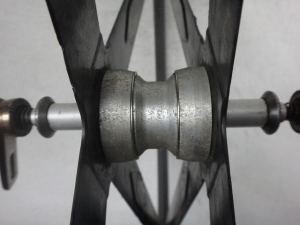
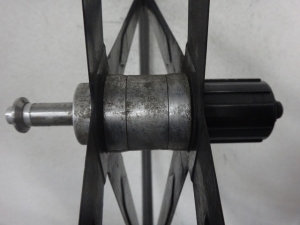
↑The front hub is also narrow-flange, but the rear hub flange width might be the narrowest among tension-structure rear wheels (excluding Batton and disc designs).
Most narrow-flange hubs don't have enough space to mount a freewheel body on the anti-freewheel side (regardless of whether anyone actually does it), but this hub actually has the clearance to do it if you wanted to.
I used to think my homemade double-freewheel hub was the narrowest-flange rear hub I'd seen, but this one might actually be narrower.
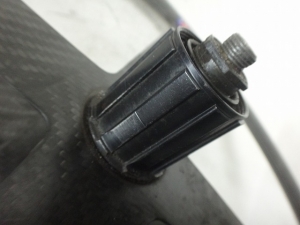
For the rear hub, this one uses a Shimano freebody.
Based on when it came out, I think it's for 8-speed, but it works up to 10-speed.
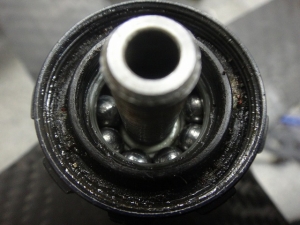
Remove the right end nut
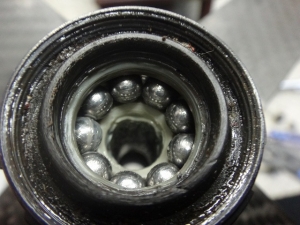
and pull the axle out toward the anti-freewheel side—it looks like this. The bearing condition is excellent.
To remove the freebody from here, you loosen the hollow bolt, but only the original 7400-series freehubs require a special tool. Later hollow bolts can be removed with a 10mm or 12mm Allen key.
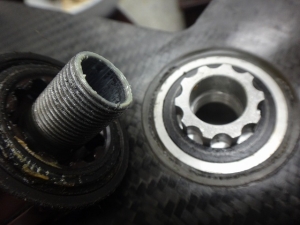
It has the same spline as Shimano hubs. There's also a washer on the freebody to prevent end-play (easy to see because it's black).
This structure is basically the same from the 7800-series through the 9000-series. There was planned obsolescence in changing the spline shape (→here).
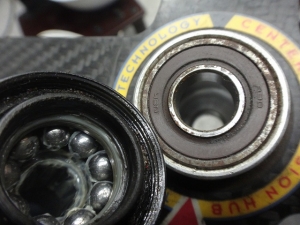
The anti-freewheel side is a cartridge bearing, the freewheel side is large loose ball bearings. It's strange that this didn't cause more problems back then.
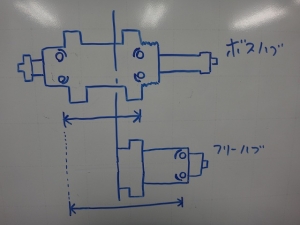
The biggest reason Shimano invented the freebody hub was "to increase the distance between bearings." (Not "to reduce weight"—using a lightweight freewheel gear would have been lighter than the freebody hubs plus cassette sprockets of that era.)
Since the concept was an extension of boss hubs, there's only one bearing on each side, and when you remove the freebody you can't spin it in the "front wheel with dish" state. Current hubs have the same structure except the anti-freewheel side uses a retainer-style bearing instead of loose balls.
It works trouble-free because both sides use angular contact bearings with reasonably large ball diameters.
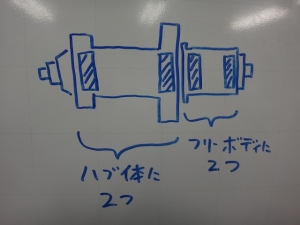
↑In typical modern freehubs, there's one bearing each on the left and right of the hub body and one on each end of the freebody—4 bearings total. Usually these are cartridge-style radial bearings, but with Campagnolo only the hub body bearings are angular contact retainer bearings. As an exception, some manufacturers use angular contact cartridge-style bearings on the hub body to allow fine-tuning of ball seating. With these hubs, it's possible to spin them as a bearing-less hub even with the freebody removed. With radial bearings alone, if you don't have 4 positioned as shown in the diagram, the bearings apparently wear out too quickly, so it's difficult to reduce the number. Alchemy made a hub with very wide bearing width—nearly the full hub width—and just 3 bearings, but unfortunately it had to be recalled.
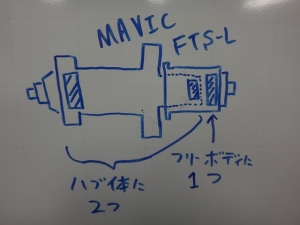
With Mavic, there are 3 bearings, but the freewheel-side bearing on the hub body is pushed all the way out. Also, I forgot to draw it in the diagram, but there's a rubber seal ring wedged between the freebody and hub body. Like a car's partially-engaged clutch, it's constantly rubbing. The reason the freebody oil (not grease) doesn't leak despite its low viscosity, and why the rear wheel spins the crank via the chain when the wheel is lifted—both are due to this contact. Since the freebody acts like a fixed gear when you're pedaling smoothly, they apparently don't worry about this friction. It might be that the seal ring contact acts as a bushing rather than a bearing, which is why 3 bearings work.
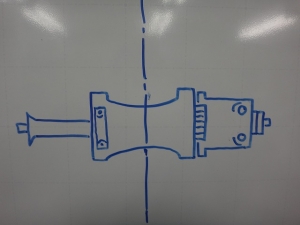
Thinking about it that way, it's strange that this Spinergy hub—with a cartridge bearing (narrow, small ball diameter) on the left side and only 2 bearing locations—managed to work with relatively few issues back in the day.Though I have seen them get sloppy.
My double-freewheel hub is configured with two of the right halves of the diagram joined together, so regardless of the spoke characteristics from the narrow flanges, the bearing width is super-wide with large ball diameters and angular contact, so I'm not worried about that aspect.
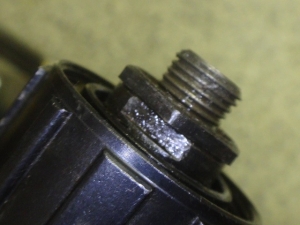
The double nut on the freewheel side is for ball seating adjustment, so it takes two hub wrenches. I'm not sure if this was original Shimano spec or Spinergy's own thinking, but I'd guess the latter.
Edit: I check for typos and fix grammar immediately after posting, but even at this hour, this entry already got 3 applause. Don't stay up late reading this crappy blog.
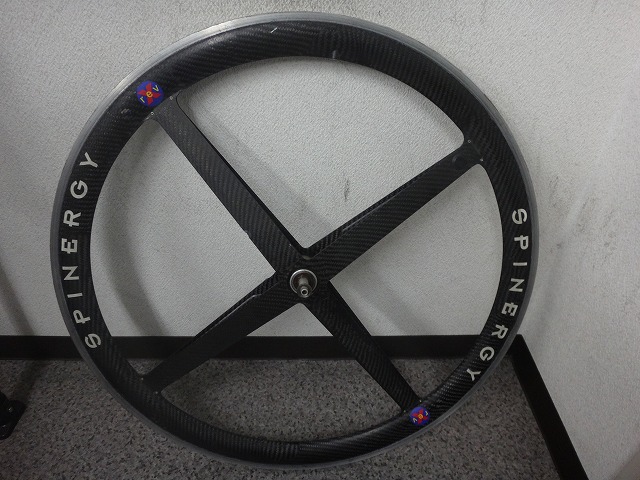
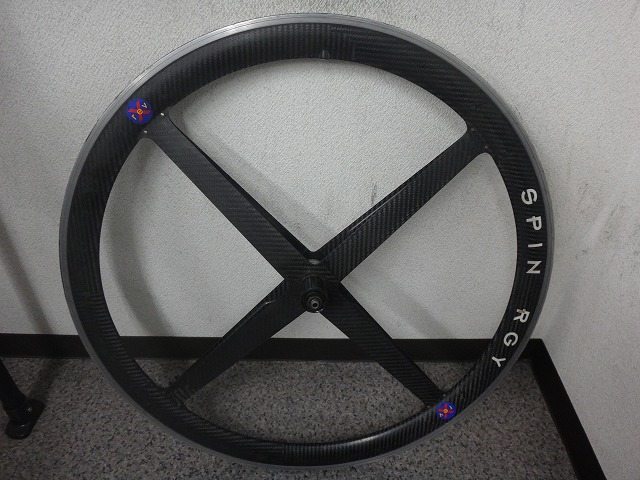
It's a wheel made with 8 blades (4 pairs) in a tension structure.
(The MTB version of this has 12 blades (6 pairs))
This is an early model, and later they started putting large triangular stickers on the blades, but this model was basically divided into three variants: the one with a blue sticker was called "Standard," the one with reinforced blades and a red sticker was called "Super Stiff," and the one with lightweight hub axles (※) and a yellow sticker was called "Extra Lite." Then finally they released a unified spec version with Extra Lite hub axles and Super Stiff blades.
※: The front hub has an aluminum axle, the rear hub has a titanium axle.
I was going to write "Extra Lite" as "Ekisutora Raito," but since the model name is XtraLite and not ExtraLite, I went with Extra.
Of course, you can't true this wheel, but the customer asked me to do whatever inspections I could.
There was slight lateral runout at one spot on both the front and rear, but given the age of the wheel, that's quite minimal.
The front wheel center was slightly off, but there's nothing that can be done about that.

Starting with the front wheel—if you were to replace the bearings or axle, you'd remove this snap ring.
There's a notch on one end of the snap ring for easy access.
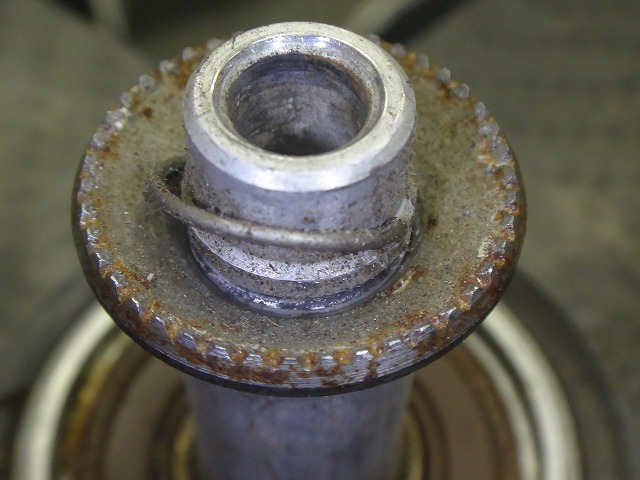
The end nut has a C-clip snap ring fitted into it, and by lifting it up you can remove it.
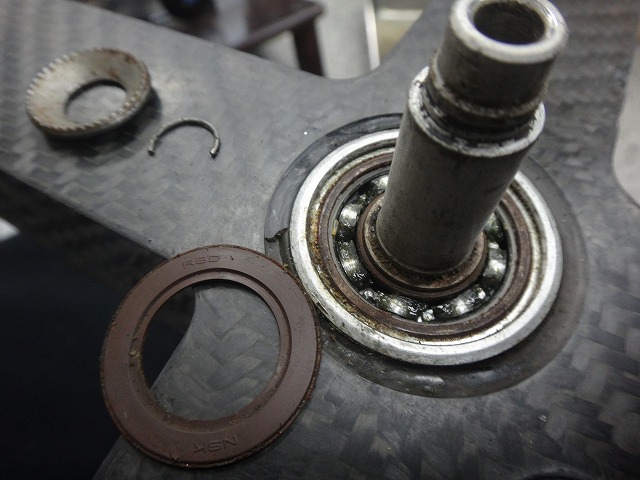
Since we're just greasing the bearings, technically you don't need to remove either of them, but I'm showing it for reference.

On the rear hub it says "Center of Tension Hub," but that simply means there's no dish.
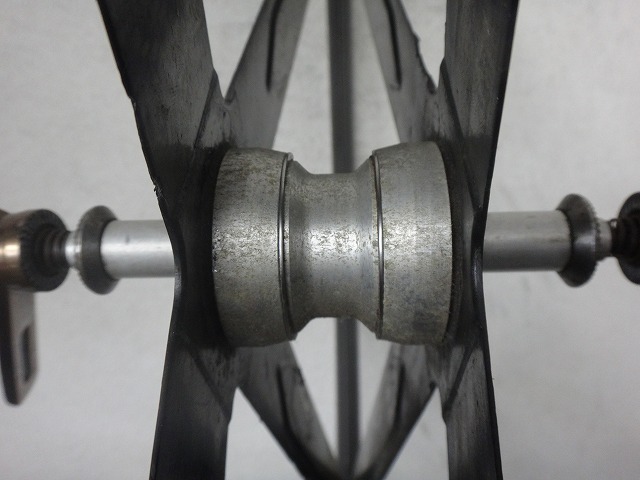
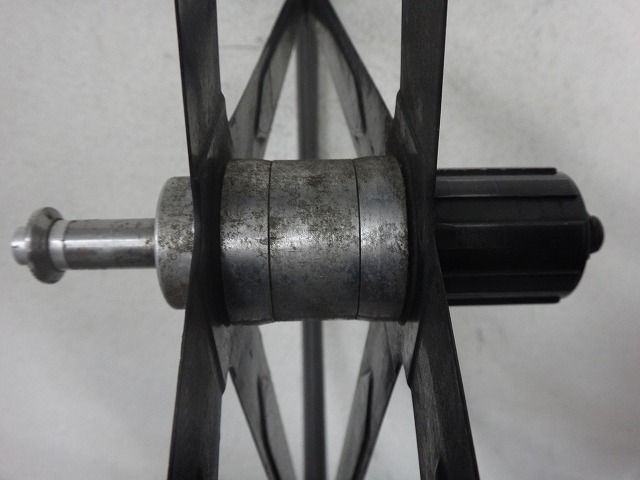
↑The front hub is also narrow-flange, but the rear hub flange width might be the narrowest among tension-structure rear wheels (excluding Batton and disc designs).
Most narrow-flange hubs don't have enough space to mount a freewheel body on the anti-freewheel side (regardless of whether anyone actually does it), but this hub actually has the clearance to do it if you wanted to.
I used to think my homemade double-freewheel hub was the narrowest-flange rear hub I'd seen, but this one might actually be narrower.
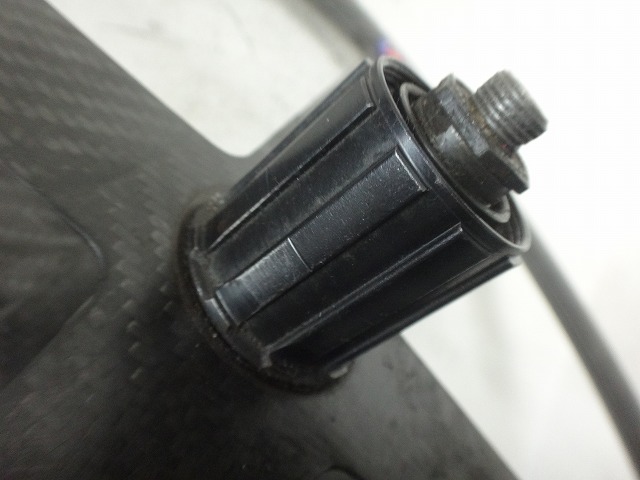
For the rear hub, this one uses a Shimano freebody.
Based on when it came out, I think it's for 8-speed, but it works up to 10-speed.
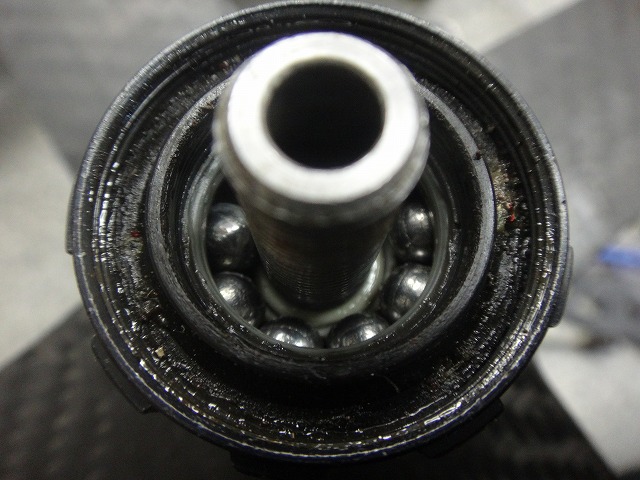
Remove the right end nut
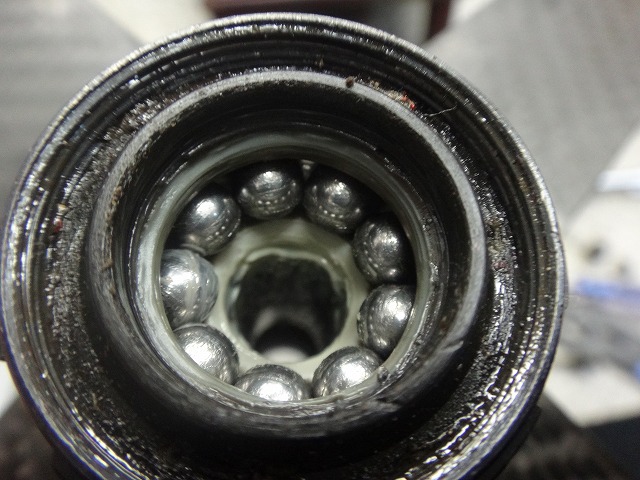
and pull the axle out toward the anti-freewheel side—it looks like this. The bearing condition is excellent.
To remove the freebody from here, you loosen the hollow bolt, but only the original 7400-series freehubs require a special tool. Later hollow bolts can be removed with a 10mm or 12mm Allen key.
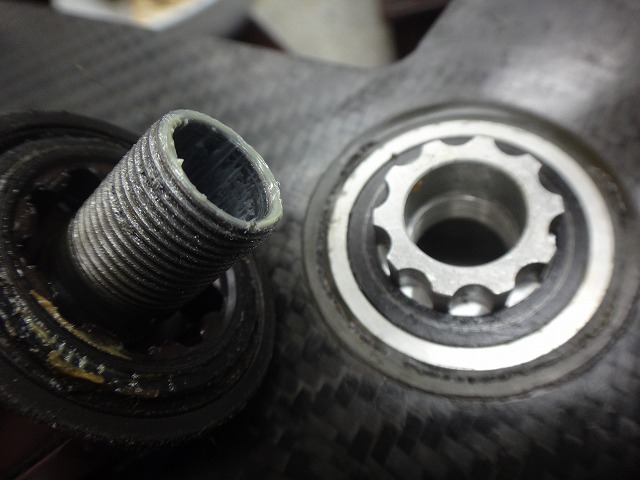
It has the same spline as Shimano hubs. There's also a washer on the freebody to prevent end-play (easy to see because it's black).
This structure is basically the same from the 7800-series through the 9000-series. There was planned obsolescence in changing the spline shape (→here).
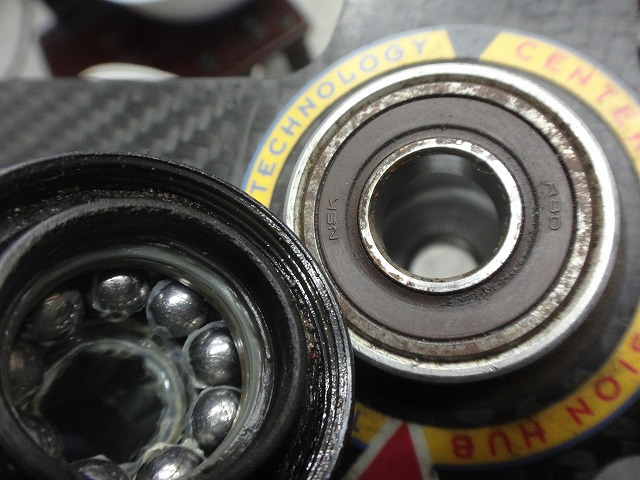
The anti-freewheel side is a cartridge bearing, the freewheel side is large loose ball bearings. It's strange that this didn't cause more problems back then.
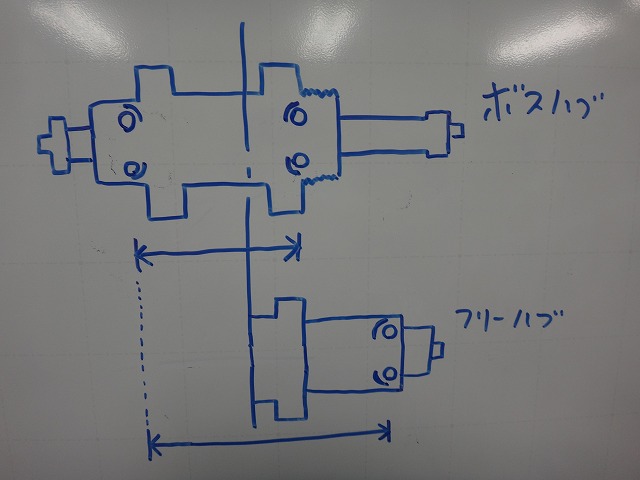
The biggest reason Shimano invented the freebody hub was "to increase the distance between bearings." (Not "to reduce weight"—using a lightweight freewheel gear would have been lighter than the freebody hubs plus cassette sprockets of that era.)
Since the concept was an extension of boss hubs, there's only one bearing on each side, and when you remove the freebody you can't spin it in the "front wheel with dish" state. Current hubs have the same structure except the anti-freewheel side uses a retainer-style bearing instead of loose balls.
It works trouble-free because both sides use angular contact bearings with reasonably large ball diameters.
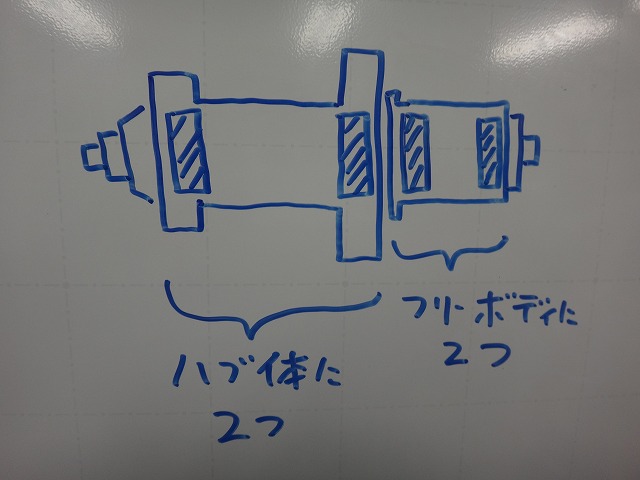
↑In typical modern freehubs, there's one bearing each on the left and right of the hub body and one on each end of the freebody—4 bearings total. Usually these are cartridge-style radial bearings, but with Campagnolo only the hub body bearings are angular contact retainer bearings. As an exception, some manufacturers use angular contact cartridge-style bearings on the hub body to allow fine-tuning of ball seating. With these hubs, it's possible to spin them as a bearing-less hub even with the freebody removed. With radial bearings alone, if you don't have 4 positioned as shown in the diagram, the bearings apparently wear out too quickly, so it's difficult to reduce the number. Alchemy made a hub with very wide bearing width—nearly the full hub width—and just 3 bearings, but unfortunately it had to be recalled.

With Mavic, there are 3 bearings, but the freewheel-side bearing on the hub body is pushed all the way out. Also, I forgot to draw it in the diagram, but there's a rubber seal ring wedged between the freebody and hub body. Like a car's partially-engaged clutch, it's constantly rubbing. The reason the freebody oil (not grease) doesn't leak despite its low viscosity, and why the rear wheel spins the crank via the chain when the wheel is lifted—both are due to this contact. Since the freebody acts like a fixed gear when you're pedaling smoothly, they apparently don't worry about this friction. It might be that the seal ring contact acts as a bushing rather than a bearing, which is why 3 bearings work.
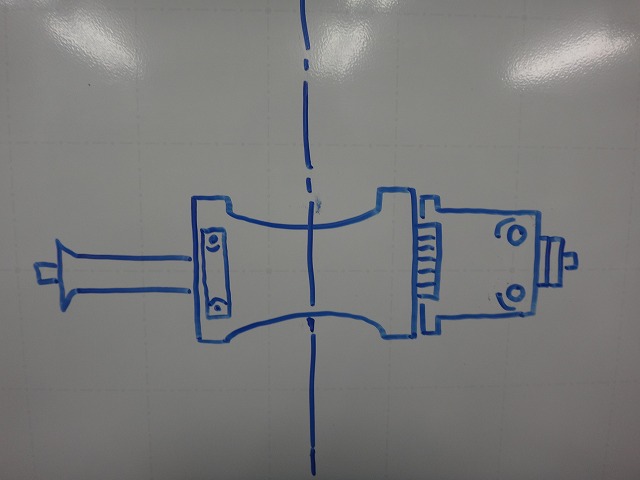
Thinking about it that way, it's strange that this Spinergy hub—with a cartridge bearing (narrow, small ball diameter) on the left side and only 2 bearing locations—managed to work with relatively few issues back in the day.
My double-freewheel hub is configured with two of the right halves of the diagram joined together, so regardless of the spoke characteristics from the narrow flanges, the bearing width is super-wide with large ball diameters and angular contact, so I'm not worried about that aspect.
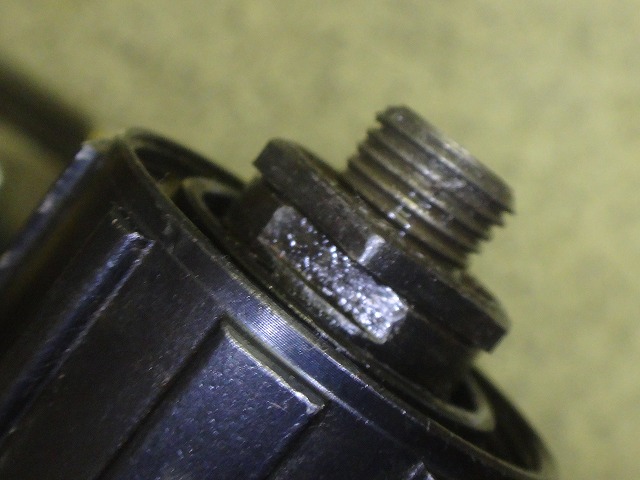
The double nut on the freewheel side is for ball seating adjustment, so it takes two hub wrenches. I'm not sure if this was original Shimano spec or Spinergy's own thinking, but I'd guess the latter.
Edit: I check for typos and fix grammar immediately after posting, but even at this hour, this entry already got 3 applause. Don't stay up late reading this crappy blog.