When building a wheel, you need to calculate spoke length,
and the information required for that is three things:
the rim's support length (the distance between the surfaces where the tire sits),
hub flange width, and hub flange diameter.
Today I'm writing about the left-right difference in rear hub flange width.
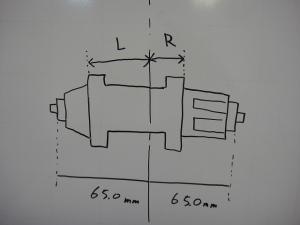
First, about flange width.
Flange width is the measurement from the outside of one flange to the outside of the opposite flange.
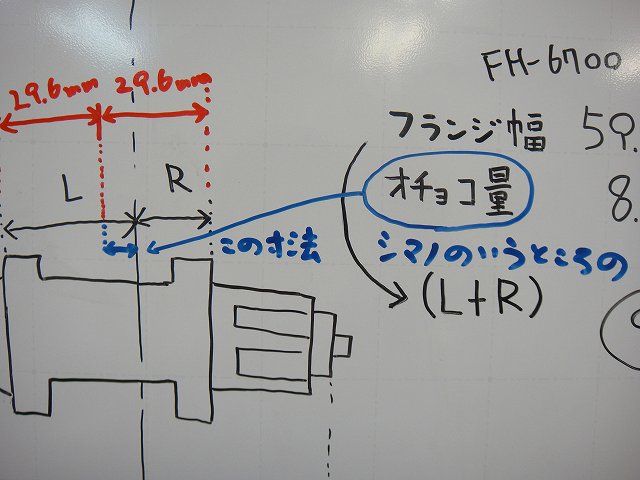
In the diagram above, I'm calling the distance from the hub's center to the right flange edge R,
and to the left flange edge L.
As a side note, the spoke length calculated from this is the length of inpoke spokes.
The spoke length of outpoke spokes strictly requires calculation using the dimension
to the inside of the flange.
In practice, the difference is within what's absorbed by the nipple thread length,
so you don't need to calculate two different spoke lengths from either flange.
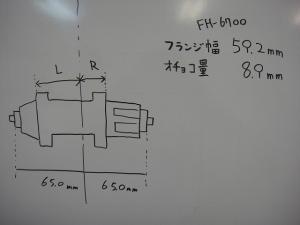
Taking Shimano's FH-6700 as an example.
In Shimano's catalog (more on this later), the FH-6700 is listed as
flange width 59.2 mm,
and ochoko amount 8.9 mm.

The flange width of 59.2 mm is the sum of L and R in the diagram above.
The ochoko amount is 8.9 mm, but which dimension is this?
We need to determine L and R from these two numbers, but
the definition of the term "ochoko amount" is unclear,
so actually you can't determine it from just this number.
Since I know the answer beforehand, I can work backwards from the answer
to calculate which dimension Shimano means by "ochoko amount".
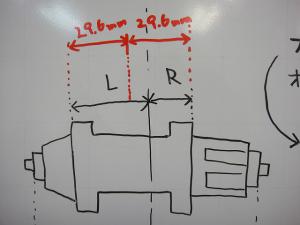
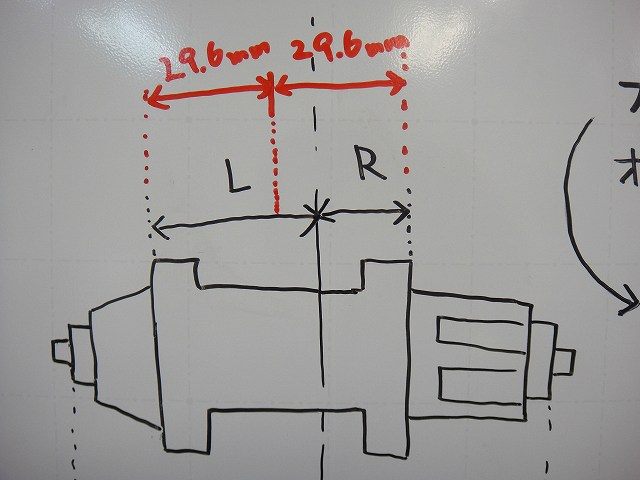
Before that. Let me mark the exact midpoint of the flange width (L + R).
Since it's half of 59.2 mm, that's 29.6 mm from the edge of the flange width.
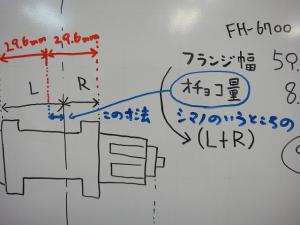
"Shimano's so-called ochoko amount" is the dimension of L minus 29.6 mm.
That's the blue line portion in the diagram above.
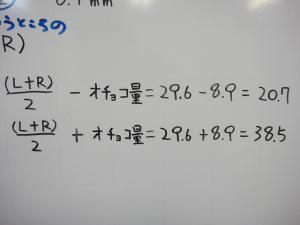
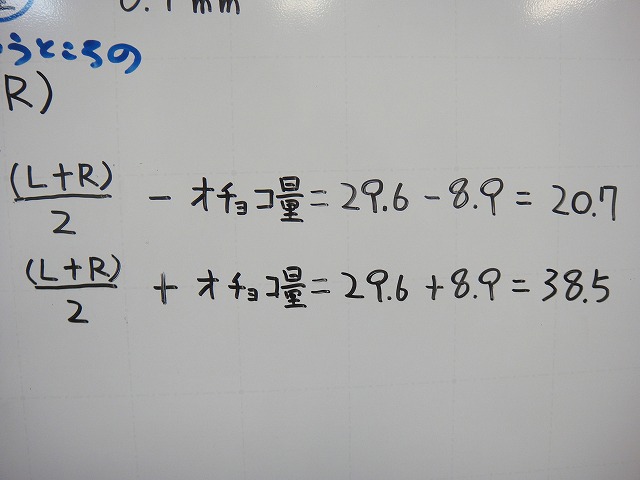
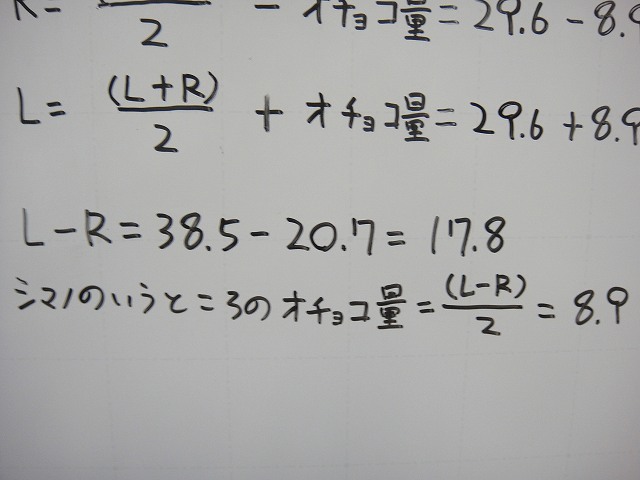
Half the flange width is (L + R) / 2,
and subtracting "Shimano's so-called ochoko amount" from that gives R,
while adding it gives L.
The calculation itself is straightforward, but is 8.9 mm, which Shimano calls ochoko amount,
really a number that should be called ochoko amount?
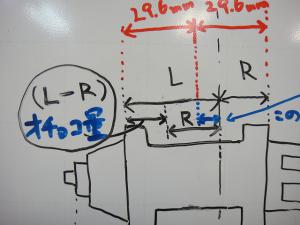
Ochoko amount originally came about because the freewheel side flange
had to be moved toward the center due to the need to fit many sprockets on the rear right side.
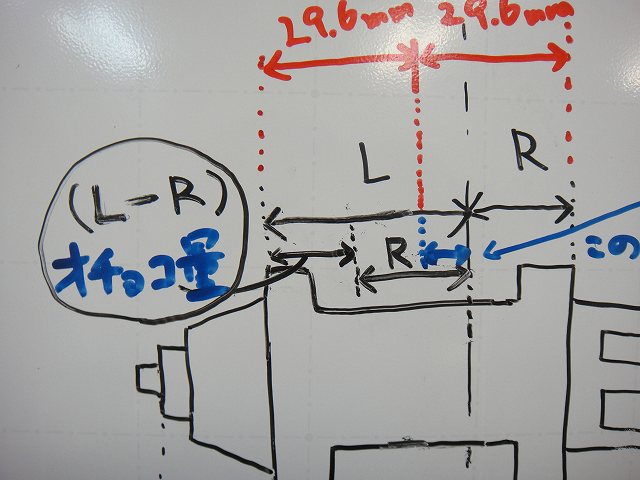
In that case, flange width always has L > R,
and L - R becomes a positive number.
I think "L - R" is what the term "ochoko amount" actually refers to.
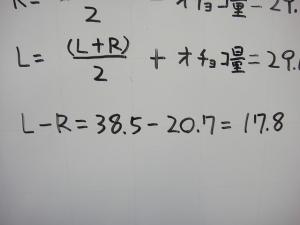
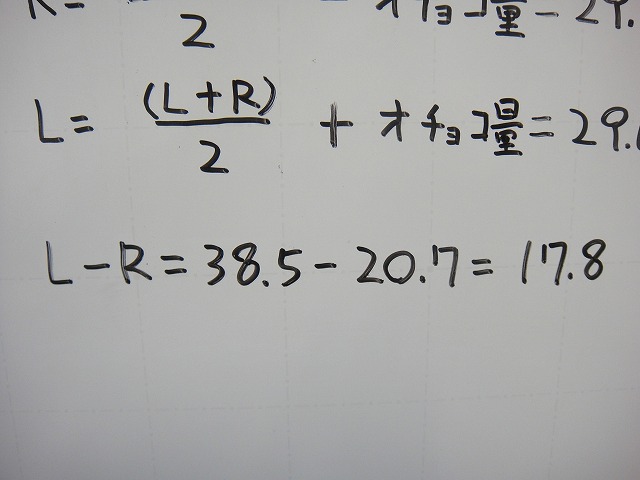
Now, let me calculate L - R. Since we know the values of L and R,
it's simple. It's 17.8.

17.8 mm is exactly double the "ochoko amount" as Shimano calls it.
Shimano's so-called ochoko amount is (L - R) / 2.
Whether "ochoko amount" refers to (L - R) or (L - R) / 2,
as long as the definition is clear within the range being used, either works for calculating,

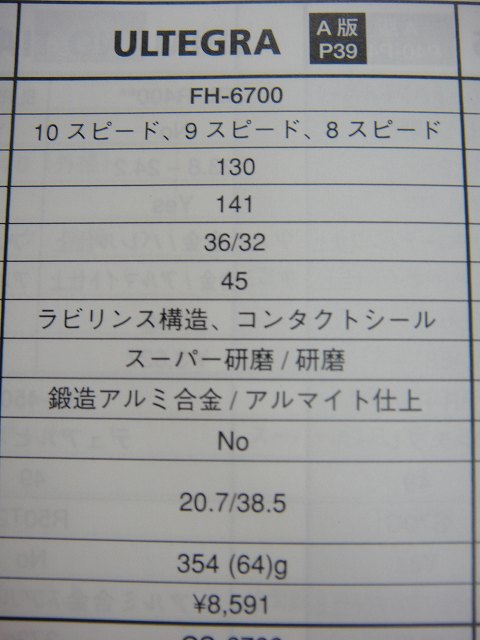
↑Shimano used to list the R and L dimensions themselves until 2011.
(The 20.7 / 38.5 in the table above is that)
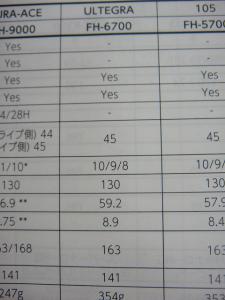
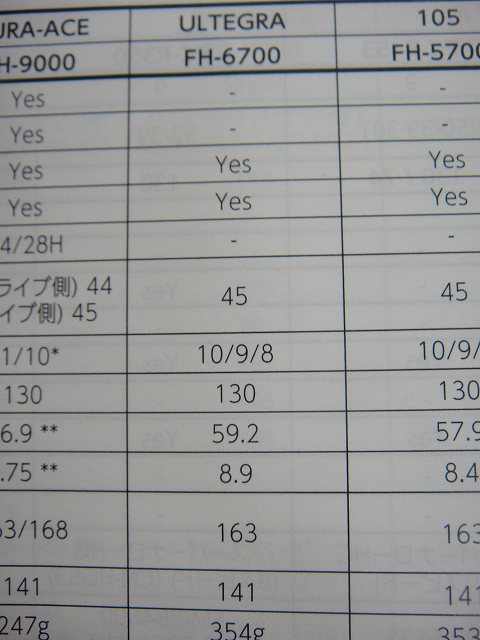
↑This is from the 2013 catalog, and
from 2012 onwards they switched to listing flange width and (so-called) ochoko amount.
(The 59.2 and 8.9 in the table above are that)
Why did they change to such a confusing notation?
The larger the ochoko amount, the greater the left-right difference in spoke tension,
but if the right flange width is the same, a wider flange width means
the wheel's lateral stiffness increases.
The left-right difference in spoke tension can be compensated for depending on how you build the wheel,
but the lack of lateral stiffness caused by narrow flange width cannot be helped,
something I've mentioned repeatedly.
Basically, I think a rear hub with larger ochoko amount is better.
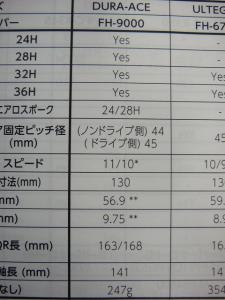
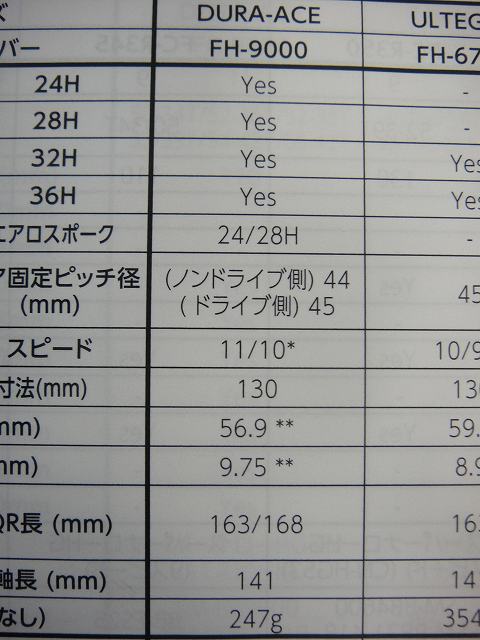
The FH-9000 has an ochoko amount of 9.75 mm compared to the FH-6700's 8.9 mm,
so that's increased. At first glance this seems welcome, but
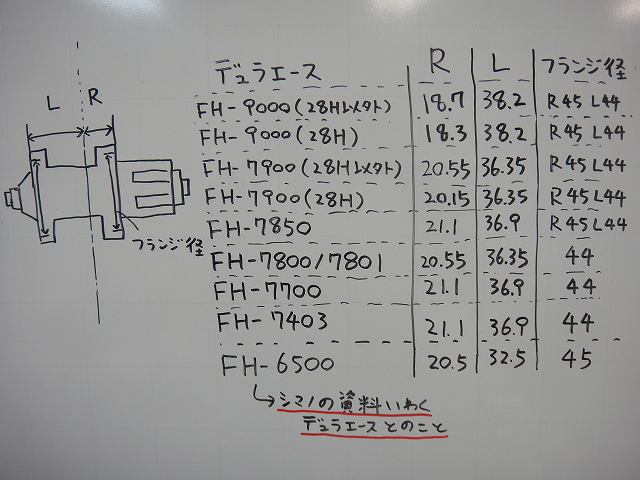
let me actually calculate the R and L widths.
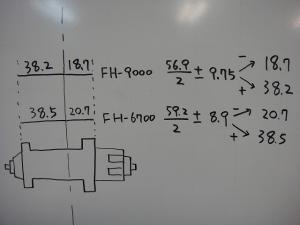
↑Actually, the FH-6700 has a wider left flange.
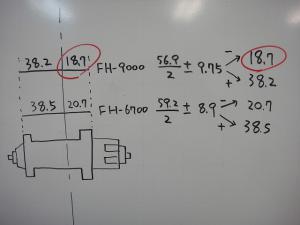
↑This freewheel side 18.7 mm is the troublemaker.
Up to 10-speed, most hubs are around 21 mm, but
for the conversion to 11-speed they tightened the freewheel side flange by about 2 mm,
so the apparent ochoko amount has only increased
while the actual flange width has narrowed.
Is it cynical to think that to obscure this,
Shimano stopped listing R and L numbers directly
and switched to listing flange width and (so-called) ochoko amount?
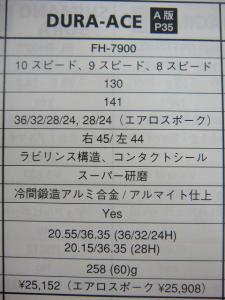
Separately, the FH-7900 hub in 28-hole only
has a right flange that's 0.4 mm narrower.
There's no obvious reason for narrowing it by 0.4 mm,
but what's also strange is that 24-hole is the same dimension as 32-hole and 36-hole,
while only 28-hole is different.
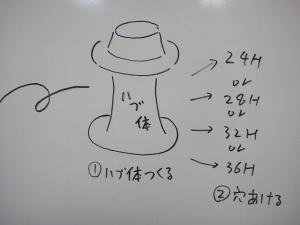
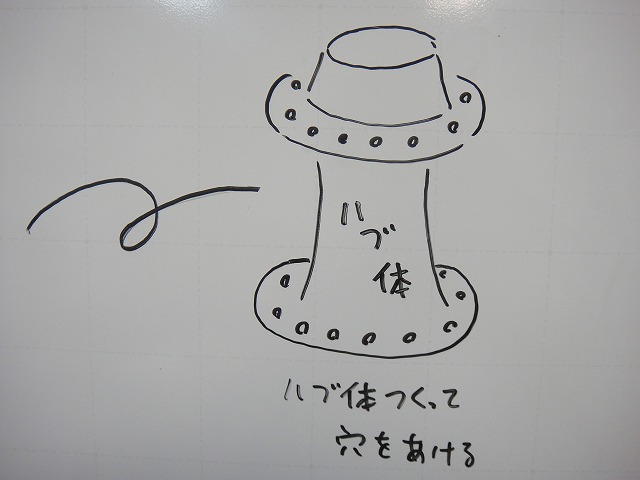
This is speculation, but in manufacturing the hub shell,
rather than "make the hub shell" → "drill the holes later as needed",
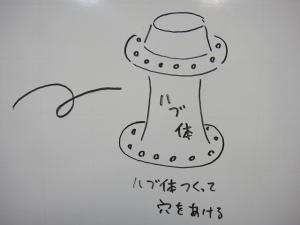
it might be that they "drill the holes while making the hub shell".
When making 28-hole hub shells, they might have
mass-produced them with a 0.4 mm difference from other spoke counts on the freewheel side.
It would cost less to note it in the catalog than to remake all those hub shells.
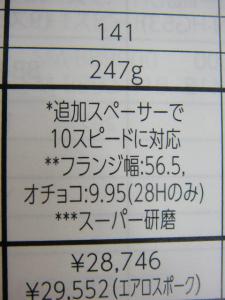
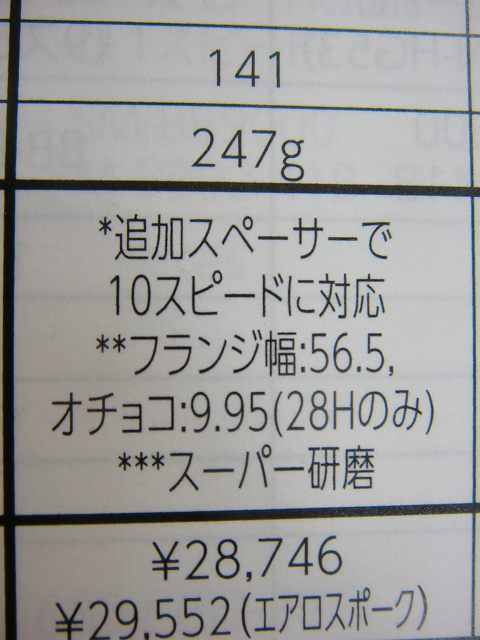
The FH-9000 also differs in 28-hole only.
It's listed as flange width 56.5 mm, (so-called) ochoko amount 9.95 mm,
but calculating it,
FH-9000 (28-hole) is R = 18.3 mm, L = 38.2 mm.
FH-9000 (other than 28-hole) is R = 18.7 mm, L = 38.2 mm, so
the FH-9000 appears to be "FH-7900 hub shell finished differently with 11-speed freewheel attached".
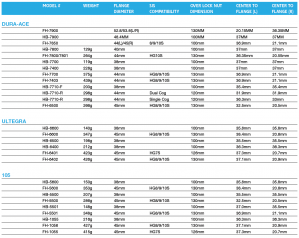
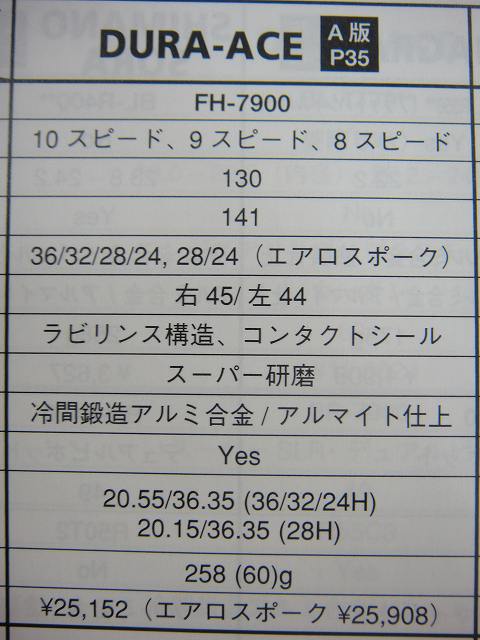
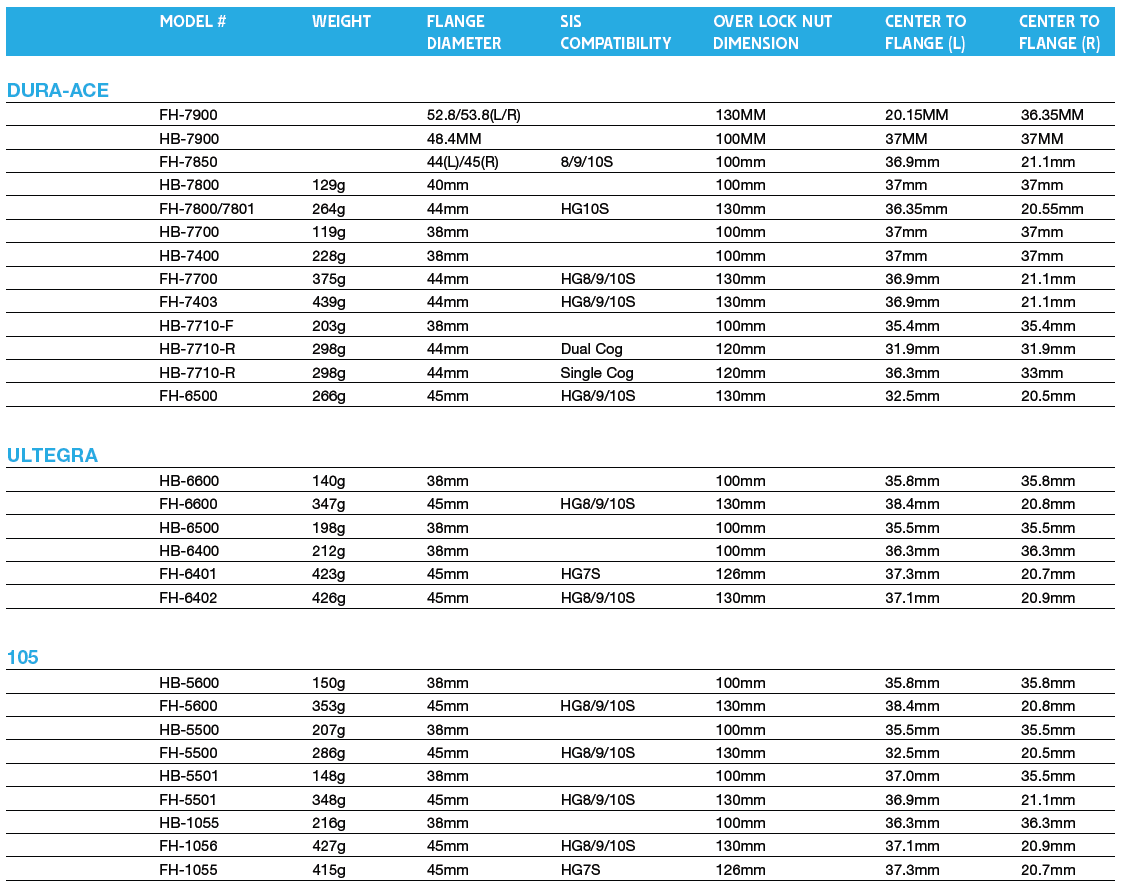
↑This is an excerpt from Shimano hub dimension data,
covering Dura-Ace, Ultegra, and 105.
It only goes up to the 7900 era so it's a bit old, but
I was looking for this to judge "lateral-stiffness-high hubs" not by flange width
but by how much the left flange protrudes.
The full document is a PDF. For details → here
I included the link to show it's official primary source material from Shimano.
The link might break eventually, which is why I captured it as an image above.
This one is pretty messed up.
・FH-7900 flange width is backwards
It shows L = 20.15 mm, R = 36.35 mm, but that can't be right.
・FH-7900 and HB-7900 flange diameter is wrong
FH-7900 shows left 52.8 mm, right 53.8 mm
and HB-7900 shows both left and right 48.4 mm,
but that's between Dura-Ace's large-flange track hub and road hub dimensions. Impossible.
・The FH-6500 believed to be an Ultegra hub is in the Dura-Ace group
A new discovery.
・105 hub 5500 and its successor 5501
have different hub dimensions, but
HB-5500 (207g) → HB-5501 (148g),
FH-5500 (286g) → FH-5501 (348g)
according to the weights listed.
I checked and the actual correct numbers are that 5500 is also front 148g, rear 348g.
Since there are so many errors, I won't trust this, and I want to extract
hub flange widths from a more reliable catalog.
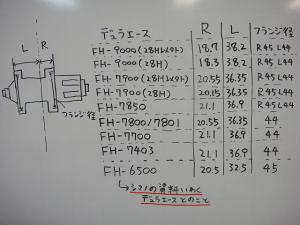
↑Dura-Ace
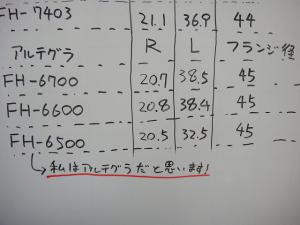
↑Ultegra
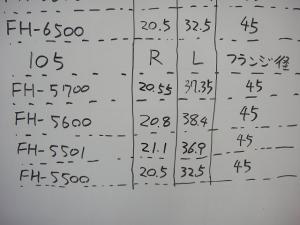
↑105
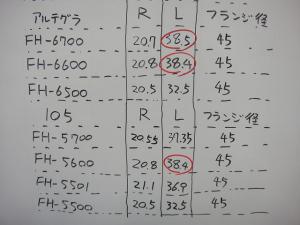
Right flange width of 20 mm or more and left flange width of 38 mm or more
is only these three in the diagrams above.
Of these, FH-6600 produced both 24-hole and 28-hole versions—
what an excellent hub—
but the nearly identical FH-6700
only comes in 32-hole and 36-hole.
Nomulabo wheel no. 33 is planned to use the 6700 hub.

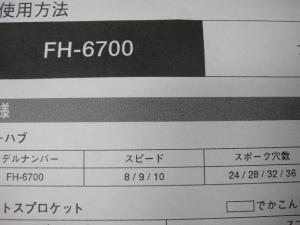
↑The FH-6700 instructions are apparently copy-pasted from the FH-6600;
they forgot to remove the 24-hole and 28-hole listings. Man, that bugs me.
If FH-6700 came in 24-hole, I'd buy 10 or 20 of them.
Regardless of spoke count options,
the FH-6700 is one of Shimano's rear hubs with the most protruding left flange in their history
is what I wanted to write about, which is why I've been researching all this.
and the information required for that is three things:
the rim's support length (the distance between the surfaces where the tire sits),
hub flange width, and hub flange diameter.
Today I'm writing about the left-right difference in rear hub flange width.

First, about flange width.
Flange width is the measurement from the outside of one flange to the outside of the opposite flange.
In the diagram above, I'm calling the distance from the hub's center to the right flange edge R,
and to the left flange edge L.
As a side note, the spoke length calculated from this is the length of inpoke spokes.
The spoke length of outpoke spokes strictly requires calculation using the dimension
to the inside of the flange.
In practice, the difference is within what's absorbed by the nipple thread length,
so you don't need to calculate two different spoke lengths from either flange.
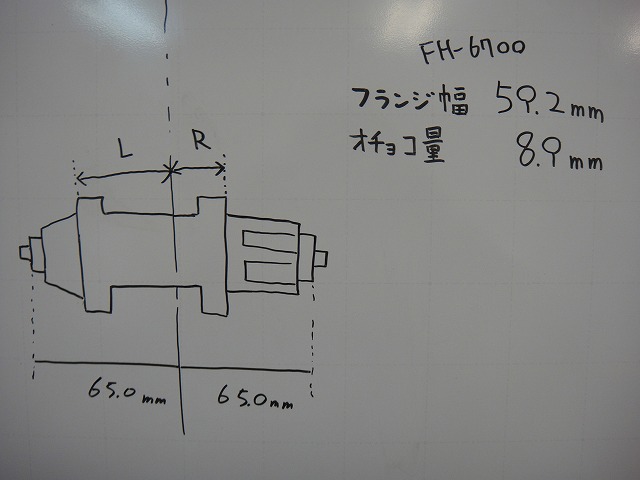
Taking Shimano's FH-6700 as an example.
In Shimano's catalog (more on this later), the FH-6700 is listed as
flange width 59.2 mm,
and ochoko amount 8.9 mm.
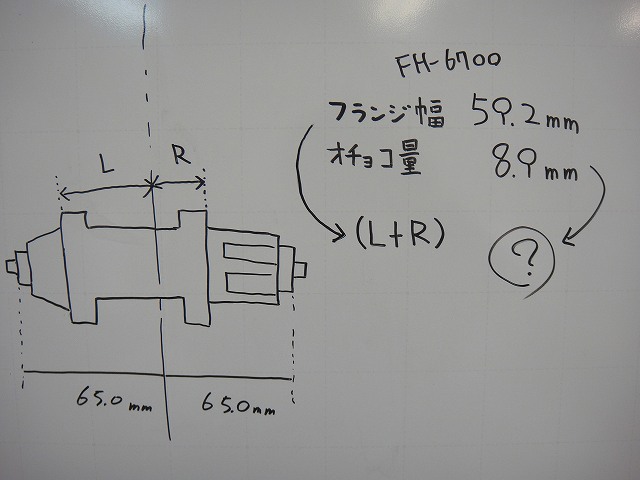
The flange width of 59.2 mm is the sum of L and R in the diagram above.
The ochoko amount is 8.9 mm, but which dimension is this?
We need to determine L and R from these two numbers, but
the definition of the term "ochoko amount" is unclear,
so actually you can't determine it from just this number.
Since I know the answer beforehand, I can work backwards from the answer
to calculate which dimension Shimano means by "ochoko amount".
Before that. Let me mark the exact midpoint of the flange width (L + R).
Since it's half of 59.2 mm, that's 29.6 mm from the edge of the flange width.
"Shimano's so-called ochoko amount" is the dimension of L minus 29.6 mm.
That's the blue line portion in the diagram above.
Half the flange width is (L + R) / 2,
and subtracting "Shimano's so-called ochoko amount" from that gives R,
while adding it gives L.
The calculation itself is straightforward, but is 8.9 mm, which Shimano calls ochoko amount,
really a number that should be called ochoko amount?
Ochoko amount originally came about because the freewheel side flange
had to be moved toward the center due to the need to fit many sprockets on the rear right side.
In that case, flange width always has L > R,
and L - R becomes a positive number.
I think "L - R" is what the term "ochoko amount" actually refers to.
Now, let me calculate L - R. Since we know the values of L and R,
it's simple. It's 17.8.
17.8 mm is exactly double the "ochoko amount" as Shimano calls it.
Shimano's so-called ochoko amount is (L - R) / 2.
Whether "ochoko amount" refers to (L - R) or (L - R) / 2,
as long as the definition is clear within the range being used, either works for calculating,
↑Shimano used to list the R and L dimensions themselves until 2011.
(The 20.7 / 38.5 in the table above is that)
↑This is from the 2013 catalog, and
from 2012 onwards they switched to listing flange width and (so-called) ochoko amount.
(The 59.2 and 8.9 in the table above are that)
Why did they change to such a confusing notation?
The larger the ochoko amount, the greater the left-right difference in spoke tension,
but if the right flange width is the same, a wider flange width means
the wheel's lateral stiffness increases.
The left-right difference in spoke tension can be compensated for depending on how you build the wheel,
but the lack of lateral stiffness caused by narrow flange width cannot be helped,
something I've mentioned repeatedly.
Basically, I think a rear hub with larger ochoko amount is better.
The FH-9000 has an ochoko amount of 9.75 mm compared to the FH-6700's 8.9 mm,
so that's increased. At first glance this seems welcome, but
let me actually calculate the R and L widths.
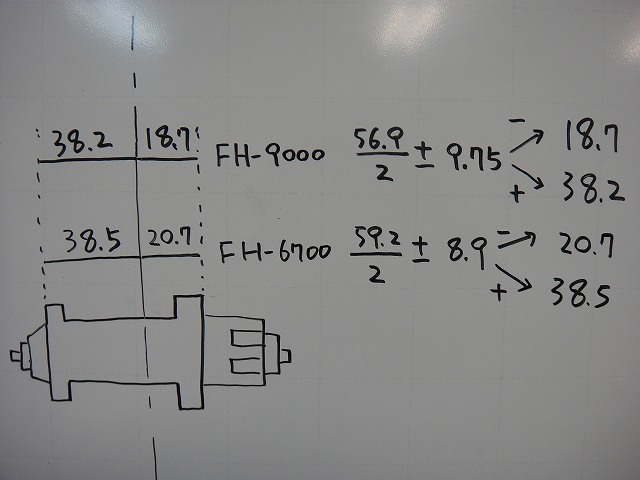
↑Actually, the FH-6700 has a wider left flange.
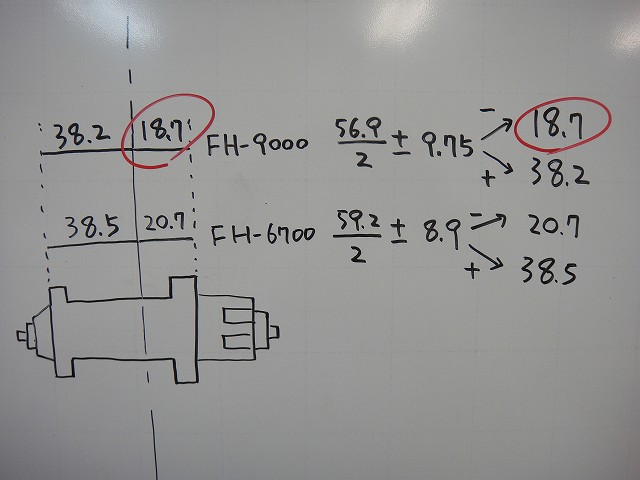
↑This freewheel side 18.7 mm is the troublemaker.
Up to 10-speed, most hubs are around 21 mm, but
for the conversion to 11-speed they tightened the freewheel side flange by about 2 mm,
so the apparent ochoko amount has only increased
while the actual flange width has narrowed.
Is it cynical to think that to obscure this,
Shimano stopped listing R and L numbers directly
and switched to listing flange width and (so-called) ochoko amount?
Separately, the FH-7900 hub in 28-hole only
has a right flange that's 0.4 mm narrower.
There's no obvious reason for narrowing it by 0.4 mm,
but what's also strange is that 24-hole is the same dimension as 32-hole and 36-hole,
while only 28-hole is different.
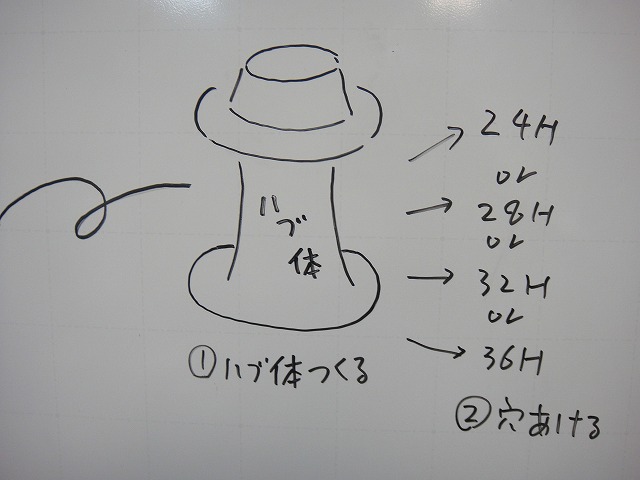
This is speculation, but in manufacturing the hub shell,
rather than "make the hub shell" → "drill the holes later as needed",
it might be that they "drill the holes while making the hub shell".
When making 28-hole hub shells, they might have
mass-produced them with a 0.4 mm difference from other spoke counts on the freewheel side.
It would cost less to note it in the catalog than to remake all those hub shells.
The FH-9000 also differs in 28-hole only.
It's listed as flange width 56.5 mm, (so-called) ochoko amount 9.95 mm,
but calculating it,
FH-9000 (28-hole) is R = 18.3 mm, L = 38.2 mm.
FH-9000 (other than 28-hole) is R = 18.7 mm, L = 38.2 mm, so
the FH-9000 appears to be "FH-7900 hub shell finished differently with 11-speed freewheel attached".
↑This is an excerpt from Shimano hub dimension data,
covering Dura-Ace, Ultegra, and 105.
It only goes up to the 7900 era so it's a bit old, but
I was looking for this to judge "lateral-stiffness-high hubs" not by flange width
but by how much the left flange protrudes.
The full document is a PDF. For details → here
I included the link to show it's official primary source material from Shimano.
The link might break eventually, which is why I captured it as an image above.
This one is pretty messed up.
・FH-7900 flange width is backwards
It shows L = 20.15 mm, R = 36.35 mm, but that can't be right.
・FH-7900 and HB-7900 flange diameter is wrong
FH-7900 shows left 52.8 mm, right 53.8 mm
and HB-7900 shows both left and right 48.4 mm,
but that's between Dura-Ace's large-flange track hub and road hub dimensions. Impossible.
・The FH-6500 believed to be an Ultegra hub is in the Dura-Ace group
A new discovery.
・105 hub 5500 and its successor 5501
have different hub dimensions, but
HB-5500 (207g) → HB-5501 (148g),
FH-5500 (286g) → FH-5501 (348g)
according to the weights listed.
I checked and the actual correct numbers are that 5500 is also front 148g, rear 348g.
Since there are so many errors, I won't trust this, and I want to extract
hub flange widths from a more reliable catalog.
↑Dura-Ace
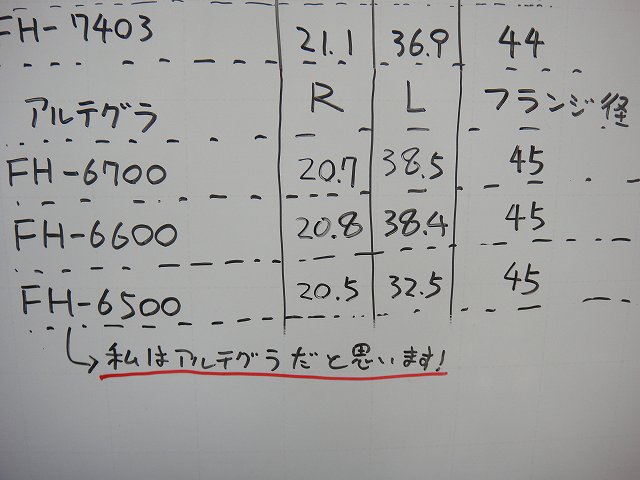
↑Ultegra
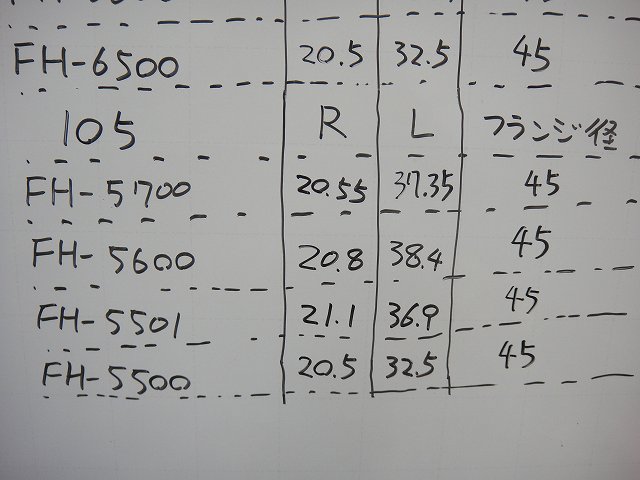
↑105
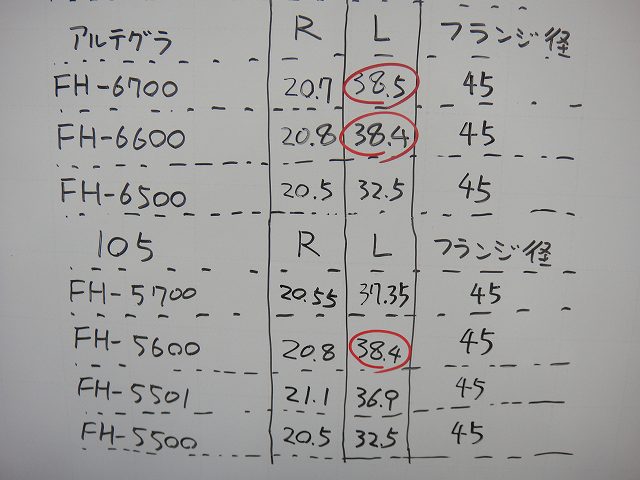
Right flange width of 20 mm or more and left flange width of 38 mm or more
is only these three in the diagrams above.
Of these, FH-6600 produced both 24-hole and 28-hole versions—
what an excellent hub—
but the nearly identical FH-6700
only comes in 32-hole and 36-hole.
Nomulabo wheel no. 33 is planned to use the 6700 hub.
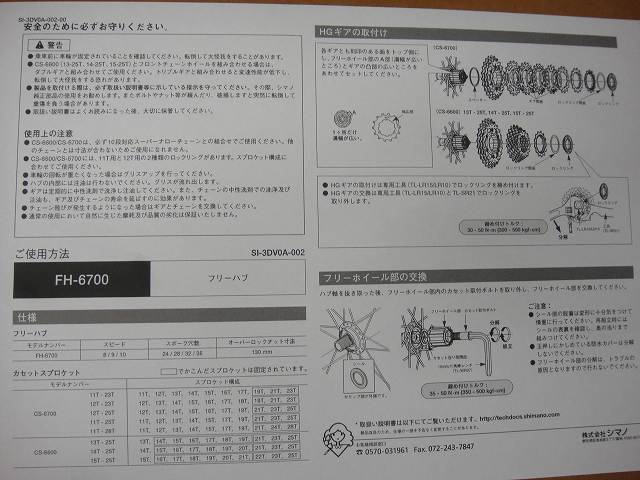
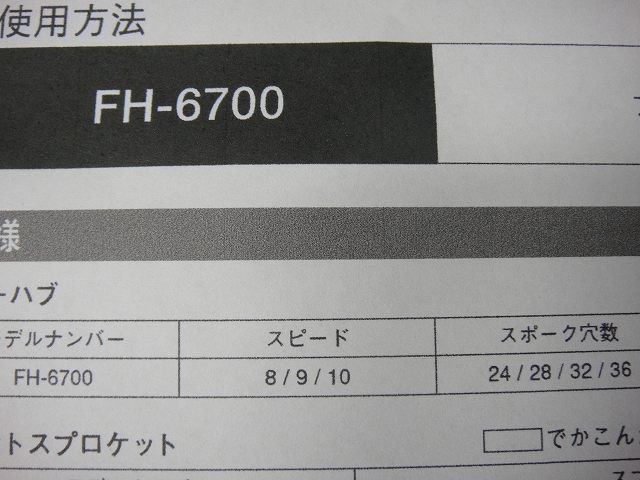
↑The FH-6700 instructions are apparently copy-pasted from the FH-6600;
they forgot to remove the 24-hole and 28-hole listings. Man, that bugs me.
If FH-6700 came in 24-hole, I'd buy 10 or 20 of them.
Regardless of spoke count options,
the FH-6700 is one of Shimano's rear hubs with the most protruding left flange in their history
is what I wanted to write about, which is why I've been researching all this.