Another wheel day (and so on).
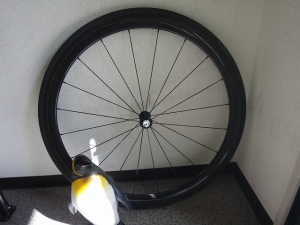
A customer brought in a front wheel with a carbon rim.
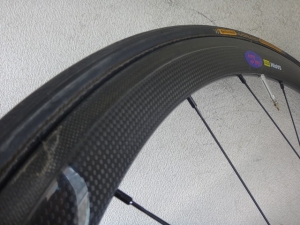
↑On the left side of the image, the brake zone is looking a bit rough.
It looks like it got deformed from buckling.
The customer wanted a rim replacement,
so we decided to rebuild it into a Nomu Lab Wheel #2 with a similar rim height.
Since we're switching from external nipples to internal nipples,
the spoke length actually gets longer, so we can't reuse the old spokes.
(It would be possible with around 45mm-high internal nipple rims, but not this one.)
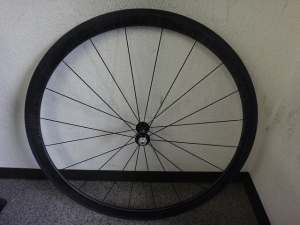
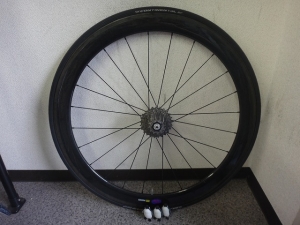
Rebuilt it.
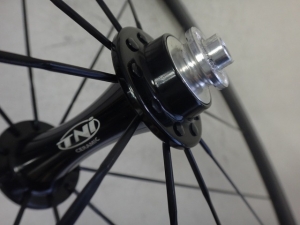
New spokes, but the same black CX-RAY as before,
reused the Tni Wing hub,
20H outpoke radial lacing.
We ended up building the rear wheel too, which wasn't originally planned.
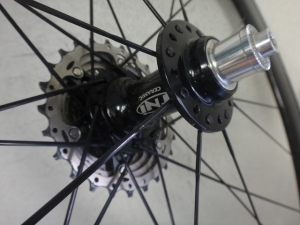
24H rim laced 2:1 with a 32H Wing hub.
This rim is also a bit rough,
but not as bad as the front, so it's still somewhat usable.
The customer brought the rear wheel,
but I build 24H rims with 24H hubs (laughs), so
I couldn't reuse that 32H hub.
Plus, unlike the front hub, the bearings were completely shot.
For the rim, I'm using a separate one—
a Nomu Lab Wheel #2.5 with 50mm rim height.
For the hub, I'm using an Evolite Hub, 24H.
(Dimensionally superior to the Wing hub.)
When building with that hub and rim,
I checked whether I could reuse spokes from this 24H all-black CX-RAY 60-spoke 2:1 laced wheel,
and found they don't match on the freewheel side.
I haven't checked the non-freewheel side, but with only 8 spokes available,
having 8 used and 4 new spokes to make up 12 total feels off to me,
so I'm not reusing them.
Which means this rear wheel
only needs to exist to transfer the tire and sprocket after rebuilding—
it doesn't need to be disassembled.
So even after building the new rear wheel,
both can exist at the same time.
Hehe, that's interesting.
P.S.:
I got a comment saying:
"I didn't understand what's 'interesting' about just having no reusable parts.
Could you explain?"
It's not that there are no reusable parts that's interesting—
it's that I don't need to disassemble the wheel,
so I can compare the two rear wheels side-by-side at the same time. For me.
If I'd disassembled and rebuilt it, the original wheel would be gone,
so explaining to the customer would mean relying on data I'd recorded beforehand
to show the differences before and after—
but if both exist simultaneously, that saves me a lot of work.
Since the original wheel is still in working condition,
the customer can even ride both and compare them.
It's rare that I get to leave a pre-rebuild wheel unassembled,
so having the customer able to clearly see the differences themselves
—that's what I find "interesting."
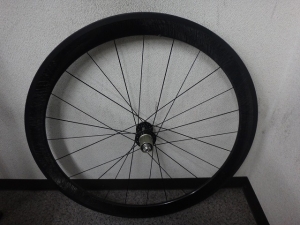
Built it.
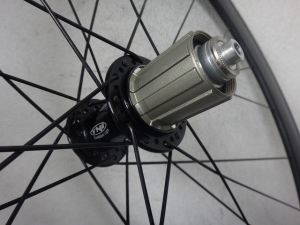
Evolite Hub 24H semi-comp 46-spoke lacing, no cross-bracing yet.
Even in this state, it's far stiffer than the customer's brought-in rear wheel.
(At least numerically, it's completely superior.)
I wanted to verify that the difference isn't marginal—something they barely exceeded with bracing—
so I deliberately didn't cross-brace it first.
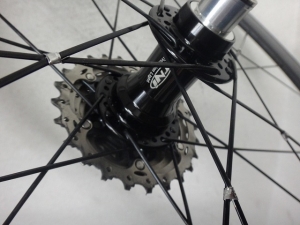
Cross-braced it.

A customer brought in a front wheel with a carbon rim.
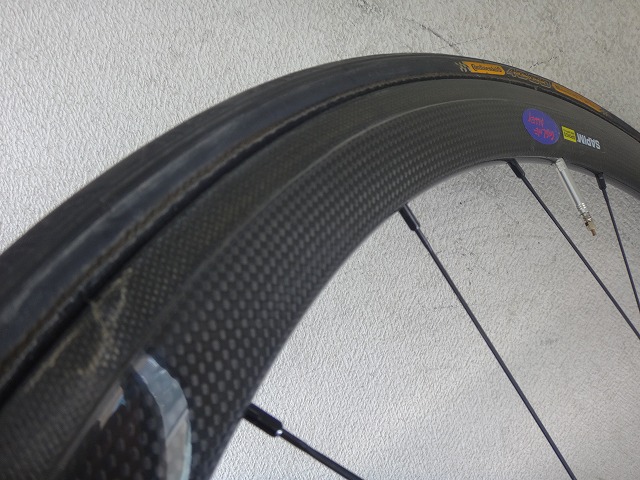
↑On the left side of the image, the brake zone is looking a bit rough.
It looks like it got deformed from buckling.
The customer wanted a rim replacement,
so we decided to rebuild it into a Nomu Lab Wheel #2 with a similar rim height.
Since we're switching from external nipples to internal nipples,
the spoke length actually gets longer, so we can't reuse the old spokes.
(It would be possible with around 45mm-high internal nipple rims, but not this one.)

Rebuilt it.
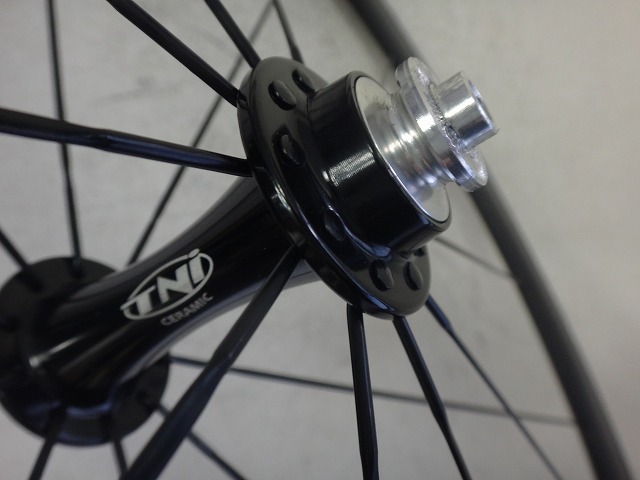
New spokes, but the same black CX-RAY as before,
reused the Tni Wing hub,
20H outpoke radial lacing.
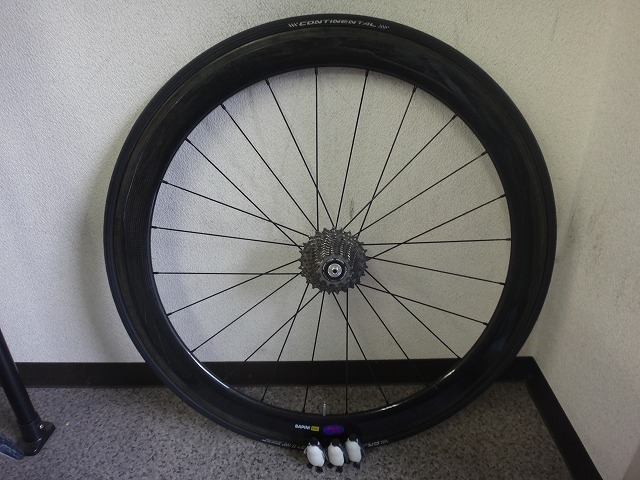
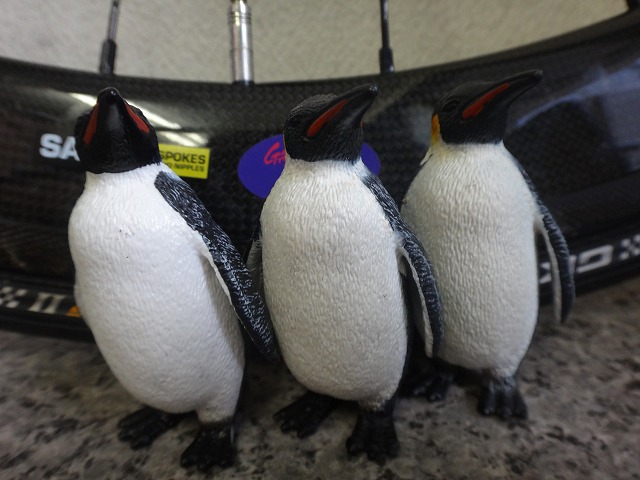
We ended up building the rear wheel too, which wasn't originally planned.
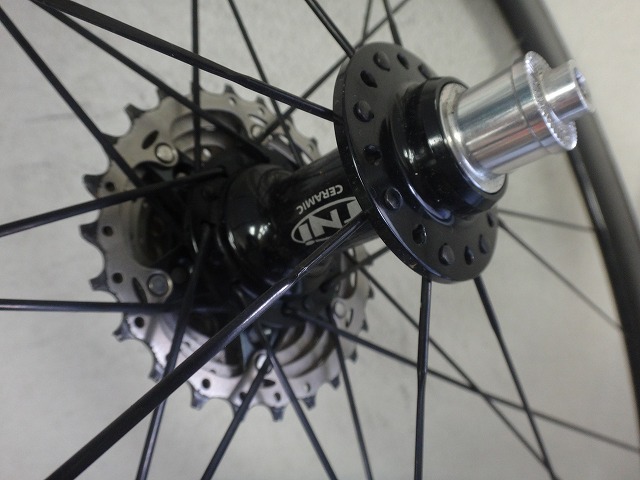
24H rim laced 2:1 with a 32H Wing hub.
This rim is also a bit rough,
but not as bad as the front, so it's still somewhat usable.
The customer brought the rear wheel,
but I build 24H rims with 24H hubs (laughs), so
I couldn't reuse that 32H hub.
Plus, unlike the front hub, the bearings were completely shot.
For the rim, I'm using a separate one—
a Nomu Lab Wheel #2.5 with 50mm rim height.
For the hub, I'm using an Evolite Hub, 24H.
(Dimensionally superior to the Wing hub.)
When building with that hub and rim,
I checked whether I could reuse spokes from this 24H all-black CX-RAY 60-spoke 2:1 laced wheel,
and found they don't match on the freewheel side.
I haven't checked the non-freewheel side, but with only 8 spokes available,
having 8 used and 4 new spokes to make up 12 total feels off to me,
so I'm not reusing them.
Which means this rear wheel
only needs to exist to transfer the tire and sprocket after rebuilding—
it doesn't need to be disassembled.
So even after building the new rear wheel,
both can exist at the same time.
Hehe, that's interesting.
P.S.:
I got a comment saying:
"I didn't understand what's 'interesting' about just having no reusable parts.
Could you explain?"
It's not that there are no reusable parts that's interesting—
it's that I don't need to disassemble the wheel,
so I can compare the two rear wheels side-by-side at the same time. For me.
If I'd disassembled and rebuilt it, the original wheel would be gone,
so explaining to the customer would mean relying on data I'd recorded beforehand
to show the differences before and after—
but if both exist simultaneously, that saves me a lot of work.
Since the original wheel is still in working condition,
the customer can even ride both and compare them.
It's rare that I get to leave a pre-rebuild wheel unassembled,
so having the customer able to clearly see the differences themselves
—that's what I find "interesting."
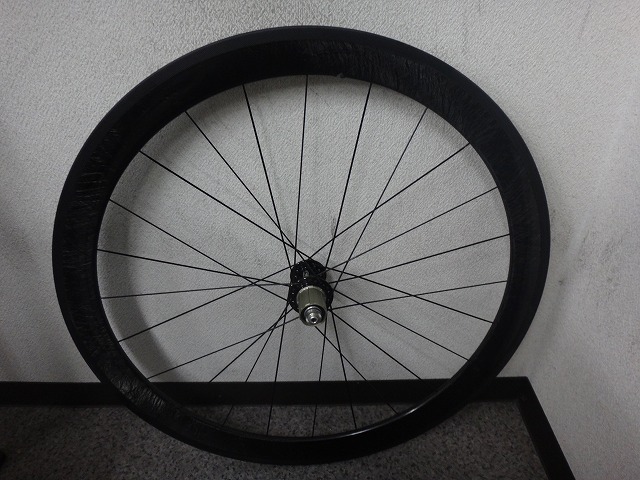
Built it.
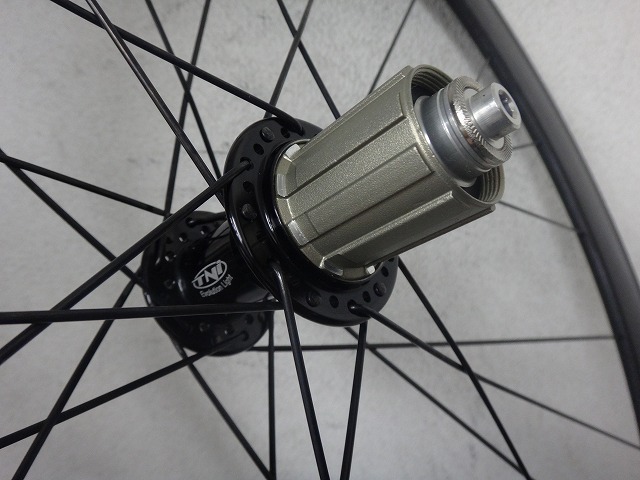
Evolite Hub 24H semi-comp 46-spoke lacing, no cross-bracing yet.
Even in this state, it's far stiffer than the customer's brought-in rear wheel.
(At least numerically, it's completely superior.)
I wanted to verify that the difference isn't marginal—something they barely exceeded with bracing—
so I deliberately didn't cross-brace it first.
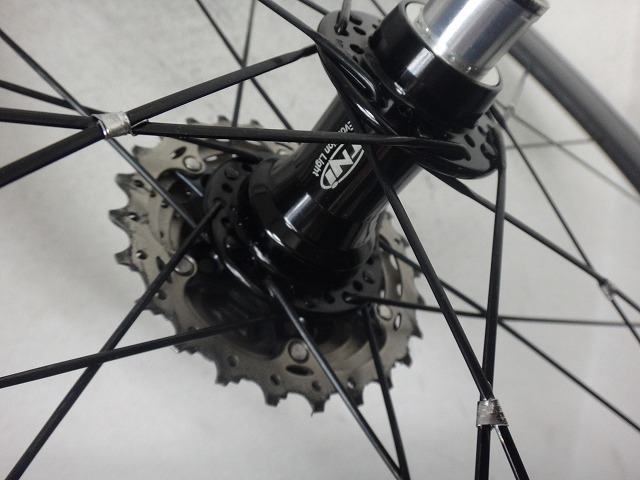
Cross-braced it.