Another wheel day (and so on...).
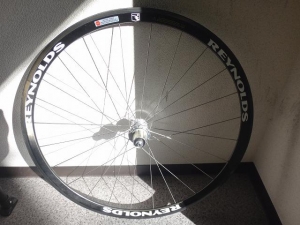
A customer brought in a Reynolds R2 rear wheel for work.
The wheel itself is light, but they feel flex during hill climbs,
so they're actually using a heavier wheel for their race bike instead.
They're hoping a rebuild might help with that,
and honestly, this should definitely build up significantly tighter than it was.
Of course, I'll adjust the spoke tension conditioning as well.
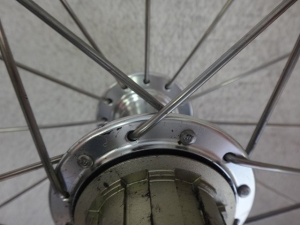
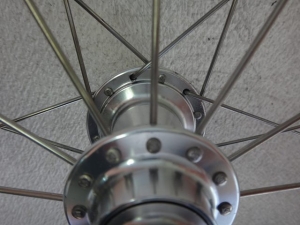
The freewheel side has a crossing pattern equivalent to reverse Italian/reverse JIS,
24-hole, all comp, 4-cross lacing.
Reynolds once used asymmetric sizing, and
when they did, they'd lace round spokes comp/revo.
This wheel is all comp.
I decided to reuse the freewheel-side spokes as-is,
and build the non-freewheel side with CX-RAY spokes in 6-cross.

The freewheel body wasn't Shimano 11-speed compatible.
The customer is currently using it with 10-speed components,
but I suggested that if they don't have plans to upgrade to 11-speed in the near future,
we should keep the hub since it has good dimensions,
but if they do plan to go 11-speed, we should swap it for something like an Evolite hub.
Converting to 11-speed with just a freewheel body swap might be possible,
but since the freewheel body cost is about the same as an Evolite hub anyway,
if 11-speed is in the cards, it's better to replace the hub now.
But this time, we went with reusing the existing hub.
The non-freewheel side radial spokes are noticeably longer...

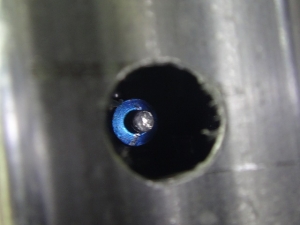
↑Out of 24 spokes, I carefully disassembled 20. Here's one of the remaining 4 on the non-freewheel side.
During disassembly, this nipple was never tightened or loosened at all.
The threads are protruding about 5+ turns.
The freewheel side also had threads sticking out about 2 turns,
but this non-freewheel side is somewhat problematic.
The spoke threads have bottomed out against the nipple, so I can't make further tension adjustments.
That said, these are the spokes I'm discarding anyway,
so as long as I don't mess up my spoke length calculations for the rebuild, it's fine.
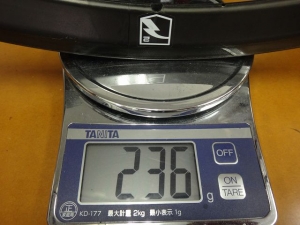
The rim was remarkably light.
Excellent.
Just being light wouldn't be anything special,
but this rim can build up incredibly tight for its weight.
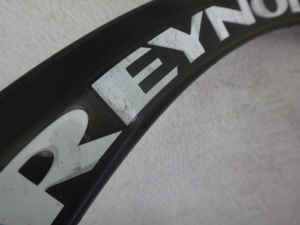
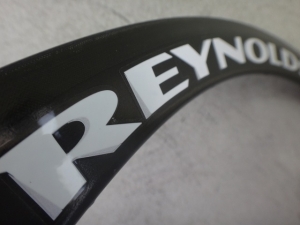
While rebuilding, I cleaned up the rim sidewalls nicely.
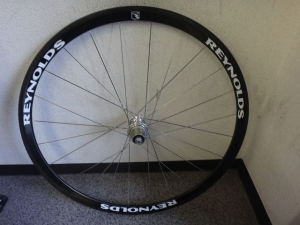
Built it up.
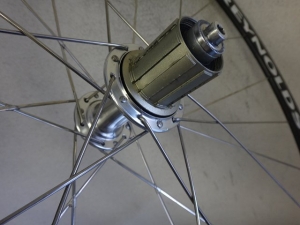
24-hole, half-comp, 4-cross with lacing wire.
I built this rear wheel while the customer watched,
and before lacing, it was already pulling up tighter than before the rebuild.
We also checked how spoke deformation changes with just 2 of the 6 final crossing points laced.
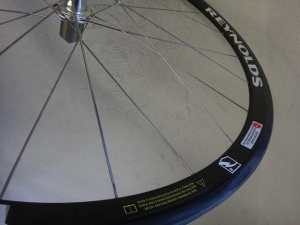
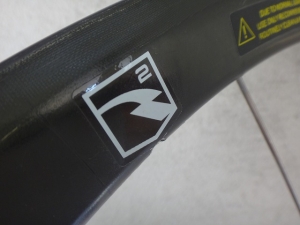
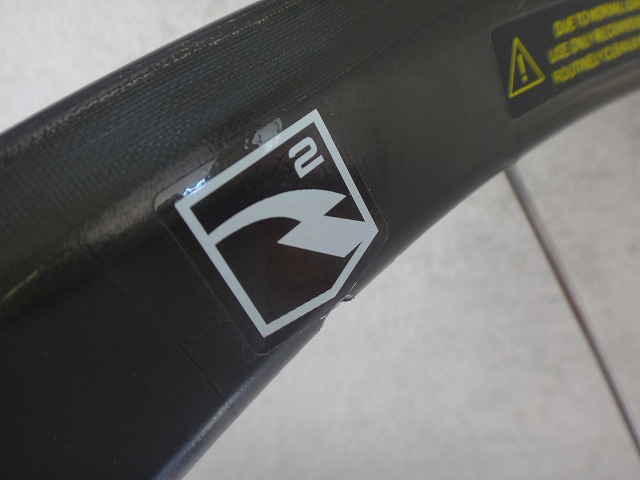
In the image above, next to the R2 marking at the valve hole,
there's a caution sticker—
before the rebuild, this was the freewheel side.
The rim had no offset holes, so I treated it as a standard rim and built it that way.
After the rebuild, I also built it treating the rim as standard,
but for reasons I had in mind, I flipped the rim over.
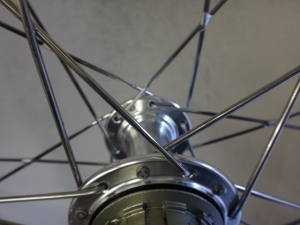
I changed the freewheel side crossing to Italian-style lacing.
When reusing tangent-laced spokes, there are different deformations at the spoke neck
depending on whether they're inpokes or outpokes, so
I've made it a rule that "original inpokes go back as inpokes, original outpokes as outpokes."
But with this rebuild, the freewheel-side spokes never left the hub flanges at all.
I just took the inpokes that were in the opposite direction when I disassembled,
and laced them back in the correct direction.
Since it's 4-cross with a standard rim, proper Italian lacing means right-drop,
so I threaded the CX-RAY right-drop and built it that way.
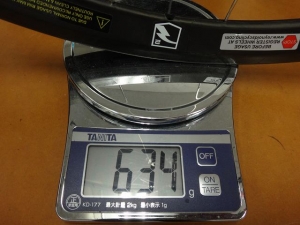
↑With a light rim, the whole wheel comes out light.
It doesn't feel like a rear wheel at all.
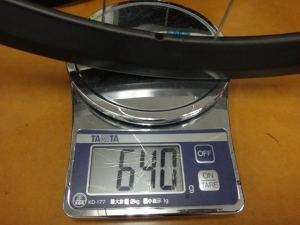
↑By the way, the rear wheel of the Nourlab Wheel No. 6 I built yesterday.
I was actually surprised how close they are in weight.
Because the rim on that one is actually heavier.
The Leaf hub is so light that the overall scale weight just came out nearly the same.
You can't judge things just by what the scale tells you.
Between these two rear wheels, if the only use were hill climbing,
which would be the better choice would depend on the rider's weight and style—
the answer changes from person to person.
It's a small difference with pros and cons to each,
but the R2 should have lighter, snappier roll-out acceleration,
while the No. 6 should flex less when you're really mashing the pedals.
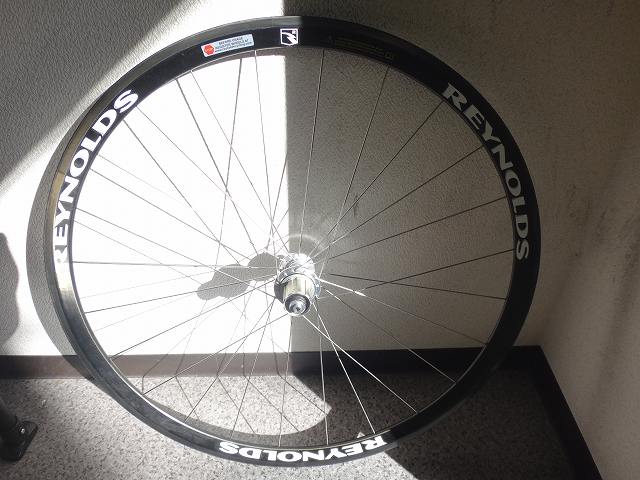
A customer brought in a Reynolds R2 rear wheel for work.
The wheel itself is light, but they feel flex during hill climbs,
so they're actually using a heavier wheel for their race bike instead.
They're hoping a rebuild might help with that,
and honestly, this should definitely build up significantly tighter than it was.
Of course, I'll adjust the spoke tension conditioning as well.
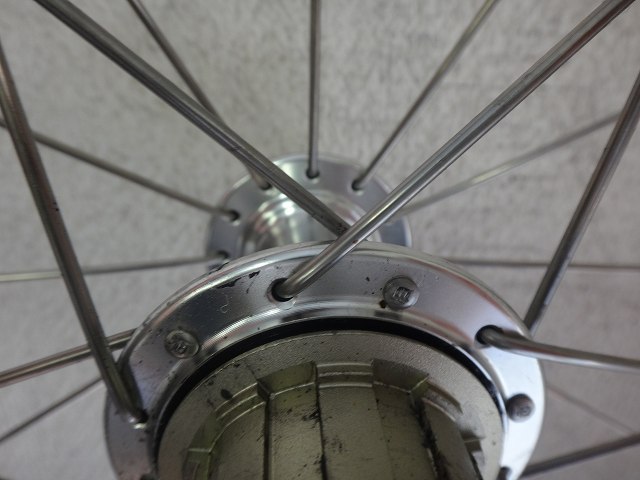

The freewheel side has a crossing pattern equivalent to reverse Italian/reverse JIS,
24-hole, all comp, 4-cross lacing.
Reynolds once used asymmetric sizing, and
when they did, they'd lace round spokes comp/revo.
This wheel is all comp.
I decided to reuse the freewheel-side spokes as-is,
and build the non-freewheel side with CX-RAY spokes in 6-cross.
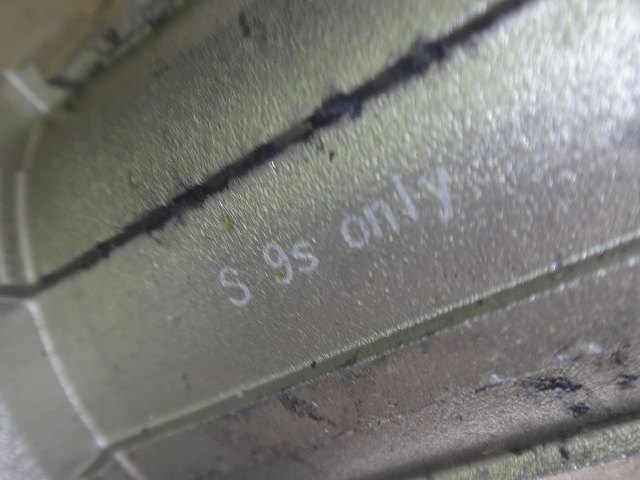
The freewheel body wasn't Shimano 11-speed compatible.
The customer is currently using it with 10-speed components,
but I suggested that if they don't have plans to upgrade to 11-speed in the near future,
we should keep the hub since it has good dimensions,
but if they do plan to go 11-speed, we should swap it for something like an Evolite hub.
Converting to 11-speed with just a freewheel body swap might be possible,
but since the freewheel body cost is about the same as an Evolite hub anyway,
if 11-speed is in the cards, it's better to replace the hub now.
But this time, we went with reusing the existing hub.
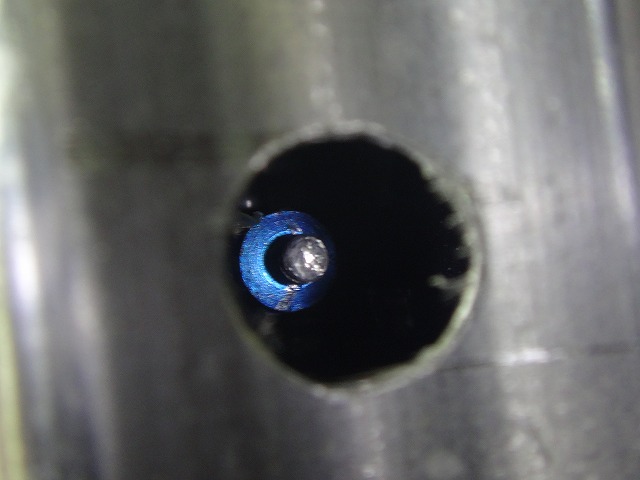
The non-freewheel side radial spokes are noticeably longer...
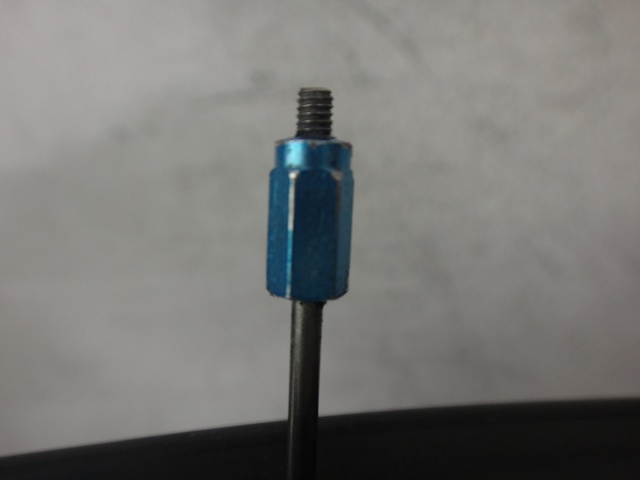
↑Out of 24 spokes, I carefully disassembled 20. Here's one of the remaining 4 on the non-freewheel side.
During disassembly, this nipple was never tightened or loosened at all.
The threads are protruding about 5+ turns.
The freewheel side also had threads sticking out about 2 turns,
but this non-freewheel side is somewhat problematic.
The spoke threads have bottomed out against the nipple, so I can't make further tension adjustments.
That said, these are the spokes I'm discarding anyway,
so as long as I don't mess up my spoke length calculations for the rebuild, it's fine.
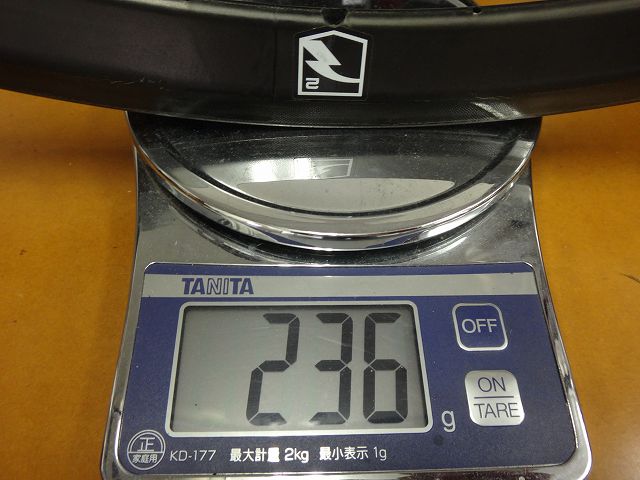
The rim was remarkably light.
Excellent.
Just being light wouldn't be anything special,
but this rim can build up incredibly tight for its weight.


While rebuilding, I cleaned up the rim sidewalls nicely.
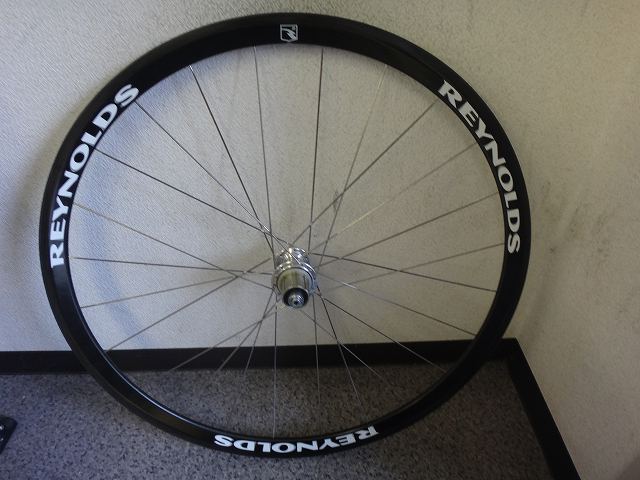
Built it up.
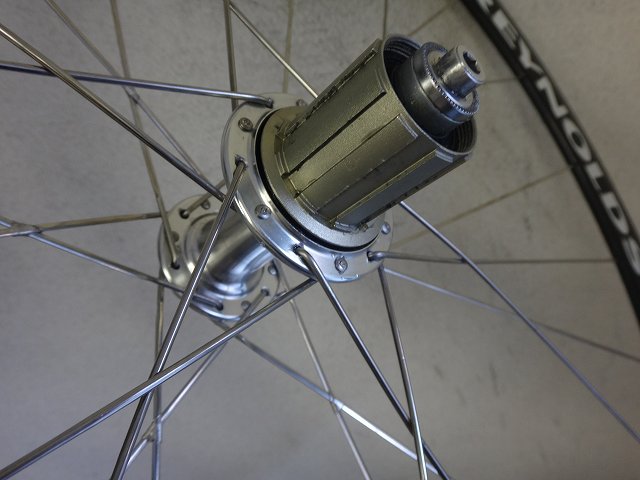
24-hole, half-comp, 4-cross with lacing wire.
I built this rear wheel while the customer watched,
and before lacing, it was already pulling up tighter than before the rebuild.
We also checked how spoke deformation changes with just 2 of the 6 final crossing points laced.
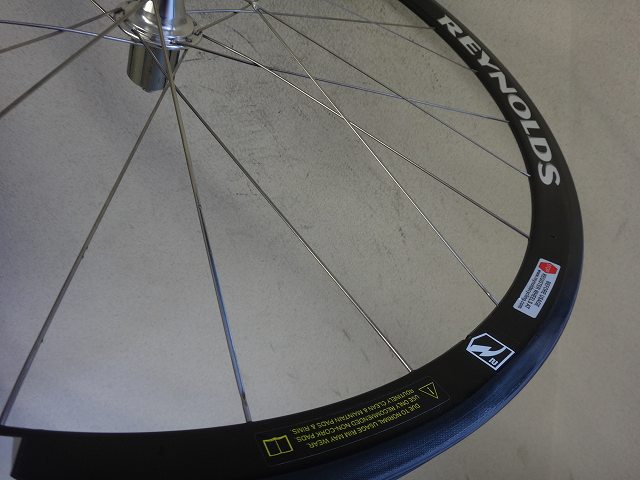
In the image above, next to the R2 marking at the valve hole,
there's a caution sticker—
before the rebuild, this was the freewheel side.
The rim had no offset holes, so I treated it as a standard rim and built it that way.
After the rebuild, I also built it treating the rim as standard,
but for reasons I had in mind, I flipped the rim over.
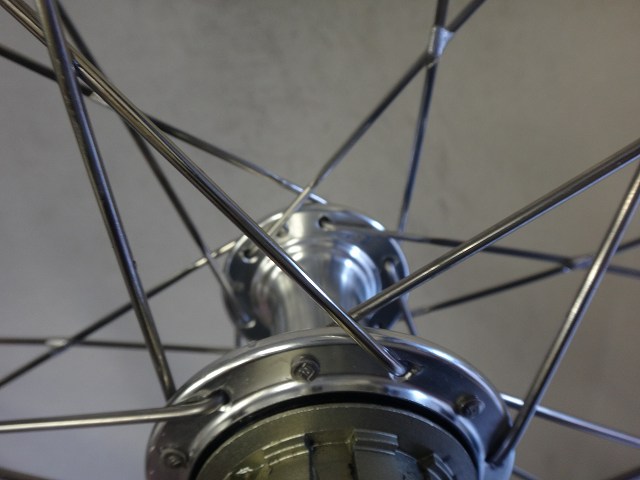
I changed the freewheel side crossing to Italian-style lacing.
When reusing tangent-laced spokes, there are different deformations at the spoke neck
depending on whether they're inpokes or outpokes, so
I've made it a rule that "original inpokes go back as inpokes, original outpokes as outpokes."
But with this rebuild, the freewheel-side spokes never left the hub flanges at all.
I just took the inpokes that were in the opposite direction when I disassembled,
and laced them back in the correct direction.
Since it's 4-cross with a standard rim, proper Italian lacing means right-drop,
so I threaded the CX-RAY right-drop and built it that way.

↑With a light rim, the whole wheel comes out light.
It doesn't feel like a rear wheel at all.
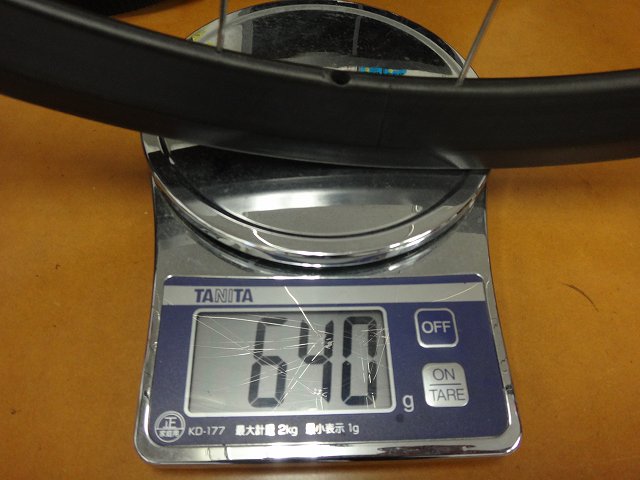
↑By the way, the rear wheel of the Nourlab Wheel No. 6 I built yesterday.
I was actually surprised how close they are in weight.
Because the rim on that one is actually heavier.
The Leaf hub is so light that the overall scale weight just came out nearly the same.
You can't judge things just by what the scale tells you.
Between these two rear wheels, if the only use were hill climbing,
which would be the better choice would depend on the rider's weight and style—
the answer changes from person to person.
It's a small difference with pros and cons to each,
but the R2 should have lighter, snappier roll-out acceleration,
while the No. 6 should flex less when you're really mashing the pedals.