A customer brought in a Cosmic Carbon SLR for service.


It's a wheel built with the traditional Cosmic Carbon rim and adjustable carbon spokes.
It had a short production run and is now discontinued,
but since the first generation didn't use Exalith rims, this is the second generation—
and the final model at that.
Both wheels had a slight centering issue.
There's virtually no lateral runout at all.
Also, the front hub developed some play.


I removed the axle to check just in case,
but the bearings weren't damaged.
The same goes for the Cosmic Carbon Ultimate—
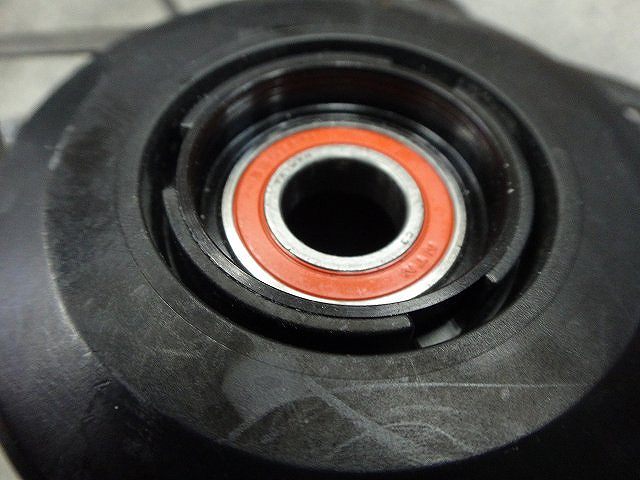
the side of the front hub with the bearing adjustment mechanism
sits slightly inward due to its own thickness,
so the bearing depths differ left to right.
Even if you made both sides the same depth and matched the narrower side,
there shouldn't be any problem with a narrower bearing width,
but apparently the design philosophy is to keep things as wide as possible,
even if that means the bearing seats are asymmetrical.
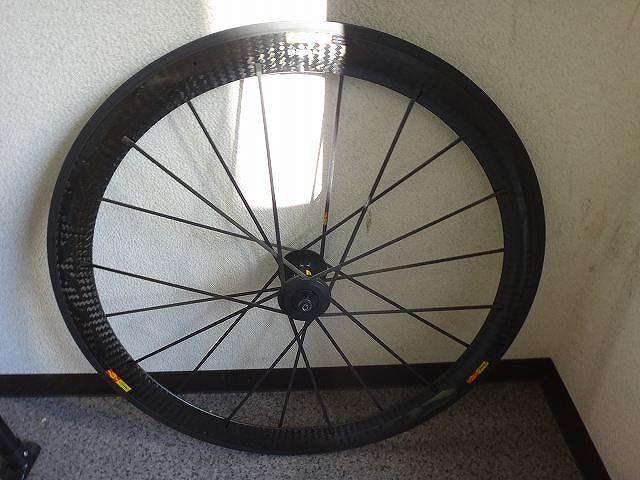
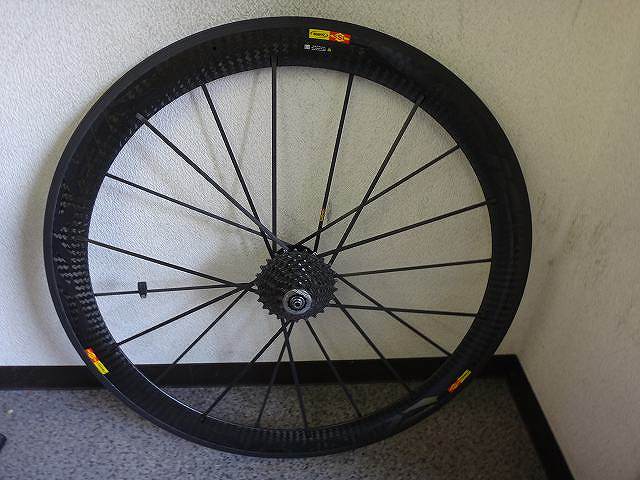
It's a wheel built with the traditional Cosmic Carbon rim and adjustable carbon spokes.
It had a short production run and is now discontinued,
but since the first generation didn't use Exalith rims, this is the second generation—
and the final model at that.
Both wheels had a slight centering issue.
There's virtually no lateral runout at all.
Also, the front hub developed some play.
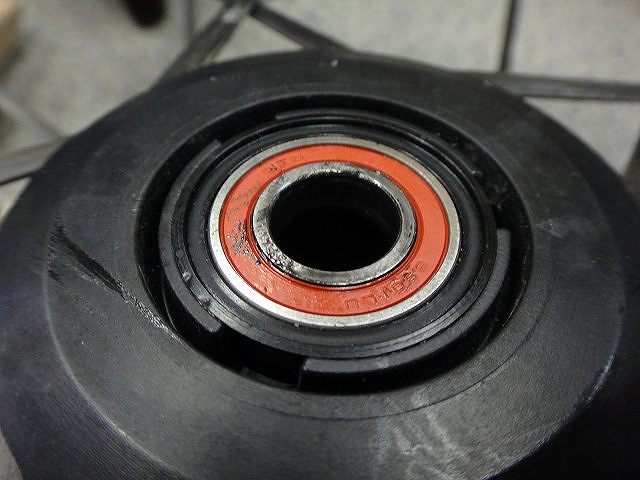
I removed the axle to check just in case,
but the bearings weren't damaged.
The same goes for the Cosmic Carbon Ultimate—
the side of the front hub with the bearing adjustment mechanism
sits slightly inward due to its own thickness,
so the bearing depths differ left to right.
Even if you made both sides the same depth and matched the narrower side,
there shouldn't be any problem with a narrower bearing width,
but apparently the design philosophy is to keep things as wide as possible,
even if that means the bearing seats are asymmetrical.