A customer dropped off the front wheel from an 808 for inspection.
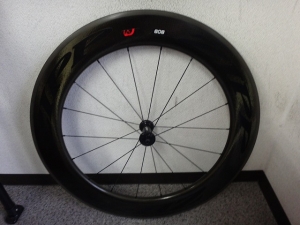
They wanted a full checkup.

By the way, it's a WO rim.
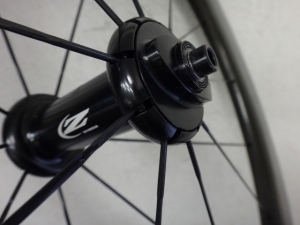
The hub is from the previous generation, but it uses the older design dust cap that relies on spoke tension to stay in place—which I'm honestly not a fan of from an adjustment standpoint—so I'm relieved it doesn't have that.

Since this wheel came from a customer at a distance, I can't show the work process in person. So here's a picture showing how far out of true it was. Of course, I fixed it.
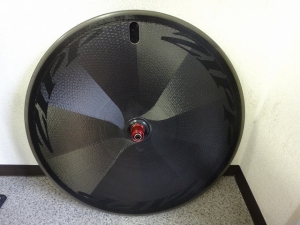
The matching rear wheel is a Super 9 with WO specs. I was wondering where there'd be anything to adjust, but apparently the rear hub play was bothering them. They'd looked it up online and found some sites saying "there's always some play," but well, this play here...
it's normal lateral play.
I adjusted the bearing preload and fixed it. It wasn't some super-delicate micro-adjustment or anything—I just tightened the adjustment nut once the play finally disappeared.
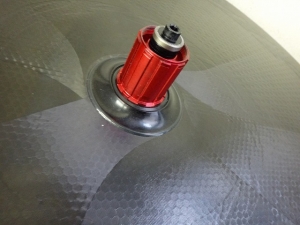
I like how the decorative carbon fiber sheet on the outermost layer is applied in a spiral curve pattern rather than straight lines. Though I doubt it actually has much effect in terms of resisting deformation under pedaling stress compared to straight lines.

On the other side, when the axle was swapped out to one with 120mm over-locknut dimension, it was set up to accept a track-style single gear.
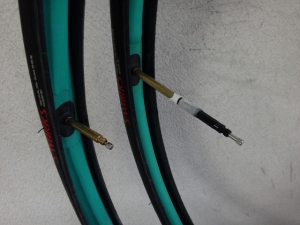
I have it here with tires mounted, but

they wanted a rotation, so I swapped the front and rear. Only the side that was on the rear wheel has the centerline worn away, so the timing seems right for a rotation.
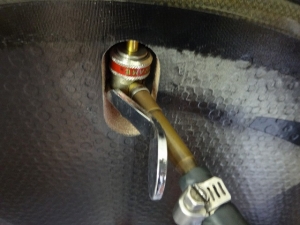
When inflating this disc wheel, the side-pull cam lever worked well in this case. I was being quite careful lowering the cam lever when I did it.

That's because the claw-like protrusions on the stopper part of the side-pull cam lever (the part in the image) can sometimes gouge and damage foam urethane filler material and similar compounds depending on the type of disc wheel. Even previous generation Lightweight disc wheels need to be watched carefully. If you're not 100% certain you won't damage anything, it's better to use a special adapter shaped like the stem of a pipe—one designed specifically for disc wheels.
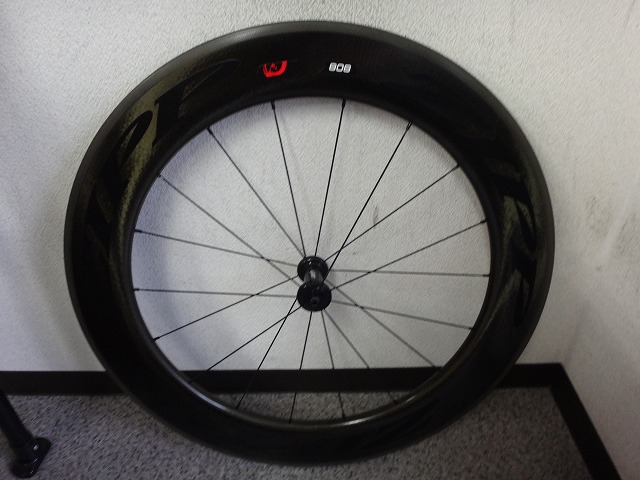
They wanted a full checkup.
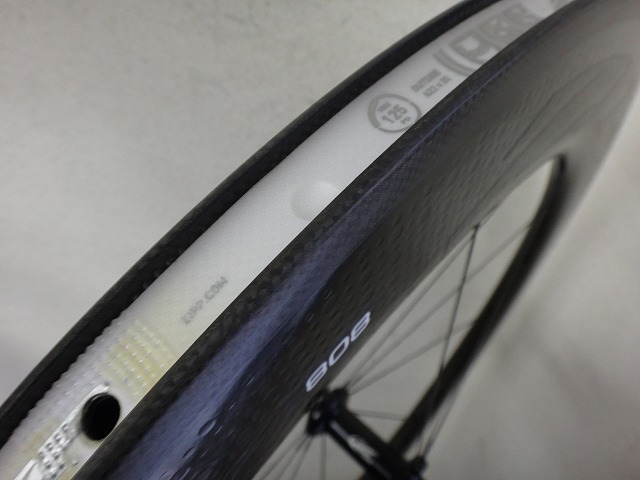
By the way, it's a WO rim.
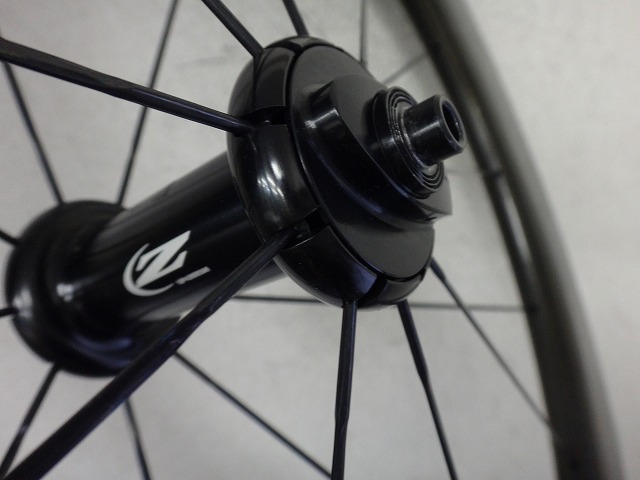
The hub is from the previous generation, but it uses the older design dust cap that relies on spoke tension to stay in place—which I'm honestly not a fan of from an adjustment standpoint—so I'm relieved it doesn't have that.

Since this wheel came from a customer at a distance, I can't show the work process in person. So here's a picture showing how far out of true it was. Of course, I fixed it.

The matching rear wheel is a Super 9 with WO specs. I was wondering where there'd be anything to adjust, but apparently the rear hub play was bothering them. They'd looked it up online and found some sites saying "there's always some play," but well, this play here...
it's normal lateral play.
I adjusted the bearing preload and fixed it. It wasn't some super-delicate micro-adjustment or anything—I just tightened the adjustment nut once the play finally disappeared.
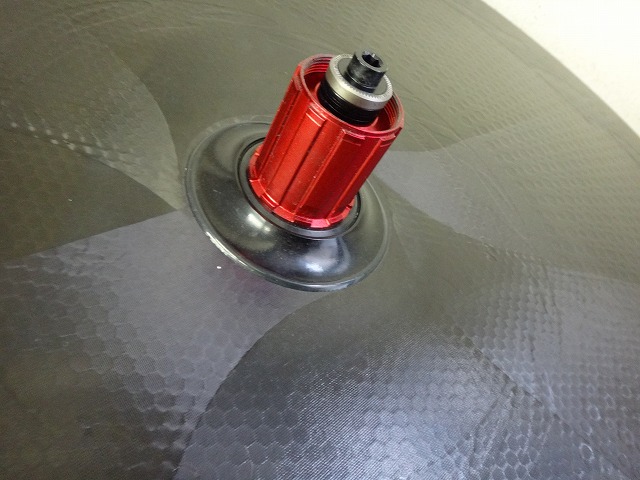
I like how the decorative carbon fiber sheet on the outermost layer is applied in a spiral curve pattern rather than straight lines. Though I doubt it actually has much effect in terms of resisting deformation under pedaling stress compared to straight lines.
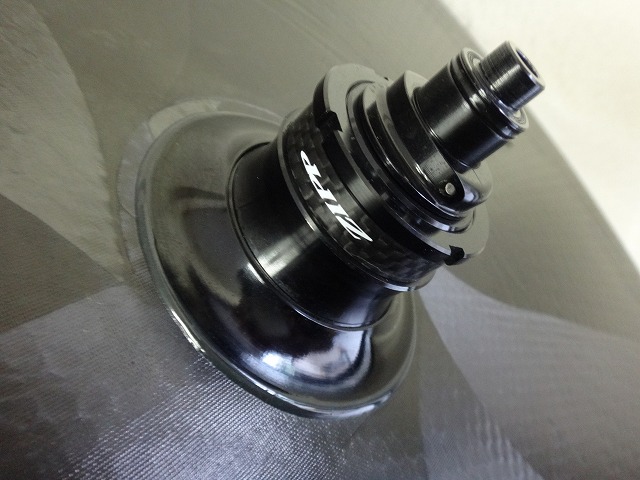
On the other side, when the axle was swapped out to one with 120mm over-locknut dimension, it was set up to accept a track-style single gear.
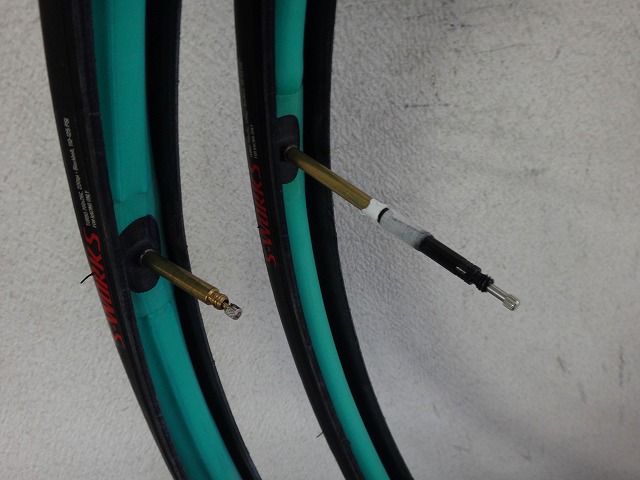
I have it here with tires mounted, but

they wanted a rotation, so I swapped the front and rear. Only the side that was on the rear wheel has the centerline worn away, so the timing seems right for a rotation.
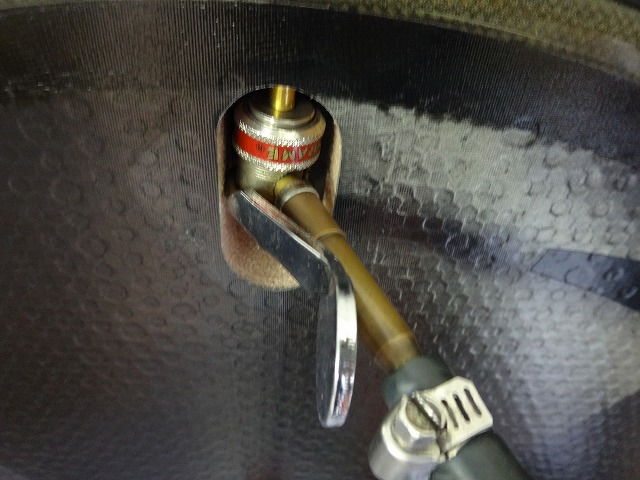
When inflating this disc wheel, the side-pull cam lever worked well in this case. I was being quite careful lowering the cam lever when I did it.

That's because the claw-like protrusions on the stopper part of the side-pull cam lever (the part in the image) can sometimes gouge and damage foam urethane filler material and similar compounds depending on the type of disc wheel. Even previous generation Lightweight disc wheels need to be watched carefully. If you're not 100% certain you won't damage anything, it's better to use a special adapter shaped like the stem of a pipe—one designed specifically for disc wheels.