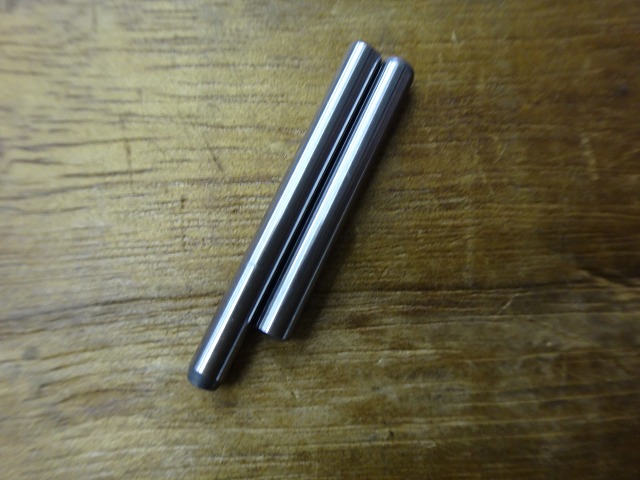
For adjusting the bearing preload on Time frame headsets,
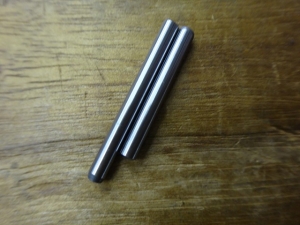
a rod like this comes included with the frameset,
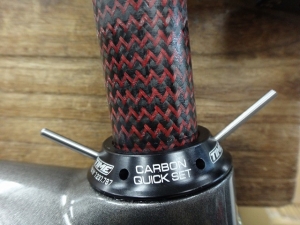
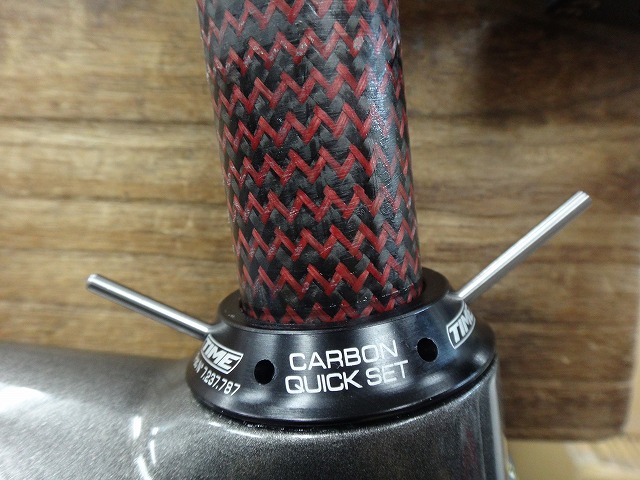
and you insert it like this to tighten it down.
However, this rod is quite short and doesn't allow for very firm tightening.
I haven't done it myself, but
I've seen examples where someone tried turning it with a metal spanner wrench-like tool
and ended up scratching it,
so it's not advisable to casually try non-standard methods.
But the truth is that adjusting with such a short rod is difficult,
so I always make a custom tool
to turn this part without damaging the headset.
Since this rod has a 3mm diameter,
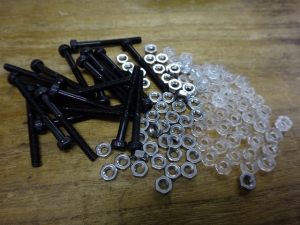
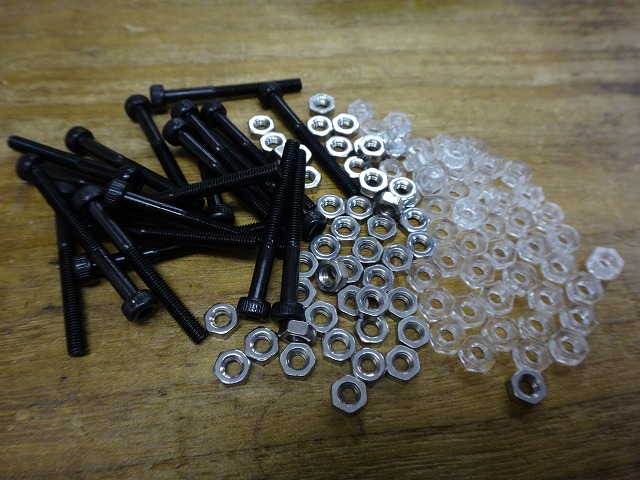
I prepare a nice long 3mm iron bolt,
along with stainless steel and plastic 3mm nuts.
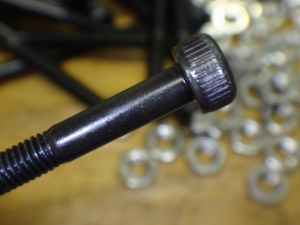
The reason I use a long bolt is that once it reaches a certain length,
the underhead portion doesn't have the thread runout, so it maintains the full diameter.
This section's diameter is the same as the original rod.

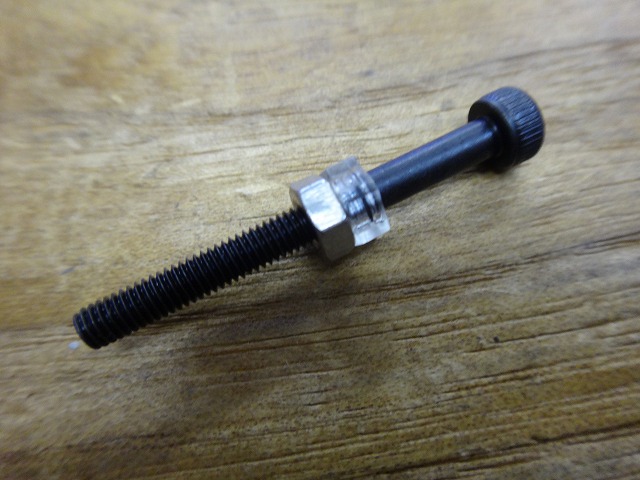
I thread the nuts onto the bolt in order—plastic first, then stainless—
and lock them together with a double nut, end to end.
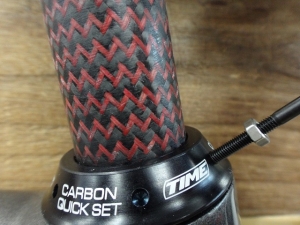
Separately, I measure the depth of the headset's hole.
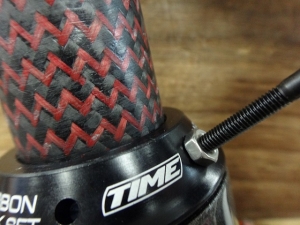
Gently rotating the nut,
once it bottoms out, the remaining distance is the hole depth.

I cut off the bolt head and made the shaft length
equal to the measured hole depth,
then fixed it with a pin vise.
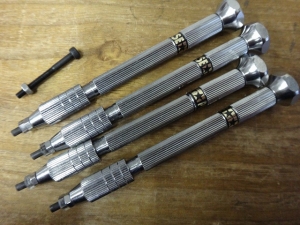
The pin vise is a Tamiya model that can grip up to 3.2mm diameter.
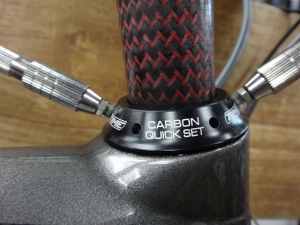
With this tool, that final "click!" of tightening
is considerably easier than with the original short rod.
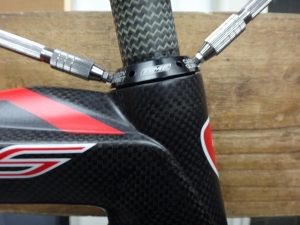
When I said earlier that I "always make" these,
it's because when we assemble a Time frame at the shop,
I give one of these to the customer.

I used a plastic nut on the side that contacts the headset
specifically to prevent scratching.
Just to be clear—the wear marks on this ZXRS weren't made by me.
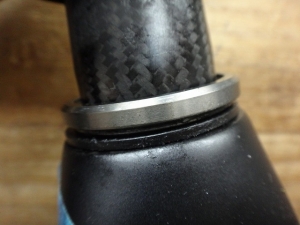
The Time headset has a special bearing on the lower side
(probably a proprietary design),

where the bearing balls protrude ever so slightly from the retainer made of soft, semi-transparent material.
The exposed portion is of course where it contacts the bearing race.
Perhaps because these bearing balls are small,
Time's headset adjustment is extremely finicky—
"tighten it slightly and the handlebar gets heavy, loosen it slightly and you get play"—
that sort of thing.
Even at the point where play just disappears, the handlebar is a bit stiff to turn, so
many riders just accept it as a characteristic of the system and deal with it.
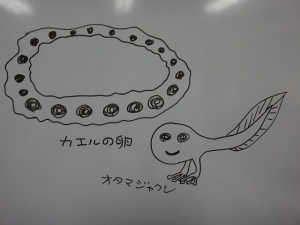
Anyway, this bearing reminds me of something,
but I can't remember what it is.
a rod like this comes included with the frameset,
and you insert it like this to tighten it down.
However, this rod is quite short and doesn't allow for very firm tightening.
I haven't done it myself, but
I've seen examples where someone tried turning it with a metal spanner wrench-like tool
and ended up scratching it,
so it's not advisable to casually try non-standard methods.
But the truth is that adjusting with such a short rod is difficult,
so I always make a custom tool
to turn this part without damaging the headset.
Since this rod has a 3mm diameter,
I prepare a nice long 3mm iron bolt,
along with stainless steel and plastic 3mm nuts.

The reason I use a long bolt is that once it reaches a certain length,
the underhead portion doesn't have the thread runout, so it maintains the full diameter.
This section's diameter is the same as the original rod.
I thread the nuts onto the bolt in order—plastic first, then stainless—
and lock them together with a double nut, end to end.
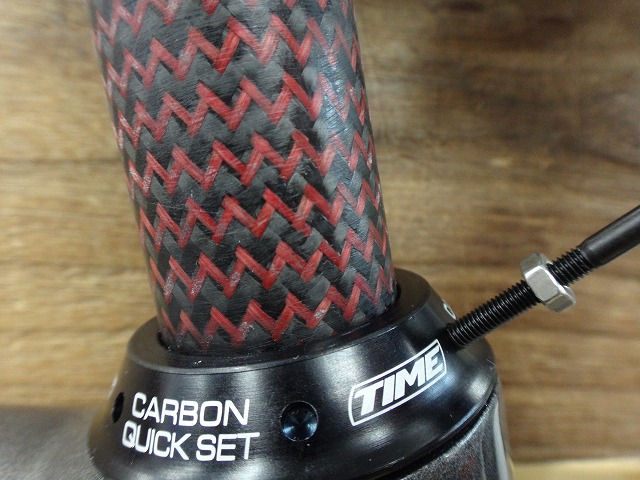
Separately, I measure the depth of the headset's hole.

Gently rotating the nut,
once it bottoms out, the remaining distance is the hole depth.
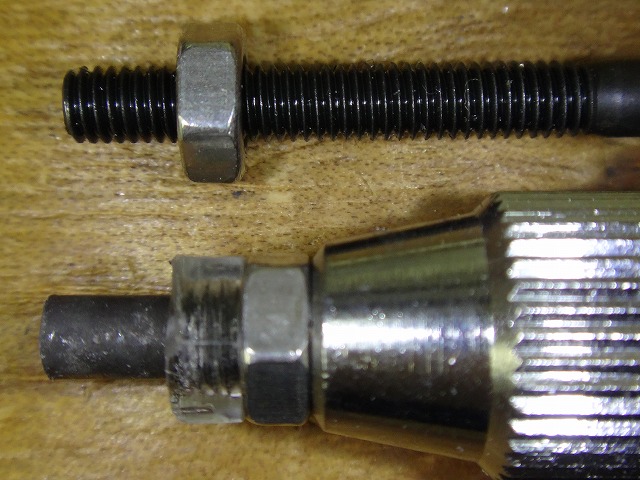
I cut off the bolt head and made the shaft length
equal to the measured hole depth,
then fixed it with a pin vise.
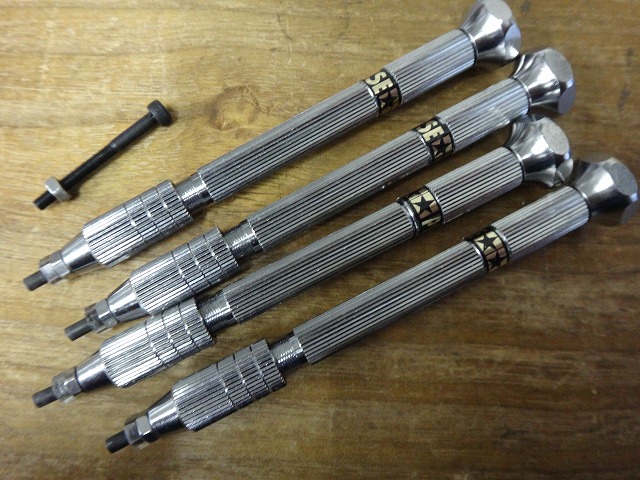
The pin vise is a Tamiya model that can grip up to 3.2mm diameter.
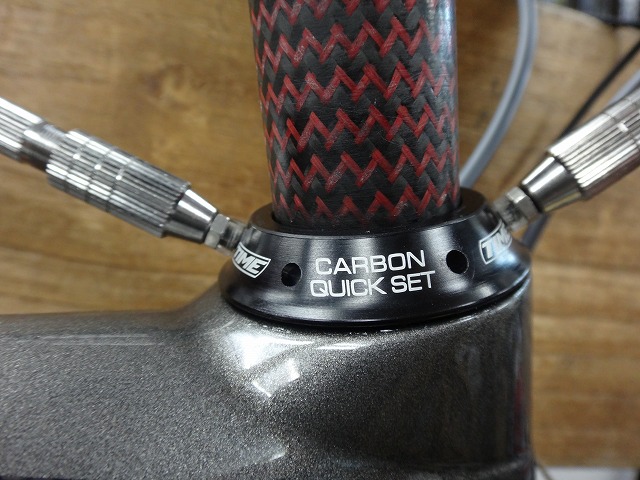
With this tool, that final "click!" of tightening
is considerably easier than with the original short rod.

When I said earlier that I "always make" these,
it's because when we assemble a Time frame at the shop,
I give one of these to the customer.

I used a plastic nut on the side that contacts the headset
specifically to prevent scratching.
Just to be clear—the wear marks on this ZXRS weren't made by me.
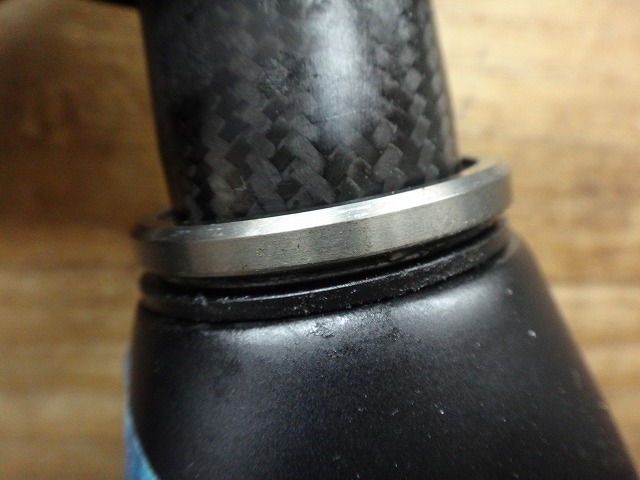
The Time headset has a special bearing on the lower side
(probably a proprietary design),
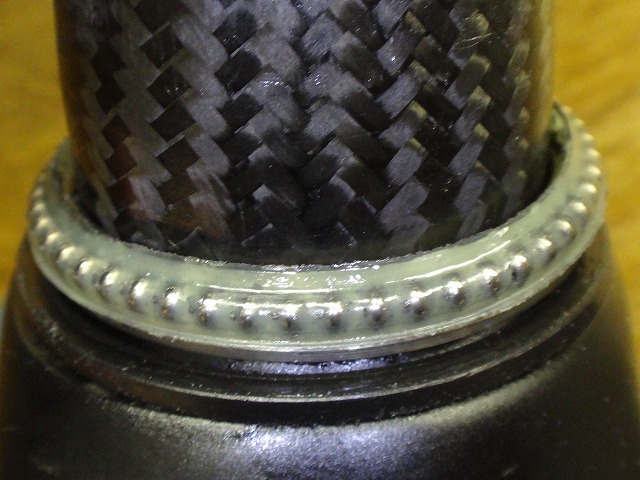
where the bearing balls protrude ever so slightly from the retainer made of soft, semi-transparent material.
The exposed portion is of course where it contacts the bearing race.
Perhaps because these bearing balls are small,
Time's headset adjustment is extremely finicky—
"tighten it slightly and the handlebar gets heavy, loosen it slightly and you get play"—
that sort of thing.
Even at the point where play just disappears, the handlebar is a bit stiff to turn, so
many riders just accept it as a characteristic of the system and deal with it.
Anyway, this bearing reminds me of something,
but I can't remember what it is.