Another day with wheels (and so on).
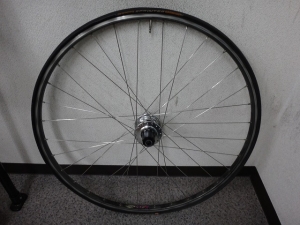
A customer left me a PowerTap hub rear wheel.
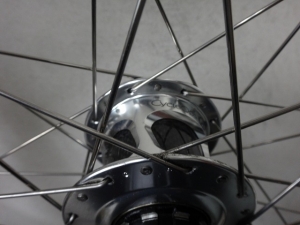
32H DT Champion #15 plain spokes
Built in the "Rokuroku Italian" style with brass nipples.
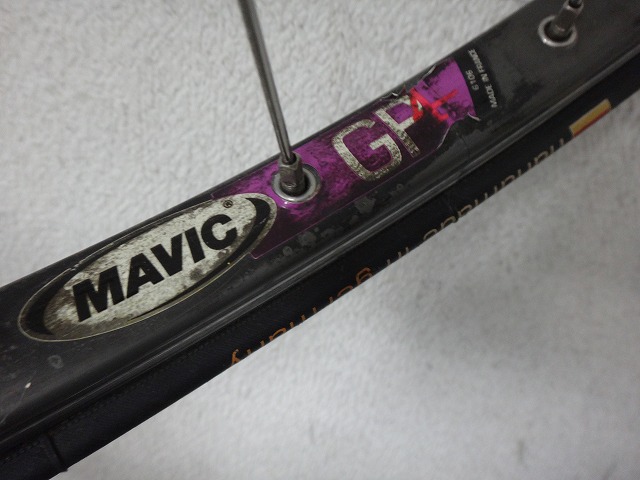
This wheel's rim is the final version of the Mavic GP4, but
the final version of the GP4 has flanges and is heavy, so
it should be able to handle higher spoke tension.
Whether it wasn't tensioned or couldn't be tensioned, I don't know, but
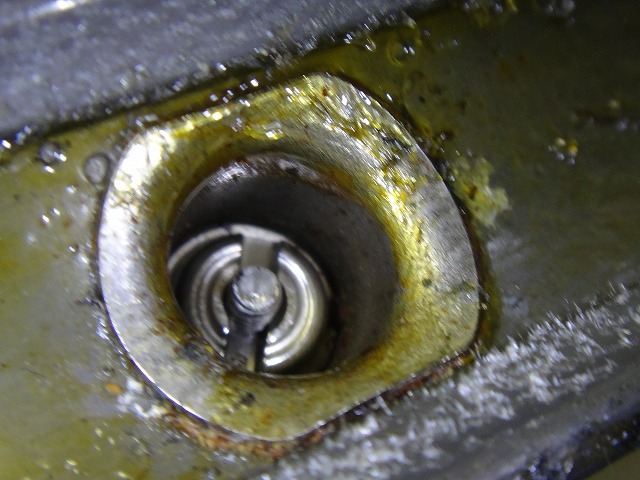
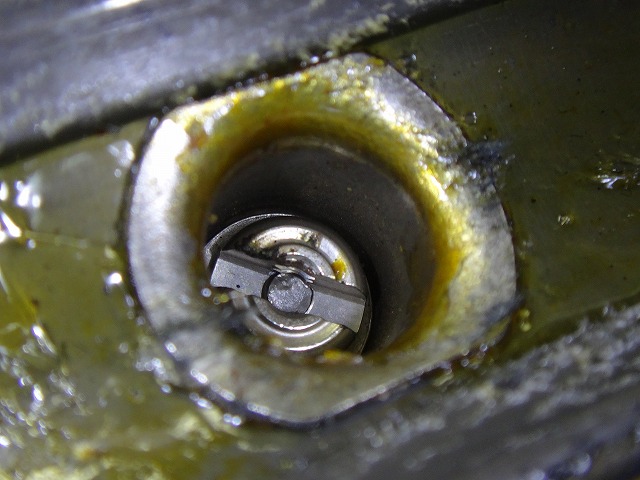
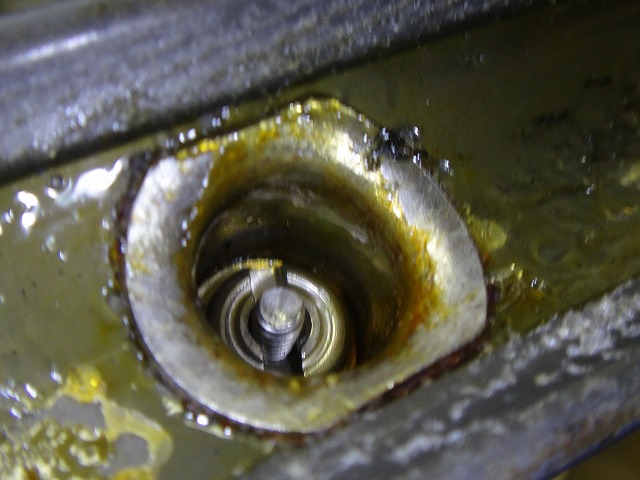
the spoke length relative to the nipples is
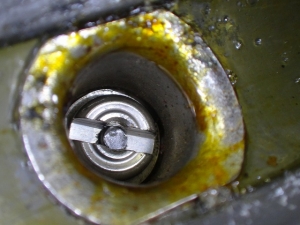
short
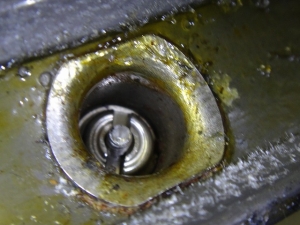
long
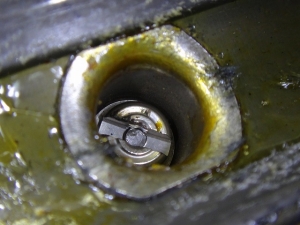
short
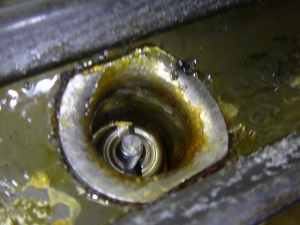
long
alternating back and forth. This is a shortcut wheel built using spokes of equal length on both sides. The longer ones are naturally on the freewheel side, but when they protrude this much, it's close to bottoming out and there's almost no room for further tightening. So it's likely that the spokes weren't "tensioned weakly" but rather "couldn't be tensioned."
This rim is the final version of the GP4, but
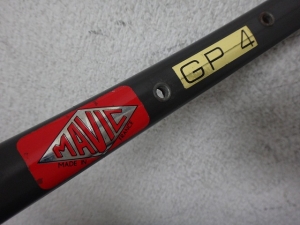
I also have the early version from the red-label era on hand, and the customer said I could use either one at my discretion.
↑The one on the left with the "flanges" is the final version.
This rim shape was inherited by the Reflex as well, but
with thick tires (like Vittoria), the seam below the rim tape
can cause the tire's adhesion surface to lift partially.
I haven't seen any actual examples of peeling, but the rim tape edge gets stained black,
so you can tell there was a gap when you remove the tire.
In this case it's a Continental tire, so there's no issue with the rim contact surface.
(Continental tubular tire rim tape is black except for the Giro made by Lion Tire,
so you can't tell if it gets dirty anyway.)
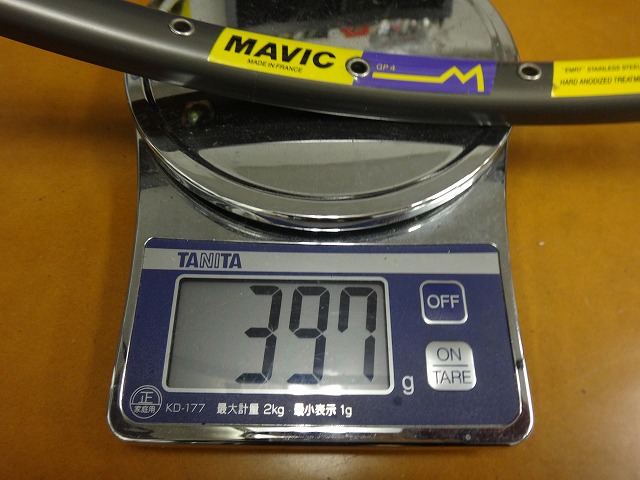
The GP4's weight is about 480g for the final version and about 400g for the early version.
Only the final version is extremely heavy (and has a different shape), but
I don't think "a 500g rim shouldn't be called a GP4."
That's because the flanged final version is extremely sturdy and
allows you to raise spoke tension very pleasantly.
Though I can't deny that nostalgia bias might be playing a role, as I used it back in high school nearly 20 years ago.
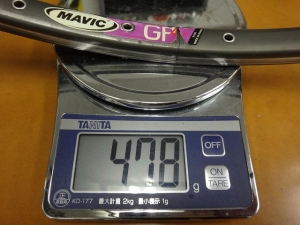
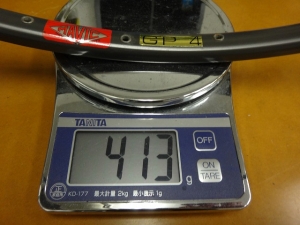
↑Actual measured weights.
The early version is a somewhat heavy specimen, and the final version is quite a light specimen.
When I checked both on a glass straightedge, the early version fits perfectly, but
the final version showed a very slight warp.
Not so much that I couldn't build a wheel with it.
I had to think hard, but since the early version doesn't allow particularly high spoke tension
and the final version is far better conditioned for building it tight,
plus the customer's request was
"Please make it a wheel I can confidently use hard for practice,"
I decided to build it with the final version.
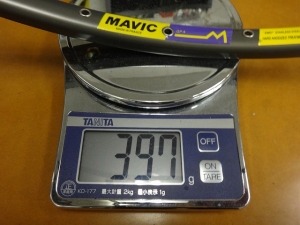
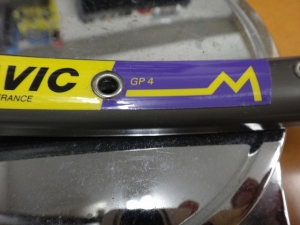
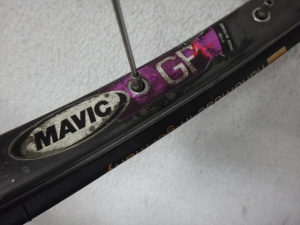
By the way, this is my personal yellow-label mid-period GP4.
The yellow-label era had many excellent rims, and the purple sections on the GP4 in the image above
vary by model (→here).
Not included in that link, but the yellow-green label MACH 2 CD2 (Mach Two CD Two) is also a good rim.

The timeline gets a bit mixed up here, but
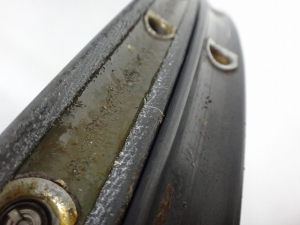
there was some mysterious dirt caked on the rim.
Touching it lightly doesn't dirty my hands, and
even pressing with the ball of my finger barely makes them dirty.
Wiping with a cloth dampened in parts cleaner didn't do much either.
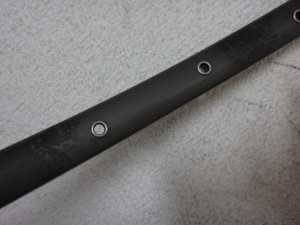
But I found a way to clean it, so
I worked hard to scrub the entire rim circumference.
While I can't say for certain, rims that have been left on a fixed trainer tend to
get dirty like this depending on the properties of the chain oil.
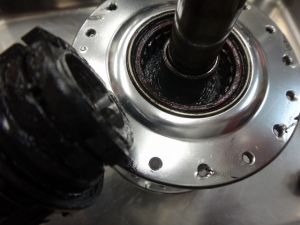
I'll clean the hub.
I'll grease up the ratchet on the freewheel body, but
I didn't feel the bearings needed greasing, so I'm not doing that this time.
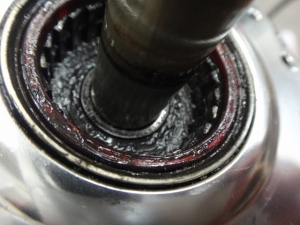
By the way, this seal is facing the wrong way.
You need to install it with the U-channel groove facing outward.
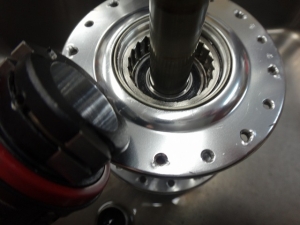
All cleaned.
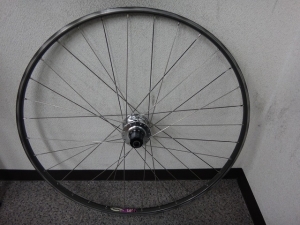
It's built.
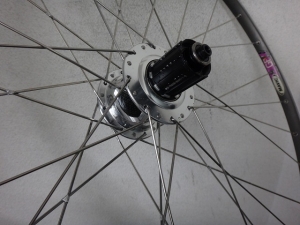
G3 hub (technically) 32H semi-competition "Yonroku" (4-cross) laced with reinforcement.
"Yonpachi" (6-cross) wasn't possible because the spoke length for the non-freewheel side doesn't exist in CX-RAY.
As expected from the GP4 final version, it tensioned up very pleasantly.
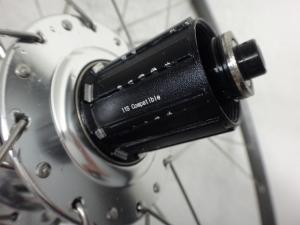
The black Shimano 11-speed freewheel body is a mismatch with the hub shell's generation, but
this is a hub shell from the SL+ era that
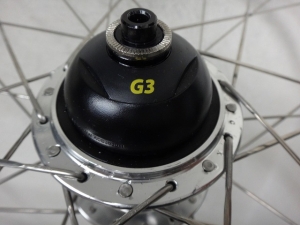
PowerTap converted with G3 internals
(probably as a service).
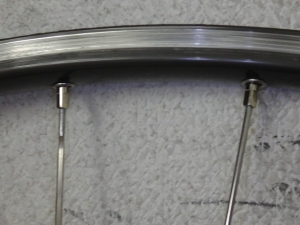
I went with brass nipples.
The customer's preference was "new is fine regardless of material."
Regarding nipple weight, whether #14 or #15, for 12mm length
brass nipples: 72 pieces = approximately 78g, aluminum nipples: 72 pieces = approximately 28g.
(For quick calculations, you can figure brass at 1g per nipple and aluminum at 3 per 1g.)
Theoretically #14 nipples should be lighter since the hole is larger, but
with only 72 pieces there's no significant difference anyway.
And normally a wheel only uses about 36 nipples to begin with.
For this 32H wheel, brass nipples weigh 34.6g,
and if it were aluminum nipples it would be 12.4g—about a 22g weight reduction.
But I think it's better to worry about the potential difference between the rim eyelets and nipples
than the weight savings from aluminum nipples on a not-particularly-light 480g rim,
so I deliberately chose brass nipples.
If I were building with the early GP4, I probably would have gone with aluminum.

A customer left me a PowerTap hub rear wheel.
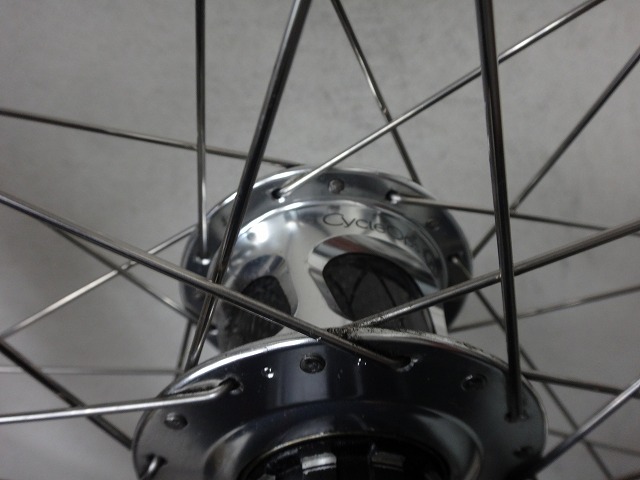
32H DT Champion #15 plain spokes
Built in the "Rokuroku Italian" style with brass nipples.
This wheel's rim is the final version of the Mavic GP4, but
the final version of the GP4 has flanges and is heavy, so
it should be able to handle higher spoke tension.
Whether it wasn't tensioned or couldn't be tensioned, I don't know, but
the spoke length relative to the nipples is
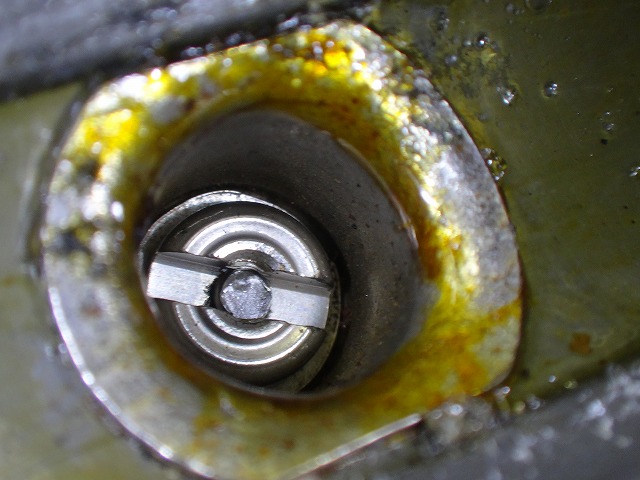
short
long
short
long
alternating back and forth. This is a shortcut wheel built using spokes of equal length on both sides. The longer ones are naturally on the freewheel side, but when they protrude this much, it's close to bottoming out and there's almost no room for further tightening. So it's likely that the spokes weren't "tensioned weakly" but rather "couldn't be tensioned."
This rim is the final version of the GP4, but
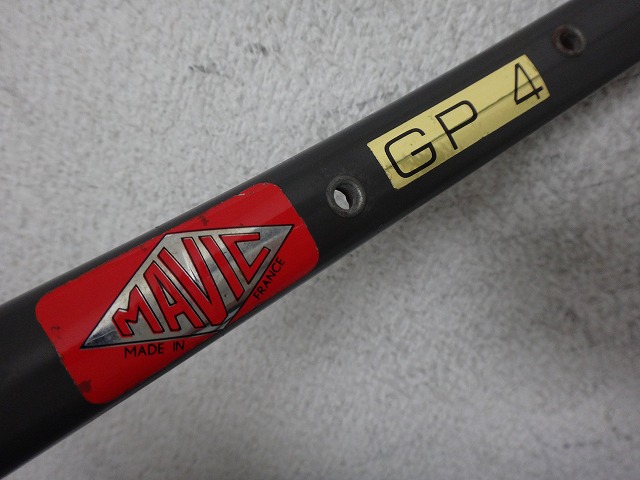
I also have the early version from the red-label era on hand, and the customer said I could use either one at my discretion.
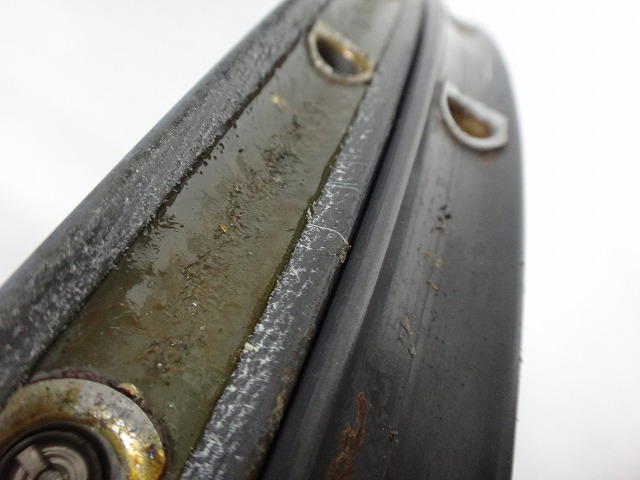
↑The one on the left with the "flanges" is the final version.
This rim shape was inherited by the Reflex as well, but
with thick tires (like Vittoria), the seam below the rim tape
can cause the tire's adhesion surface to lift partially.
I haven't seen any actual examples of peeling, but the rim tape edge gets stained black,
so you can tell there was a gap when you remove the tire.
In this case it's a Continental tire, so there's no issue with the rim contact surface.
(Continental tubular tire rim tape is black except for the Giro made by Lion Tire,
so you can't tell if it gets dirty anyway.)
The GP4's weight is about 480g for the final version and about 400g for the early version.
Only the final version is extremely heavy (and has a different shape), but
I don't think "a 500g rim shouldn't be called a GP4."
That's because the flanged final version is extremely sturdy and
allows you to raise spoke tension very pleasantly.
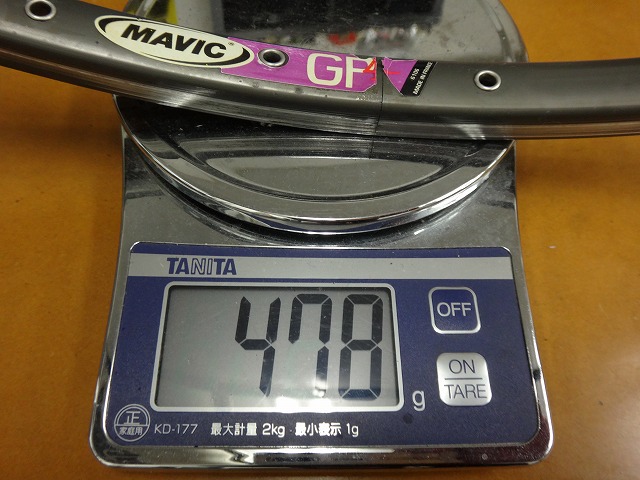
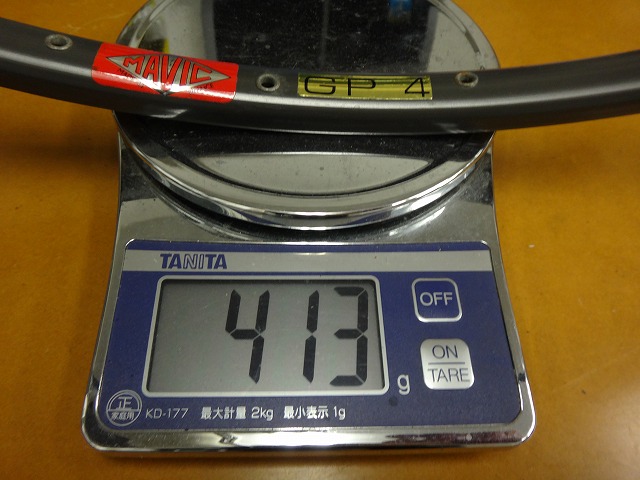
↑Actual measured weights.
The early version is a somewhat heavy specimen, and the final version is quite a light specimen.
When I checked both on a glass straightedge, the early version fits perfectly, but
the final version showed a very slight warp.
Not so much that I couldn't build a wheel with it.
I had to think hard, but since the early version doesn't allow particularly high spoke tension
and the final version is far better conditioned for building it tight,
plus the customer's request was
"Please make it a wheel I can confidently use hard for practice,"
I decided to build it with the final version.
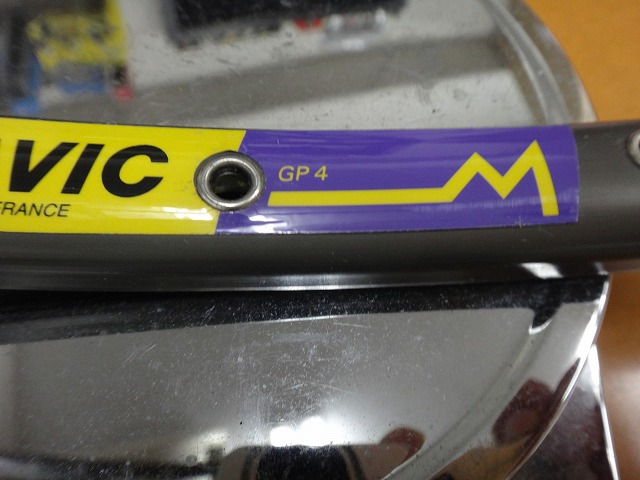
By the way, this is my personal yellow-label mid-period GP4.
The yellow-label era had many excellent rims, and the purple sections on the GP4 in the image above
vary by model (→here).
Not included in that link, but the yellow-green label MACH 2 CD2 (Mach Two CD Two) is also a good rim.
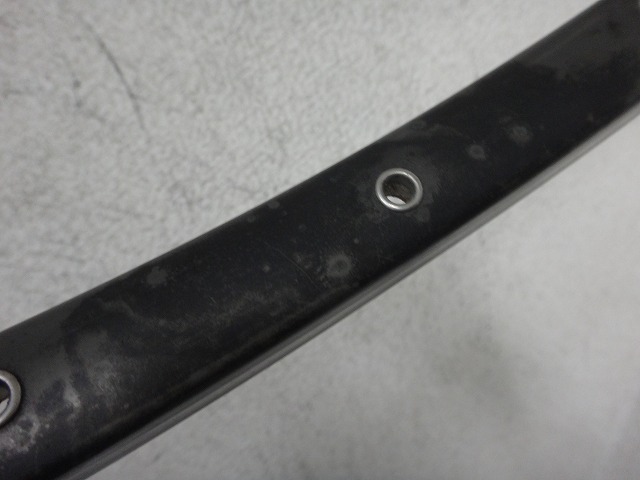
The timeline gets a bit mixed up here, but
there was some mysterious dirt caked on the rim.
Touching it lightly doesn't dirty my hands, and
even pressing with the ball of my finger barely makes them dirty.
Wiping with a cloth dampened in parts cleaner didn't do much either.
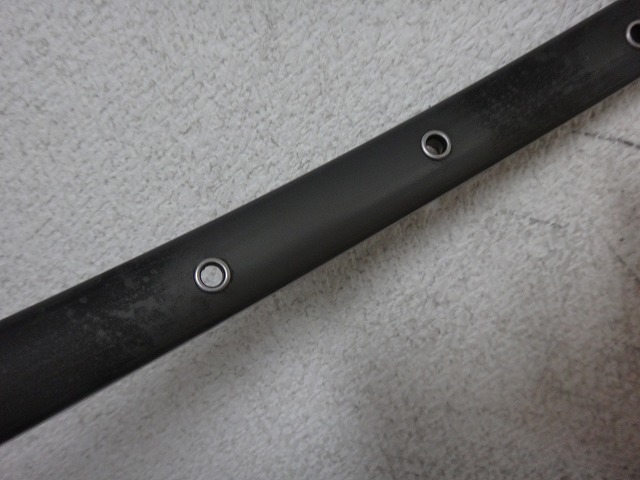
But I found a way to clean it, so
I worked hard to scrub the entire rim circumference.
While I can't say for certain, rims that have been left on a fixed trainer tend to
get dirty like this depending on the properties of the chain oil.
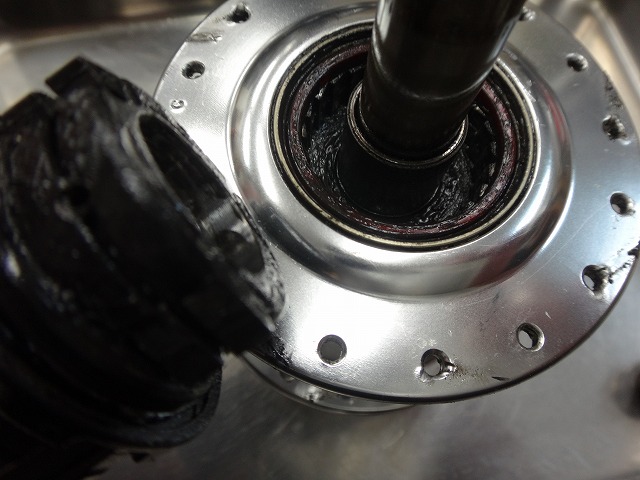
I'll clean the hub.
I'll grease up the ratchet on the freewheel body, but
I didn't feel the bearings needed greasing, so I'm not doing that this time.
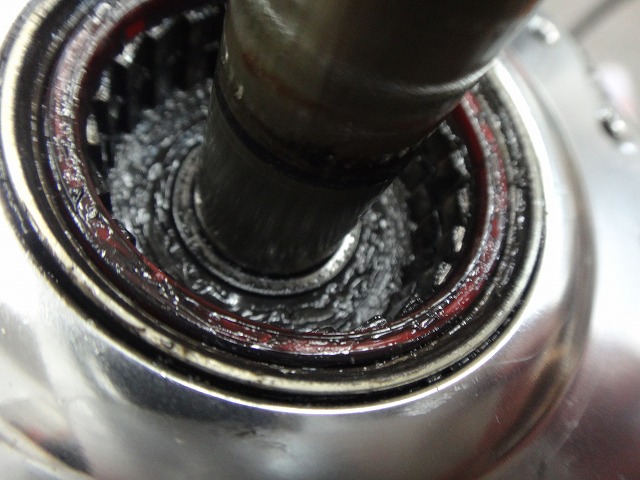
By the way, this seal is facing the wrong way.
You need to install it with the U-channel groove facing outward.
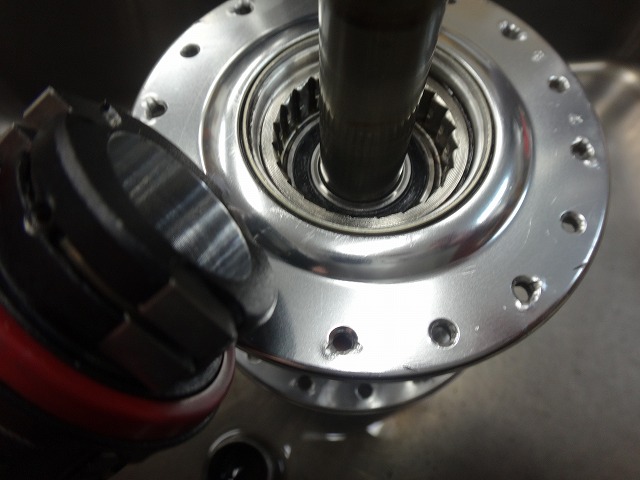
All cleaned.
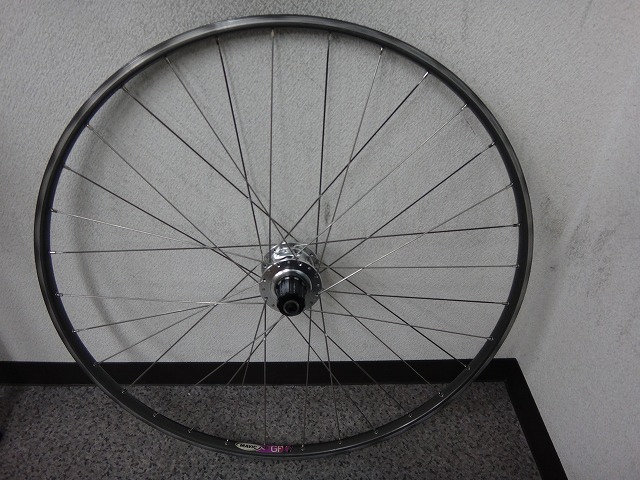
It's built.
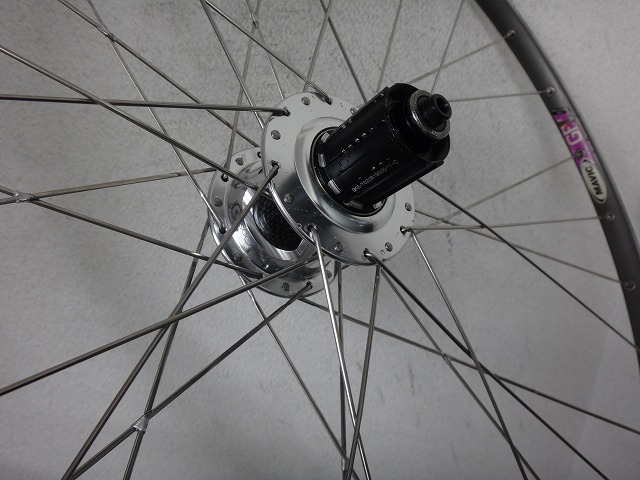
G3 hub (technically) 32H semi-competition "Yonroku" (4-cross) laced with reinforcement.
"Yonpachi" (6-cross) wasn't possible because the spoke length for the non-freewheel side doesn't exist in CX-RAY.
As expected from the GP4 final version, it tensioned up very pleasantly.
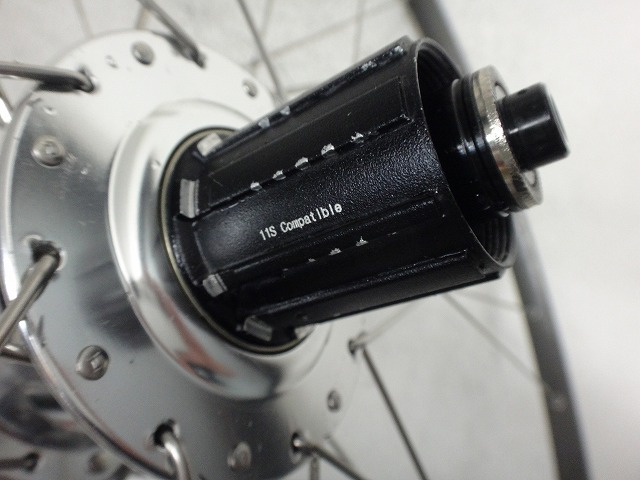
The black Shimano 11-speed freewheel body is a mismatch with the hub shell's generation, but
this is a hub shell from the SL+ era that
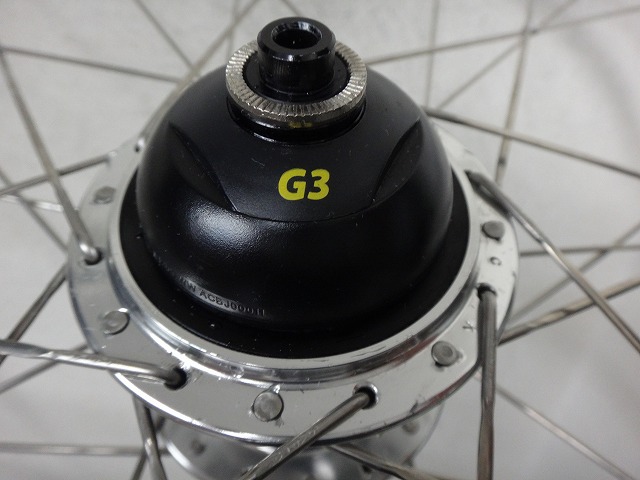
PowerTap converted with G3 internals
(probably as a service).
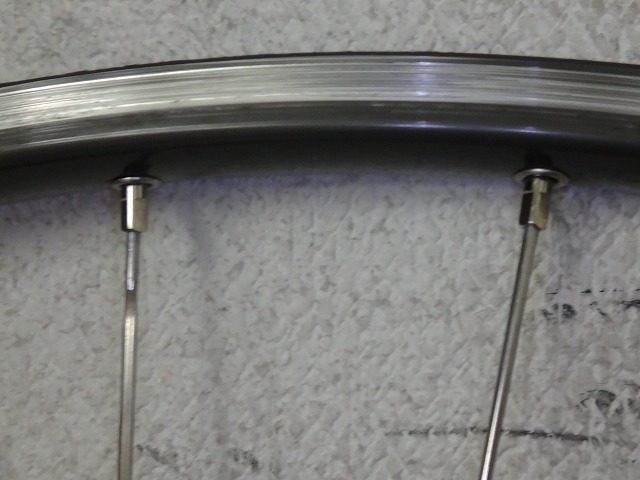
I went with brass nipples.
The customer's preference was "new is fine regardless of material."
Regarding nipple weight, whether #14 or #15, for 12mm length
brass nipples: 72 pieces = approximately 78g, aluminum nipples: 72 pieces = approximately 28g.
(For quick calculations, you can figure brass at 1g per nipple and aluminum at 3 per 1g.)
Theoretically #14 nipples should be lighter since the hole is larger, but
with only 72 pieces there's no significant difference anyway.
And normally a wheel only uses about 36 nipples to begin with.
For this 32H wheel, brass nipples weigh 34.6g,
and if it were aluminum nipples it would be 12.4g—about a 22g weight reduction.
But I think it's better to worry about the potential difference between the rim eyelets and nipples
than the weight savings from aluminum nipples on a not-particularly-light 480g rim,
so I deliberately chose brass nipples.
If I were building with the early GP4, I probably would have gone with aluminum.