Another wheel today (and so on).
I took yesterday off, so I didn't open the shop today for that reason,
but I came in just to build this wheel.
I took the order for this wheel in November,
but that was November two years ago, so we're looking at a 14-month wait.
See what happens when you say things like "whenever is fine"!
↑why am I being so bossy
I'm heading over to the customer's place to deliver it now.
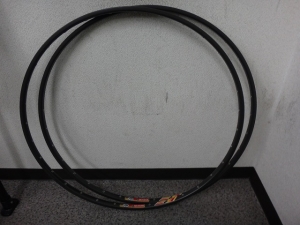
I received a FiR QUASAR rim from the customer.
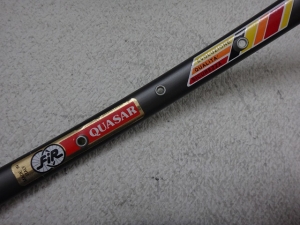
FiR rims from this era have names based on astronomical terminology or star names.
Others include Sirius, Vega (spelled WEGA, not VEGA), Rigel (RIGEL), and
Alkor (spelled ALKOR, not ALKOR—wait, that one's the same)... anyway, Alcor is spelled ALKOR.
The spellings differ from English because they're Italian.
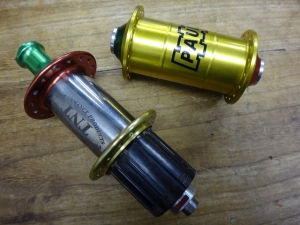
I also have the hubs on hand—front is a Paul hub and rear is TNT.
Both have anodized finish in rasta colors.
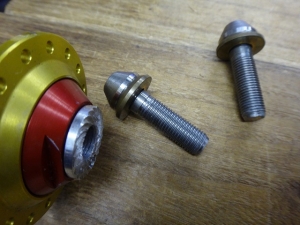
The Paul hub uses a titanium bolt in place of the axle
to secure it to the fork end,
and naturally it's quite a long bolt.
This is a tangent, but KCNC made ISIS-standard cotterless cranksets where
both the shaft and fixing bolt were scandium,
and those bolts were also abnormally long.
Even though scandium alloy is ultimately aluminum alloy,
they apparently figured that aluminum on a crankset shaft was risky,
so they tried to secure strength by having both the fixing bolt and
the long shaft—pretty cheeky engineering, if you ask me (←I mean that as a compliment).
This hub bolt length reminds me of that.
But I'm getting further sidetracked: scandium alloy isn't actually scandium as the main component.
It's just aluminum alloy with tiny amounts of scandium added as an alloying element.
If you can call something "scandium alloy" with that level of composition,
then 3-2.5 titanium alloy should also be called "aluminum alloy" or "vanadium alloy,"
depending on what you're emphasizing.
I'm puzzled why scandium always seems to be talked about as if it's the primary component.
Though, come to think of it, chromoly is steel with chromium and molybdenum added,
yet we call it by the alloying elements' name instead of "steel."
But with chromoly, people generally recognize that steel is the main material.
With scandium alloy, some people seem to think "over 90% of the composition is scandium,"
so I find it pretty confusing.
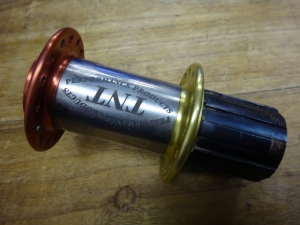
The TNT rear hub has the hub shell and right end/axle made of titanium.
And this hub

comes apart like this.
It's not a defect—that's just how it's designed.
Kyserium's front hub doesn't glue the aluminum flanges to the carbon shell either.
And I don't like to reference my own custom work, but
my W freehub doesn't glue the left and right hub shells together either.
This is kind of trivial, but with hubs like this, you can set the phase of one flange hole
independently from the other side,
so even with pair-spoke rims you don't get phasing issues.
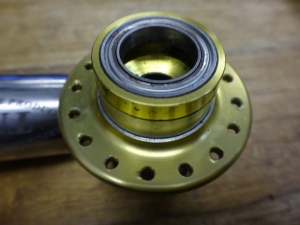
↑There's a bearing here, I think, which is why it comes apart.
This bearing isn't preloaded by tightening the axle—
it's just there to keep the shaft from wobbling.
And once the wheel is built, this bearing can't be replaced.
(Even if you remove the hub's left bearing, it's impossible)

↑The rear hub structure is roughly like this.
The freewheel body is Shimano-compatible, but unlike Shimano,
it has a cartridge bearing pressed into the right end of the freebody.
Because Shimano's setup uses only two bearings at each end (cup and cone),
when you try to do it with cartridge bearings only, it felt risky,
so they've added another bearing inside the hub shell.
It's just a left-side hollow aluminum nut and right-side hollow titanium bolt
threaded in from each side,
but the aluminum shaft portion directly below the hub-shell bearing
is outbatted to receive the bearing.
As I mentioned earlier, this bearing isn't ball-preload adjusted by tightening.
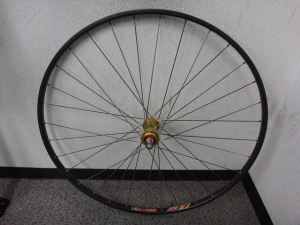
Front wheel is done.

When I put it on the truing stand,
I need to have a bolt attached to the hub axle,
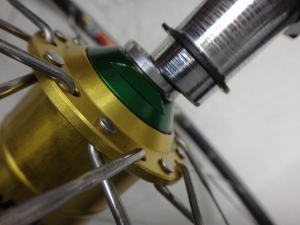
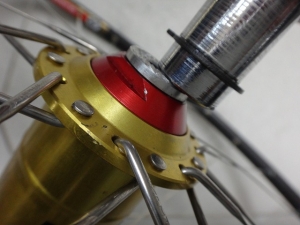
but I have to remove it every time I check the centering, which is annoying.
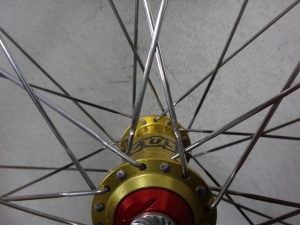
The lacing pattern was left to my discretion.
32H, CX-RAY, 4x Italian lacing.
There's a reason I didn't do radial lacing,
and there's a reason the 32H tangent lacing is 4-cross rather than 6-cross. Not explaining though.
If this were the me from not long ago, I'd probably have done 6-cross,
so I do sense some sort of progress or growth here,
but if I encounter a similar situation again, I might inexplicably go with 6-cross.
Maybe there isn't a single optimal solution... ugh.
I could explain to this wheel's customer why I think this is the best choice right now,
but I don't expect they'll ask.
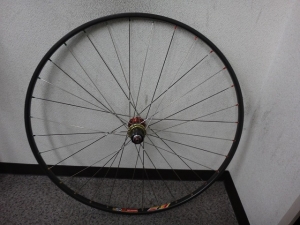
Rear wheel is done.
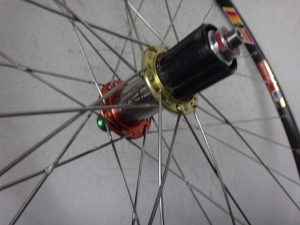
32H, half-comp, 4-cross lacing with cross-connections.
With this TNT hub, you probably shouldn't do radial lacing on either the front or rear.
I don't know what the manufacturer said back then,
but I've actually seen a front wheel with radial lacing on a TNT hub
that exploded from spoke tension one day when I checked on it.
The aluminum forging might not have been as good back then as it is now,
or it might be relevant that they didn't position the flange holes toward the inside
(they're thin-walled toward the outside).
The titanium hub shell's press fit with the left flange looked loose,
so I could've taken it apart and flipped the logo right-side up,
but I couldn't be bothered.
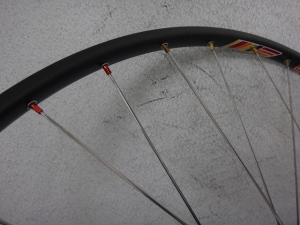
For the nipple colors, per the customer's request,
starting clockwise from the valve hole: 11 red nipples in a row, then 10 gold ones in a row,
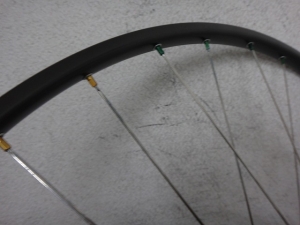
followed by 11 green ones in a row—rasta color pattern.
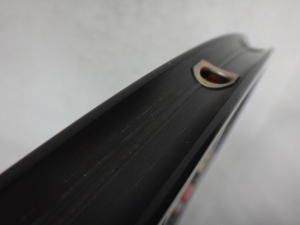
FiR's tubular rim has a tight radius on the outer edge,
so it's not ideal for wide tires.
I had Continental 25C and TUFO 22C tires on hand from the customer,
so I went with the TUFO.
I took yesterday off, so I didn't open the shop today for that reason,
but I came in just to build this wheel.
I took the order for this wheel in November,
but that was November two years ago, so we're looking at a 14-month wait.
See what happens when you say things like "whenever is fine"!
↑why am I being so bossy
I'm heading over to the customer's place to deliver it now.
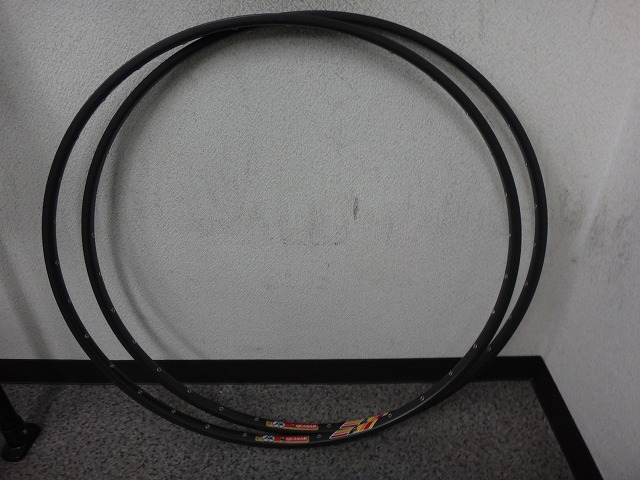
I received a FiR QUASAR rim from the customer.
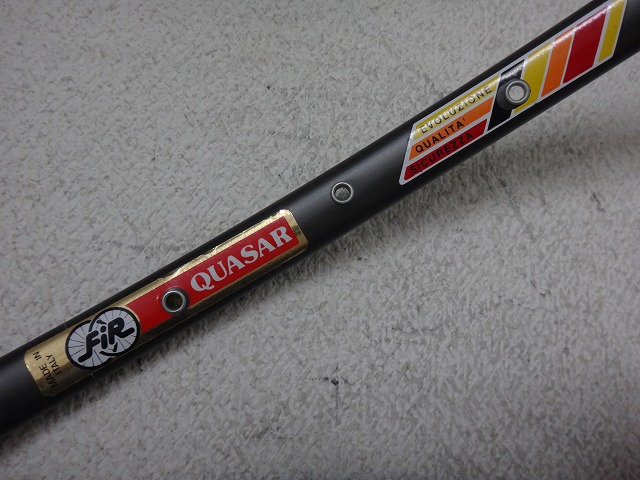
FiR rims from this era have names based on astronomical terminology or star names.
Others include Sirius, Vega (spelled WEGA, not VEGA), Rigel (RIGEL), and
Alkor (spelled ALKOR, not ALKOR—wait, that one's the same)... anyway, Alcor is spelled ALKOR.
The spellings differ from English because they're Italian.
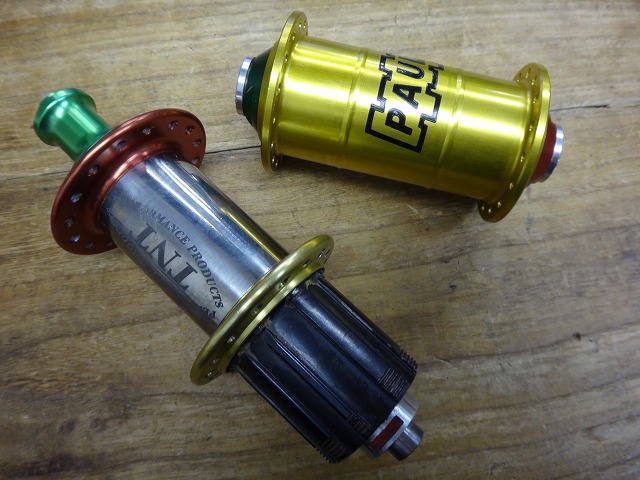
I also have the hubs on hand—front is a Paul hub and rear is TNT.
Both have anodized finish in rasta colors.

The Paul hub uses a titanium bolt in place of the axle
to secure it to the fork end,
and naturally it's quite a long bolt.
This is a tangent, but KCNC made ISIS-standard cotterless cranksets where
both the shaft and fixing bolt were scandium,
and those bolts were also abnormally long.
Even though scandium alloy is ultimately aluminum alloy,
they apparently figured that aluminum on a crankset shaft was risky,
so they tried to secure strength by having both the fixing bolt and
the long shaft—pretty cheeky engineering, if you ask me (←I mean that as a compliment).
This hub bolt length reminds me of that.
But I'm getting further sidetracked: scandium alloy isn't actually scandium as the main component.
It's just aluminum alloy with tiny amounts of scandium added as an alloying element.
If you can call something "scandium alloy" with that level of composition,
then 3-2.5 titanium alloy should also be called "aluminum alloy" or "vanadium alloy,"
depending on what you're emphasizing.
I'm puzzled why scandium always seems to be talked about as if it's the primary component.
Though, come to think of it, chromoly is steel with chromium and molybdenum added,
yet we call it by the alloying elements' name instead of "steel."
But with chromoly, people generally recognize that steel is the main material.
With scandium alloy, some people seem to think "over 90% of the composition is scandium,"
so I find it pretty confusing.
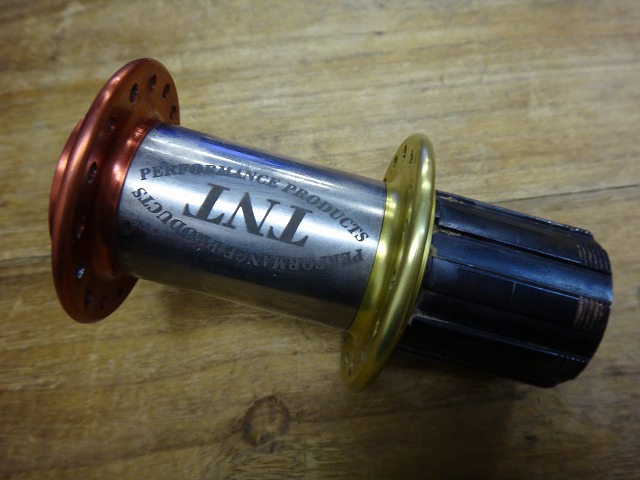
The TNT rear hub has the hub shell and right end/axle made of titanium.
And this hub
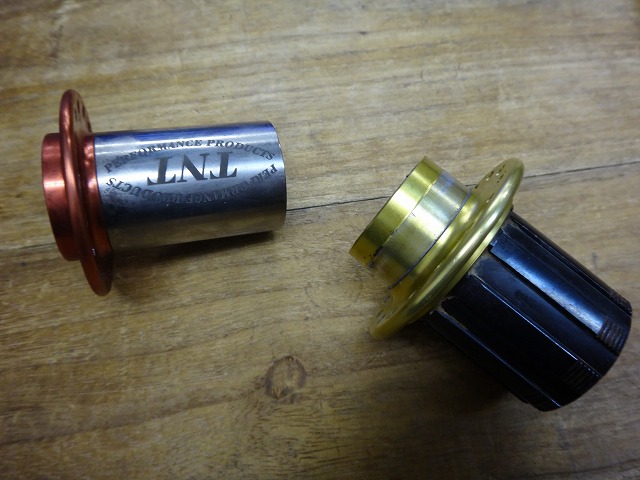
comes apart like this.
It's not a defect—that's just how it's designed.
Kyserium's front hub doesn't glue the aluminum flanges to the carbon shell either.
And I don't like to reference my own custom work, but
my W freehub doesn't glue the left and right hub shells together either.
This is kind of trivial, but with hubs like this, you can set the phase of one flange hole
independently from the other side,
so even with pair-spoke rims you don't get phasing issues.
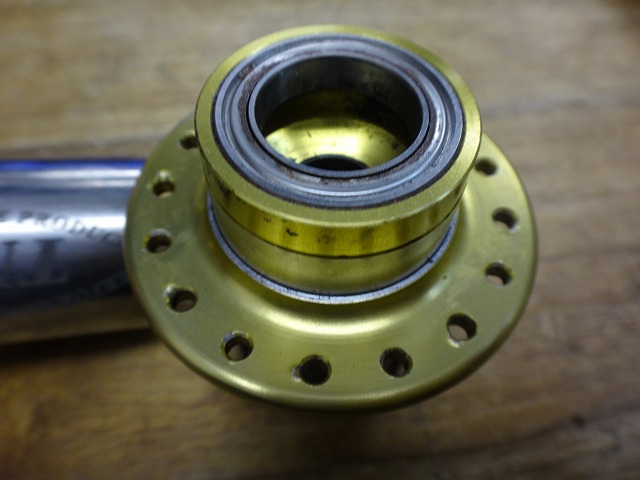
↑There's a bearing here, I think, which is why it comes apart.
This bearing isn't preloaded by tightening the axle—
it's just there to keep the shaft from wobbling.
And once the wheel is built, this bearing can't be replaced.
(Even if you remove the hub's left bearing, it's impossible)
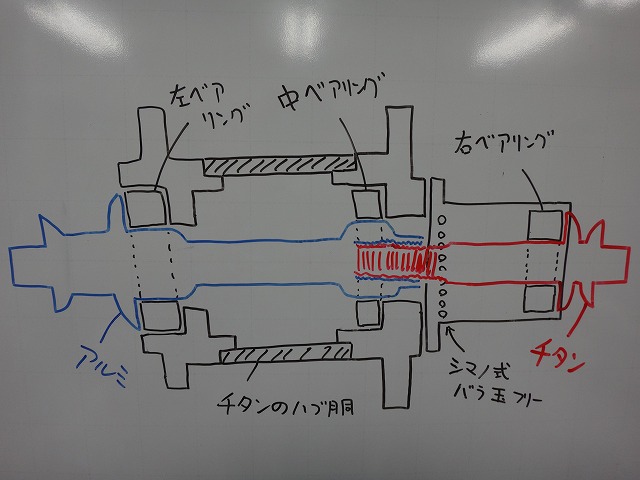
↑The rear hub structure is roughly like this.
The freewheel body is Shimano-compatible, but unlike Shimano,
it has a cartridge bearing pressed into the right end of the freebody.
Because Shimano's setup uses only two bearings at each end (cup and cone),
when you try to do it with cartridge bearings only, it felt risky,
so they've added another bearing inside the hub shell.
It's just a left-side hollow aluminum nut and right-side hollow titanium bolt
threaded in from each side,
but the aluminum shaft portion directly below the hub-shell bearing
is outbatted to receive the bearing.
As I mentioned earlier, this bearing isn't ball-preload adjusted by tightening.
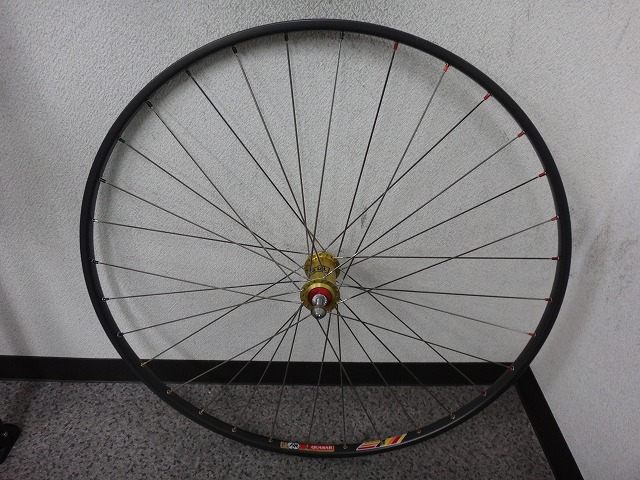
Front wheel is done.

When I put it on the truing stand,
I need to have a bolt attached to the hub axle,
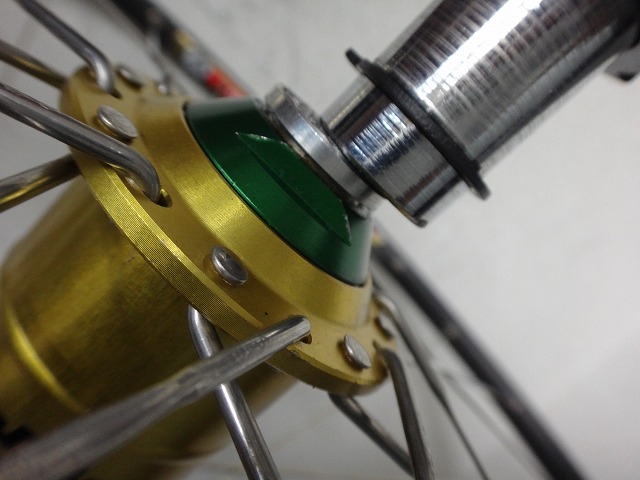
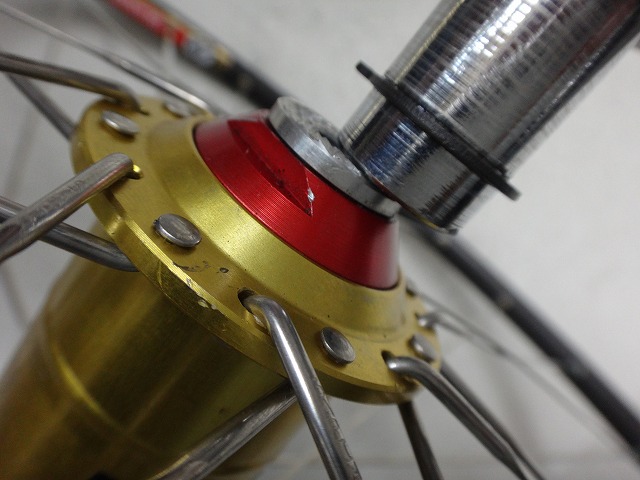
but I have to remove it every time I check the centering, which is annoying.
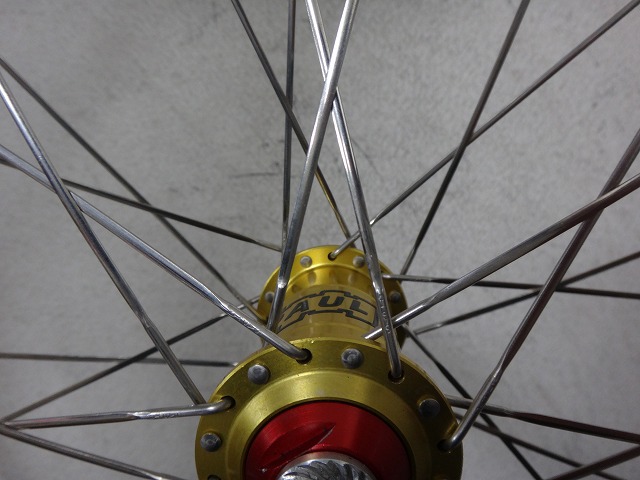
The lacing pattern was left to my discretion.
32H, CX-RAY, 4x Italian lacing.
There's a reason I didn't do radial lacing,
and there's a reason the 32H tangent lacing is 4-cross rather than 6-cross. Not explaining though.
If this were the me from not long ago, I'd probably have done 6-cross,
so I do sense some sort of progress or growth here,
but if I encounter a similar situation again, I might inexplicably go with 6-cross.
Maybe there isn't a single optimal solution... ugh.
I could explain to this wheel's customer why I think this is the best choice right now,
but I don't expect they'll ask.
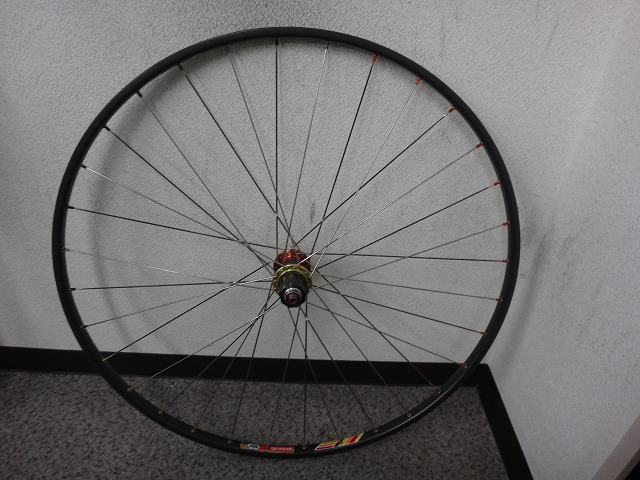
Rear wheel is done.
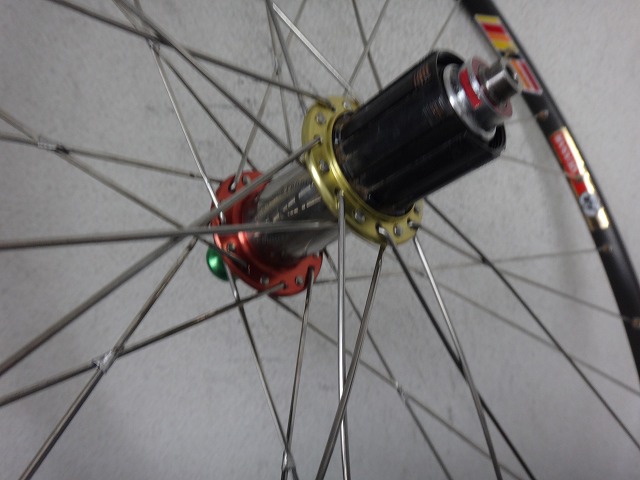
32H, half-comp, 4-cross lacing with cross-connections.
With this TNT hub, you probably shouldn't do radial lacing on either the front or rear.
I don't know what the manufacturer said back then,
but I've actually seen a front wheel with radial lacing on a TNT hub
that exploded from spoke tension one day when I checked on it.
The aluminum forging might not have been as good back then as it is now,
or it might be relevant that they didn't position the flange holes toward the inside
(they're thin-walled toward the outside).
The titanium hub shell's press fit with the left flange looked loose,
so I could've taken it apart and flipped the logo right-side up,
but I couldn't be bothered.
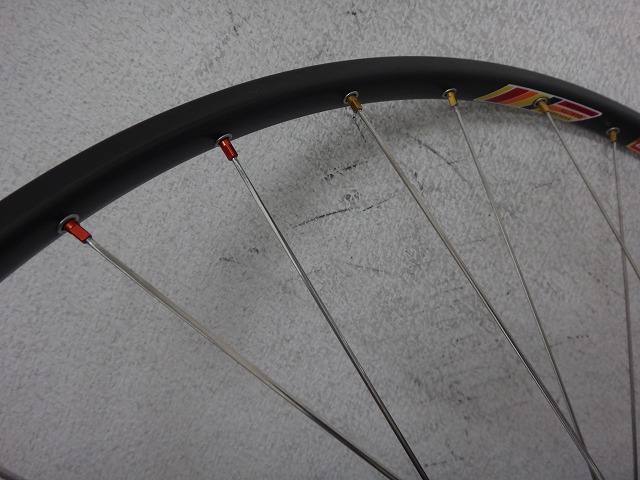
For the nipple colors, per the customer's request,
starting clockwise from the valve hole: 11 red nipples in a row, then 10 gold ones in a row,
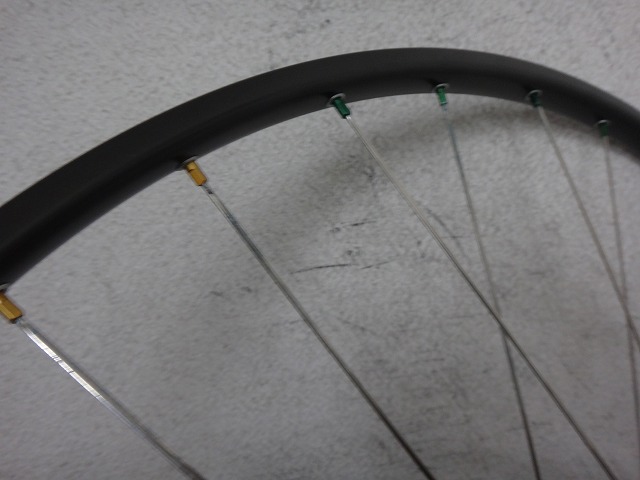
followed by 11 green ones in a row—rasta color pattern.
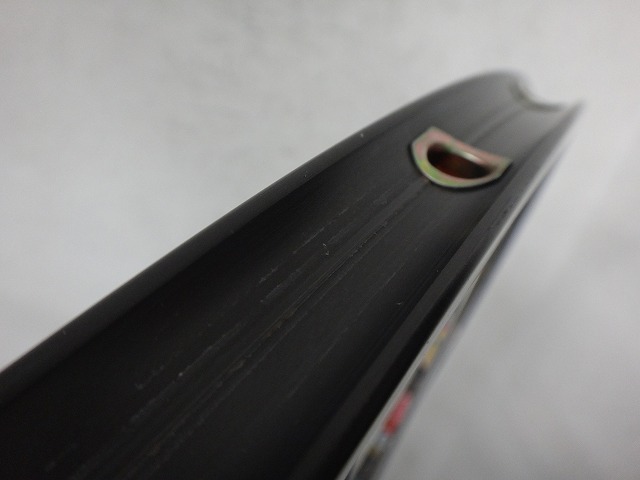
FiR's tubular rim has a tight radius on the outer edge,
so it's not ideal for wide tires.
I had Continental 25C and TUFO 22C tires on hand from the customer,
so I went with the TUFO.