Another day with wheels (and so on).
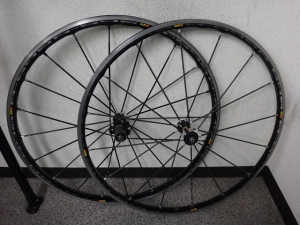
A customer left me an R-SYS Premium wheel.
It's a model that takes the original R-SYS rim and anodizes it black, with a titanium rear hub axle nut finished in what looks like a blue-burnt style.
The Ksyrium and Cosmic Carbone also have Premium series, but these share two things in common: instead of those loud yellow stickers on the spokes and rims, they use silver and black for a sleek look, and they don't come in tubular versions.
Unlike the R-SYS SL, the hub uses a six-hole fixed cone adjustment system rather than a sealed cartridge, so you can adjust the bearing play.
So, the reason the customer brought this wheel in is that they want it rebuilt with an R-SYS SLR rim.
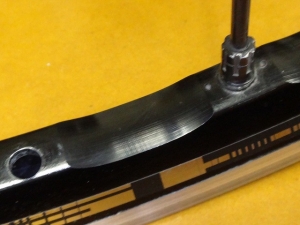
The rim generation is the same as the Ksyrium K1, with rim side cutouts.
~For the Folks at Home~
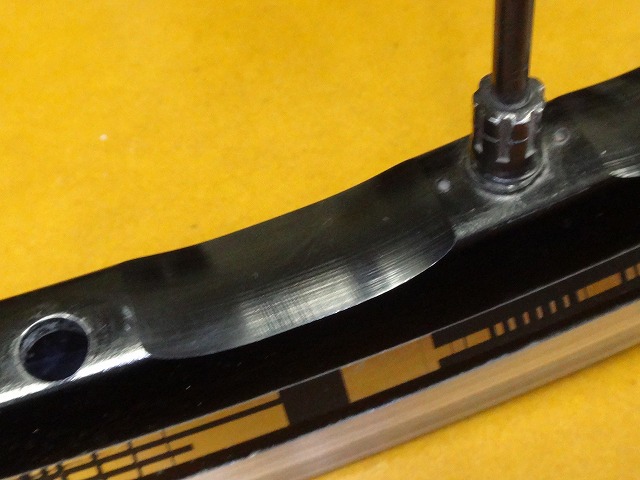
Mavic's rims for Zicral spokes have dots marked on the rim side next to each spoke hole, counter-clockwise from the valve hole when viewed from the right side.
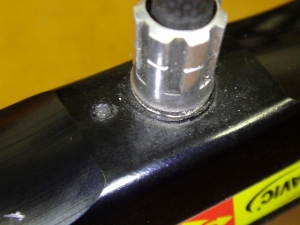
One dot marks the front rim,

and two dots mark the rear rim. Since the rear rim is offset, you can't build it backwards. If you force the nipple threads, they'll strip easily, so be careful.
The thing is, the SLR rim doesn't have a dot next to the valve hole.
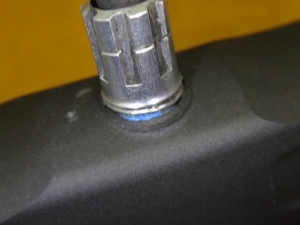
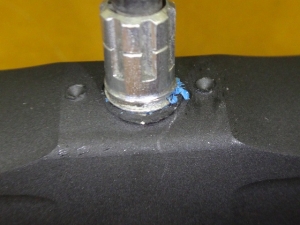
The dot is two holes away from the valve hole.
You might think the front rim has no left-right orientation, and you'd actually be right. Up to a certain generation, anyway.
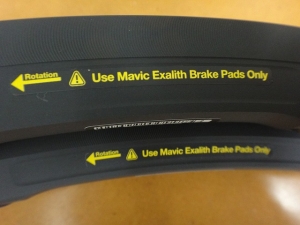
This rim is aero (teardrop profile), so there's a specific rotation direction.
The front rim's dot position and rotation direction matched up this time, but if they hadn't (which is extremely unlikely), we'd prioritize the aero orientation when building.
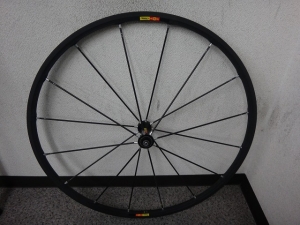
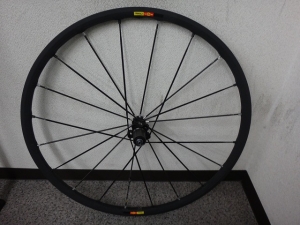
Built it.
With Zicral spoke wheels, the planned number of nipple thread wraps visible through the rim holes is pretty much predetermined, which actually makes them easier to build than standard wheels. If a factory worker only builds these all day, I'd imagine the build time per wheel is quite short.
(Not that I'm making any snide remarks about Mavic's notoriously loose quality control and terrible hub centering.)
After rebuilding with the SLR rim, you notice right away from the contact sound with the truing stand gauge that the surface hardness is very high. And when you're building, even though the tension is quite high, the rim barely deflects, confirming it's a genuinely stiff rim.
When it's just a bare rim, that's one thing, but some rims will oscillate in the built wheel. Shimano's carbon laminate rims especially do this—for example, a C24 front 16H will have all eight spoke positions on each side deform left and right from spoke tension, creating a wavy pattern. With rims like that, you have to compromise on lateral runout tolerances. Put the truing stand gauge close to the rim and spin the wheel, and you'll hear "tsaka-tsaka-tsaka..." tiny lateral runout that's absolutely impossible to true out completely.
The fact that this rim has almost no waviness—or rather, none at all—considering its spoke count (being low) and rim weight (being light for carbon) is surprising. With a heavier rim, it wouldn't be so remarkable.
As for the actual weight, that's something only I need to know, so I'm not writing it here. Don't go thinking you can figure out a rim's weight just by scrolling through the browser images. ← Man, this guy has bad vibes.

Thanks for waiting!
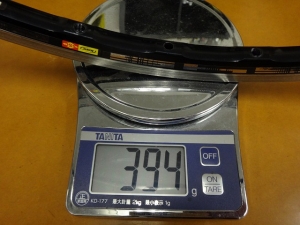
Premium front rim!
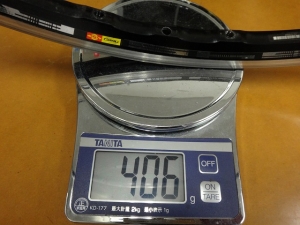
Premium rear rim!
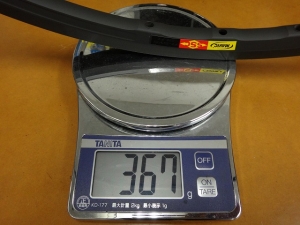
SLR front rim!
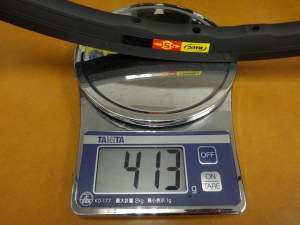
SLR rear rim!
↑Okay, cut it out!
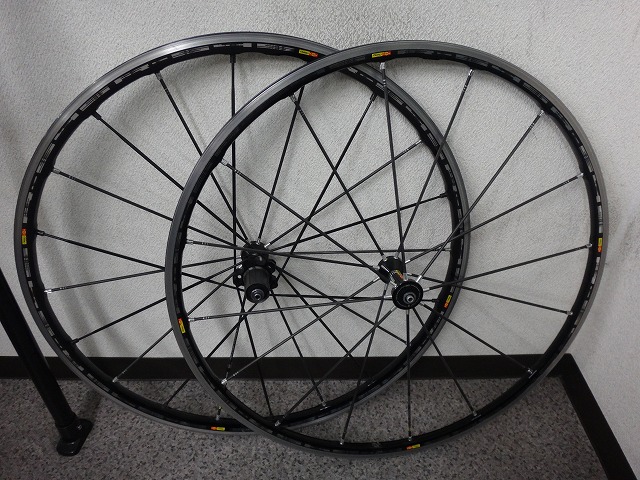
A customer left me an R-SYS Premium wheel.
It's a model that takes the original R-SYS rim and anodizes it black, with a titanium rear hub axle nut finished in what looks like a blue-burnt style.
The Ksyrium and Cosmic Carbone also have Premium series, but these share two things in common: instead of those loud yellow stickers on the spokes and rims, they use silver and black for a sleek look, and they don't come in tubular versions.
Unlike the R-SYS SL, the hub uses a six-hole fixed cone adjustment system rather than a sealed cartridge, so you can adjust the bearing play.
So, the reason the customer brought this wheel in is that they want it rebuilt with an R-SYS SLR rim.
The rim generation is the same as the Ksyrium K1, with rim side cutouts.
~For the Folks at Home~
Mavic's rims for Zicral spokes have dots marked on the rim side next to each spoke hole, counter-clockwise from the valve hole when viewed from the right side.

One dot marks the front rim,
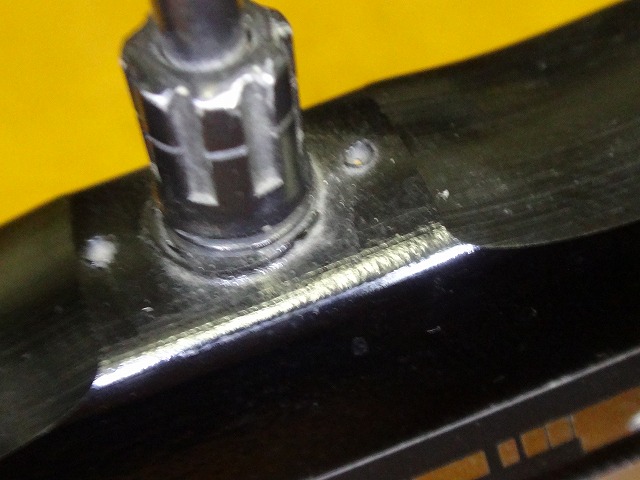
and two dots mark the rear rim. Since the rear rim is offset, you can't build it backwards. If you force the nipple threads, they'll strip easily, so be careful.
The thing is, the SLR rim doesn't have a dot next to the valve hole.

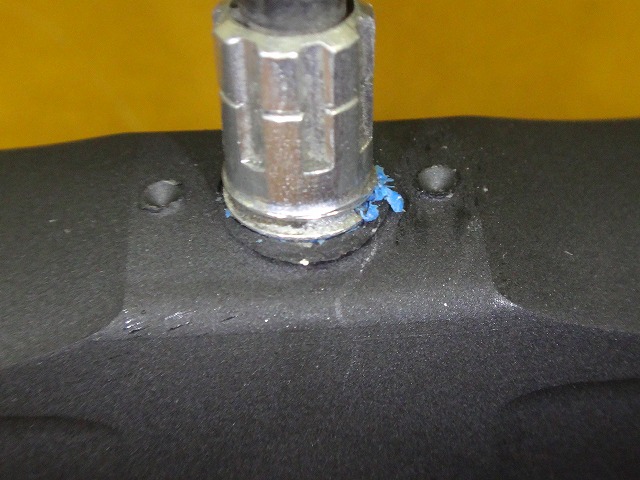
The dot is two holes away from the valve hole.
You might think the front rim has no left-right orientation, and you'd actually be right. Up to a certain generation, anyway.

This rim is aero (teardrop profile), so there's a specific rotation direction.
The front rim's dot position and rotation direction matched up this time, but if they hadn't (which is extremely unlikely), we'd prioritize the aero orientation when building.
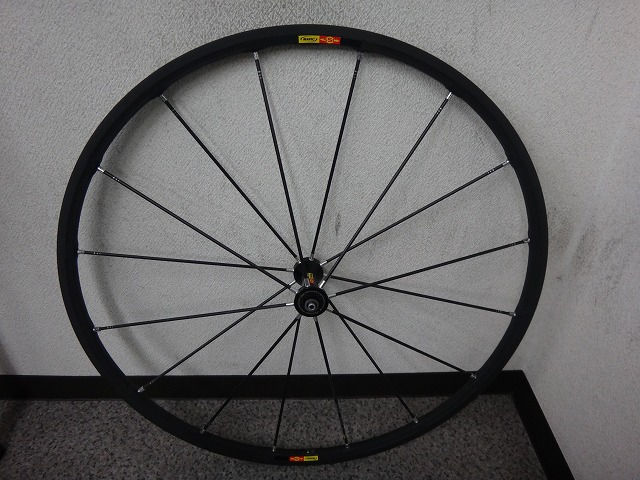

Built it.
With Zicral spoke wheels, the planned number of nipple thread wraps visible through the rim holes is pretty much predetermined, which actually makes them easier to build than standard wheels. If a factory worker only builds these all day, I'd imagine the build time per wheel is quite short.
(Not that I'm making any snide remarks about Mavic's notoriously loose quality control and terrible hub centering.)
After rebuilding with the SLR rim, you notice right away from the contact sound with the truing stand gauge that the surface hardness is very high. And when you're building, even though the tension is quite high, the rim barely deflects, confirming it's a genuinely stiff rim.
When it's just a bare rim, that's one thing, but some rims will oscillate in the built wheel. Shimano's carbon laminate rims especially do this—for example, a C24 front 16H will have all eight spoke positions on each side deform left and right from spoke tension, creating a wavy pattern. With rims like that, you have to compromise on lateral runout tolerances. Put the truing stand gauge close to the rim and spin the wheel, and you'll hear "tsaka-tsaka-tsaka..." tiny lateral runout that's absolutely impossible to true out completely.
The fact that this rim has almost no waviness—or rather, none at all—considering its spoke count (being low) and rim weight (being light for carbon) is surprising. With a heavier rim, it wouldn't be so remarkable.
As for the actual weight, that's something only I need to know, so I'm not writing it here. Don't go thinking you can figure out a rim's weight just by scrolling through the browser images. ← Man, this guy has bad vibes.
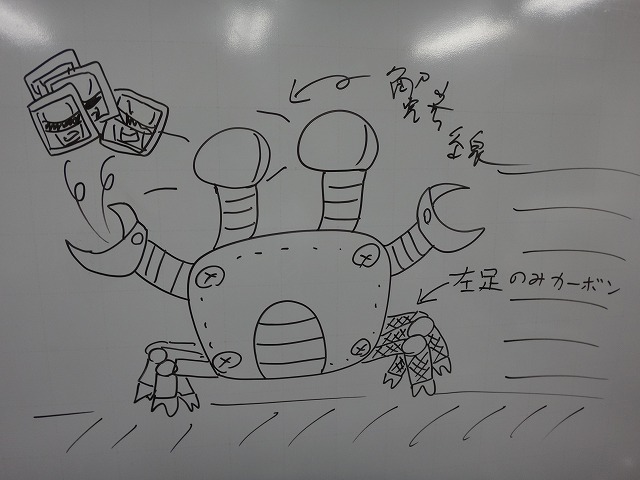
Thanks for waiting!
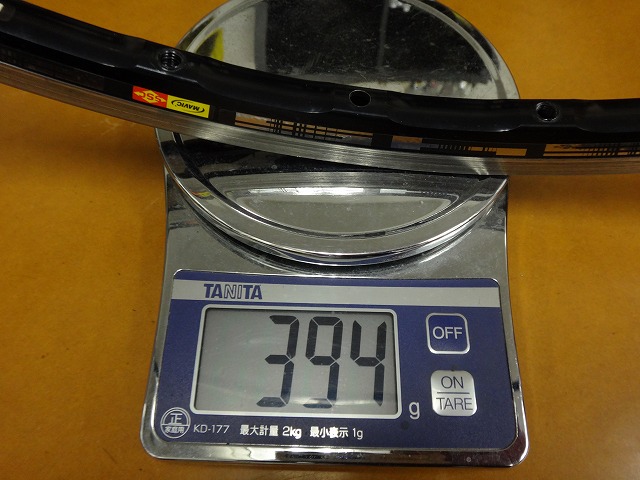
Premium front rim!

Premium rear rim!
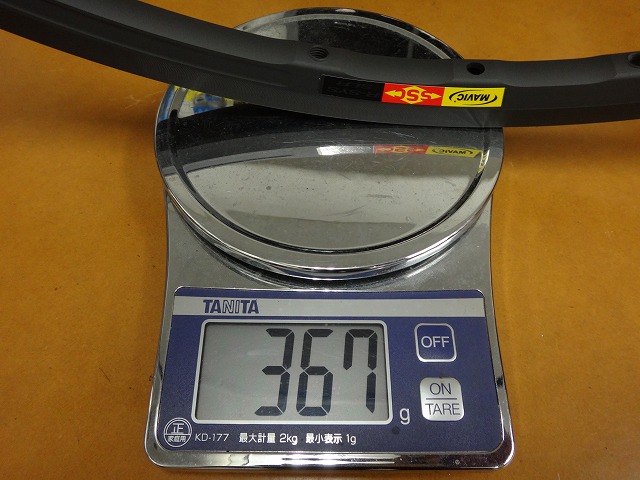
SLR front rim!
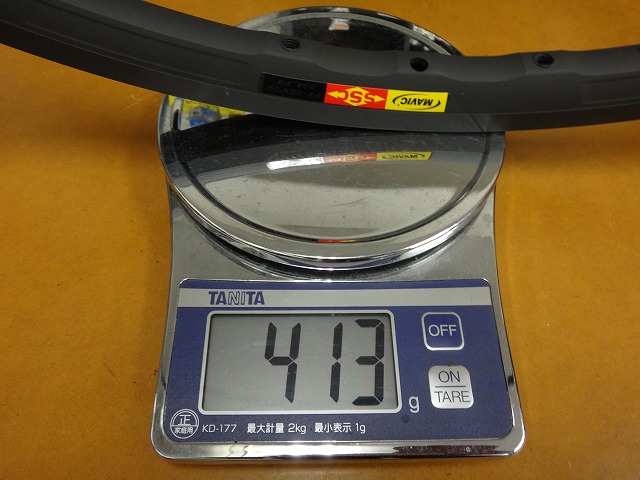
SLR rear rim!
↑Okay, cut it out!