As part of a bike overhaul,

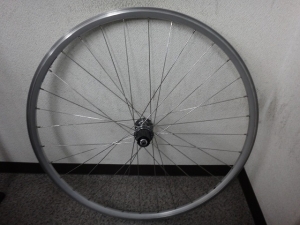
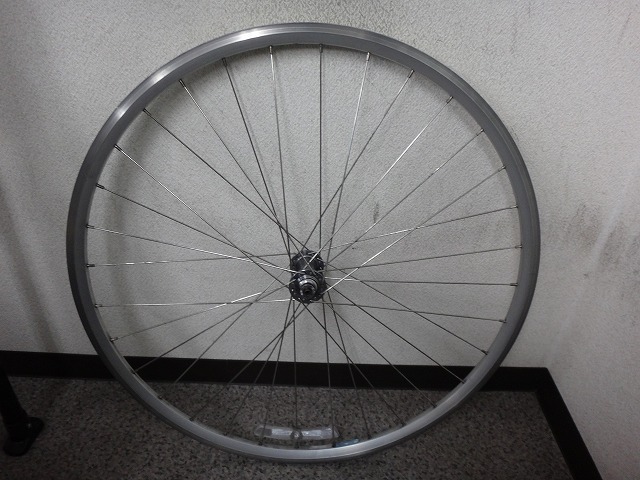
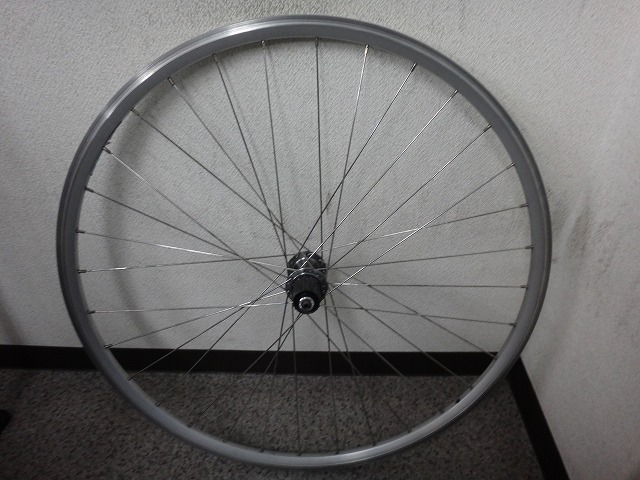
I overhauled the wheels that came on a sportif-type complete bike.
I can't go into too much detail, but
the customer bought their sportif in Hyogo
and now lives in Kyoto.
When they tried to ask a local shop to do the overhaul,
they were told something like "we don't touch sportifs"
and turned away.
It sounds like they were saying "we can handle road bikes properly" (laugh), but
the bike they entrusted to me isn't assembled with old parts or anything
particularly difficult to handle, so my thinking is:
if someone can't touch this, they can't handle road bikes either.
And yet, despite being a first-time customer, they came all the way from out of town.
The fact that they passed by other shops to come to us
is something I'm truly grateful for and deeply appreciate.
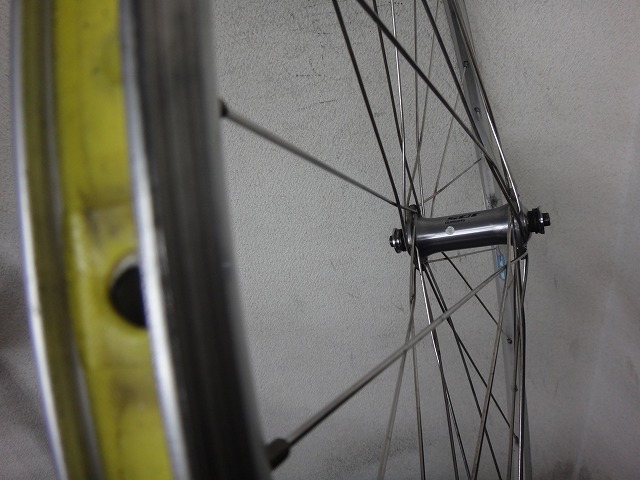
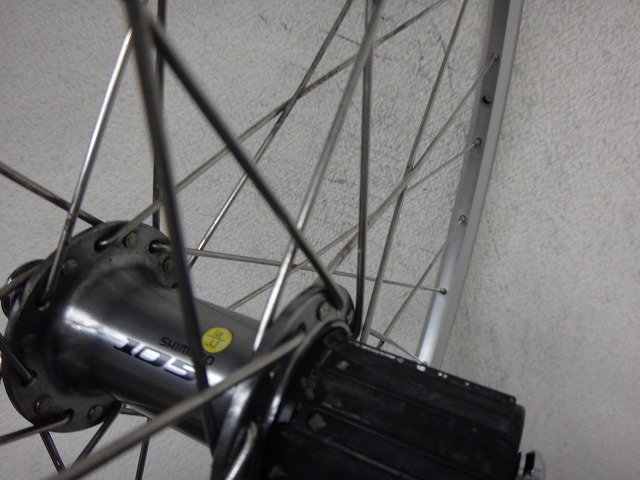
The hubs are Shimano 5700 series 105, the rims are Araya AR-713,
and the spokes are CN spokes number 14 plain,
with both wheels laced 32H six-cross Italian style.
The hub rotation feels smooth without any pitting,
but there's a dry, crusty feeling like the grease has broken down, so I disassembled it.
As part of a full overhaul,
I disassemble regardless of whether there are any odd sensations.
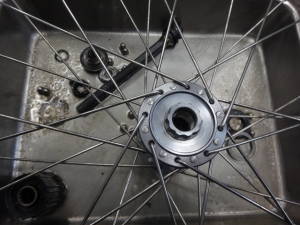
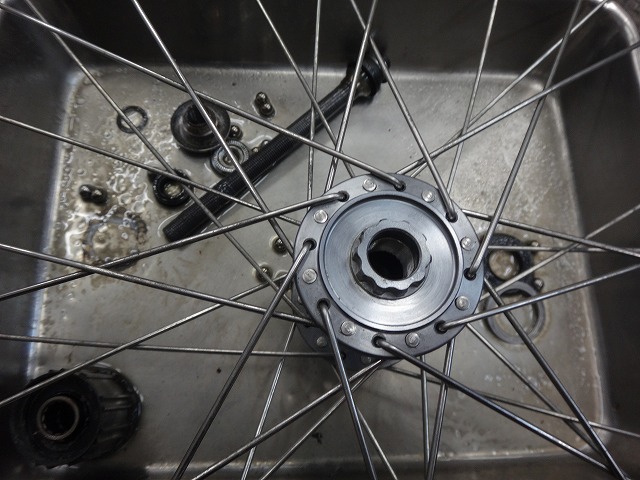
Looking at the hub bearings, the grease on the non-drive side was pitch black and dirty.
Sand must have gotten in.
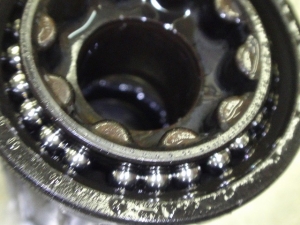
The freewheel body also felt dry when spinning freely,
so after cleaning, I applied grease.
For cleaning this, I don't use parts cleaner—
instead, I spray oil into the gaps to flush out the dirt.
It's the same method as cleaning old freewheel cogs,
and since this freewheel body is essentially a freewheel cog with the gears removed,
it makes sense that the maintenance method is the same.
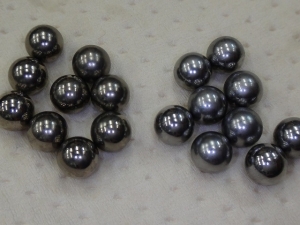
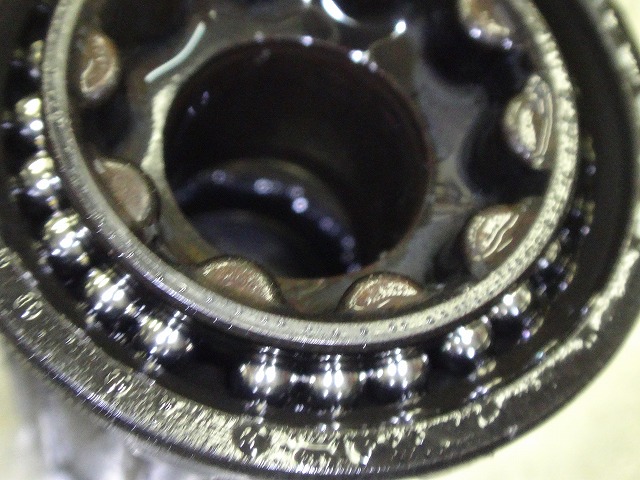
↑The nine balls on the left side of the image are the non-drive side.
The surface shine is noticeably dulled—clearly visible.
Fine sand got in and was grinding away as it rotated,
but neither the races nor the cones show any pitting or signs of it.
From a long-term perspective, this could eventually cause pitting, so I replaced the ball bearings.

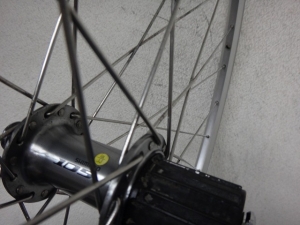
Aside from the fact that the hub name doesn't appear at the valve hole when you look through,
this is an exceptionally well-built wheel.
There's virtually no runout, and while there is some dish,
it's so minute that some centering gauges wouldn't even detect it.
You'd almost think they trued it right before bringing it in,
but that's almost certainly not what happened.
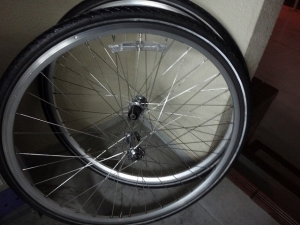
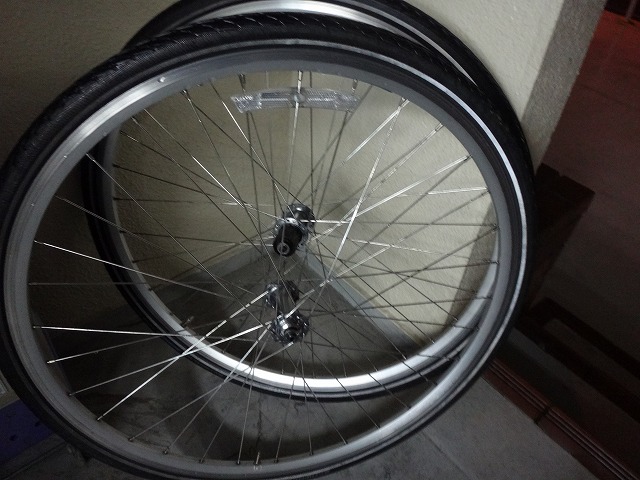
Because I wash the wheel before starting work.
If they'd trued it before I washed it,
there would definitely be fingerprints on top of the black grime.
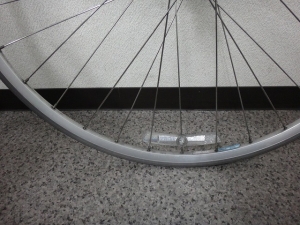
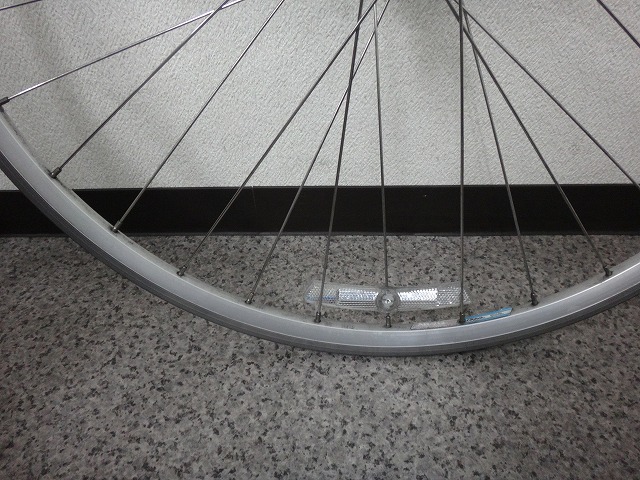
I wanted to check how reflective the front wheel's reflector is, so
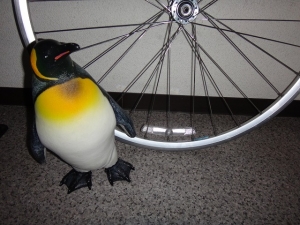
I took a photo with the flash in a completely dark shop.
I overhauled the wheels that came on a sportif-type complete bike.
I can't go into too much detail, but
the customer bought their sportif in Hyogo
and now lives in Kyoto.
When they tried to ask a local shop to do the overhaul,
they were told something like "we don't touch sportifs"
and turned away.
It sounds like they were saying "we can handle road bikes properly" (laugh), but
the bike they entrusted to me isn't assembled with old parts or anything
particularly difficult to handle, so my thinking is:
if someone can't touch this, they can't handle road bikes either.
And yet, despite being a first-time customer, they came all the way from out of town.
The fact that they passed by other shops to come to us
is something I'm truly grateful for and deeply appreciate.
The hubs are Shimano 5700 series 105, the rims are Araya AR-713,
and the spokes are CN spokes number 14 plain,
with both wheels laced 32H six-cross Italian style.
The hub rotation feels smooth without any pitting,
but there's a dry, crusty feeling like the grease has broken down, so I disassembled it.
As part of a full overhaul,
I disassemble regardless of whether there are any odd sensations.
Looking at the hub bearings, the grease on the non-drive side was pitch black and dirty.
Sand must have gotten in.
The freewheel body also felt dry when spinning freely,
so after cleaning, I applied grease.
For cleaning this, I don't use parts cleaner—
instead, I spray oil into the gaps to flush out the dirt.
It's the same method as cleaning old freewheel cogs,
and since this freewheel body is essentially a freewheel cog with the gears removed,
it makes sense that the maintenance method is the same.

↑The nine balls on the left side of the image are the non-drive side.
The surface shine is noticeably dulled—clearly visible.
Fine sand got in and was grinding away as it rotated,
but neither the races nor the cones show any pitting or signs of it.
From a long-term perspective, this could eventually cause pitting, so I replaced the ball bearings.
Aside from the fact that the hub name doesn't appear at the valve hole when you look through,
this is an exceptionally well-built wheel.
There's virtually no runout, and while there is some dish,
it's so minute that some centering gauges wouldn't even detect it.
You'd almost think they trued it right before bringing it in,
but that's almost certainly not what happened.
Because I wash the wheel before starting work.
If they'd trued it before I washed it,
there would definitely be fingerprints on top of the black grime.
I wanted to check how reflective the front wheel's reflector is, so
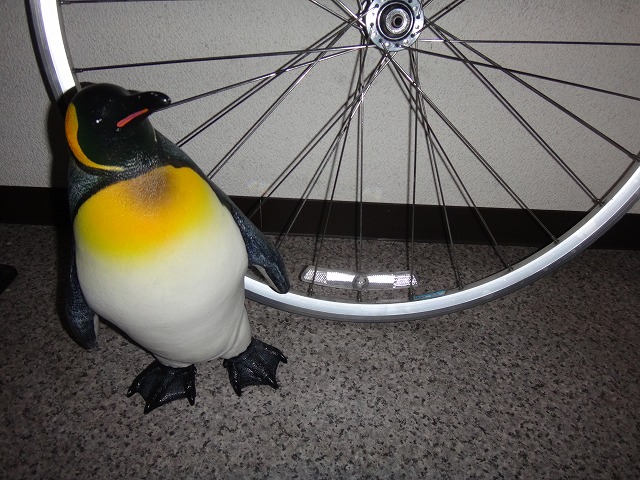
I took a photo with the flash in a completely dark shop.