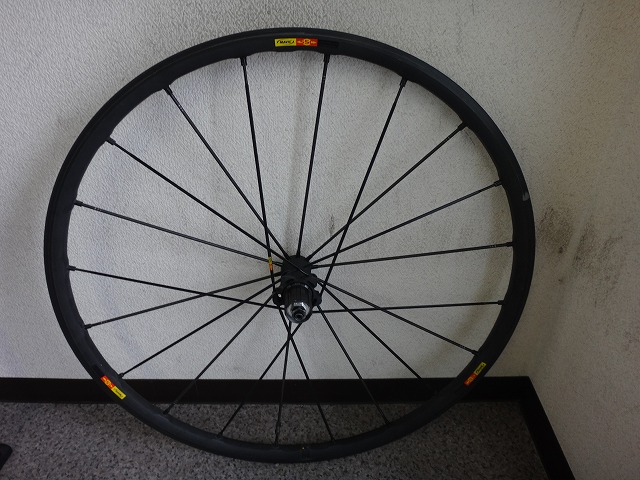
A customer brought in the rear wheel from an R-SYS SLR for service.
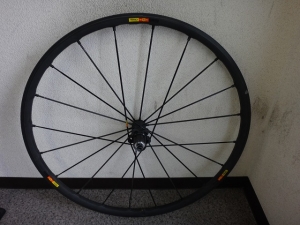
There was a clicking sound coming from around the rear hub, and they'd taken it to a nearby shop multiple times but it never got fixed.
Initially I thought the problem was around the drive ring, but I was wrong.

I took a photo before disassembling the hub. I told the customer that
it was strange how the axle was recessed relative to the end nut.
When tightening the end nut onto the axle, you must not tighten the bearing cone adjustment cap on the left side.
In the state shown in the image above, there should be some lateral play, but
when you tighten the left end bearing cone, the play disappears.
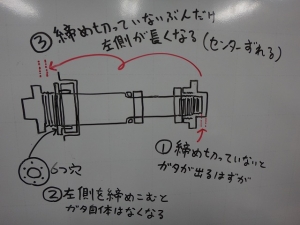
↑This is what I mean.
When tightening the right end, the bearing cone adjustment part on the left end must either
not be attached to the axle or be sufficiently loosened.
Initially, I thought this was the cause — that the bearings weren't fully seated on the axle, causing stress and creating the noise.
If that were the case, loosening the left end six-hole bearing cone adjustment cap should create play in the axle.
But the right end was tightly secured to the axle.
When I pulled out the axle, I discovered the real cause.
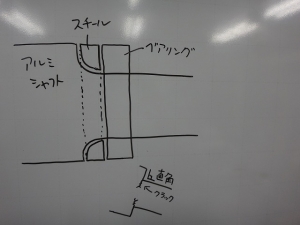
On the butted section of the aluminum axle, the base is rounded to resist bending stress.
The butted portion contacts the bearing from the inside on the right side of the hub body, but to avoid having the rounded surface make direct contact and to prevent aluminum from bearing the load,
a spacer made of steel (or zinc alloy) is installed. One side of this spacer is bowl-shaped to seat on the rounded axle,
and the other side is flat to seat on the bearing.
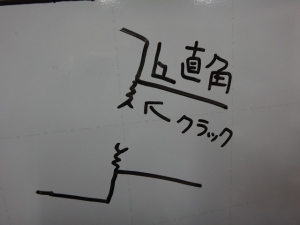
↑If you make the butted section of an aluminum axle perpendicular, this kind of trouble can occur.
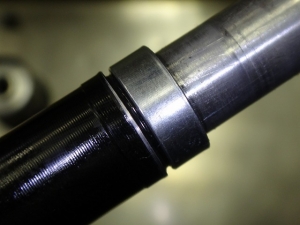
↑And here's that spot — the spacer is clearly floating away from the axle's butted section.
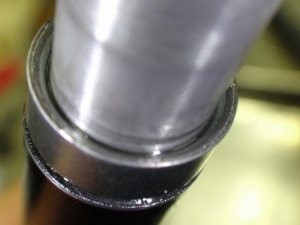
This end face is bowl-shaped, so it was installed in the wrong direction.
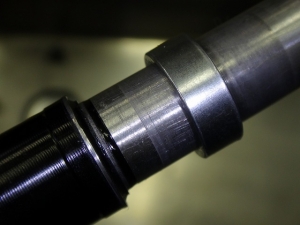
Because the end nut was tightened so firmly, the spacer had bitten deeply into the axle.
It was extremely difficult to remove without marking the axle.
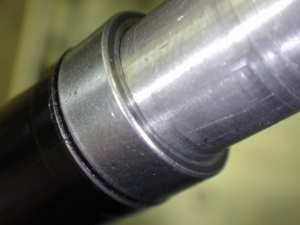
When installed in the correct direction, it looks like this.
Jumping ahead in the timeline, after the work was done,
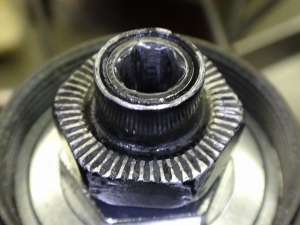
the relationship between the end nut and axle looked like this.
The axle was recessed by exactly the amount of gap created by the spacer being installed backwards.

Looking at the contact point between the drive ring and spoke head, there are no signs of lateral slipping that occurs when nipple tension is insufficient and spoke deformation is significant, so the noise doesn't seem to be coming from here.
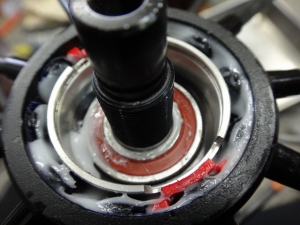
I did some truing and applied some thick grease while I had the drive ring off.
The spoke tension wasn't loose.
A few hours after the work was done, the customer called and said
"I rode about 30km and didn't hear any noise at all,"
so it's probably fixed.
There was a clicking sound coming from around the rear hub, and they'd taken it to a nearby shop multiple times but it never got fixed.
Initially I thought the problem was around the drive ring, but I was wrong.
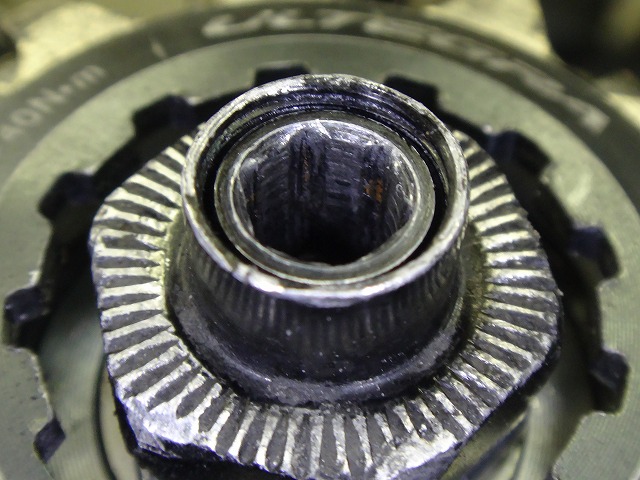
I took a photo before disassembling the hub. I told the customer that
it was strange how the axle was recessed relative to the end nut.
When tightening the end nut onto the axle, you must not tighten the bearing cone adjustment cap on the left side.
In the state shown in the image above, there should be some lateral play, but
when you tighten the left end bearing cone, the play disappears.
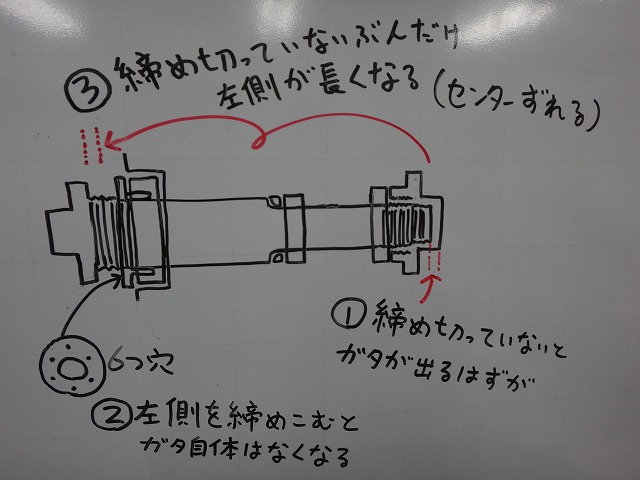
↑This is what I mean.
When tightening the right end, the bearing cone adjustment part on the left end must either
not be attached to the axle or be sufficiently loosened.
Initially, I thought this was the cause — that the bearings weren't fully seated on the axle, causing stress and creating the noise.
If that were the case, loosening the left end six-hole bearing cone adjustment cap should create play in the axle.
But the right end was tightly secured to the axle.
When I pulled out the axle, I discovered the real cause.

On the butted section of the aluminum axle, the base is rounded to resist bending stress.
The butted portion contacts the bearing from the inside on the right side of the hub body, but to avoid having the rounded surface make direct contact and to prevent aluminum from bearing the load,
a spacer made of steel (or zinc alloy) is installed. One side of this spacer is bowl-shaped to seat on the rounded axle,
and the other side is flat to seat on the bearing.
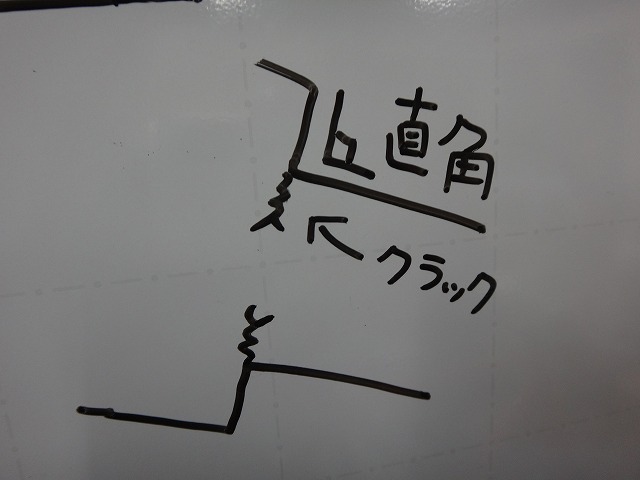
↑If you make the butted section of an aluminum axle perpendicular, this kind of trouble can occur.
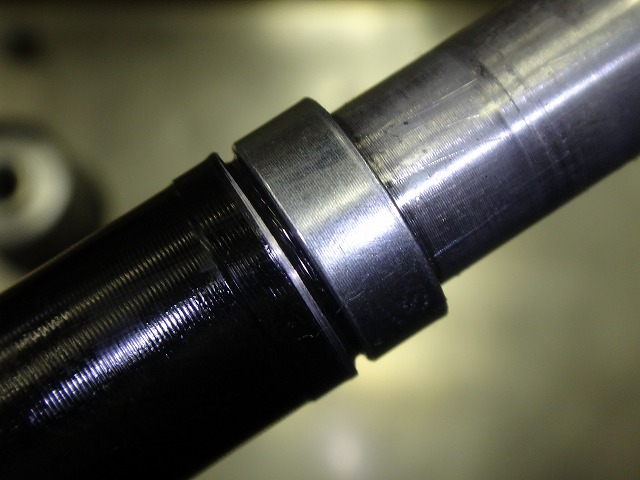
↑And here's that spot — the spacer is clearly floating away from the axle's butted section.
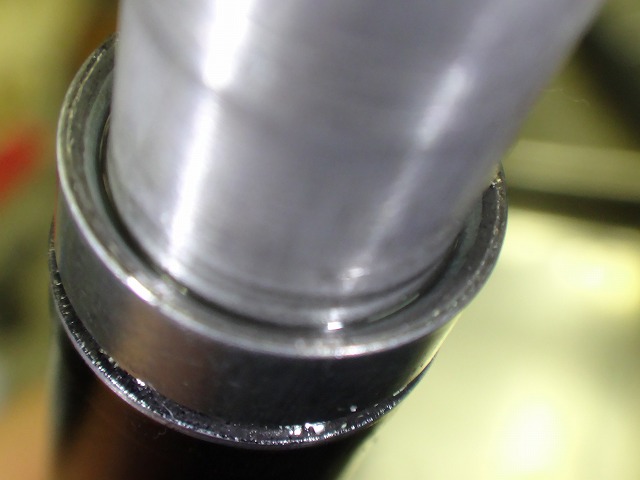
This end face is bowl-shaped, so it was installed in the wrong direction.
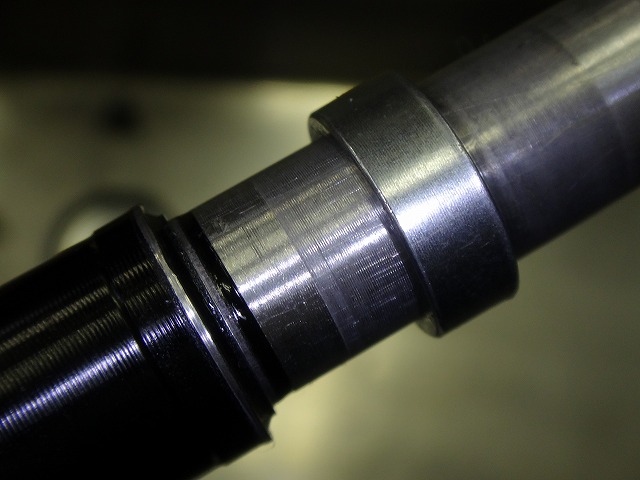
Because the end nut was tightened so firmly, the spacer had bitten deeply into the axle.
It was extremely difficult to remove without marking the axle.
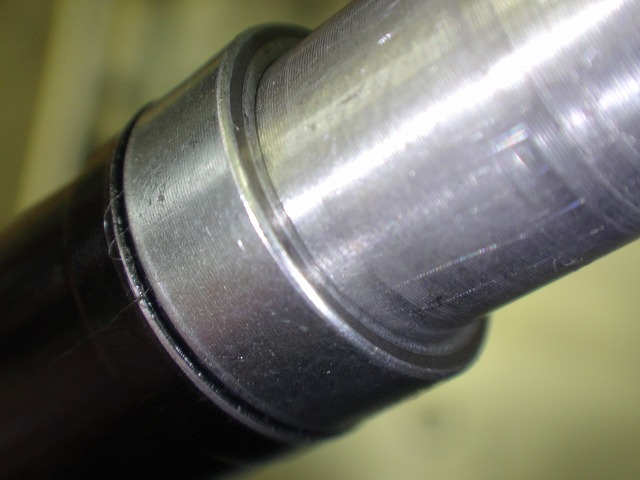
When installed in the correct direction, it looks like this.
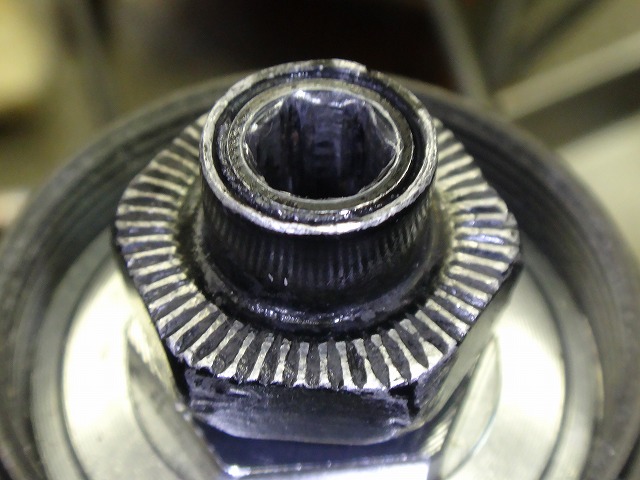
Jumping ahead in the timeline, after the work was done,
the relationship between the end nut and axle looked like this.
The axle was recessed by exactly the amount of gap created by the spacer being installed backwards.
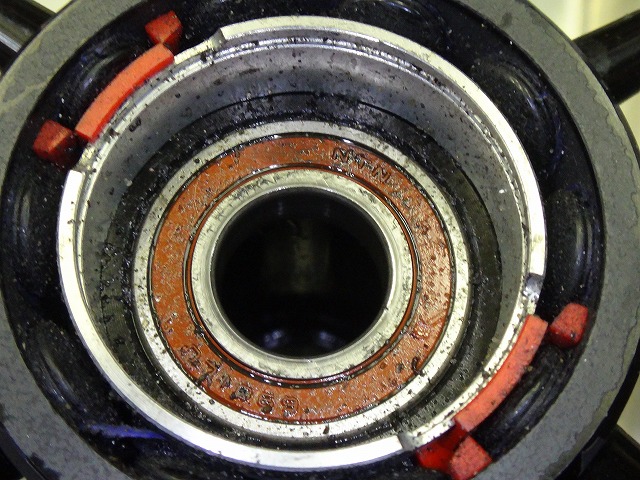
Looking at the contact point between the drive ring and spoke head, there are no signs of lateral slipping that occurs when nipple tension is insufficient and spoke deformation is significant, so the noise doesn't seem to be coming from here.
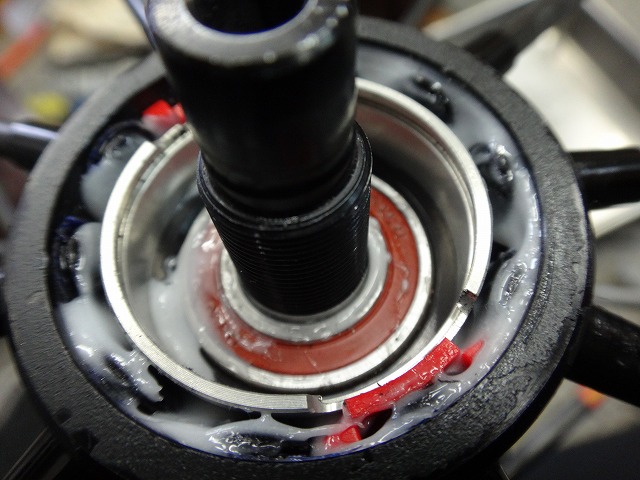
I did some truing and applied some thick grease while I had the drive ring off.
The spoke tension wasn't loose.
A few hours after the work was done, the customer called and said
"I rode about 30km and didn't hear any noise at all,"
so it's probably fixed.