A customer brought in a Bora Ultra 35 wheel for service.
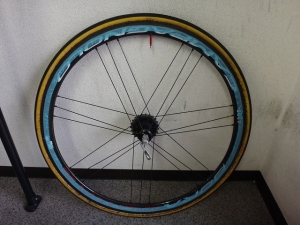
The brake zone on the non-driveside had become wavy and uneven from brake heat damage,
and they wanted to see if anything could be done about it.
The blue masking tape visible in the photo is something I applied for work purposes.
My guess is they might be using a direct-mount brake?
I once saw a test result from Campagnolo stating that
"Shimano's direct-mount brakes show a larger temperature differential between left and right sides of the rim during downhill braking tests compared to our brakes."
Or perhaps even with a "pseudo direct-mount brake" style brake arch like the BR-9000,
which converts the dual-pivot direct-mount brake mounting to a single shaft to fit traditional brake holes,
you might get similar results.
But then I thought — since the freewheel body is Campagnolo spec,
the customer's components are probably Campagnolo as well,
so that theory might not apply here.
In any case, having only one side of the rim damaged by brake heat is a pretty rare symptom.
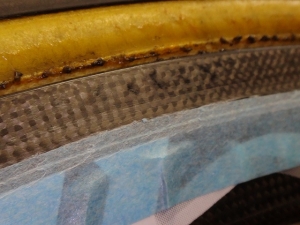
↑The black speckled areas show the bulging caused by heat.
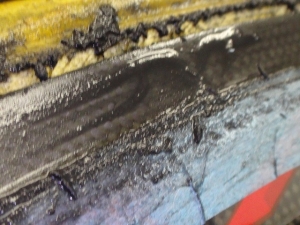
I was afraid of overdoing it, so I filed it down moderately.
Though "moderately" is relative — I actually removed quite a bit. ←Make up your mind!
Since the tire was glued on with rim cement, I took it for a test ride before and after the work.
When I lightly applied the brake while riding, I felt a "thud" once per revolution,
but this was caused by noticeable lateral runout, not really related to the brake zone heat damage.
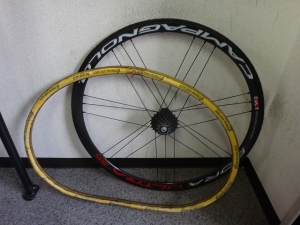
After truing the lateral runout, I removed the tire.
I wanted to make sure I got the centering adjusted properly.
Also, the hub had some play in it.
There was a centering offset, but since I didn't check the temporary center before truing,
I'm not sure if it was there originally or if I created it during my work.
The wheel at this point is waiting for the rim cement to dry — I've applied it to both the tire and rim.
At this stage, I've installed my own freewheel body and sprocket.
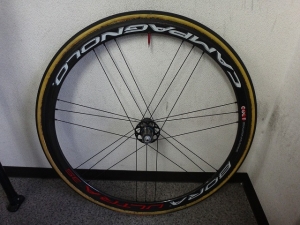
I glued the tire on.
After the rim cement had set, I took it for a short test ride,
and the brake feel was definitely better, though not quite like new.
At this point, anything more would require a rim replacement. I apologize.
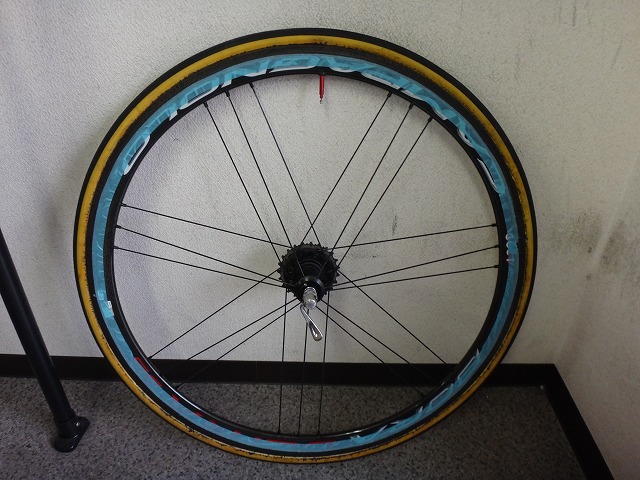
The brake zone on the non-driveside had become wavy and uneven from brake heat damage,
and they wanted to see if anything could be done about it.
The blue masking tape visible in the photo is something I applied for work purposes.
My guess is they might be using a direct-mount brake?
I once saw a test result from Campagnolo stating that
"Shimano's direct-mount brakes show a larger temperature differential between left and right sides of the rim during downhill braking tests compared to our brakes."
Or perhaps even with a "pseudo direct-mount brake" style brake arch like the BR-9000,
which converts the dual-pivot direct-mount brake mounting to a single shaft to fit traditional brake holes,
you might get similar results.
But then I thought — since the freewheel body is Campagnolo spec,
the customer's components are probably Campagnolo as well,
so that theory might not apply here.
In any case, having only one side of the rim damaged by brake heat is a pretty rare symptom.
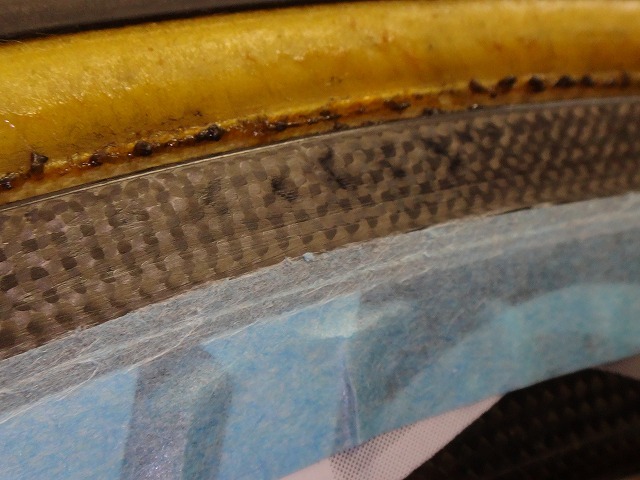
↑The black speckled areas show the bulging caused by heat.
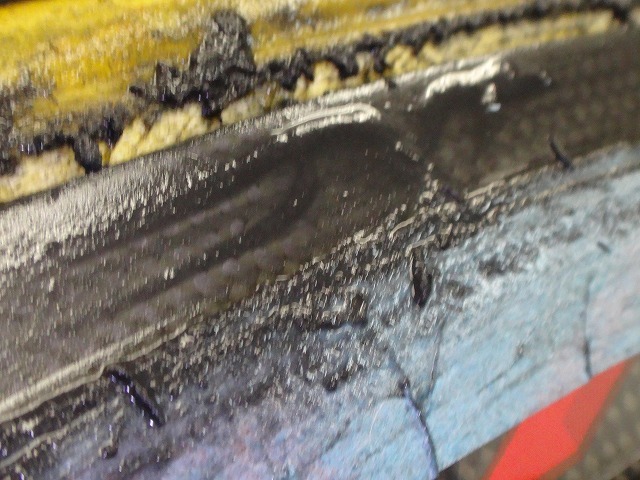
I was afraid of overdoing it, so I filed it down moderately.
Though "moderately" is relative — I actually removed quite a bit. ←Make up your mind!
Since the tire was glued on with rim cement, I took it for a test ride before and after the work.
When I lightly applied the brake while riding, I felt a "thud" once per revolution,
but this was caused by noticeable lateral runout, not really related to the brake zone heat damage.
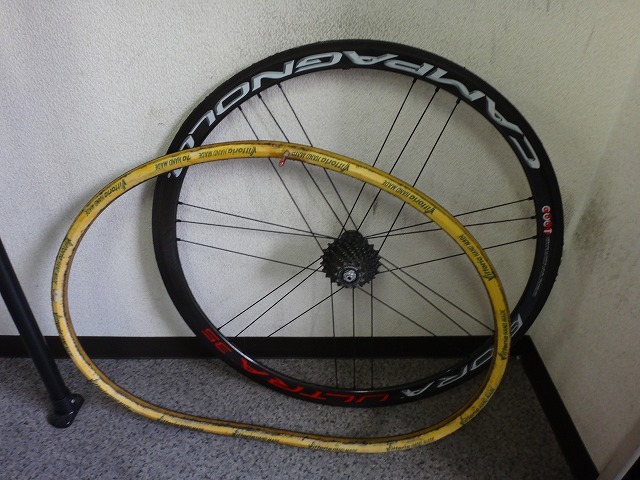
After truing the lateral runout, I removed the tire.
I wanted to make sure I got the centering adjusted properly.
Also, the hub had some play in it.
There was a centering offset, but since I didn't check the temporary center before truing,
I'm not sure if it was there originally or if I created it during my work.
The wheel at this point is waiting for the rim cement to dry — I've applied it to both the tire and rim.
At this stage, I've installed my own freewheel body and sprocket.
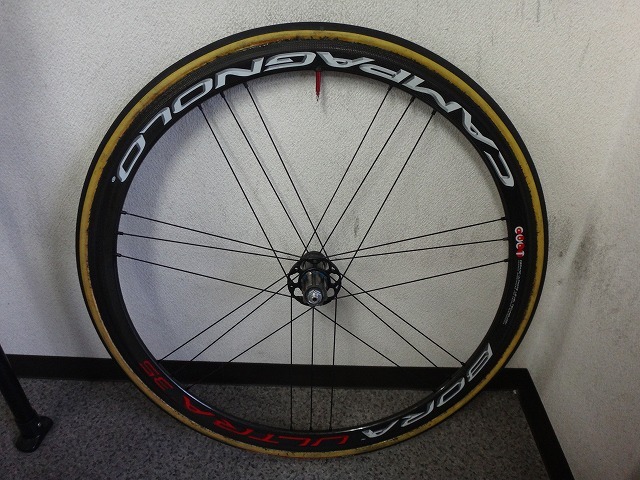
I glued the tire on.
After the rim cement had set, I took it for a short test ride,
and the brake feel was definitely better, though not quite like new.
At this point, anything more would require a rim replacement. I apologize.