A customer (someone from a secret guild with roots in stonemason associations) left a Zonda with me for work.

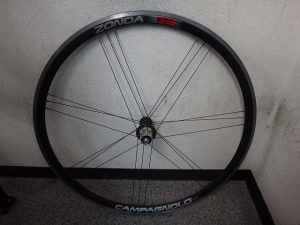
Apparently, on a downhill mountain road, he hit an enormous weasel—about 2 meters tall—went over the bars and crashed.
Since his phone had no signal,
he walked until he found reception and called a taxi.
On the ride back, the taxi driver asked him,
"Why did you fall in a place like that?"
So he answered, "I hit a weasel."
The driver then asked, "What happened to the weasel?"
He replied, "When I came to and looked back, it was gone."
At that point, the taxi driver removed his hat, turned around and said,
"That weasel... did it look something like this~?"
...and the story goes that when he came to, he was in a hospital bed. I'm not entirely sure how much of that story is actually true.
He had a ridiculous request to swap in blue aluminum nipples, which I rejected, and just did a basic inspection instead.
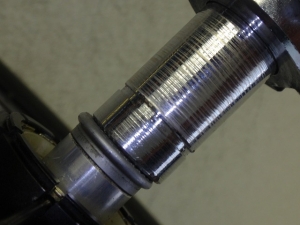
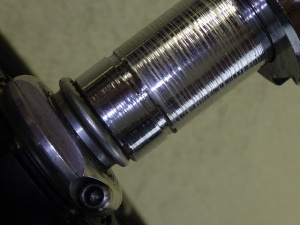
The front wheel was perfectly centered except for a slight wobble in one spot.
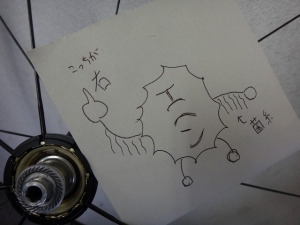
When you install the hub end caps, it becomes impossible to tell left from right, so I've marked this one to indicate "this side is right."
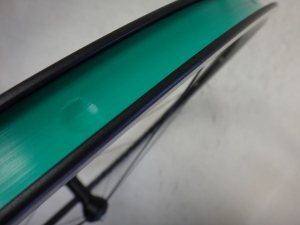
This rim has standard nipple holes aside from the valve hole,
so swapping to blue aluminum nipples wouldn't be that complicated in itself—
it's just more tedious compared to the magnetic pickup method,
so I rejected it anyway.
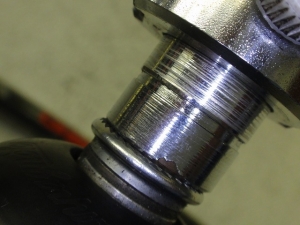
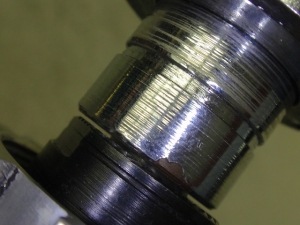
The rear rim had a general offset throughout.
Based on the direction of drift and the amount, which matches age-related wear patterns,
it likely was centered when new.
He also brought along some spare spokes he happened to have, but we didn't end up needing them.
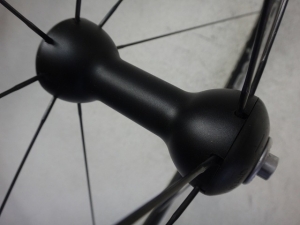
This is a fully-assembled hub built to Chorus specifications.
The only difference from Record is the presence or absence of a grease hole in the hub shell.
There's also Daytona as another cup-and-cone hub option (which can be converted to CULT),
but Daytona's hub is essentially the same spec as Chorus,
just with a black anodized bearing adjustment nut.
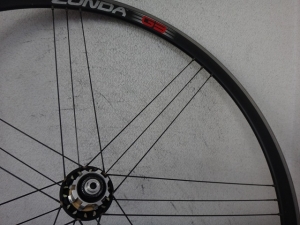
The differences from Eurus, the flagship model of that era,
are the relief-drilled rim, aero spokes, and internal nipples.
The round-butted spokes used here are quite thin,
so visually they appear lighter than Eurus spokes.
At this point, it's not yet a left-right different-diameter design.


Apparently, on a downhill mountain road, he hit an enormous weasel—about 2 meters tall—went over the bars and crashed.
Since his phone had no signal,
he walked until he found reception and called a taxi.
On the ride back, the taxi driver asked him,
"Why did you fall in a place like that?"
So he answered, "I hit a weasel."
The driver then asked, "What happened to the weasel?"
He replied, "When I came to and looked back, it was gone."
At that point, the taxi driver removed his hat, turned around and said,
"That weasel... did it look something like this~?"
...and the story goes that when he came to, he was in a hospital bed. I'm not entirely sure how much of that story is actually true.
He had a ridiculous request to swap in blue aluminum nipples, which I rejected, and just did a basic inspection instead.
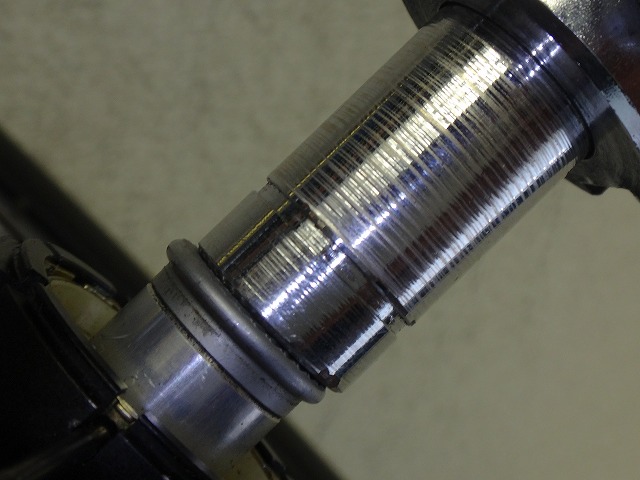
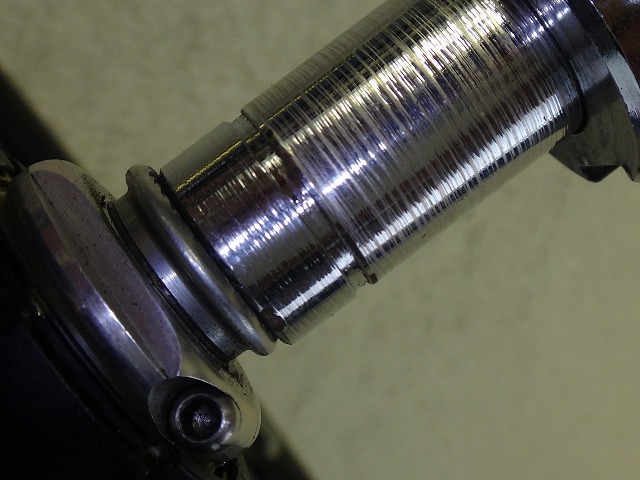
The front wheel was perfectly centered except for a slight wobble in one spot.
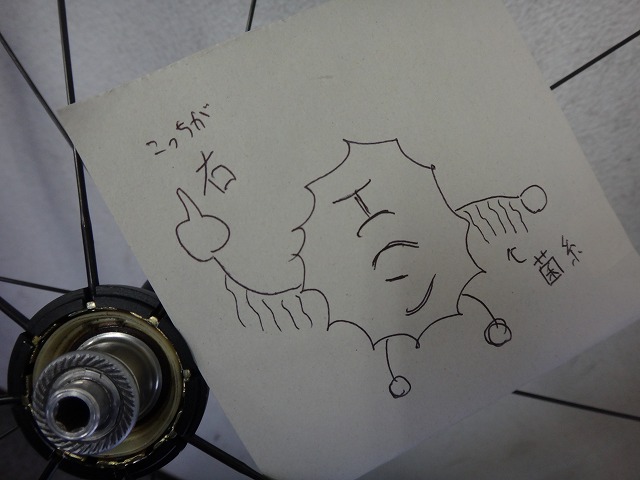
When you install the hub end caps, it becomes impossible to tell left from right, so I've marked this one to indicate "this side is right."
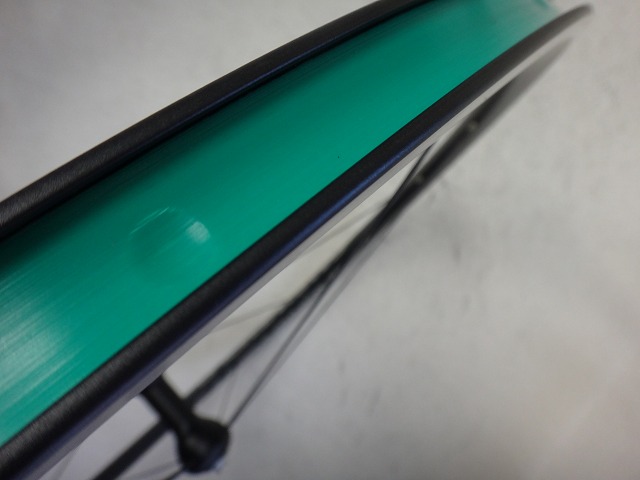
This rim has standard nipple holes aside from the valve hole,
so swapping to blue aluminum nipples wouldn't be that complicated in itself—
it's just more tedious compared to the magnetic pickup method,
so I rejected it anyway.

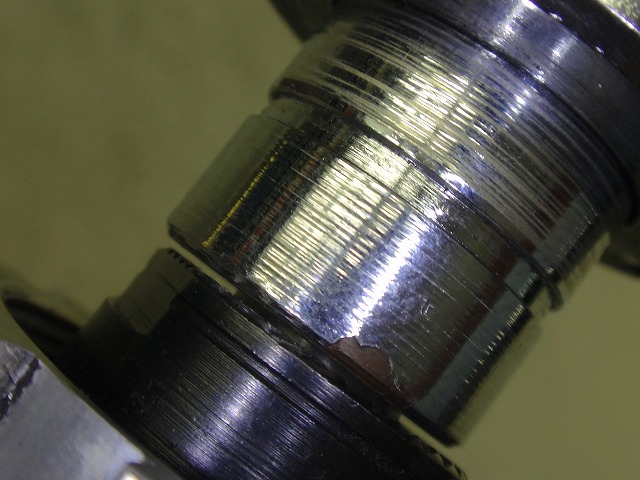
The rear rim had a general offset throughout.
Based on the direction of drift and the amount, which matches age-related wear patterns,
it likely was centered when new.
He also brought along some spare spokes he happened to have, but we didn't end up needing them.

This is a fully-assembled hub built to Chorus specifications.
The only difference from Record is the presence or absence of a grease hole in the hub shell.
There's also Daytona as another cup-and-cone hub option (which can be converted to CULT),
but Daytona's hub is essentially the same spec as Chorus,
just with a black anodized bearing adjustment nut.

The differences from Eurus, the flagship model of that era,
are the relief-drilled rim, aero spokes, and internal nipples.
The round-butted spokes used here are quite thin,
so visually they appear lighter than Eurus spokes.
At this point, it's not yet a left-right different-diameter design.