A customer brought in a Racing Zero Carbon (high-end carbon road bike) for me to work on.
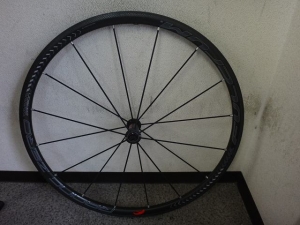

Someone brought it in on behalf of the actual owner,
so I didn't get to meet the owner myself.
The inspection turned out to be pretty straightforward—I just did a minor wheel truing.
Apparently it's been ridden for about 1000 km.
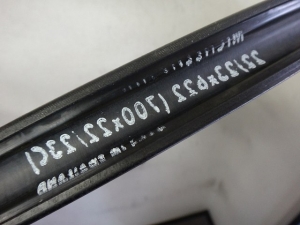
There are signs that a Michelin latex tube was used,
but honestly it's better to avoid latex tubes on carbon WO rims.
Also, the owner mentioned that the rear wheel rotation feels sluggish,
which is actually a pretty sharp observation.
Indeed, the rear hub rotates smoothly but feels somewhat heavy.
However, I figure if it gets another 5000 km of use, it'll break in and improve naturally,
so there's no real need to do anything about it. That said, I did make an adjustment anyway.
First, I had the person who brought it in confirm the light, smooth rotation of the rear hub in its "front hub state"—that is, with the freebody removed.
Then I adjusted the grease consistency to optimize it and lighten the rotation.
This is a different effect than what happens with natural wear over time.
When I had them check the front hub state rotation again,
they could clearly see—faintly, but definitely—that it was lighter.
That said, while you can feel the difference distinctly when you touch the hub axle by hand,
I'm honestly skeptical whether you'd notice it while actually riding.
The thickness and viscosity properties of grease are called "consistency,"
and since the character "稠" (chou) isn't part of standard everyday kanji, we typically write it as "consistency" (chou-do).
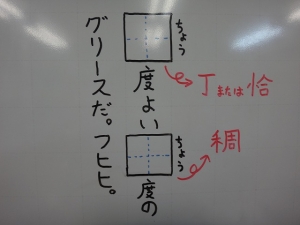
So you probably won't see questions about kanji like this on a standard test. Probably.
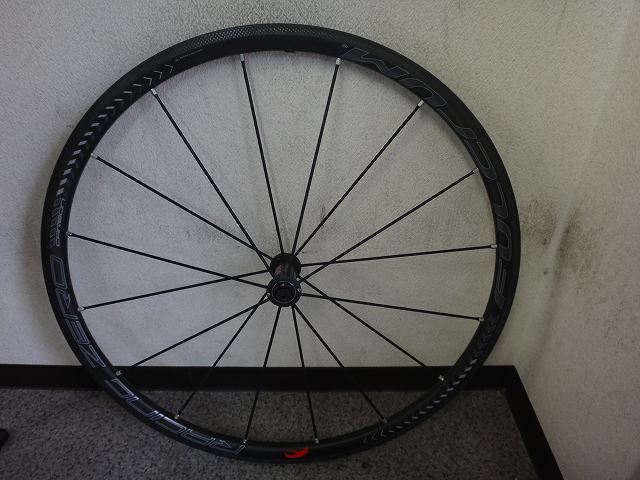

Someone brought it in on behalf of the actual owner,
so I didn't get to meet the owner myself.
The inspection turned out to be pretty straightforward—I just did a minor wheel truing.
Apparently it's been ridden for about 1000 km.
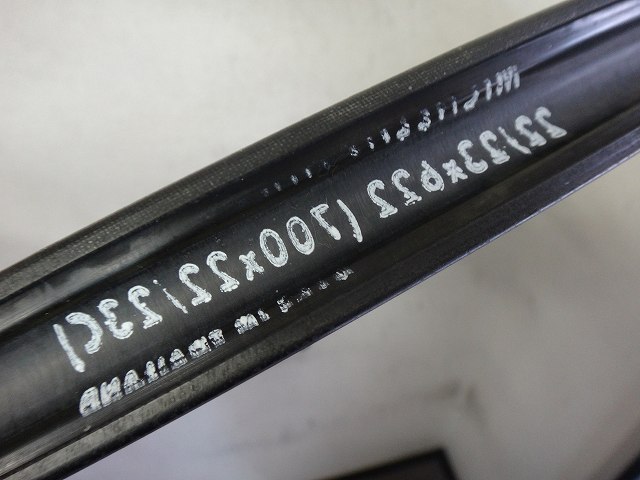
There are signs that a Michelin latex tube was used,
but honestly it's better to avoid latex tubes on carbon WO rims.
Also, the owner mentioned that the rear wheel rotation feels sluggish,
which is actually a pretty sharp observation.
Indeed, the rear hub rotates smoothly but feels somewhat heavy.
However, I figure if it gets another 5000 km of use, it'll break in and improve naturally,
so there's no real need to do anything about it. That said, I did make an adjustment anyway.
First, I had the person who brought it in confirm the light, smooth rotation of the rear hub in its "front hub state"—that is, with the freebody removed.
Then I adjusted the grease consistency to optimize it and lighten the rotation.
This is a different effect than what happens with natural wear over time.
When I had them check the front hub state rotation again,
they could clearly see—faintly, but definitely—that it was lighter.
That said, while you can feel the difference distinctly when you touch the hub axle by hand,
I'm honestly skeptical whether you'd notice it while actually riding.
The thickness and viscosity properties of grease are called "consistency,"
and since the character "稠" (chou) isn't part of standard everyday kanji, we typically write it as "consistency" (chou-do).
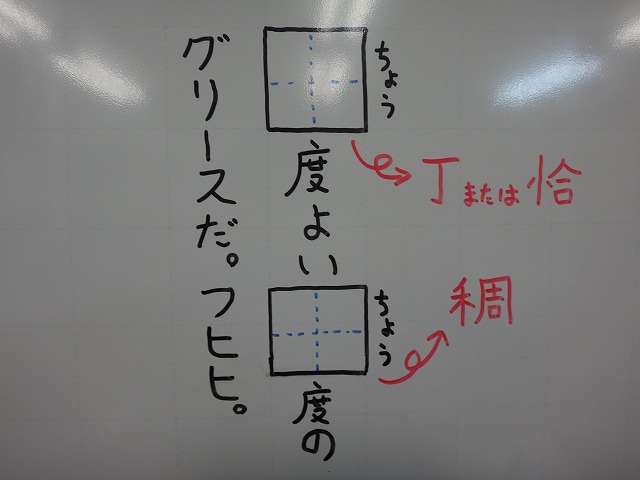
So you probably won't see questions about kanji like this on a standard test. Probably.