A customer dropped off a Shamal Ultra (high-performance wheel set by Campagnolo) with me.
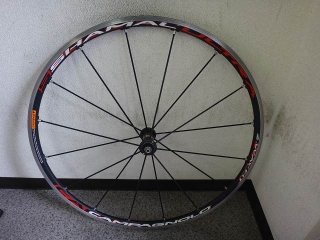
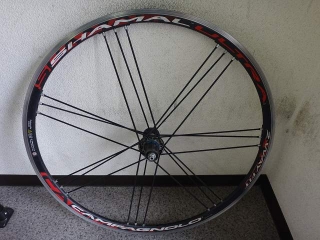
It developed problems after a nearby shop did an overhaul on it.
The customer is from quite far away,
but managed to visit during the May holiday break.
They replaced several spokes and—for reasons unclear—completely loosened all the nipples
and rebuilt the wheel from scratch.
But the spoke tension is clearly insufficient.
The rear wheel is at about the lower limit for a hanging tension,
while the front wheel is actually below that—basically half-assembled.
And the front wheel has such severe radial runout that you can see the rim visibly dancing up and down.
On a three-roller trainer, you'd definitely feel the eccentric wobble.
If you're going to disassemble a wheel, you should measure the spoke tension beforehand
and at least tension it back to that point.
On the front wheel, I tightened the nipples nearly a full rotation,
but with the coarse thread pitch of aluminum spokes on the Shamal Ultra,
you basically can't turn the nipples a full rotation from factory spec.
That's how loose it was.
The rear wheel had some radial runout from the G3 hub, but at least it was assembled.
Both wheels are essentially centered with no lateral runout, but the front hub has play.
I'm a bit skeptical they actually did an overhaul,
but they definitely completely loosened all the rim nipples.
I'm concerned about the darkening on the threaded portion of the hub axle on the left side where the locknut attaches.
If they'd properly disassembled and cleaned the hub,
it should be much cleaner.
Though the customer has been riding it for about a month since getting it back with the "overhaul" done, so I can't say for certain.
I definitely thought there's no way it gets that dirty in just a month.
The hub bearings spin with absolutely no roughness,
but then again, this is just what well-broken-in Campagnolo bearings feel like.
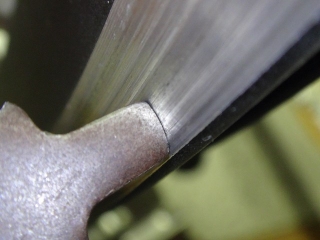
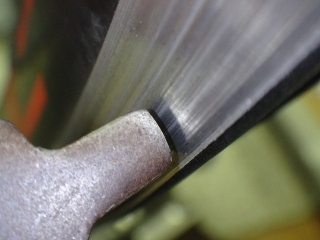
One spot on the rear wheel had serious runout.
The customer had already pointed this out beforehand.
When I checked the temporary center by rotating 90 degrees from that spot,
there was essentially no lateral runout, so by correcting just that runout alone
I could get it to a state of no radial and no lateral runout.
But like the front wheel (though not as bad), the tension was clearly loose,
so I first tightened just the freewheel side, then once the rim moved decisively toward the freewheel side,
I centered it with tightening on the non-freewheel side only.
I let the customer see the actual measured spoke tension values on the freewheel side before and after the work.
I actually bent a spoke tension meter slightly, but never mind.
When the customer felt the rear wheel spokes after the work,
they said they were noticeably tighter,
but it's still only at about the upper limit of acceptable hang tension,
not over-tensioned.
And what really transformed between before and after was the front wheel, not the rear.

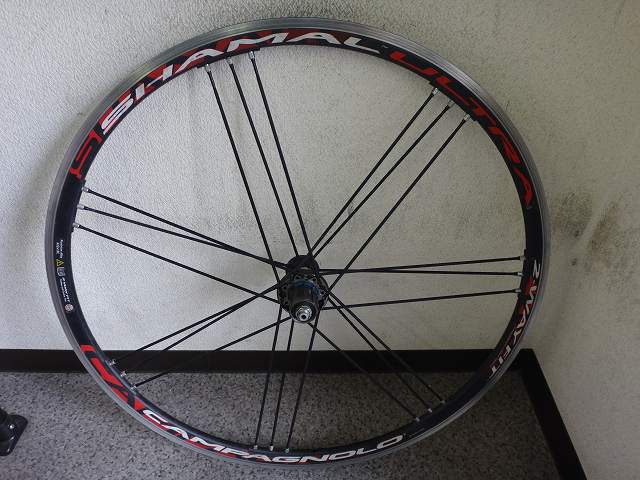
It developed problems after a nearby shop did an overhaul on it.
The customer is from quite far away,
but managed to visit during the May holiday break.
They replaced several spokes and—for reasons unclear—completely loosened all the nipples
and rebuilt the wheel from scratch.
But the spoke tension is clearly insufficient.
The rear wheel is at about the lower limit for a hanging tension,
while the front wheel is actually below that—basically half-assembled.
And the front wheel has such severe radial runout that you can see the rim visibly dancing up and down.
On a three-roller trainer, you'd definitely feel the eccentric wobble.
If you're going to disassemble a wheel, you should measure the spoke tension beforehand
and at least tension it back to that point.
On the front wheel, I tightened the nipples nearly a full rotation,
but with the coarse thread pitch of aluminum spokes on the Shamal Ultra,
you basically can't turn the nipples a full rotation from factory spec.
That's how loose it was.
The rear wheel had some radial runout from the G3 hub, but at least it was assembled.
Both wheels are essentially centered with no lateral runout, but the front hub has play.
I'm a bit skeptical they actually did an overhaul,
but they definitely completely loosened all the rim nipples.
I'm concerned about the darkening on the threaded portion of the hub axle on the left side where the locknut attaches.
If they'd properly disassembled and cleaned the hub,
it should be much cleaner.
Though the customer has been riding it for about a month since getting it back with the "overhaul" done, so I can't say for certain.
The hub bearings spin with absolutely no roughness,
but then again, this is just what well-broken-in Campagnolo bearings feel like.
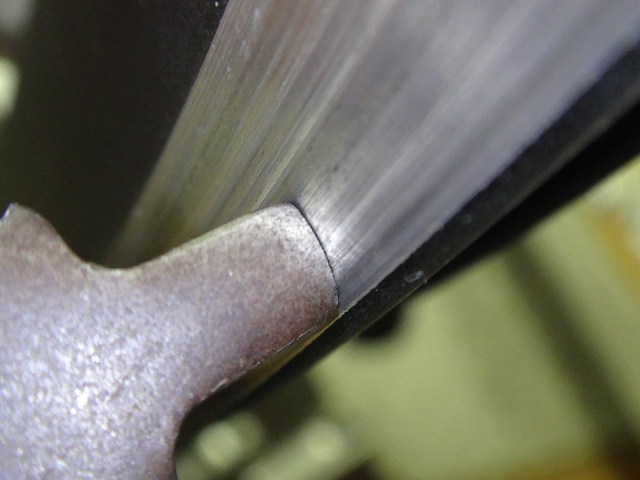
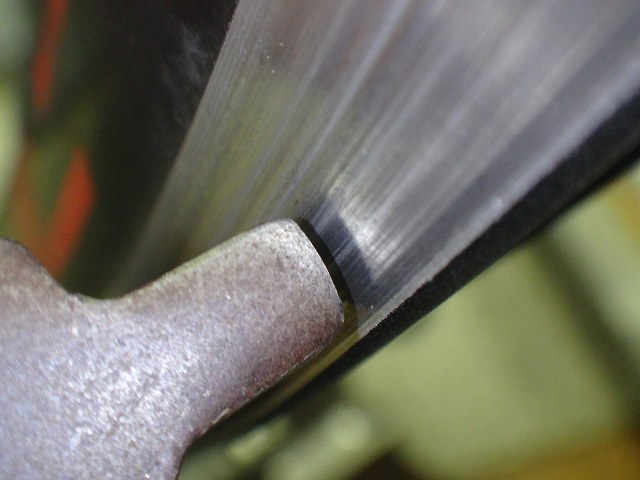
One spot on the rear wheel had serious runout.
The customer had already pointed this out beforehand.
When I checked the temporary center by rotating 90 degrees from that spot,
there was essentially no lateral runout, so by correcting just that runout alone
I could get it to a state of no radial and no lateral runout.
But like the front wheel (though not as bad), the tension was clearly loose,
so I first tightened just the freewheel side, then once the rim moved decisively toward the freewheel side,
I centered it with tightening on the non-freewheel side only.
I let the customer see the actual measured spoke tension values on the freewheel side before and after the work.
When the customer felt the rear wheel spokes after the work,
they said they were noticeably tighter,
but it's still only at about the upper limit of acceptable hang tension,
not over-tensioned.
And what really transformed between before and after was the front wheel, not the rear.