Another day of wheel building (and so on).
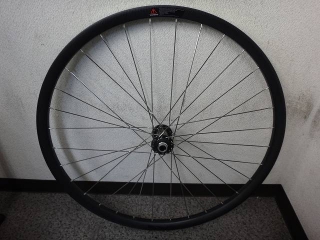
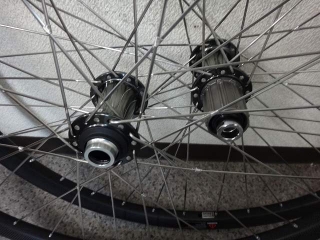
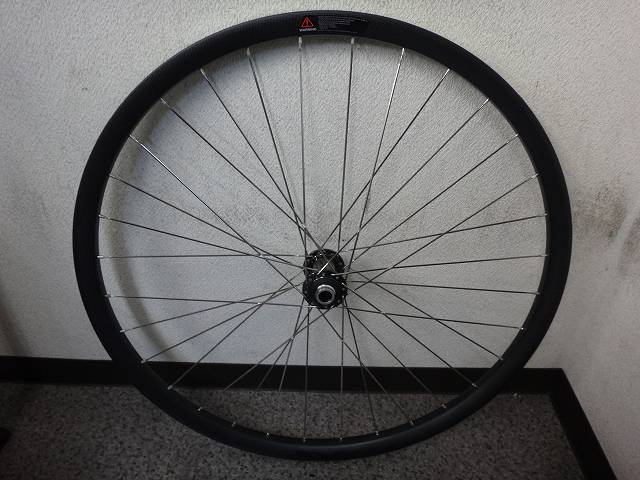
Built a wheel with an XTR hub and 27.5-inch carbon rim.
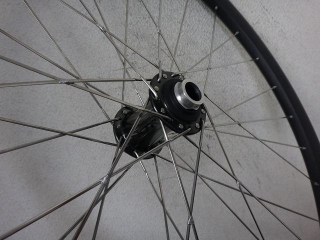
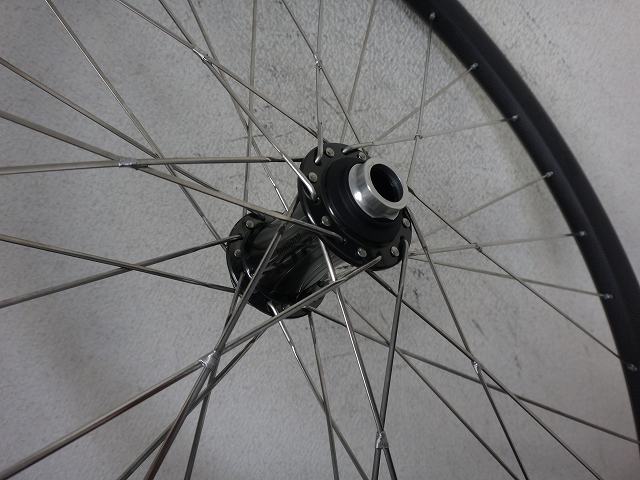
Front wheel: HB-M9010 32H
All CX-RAY 64-spoke reverse Italian lacing with spoke bridging.
The spoke bridging seemed optional,
but doing it made a difference, so I think this is the way to go.
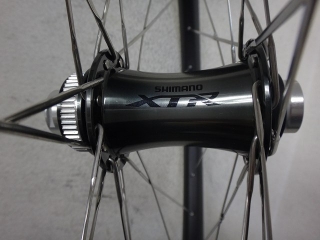
This is a disc brake front hub,
but because of the rotor mounting surface, the left and right flange widths are different—
it has an asymmetry. This is the same with all manufacturers, not just Shimano.
If hub dimensions didn't significantly affect wheel performance
and wheel stiffness was determined almost entirely by spoke tension,
then for disc hubs, manufacturers should narrow the right side
to match how the left side gets squeezed by the rotor mount,
creating symmetrical flanges. But no complete wheel manufacturer does this.
The fact that they don't design disc hubs this way means
that for wheels, "having equal spoke tension on both sides"
is not worth the trade-off of narrowing flange width—
in other words, flange width is a far more critical factor.
"Far more" because if manufacturers thought it was only slightly less important,
symmetric-flange disc hubs would occupy some market share. They don't.
Along similar lines, single-thread-cut track rear hubs typically have
a wider left flange with asymmetry. With double-thread-cut hubs,
the flanges are naturally equal, but with single-thread-cut hubs,
despite knowing that the asymmetry will create spoke tension differences,
manufacturers still make the flange wider.
When people mention "narrow flange," they're usually referring to Gokiso rear hubs.
Those are narrow not by choice but by structural necessity—
to ensure shaft rotation isn't affected even when the hub body distorts under load—
but the manufacturer seems to be selling it as if they've sacrificed a major factor
to perfect a minor one. Yet they shamelessly promote claims like
narrow flanges having higher stability (see here),
which are clearly wrong.
As I've written before, I'm not denying that Gokiso hubs spin best in the world.
A rear hub with Gokiso's dimensions is dimensionally poor.
It just happens that this dimensionally poor rear hub spins the best in the world.
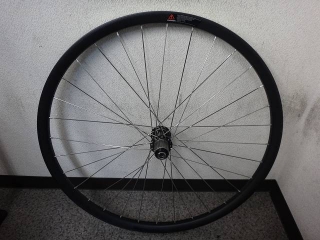
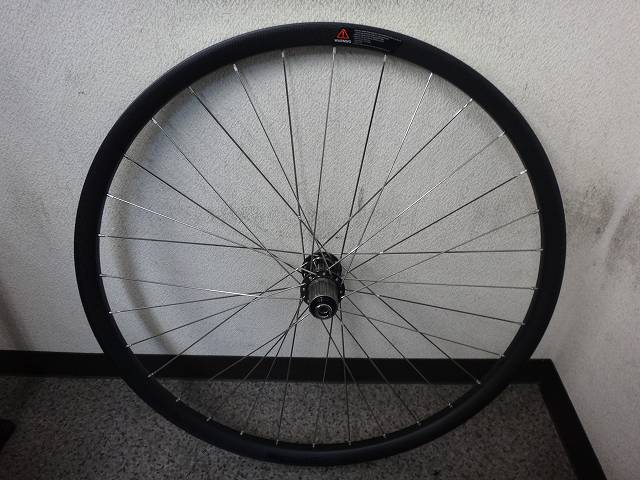
Now for the rear wheel.
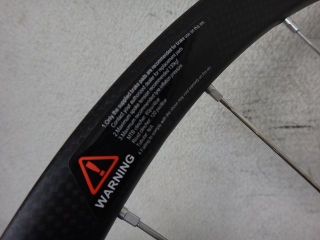
As for the rim,
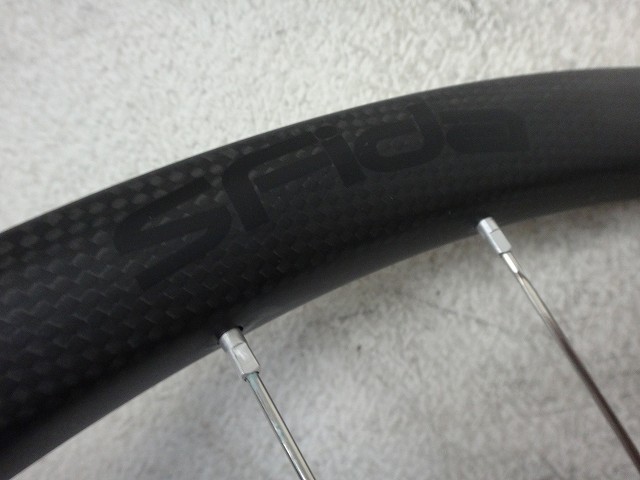
I almost accidentally mentioned the manufacturer name, but
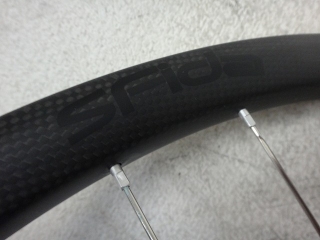
it has SFIDA printed as the brand name,
so it's a Sfida rim.
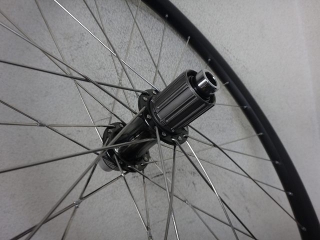
FH-M9010 32H, semi-competition 64-spoke JIS lacing with spoke bridging.
The front hub is 100mm wide with 15mm thru-axle
and the rear hub is 142mm wide with 12mm thru-axle.
Compared to the 135mm quick-release CX75 rear hub, the extra width is
properly used on the freehub flange width, reducing the asymmetry
(the important thing is that the right side got wider, not that the left got narrower).
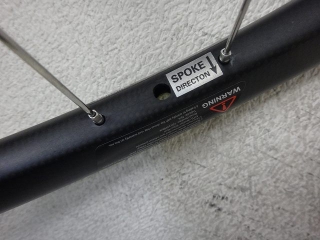
These rims are not offset rims, front or rear.
The spoke direction marking just means to build them as what I call a "normal rim,"
and as long as you follow that, the arrow direction can face either way.
In any case, when viewed from the right side (non-rotor side)
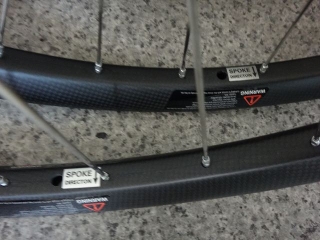
I made sure the arrow directions aligned.
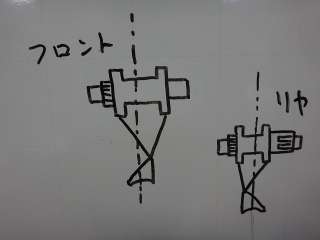
Though this rim isn't offset, the whole point of offset rims is reducing asymmetry.
The idea is to shift the rim's apex away from the side where spokes stand more upright,
thereby reducing the difference in spoke angles.
The diagram above is so compressed and exaggerated that
the naturally upright spokes appear slack, but in reality it's nowhere near that extreme.
When building a front wheel with an offset rim and disc hub,
you can aim for reduced asymmetry by using the rim in the opposite direction from the rear wheel
thanks to the asymmetry geometry. Since disc front hubs have less asymmetry than rear hubs
and the rim-side compensation doesn't sacrifice hub flange width,
you get a nicely balanced left-right difference and stiffness. However,
at my previous shop there was a guy who built front rims the same direction as rear rims.
He apparently memorized it as "offset rim apex shifts left."
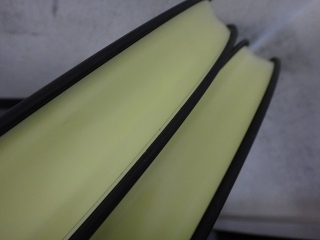
At the customer's request, I applied rim tape.
(Since this is Stans tape-type rim tape, I used "applied."
For stretch-band rim tape I use "fitted.")
I keep both 21mm and 25mm widths of this tape in stock.
The 25mm is used for super-wide road rims like Smartevery or Easton.
Beyond that come 27, 30, 33, 36, and 39mm widths.
Built a wheel with an XTR hub and 27.5-inch carbon rim.
Front wheel: HB-M9010 32H
All CX-RAY 64-spoke reverse Italian lacing with spoke bridging.
The spoke bridging seemed optional,
but doing it made a difference, so I think this is the way to go.

This is a disc brake front hub,
but because of the rotor mounting surface, the left and right flange widths are different—
it has an asymmetry. This is the same with all manufacturers, not just Shimano.
If hub dimensions didn't significantly affect wheel performance
and wheel stiffness was determined almost entirely by spoke tension,
then for disc hubs, manufacturers should narrow the right side
to match how the left side gets squeezed by the rotor mount,
creating symmetrical flanges. But no complete wheel manufacturer does this.
The fact that they don't design disc hubs this way means
that for wheels, "having equal spoke tension on both sides"
is not worth the trade-off of narrowing flange width—
in other words, flange width is a far more critical factor.
"Far more" because if manufacturers thought it was only slightly less important,
symmetric-flange disc hubs would occupy some market share. They don't.
Along similar lines, single-thread-cut track rear hubs typically have
a wider left flange with asymmetry. With double-thread-cut hubs,
the flanges are naturally equal, but with single-thread-cut hubs,
despite knowing that the asymmetry will create spoke tension differences,
manufacturers still make the flange wider.
When people mention "narrow flange," they're usually referring to Gokiso rear hubs.
Those are narrow not by choice but by structural necessity—
to ensure shaft rotation isn't affected even when the hub body distorts under load—
but the manufacturer seems to be selling it as if they've sacrificed a major factor
to perfect a minor one. Yet they shamelessly promote claims like
narrow flanges having higher stability (see here),
which are clearly wrong.
As I've written before, I'm not denying that Gokiso hubs spin best in the world.
A rear hub with Gokiso's dimensions is dimensionally poor.
It just happens that this dimensionally poor rear hub spins the best in the world.
Now for the rear wheel.

As for the rim,
I almost accidentally mentioned the manufacturer name, but
it has SFIDA printed as the brand name,
so it's a Sfida rim.
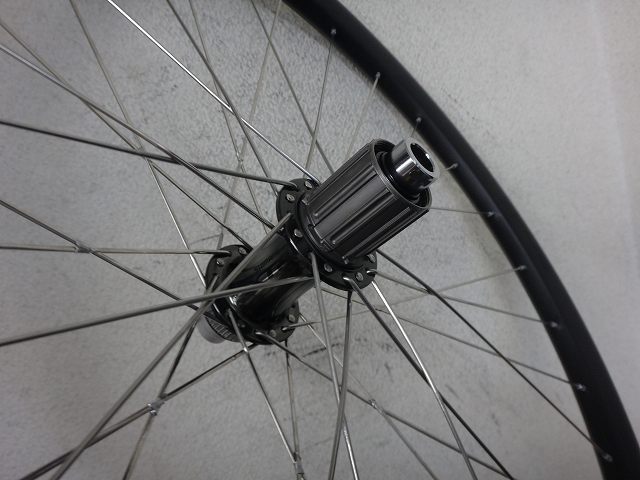
FH-M9010 32H, semi-competition 64-spoke JIS lacing with spoke bridging.
The front hub is 100mm wide with 15mm thru-axle
and the rear hub is 142mm wide with 12mm thru-axle.
Compared to the 135mm quick-release CX75 rear hub, the extra width is
properly used on the freehub flange width, reducing the asymmetry
(the important thing is that the right side got wider, not that the left got narrower).
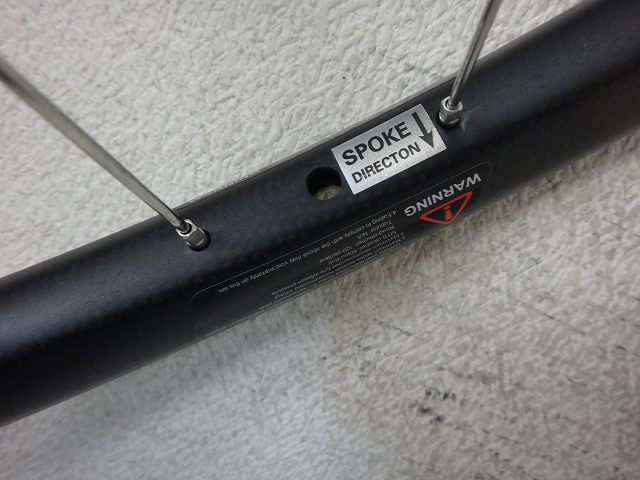
These rims are not offset rims, front or rear.
The spoke direction marking just means to build them as what I call a "normal rim,"
and as long as you follow that, the arrow direction can face either way.

In any case, when viewed from the right side (non-rotor side)
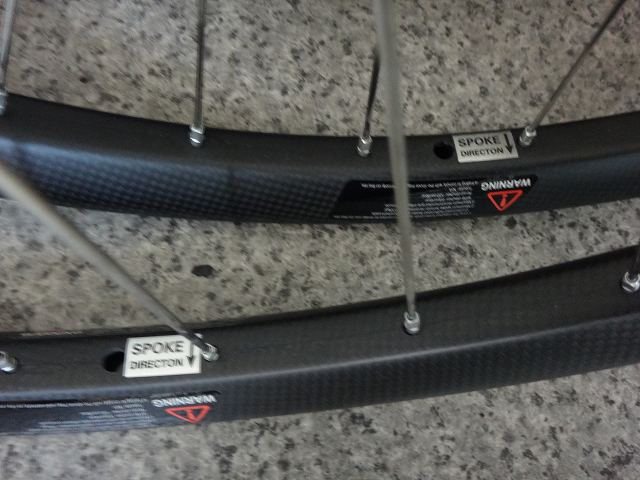
I made sure the arrow directions aligned.

Though this rim isn't offset, the whole point of offset rims is reducing asymmetry.
The idea is to shift the rim's apex away from the side where spokes stand more upright,
thereby reducing the difference in spoke angles.
The diagram above is so compressed and exaggerated that
the naturally upright spokes appear slack, but in reality it's nowhere near that extreme.
When building a front wheel with an offset rim and disc hub,
you can aim for reduced asymmetry by using the rim in the opposite direction from the rear wheel
thanks to the asymmetry geometry. Since disc front hubs have less asymmetry than rear hubs
and the rim-side compensation doesn't sacrifice hub flange width,
you get a nicely balanced left-right difference and stiffness. However,
at my previous shop there was a guy who built front rims the same direction as rear rims.
He apparently memorized it as "offset rim apex shifts left."

At the customer's request, I applied rim tape.
(Since this is Stans tape-type rim tape, I used "applied."
For stretch-band rim tape I use "fitted.")
I keep both 21mm and 25mm widths of this tape in stock.
The 25mm is used for super-wide road rims like Smartevery or Easton.
Beyond that come 27, 30, 33, 36, and 39mm widths.