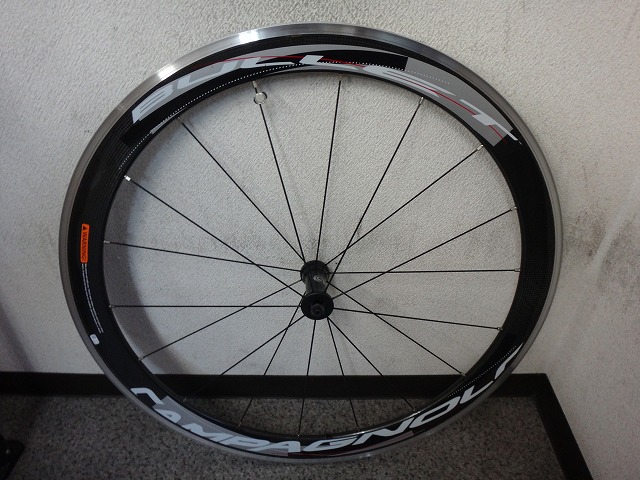
A customer (technically) left a Bullet with me for service.
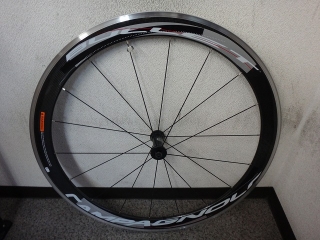
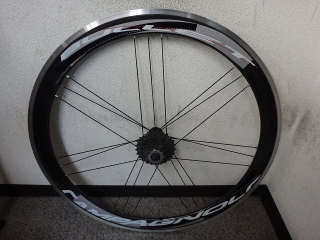
They said the spokes were loose and wanted them tensioned,
so I was about to say "you got legs strong enough to complain about slack spokes on a Bullet?"
but... no, these really are slack.
They're still above the factory minimum, though.
The front wheel only needed minor re-tensioning while straightening,
but the rear wheel needed serious tightening.
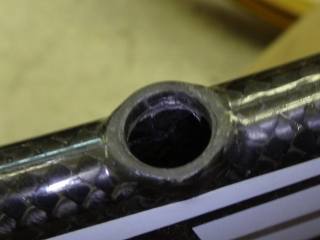
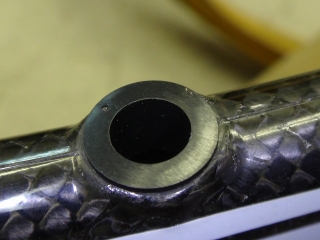
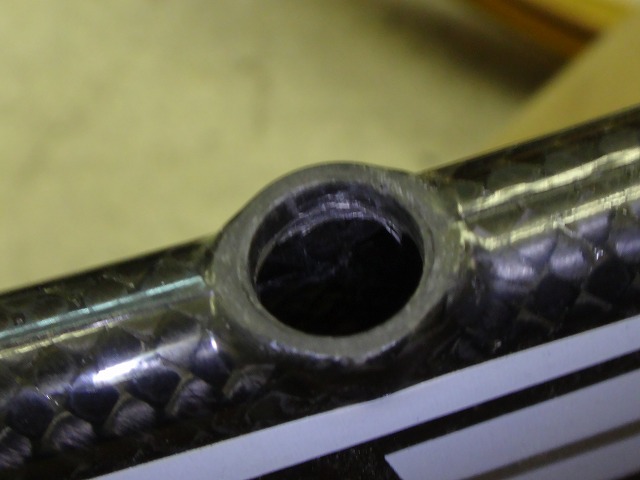
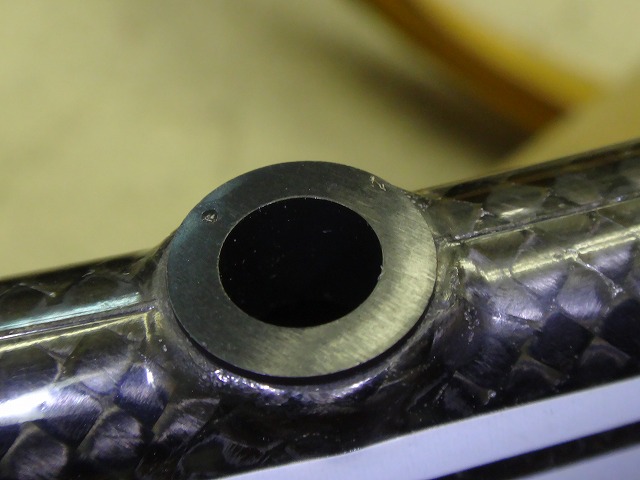
Both rims were missing valve bushings, so I replaced them,
but especially on the front rim—probably due to heavy brake use
(the rear rim shows noticeably less brake wear than the front)
the valve hole is worn fore and aft,
and the valve bushing just falls right out.
The tube valve didn't have a threaded section,
so I couldn't secure it with a valve nut either.
So I glued it in place with instant adhesive.
Speaking of spoke tension on Campagnolo and Fulcrum wheels,
I can state the factory upper and lower limits with certainty, not speculation.
It's based on actual documentation:
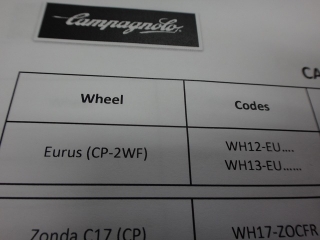
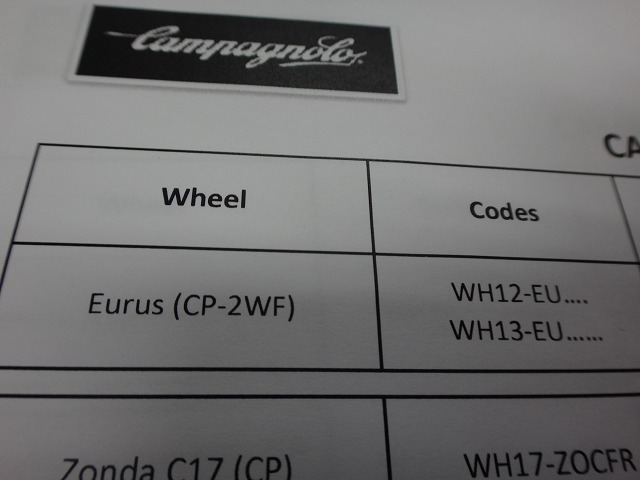
I happened to see a page with Eurus at the top,
so I checked it out:
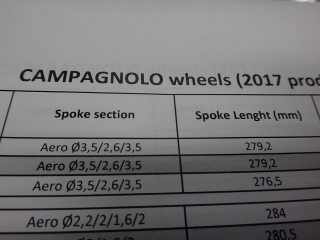
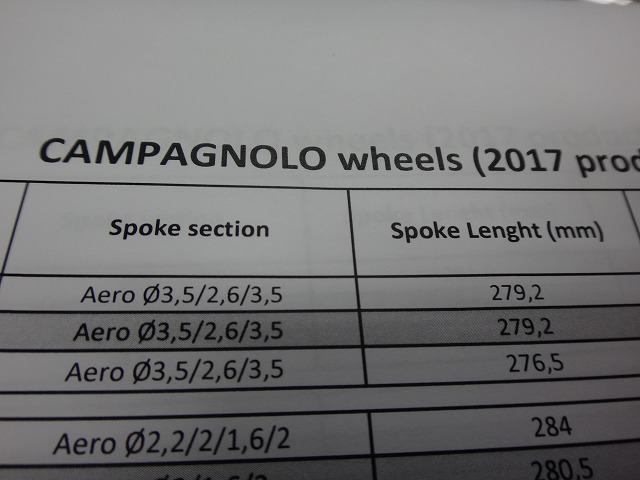
Spoke nominal dimensions and length
(the fact that spoke length is spelled "Lenght" rather than "Length"
may or may not be a typo)
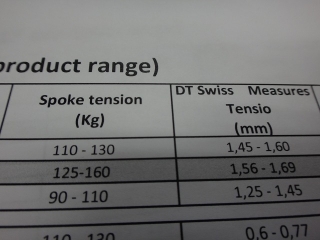
and the factory standard spoke tension.
The key detail is that the first spoke tension for aluminum spokes is
actually listed.
This is DT's first spoke tension (D1ST on their tension meter),
but when Campagnolo aluminum spokes reach a certain D1ST value,
only Campagnolo—not DT—can define what the second spoke tension
(Spoke tension in the table above) will be.
D1ST can be converted to Hozan tension meter's H1ST,
so if you know this conversion, you can manage
Campagnolo aluminum spoke tension using H1ST readings.
Just for reference:
D1ST of 1.6mm corresponds to H1ST of 235 (2.35mm).
Watching this stuff, I always think:
Do you really need to specify spoke tension for anything other than the front and rear drive side?
Once the rear drive side is tensioned near the upper specification limit
and the rim is centered,
the rear non-drive side tension is determined by the wheel's dimensional constraints—
there's nothing you can do about it.
That's why I always emphasize optimizing the dimensional conditions
with the materials you're given,
and I want people choosing complete wheels to really examine these dimensional characteristics.
I won't name names, but there are Mavic wheels where if you tension
the rear drive side to its limit, the rear non-drive side reaches its minimum.
Ah, so that's it. That's why Mavic rear wheels often end up
with the rim shifted toward the anti-freewheel side
(tightening only the non-drive side to hit spec tension)—
or so I speculate.

They said the spokes were loose and wanted them tensioned,
so I was about to say "you got legs strong enough to complain about slack spokes on a Bullet?"
but... no, these really are slack.
They're still above the factory minimum, though.
The front wheel only needed minor re-tensioning while straightening,
but the rear wheel needed serious tightening.
Both rims were missing valve bushings, so I replaced them,
but especially on the front rim—probably due to heavy brake use
(the rear rim shows noticeably less brake wear than the front)
the valve hole is worn fore and aft,
and the valve bushing just falls right out.
The tube valve didn't have a threaded section,
so I couldn't secure it with a valve nut either.
So I glued it in place with instant adhesive.
Speaking of spoke tension on Campagnolo and Fulcrum wheels,
I can state the factory upper and lower limits with certainty, not speculation.
It's based on actual documentation:
I happened to see a page with Eurus at the top,
so I checked it out:
Spoke nominal dimensions and length
(the fact that spoke length is spelled "Lenght" rather than "Length"
may or may not be a typo)

and the factory standard spoke tension.
The key detail is that the first spoke tension for aluminum spokes is
actually listed.
This is DT's first spoke tension (D1ST on their tension meter),
but when Campagnolo aluminum spokes reach a certain D1ST value,
only Campagnolo—not DT—can define what the second spoke tension
(Spoke tension in the table above) will be.
D1ST can be converted to Hozan tension meter's H1ST,
so if you know this conversion, you can manage
Campagnolo aluminum spoke tension using H1ST readings.
Just for reference:
D1ST of 1.6mm corresponds to H1ST of 235 (2.35mm).
Watching this stuff, I always think:
Do you really need to specify spoke tension for anything other than the front and rear drive side?
Once the rear drive side is tensioned near the upper specification limit
and the rim is centered,
the rear non-drive side tension is determined by the wheel's dimensional constraints—
there's nothing you can do about it.
That's why I always emphasize optimizing the dimensional conditions
with the materials you're given,
and I want people choosing complete wheels to really examine these dimensional characteristics.
I won't name names, but there are Mavic wheels where if you tension
the rear drive side to its limit, the rear non-drive side reaches its minimum.
Ah, so that's it. That's why Mavic rear wheels often end up
with the rim shifted toward the anti-freewheel side
(tightening only the non-drive side to hit spec tension)—
or so I speculate.