I had some urgent business and made a day trip to Tokyo.
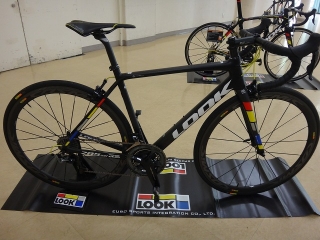
I've got my eye on LOOK's 2018 model, the 785 HUEZ RS.
Separately, there's another model called HUEZ (not the RS version) with the same teardrop shape,
and the S-size specs list a frame weight of 990g plus fork of 350g,
with a complete bike using 105 components priced at 320,000 yen before tax—which is pretty good value in its own right—
but the HUEZ RS has S-size specs of 730g frame plus 280g fork,
and the frameset is priced at 380,000 yen before tax, so it's tuned for absolute lightness.
Since it's not a flagship model,
it's actually quite gentle on the wallet too.
The head tube is on the longer side except for the smallest size
(or rather, most LOOK bikes from 586 onward are like that),
but while higher-end models assume their proprietary stem design,
the HUEZ series uses standard stems, so position adjustability isn't overly restricted,
and you can pick a lightweight stem.
LOOK even makes a 100mm stem with a claimed weight of 108g,
and if you're prioritizing visual harmony over squeezing out a few extra grams,
that's plenty sufficient
(the "LS1" stem on the bike in the photo above is that one).
The seatpost also accepts standard 27.2mm diameter tubes,
so you shouldn't have any trouble finding your saddle position.
Of course, if it were me, I'd shove in a shameless stick under 100g actual weight.
Postscript: I've received comments saying
"magazines also use the spelling Huez, but in French the H isn't pronounced, so Yuez would be correct,"
and actually the catalog itself lists both Huez and "Yue" as alternative readings.
Long ago, the Japanese importer of Clement (a zombie brand now under Vittoria) tires
used katakana transcriptions like Gabia and Galibie for model names,
and among those was a model called Tourmalet.
Since Gabia and Galibie are pass names,
Tourmalet would be more accurate as Tourmalet,
but in cases like this it's safest to follow the importer's convention.
Speaking of the Tour de France leader's yellow jersey—maillot jaune—
there was quite a bit of variation in katakana spelling way back, like maillot jonnu or maillot jon,
but I recall it was photographer Rokuro Inoue who standardized it as maillot jaune.
Once you start down this road it leads to the tiresome argument that "accurate katakana transcription of foreign words is impossible anyway!"
Back in Shin-Osaka, the first thing I noticed was
that the open side of escalators is different between Osaka and Tokyo.
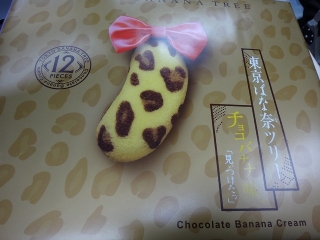
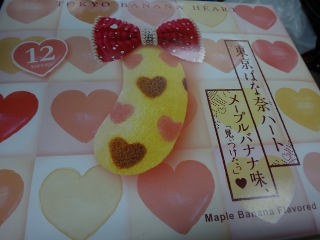
I bought Tokyo Banana as a souvenir,
but since I didn't want to look like I'd frantically remembered to buy it at Shin-Osaka Station,
I went with a limited edition (probably) that isn't sold in Osaka.

I've got my eye on LOOK's 2018 model, the 785 HUEZ RS.
Separately, there's another model called HUEZ (not the RS version) with the same teardrop shape,
and the S-size specs list a frame weight of 990g plus fork of 350g,
with a complete bike using 105 components priced at 320,000 yen before tax—which is pretty good value in its own right—
but the HUEZ RS has S-size specs of 730g frame plus 280g fork,
and the frameset is priced at 380,000 yen before tax, so it's tuned for absolute lightness.
Since it's not a flagship model,
it's actually quite gentle on the wallet too.
The head tube is on the longer side except for the smallest size
(or rather, most LOOK bikes from 586 onward are like that),
but while higher-end models assume their proprietary stem design,
the HUEZ series uses standard stems, so position adjustability isn't overly restricted,
and you can pick a lightweight stem.
LOOK even makes a 100mm stem with a claimed weight of 108g,
and if you're prioritizing visual harmony over squeezing out a few extra grams,
that's plenty sufficient
(the "LS1" stem on the bike in the photo above is that one).
The seatpost also accepts standard 27.2mm diameter tubes,
so you shouldn't have any trouble finding your saddle position.
Of course, if it were me, I'd shove in a shameless stick under 100g actual weight.
Postscript: I've received comments saying
"magazines also use the spelling Huez, but in French the H isn't pronounced, so Yuez would be correct,"
and actually the catalog itself lists both Huez and "Yue" as alternative readings.
Long ago, the Japanese importer of Clement (a zombie brand now under Vittoria) tires
used katakana transcriptions like Gabia and Galibie for model names,
and among those was a model called Tourmalet.
Since Gabia and Galibie are pass names,
Tourmalet would be more accurate as Tourmalet,
but in cases like this it's safest to follow the importer's convention.
Speaking of the Tour de France leader's yellow jersey—maillot jaune—
there was quite a bit of variation in katakana spelling way back, like maillot jonnu or maillot jon,
but I recall it was photographer Rokuro Inoue who standardized it as maillot jaune.
Once you start down this road it leads to the tiresome argument that "accurate katakana transcription of foreign words is impossible anyway!"
Back in Shin-Osaka, the first thing I noticed was
that the open side of escalators is different between Osaka and Tokyo.
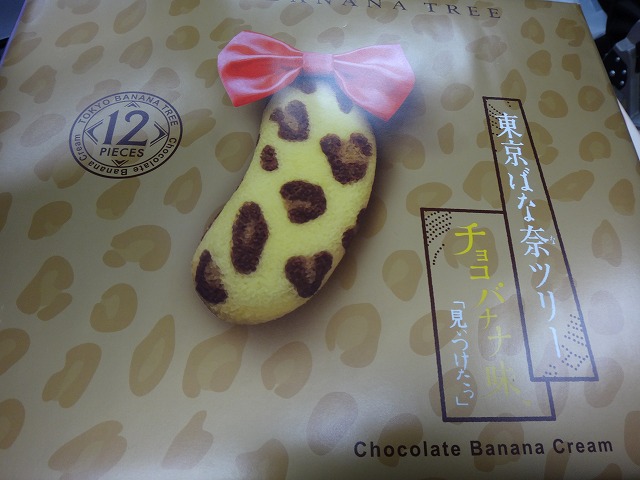
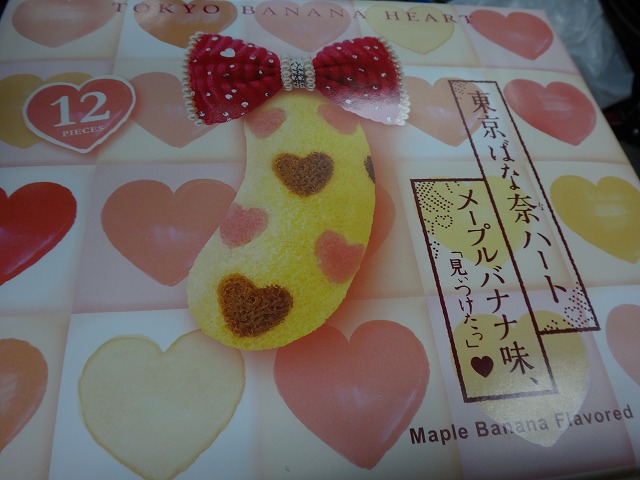
I bought Tokyo Banana as a souvenir,
but since I didn't want to look like I'd frantically remembered to buy it at Shin-Osaka Station,
I went with a limited edition (probably) that isn't sold in Osaka.