I received a comment.
To summarize:
"I built wheels using a hub with an 18.5mm right flange width and another with 20.55mm,
and I noticed that this roughly 2mm difference has a major impact
on the left-right difference in spoke tension."
That's the gist of it.
Yes, that's exactly right.
Build wheels with these two specifications and the difference becomes immediately obvious.
Based on my experience as a guide,
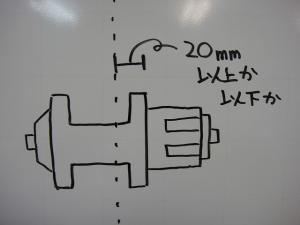
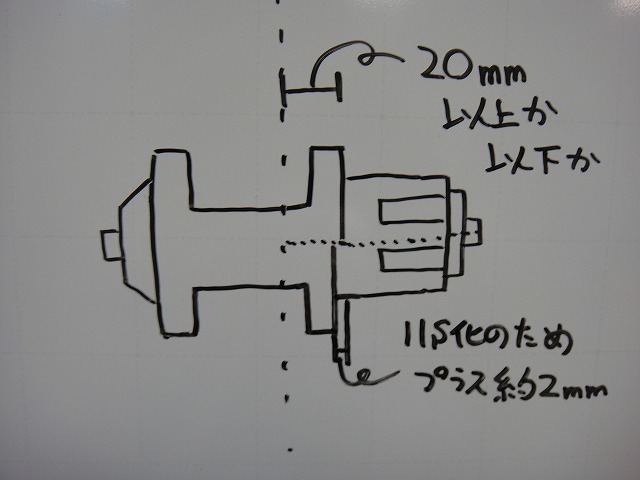
when the right flange width (the dimension from the hub center to the outer edge of the right flange) drops below 20mm,
it becomes difficult to increase spoke tension on the non-drive side using an adjusting cone.
Even comparing 19mm and 21mm—a range of 20mm plus or minus 1mm—the difference is pronounced.
With a 19mm hub, you think: "The non-drive side is still slack,
but the drive side is already this tight!"
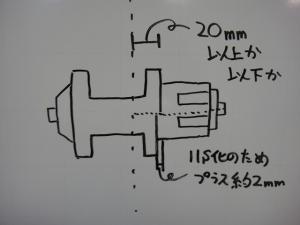
Shimano's 11-speed compatible hubs typically accommodate this change
by reducing the right flange width by about 2mm.
This 2mm reduction in flange width does result in some loss of lateral stiffness,
but that loss is hard to feel at the wheel-building stage.
However, the 2mm change in spoke angle on the right side
and the resulting increase in left-right spoke tension difference
is immediately noticeable when you're building the wheel.
With mass-produced wheels, designers can recover from the loss of flange offset (och'cho)
through extreme hub dimensions or spoke arrangements,
but with hand-built hubs, the situation is simply that the right flange is narrowed by 2mm
from the previous (10-speed hub) specification, so the theoretical loss in wheel-building performance
from Shimano's 11-speed conversion is far greater with hand-built wheels.
This is the "headwind" mentioned in the title. Yet if we're going to say
"hand-built wheels are worth it" in this era,
building them normally just won't cut it against mass-produced wheels.
We need to deploy maximum effort and ingenuity.
That ingenuity is what I'm always discussing here on this blog.
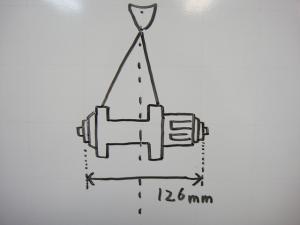
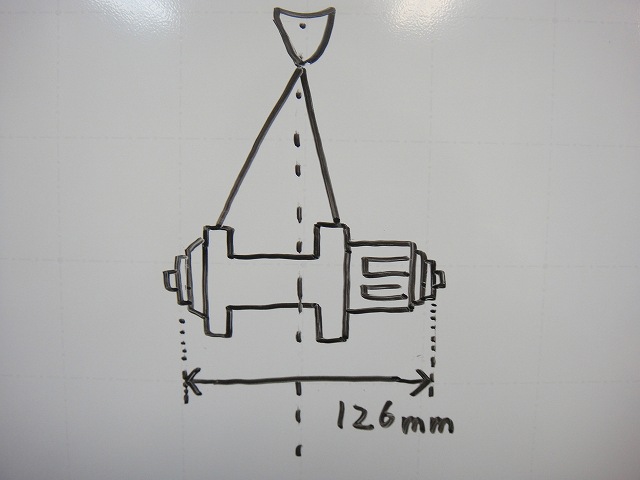
Flange offset (och'cho) is a critical factor.
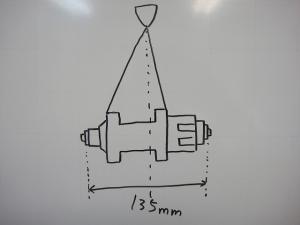
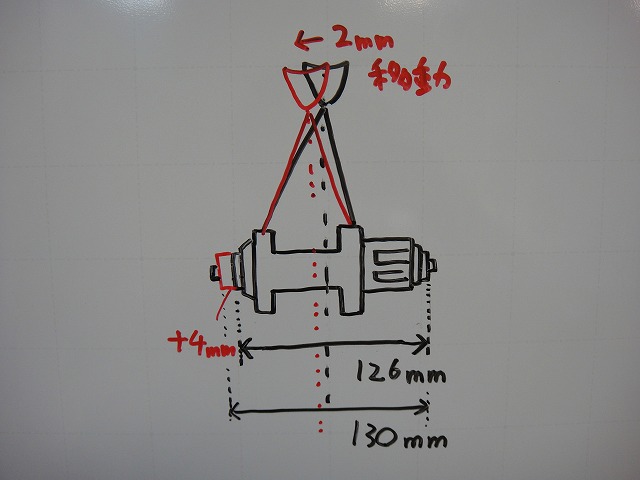
Let's say we have a hub with an over-locknut dimension (henceforth OLD) of 126mm.
The diagram shows a freewheel body hub, but at 126mm it's usually a freehub body.

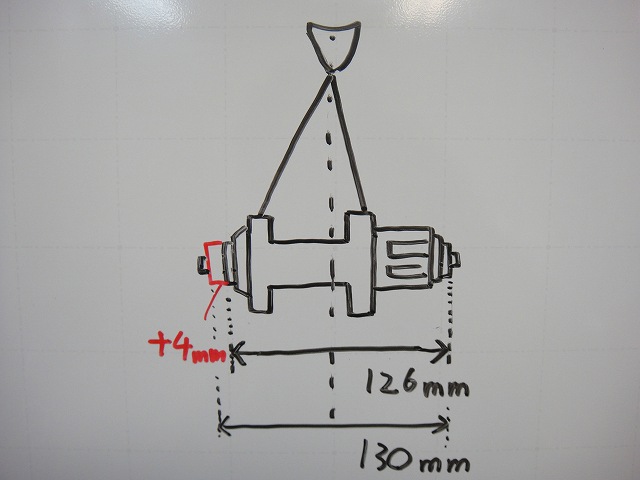
To fit a frame with 130mm dropout spacing,
I added a 4mm spacer on the left side.
I'll swap the axle if needed.
Adding spacer on the right is a no-go.
It increases the flange offset and, more importantly, changes the derailleur adjustment position.
(Unless this wheel alone requires its own derailleur tuning.)
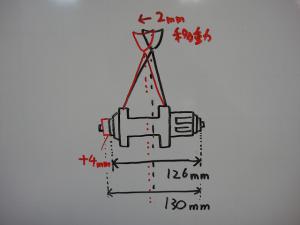
Now I re-center the rim to match the new OLD of 130mm.
The rim's lateral shift in this case is half the width I added to the left axle.
Just 2mm, but the left-right spoke tension difference drops dramatically.
In this case, shifting the rim toward the non-drive side means
tightening only the non-drive-side nipples by enough to shift the rim 2mm,
which is an enormous bonus for non-drive-side spoke tension.
Next, the opposite scenario.
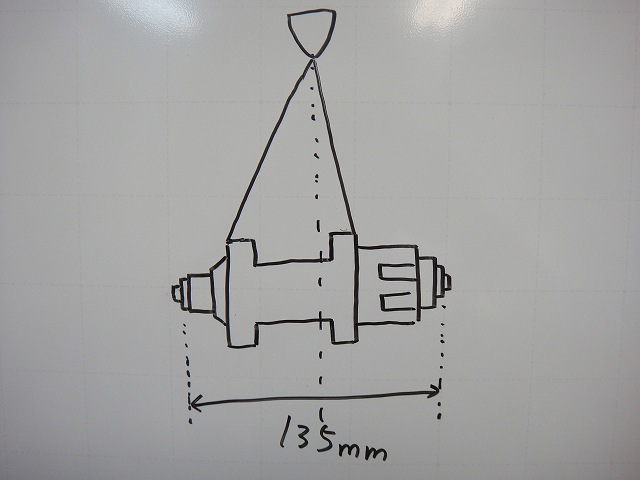
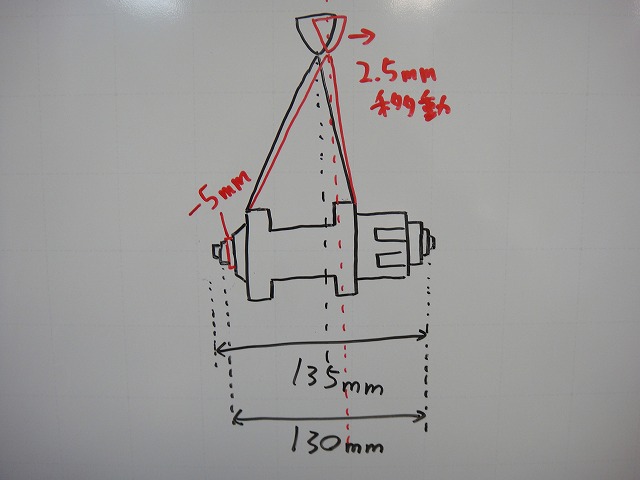
Using an MTB or similar hub with OLD 135mm, cut down to 130mm.
Shimano's small-wheel component group, Capreo, only comes in OLD 135mm spec,
but when building a wheel for a small-wheel frame with 130mm dropouts,
this kind of work becomes necessary.
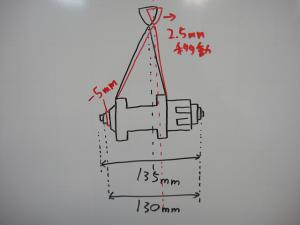
This 2.5mm rim shift toward the drive side is really harsh!
I'll be building wheels like this soon.
Even if you build such a wheel with equal-spoke-count both sides (rokuroku lacing),
it's pretty much an uphill battle.
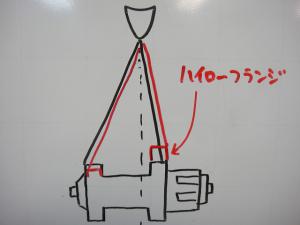
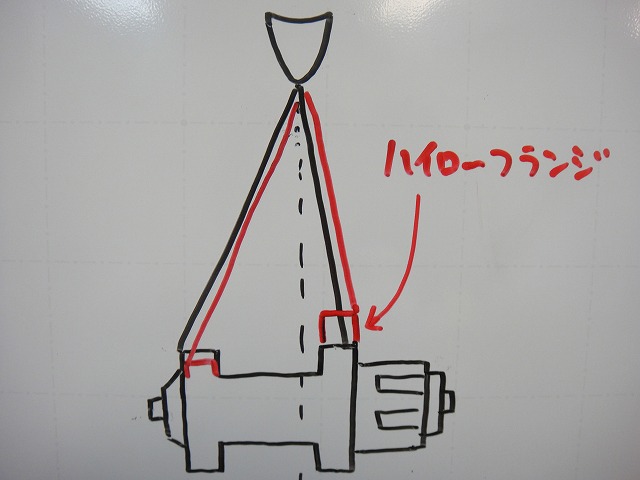
↑Here's the diagram showing equal flanges on both sides shifting to large flange on the drive side
and small flange on the non-drive side.
Notice how the drive-side spoke angle flares outward due to the large flange.
Now suppose this was a Shimano 10-speed hub originally
and the right flange moved inward by about 2mm with 11-speed conversion.
Ideally, the red spoke on the drive side would stay above its original angle (black spoke)
without intersecting it, but unfortunately that's not what happens
with typical large-flange conversion.
A steeper angle means worse flange offset.
For the hand-built Shimano 11-speed situation, which has become harsher regarding flange offset,
asymmetric lacing patterns go beyond "you should do it"—
I believe they're practically mandatory.
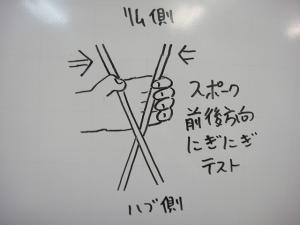
So far I've been talking about viewing the wheel front-to-back,
but let me also address side-to-side viewing.
High-low flanging is essentially small-flanging the non-drive side.
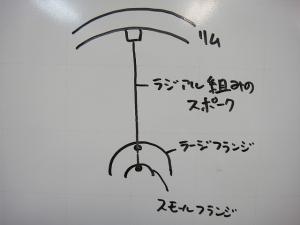
Let me discuss how that affects "spoke fore-aft tightness" as shown in the diagram above.
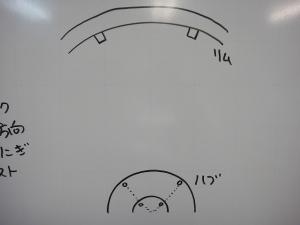
Consider hubs with large and small flanges
that have the same spoke hole phasing.
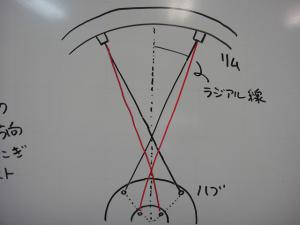
When threading spokes through these hubs,
the small flange's spoke crossing angle is closer to radial.
This means the small flange is more susceptible to deformation
in the "side-squeeze test."
(The angle is one factor, but longer spokes also contribute to greater deformation.
In practice, spoke length probably matters more than angle for deformation increase,
so we shouldn't attribute it solely to the angle.)
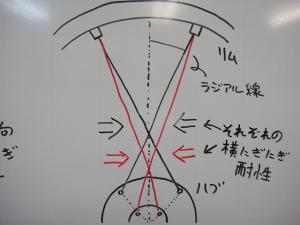
That said, concluding large flanges are better would be premature.
Small-flanging reduces flange offset—that's one benefit—
while simultaneously increasing deformation in the side-squeeze test.
Weighed against each other, flange offset reduction is clearly the priority.
If side-squeeze reduction were truly critical, Fulcrum wheels would use
super large flanges on both sides instead of ultra high-low flanging.
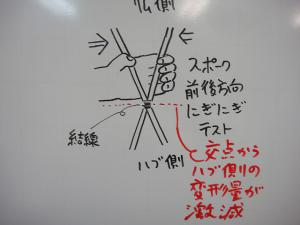
But if you can minimize side-squeeze, you get a tighter, more solid wheel—
that's one reason I solder spokes where they cross.
With soldering, spoke deformation on the hub side becomes nearly zero.
The spoke crossing point behaves like a hub flange in terms of side-squeeze.
You could say the spoke deformation has been super large-flanged
in that dimension alone.
This all explains why "building hand-wheels conventionally can't compete with mass-produced wheels."
One more thing.
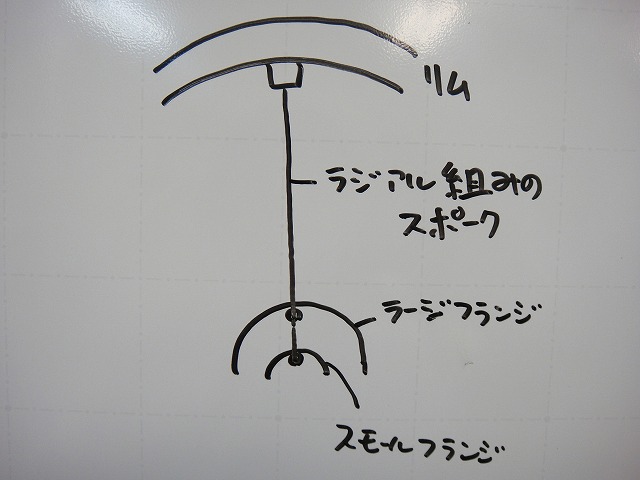
With radial lacing, spoke angle is constant regardless of flange size.
If you use this as a strength and adopt radial lacing
(especially non-drive-side radial) to compensate for its shortcomings,
you'd need either ultra high-low flanges or 2:1 lacing.
The former doesn't exist for hand-build hubs (there are some, but those are for straight spokes),
and the latter shouldn't use bent-head spokes, in my view.
Either way, these don't seem suited to hand-built wheel lacing.
To summarize:
"I built wheels using a hub with an 18.5mm right flange width and another with 20.55mm,
and I noticed that this roughly 2mm difference has a major impact
on the left-right difference in spoke tension."
That's the gist of it.
Yes, that's exactly right.
Build wheels with these two specifications and the difference becomes immediately obvious.

Based on my experience as a guide,
when the right flange width (the dimension from the hub center to the outer edge of the right flange) drops below 20mm,
it becomes difficult to increase spoke tension on the non-drive side using an adjusting cone.
Even comparing 19mm and 21mm—a range of 20mm plus or minus 1mm—the difference is pronounced.
With a 19mm hub, you think: "The non-drive side is still slack,
but the drive side is already this tight!"
Shimano's 11-speed compatible hubs typically accommodate this change
by reducing the right flange width by about 2mm.
This 2mm reduction in flange width does result in some loss of lateral stiffness,
but that loss is hard to feel at the wheel-building stage.
However, the 2mm change in spoke angle on the right side
and the resulting increase in left-right spoke tension difference
is immediately noticeable when you're building the wheel.
With mass-produced wheels, designers can recover from the loss of flange offset (och'cho)
through extreme hub dimensions or spoke arrangements,
but with hand-built hubs, the situation is simply that the right flange is narrowed by 2mm
from the previous (10-speed hub) specification, so the theoretical loss in wheel-building performance
from Shimano's 11-speed conversion is far greater with hand-built wheels.
This is the "headwind" mentioned in the title. Yet if we're going to say
"hand-built wheels are worth it" in this era,
building them normally just won't cut it against mass-produced wheels.
We need to deploy maximum effort and ingenuity.
That ingenuity is what I'm always discussing here on this blog.
Flange offset (och'cho) is a critical factor.
Let's say we have a hub with an over-locknut dimension (henceforth OLD) of 126mm.
The diagram shows a freewheel body hub, but at 126mm it's usually a freehub body.
To fit a frame with 130mm dropout spacing,
I added a 4mm spacer on the left side.
I'll swap the axle if needed.
Adding spacer on the right is a no-go.
It increases the flange offset and, more importantly, changes the derailleur adjustment position.
(Unless this wheel alone requires its own derailleur tuning.)
Now I re-center the rim to match the new OLD of 130mm.
The rim's lateral shift in this case is half the width I added to the left axle.
Just 2mm, but the left-right spoke tension difference drops dramatically.
In this case, shifting the rim toward the non-drive side means
tightening only the non-drive-side nipples by enough to shift the rim 2mm,
which is an enormous bonus for non-drive-side spoke tension.
Next, the opposite scenario.
Using an MTB or similar hub with OLD 135mm, cut down to 130mm.
Shimano's small-wheel component group, Capreo, only comes in OLD 135mm spec,
but when building a wheel for a small-wheel frame with 130mm dropouts,
this kind of work becomes necessary.
This 2.5mm rim shift toward the drive side is really harsh!
I'll be building wheels like this soon.
Even if you build such a wheel with equal-spoke-count both sides (rokuroku lacing),
it's pretty much an uphill battle.
↑Here's the diagram showing equal flanges on both sides shifting to large flange on the drive side
and small flange on the non-drive side.
Notice how the drive-side spoke angle flares outward due to the large flange.
Now suppose this was a Shimano 10-speed hub originally
and the right flange moved inward by about 2mm with 11-speed conversion.
Ideally, the red spoke on the drive side would stay above its original angle (black spoke)
without intersecting it, but unfortunately that's not what happens
with typical large-flange conversion.
A steeper angle means worse flange offset.
For the hand-built Shimano 11-speed situation, which has become harsher regarding flange offset,
asymmetric lacing patterns go beyond "you should do it"—
I believe they're practically mandatory.

So far I've been talking about viewing the wheel front-to-back,
but let me also address side-to-side viewing.
High-low flanging is essentially small-flanging the non-drive side.
Let me discuss how that affects "spoke fore-aft tightness" as shown in the diagram above.
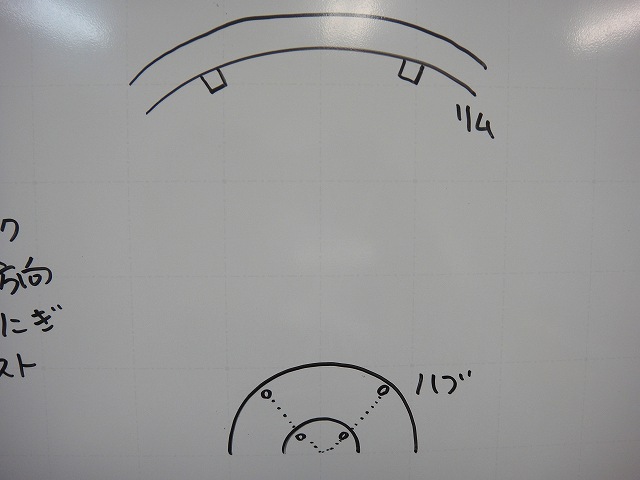
Consider hubs with large and small flanges
that have the same spoke hole phasing.
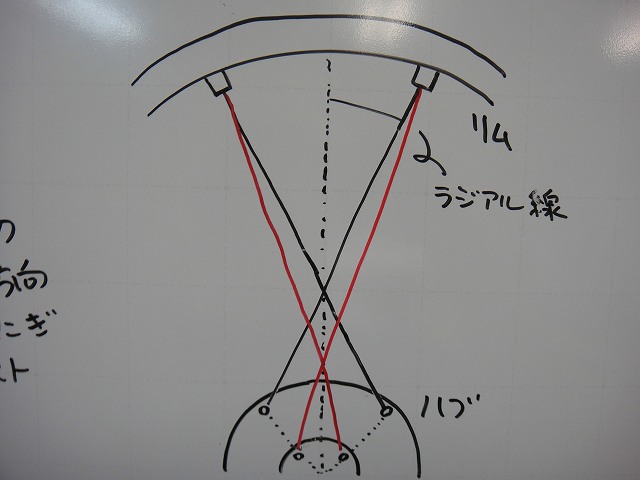
When threading spokes through these hubs,
the small flange's spoke crossing angle is closer to radial.
This means the small flange is more susceptible to deformation
in the "side-squeeze test."
(The angle is one factor, but longer spokes also contribute to greater deformation.
In practice, spoke length probably matters more than angle for deformation increase,
so we shouldn't attribute it solely to the angle.)

That said, concluding large flanges are better would be premature.
Small-flanging reduces flange offset—that's one benefit—
while simultaneously increasing deformation in the side-squeeze test.
Weighed against each other, flange offset reduction is clearly the priority.
If side-squeeze reduction were truly critical, Fulcrum wheels would use
super large flanges on both sides instead of ultra high-low flanging.
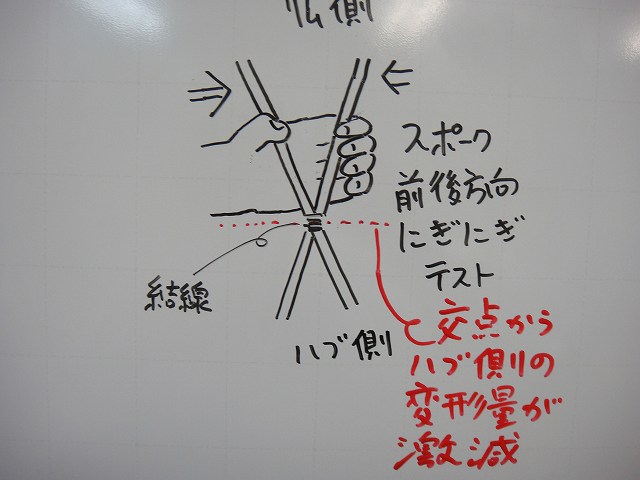
But if you can minimize side-squeeze, you get a tighter, more solid wheel—
that's one reason I solder spokes where they cross.
With soldering, spoke deformation on the hub side becomes nearly zero.
The spoke crossing point behaves like a hub flange in terms of side-squeeze.
You could say the spoke deformation has been super large-flanged
in that dimension alone.
This all explains why "building hand-wheels conventionally can't compete with mass-produced wheels."
One more thing.
With radial lacing, spoke angle is constant regardless of flange size.
If you use this as a strength and adopt radial lacing
(especially non-drive-side radial) to compensate for its shortcomings,
you'd need either ultra high-low flanges or 2:1 lacing.
The former doesn't exist for hand-build hubs (there are some, but those are for straight spokes),
and the latter shouldn't use bent-head spokes, in my view.
Either way, these don't seem suited to hand-built wheel lacing.