I sometimes write long posts about wheels,
and I was planning to write a summary piece called "Hand-built Wheels vs. Pre-built Wheels"
once I finished those posts.
I'm still in the preparation stage for that now, but I've probably only written half of it.
However, I've been thinking about something, so I'll write the summary piece first
while continuing with the theoretical discussion in my own time.

Ultimately, a good wheel is one that propels you forward more when you pedal.
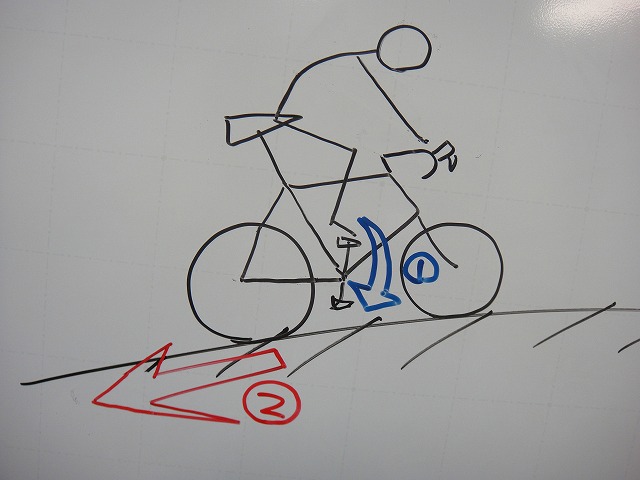
When you push down on the pedal from the top (diagram 1 above),
the rear wheel shoots forward (diagram 2 above),
and if the input force in 1 is the same but the result in 2 changes depending on the wheel,
then that's the wheel's performance difference itself.
When you push down on the pedal with a certain amount of power from the top, there's
internal resistance in the pedal bearing, flex in the crank, flex in the frame, internal resistance in the BB,
resistance between chain and chainring, internal resistance in the chain,
resistance between chain and sprocket,
the tension-maintaining force of the rear derailleur, flex in the spokes—
there may be other factors too—but power gets lost bit by bit through all these points,
and what remains is the force the rear wheel uses to push off the ground.
Tire characteristics (contact patch, grip, etc.) are also a major factor.
How to theoretically reduce the power loss in the wheel
is the usual theme of my long posts.
The magnitude of the force shown in diagram 2 above, I'll call the wheel's
responsiveness.

I've thought about what determines that responsiveness.
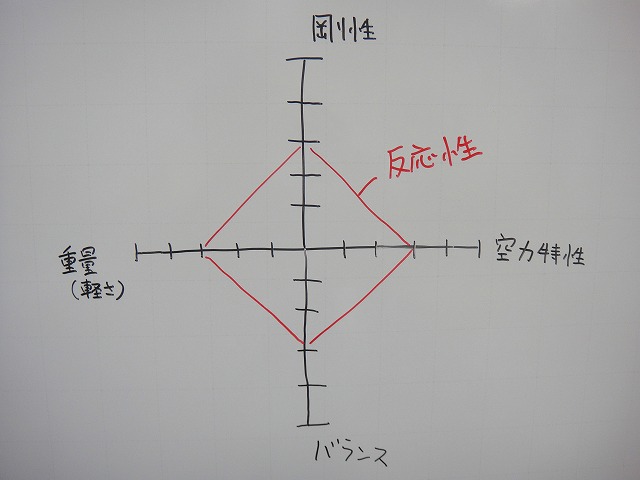
In my view, it breaks down into four elements: stiffness (strictly speaking, vertical and lateral stiffness),
lightness, aerodynamic characteristics, and left-right wheel balance.
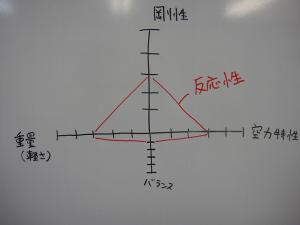
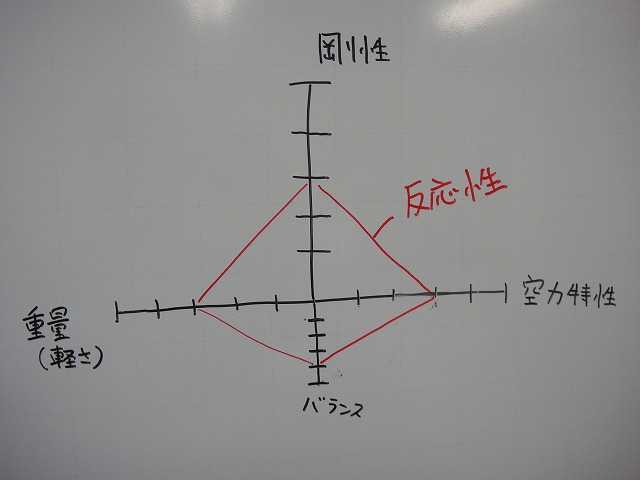
When you represent that in a parameter graph, you get something like the diagram above.
In the diagram above, a certain wheel scores 3 out of 5 points
in all four elements.
The larger the area of the red quadrilateral formed by connecting these,
the higher the wheel's responsiveness—or so I'd like to say, but...
The importance of each element to responsiveness is not equal.
Balance is the least important to overlook.
The front wheel has no dish, so there's no inherent left-right balance difference,
but with the rear wheel, if there's a large left-right balance difference, as I wrote before,
you get a wheel that rubs only on the left side.
However, even if the left spoke tension is somewhat loose, as long as the right side (freewheel side) is
properly tensioned, it's actually not that big a problem in practice.
(As long as it doesn't rub on the left)
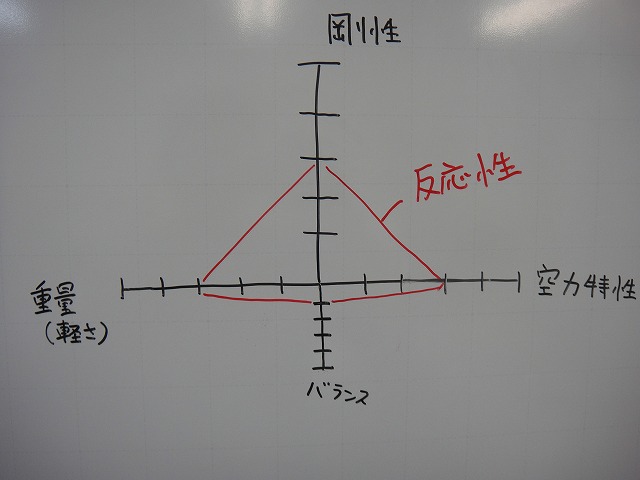
In the diagram above, elements other than balance score 3 points, balance alone scores 1 point, but

even if balance improved to 4 points,
it wouldn't significantly impact wheel responsiveness (the area doesn't change that much).
A road bike rear wheel with equal left-right spoke tension basically doesn't exist.
A balance score of 5 points—wheels with equal spoke tension on both sides—
(I'm making this up myself, but)—my W-freewheel rear wheel would qualify as a 5-point balance.
However, that wheel scores only 0.5 in stiffness on my own assessment (especially lateral stiffness is weak).
Since responsiveness prioritizes stiffness overwhelmingly over balance,
sacrificing stiffness for balance makes no sense.
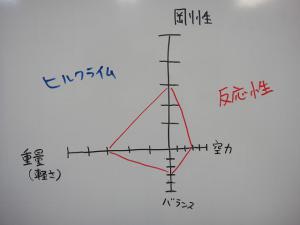
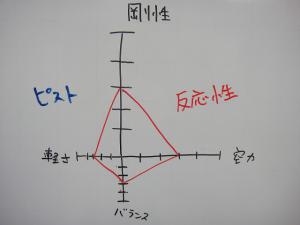
One more thing. How we evaluate responsiveness also changes depending on the situation.
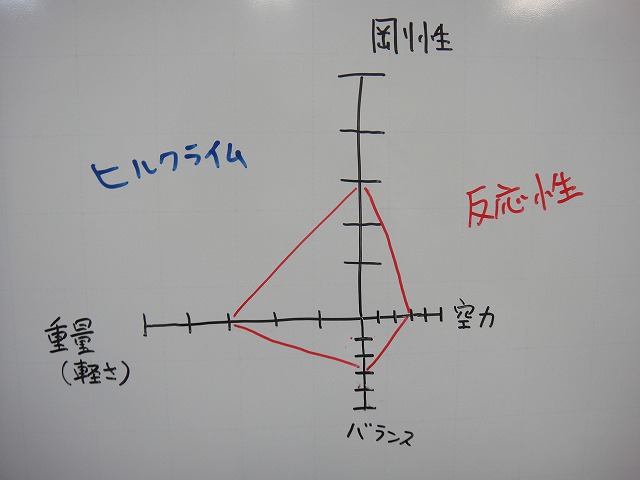
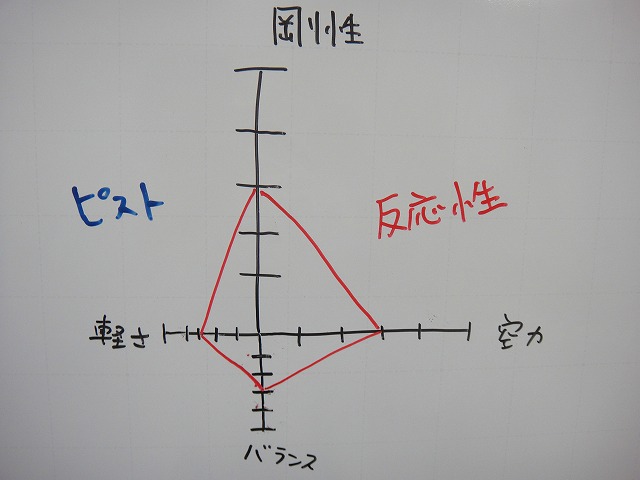
For example, a wheel's aerodynamic performance matters completely differently in hill climbs versus track racing.
Using a wheel with 4 points in lightness and 1 in aerodynamics (like the R-SYS) in track racing,
or using one with 1 point in lightness and 4 in aerodynamics (like Cosmic Carbone) in hill climbs
isn't the right tool for the job.
The key point here is:
Stiffness is the most important element in a wheel.
Even an abnormally light hill-climb-only wheel is unusable if it lacks stiffness.

Now, thinking only about "building high-responsiveness wheels,"
I'll consider each element of hand-built versus pre-built wheels.
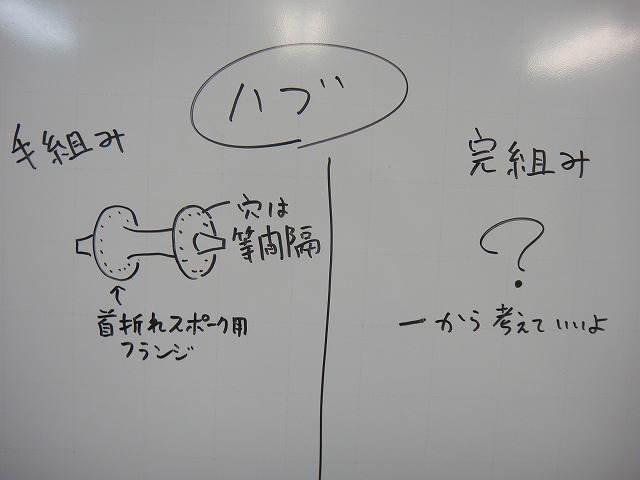
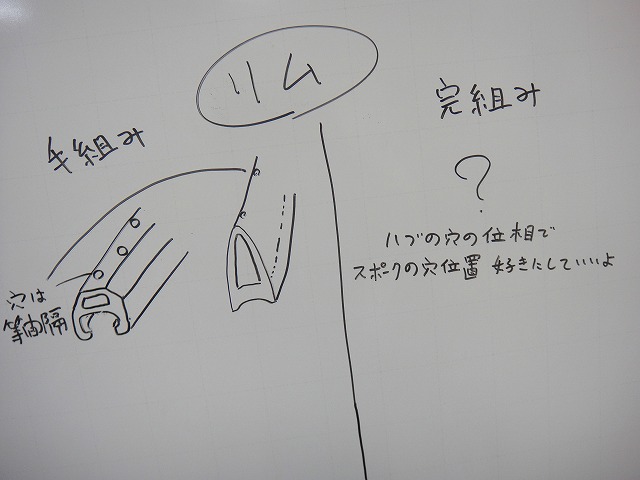
First, the hub. Normal hubs are limited to those with flanges for bent-elbow spokes,
and spoke holes are only evenly spaced.
There are high-low flange rear hubs, but
there aren't many with extremely pronounced left-right differences.
Pre-built wheels, on the other hand, can have hub flanges specially designed
for the specific rim they'll use, and by sacrificing versatility, they can achieve
quite extreme designs.

Next, spokes and nipples.
Hand-built wheels can only use standard spokes and nipples,
but pre-built wheels can use special materials like aluminum or carbon.
With hand-built wheel spokes, once the hub and rim are decided,
you can vary the lacing pattern, and as long as the spokes aren't black-painted,
you can solder the spoke crossings.
That's the part circled in red in the image above,
and it's one of the few advantages hand-built wheels have over pre-built wheels.
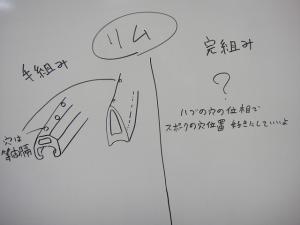
Finally, the rim. Pre-built wheels can freely position spoke holes on the rim.
Standard rims need evenly-spaced spoke holes
to work with standard hubs.
Here I'm only thinking about building higher-responsiveness wheels,
so I'm not considering "maintenance features" like easier truing or easier spoke replacement
as part of wheel performance.
Aesthetics like "a cromoly frame looks better with 32H or 36H wheels"
don't matter here either.
The biggest advantage of pre-built wheels is straight spokes.
With just this change, you can build wheels with spoke tensions that would be nearly impossible
with bent-elbow spokes, and you can easily achieve high stiffness,
which is the most critical element of wheel performance.

To conclude on wheels: honestly, it just comes down to "buy Lightweight."
Repeating what I said before, whether or not you can true a wheel
has nothing to do with wheel responsiveness (for our purposes here), so it doesn't matter.
Beyond that, wheels like Mavic's Cosmic Carbone Ultimate or
Reynolds' RZR series—carbon spoke carbon tubular wheels—
are probably the strongest wheels.
Outside of very specific situations like using a disc rear wheel for time trials,
there probably aren't wheels with higher responsiveness than these.
For hand-built wheels to match or exceed Lightweight—to be either "stronger at the same weight"
or "lighter at the same stiffness"—is impossible (at least for me),
so these represent the ultimate in dedicated design, and hand-built wheels can't compete.
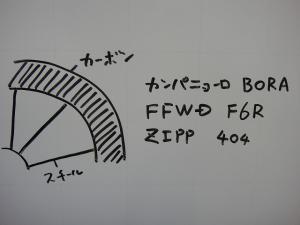
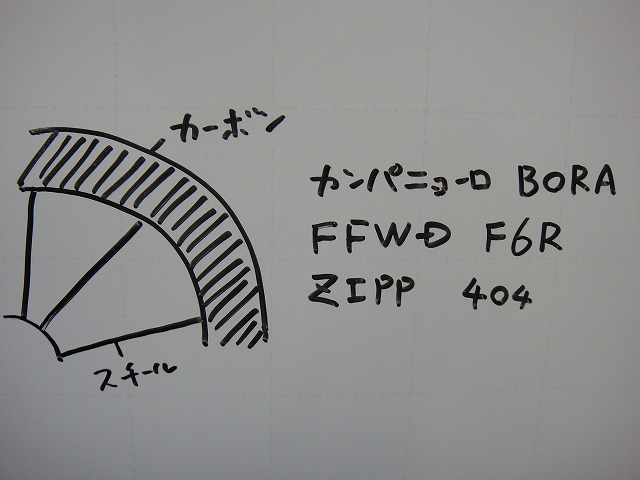
Next, consider carbon tubular wheels with rim heights of around 40–50mm.
Since you can true them, they're durable enough for regular use, and the price isn't extreme,
so far more people actually own them compared to Lightweight.
My targets in this category are wheels like Campagnolo's Bora or Zipp's 404, but
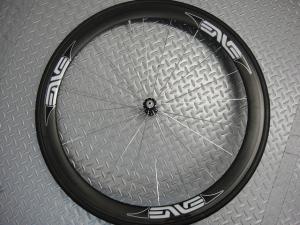
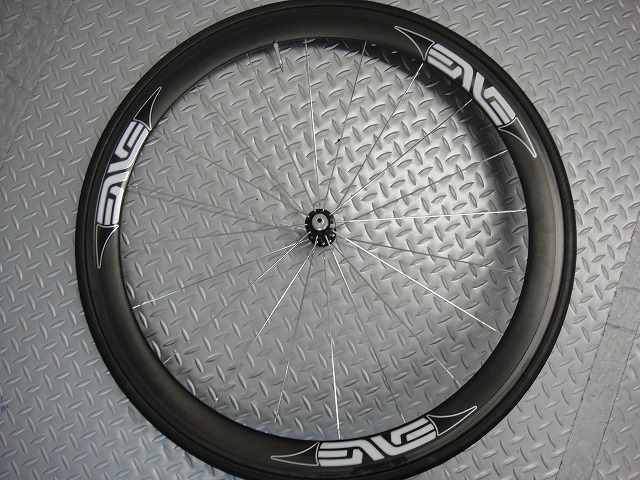
for this class, if I build a wheel with an Enve 1-45 rim,
I'm confident I can build something with comparable performance, though with tradeoffs.
It might be slightly weaker in vertical stiffness and slightly heavier in external weight, perhaps.
The fact that I can adjust the lacing pattern and spoke count based on rider weight
is another advantage for hand-built.
I won't go so far as to tell someone who wants a Bora One to get an Enve instead,
but if someone asks for an Enve, I'll build them a wheel they'll think
"I'm glad I went with this instead!"
The image above is one I actually built that way.
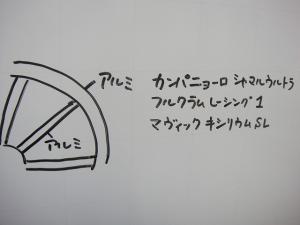
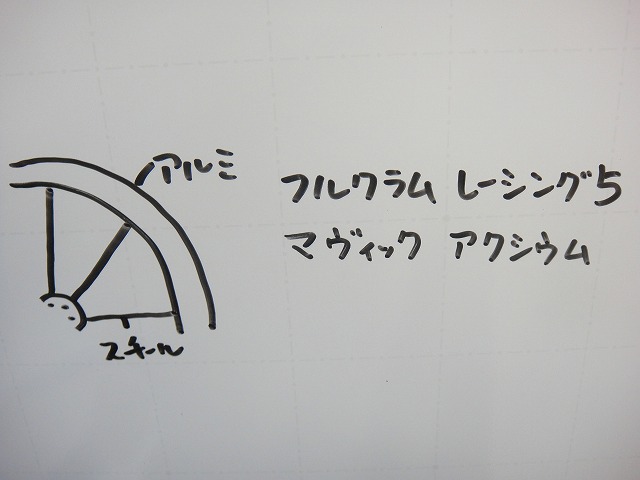
Next, clincher wheels built with aluminum rims and aluminum or carbon spokes.
For clincher rims, Mavic Open Pro is my recommendation,
but no matter how you build it, you can't make it lighter than the R-SYS or
stiffer than the Racing Zero.
(The latter is technically possible, but it would end up heavier than the Racing Zero)
For people who think tubulars are a hassle but want a wheel that performs,
I often recommend the Fulcrum Racing Zero.

Finally, clincher wheels built with aluminum rims and steel spokes.
Wheels in this class often come stock on complete bikes,
and the main difference from hand-built wheels is whether they have straight spokes.
Sometimes they have bent-elbow spokes instead.
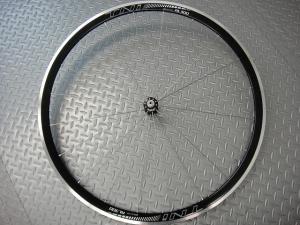
In this class, I'm confident I can build a wheel with a Tni aluminum rim
that I can recommend as "this is the better choice!"
Since the rim arrives tomorrow, more updates tomorrow!
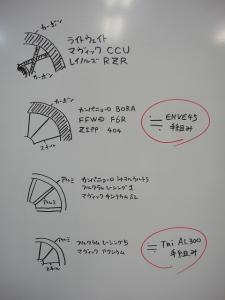
↑With steel spokes, hand-built wheels can potentially match pre-built wheels,
which means there's a possibility of building hand-built wheels that rival pre-builts in this category.
and I was planning to write a summary piece called "Hand-built Wheels vs. Pre-built Wheels"
once I finished those posts.
I'm still in the preparation stage for that now, but I've probably only written half of it.
However, I've been thinking about something, so I'll write the summary piece first
while continuing with the theoretical discussion in my own time.
Ultimately, a good wheel is one that propels you forward more when you pedal.
When you push down on the pedal from the top (diagram 1 above),
the rear wheel shoots forward (diagram 2 above),
and if the input force in 1 is the same but the result in 2 changes depending on the wheel,
then that's the wheel's performance difference itself.
When you push down on the pedal with a certain amount of power from the top, there's
internal resistance in the pedal bearing, flex in the crank, flex in the frame, internal resistance in the BB,
resistance between chain and chainring, internal resistance in the chain,
resistance between chain and sprocket,
the tension-maintaining force of the rear derailleur, flex in the spokes—
there may be other factors too—but power gets lost bit by bit through all these points,
and what remains is the force the rear wheel uses to push off the ground.
Tire characteristics (contact patch, grip, etc.) are also a major factor.
How to theoretically reduce the power loss in the wheel
is the usual theme of my long posts.
The magnitude of the force shown in diagram 2 above, I'll call the wheel's
responsiveness.
I've thought about what determines that responsiveness.
In my view, it breaks down into four elements: stiffness (strictly speaking, vertical and lateral stiffness),
lightness, aerodynamic characteristics, and left-right wheel balance.
When you represent that in a parameter graph, you get something like the diagram above.
In the diagram above, a certain wheel scores 3 out of 5 points
in all four elements.
The larger the area of the red quadrilateral formed by connecting these,
the higher the wheel's responsiveness—or so I'd like to say, but...
The importance of each element to responsiveness is not equal.
Balance is the least important to overlook.
The front wheel has no dish, so there's no inherent left-right balance difference,
but with the rear wheel, if there's a large left-right balance difference, as I wrote before,
you get a wheel that rubs only on the left side.
However, even if the left spoke tension is somewhat loose, as long as the right side (freewheel side) is
properly tensioned, it's actually not that big a problem in practice.
(As long as it doesn't rub on the left)
In the diagram above, elements other than balance score 3 points, balance alone scores 1 point, but
even if balance improved to 4 points,
it wouldn't significantly impact wheel responsiveness (the area doesn't change that much).
A road bike rear wheel with equal left-right spoke tension basically doesn't exist.
A balance score of 5 points—wheels with equal spoke tension on both sides—
(I'm making this up myself, but)—my W-freewheel rear wheel would qualify as a 5-point balance.
However, that wheel scores only 0.5 in stiffness on my own assessment (especially lateral stiffness is weak).
Since responsiveness prioritizes stiffness overwhelmingly over balance,
sacrificing stiffness for balance makes no sense.
One more thing. How we evaluate responsiveness also changes depending on the situation.
For example, a wheel's aerodynamic performance matters completely differently in hill climbs versus track racing.
Using a wheel with 4 points in lightness and 1 in aerodynamics (like the R-SYS) in track racing,
or using one with 1 point in lightness and 4 in aerodynamics (like Cosmic Carbone) in hill climbs
isn't the right tool for the job.
The key point here is:
Stiffness is the most important element in a wheel.
Even an abnormally light hill-climb-only wheel is unusable if it lacks stiffness.
Now, thinking only about "building high-responsiveness wheels,"
I'll consider each element of hand-built versus pre-built wheels.
First, the hub. Normal hubs are limited to those with flanges for bent-elbow spokes,
and spoke holes are only evenly spaced.
There are high-low flange rear hubs, but
there aren't many with extremely pronounced left-right differences.
Pre-built wheels, on the other hand, can have hub flanges specially designed
for the specific rim they'll use, and by sacrificing versatility, they can achieve
quite extreme designs.

Next, spokes and nipples.
Hand-built wheels can only use standard spokes and nipples,
but pre-built wheels can use special materials like aluminum or carbon.
With hand-built wheel spokes, once the hub and rim are decided,
you can vary the lacing pattern, and as long as the spokes aren't black-painted,
you can solder the spoke crossings.
That's the part circled in red in the image above,
and it's one of the few advantages hand-built wheels have over pre-built wheels.
Finally, the rim. Pre-built wheels can freely position spoke holes on the rim.
Standard rims need evenly-spaced spoke holes
to work with standard hubs.
Here I'm only thinking about building higher-responsiveness wheels,
so I'm not considering "maintenance features" like easier truing or easier spoke replacement
as part of wheel performance.
Aesthetics like "a cromoly frame looks better with 32H or 36H wheels"
don't matter here either.
The biggest advantage of pre-built wheels is straight spokes.
With just this change, you can build wheels with spoke tensions that would be nearly impossible
with bent-elbow spokes, and you can easily achieve high stiffness,
which is the most critical element of wheel performance.

To conclude on wheels: honestly, it just comes down to "buy Lightweight."
Repeating what I said before, whether or not you can true a wheel
has nothing to do with wheel responsiveness (for our purposes here), so it doesn't matter.
Beyond that, wheels like Mavic's Cosmic Carbone Ultimate or
Reynolds' RZR series—carbon spoke carbon tubular wheels—
are probably the strongest wheels.
Outside of very specific situations like using a disc rear wheel for time trials,
there probably aren't wheels with higher responsiveness than these.
For hand-built wheels to match or exceed Lightweight—to be either "stronger at the same weight"
or "lighter at the same stiffness"—is impossible (at least for me),
so these represent the ultimate in dedicated design, and hand-built wheels can't compete.
Next, consider carbon tubular wheels with rim heights of around 40–50mm.
Since you can true them, they're durable enough for regular use, and the price isn't extreme,
so far more people actually own them compared to Lightweight.
My targets in this category are wheels like Campagnolo's Bora or Zipp's 404, but
for this class, if I build a wheel with an Enve 1-45 rim,
I'm confident I can build something with comparable performance, though with tradeoffs.
It might be slightly weaker in vertical stiffness and slightly heavier in external weight, perhaps.
The fact that I can adjust the lacing pattern and spoke count based on rider weight
is another advantage for hand-built.
I won't go so far as to tell someone who wants a Bora One to get an Enve instead,
but if someone asks for an Enve, I'll build them a wheel they'll think
"I'm glad I went with this instead!"
The image above is one I actually built that way.

Next, clincher wheels built with aluminum rims and aluminum or carbon spokes.
For clincher rims, Mavic Open Pro is my recommendation,
but no matter how you build it, you can't make it lighter than the R-SYS or
stiffer than the Racing Zero.
(The latter is technically possible, but it would end up heavier than the Racing Zero)
For people who think tubulars are a hassle but want a wheel that performs,
I often recommend the Fulcrum Racing Zero.
Finally, clincher wheels built with aluminum rims and steel spokes.
Wheels in this class often come stock on complete bikes,
and the main difference from hand-built wheels is whether they have straight spokes.
Sometimes they have bent-elbow spokes instead.
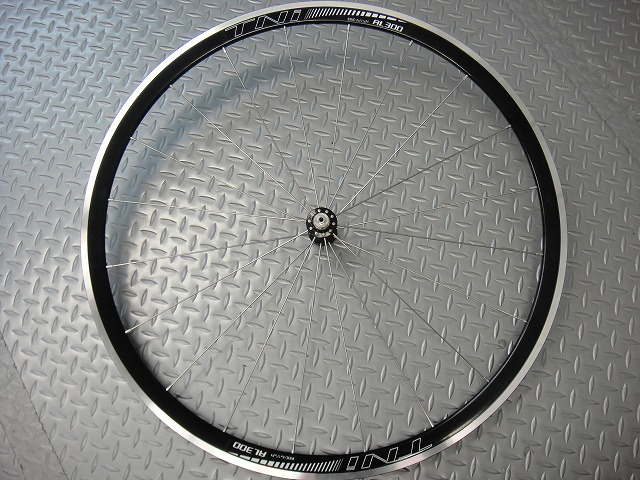
In this class, I'm confident I can build a wheel with a Tni aluminum rim
that I can recommend as "this is the better choice!"
Since the rim arrives tomorrow, more updates tomorrow!
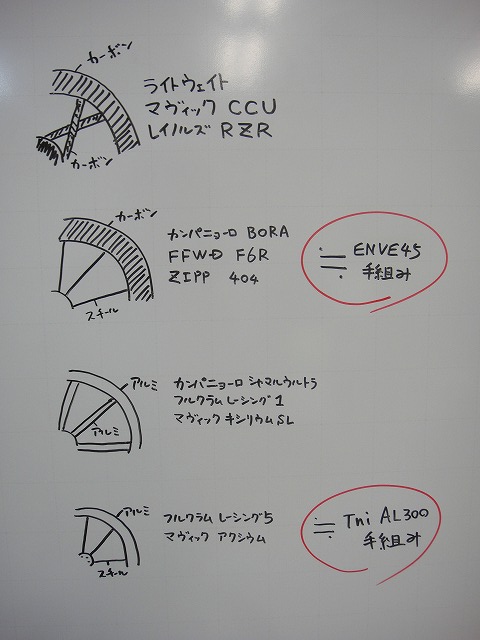
↑With steel spokes, hand-built wheels can potentially match pre-built wheels,
which means there's a possibility of building hand-built wheels that rival pre-builts in this category.