Another day with wheels (and so on).
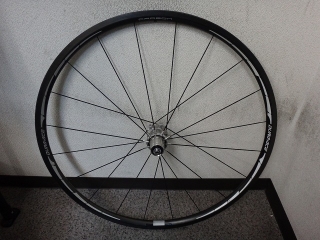
A customer left me with a WH-7801C rear wheel.
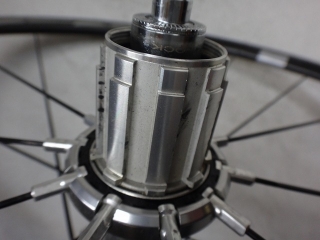
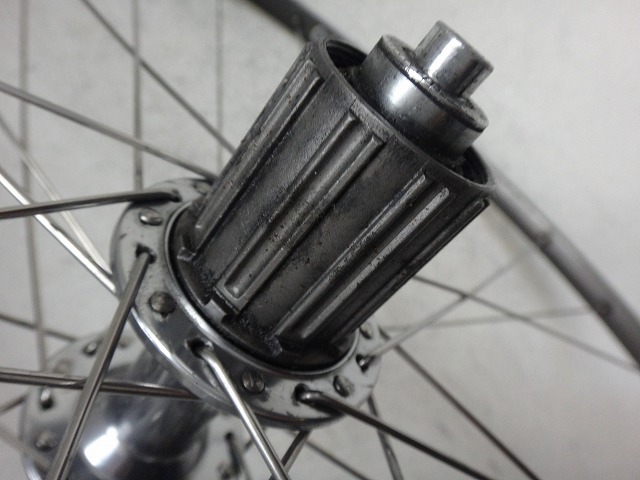
The freewheel body is 10-speed only, so 11-speed sprockets won't fit.
They want it rebuilt with an 11-speed hub.
This freewheel body is literally "10-speed only"—neither 9-speed nor 11-speed will mount on it.
By switching from a titanium 9-speed freewheel body to an aluminum one, there's a slight weight savings,
but aluminum splines with shallow teeth raised strength concerns,
so they increased the tooth height partway up the splines.
Because of this, only 10-speed sprockets designed to match those specs could be installed
(initially only the new Dura-Ace 7800),
meaning if you wanted to use Dura-Ace wheels, you had to buy a new groupset too.
At that time, when mounting a 10-speed sprocket onto a 10-speed-only aluminum freewheel body
(like those Easton made, outside Shimano),
a 1.0mm low spacer was unnecessary
(actually, the step would jam it, so you couldn't use it),
but when mounting a 10-speed sprocket onto a traditional 9-speed freewheel body, it was necessary—
because of this annoying dual requirement, from that point until now
customer-caused low spacer installation errors have happened countless times.
Just the other day I ordered about 10 low spacers,
but since they get used for various things (of course, for their proper purpose),
I often notice the stock is nearly depleted.
This 10-speed-only aluminum freewheel body is the root source of this evil—
a harm still imposed on customers today because of temporary business convenience to stimulate replacement demand.
When installing a 1.85mm spacer to downgrade an 11-speed freewheel body to 10-speed,
many people remove the 1.0mm low spacer.
The 1.85mm spacer is a hub-side part,
the 1.0mm spacer is a sprocket-side part,
and both are necessary for different reasons, so you need to install both.
What makes it even more complicated is
the low-gear interior of junior-gearing 10-speed sprockets (13-16T top)
has a molded low spacer shape, so a low spacer is not needed.
It doesn't come with one either.
Junior gearing engages the taller spline of the 10-speed-only aluminum freewheel body,
so while it's technically 10-speed sprocket, it cannot be mounted on a 10-speed-only freewheel body.
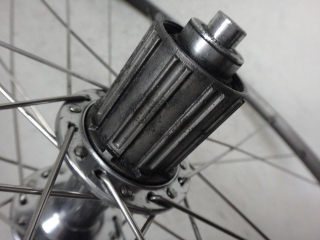
↑7900 series
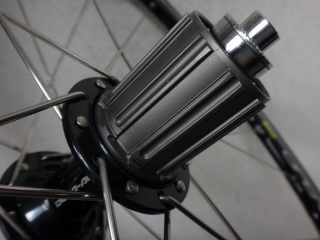
↑9000 series
From the 7900 series onward, by adding grooves to the 7700 series titanium spline,
they achieved a lighter 7800 aluminum freewheel body than the 7700 titanium, and an even lighter titanium freewheel body.
They should have done this from the start.
Of course, they knew what they were doing.
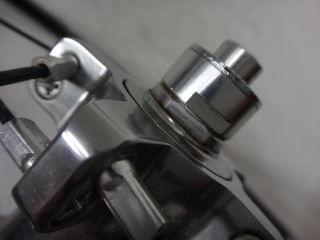
Before disassembly.
The left flange width was widened up to about flush with the dust cap.
I thought this would be the end of the wide-flange gimmick,
but it narrowed again with the 7900, and then in the 9000 they did it again with "It's wider now!"
They should have done this from the start.
Of course, they knew what they were doing.
By the way, this hub uses a hub wrench for the bearing cone adjustment nut,
and a hub wrench or 5mm Allen key for the end nut,
with a thin washer sandwiched between them.
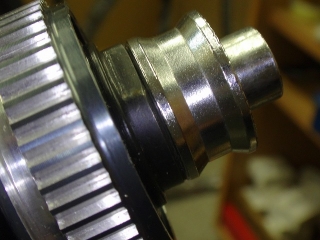
↑This is the CX75 rear hub,
and except for the end nut being compatible with only a 5mm Allen key,
it uses the same method as the 7800 hub.
From the 7900 hub onward, instead of this double-nut type system,
they switched to a digital ratchet type, not because of this hub's lower grade,
but probably because it's structurally difficult to make it coexist with the centerlock rotor mount
(the quick-release XTRA hub also isn't digital ratchet but uses this method).
Personally, I prefer this system with infinite adjustment,
but I'm always bothered by the lack of a washer between the double nuts.
There's actually room dimensionally to fit one.
The washer between double nuts is technically a functional component, so
it has far more meaning than the unsavory 1.0mm low spacer introduced for commercial purposes.
Well, it's true that tightening it firmly makes it almost impossible to loosen.

The black spokes up through the 7800 series rust really badly.
... I've already written everything I wanted to before disassembly,
so let's get to the wheel rebuild now.

Built it.
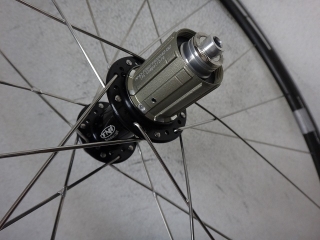
Evolite hub, 20H, half-comp, four-cross lacing with nipple holes. Unlike before the rebuild, the spokes are silver because that's what the customer wanted.
I wondered if we could build the 7801C rim with a generic hub, but
there was a precedent (→here).
At the customer's request, they want the rim weight and finished wheel weight
posted, so here they are.
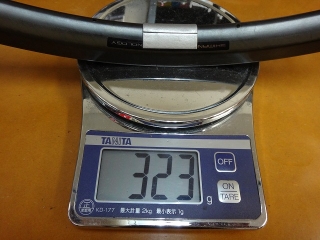
↑The rim. There's weight tape on it,
but even with it, it's probably around 10g.
The Nomu Lab wheel #6 is about the same weight or slightly lighter,
and I'd like to say it's excellent because of the higher rim profile,
but this rear rim is an offset rim, so it loses on that count.
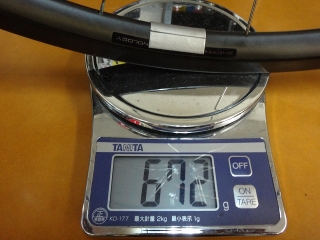
↑The wheel weight.
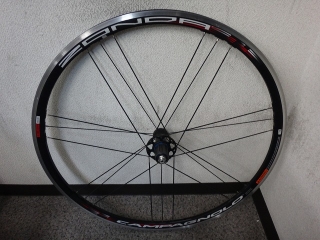
The same customer also left me with a Zonda rear wheel.
There's a suspicion that the rim is shifted toward the freewheel side.
Also, they want an inspection of the freewheel pawl return springs and such.
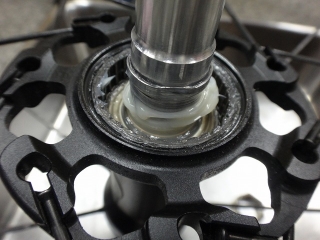
The hub grease is barely dirty at all.
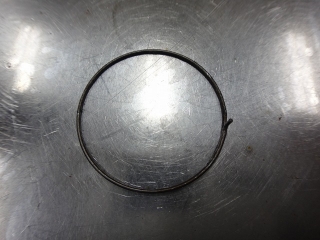
The freewheel pawl return springs show no deformation.
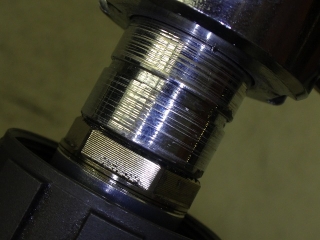
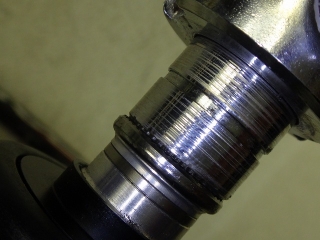
Perfectly centered, almost no runout at all.
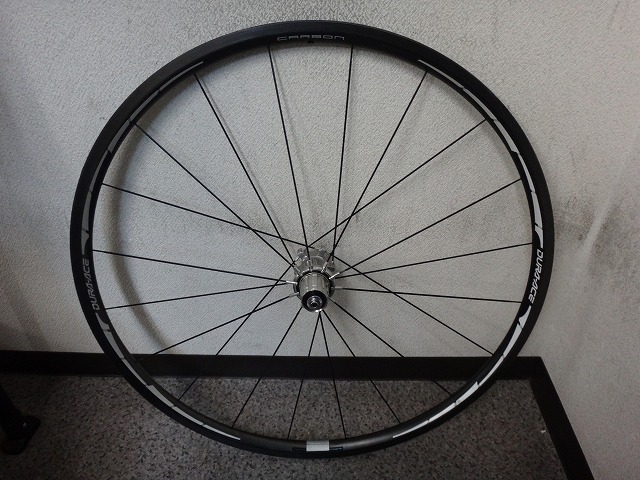
A customer left me with a WH-7801C rear wheel.

The freewheel body is 10-speed only, so 11-speed sprockets won't fit.
They want it rebuilt with an 11-speed hub.
This freewheel body is literally "10-speed only"—neither 9-speed nor 11-speed will mount on it.
By switching from a titanium 9-speed freewheel body to an aluminum one, there's a slight weight savings,
but aluminum splines with shallow teeth raised strength concerns,
so they increased the tooth height partway up the splines.
Because of this, only 10-speed sprockets designed to match those specs could be installed
(initially only the new Dura-Ace 7800),
meaning if you wanted to use Dura-Ace wheels, you had to buy a new groupset too.
At that time, when mounting a 10-speed sprocket onto a 10-speed-only aluminum freewheel body
(like those Easton made, outside Shimano),
a 1.0mm low spacer was unnecessary
(actually, the step would jam it, so you couldn't use it),
but when mounting a 10-speed sprocket onto a traditional 9-speed freewheel body, it was necessary—
because of this annoying dual requirement, from that point until now
customer-caused low spacer installation errors have happened countless times.
Just the other day I ordered about 10 low spacers,
but since they get used for various things (of course, for their proper purpose),
I often notice the stock is nearly depleted.
This 10-speed-only aluminum freewheel body is the root source of this evil—
a harm still imposed on customers today because of temporary business convenience to stimulate replacement demand.
When installing a 1.85mm spacer to downgrade an 11-speed freewheel body to 10-speed,
many people remove the 1.0mm low spacer.
The 1.85mm spacer is a hub-side part,
the 1.0mm spacer is a sprocket-side part,
and both are necessary for different reasons, so you need to install both.
What makes it even more complicated is
the low-gear interior of junior-gearing 10-speed sprockets (13-16T top)
has a molded low spacer shape, so a low spacer is not needed.
It doesn't come with one either.
Junior gearing engages the taller spline of the 10-speed-only aluminum freewheel body,
so while it's technically 10-speed sprocket, it cannot be mounted on a 10-speed-only freewheel body.
↑7900 series
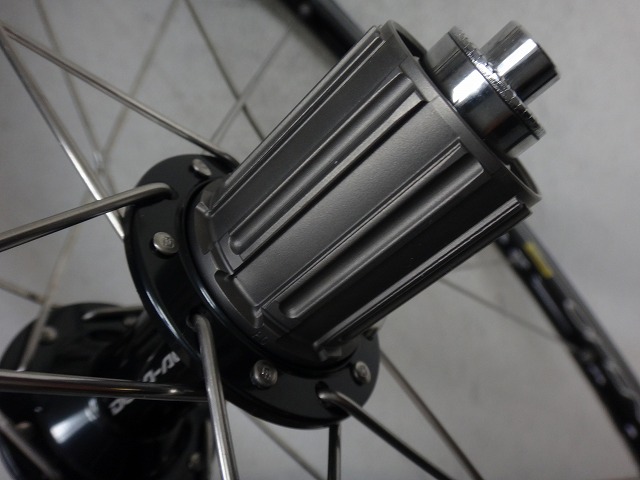
↑9000 series
From the 7900 series onward, by adding grooves to the 7700 series titanium spline,
they achieved a lighter 7800 aluminum freewheel body than the 7700 titanium, and an even lighter titanium freewheel body.
They should have done this from the start.
Of course, they knew what they were doing.
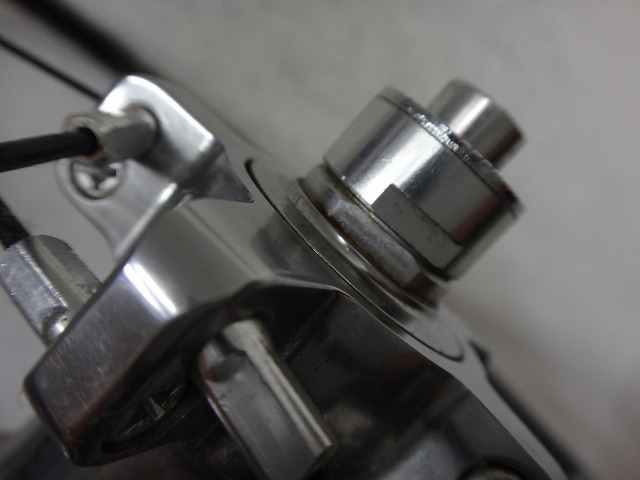
Before disassembly.
The left flange width was widened up to about flush with the dust cap.
I thought this would be the end of the wide-flange gimmick,
but it narrowed again with the 7900, and then in the 9000 they did it again with "It's wider now!"
They should have done this from the start.
Of course, they knew what they were doing.
By the way, this hub uses a hub wrench for the bearing cone adjustment nut,
and a hub wrench or 5mm Allen key for the end nut,
with a thin washer sandwiched between them.
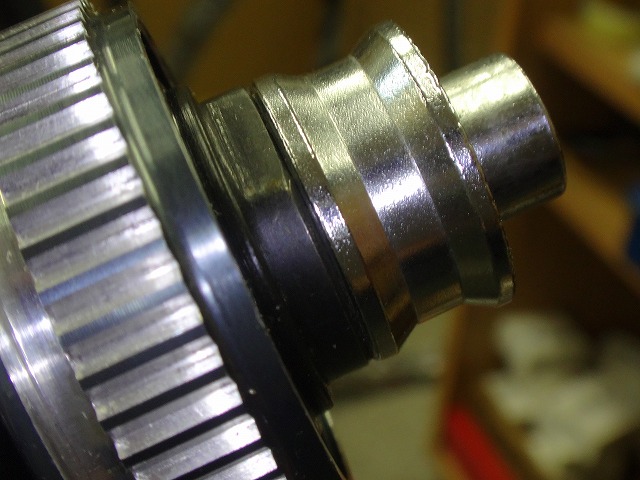
↑This is the CX75 rear hub,
and except for the end nut being compatible with only a 5mm Allen key,
it uses the same method as the 7800 hub.
From the 7900 hub onward, instead of this double-nut type system,
they switched to a digital ratchet type, not because of this hub's lower grade,
but probably because it's structurally difficult to make it coexist with the centerlock rotor mount
(the quick-release XTRA hub also isn't digital ratchet but uses this method).
Personally, I prefer this system with infinite adjustment,
but I'm always bothered by the lack of a washer between the double nuts.
There's actually room dimensionally to fit one.
The washer between double nuts is technically a functional component, so
it has far more meaning than the unsavory 1.0mm low spacer introduced for commercial purposes.
Well, it's true that tightening it firmly makes it almost impossible to loosen.
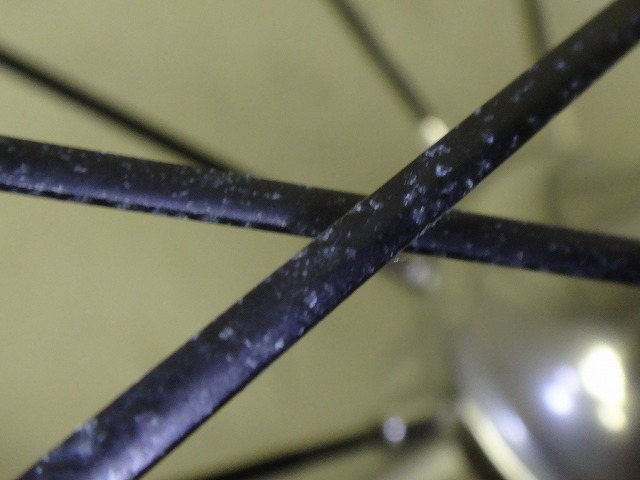
The black spokes up through the 7800 series rust really badly.
... I've already written everything I wanted to before disassembly,
so let's get to the wheel rebuild now.

Built it.
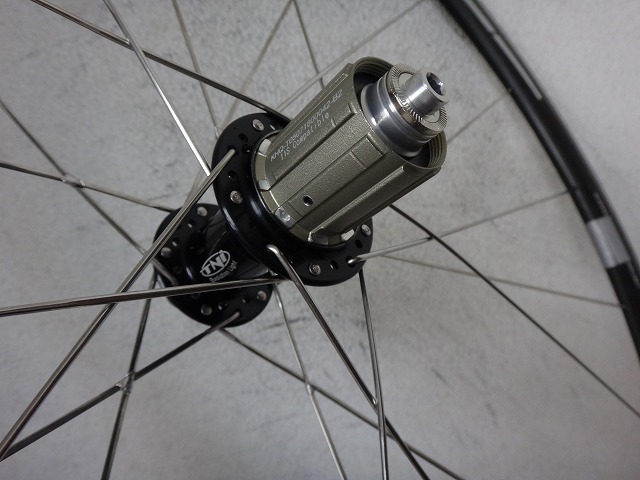
Evolite hub, 20H, half-comp, four-cross lacing with nipple holes. Unlike before the rebuild, the spokes are silver because that's what the customer wanted.
I wondered if we could build the 7801C rim with a generic hub, but
there was a precedent (→here).
At the customer's request, they want the rim weight and finished wheel weight
posted, so here they are.
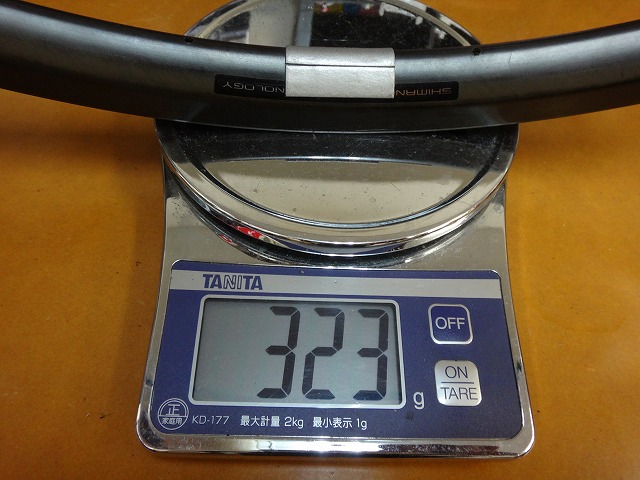
↑The rim. There's weight tape on it,
but even with it, it's probably around 10g.
The Nomu Lab wheel #6 is about the same weight or slightly lighter,
and I'd like to say it's excellent because of the higher rim profile,
but this rear rim is an offset rim, so it loses on that count.
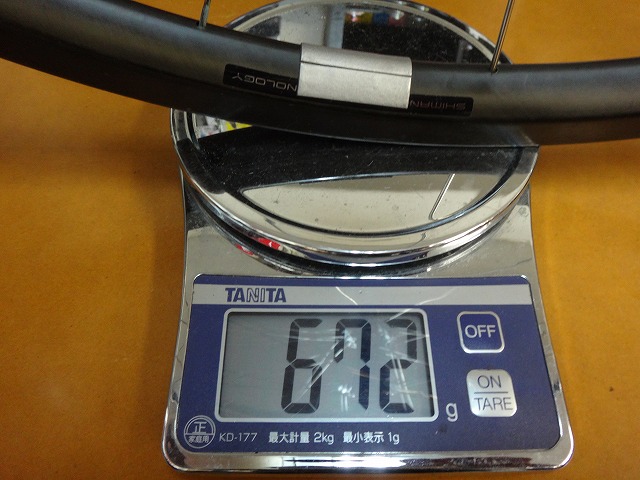
↑The wheel weight.

The same customer also left me with a Zonda rear wheel.
There's a suspicion that the rim is shifted toward the freewheel side.
Also, they want an inspection of the freewheel pawl return springs and such.
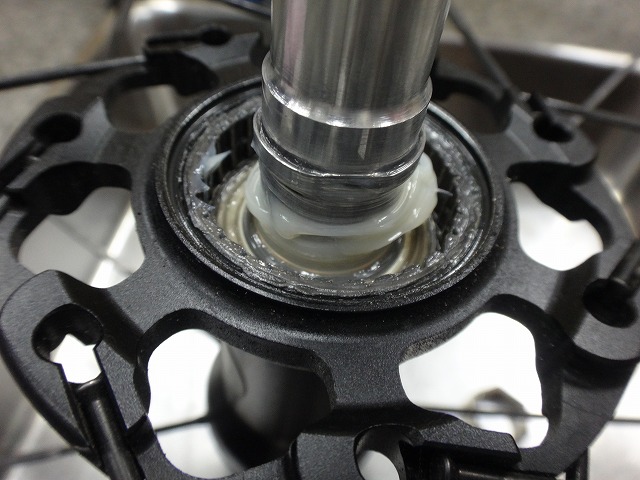
The hub grease is barely dirty at all.
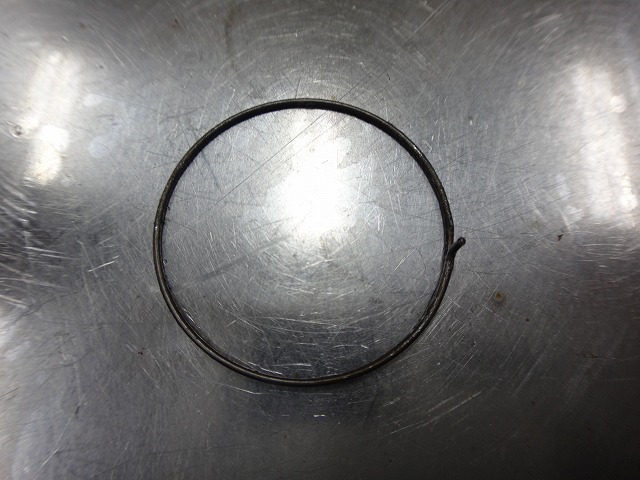
The freewheel pawl return springs show no deformation.
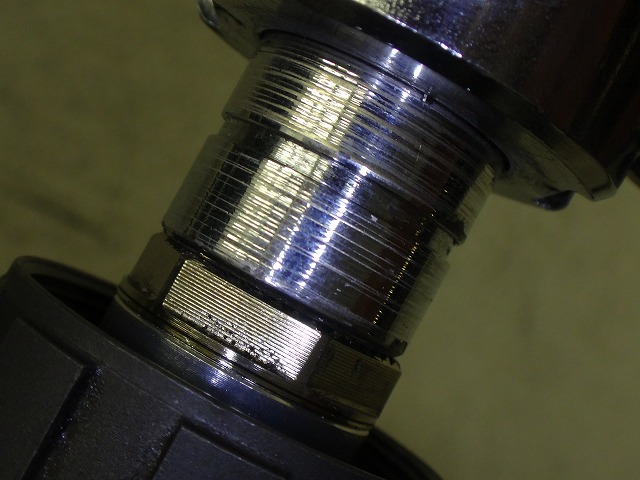
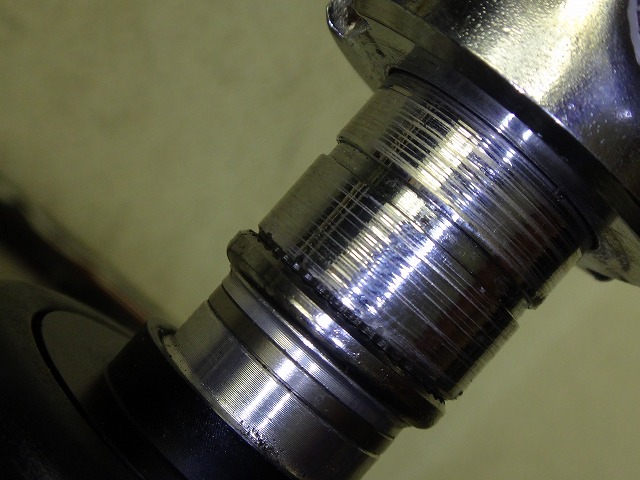
Perfectly centered, almost no runout at all.