Back to wheels again today (and so on).
Continuing from last time.
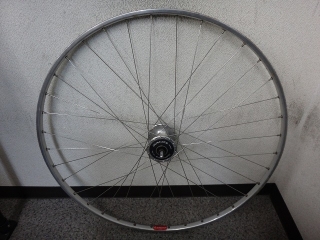
Rebuilding a front wheel with a 7600 hub and a 16B gold rim.

It's 15-16 gauge butted spokes with a 36H crossed 8x8 JIS lacing pattern,
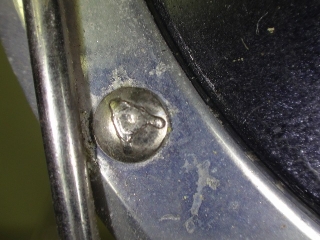
but unlike the rear wheel, these are Asahi stainless steel spokes.
They don't react to magnets, and from my experience,
they seem more prone to spoke nipple breakage than Hoshi brand spokes.
Though to be fair, both break relatively easily.
DT and Sapim spokes do experience spoke head failures, but it's genuinely rare.
Over the past 20 years, both rims and hubs have changed dramatically, and so have spokes.
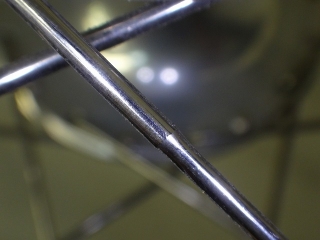
Unlike Hoshi, the Asahi butted spokes don't have a sharp transition line between diameters.
Actually, Hoshi spokes with a crisp finish are rather unusual.
Unlike the rear wheel, the front wheel spokes and rim were tensioned quite firmly.
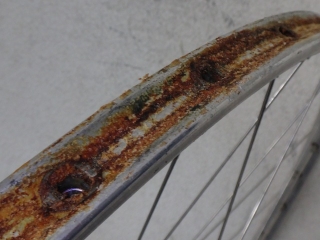
This rim cement was a quick-drying type.
Once fully dry, it becomes brittle and peels easily.
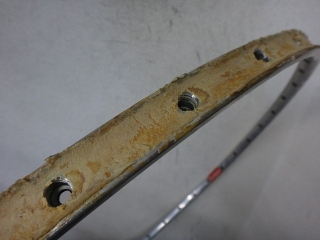
The original rear wheel had keirin track-use rim cement,
which when dry becomes hardened yet maintains a rubbery, tough flexibility like dried chewing gum.
I don't reuse rims, but when recovering the cut spokes and nipples,
even pushing the spoke outward with force couldn't break through the bed,
so I had to drill holes to create an opening.

Unlike the rear hub, this one had rust buildup on the hub shell, so

after disassembling, I polished it moderately.
I could polish it to a mirror shine, but
doing so speeds up tarnishing, so I keep it moderate.
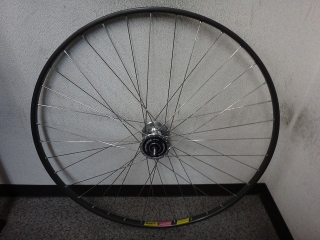
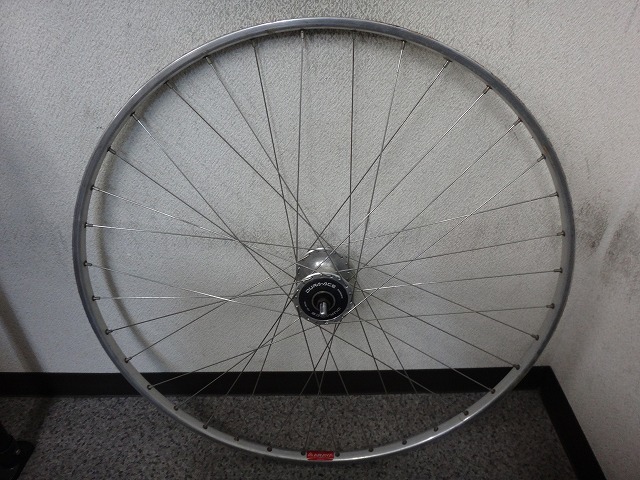
It's built.
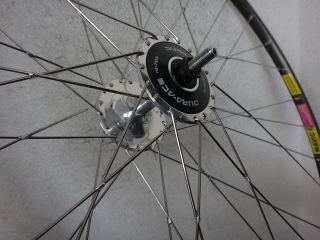
HB-7600-F, 36H, fully crossed 4x4 Italian lacing with lacing solder.
Sorry, I got carried away with technical details.
The customer's request is "as stiff as possible,"
but I should explain: with this hub, this rim, and 36H on a front wheel,
the perceived stiffness difference between fully crossed 8x8 and fully crossed 4x4 is
practically nonexistent, in my experience.
That's assuming the rim is tensioned to its limit and lacing solder is used.
In this case, the lacing solder is a significant factor.
This hub has a small difference between flange hole diameter and flange diameter itself,
so it's not ideal for radial lacing.
If it had radial-friendly dimensions with slit holes,
I'd even consider doing a 36H radial front wheel for CX bikes.
14-15 gauge competition spokes have 85% the density of 15-16 butted spokes,
but on this hub and rim at 36H,
comparing the total weight of fully crossed 8x8 butted spoke lengths
with fully crossed 4x4 competition spoke lengths,
the latter is about 80% of the former.
Even though spoke material volume between rim and hub is reduced by 20%,
the perceived stiffness doesn't change much—this is what I aimed for
by carefully considering the relative importance of various factors.
Currently with road wheels, front wheels work fine with radial lacing,
but rear wheels with radial lacing on both sides don't make a proper wheel.
Front and rear (drive) wheels have different demands.
Probably if you rode this hub and rim rear wheel built as
both fully crossed 8x8 and fully crossed 4x4 (both with lacing solder),
you'd notice a difference.
But as I mentioned, on a front wheel,
you probably wouldn't notice it.
Though the comparison is admittedly weak,
this is a completely different wheel from the original front wheel.
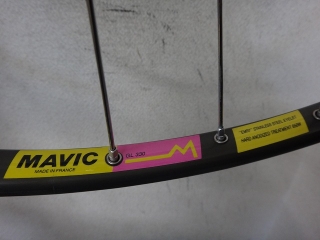
Since I used Italian lacing, there's a left-right distinction.
If the label text reads correctly when viewed from the right side, the orientation is correct.
The NJS marking on the hub shell is also aligned with the rear wheel.
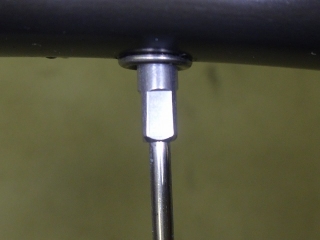
The front wheel is built with aluminum nipples.
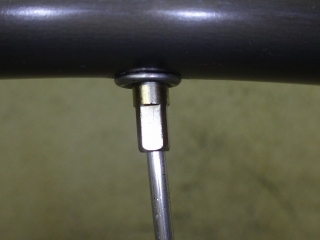
The rear wheel uses brass nipples.
This is also a result of weighing various factors, but I won't go into detail.
With an eyelet rim, the galvanic potential difference argument is a minor point
and feels contrived, so I'm not using that as justification.
If that reasoning were invalid, then using aluminum nipples when building Open Pro wheels would be questionable too.
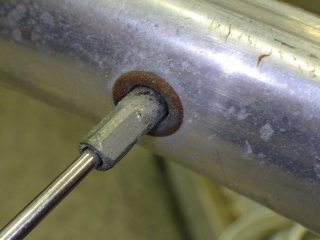
By the way, here's what the eyelets and nipples looked like before rebuilding.
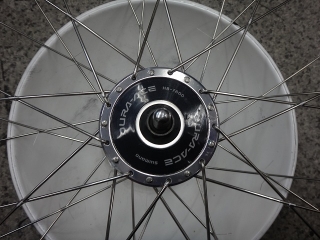
Since the front wheel is 4x4 laced, the final cross doesn't reach the outer edge
as much as with 8x8 lacing.
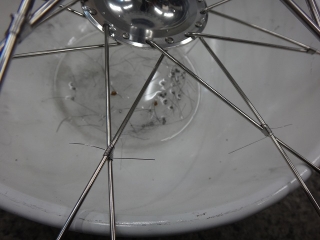
This enamelware bowl serves as my soldering stand for lacing solder.
With stainless steel solder, I apply flux (with hydrochloric acid as the main component)
to the final cross binding, but metal bowls rust quickly from flux exposure,
so I looked for an enamelware bowl that was just the right size.
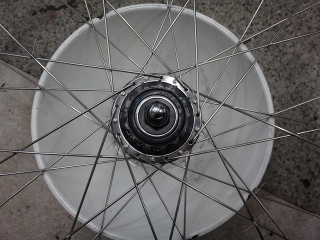
But when working with large flange wheels or 8x8 lacing,
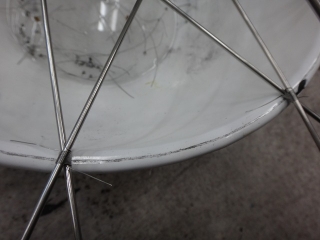
the final cross lands on or extends beyond the bowl's rim.
I don't want flux applied in those cases,
so for those situations only, I make disposable soldering work stands.
Someone might suggest using a larger diameter bowl, but
this enamelware bowl also serves as a catch tray for spoke cutter scraps,
and it's the right size for that purpose, so I can't go bigger.
Continuing from last time.
Rebuilding a front wheel with a 7600 hub and a 16B gold rim.
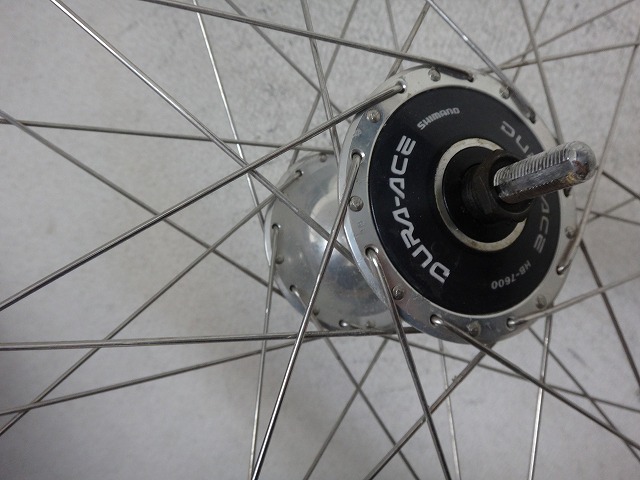
It's 15-16 gauge butted spokes with a 36H crossed 8x8 JIS lacing pattern,
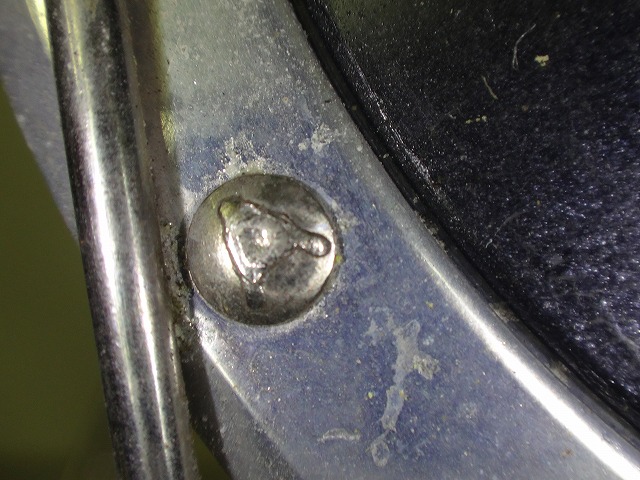
but unlike the rear wheel, these are Asahi stainless steel spokes.
They don't react to magnets, and from my experience,
they seem more prone to spoke nipple breakage than Hoshi brand spokes.
Though to be fair, both break relatively easily.
DT and Sapim spokes do experience spoke head failures, but it's genuinely rare.
Over the past 20 years, both rims and hubs have changed dramatically, and so have spokes.
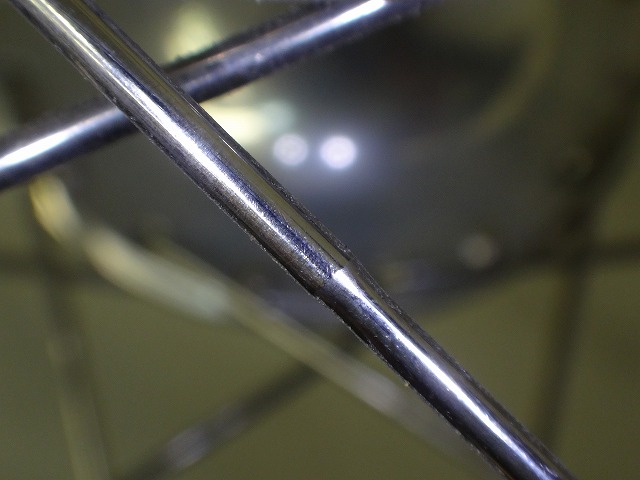
Unlike Hoshi, the Asahi butted spokes don't have a sharp transition line between diameters.
Actually, Hoshi spokes with a crisp finish are rather unusual.
Unlike the rear wheel, the front wheel spokes and rim were tensioned quite firmly.

This rim cement was a quick-drying type.
Once fully dry, it becomes brittle and peels easily.
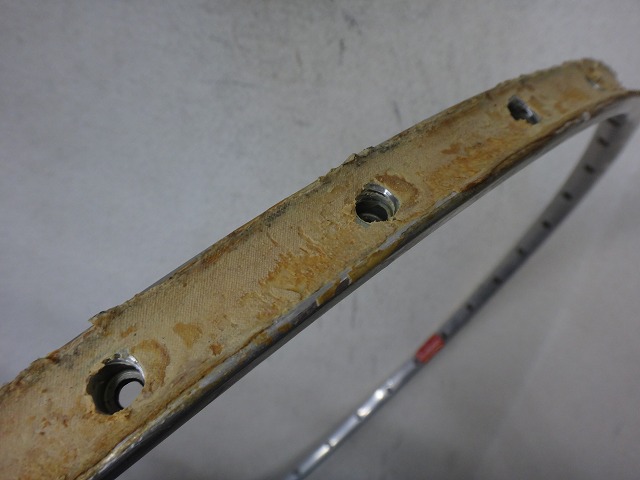
The original rear wheel had keirin track-use rim cement,
which when dry becomes hardened yet maintains a rubbery, tough flexibility like dried chewing gum.
I don't reuse rims, but when recovering the cut spokes and nipples,
even pushing the spoke outward with force couldn't break through the bed,
so I had to drill holes to create an opening.

Unlike the rear hub, this one had rust buildup on the hub shell, so

after disassembling, I polished it moderately.
I could polish it to a mirror shine, but
doing so speeds up tarnishing, so I keep it moderate.

It's built.
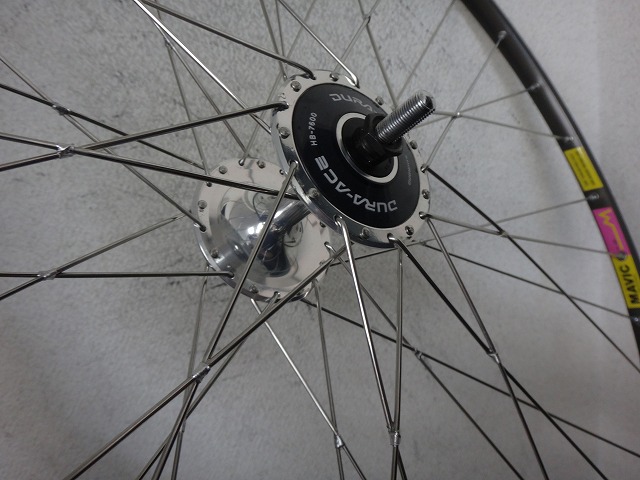
HB-7600-F, 36H, fully crossed 4x4 Italian lacing with lacing solder.
Sorry, I got carried away with technical details.
The customer's request is "as stiff as possible,"
but I should explain: with this hub, this rim, and 36H on a front wheel,
the perceived stiffness difference between fully crossed 8x8 and fully crossed 4x4 is
practically nonexistent, in my experience.
That's assuming the rim is tensioned to its limit and lacing solder is used.
In this case, the lacing solder is a significant factor.
This hub has a small difference between flange hole diameter and flange diameter itself,
so it's not ideal for radial lacing.
If it had radial-friendly dimensions with slit holes,
I'd even consider doing a 36H radial front wheel for CX bikes.
14-15 gauge competition spokes have 85% the density of 15-16 butted spokes,
but on this hub and rim at 36H,
comparing the total weight of fully crossed 8x8 butted spoke lengths
with fully crossed 4x4 competition spoke lengths,
the latter is about 80% of the former.
Even though spoke material volume between rim and hub is reduced by 20%,
the perceived stiffness doesn't change much—this is what I aimed for
by carefully considering the relative importance of various factors.
Currently with road wheels, front wheels work fine with radial lacing,
but rear wheels with radial lacing on both sides don't make a proper wheel.
Front and rear (drive) wheels have different demands.
Probably if you rode this hub and rim rear wheel built as
both fully crossed 8x8 and fully crossed 4x4 (both with lacing solder),
you'd notice a difference.
But as I mentioned, on a front wheel,
you probably wouldn't notice it.
Though the comparison is admittedly weak,
this is a completely different wheel from the original front wheel.
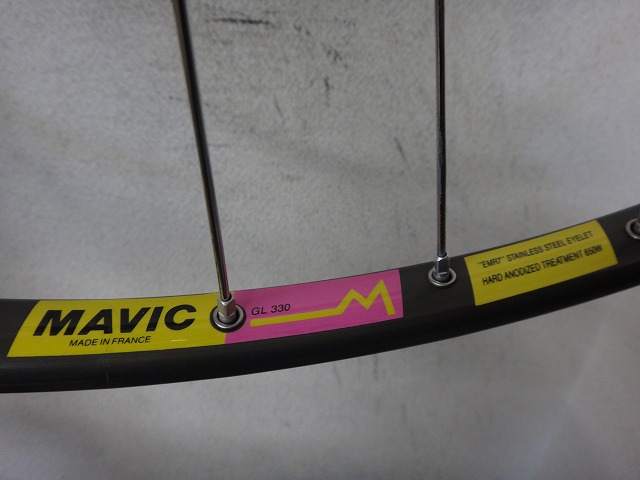
Since I used Italian lacing, there's a left-right distinction.
If the label text reads correctly when viewed from the right side, the orientation is correct.
The NJS marking on the hub shell is also aligned with the rear wheel.

The front wheel is built with aluminum nipples.

The rear wheel uses brass nipples.
This is also a result of weighing various factors, but I won't go into detail.
With an eyelet rim, the galvanic potential difference argument is a minor point
and feels contrived, so I'm not using that as justification.
If that reasoning were invalid, then using aluminum nipples when building Open Pro wheels would be questionable too.

By the way, here's what the eyelets and nipples looked like before rebuilding.
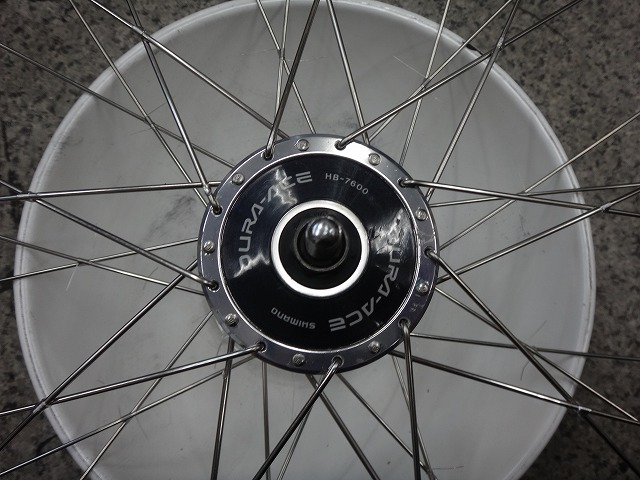
Since the front wheel is 4x4 laced, the final cross doesn't reach the outer edge
as much as with 8x8 lacing.
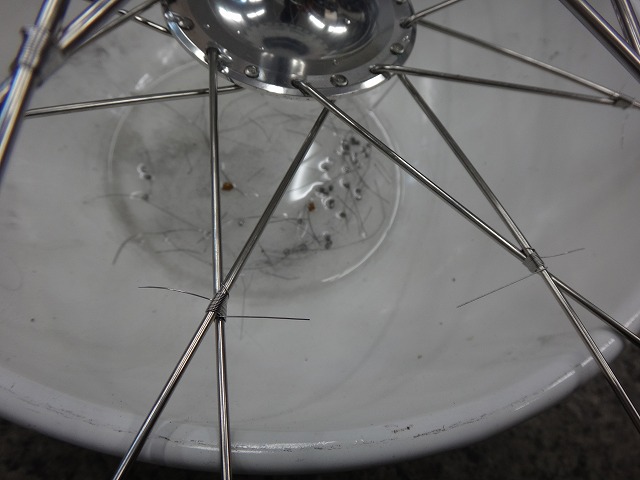
This enamelware bowl serves as my soldering stand for lacing solder.
With stainless steel solder, I apply flux (with hydrochloric acid as the main component)
to the final cross binding, but metal bowls rust quickly from flux exposure,
so I looked for an enamelware bowl that was just the right size.
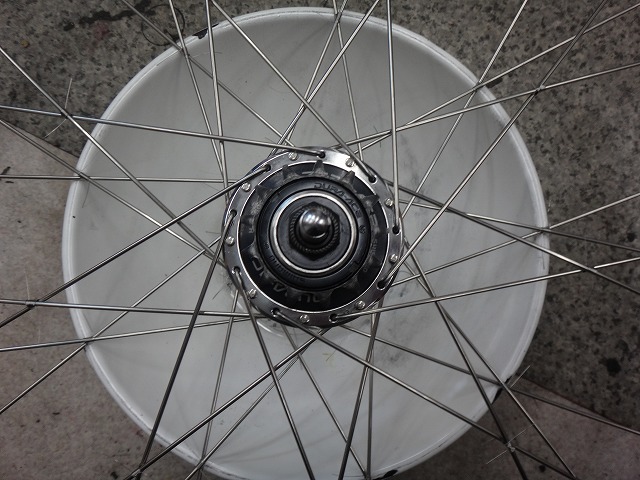
But when working with large flange wheels or 8x8 lacing,
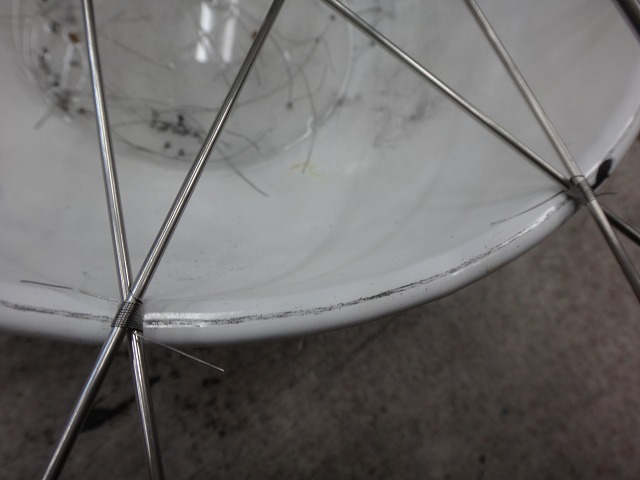
the final cross lands on or extends beyond the bowl's rim.
I don't want flux applied in those cases,
so for those situations only, I make disposable soldering work stands.
Someone might suggest using a larger diameter bowl, but
this enamelware bowl also serves as a catch tray for spoke cutter scraps,
and it's the right size for that purpose, so I can't go bigger.