A customer left me a 36H track wheel to work on.
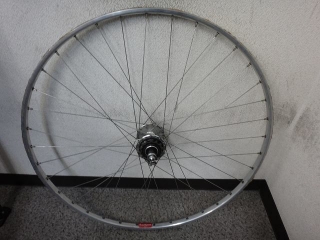
They wanted me to rebuild it with a new rim and make it as stiff as possible.
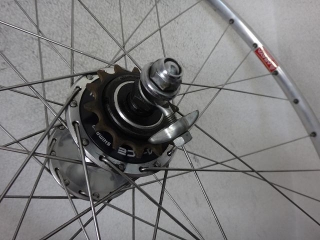
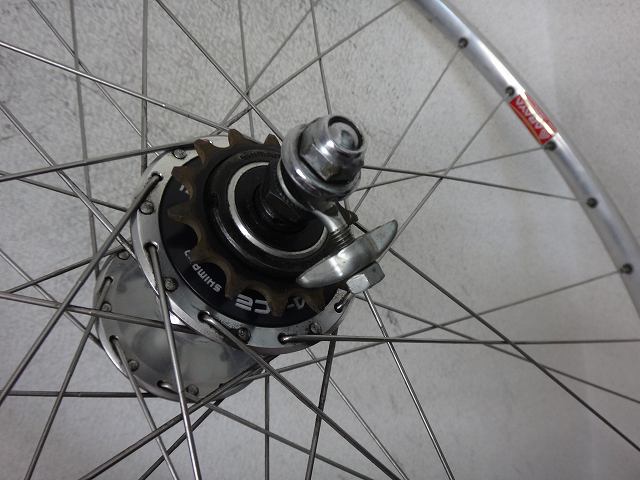
The hub is a 7600 36H.
With Dura-Ace track hubs, the large flange is the 7600 and
the small flange is the 7710.
Other specs besides 36H exist, but only the 36H can be used in keirin racing,
so the NJS stamp is only on the 36H version.
This rear hub is not a freehub,
so the part number doesn't start with FH— but rather HB-7600,
or more precisely HB-7600-R.
Since it's a dual-sided hub that takes sprockets on both sides, there's no dish.
With single-sided hubs, the flange on the non-gear side is wider
and has a slight dish, but
this is what I call an example of my saying that
a wider flange is advantageous—meaning it's a major factor for lateral stiffness."

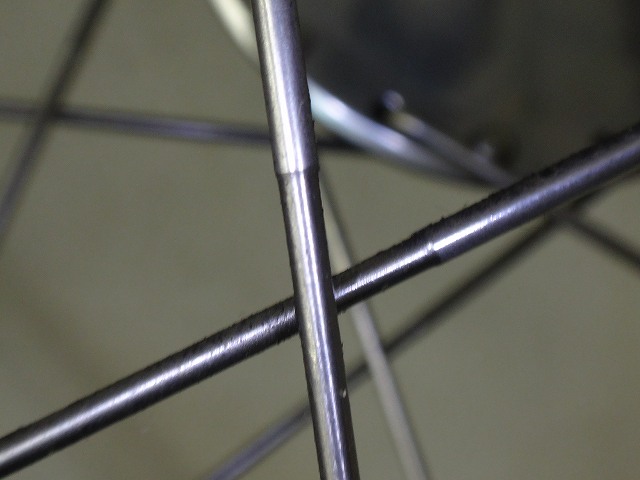
The spokes are stainless "Stainless" star spokes with the ☆ mark,

15-16 butted.
"Stainless" is a product name, not a general term for stainless steel spokes.
That's because the H-marked Starlight is also technically a stainless steel spoke.
Since these are old "Stainless" spokes, they show zero reaction to a magnet.
I tested them with a pretty powerful wheel magnet, but
they were just as unresponsive as if I'd held it against plastic.
Between "Stainless" and Starlight, when you line up new bundles side by side
the "Stainless" ones have more shine.
From experience, Starlight spokes are clearly less prone to breaking at the neck,
but Starlight is cheaper.
I previously wrote that current Starlight doesn't attract to magnets as much as the old version
and the ☆-marked "Stainless" now has a faint magnetic response,
that the clear production distinction between H and ☆ marks is no longer being made.
From the latest information I've confirmed,
current Starlight reacts to magnets like the old Starlight did, and
"Stainless" is non-reactive "in some cases"—I have confirmed this.
So it's possible they've returned to proper differentiation,
but I'm scared of getting stuck with a bad batch depending on which lot we order,
so unless DT or Sapim goes bankrupt or becomes unavailable
I still can't bring myself to buy them.
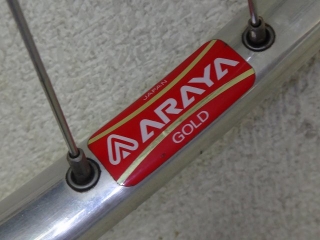
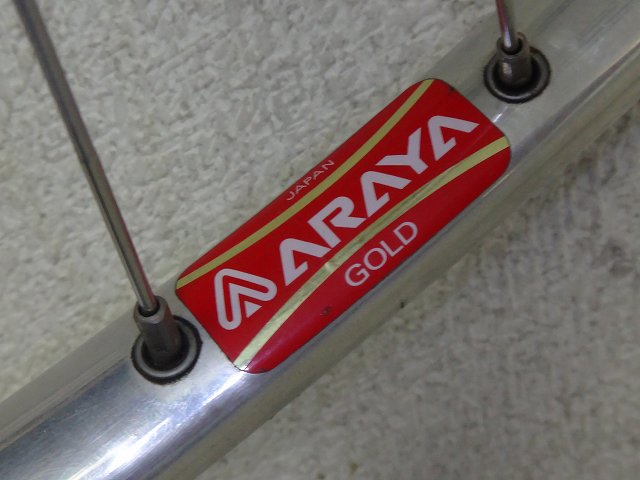
The rim is an Araya 16B Gold,
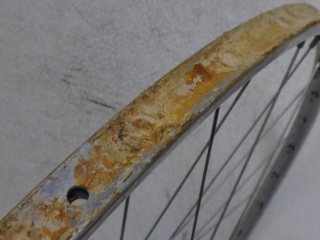
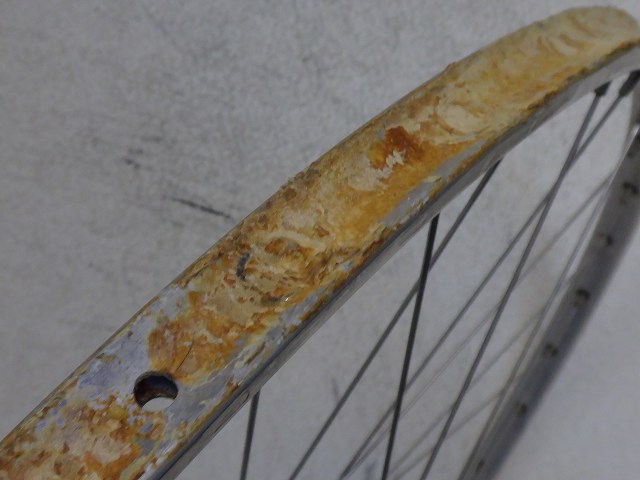
and the rim cement bed is white, slow-drying Sohyo (Sohyo rim cement) made for track use
(different from the road version).
They come in small cans, but also in large square cans like thinner or toluene bottles,
and you'll find them sitting around at velodromes.
This customer only uses it on track and isn't racing in keirin, so
when rebuilding it's okay to use non-NJS parts.
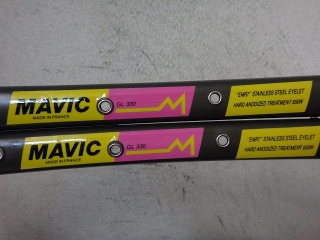

The rim is a Mavic GL330 late-model 36H
that for some reason our shop has in large stock, so that's what I'm using.
It used to be sold as Nomu Lab Wheel #33, but
after stock ran out it made a comeback.
People often ask "don't you have 32H?" but no.
I use it on my Cineili.
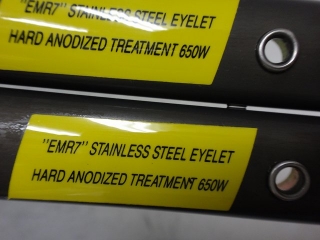
The hard anodizing is listed as 650W power consumption, but
some have 650V markings (→here)
so the current would be 1A.
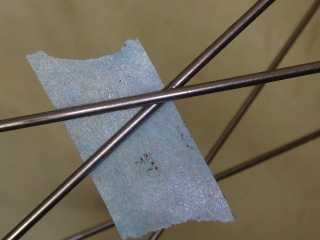

When I squeeze the old spokes, they flex quite a bit, but
the 16B Gold is a rim that can't handle much tension anyway.
The fact that the spokes are thin contributes somewhat to this.
There's still room to increase tension further, it's true,
but it won't transform into something dramatically different.
When I disassembled the wheel, I could see it was warped just from laying it on the floor
without needing to check it on a glass truing stand.
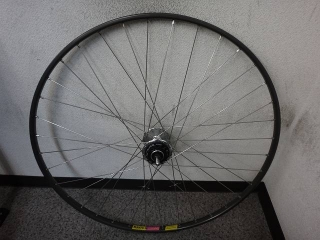
Built it.
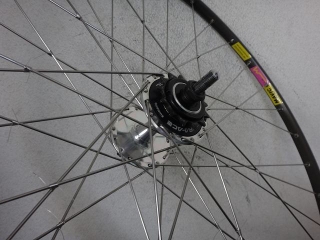
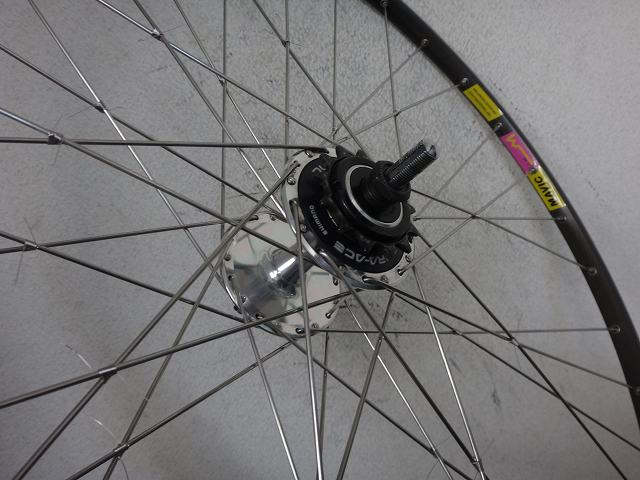
HB-7600-R 36H, all Campagnolo 88 JIS laced with lacing wire.
36H 88 JIS lacing is the only method NJS allows,
but I followed it not because of that regulation but because
I judged it to be the most logical choice theoretically.
If it had been a single-sided hub, I would have done Italian lacing.
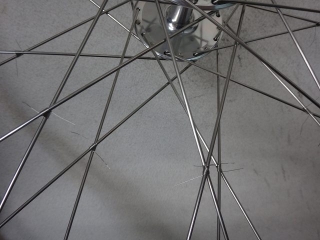
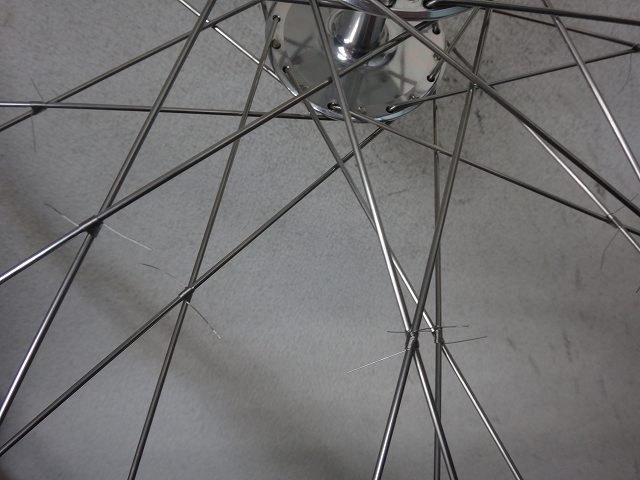
I've laced it, but haven't soldered yet.
When the final cross gets too far from the hub,
I need to set up a temporary work table separate from my normal soldering operation.
Since I'm also building the front wheel, I'll solder both at the same time.
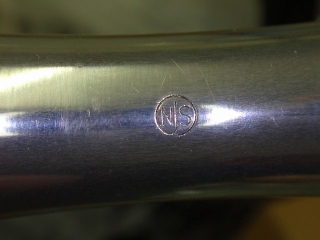
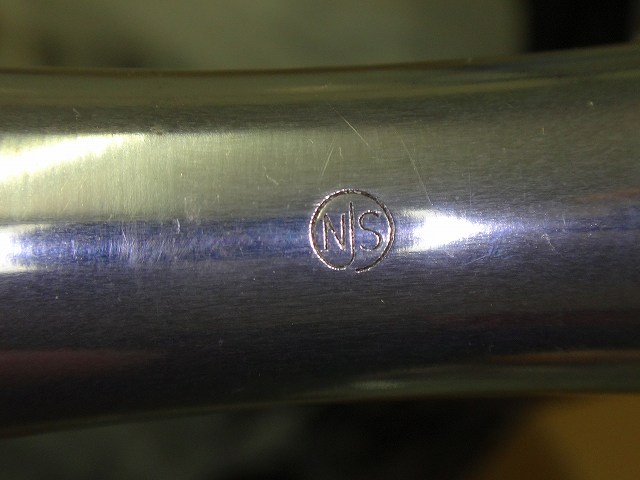
With a dual-sided hub there's no left or right distinction, but
since this is an NJS-approved hub it has stamps on the hub shell.
So I viewed the right side in the image above as the wheel's right side,
and built it so the rim label reads correctly when viewed from the right.
Since they wanted it built as stiff as possible,
I did everything the rim would allow, but
please understand that I won't accept complaints that it's too stiff.
I have things to say about soldering method and nipple material,
but I'll cover those when I do the front wheel (part 2).
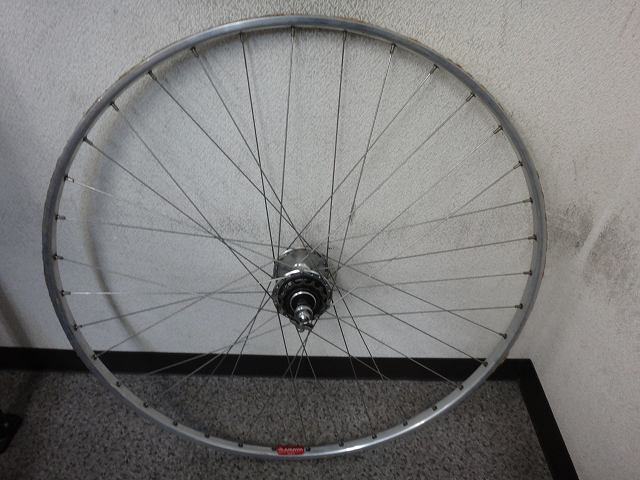
They wanted me to rebuild it with a new rim and make it as stiff as possible.
The hub is a 7600 36H.
With Dura-Ace track hubs, the large flange is the 7600 and
the small flange is the 7710.
Other specs besides 36H exist, but only the 36H can be used in keirin racing,
so the NJS stamp is only on the 36H version.
This rear hub is not a freehub,
so the part number doesn't start with FH— but rather HB-7600,
or more precisely HB-7600-R.
Since it's a dual-sided hub that takes sprockets on both sides, there's no dish.
With single-sided hubs, the flange on the non-gear side is wider
and has a slight dish, but
this is what I call an example of my saying that
a wider flange is advantageous—meaning it's a major factor for lateral stiffness."

The spokes are stainless "Stainless" star spokes with the ☆ mark,
15-16 butted.
"Stainless" is a product name, not a general term for stainless steel spokes.
That's because the H-marked Starlight is also technically a stainless steel spoke.
Since these are old "Stainless" spokes, they show zero reaction to a magnet.
I tested them with a pretty powerful wheel magnet, but
they were just as unresponsive as if I'd held it against plastic.
Between "Stainless" and Starlight, when you line up new bundles side by side
the "Stainless" ones have more shine.
From experience, Starlight spokes are clearly less prone to breaking at the neck,
but Starlight is cheaper.
I previously wrote that current Starlight doesn't attract to magnets as much as the old version
and the ☆-marked "Stainless" now has a faint magnetic response,
that the clear production distinction between H and ☆ marks is no longer being made.
From the latest information I've confirmed,
current Starlight reacts to magnets like the old Starlight did, and
"Stainless" is non-reactive "in some cases"—I have confirmed this.
So it's possible they've returned to proper differentiation,
but I'm scared of getting stuck with a bad batch depending on which lot we order,
so unless DT or Sapim goes bankrupt or becomes unavailable
I still can't bring myself to buy them.
The rim is an Araya 16B Gold,
and the rim cement bed is white, slow-drying Sohyo (Sohyo rim cement) made for track use
(different from the road version).
They come in small cans, but also in large square cans like thinner or toluene bottles,
and you'll find them sitting around at velodromes.
This customer only uses it on track and isn't racing in keirin, so
when rebuilding it's okay to use non-NJS parts.

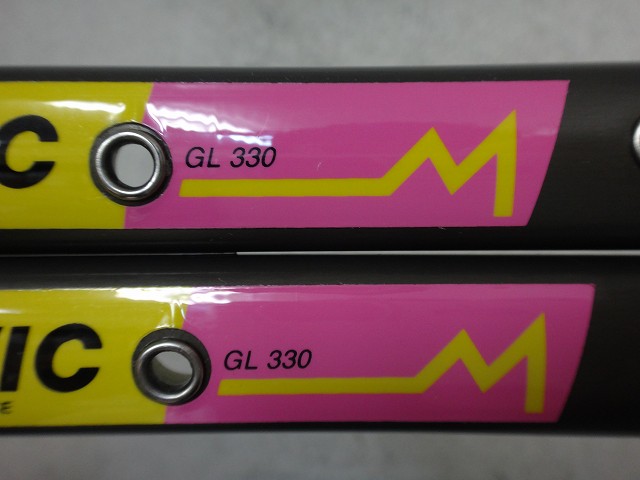
The rim is a Mavic GL330 late-model 36H
that for some reason our shop has in large stock, so that's what I'm using.
It used to be sold as Nomu Lab Wheel #33, but
after stock ran out it made a comeback.
People often ask "don't you have 32H?" but no.
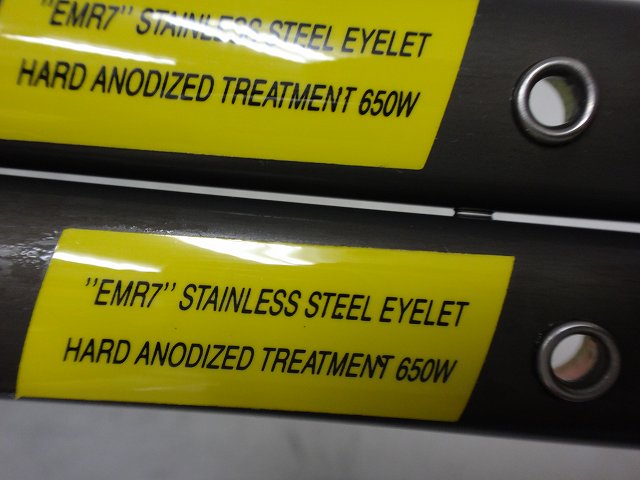
The hard anodizing is listed as 650W power consumption, but
some have 650V markings (→here)
so the current would be 1A.
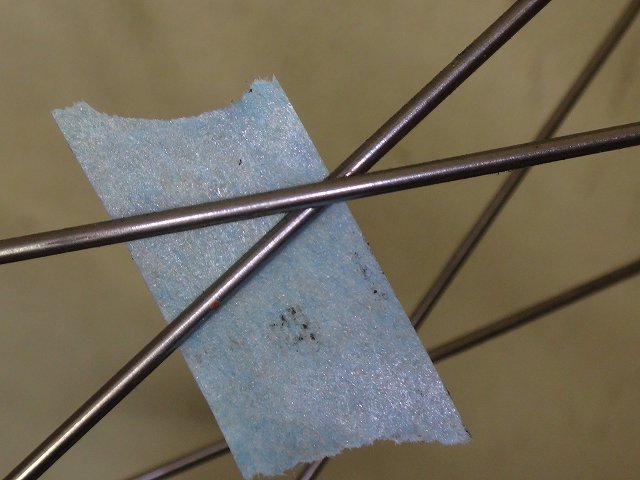

When I squeeze the old spokes, they flex quite a bit, but
the 16B Gold is a rim that can't handle much tension anyway.
The fact that the spokes are thin contributes somewhat to this.
There's still room to increase tension further, it's true,
but it won't transform into something dramatically different.
When I disassembled the wheel, I could see it was warped just from laying it on the floor
without needing to check it on a glass truing stand.
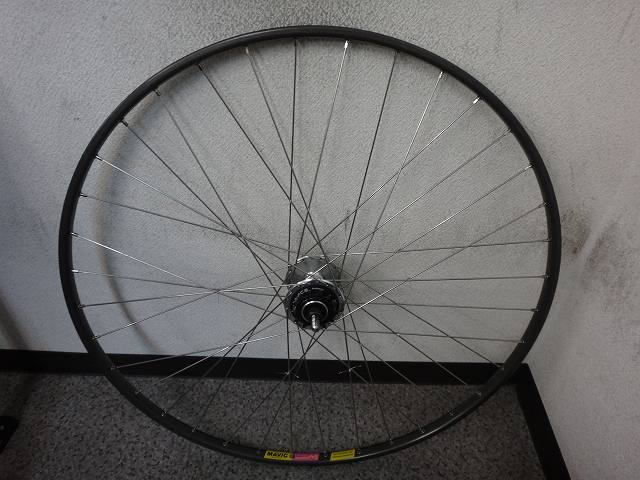
Built it.
HB-7600-R 36H, all Campagnolo 88 JIS laced with lacing wire.
36H 88 JIS lacing is the only method NJS allows,
but I followed it not because of that regulation but because
I judged it to be the most logical choice theoretically.
If it had been a single-sided hub, I would have done Italian lacing.
I've laced it, but haven't soldered yet.
When the final cross gets too far from the hub,
I need to set up a temporary work table separate from my normal soldering operation.
Since I'm also building the front wheel, I'll solder both at the same time.
With a dual-sided hub there's no left or right distinction, but
since this is an NJS-approved hub it has stamps on the hub shell.
So I viewed the right side in the image above as the wheel's right side,
and built it so the rim label reads correctly when viewed from the right.
Since they wanted it built as stiff as possible,
I did everything the rim would allow, but
please understand that I won't accept complaints that it's too stiff.
I have things to say about soldering method and nipple material,
but I'll cover those when I do the front wheel (part 2).