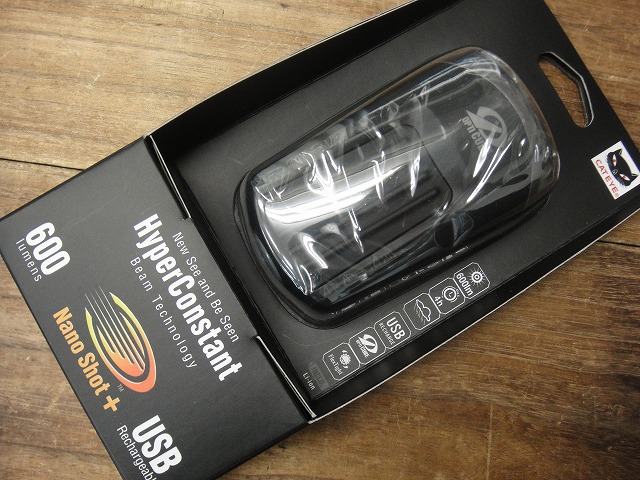
CatEye's Nano Shot Plus, otherwise known as the HL-EL625RC, has arrived!

CatEye used to list their light brightness only in candela, but
this one shows both 5000 candela and approximately 600 lumens.
Since lumens also depend on the beam spread, you can't simply convert between candela and lumens,
but it does give you a reference point for comparing with other manufacturers' lights that use lumens as their spec.


What I'm using now is CatEye's Econom Force, the HL-EL540,
which runs on four AA batteries, so the body is a bit on the large side.
This one puts out 4000 candela, but when you think that
a similar-sized model from not long ago was only 140 candela,
you really get a sense of how rapidly high-brightness LED technology advances—no matter when you buy one, you end up wishing you'd waited!
CatEye came relatively late to the high-brightness LED bike light market.
I suspect that's probably because they also make cycle computers.
There have been many cases where wireless cycle computers don't function properly
near high-brightness LED lights.
A manufacturer that only makes lights might get away with "that's not our problem,"
but since CatEye also makes cycle computers,
they can't really do that.

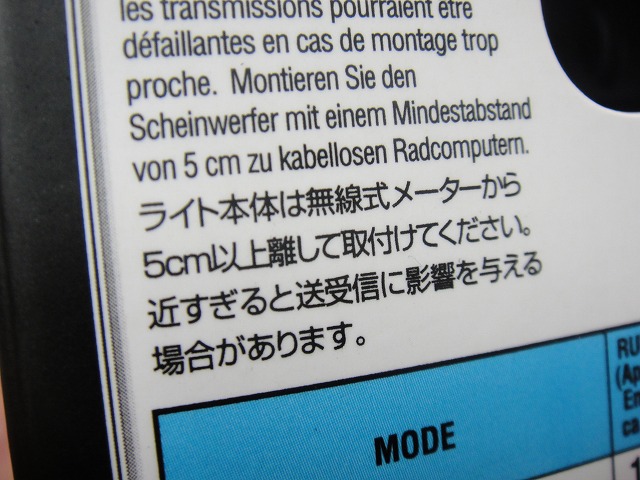
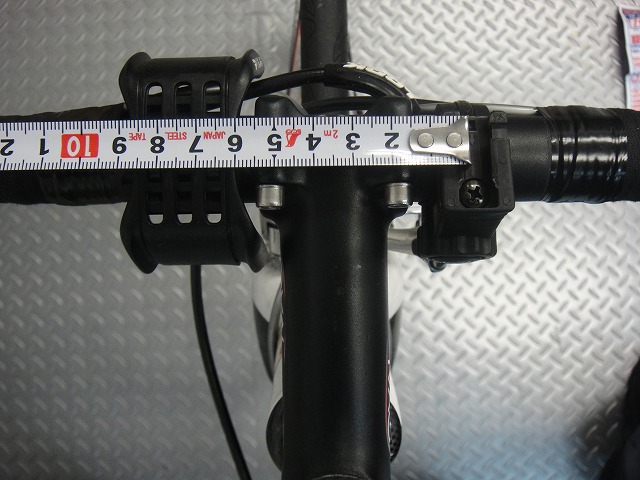
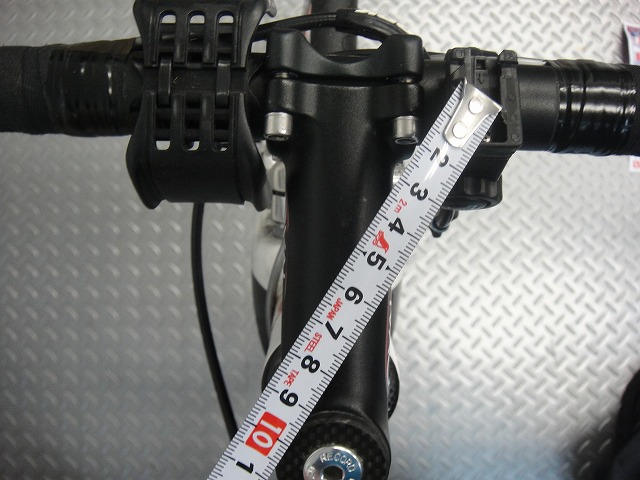
So with the Econom Force it says to keep it 7cm away from your meter,

and the Nano Shot Plus says 5cm, but what range does that actually mean in practice?

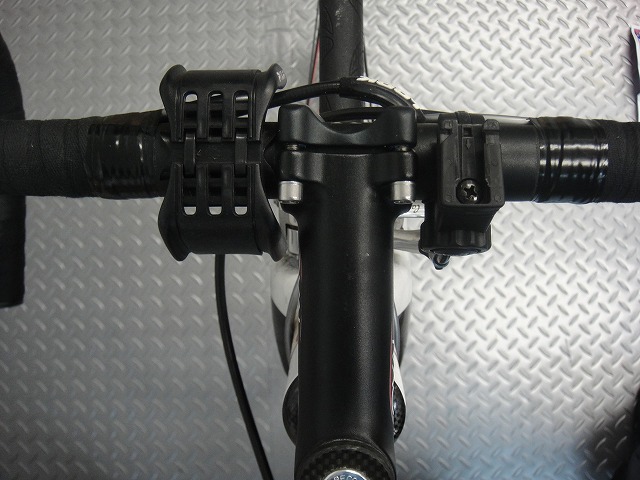
I suspect the source of the "whatever interferes with the meter's signal" is the bulb itself,
so let's look at the distance from the mounting bracket.

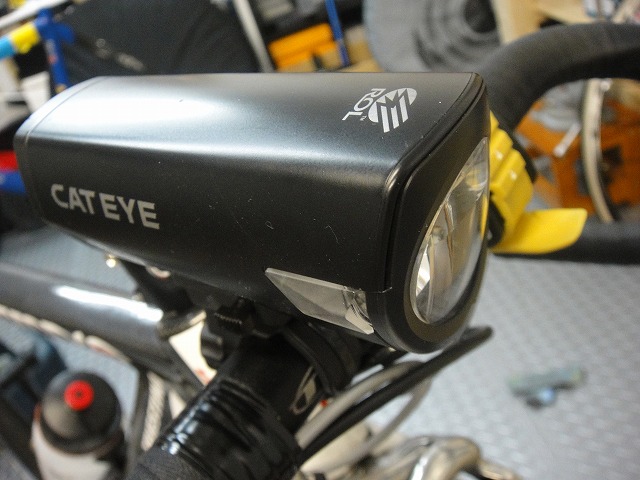
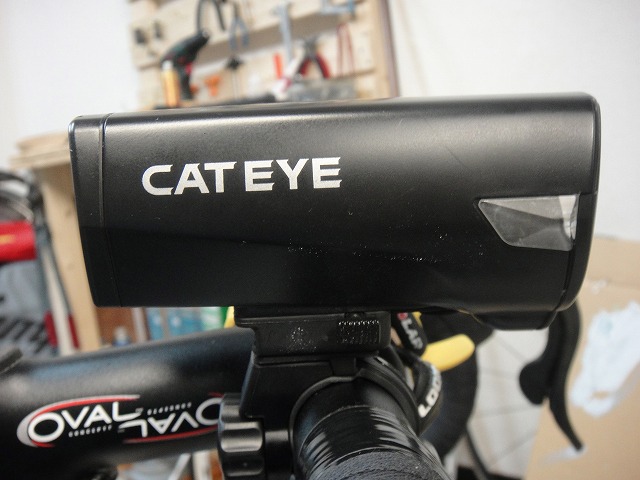
This is what it looks like when mounted on top of the handlebar,

and this is what it looks like mounted on the stem.
With the Econom Force, mounting a meter is essentially impossible (due to radio interference).
The Nano Shot Plus seems to have taken that into account as well.
In my case, I only put a POLAR heart rate monitor (I don't use speed/cadence)
or a watch on my bike, and I haven't had any problems with those acting up. I sometimes use something like a Garmin Edge 500,
but that's ANT+ compatible so I haven't tested it.
(I do think ANT+ is supposed to be better at handling that kind of interference.)

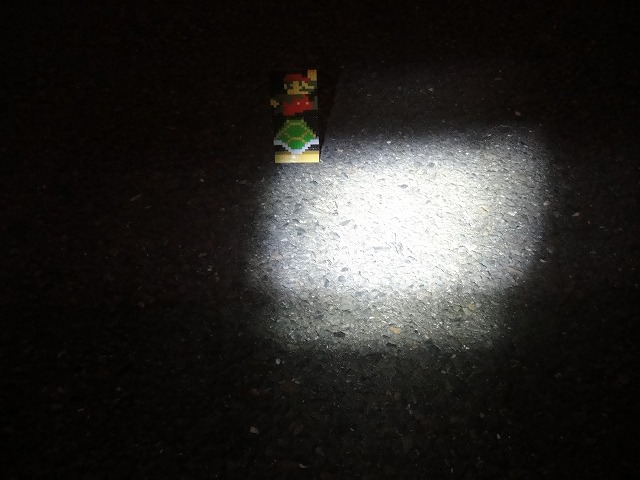
Now for the real brightness comparison.
First, the Econom Force. This is on its brightest mode.
Notice the characteristic square beam pattern.

Next, the Nano Shot Plus. This is also on its brightest mode.
The beam spread is larger, and the brightness is better too.
The Econom Force has the advantage that since the batteries are replaceable,
if they die during a long night ride, you can just swap them in and keep going.
The Nano Shot takes 8 hours to fully charge, so it's at a disadvantage there.
In every other respect—compact size, light performance (brightness and beam spread)—
the Nano Shot Plus is superior.
As I mentioned before, this kind of light advances so rapidly that
we might eventually see even higher candela models.
Maybe something will come out calling itself "the brightest bike light in the universe" at 530,000 candela,
saying "Don't worry, I have no intention of blinding you with full power..."
but for now, this seems more than sufficient.
Bonus
About that Garmin Edge 500-type thing I mentioned earlier

↑It has the Nintendo video game "Octopus" built in.
High-brightness LED lights don't cause it to malfunction,
but you can't necessarily say the same thing about the Edge 500 just because this works.
The goal is to salvage treasure from chests on the ocean floor,

but if you get too cocky, you get caught.
CatEye used to list their light brightness only in candela, but
this one shows both 5000 candela and approximately 600 lumens.
Since lumens also depend on the beam spread, you can't simply convert between candela and lumens,
but it does give you a reference point for comparing with other manufacturers' lights that use lumens as their spec.
What I'm using now is CatEye's Econom Force, the HL-EL540,
which runs on four AA batteries, so the body is a bit on the large side.
This one puts out 4000 candela, but when you think that
a similar-sized model from not long ago was only 140 candela,
you really get a sense of how rapidly high-brightness LED technology advances—no matter when you buy one, you end up wishing you'd waited!
CatEye came relatively late to the high-brightness LED bike light market.
I suspect that's probably because they also make cycle computers.
There have been many cases where wireless cycle computers don't function properly
near high-brightness LED lights.
A manufacturer that only makes lights might get away with "that's not our problem,"
but since CatEye also makes cycle computers,
they can't really do that.

So with the Econom Force it says to keep it 7cm away from your meter,
and the Nano Shot Plus says 5cm, but what range does that actually mean in practice?
I suspect the source of the "whatever interferes with the meter's signal" is the bulb itself,
so let's look at the distance from the mounting bracket.
This is what it looks like when mounted on top of the handlebar,
and this is what it looks like mounted on the stem.
With the Econom Force, mounting a meter is essentially impossible (due to radio interference).
The Nano Shot Plus seems to have taken that into account as well.
In my case, I only put a POLAR heart rate monitor (I don't use speed/cadence)
or a watch on my bike, and I haven't had any problems with those acting up. I sometimes use something like a Garmin Edge 500,
but that's ANT+ compatible so I haven't tested it.
(I do think ANT+ is supposed to be better at handling that kind of interference.)
Now for the real brightness comparison.
First, the Econom Force. This is on its brightest mode.
Notice the characteristic square beam pattern.
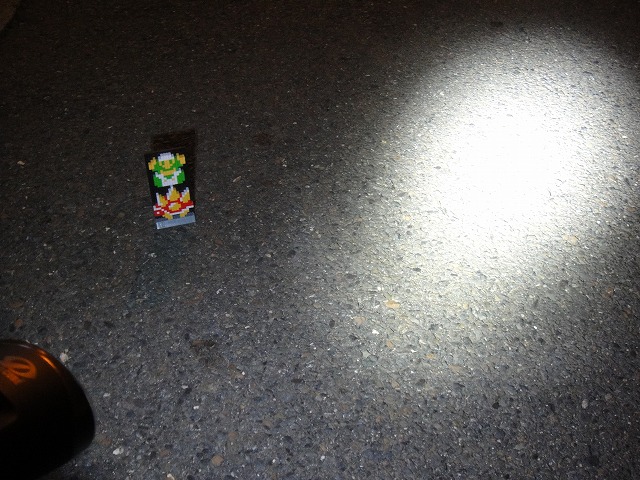
Next, the Nano Shot Plus. This is also on its brightest mode.
The beam spread is larger, and the brightness is better too.
The Econom Force has the advantage that since the batteries are replaceable,
if they die during a long night ride, you can just swap them in and keep going.
The Nano Shot takes 8 hours to fully charge, so it's at a disadvantage there.
In every other respect—compact size, light performance (brightness and beam spread)—
the Nano Shot Plus is superior.
As I mentioned before, this kind of light advances so rapidly that
we might eventually see even higher candela models.
Maybe something will come out calling itself "the brightest bike light in the universe" at 530,000 candela,
saying "Don't worry, I have no intention of blinding you with full power..."
but for now, this seems more than sufficient.
Bonus
About that Garmin Edge 500-type thing I mentioned earlier
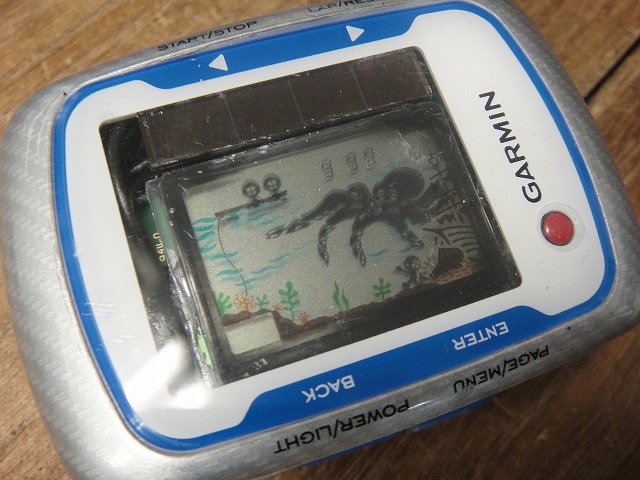
↑It has the Nintendo video game "Octopus" built in.
High-brightness LED lights don't cause it to malfunction,
but you can't necessarily say the same thing about the Edge 500 just because this works.
The goal is to salvage treasure from chests on the ocean floor,

but if you get too cocky, you get caught.