This is a personal matter, but I bought a cycle computer for the first time in ages.
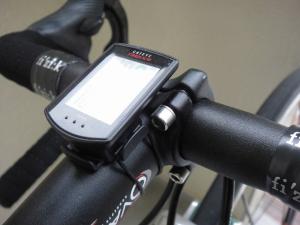
It's a CatEye Strada Slim.
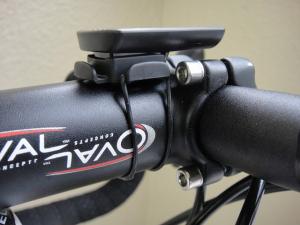
The thin profile of the unit is really nice.
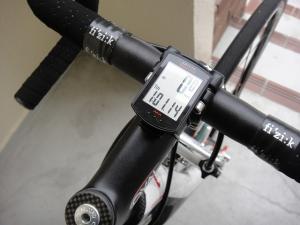
From above, it really blends into the stem.
The display shows current speed constantly at the top of the screen,
and at the bottom:
Clock
Riding time
Distance 1
Distance 2
Average speed
Maximum speed
Total distance
The five items shown in red can be toggled on and off for display.
You can configure it to skip information you don't really need to see.
The difference between Distance 1 and Distance 2 is that Distance 1 is linked to riding time, average speed, and maximum speed.
If you reset any of these, all four will be cleared simultaneously.
Distance 2 is recorded independently from those metrics,
so only Distance 2 gets erased when you reset it.
It's convenient for tracking monthly mileage or the distance ridden since a chain replacement.
I don't normally use a cycle computer.
Since I don't evaluate my training based on distance, I don't really need distance information.
For example, suppose there's someone who drops me by 20 meters per minute on climbs.
After 5 minutes, they'd be 100 meters ahead.
Even if I knew their speed at that moment was, say, 16 km/h,
how would that information actually help me catch up?
On the other hand, when riding in a group on flat terrain,
when it's my turn to pull, I need to match "the speed I was being pulled at"
as a reference for setting the group's pace—and that's where it's handy.
So the reason I bought this one is "because I wanted it" (laughs).
Really, it's not that complicated of a device.
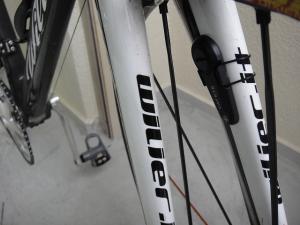
It's not just the unit itself that's thin.
The sensor being thin was also a reason I "wanted" this one.
In the image it's held with the included rubber band,
but it can also be secured with a cable tie.
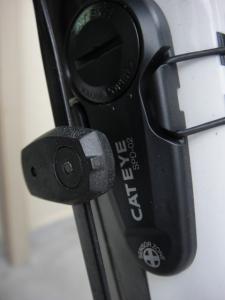
On most CatEye sensors, the position marked "SENSOR ZONE" is not
actually the position with the highest magnet sensitivity.
If you have trouble getting speed readings due to distance or magnetic field conditions,
checking the sensor zone position often solves the problem.
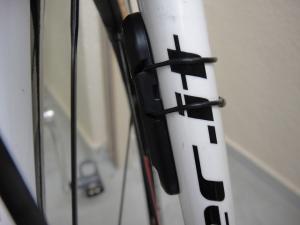
It's a genuinely thin sensor.
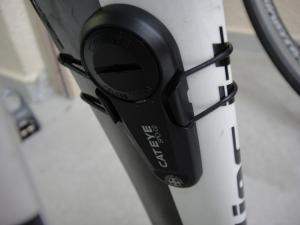
↑Rubber band mounting and
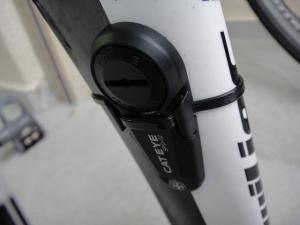
↑Cable tie mounting
We don't have these in stock at the moment, so if you're interested,
please purchase from your nearest bike shop.
If you'reeccentric enough to really want to buy it from us,
we can arrange to order one in.
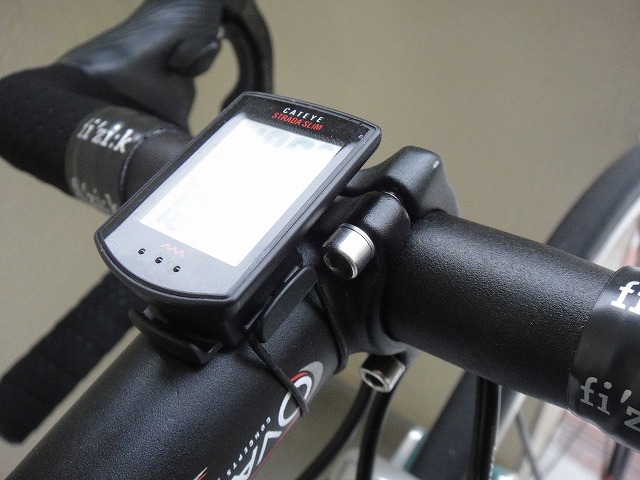
It's a CatEye Strada Slim.
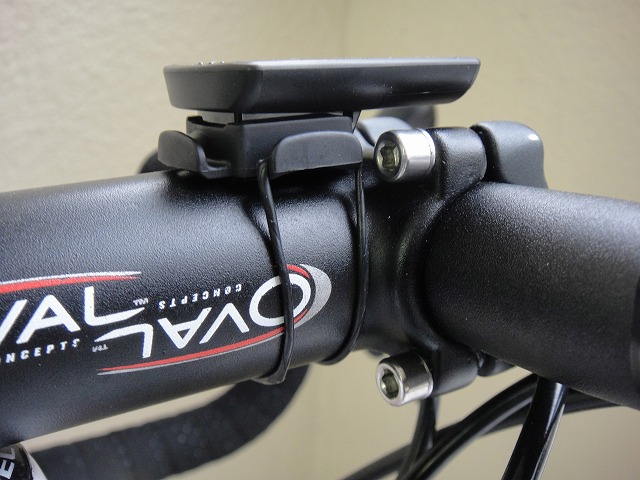
The thin profile of the unit is really nice.
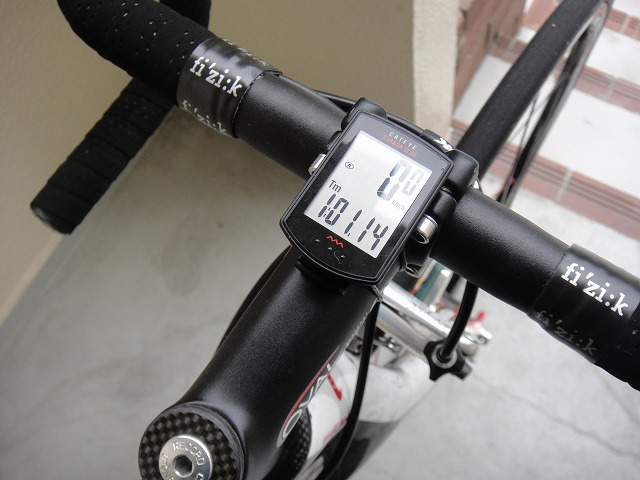
From above, it really blends into the stem.
The display shows current speed constantly at the top of the screen,
and at the bottom:
Clock
Riding time
Distance 1
Distance 2
Average speed
Maximum speed
Total distance
The five items shown in red can be toggled on and off for display.
You can configure it to skip information you don't really need to see.
The difference between Distance 1 and Distance 2 is that Distance 1 is linked to riding time, average speed, and maximum speed.
If you reset any of these, all four will be cleared simultaneously.
Distance 2 is recorded independently from those metrics,
so only Distance 2 gets erased when you reset it.
It's convenient for tracking monthly mileage or the distance ridden since a chain replacement.
I don't normally use a cycle computer.
Since I don't evaluate my training based on distance, I don't really need distance information.
For example, suppose there's someone who drops me by 20 meters per minute on climbs.
After 5 minutes, they'd be 100 meters ahead.
Even if I knew their speed at that moment was, say, 16 km/h,
how would that information actually help me catch up?
On the other hand, when riding in a group on flat terrain,
when it's my turn to pull, I need to match "the speed I was being pulled at"
as a reference for setting the group's pace—and that's where it's handy.
So the reason I bought this one is "because I wanted it" (laughs).
Really, it's not that complicated of a device.
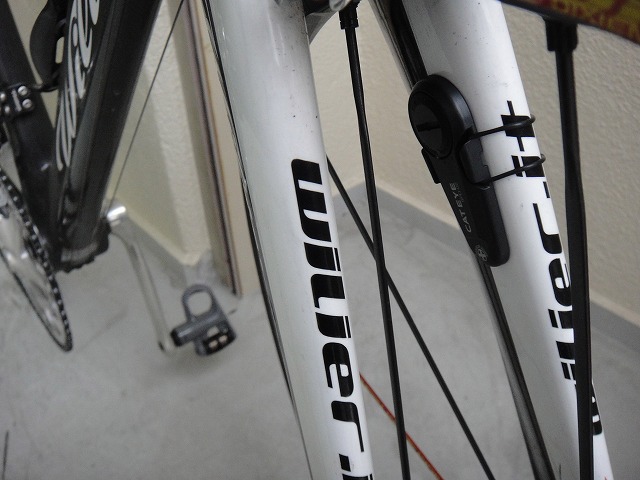
It's not just the unit itself that's thin.
The sensor being thin was also a reason I "wanted" this one.
In the image it's held with the included rubber band,
but it can also be secured with a cable tie.
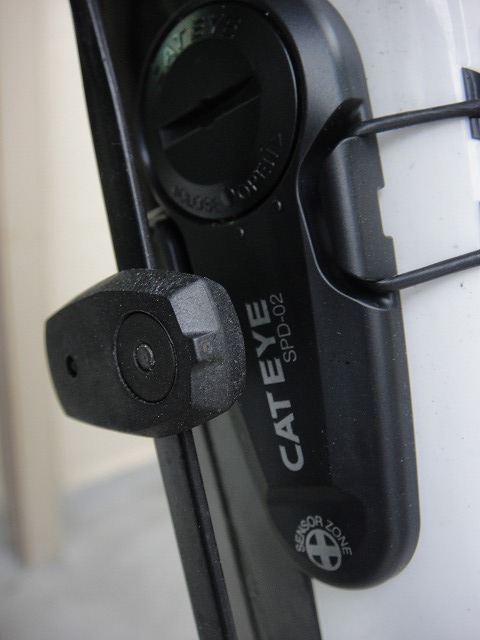
On most CatEye sensors, the position marked "SENSOR ZONE" is not
actually the position with the highest magnet sensitivity.
If you have trouble getting speed readings due to distance or magnetic field conditions,
checking the sensor zone position often solves the problem.
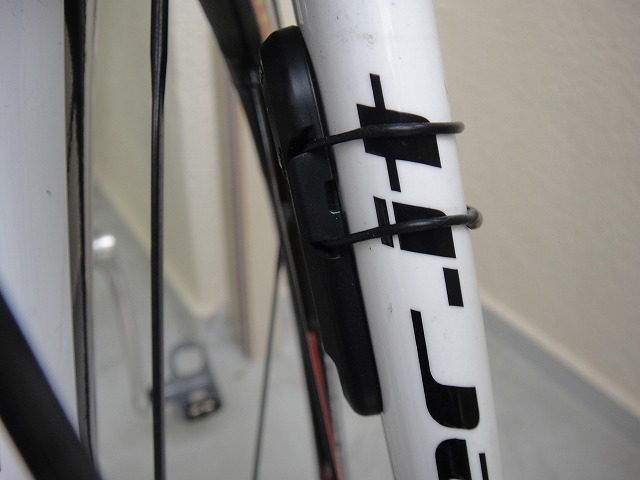
It's a genuinely thin sensor.
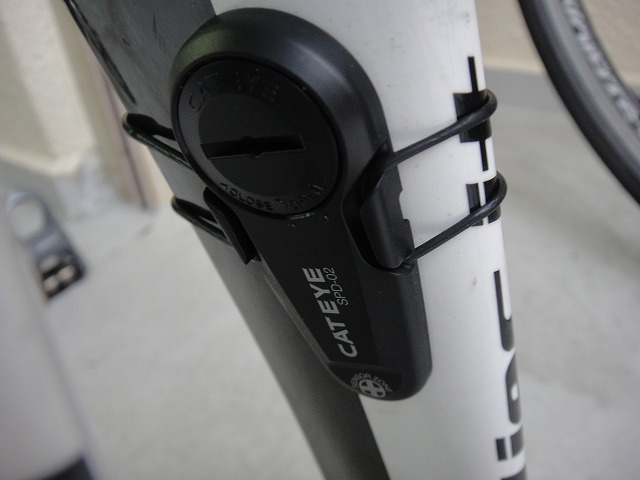
↑Rubber band mounting and
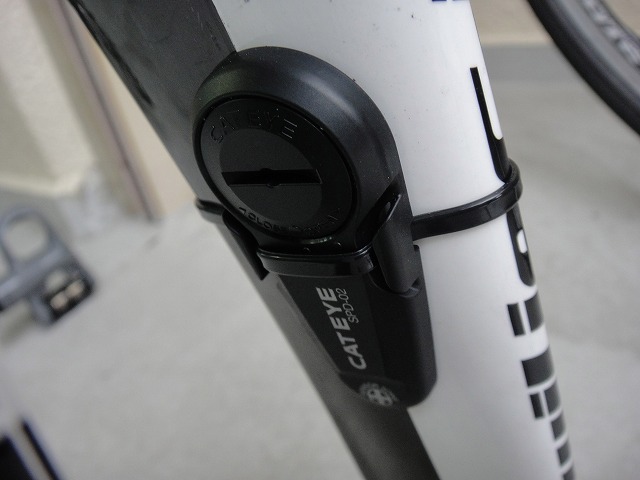
↑Cable tie mounting
We don't have these in stock at the moment, so if you're interested,
please purchase from your nearest bike shop.
If you're
we can arrange to order one in.