Another day of wheels (and so on).
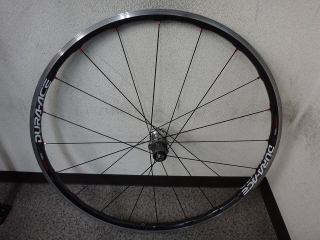
A customer brought in the rear wheel of a WH-7850.
The previous 7800 model had a "no 9-speed sprockets" specification with
a stepped spline 10-speed aluminum freebody,
and that freebody was said to be even lighter than
the titanium freebody of the earlier 7700 model.
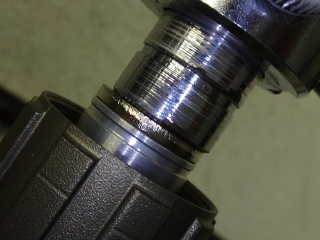
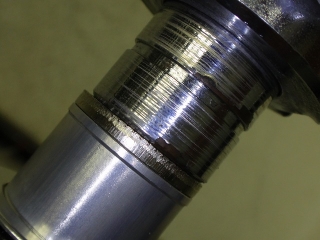
But with the 7850, they've adopted a lightweight titanium freebody
that looks like they machined down the 7700's spline,
making it even lighter than the 7800's aluminum freebody.
The important thing here is that they've gone back to 8, 9, and 10-speed sprocket compatibility,
and the component group on the customer's bike with this rear wheel
is actually 7700 Dura-Ace (9-speed).
It's their highest-grade bike in terms of component and frame level, yet
the 105 on their commute bike is 11-speed... so they wanted to upgrade to 11-speed eventually, but
they wanted to keep the wheels, so they asked if there was a way to make it work.
That's why we ended up replacing the rear hub.
I didn't even need to calculate spoke length—there are plenty of past examples.
So for this job, I didn't add any new calculation columns to my spreadsheet.
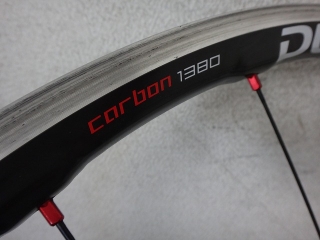
It says "carbon 1" on it.
They were really pleased that the claimed weight for both wheels combined came in under 1400g.
The nipples aren't standard parts—the rim holes are designed accordingly—so
we're reusing just the nipples.
If that doesn't work, the current Bora ones would fit too, but those are black.
Actually, the Bullet red nipples should work.
I've got stock of both anyway.
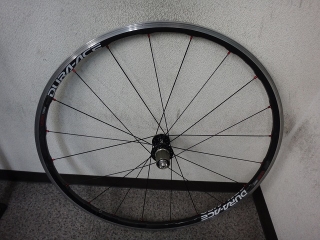
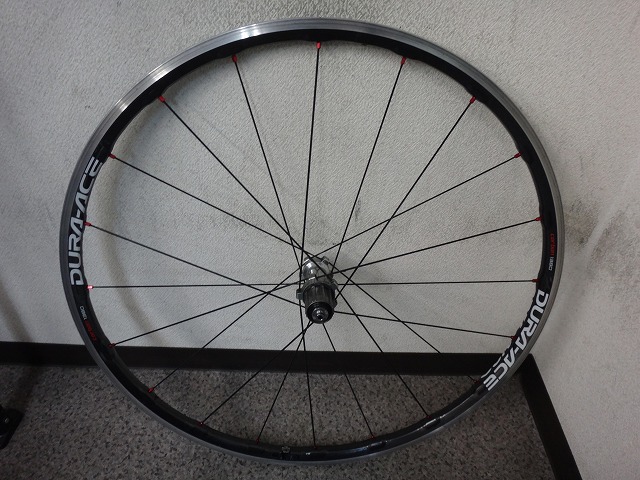
All built up.
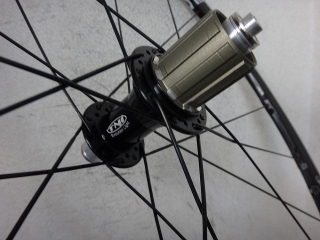
Evolite hub, 20H, half-comp 4-cross lacing.
I'll do the tying up later.
Well, actually I'd already done it by the time this photo was taken.
I considered going with half-championship lacing, but half-comp was plenty.
The offset rim is definitely doing its job.
Of course the centerline is true, but
the non-freewheel side is pulling so hard it doesn't look like the rim could be shifted to the left.
And this is before tying up, of course.
By the way, tying up doesn't change the "spoke volume."
I use stainless steel wire for tying up, and
while the material happens to be the same as the spokes,
the "volume as a spoke" hasn't actually increased.
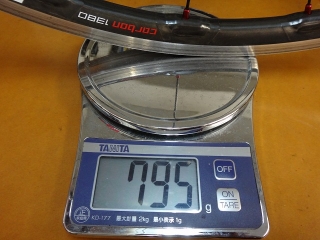
↑Before rebuild
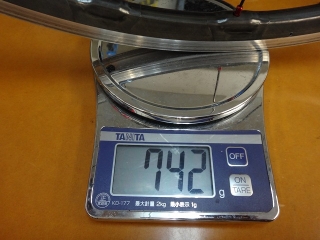
↑After rebuild
About 50g lighter.
The spokes add about 15g more weight,
but the rear hub alone is lighter than that.
I'm not trying to say this means
performance upgrade! completely superior! or anything like that.
Dura-Ace has far better hub durability and dust/water sealing.
In fact, the old hub would look almost new just from an exterior wash.
Since we're keeping the front wheel as-is, to commemorate the 50g weight savings
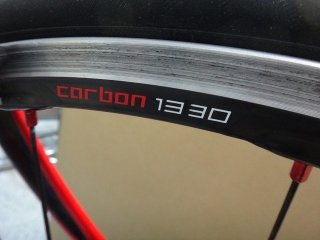
I went with carbon 1, but
the customer might kick me, so I'm putting it back the way it was.
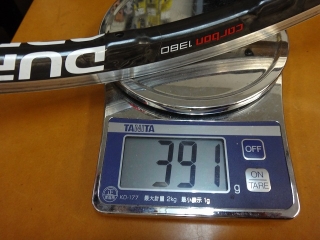
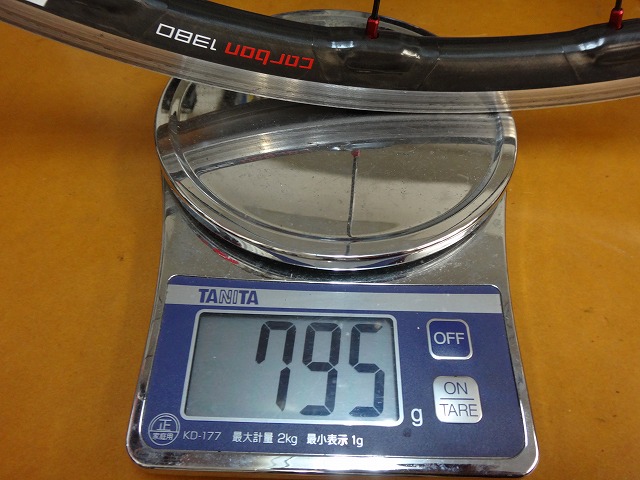
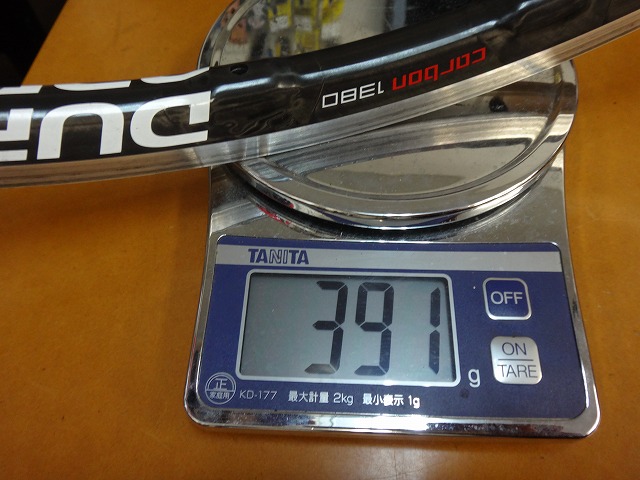
What? The rim's individual weight?
Of course I measured it, and considering it's an offset rim
it's incredibly light, but why do I have to tell you everything. ←Wow, what an attitude.
Happy New Year!
Please look at this image!
↑Stop it already!
A customer brought in the rear wheel of a WH-7850.
The previous 7800 model had a "no 9-speed sprockets" specification with
a stepped spline 10-speed aluminum freebody,
and that freebody was said to be even lighter than
the titanium freebody of the earlier 7700 model.
But with the 7850, they've adopted a lightweight titanium freebody
that looks like they machined down the 7700's spline,
making it even lighter than the 7800's aluminum freebody.
The important thing here is that they've gone back to 8, 9, and 10-speed sprocket compatibility,
and the component group on the customer's bike with this rear wheel
is actually 7700 Dura-Ace (9-speed).
It's their highest-grade bike in terms of component and frame level, yet
the 105 on their commute bike is 11-speed... so they wanted to upgrade to 11-speed eventually, but
they wanted to keep the wheels, so they asked if there was a way to make it work.
That's why we ended up replacing the rear hub.
I didn't even need to calculate spoke length—there are plenty of past examples.
So for this job, I didn't add any new calculation columns to my spreadsheet.
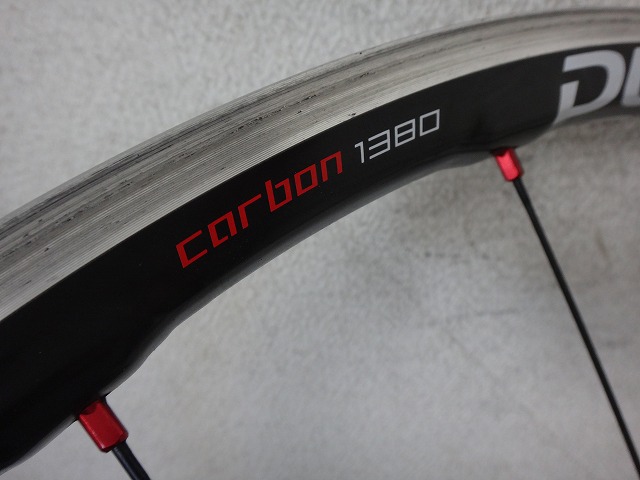
It says "carbon 1" on it.
They were really pleased that the claimed weight for both wheels combined came in under 1400g.
The nipples aren't standard parts—the rim holes are designed accordingly—so
we're reusing just the nipples.
Actually, the Bullet red nipples should work.
I've got stock of both anyway.
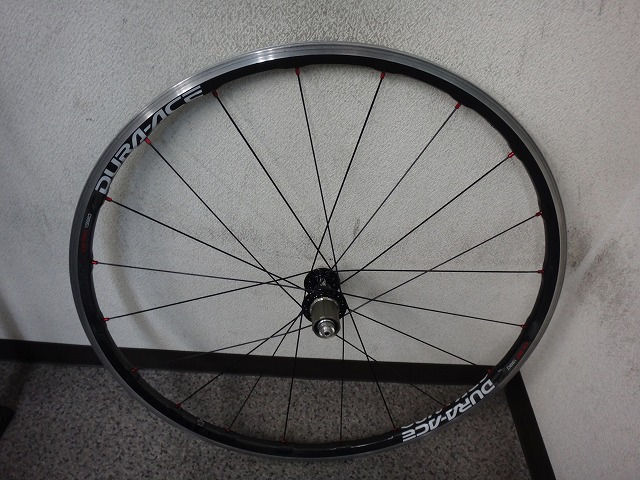
All built up.
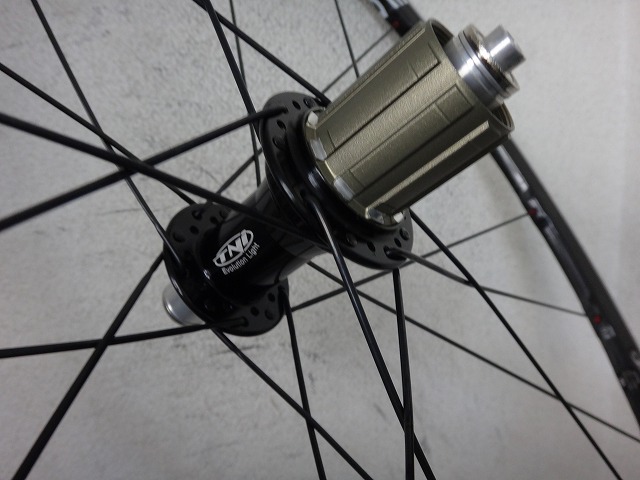
Evolite hub, 20H, half-comp 4-cross lacing.
I'll do the tying up later.
Well, actually I'd already done it by the time this photo was taken.
I considered going with half-championship lacing, but half-comp was plenty.
The offset rim is definitely doing its job.
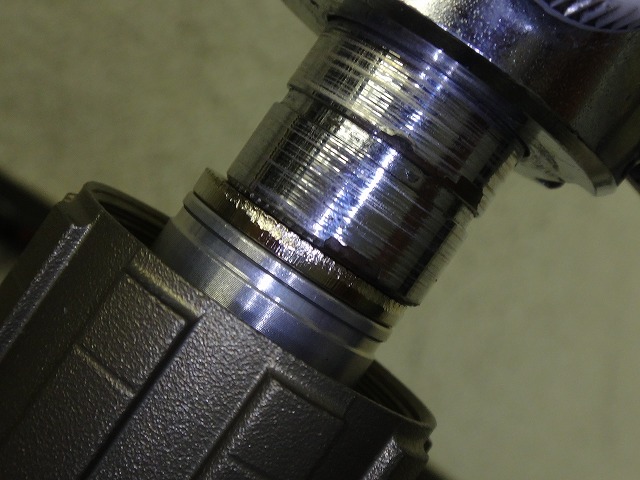
Of course the centerline is true, but
the non-freewheel side is pulling so hard it doesn't look like the rim could be shifted to the left.
And this is before tying up, of course.
By the way, tying up doesn't change the "spoke volume."
I use stainless steel wire for tying up, and
while the material happens to be the same as the spokes,
the "volume as a spoke" hasn't actually increased.
↑Before rebuild

↑After rebuild
About 50g lighter.
The spokes add about 15g more weight,
but the rear hub alone is lighter than that.
I'm not trying to say this means
performance upgrade! completely superior! or anything like that.
Dura-Ace has far better hub durability and dust/water sealing.
In fact, the old hub would look almost new just from an exterior wash.
Since we're keeping the front wheel as-is, to commemorate the 50g weight savings
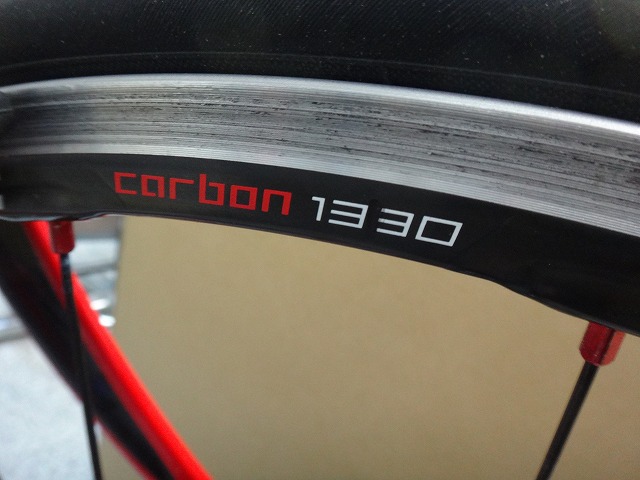
I went with carbon 1, but
the customer might kick me, so I'm putting it back the way it was.
What? The rim's individual weight?
Of course I measured it, and considering it's an offset rim
it's incredibly light, but why do I have to tell you everything. ←Wow, what an attitude.
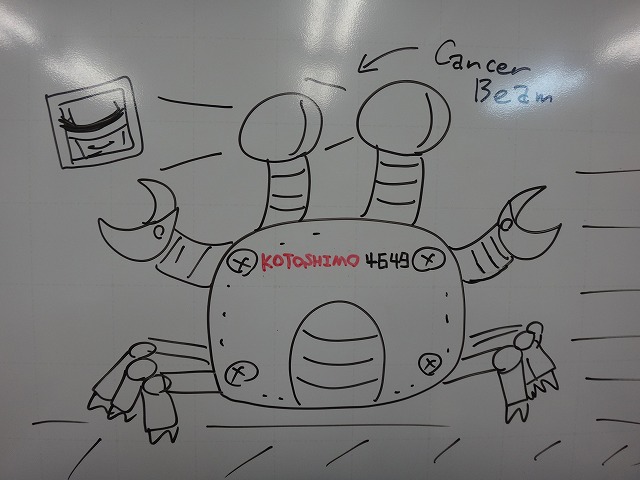
Happy New Year!
Please look at this image!
↑Stop it already!