Wheels again today (and so on).
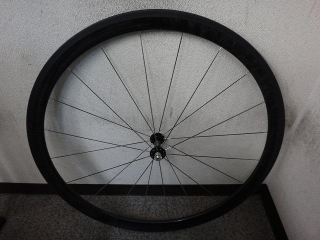
Built Nomu Lab Wheel No. 2.
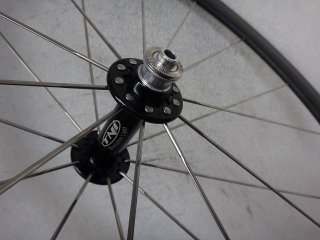
Front wheel is Evolite hub 20H CX-RAY outpoke radial laced,
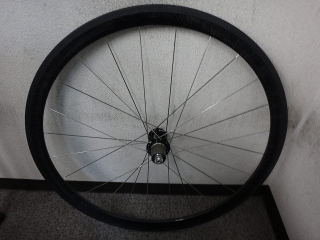

Rear wheel is Evolite hub 24H semi-comp 4-cross laced with spoke-pairing.
At the time of the photo I had done the spoke-pairing, but
for reasons I deferred the pairing on this one.
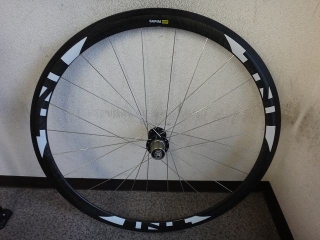
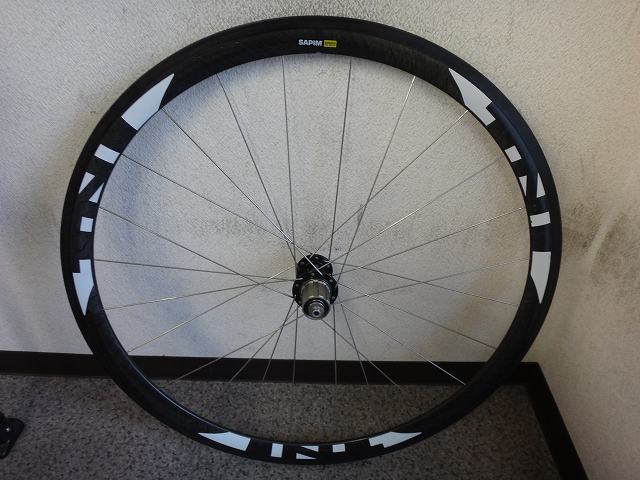
I received a rear wheel built with a Tni ROAD 38 rim from a customer.
It's the same rim as Nomu Lab Wheel No. 2's rim,
and based on its specs it's a stock wheel made in-house at the Tni wholesaler.
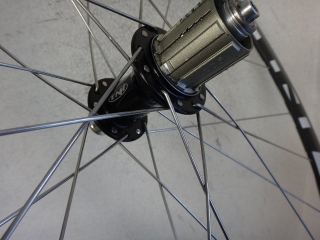
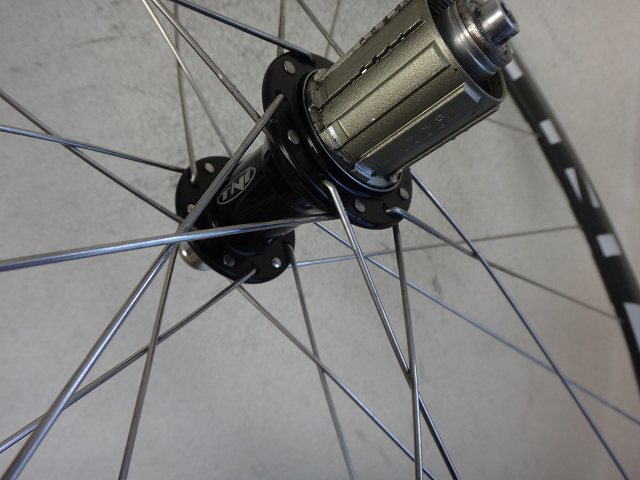
Evolite hub 24H full-race 4-2 Italian laced.
Although it's made in-house at the wholesaler,
it was built at an antenna shop near the wholesaler.
Back when we handled ZIPP and EDGE/ENVE,
when a shop requested wheels rather than rim singles,
I'd build the wheels for them instead of the shop.
Around 15 years ago I asked about the ZIPP 280 rim—whether more shops
bought rim singles or preferred wheel builds—and was told
that shops buying rim singles were far the minority.
Just like complete wheels, I think the reason
so many pro shops have stopped actively pursuing wheel-building experience
is precisely because they've continuously abandoned opportunities to build.
So this antenna shop is doing the heavy lifting on skill development,
and from the wheels I've seen from them before,
I'll say—a bit presumptuous—they build extremely well in most cases.
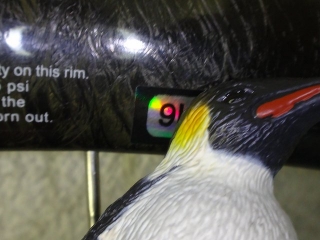
The rim is from 2009, so it was built in 2009 or
certainly no later than 2010,
but the centering was spot-on and there was virtually no wobble.
Considering it has internal nipples and is tubular, with limited opportunities for truing,
this is extremely impressive work.
About the centering being spot-on—it wouldn't be surprising if after years of use
the rim drifted slightly toward the freewheel side,
but it stayed put.
That said, judging from the brake zone wear, it doesn't look like it saw
heavy constant use over the full 7–8 years.
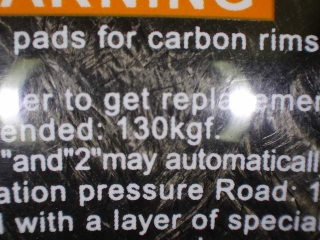
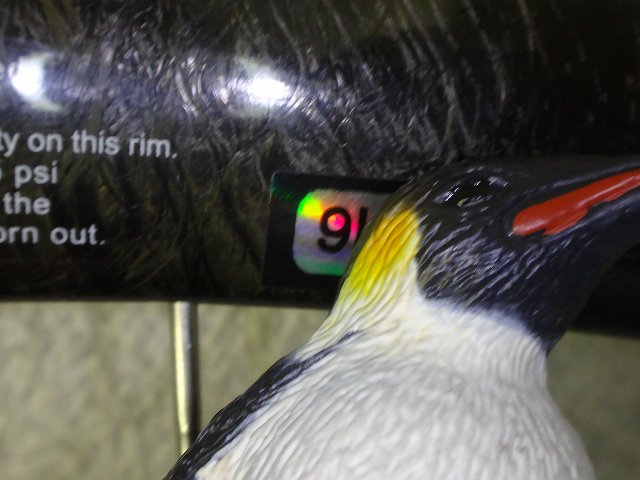
↑Sure enough, the max tension limit back then is listed as 130 kgf.
The rim on Nomu Lab Wheel No. 2.5 from that era is 100 kgf,

while now both are 120 kgf.
I don't see any difference in the thickness of the holes on the rim's inner edge or anything.
The rear wheel from Nomu Lab Wheel No. 2 I just built, without spoke-pairing,
plus this rear wheel,
plus another rear wheel from a different job—semi-comp 4-cross with spoke-pairing,
a different Nomu Lab Wheel No. 2 rear wheel—all three rear wheels came together,
and though none of their owners were present,
I had a few customers who were there check the spoke tension and
the deformation amount when hand-crunching (especially on the non-freewheel side).
It's a valuable chance to compare full-race 4-2 versus semi-comp 4-cross,
and semi-comp 4-cross with and without spoke-pairing.
So for this rear wheel with full-race 4-2 lacing,
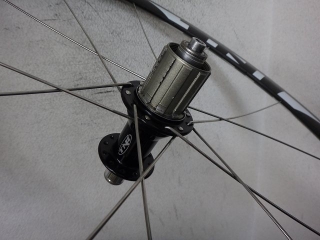
the customer requested that I do the non-freewheel side with 6 CX-RAY spokes and spoke-pair it.
In terms of spoke mass, Sapim Race equals DT Competition
(actually Race is slightly lighter),
so semi-race is nearly the same as semi-comp.
I loosened the freewheel-side nipples to where the spoke threads show,
then applied threadlock,
and honestly the labor wasn't much different from a full teardown.
So after the rebuild, only the freewheel-side nipples are brass.
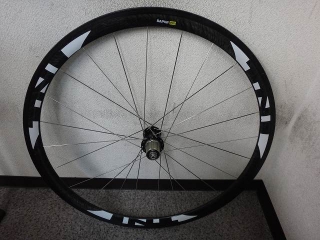
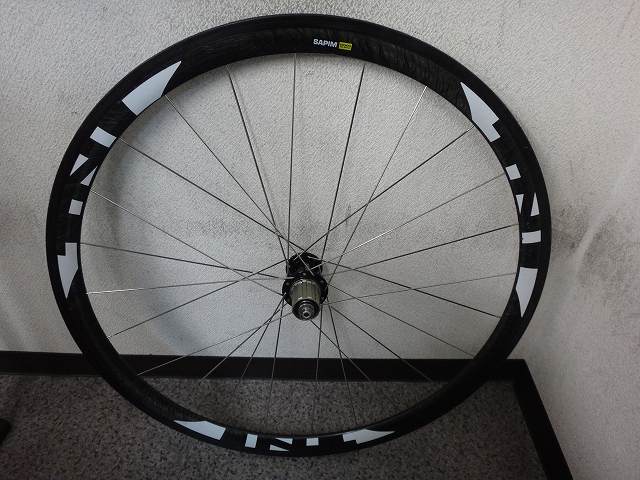
Built.
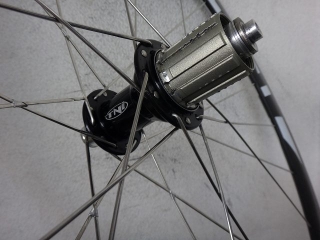
Evolite hub 24H semi-race 4-cross laced
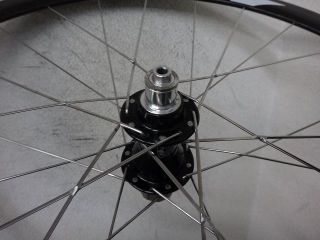
with spoke-pairing.
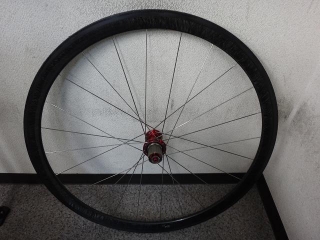
I received a Nomu Lab Wheel No. 2 rear wheel from a customer.
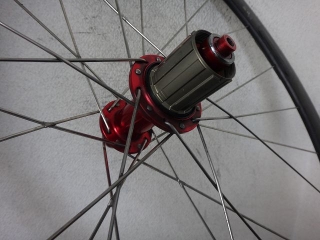
Leaf hub's sibling hub 24H semi-comp 4-cross laced with spoke-pairing.
I've built another rear wheel for this same customer with semi-champ lacing before,
and because that one's stiffness was so impressive,
they're asking me to make this one semi-champ too.
For asymmetric lacing, the reliable steady suppliers
(DT and Sapim, secondarily Pillar and Wheelsmith) offer spokes in three types
with spoke mass fundamentals of roughly 100%, 85%, and 65%,
so the asymmetric combinations available are
65:100, 85:100, and 65:85, and of these
65:85 (semi-comp) is lightest so I standardly choose that.
And I should note—spokes at the 65% level will exhibit
"wonky" deflection if they're round-section, so they need to be flat spokes.
Weighing the factors, there's no clear-cut answer whether semi-comp or semi-champ is superior,
but for 24H wheels—as opposed to 20H rear wheels where you have to do 4-4—
I think semi-comp is the better choice.
Indeed, that's what I do on almost all 24H rear wheels.
Though I'll admit my personal Nomu Lab Wheel No. 68
is built freewheel-side CX and non-freewheel-side CX-RAY,
which spoke-mass-wise works out to semi-champ equivalent.
I can do the rebuild if that's what the customer wants, but
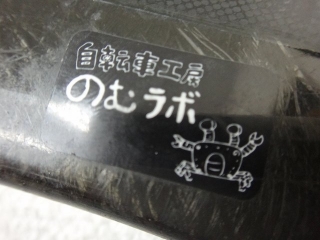
let's not put gross stickers on the rim, yeah?
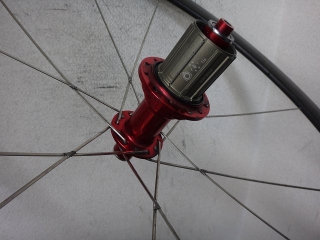
So this time I did the opposite—tore down the freewheel side.
I also loosened the non-freewheel side somewhat and evenly,
and this acted as a guide that suppressed lateral deflection,
so there was virtually no radial wobble after the initial build.
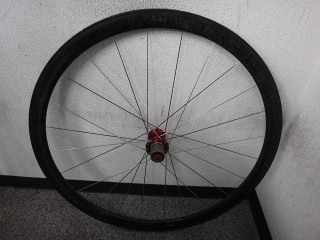
Built.
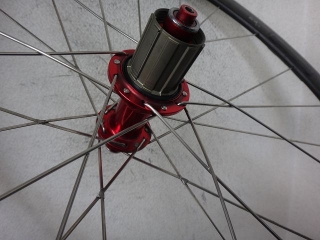
24H semi-champ 4-cross laced with spoke-pairing.
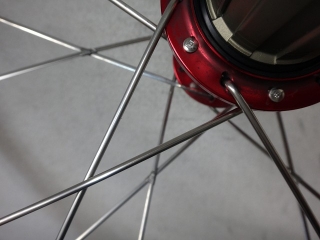
The freewheel-side spoke when hand-crunched is basically immobile.
It's noticeably stiffer than semi-comp,
but whether it needs to be this stiff is debatable.

Built Nomu Lab Wheel No. 2.

Front wheel is Evolite hub 20H CX-RAY outpoke radial laced,
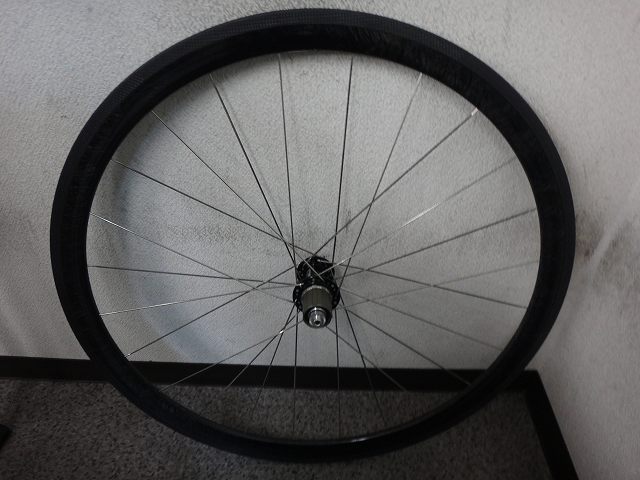
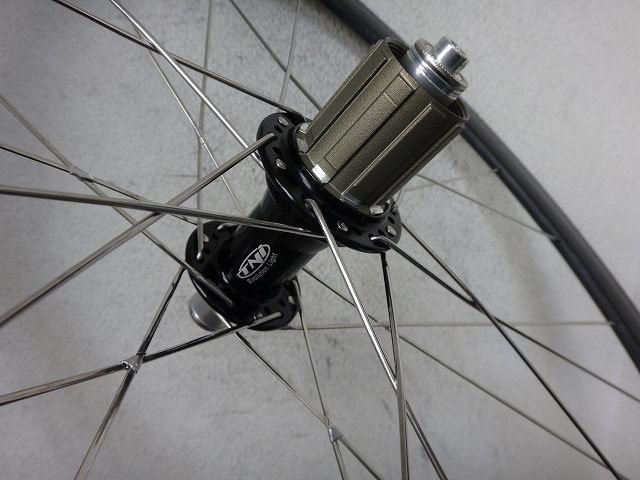
Rear wheel is Evolite hub 24H semi-comp 4-cross laced with spoke-pairing.
At the time of the photo I had done the spoke-pairing, but
for reasons I deferred the pairing on this one.
I received a rear wheel built with a Tni ROAD 38 rim from a customer.
It's the same rim as Nomu Lab Wheel No. 2's rim,
and based on its specs it's a stock wheel made in-house at the Tni wholesaler.
Evolite hub 24H full-race 4-2 Italian laced.
Although it's made in-house at the wholesaler,
it was built at an antenna shop near the wholesaler.
Back when we handled ZIPP and EDGE/ENVE,
when a shop requested wheels rather than rim singles,
I'd build the wheels for them instead of the shop.
Around 15 years ago I asked about the ZIPP 280 rim—whether more shops
bought rim singles or preferred wheel builds—and was told
that shops buying rim singles were far the minority.
Just like complete wheels, I think the reason
so many pro shops have stopped actively pursuing wheel-building experience
is precisely because they've continuously abandoned opportunities to build.
So this antenna shop is doing the heavy lifting on skill development,
and from the wheels I've seen from them before,
I'll say—a bit presumptuous—they build extremely well in most cases.
The rim is from 2009, so it was built in 2009 or
certainly no later than 2010,
but the centering was spot-on and there was virtually no wobble.
Considering it has internal nipples and is tubular, with limited opportunities for truing,
this is extremely impressive work.
About the centering being spot-on—it wouldn't be surprising if after years of use
the rim drifted slightly toward the freewheel side,
but it stayed put.
That said, judging from the brake zone wear, it doesn't look like it saw
heavy constant use over the full 7–8 years.

↑Sure enough, the max tension limit back then is listed as 130 kgf.
The rim on Nomu Lab Wheel No. 2.5 from that era is 100 kgf,

while now both are 120 kgf.
I don't see any difference in the thickness of the holes on the rim's inner edge or anything.
The rear wheel from Nomu Lab Wheel No. 2 I just built, without spoke-pairing,
plus this rear wheel,
plus another rear wheel from a different job—semi-comp 4-cross with spoke-pairing,
a different Nomu Lab Wheel No. 2 rear wheel—all three rear wheels came together,
and though none of their owners were present,
I had a few customers who were there check the spoke tension and
the deformation amount when hand-crunching (especially on the non-freewheel side).
It's a valuable chance to compare full-race 4-2 versus semi-comp 4-cross,
and semi-comp 4-cross with and without spoke-pairing.
So for this rear wheel with full-race 4-2 lacing,

the customer requested that I do the non-freewheel side with 6 CX-RAY spokes and spoke-pair it.
In terms of spoke mass, Sapim Race equals DT Competition
(actually Race is slightly lighter),
so semi-race is nearly the same as semi-comp.
I loosened the freewheel-side nipples to where the spoke threads show,
then applied threadlock,
and honestly the labor wasn't much different from a full teardown.
So after the rebuild, only the freewheel-side nipples are brass.
Built.
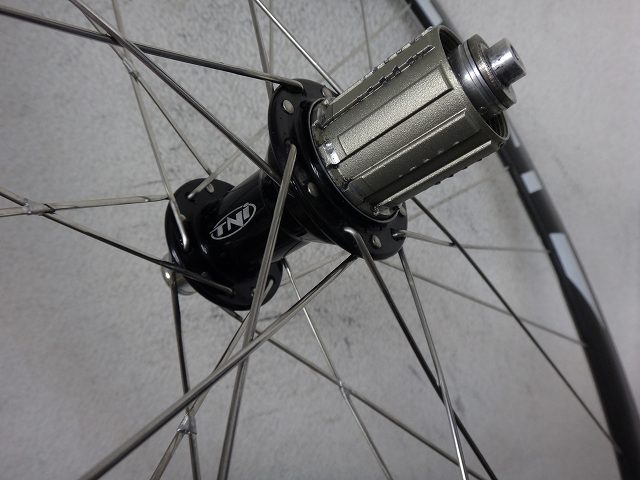
Evolite hub 24H semi-race 4-cross laced
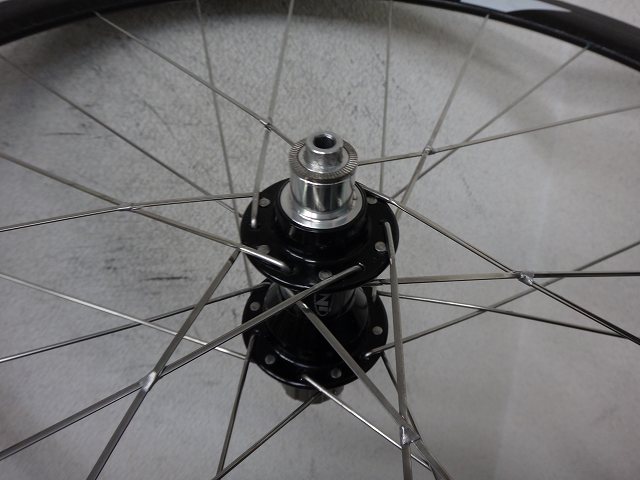
with spoke-pairing.
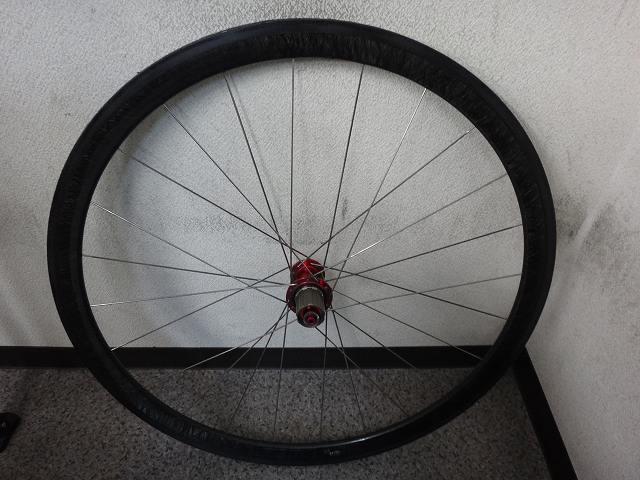
I received a Nomu Lab Wheel No. 2 rear wheel from a customer.

Leaf hub's sibling hub 24H semi-comp 4-cross laced with spoke-pairing.
I've built another rear wheel for this same customer with semi-champ lacing before,
and because that one's stiffness was so impressive,
they're asking me to make this one semi-champ too.
For asymmetric lacing, the reliable steady suppliers
(DT and Sapim, secondarily Pillar and Wheelsmith) offer spokes in three types
with spoke mass fundamentals of roughly 100%, 85%, and 65%,
so the asymmetric combinations available are
65:100, 85:100, and 65:85, and of these
65:85 (semi-comp) is lightest so I standardly choose that.
And I should note—spokes at the 65% level will exhibit
"wonky" deflection if they're round-section, so they need to be flat spokes.
Weighing the factors, there's no clear-cut answer whether semi-comp or semi-champ is superior,
but for 24H wheels—as opposed to 20H rear wheels where you have to do 4-4—
I think semi-comp is the better choice.
Indeed, that's what I do on almost all 24H rear wheels.
is built freewheel-side CX and non-freewheel-side CX-RAY,
which spoke-mass-wise works out to semi-champ equivalent.
I can do the rebuild if that's what the customer wants, but
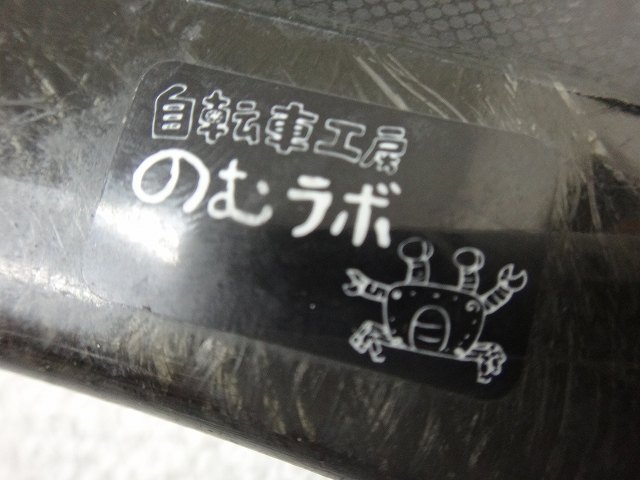
let's not put gross stickers on the rim, yeah?
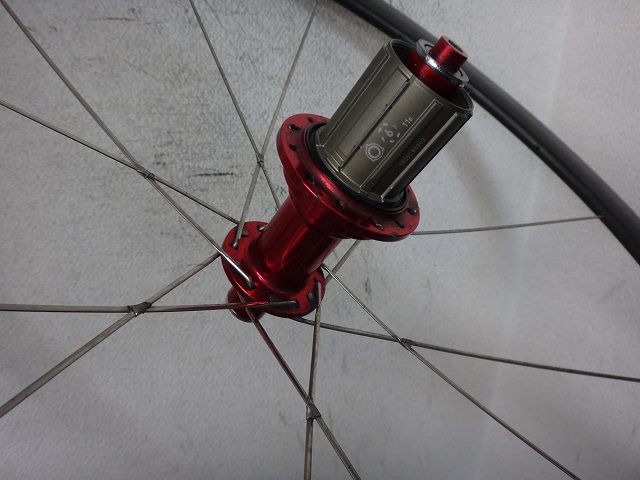
So this time I did the opposite—tore down the freewheel side.
I also loosened the non-freewheel side somewhat and evenly,
and this acted as a guide that suppressed lateral deflection,
so there was virtually no radial wobble after the initial build.
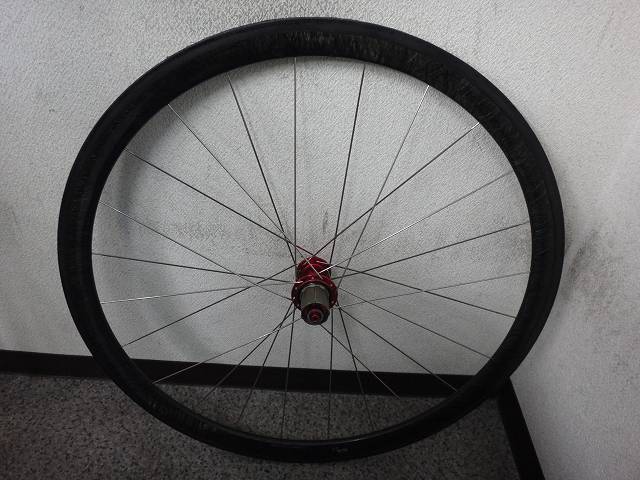
Built.
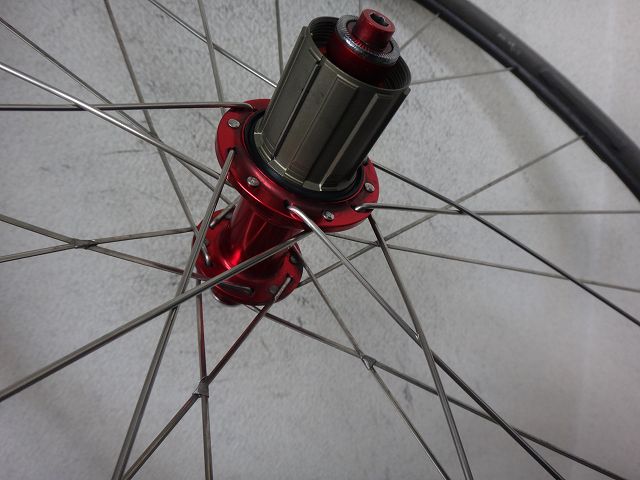
24H semi-champ 4-cross laced with spoke-pairing.
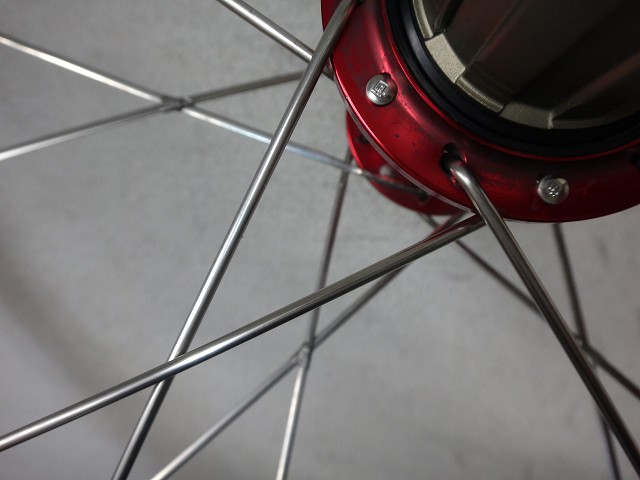
The freewheel-side spoke when hand-crunched is basically immobile.
It's noticeably stiffer than semi-comp,
but whether it needs to be this stiff is debatable.