Today it's wheels again (hereinafter omitted). ←questionable call
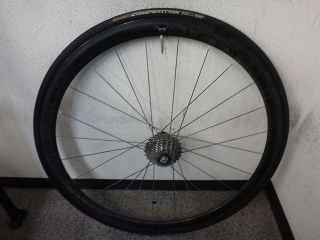
I took the rear wheel of a Nomu Lab Wheel No. 2 from a customer (probably).
They wanted the rim replaced because it deformed due to buckling.
Based on the serial number, it's a 2013 rim,
and the old 19.1mm-wide rims in 18H and 24H have small stock at the distributor.
I ordered an old rim as a replacement part for the original rim,
but the rim I received was manufactured in 2016.
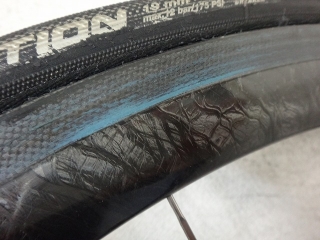
They're using Lifeline brake shoes (→here).
These are quite aggressive on the rim, so I can't really recommend them.
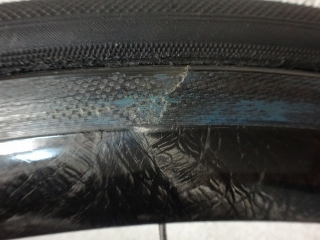
↑ This is where the buckling failure occurred—a sharp kink.
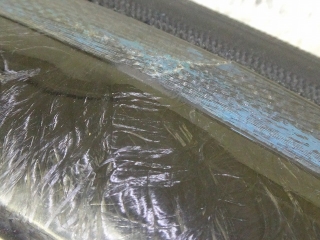
It's hard to see in the photo, but it's bulged out.
The Nomu Lab Wheel No. 2 rim is pretty flexible about brake shoe selection,
and I'd say it has fairly strong buckling resistance,
but when the buckling occurred (riding up a curb),
I asked if the rim was experiencing heat buildup at that time,
and they confirmed it was.
So if it had been the same kind of buckling without heat buildup,
it might not have failed at all.
If this is damage that only occurs when conditions align perfectly,
there's no need to create those conditions just because the brake shoes are cheap.
Also, if I were to swap the replacement rim for a new rim (20.5mm wide),
it might reduce the chance of the same thing happening again,
but due to the rim width differing front to rear and the rim weight considerations,
this time I'm rebuilding it with the old rim (which is available).
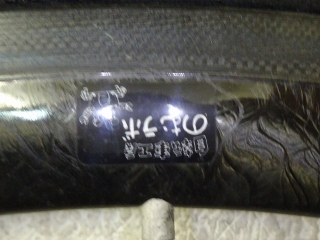
Also, let's not stick tacky stickers on the rim!
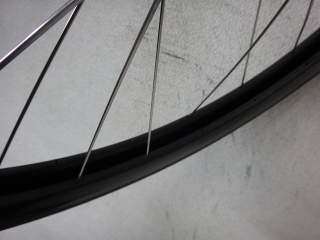
Rim moving day...
I got a comment the other day asking, "Why do you do a rim transplant?"
When doing a rim replacement where the before and after rims are the same (or have nearly the same inner diameter),
and you plan to reuse basically all the spokes,
it takes less work time than disassembling completely.
Unless you find a bent spoke during the work and need to replace just that one,
I reuse all the spokes.
I replaced all the nipples though.
Apart from not wanting to reuse aluminum nipples,
the labor involved in carefully collecting the old nipples would cost more in my labor
than the nipples themselves.
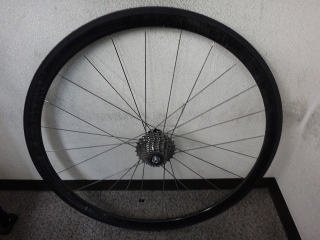
It's built.
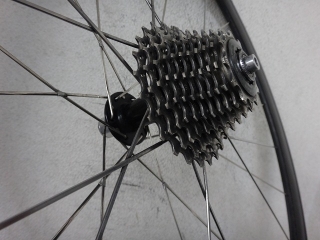
Leaf hub 24H semi-aero SB3 46-spoke laced with nipples.
The reason for the rim transplant isn't—despite what some internal guidelines might suggest—to meet today's wheel-building quota,
but I'm also building another wheel separately today.

I took the rear wheel of a Nomu Lab Wheel No. 2 from a customer (probably).
They wanted the rim replaced because it deformed due to buckling.
Based on the serial number, it's a 2013 rim,
and the old 19.1mm-wide rims in 18H and 24H have small stock at the distributor.
I ordered an old rim as a replacement part for the original rim,
but the rim I received was manufactured in 2016.
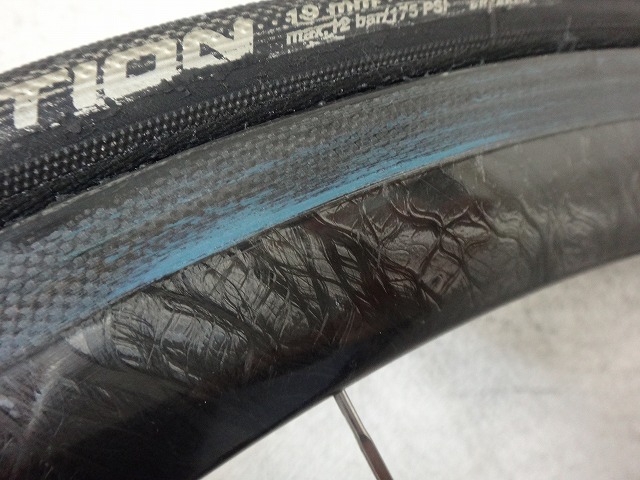
They're using Lifeline brake shoes (→here).
These are quite aggressive on the rim, so I can't really recommend them.

↑ This is where the buckling failure occurred—a sharp kink.
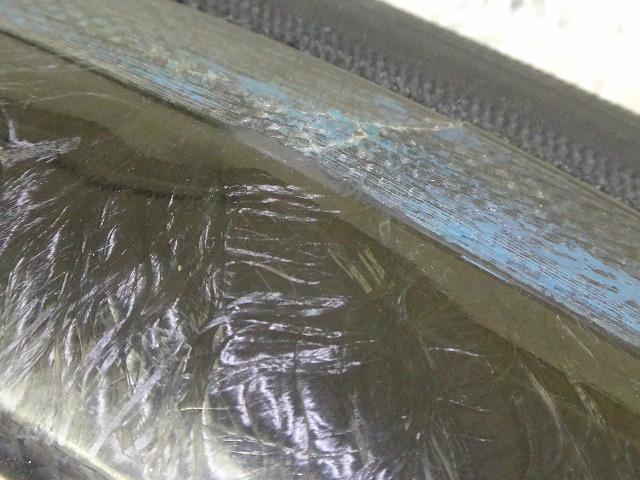
It's hard to see in the photo, but it's bulged out.
The Nomu Lab Wheel No. 2 rim is pretty flexible about brake shoe selection,
and I'd say it has fairly strong buckling resistance,
but when the buckling occurred (riding up a curb),
I asked if the rim was experiencing heat buildup at that time,
and they confirmed it was.
So if it had been the same kind of buckling without heat buildup,
it might not have failed at all.
If this is damage that only occurs when conditions align perfectly,
there's no need to create those conditions just because the brake shoes are cheap.
Also, if I were to swap the replacement rim for a new rim (20.5mm wide),
it might reduce the chance of the same thing happening again,
but due to the rim width differing front to rear and the rim weight considerations,
this time I'm rebuilding it with the old rim (which is available).

Also, let's not stick tacky stickers on the rim!
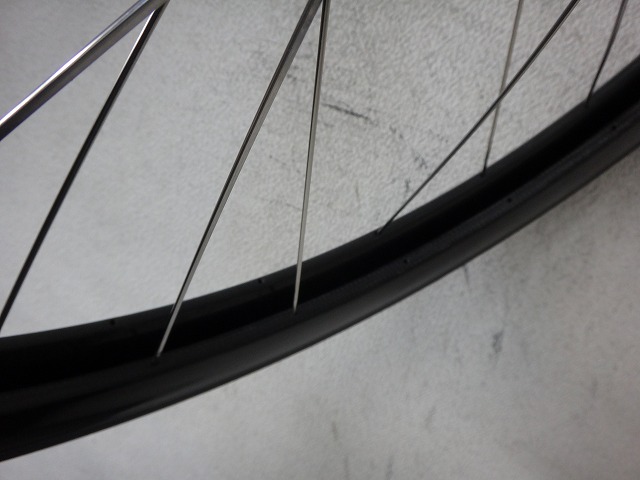
Rim moving day...
I got a comment the other day asking, "Why do you do a rim transplant?"
When doing a rim replacement where the before and after rims are the same (or have nearly the same inner diameter),
and you plan to reuse basically all the spokes,
it takes less work time than disassembling completely.
Unless you find a bent spoke during the work and need to replace just that one,
I reuse all the spokes.
I replaced all the nipples though.
Apart from not wanting to reuse aluminum nipples,
the labor involved in carefully collecting the old nipples would cost more in my labor
than the nipples themselves.
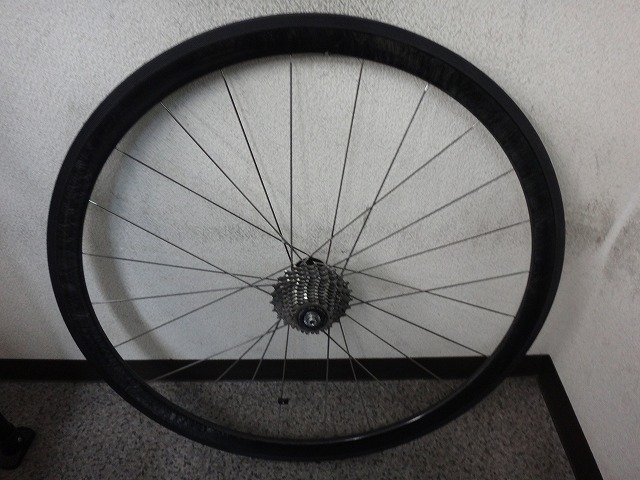
It's built.
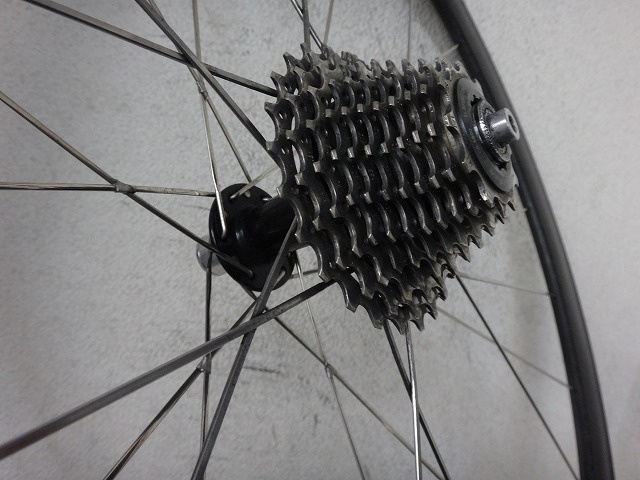
Leaf hub 24H semi-aero SB3 46-spoke laced with nipples.
The reason for the rim transplant isn't—despite what some internal guidelines might suggest—to meet today's wheel-building quota,
but I'm also building another wheel separately today.