I received a Shamal Ultra from a customer for service.
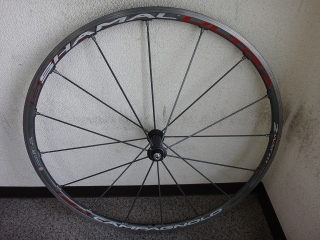
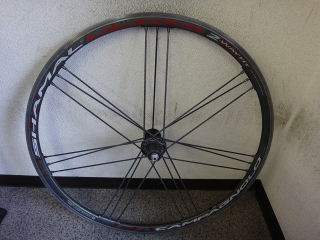
The titanium-colored anodize is the second generation after the original gold,
and the 2WAY-FIT specification first appeared in this era.
The customer requested an overhaul,
but both front and rear wheels had no hub centering issues and virtually no runout,
so all I really did was cleaning and greasing.
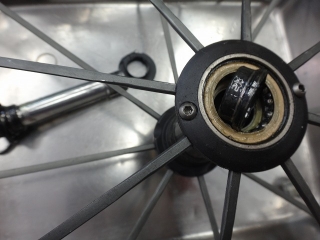
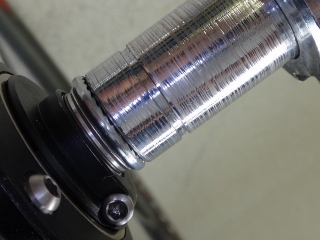
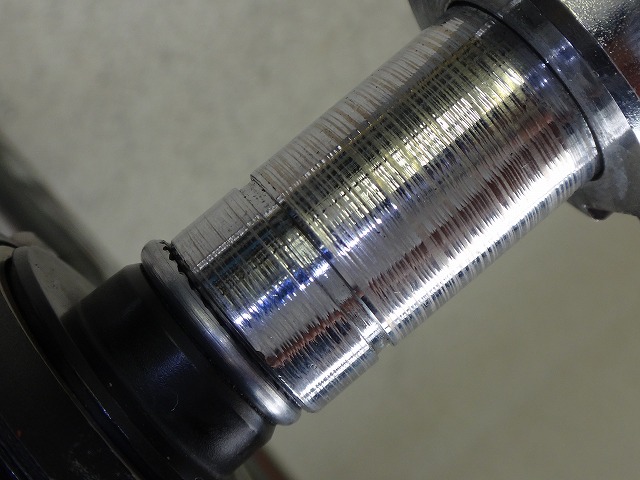
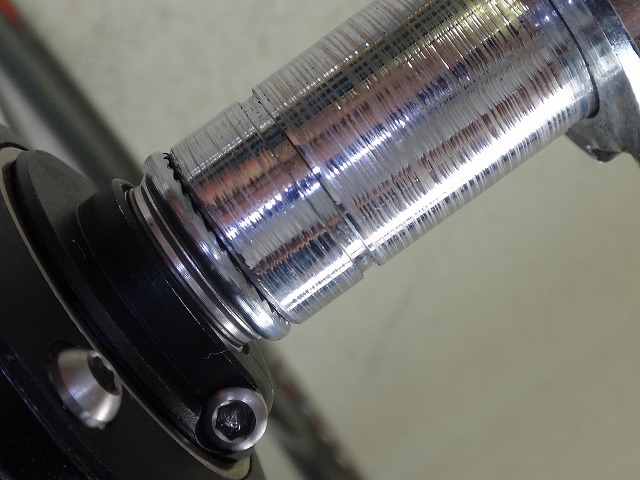
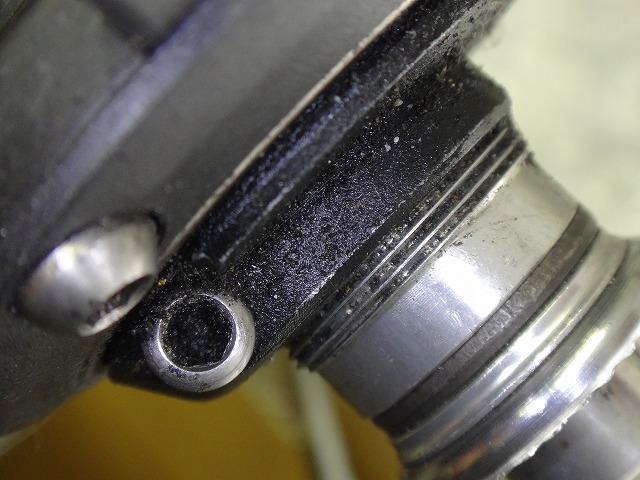
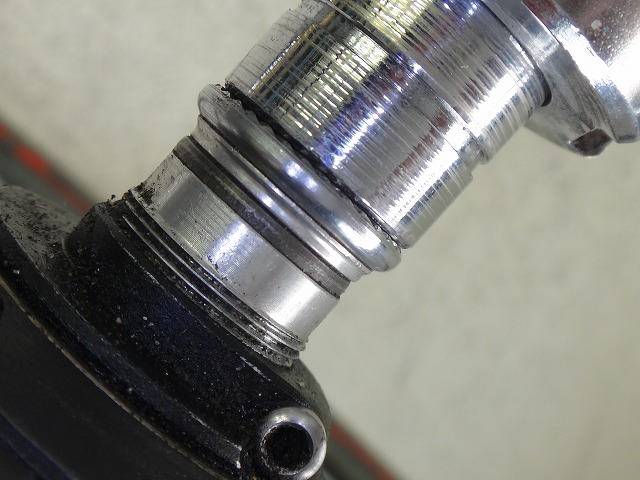
On the front hub,
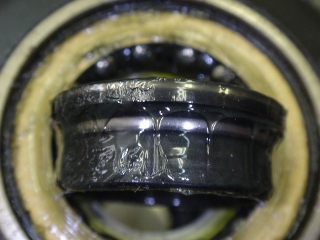
the bearing cup also
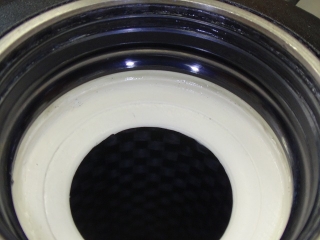
and the bearing cone have worn cleanly, so there's no need for replacement.
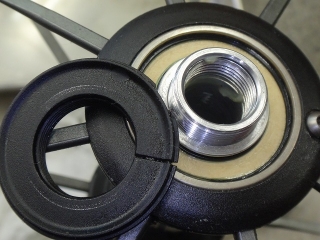
I cleaned and reassembled it.

No lateral runout either.
With a G3-laced rear wheel, it deflects inward at seven points,
so you can't get it this tight.
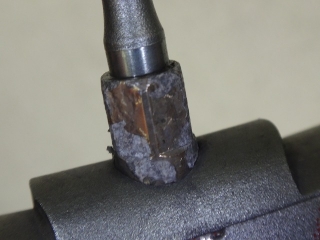
This color of anodize, seen only on certain era BB cups and aluminum spoke nipples,
tends to flake off over time.
Fortunately, there were no seized nipples, so no issues there.
Besides, there was virtually no runout to begin with.
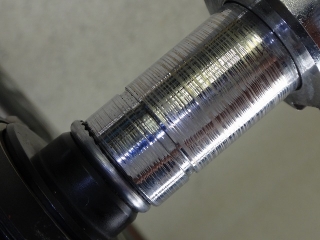
This is dead-center after work, but the wheel center can shift
depending on how much the split washer that removes hub play digs in,
so I can't know exactly how it was before the work (strictly before disassembling the hub).
As long as the center is true in the end, I suppose it's fine,
but it does concern me, so I'll check beforehand on the rear wheel.
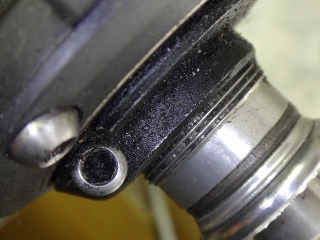
↑Before disassembly
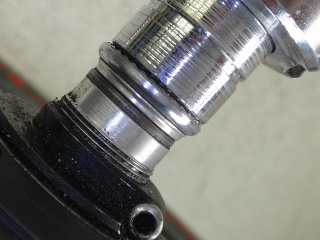
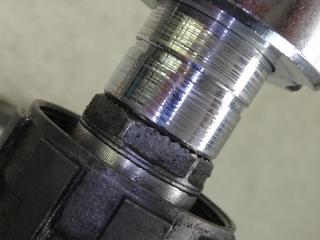
↑Dead-center
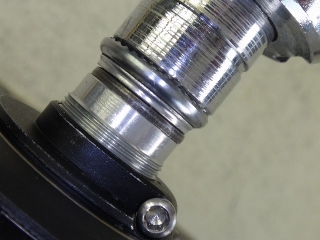
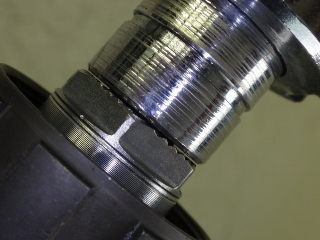
↑Timeline jumps here, but after hub cleaning and reassembly,
there's a gap of about a piece of paper.
There was no play in the hub before the work, and
the right end nut wasn't loose either.
There was virtually no runout, so this trend was the same regardless of phase.
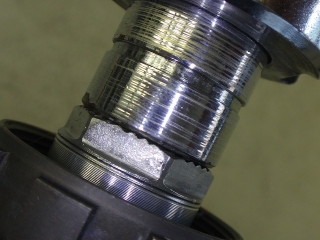
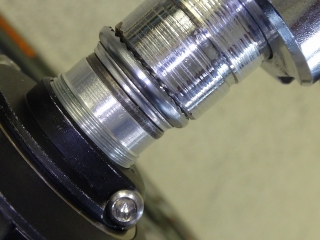
I centered it.
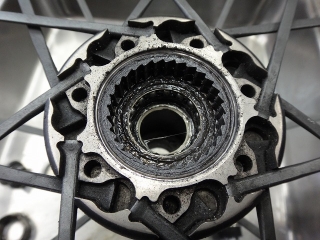
The rear hub also showed no damage to the ball races or bearings.
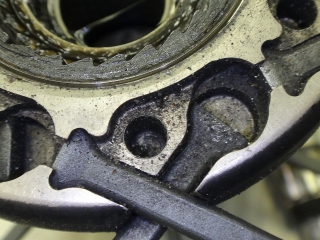
On rear hubs from this era, if you need to replace an outpoke spoke,
you have to first remove the inpoke spokes that overlap it.
On current models, the outpoke spokes are
hooked from inside the flange, making individual spoke replacement possible.
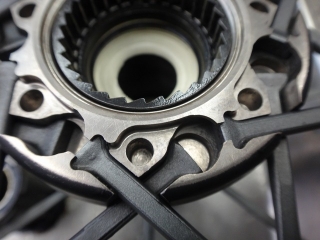
Getting this polished is really only possible on occasions like this.
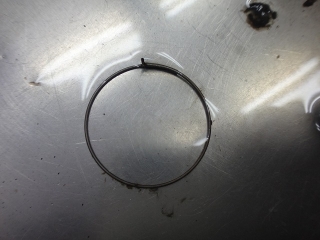
No need to replace the pawl return springs.
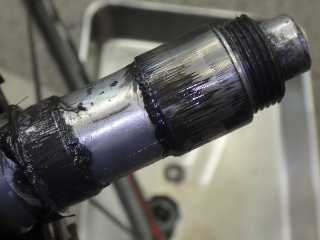
The hub shaft rotation had a slight gritty feel, but
that goes away when the freebody is removed,
so the freebody bearings must be damaged.
When one is more damaged than the other,
it's almost always the outer one.
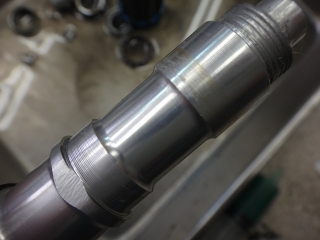
Sure enough, there was some rust bloom directly under the outer bearing.
On closer inspection, the damage wasn't severe enough to absolutely require replacement,
but it was a good opportunity and the part isn't expensive,
so I replaced just the outer bearing.

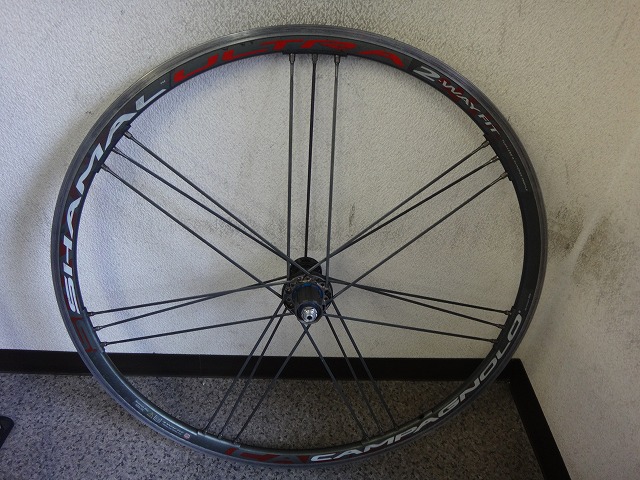
The titanium-colored anodize is the second generation after the original gold,
and the 2WAY-FIT specification first appeared in this era.
The customer requested an overhaul,
but both front and rear wheels had no hub centering issues and virtually no runout,
so all I really did was cleaning and greasing.
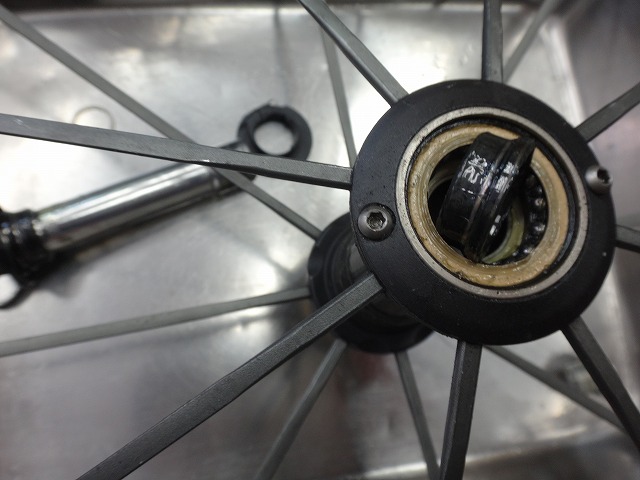
On the front hub,
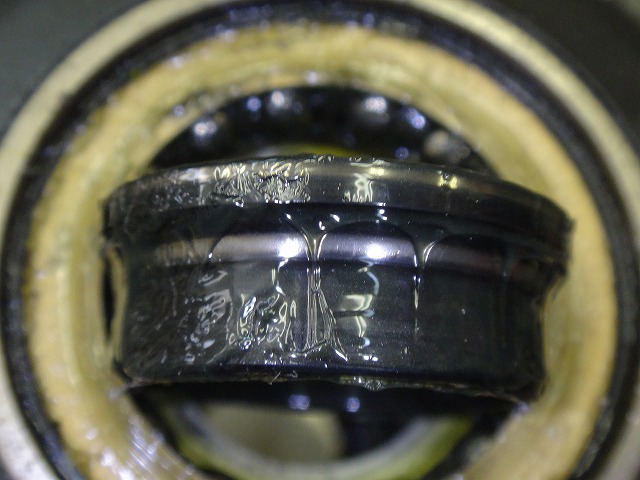
the bearing cup also

and the bearing cone have worn cleanly, so there's no need for replacement.
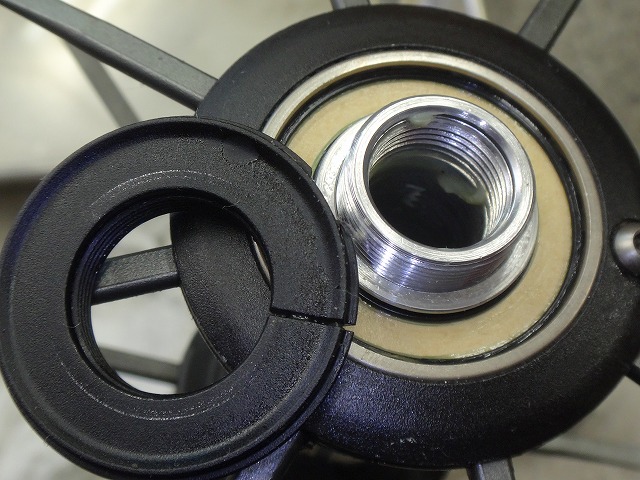
I cleaned and reassembled it.
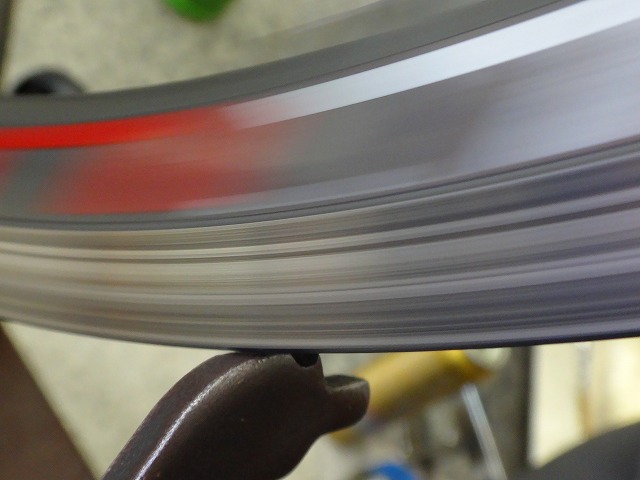
No lateral runout either.
With a G3-laced rear wheel, it deflects inward at seven points,
so you can't get it this tight.
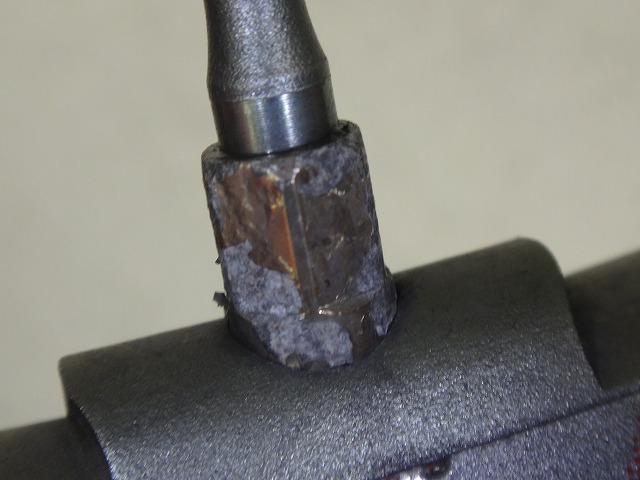
This color of anodize, seen only on certain era BB cups and aluminum spoke nipples,
tends to flake off over time.
Fortunately, there were no seized nipples, so no issues there.
Besides, there was virtually no runout to begin with.
This is dead-center after work, but the wheel center can shift
depending on how much the split washer that removes hub play digs in,
so I can't know exactly how it was before the work (strictly before disassembling the hub).
As long as the center is true in the end, I suppose it's fine,
but it does concern me, so I'll check beforehand on the rear wheel.
↑Before disassembly
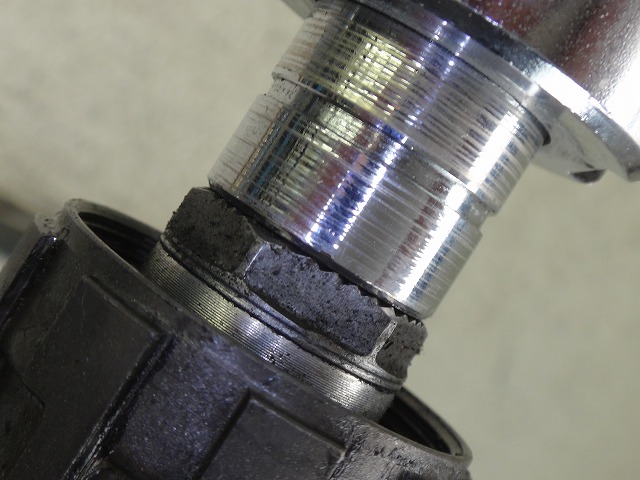
↑Dead-center
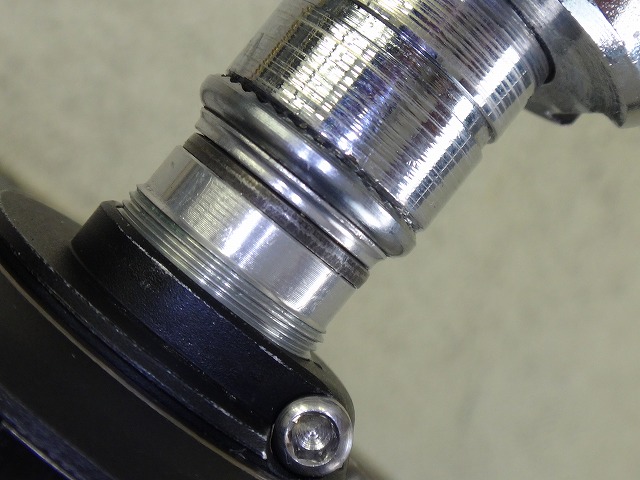
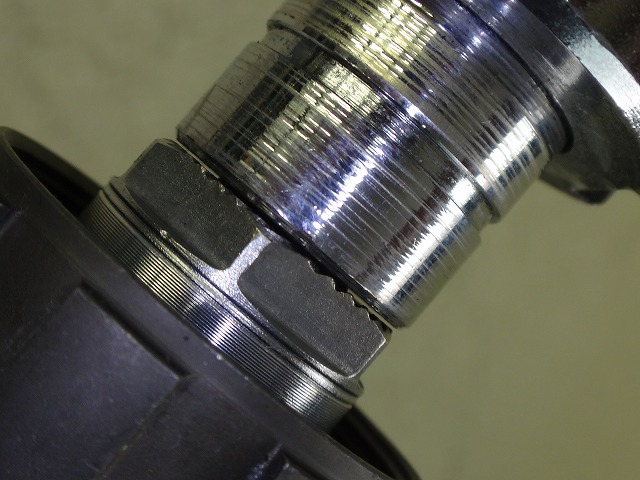
↑Timeline jumps here, but after hub cleaning and reassembly,
there's a gap of about a piece of paper.
There was no play in the hub before the work, and
the right end nut wasn't loose either.
There was virtually no runout, so this trend was the same regardless of phase.
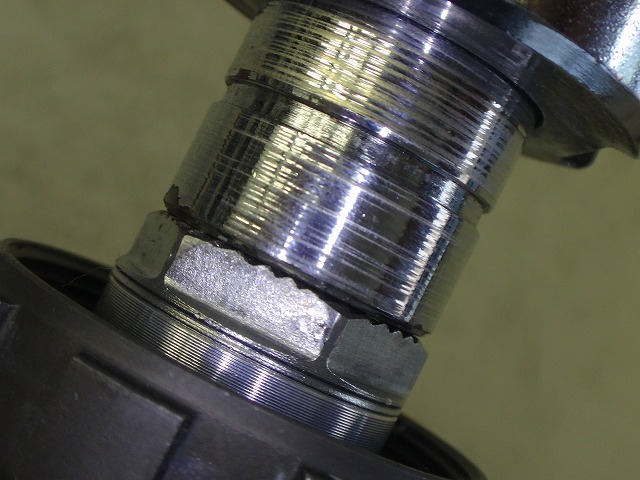
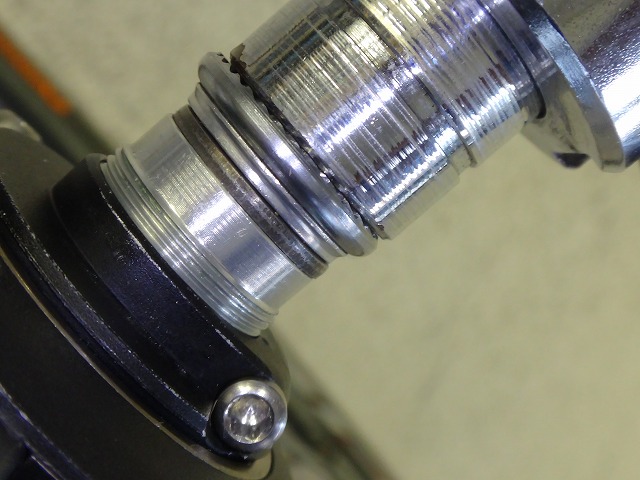
I centered it.
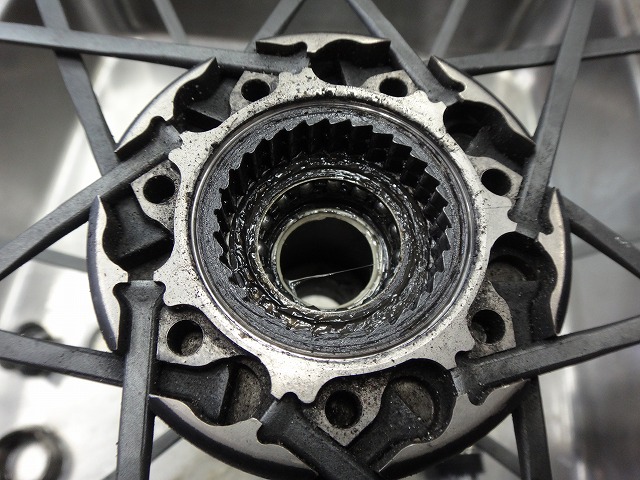
The rear hub also showed no damage to the ball races or bearings.

On rear hubs from this era, if you need to replace an outpoke spoke,
you have to first remove the inpoke spokes that overlap it.
On current models, the outpoke spokes are
hooked from inside the flange, making individual spoke replacement possible.
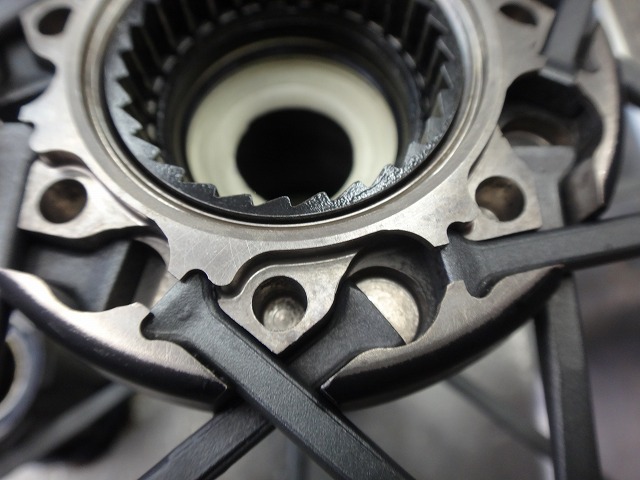
Getting this polished is really only possible on occasions like this.
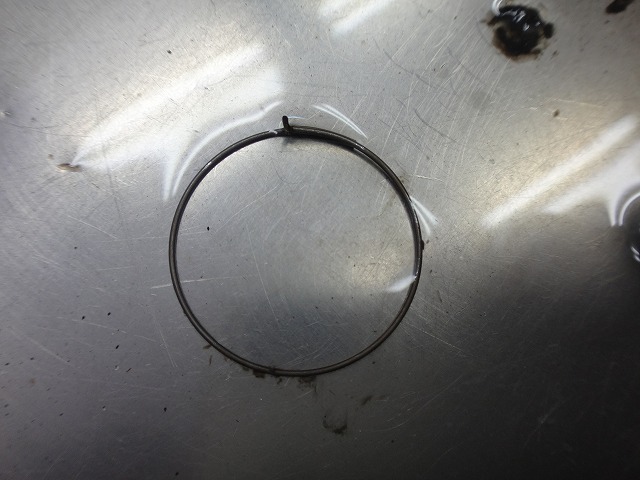
No need to replace the pawl return springs.
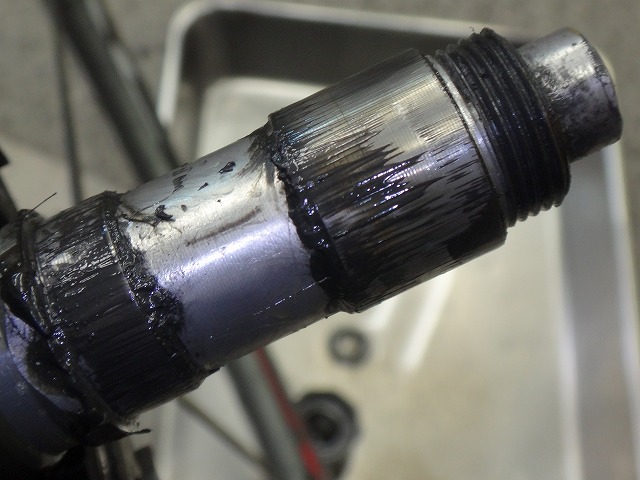
The hub shaft rotation had a slight gritty feel, but
that goes away when the freebody is removed,
so the freebody bearings must be damaged.
When one is more damaged than the other,
it's almost always the outer one.
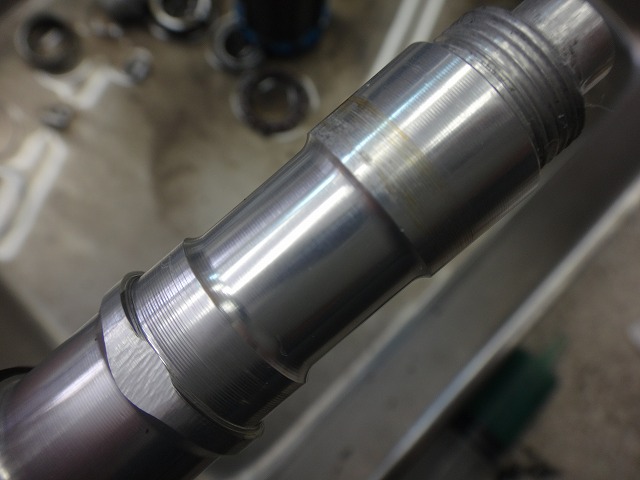
Sure enough, there was some rust bloom directly under the outer bearing.
On closer inspection, the damage wasn't severe enough to absolutely require replacement,
but it was a good opportunity and the part isn't expensive,
so I replaced just the outer bearing.
Products Mentioned in This Article
* Amazon affiliate links — prices may vary
Original Japanese post: のむラボ日記 #3995