I wasn't planning to write about this, but it turned out to be interesting.
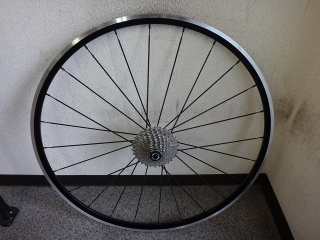
A customer dropped off a wheel built with XR200 rims.
Same rim as Nomu Lab Wheel No. 5.
Brand new, with just the sprocket installed.
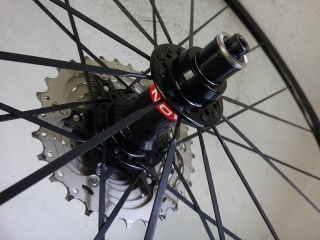
The hub is a Novatech 482SL with slit version,
identical to the Black Hub except for the hub shell appearance.
Actually, this is the original version.
Built with Pillar Spoke's required-slit Square Aero spokes
in a 24-hole 4-leading configuration,
and even though it's not an offset rim and I know the dimensional characteristics of this hub inside and out,
the anti-freewheel side is tensioned extremely tight (minimal left-right difference)
so I was surprised and checked it with a centering gauge and
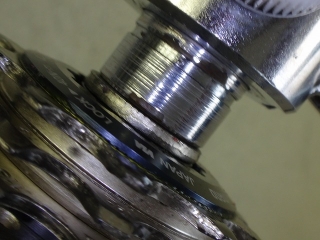
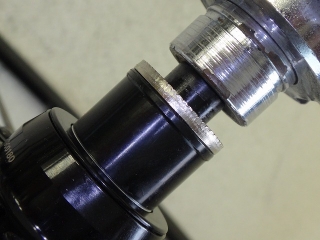
the rim was abnormally offset toward the freewheel side.
I figured something like this must be going on!
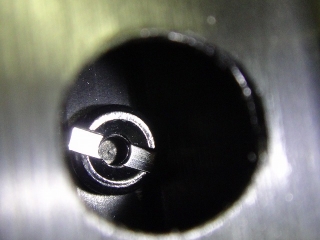
The spoke length on the anti-freewheel side
is flush with the spoke slot rather than the nipple end face (barely acceptable length),
and the freewheel side is even shorter as you can see in the image.
I initially thought an amateur had built this wheel,
but apparently that wasn't the case, though I didn't ask for details...
The front wheel had less centering offset than the rear, but
it also had enough radial runout that I could demonstrate and explain it to the customer.
It just occurred to me—what do you think about running a shop that
specializes in inspecting pre-built wheels and
wheels from questionable sources?
If I put the effort in, could I become known in that niche?
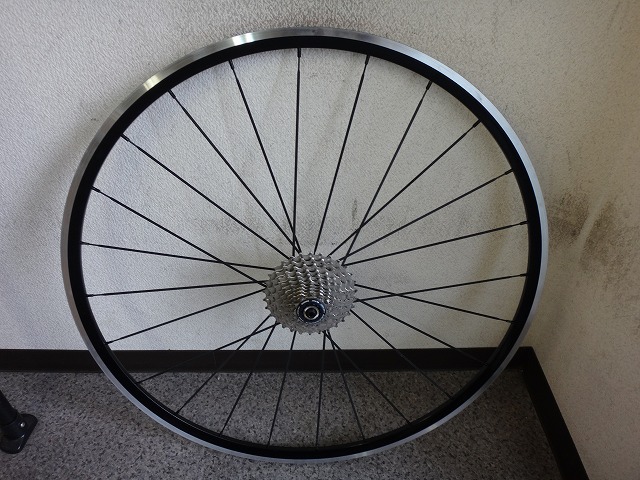
A customer dropped off a wheel built with XR200 rims.
Same rim as Nomu Lab Wheel No. 5.
Brand new, with just the sprocket installed.
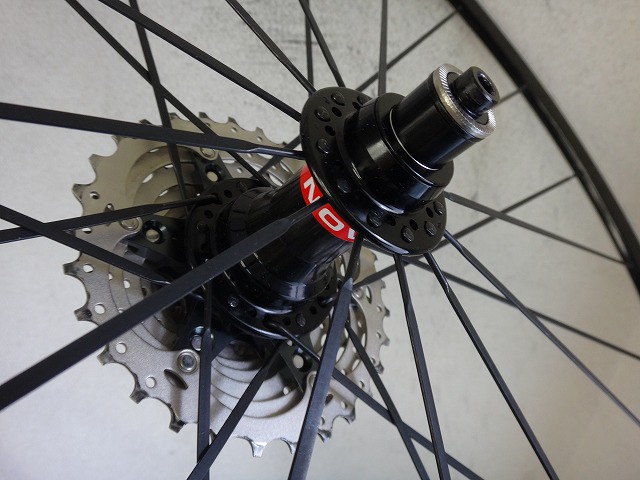
The hub is a Novatech 482SL with slit version,
identical to the Black Hub except for the hub shell appearance.
Actually, this is the original version.
Built with Pillar Spoke's required-slit Square Aero spokes
in a 24-hole 4-leading configuration,
and even though it's not an offset rim and I know the dimensional characteristics of this hub inside and out,
the anti-freewheel side is tensioned extremely tight (minimal left-right difference)
so I was surprised and checked it with a centering gauge and
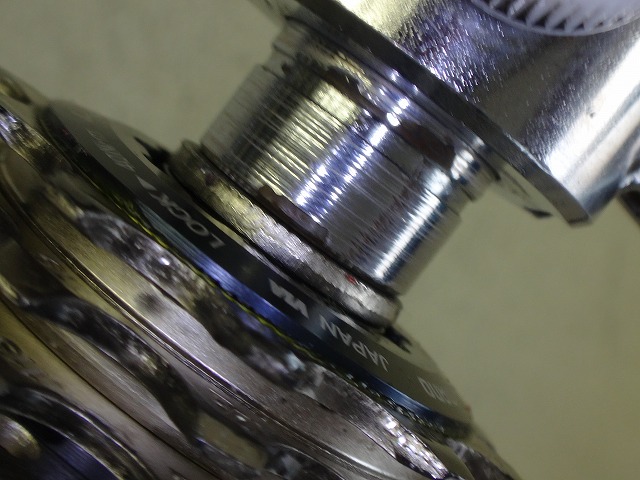

the rim was abnormally offset toward the freewheel side.
I figured something like this must be going on!
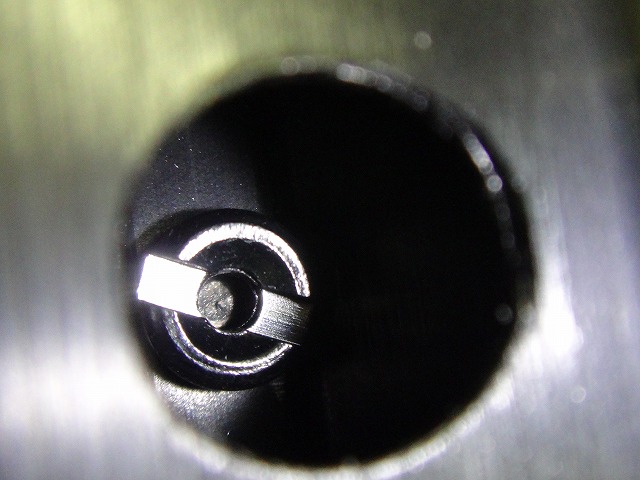
The spoke length on the anti-freewheel side
is flush with the spoke slot rather than the nipple end face (barely acceptable length),
and the freewheel side is even shorter as you can see in the image.
I initially thought an amateur had built this wheel,
but apparently that wasn't the case, though I didn't ask for details...
The front wheel had less centering offset than the rear, but
it also had enough radial runout that I could demonstrate and explain it to the customer.
It just occurred to me—what do you think about running a shop that
specializes in inspecting pre-built wheels and
wheels from questionable sources?
If I put the effort in, could I become known in that niche?