Another day of wheel building (and so on).
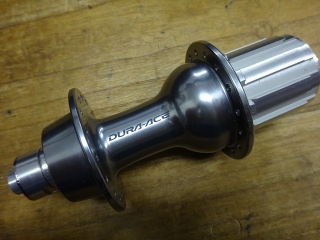
A customer handed me a 7800 series rear hub.
They purchased it secondhand and wanted an overhaul,
but since they bought it from a private individual rather than a shop,
that just means it's not first-owner condition.
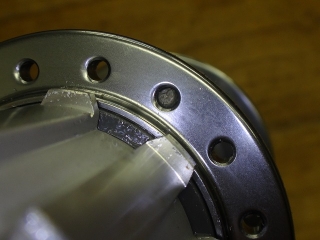
There are no build marks on the flanges, and no evidence of sprockets ever being mounted on the freebody.
It's technically new stock, but apart from what the customer requested,
I had no choice but to grease it up (more on that later).
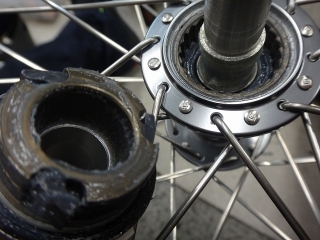
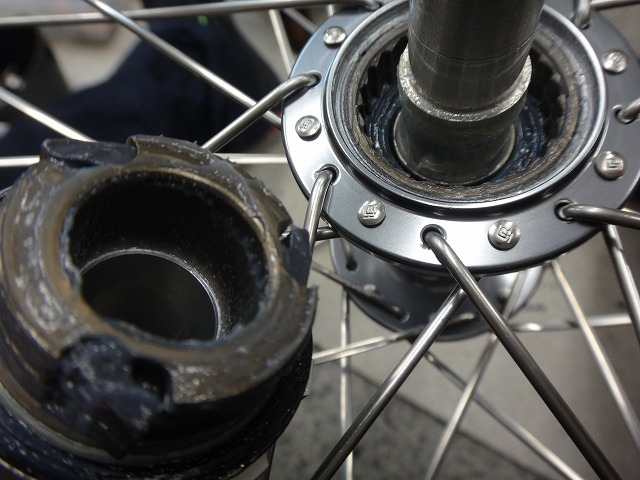
Sometimes grease or oil oozes from the hub body gap like snot and clogs the flange holes (see the photo above).
It happens regularly even with the EvoLite hubs I normally use,
so I actually give them a quick wash before building wheels.
The rim is a Toni AL27 or AL300,
32H hub with 48-spoke lacing and ties,
and for spokes the customer wants Strong/Compe or Campagnolo/CX-RAY,
with maximum diameter differences between left and right sides—
basically a "this is what I think the ultimate wheel should be" spec.
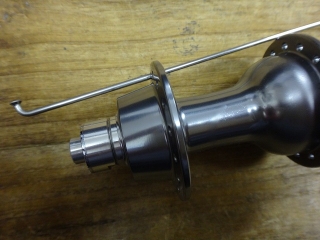
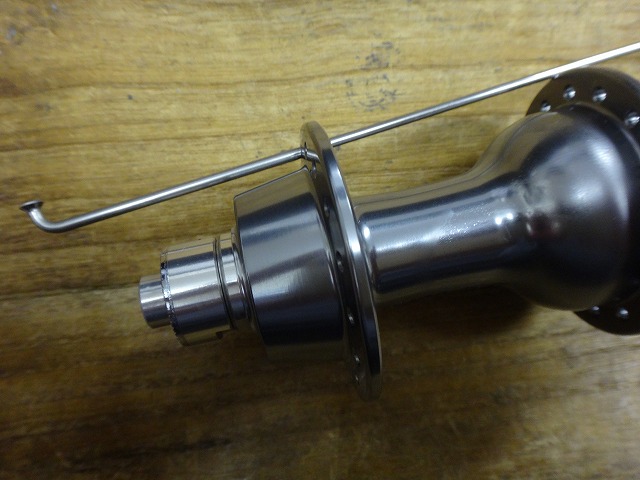
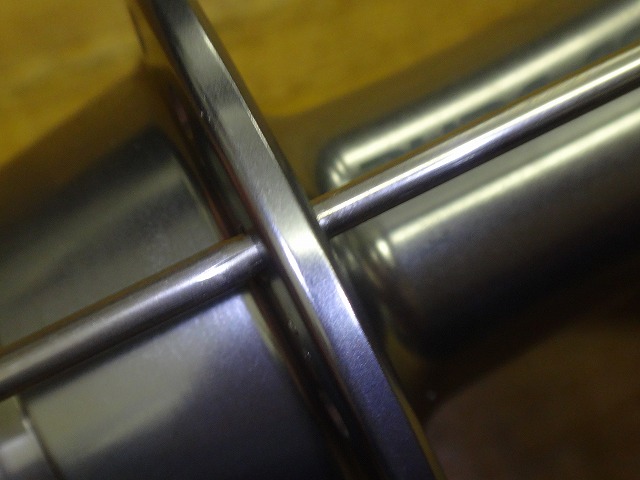
On 7800/7900/9000-series Dura-Ace hub flanges, the #13 part of Strong spokes won't fit through.
I think this is to reduce the risk of neck breaks with #15-based spokes.
When ordering a hub from my mentor figure, if you're using #15-based spokes,
he'll make the flange holes too small to pass #14 spokes.
His hubs are mostly used on small-wheel bikes,
and small wheels often call for #15 plain spokes,
so that kind of attention to detail becomes more important than with 700C wheels.
This is only a Dura-Ace thing—
hubs of the same generation but lower grades like Ultegra
let #13 spokes through pretty easily.
With Chris King hubs, they're quite tight but Strong spokes do go through.
So the flange hole diameter sits somewhere between Ultegra-and-below and Dura-Ace-and-above.
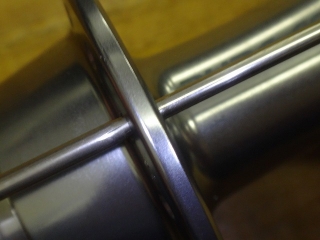
↑ Flange outside is #13, inside is #14
So the freehub side is definitely Campagnolo, and the non-freehub side will be CX-RAY.
What they call "half-Campy."
↑Campagnolo knockoff
The bearing preload felt smooth with no play, but there was a slight grinding sensation when spinning.
Ah, so this is an early type-A unit.
7800 hubs come in two bearing types: A-type with loose ball bearings, and B-type with cartridge bearings.
With loose balls, the steel spheres will click together during rotation, but as long as the grease isn't completely dried out, you won't notice it much.
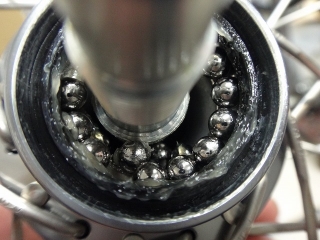
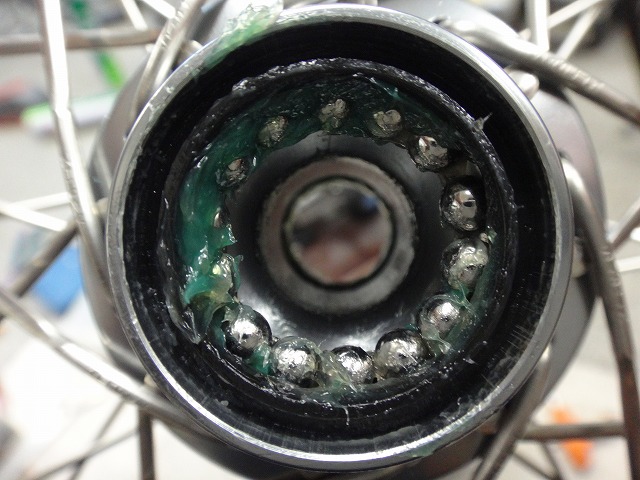
When I removed the left cone, the steel balls came tumbling into the hub shell.
You could prevent this by making the gap between the shelf inside the cup or on the hub axle smaller than the ball diameter
(or by switching to cartridge bearings),
but this hub doesn't have that feature.
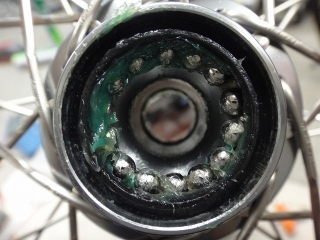
You can hold the balls in the cup with grease and install the cone straight to assemble it,
but assembly without any degreaser is extremely difficult.
There's no reason to do that anyway.
This is why I had to grease it up regardless of the customer's wishes.
By the way, I packed significantly more grease than shown in the photo,
so unless someone rides it for years with play developing in the hub,
it should basically run maintenance-free.
Just like Shimano's complete wheelsets, with Dura-Ace grade hubs,
the rim will wear out first.
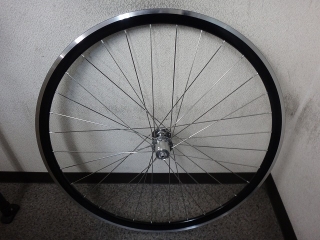
All built.
Hehehehe. Third ST acquired.

FH-7800 32H half-Campagnolo 48-spoke lacing with ties.
It's absurdly stiff, but are you sure that's what you wanted?
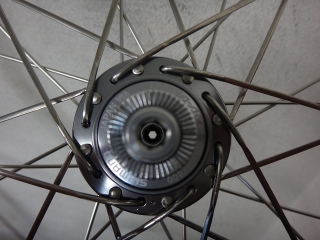
Since the non-freehub flange diameter isn't unusually small,
the overlap of the inpoke spoke heads by the outpoke spokes in 32H 8-section lacing is modest.
By the way, spoke replacement is possible.At least if I'm doing it.
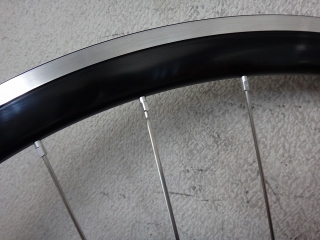
The nipples are aluminum, not brass.
If you're confident you won't strip the nipple wrench flats by the time you finish building the wheel—
or if you have the setup dialed in—there's no reason to use brass nipples.
The only exception is carbon rims, where friction with the nipples is very high.
Most recently, that Niseki carbon rim from the other day—the rear rim with slightly different specs from the front—I built that one with brass nipples.
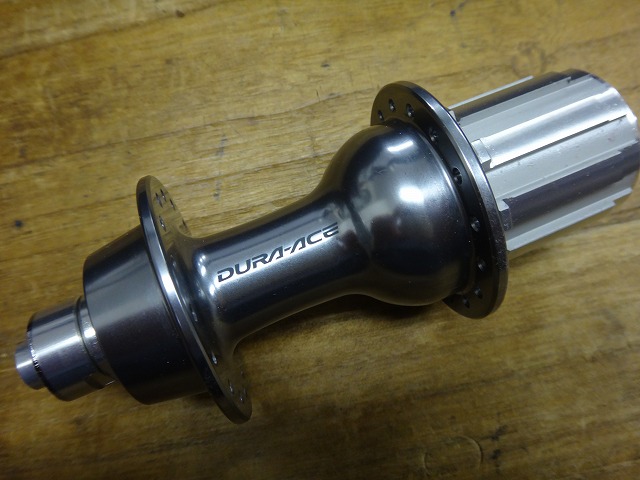
A customer handed me a 7800 series rear hub.
They purchased it secondhand and wanted an overhaul,
but since they bought it from a private individual rather than a shop,
that just means it's not first-owner condition.
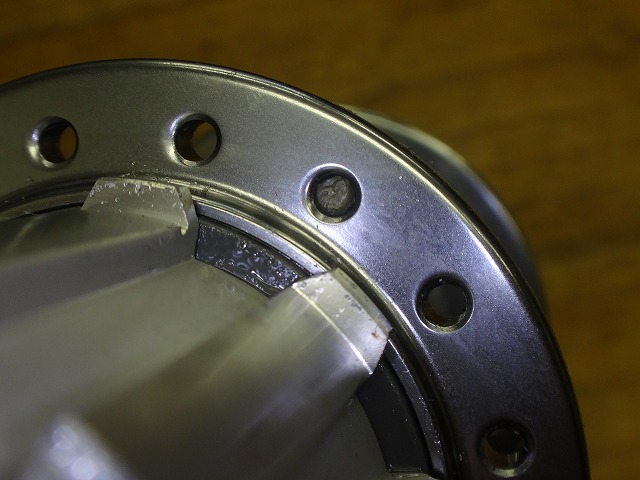
There are no build marks on the flanges, and no evidence of sprockets ever being mounted on the freebody.
It's technically new stock, but apart from what the customer requested,
I had no choice but to grease it up (more on that later).
Sometimes grease or oil oozes from the hub body gap like snot and clogs the flange holes (see the photo above).
It happens regularly even with the EvoLite hubs I normally use,
so I actually give them a quick wash before building wheels.
The rim is a Toni AL27 or AL300,
32H hub with 48-spoke lacing and ties,
and for spokes the customer wants Strong/Compe or Campagnolo/CX-RAY,
with maximum diameter differences between left and right sides—
basically a "this is what I think the ultimate wheel should be" spec.
On 7800/7900/9000-series Dura-Ace hub flanges, the #13 part of Strong spokes won't fit through.
I think this is to reduce the risk of neck breaks with #15-based spokes.
When ordering a hub from my mentor figure, if you're using #15-based spokes,
he'll make the flange holes too small to pass #14 spokes.
His hubs are mostly used on small-wheel bikes,
and small wheels often call for #15 plain spokes,
so that kind of attention to detail becomes more important than with 700C wheels.
This is only a Dura-Ace thing—
hubs of the same generation but lower grades like Ultegra
let #13 spokes through pretty easily.
With Chris King hubs, they're quite tight but Strong spokes do go through.
So the flange hole diameter sits somewhere between Ultegra-and-below and Dura-Ace-and-above.
↑ Flange outside is #13, inside is #14
So the freehub side is definitely Campagnolo, and the non-freehub side will be CX-RAY.
What they call "half-Campy."
The bearing preload felt smooth with no play, but there was a slight grinding sensation when spinning.
Ah, so this is an early type-A unit.
7800 hubs come in two bearing types: A-type with loose ball bearings, and B-type with cartridge bearings.
With loose balls, the steel spheres will click together during rotation, but as long as the grease isn't completely dried out, you won't notice it much.

When I removed the left cone, the steel balls came tumbling into the hub shell.
You could prevent this by making the gap between the shelf inside the cup or on the hub axle smaller than the ball diameter
(or by switching to cartridge bearings),
but this hub doesn't have that feature.
You can hold the balls in the cup with grease and install the cone straight to assemble it,
but assembly without any degreaser is extremely difficult.
There's no reason to do that anyway.
This is why I had to grease it up regardless of the customer's wishes.
By the way, I packed significantly more grease than shown in the photo,
so unless someone rides it for years with play developing in the hub,
it should basically run maintenance-free.
Just like Shimano's complete wheelsets, with Dura-Ace grade hubs,
the rim will wear out first.

All built.
Hehehehe. Third ST acquired.
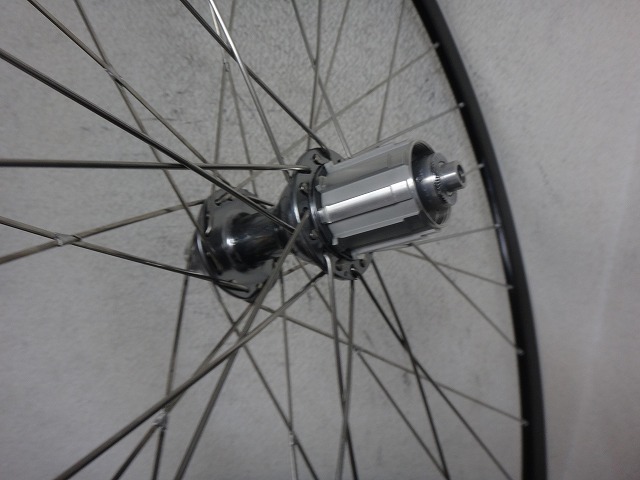
FH-7800 32H half-Campagnolo 48-spoke lacing with ties.
It's absurdly stiff, but are you sure that's what you wanted?
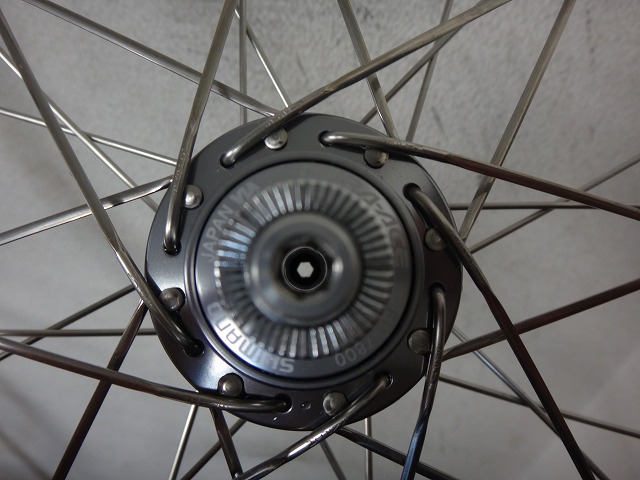
Since the non-freehub flange diameter isn't unusually small,
the overlap of the inpoke spoke heads by the outpoke spokes in 32H 8-section lacing is modest.
By the way, spoke replacement is possible.
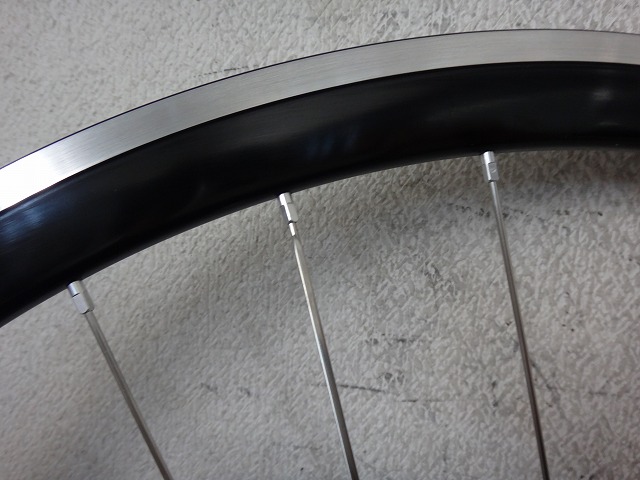
The nipples are aluminum, not brass.
If you're confident you won't strip the nipple wrench flats by the time you finish building the wheel—
or if you have the setup dialed in—there's no reason to use brass nipples.
The only exception is carbon rims, where friction with the nipples is very high.
Most recently, that Niseki carbon rim from the other day—the rear rim with slightly different specs from the front—I built that one with brass nipples.