Today, wheels again (and so on).

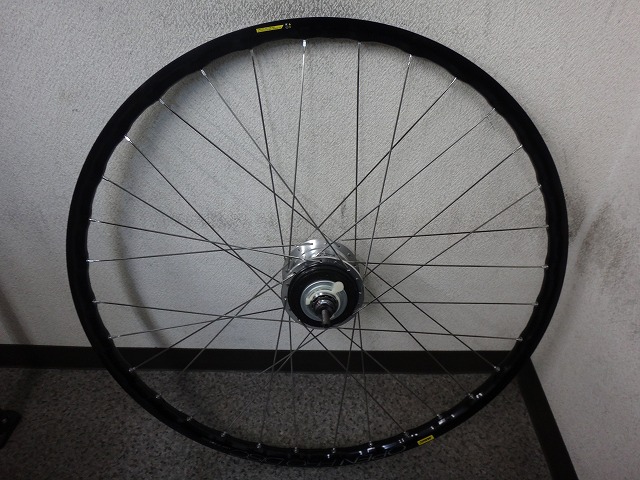
Continuing from the other day. I built a rear wheel with an Open Pro disc rim.
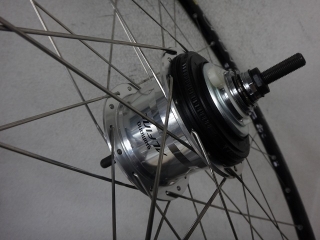
The hub is an Alfine SG-S7001-11 32H
and I used a CX-RAY 6×6 JIS lacing pattern.
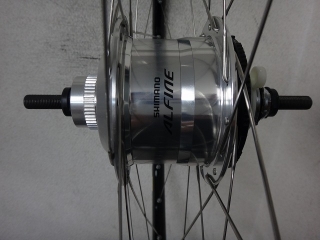
The left-right flange width difference is 3.15mm,
which is less than a fixed-gear track hub with single-threaded cones,
so there's no problem using same diameter and same count spokes on both sides.
I won't use spoke bracing. If I were to do it, I'd do both sides.
In other words, with this combination, the front wheel actually has a larger dish,
and spoke bracing is necessary—a very unusual result.
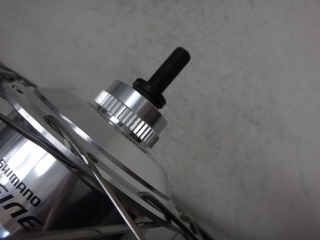
The dish difference is 3.15mm. In other words, if I move the left flange out another 3.15mm,
the hub would have zero dish.
This hub's flange thickness is 3.2mm, so if I move the flange out by about one flange thickness,
I can make it a zero-dish hub, and
at that point there doesn't seem to be any risk of the rotor or disc brake body
contacting the spokes, so
I wonder why it wasn't done this way.

Since the customer's preference was for CX-RAY, I went with CX-RAY.
The hole count specifications only come in 32H and 36H,
but if they did exist and were 24H or less, I might have used all Comp instead of all CX-RAY.
The hub's stated weight is 1665g,
but it varies with things like oiling with the dedicated oil,
and individual variation can explain the difference either way.
Continuing from the other day. I built a rear wheel with an Open Pro disc rim.
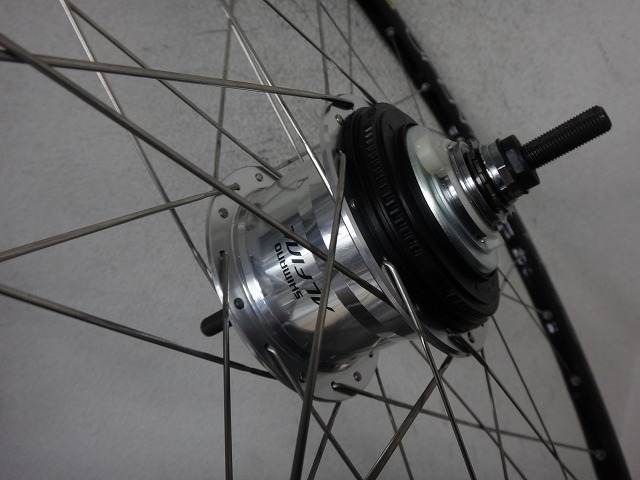
The hub is an Alfine SG-S7001-11 32H
and I used a CX-RAY 6×6 JIS lacing pattern.

The left-right flange width difference is 3.15mm,
which is less than a fixed-gear track hub with single-threaded cones,
so there's no problem using same diameter and same count spokes on both sides.
I won't use spoke bracing. If I were to do it, I'd do both sides.
In other words, with this combination, the front wheel actually has a larger dish,
and spoke bracing is necessary—a very unusual result.
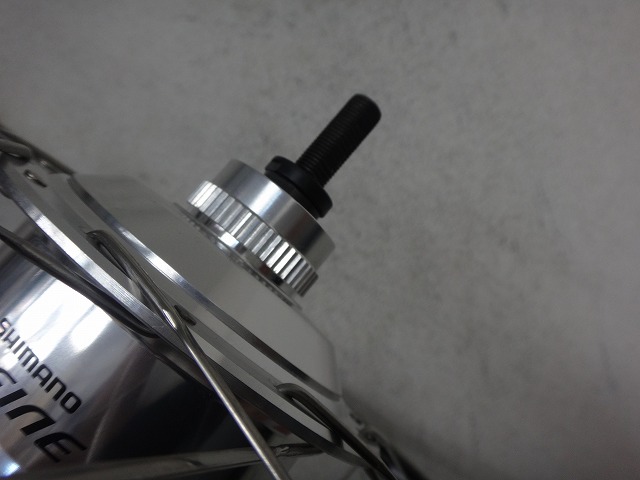
The dish difference is 3.15mm. In other words, if I move the left flange out another 3.15mm,
the hub would have zero dish.
This hub's flange thickness is 3.2mm, so if I move the flange out by about one flange thickness,
I can make it a zero-dish hub, and
at that point there doesn't seem to be any risk of the rotor or disc brake body
contacting the spokes, so
I wonder why it wasn't done this way.

Since the customer's preference was for CX-RAY, I went with CX-RAY.
The hole count specifications only come in 32H and 36H,
but if they did exist and were 24H or less, I might have used all Comp instead of all CX-RAY.
The hub's stated weight is 1665g,
but it varies with things like oiling with the dedicated oil,
and individual variation can explain the difference either way.