Another wheel day (abbreviated hereafter).
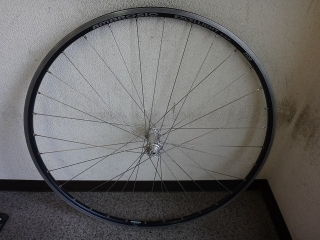
A customer brought in a wheel built with an Ambrosio Excellight rim and
a White Industries T11 hub.
The customer lives in Canada but comes to Japan for summer vacation,
and wanted to have this wheel rebuilt during that time.
Not only that, but they also wanted to watch the wheel being built,
so they came by today once the spokes had arrived.
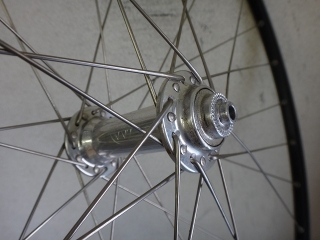
T11 hub, 32H, fully laced six-cross Italian or reverse Italian lacing.
It comes down to how you interpret this lacing pattern.
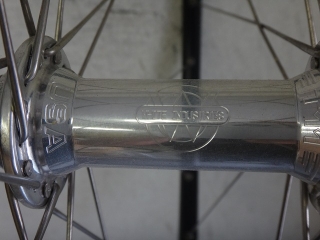
The T11 hub differs from the H2 hub in that
when you position the hub's adjustment mechanism on the left side, the logo doesn't appear upside down from above,
so from that perspective, Italian lacing is probably the right interpretation.
More than anything, since the rear wheel is Italian laced,
the front wheel should also be considered Italian laced.
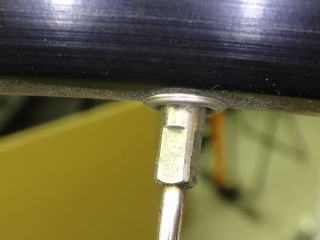
DT's Revolution comes with aluminum nipples, not brass ones.
But this front wheel was built with brass nipples.
I'm rebuilding it with Sapim CX-RAY spokes,
but since the spoke material density doesn't change, there's no weight savings from the spokes themselves.
The lacing pattern (and therefore spoke length) is the same too,
so we're talking about maybe a few grams heavier or lighter.
Switching to aluminum nipples saves about 22 grams.
What's different about CX-RAY is that due to work hardening,
the tension at which spoke slip occurs rises above the rim's limit,
which essentially means no ceiling—you can build a stiffer wheel than before.
And yet, the Revolution was tensioned so well that I was impressed.
However, it turned out the wheel as originally built at the Canadian shop was abnormally slack.
Even after they re-tensioned it once, the front wheel rubbed the brake,
so the customer increased the tension themselves.
There was some centering issue, but since the customer was the last to touch it, that's fine.
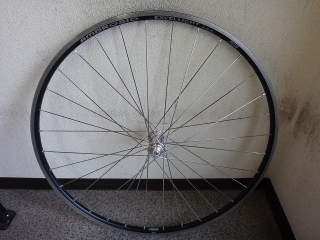
Built.
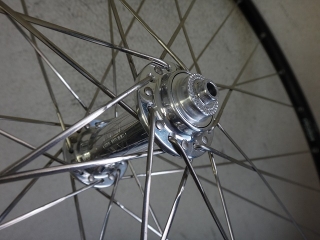
T11 hub, 32H, six-cross Italian lacing with CX-RAY spokes.
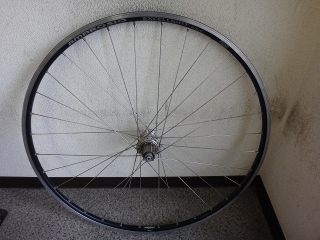
Next, the rear wheel. Hub is T11, 32H.
The rear wheel is laced fully four-cross Italian (not six-cross),
but the non-drive side is a bit wibbly-wobbly and slack.
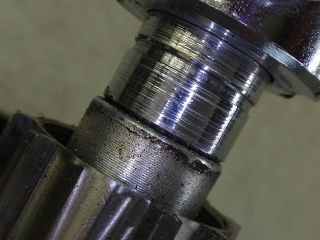
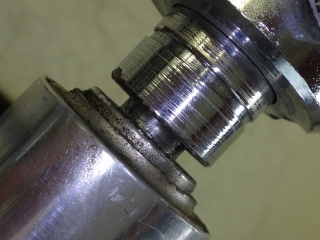
The centering was way off.
Since the customer didn't touch the rear wheel, this was from the start.
Given the direction of the misalignment, it seems someone tightened only the non-drive side
after the wheel was already centered.
If the drive side is at its tension limit, loosening the non-drive side is the only option.
It's actually not at the limit, but even if I could dial in center by tightening the drive side,
there's not much more I can do beyond that.
I've written this before, but despite being a high-low flange hub,
the T11 squanders its dimensional advantages with how tight the cup sits,
making it not much different from a regular hub—or arguably worse
(with larger left-right spoke tension imbalance).
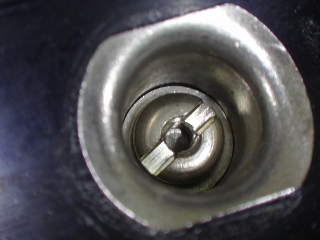
The drive-side spoke length is shorter.
On a non-high-low flange hub, with a same-spokes-both-sides lacing,
the left-right spoke length difference would be about 2mm,
so you might think "did they lazily use the same spoke length on both sides?"
But this hub has about 5mm difference even with same-spokes-both-sides,
so someone calculated each side individually to arrive at this result.
The non-drive side is "somewhat short but within appropriate range,"
so there doesn't seem to be any particular obsession with running slightly shorter spokes.

Built.
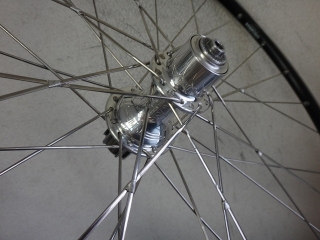
T11 hub, 32H, semi-four-cross 4-6 lacing with spoke-crossing.
With perfect centering and no spoke-crossing,
the customer confirmed the non-drive side has more tension than before the rebuild.
They also got to see how much it transforms after adding the spoke-crossings.
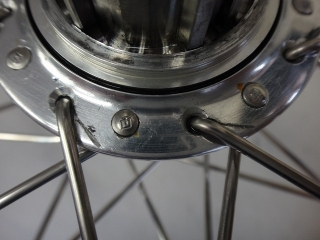
↑Drive-side flange exterior.
I'm threading inpoke spokes through the original inpoke holes,
but since the four-cross and six-cross paths are different, you can see the old inpoke marks.
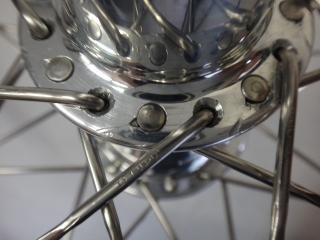
↑Non-drive-side flange exterior.
I'm threading inpoke spokes through the original outpoke holes,
so you can see the old inpoke marks in the hole next to each inpoke spoke.
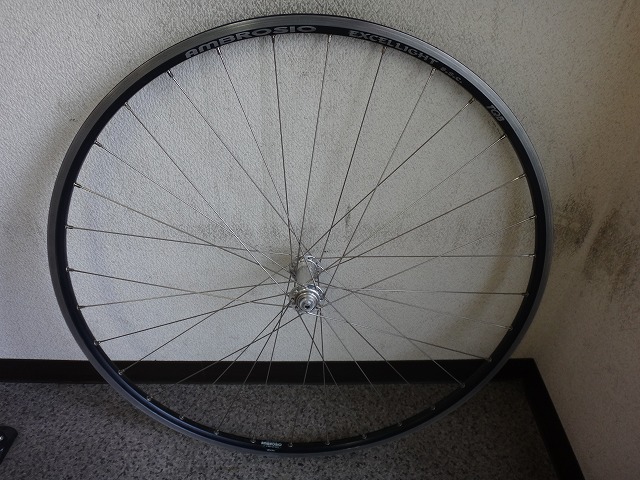
A customer brought in a wheel built with an Ambrosio Excellight rim and
a White Industries T11 hub.
The customer lives in Canada but comes to Japan for summer vacation,
and wanted to have this wheel rebuilt during that time.
Not only that, but they also wanted to watch the wheel being built,
so they came by today once the spokes had arrived.
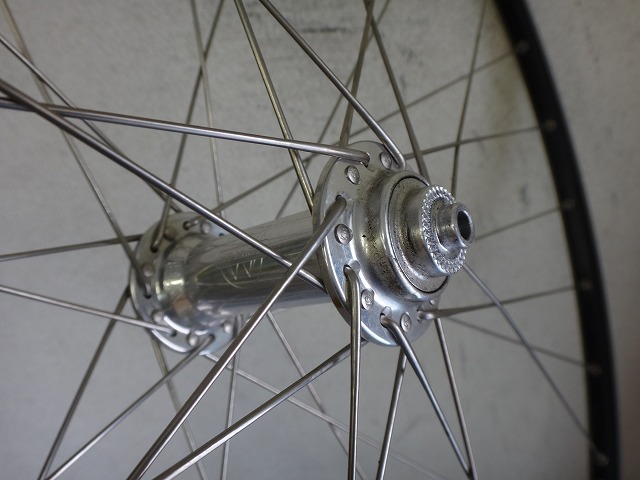
T11 hub, 32H, fully laced six-cross Italian or reverse Italian lacing.
It comes down to how you interpret this lacing pattern.
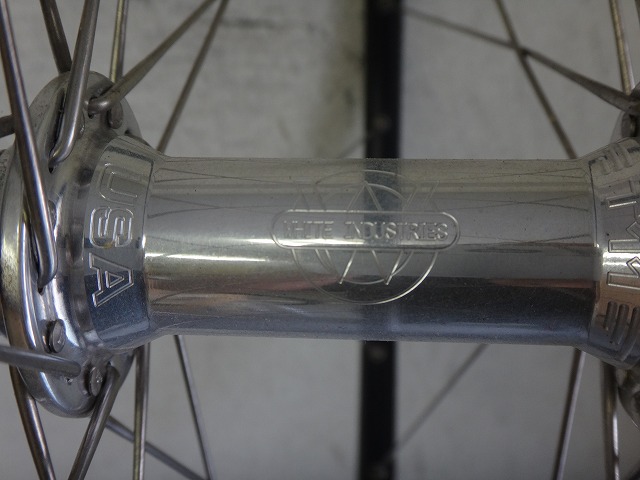
The T11 hub differs from the H2 hub in that
when you position the hub's adjustment mechanism on the left side, the logo doesn't appear upside down from above,
so from that perspective, Italian lacing is probably the right interpretation.
More than anything, since the rear wheel is Italian laced,
the front wheel should also be considered Italian laced.
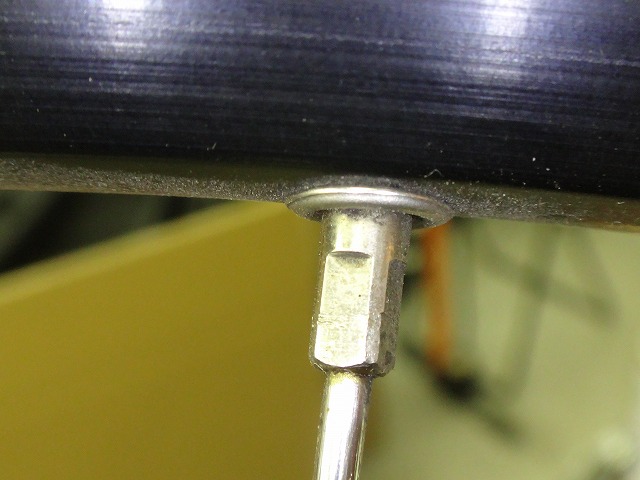
DT's Revolution comes with aluminum nipples, not brass ones.
But this front wheel was built with brass nipples.
I'm rebuilding it with Sapim CX-RAY spokes,
but since the spoke material density doesn't change, there's no weight savings from the spokes themselves.
The lacing pattern (and therefore spoke length) is the same too,
so we're talking about maybe a few grams heavier or lighter.
Switching to aluminum nipples saves about 22 grams.
What's different about CX-RAY is that due to work hardening,
the tension at which spoke slip occurs rises above the rim's limit,
which essentially means no ceiling—you can build a stiffer wheel than before.
And yet, the Revolution was tensioned so well that I was impressed.
However, it turned out the wheel as originally built at the Canadian shop was abnormally slack.
Even after they re-tensioned it once, the front wheel rubbed the brake,
so the customer increased the tension themselves.
There was some centering issue, but since the customer was the last to touch it, that's fine.
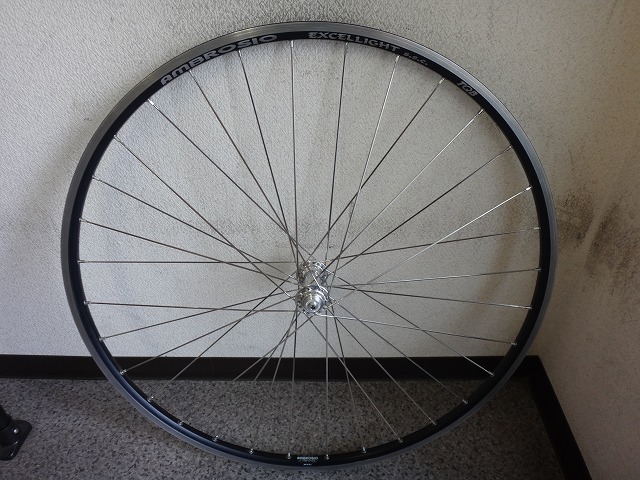
Built.
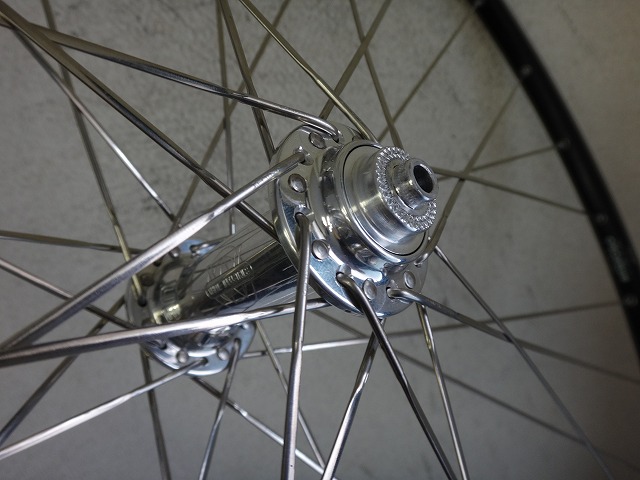
T11 hub, 32H, six-cross Italian lacing with CX-RAY spokes.
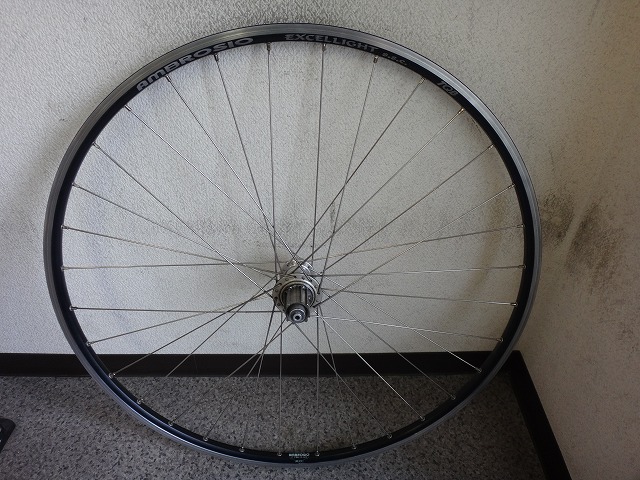
Next, the rear wheel. Hub is T11, 32H.
The rear wheel is laced fully four-cross Italian (not six-cross),
but the non-drive side is a bit wibbly-wobbly and slack.
The centering was way off.
Since the customer didn't touch the rear wheel, this was from the start.
Given the direction of the misalignment, it seems someone tightened only the non-drive side
after the wheel was already centered.
If the drive side is at its tension limit, loosening the non-drive side is the only option.
It's actually not at the limit, but even if I could dial in center by tightening the drive side,
there's not much more I can do beyond that.
I've written this before, but despite being a high-low flange hub,
the T11 squanders its dimensional advantages with how tight the cup sits,
making it not much different from a regular hub—or arguably worse
(with larger left-right spoke tension imbalance).
The drive-side spoke length is shorter.
On a non-high-low flange hub, with a same-spokes-both-sides lacing,
the left-right spoke length difference would be about 2mm,
so you might think "did they lazily use the same spoke length on both sides?"
But this hub has about 5mm difference even with same-spokes-both-sides,
so someone calculated each side individually to arrive at this result.
The non-drive side is "somewhat short but within appropriate range,"
so there doesn't seem to be any particular obsession with running slightly shorter spokes.
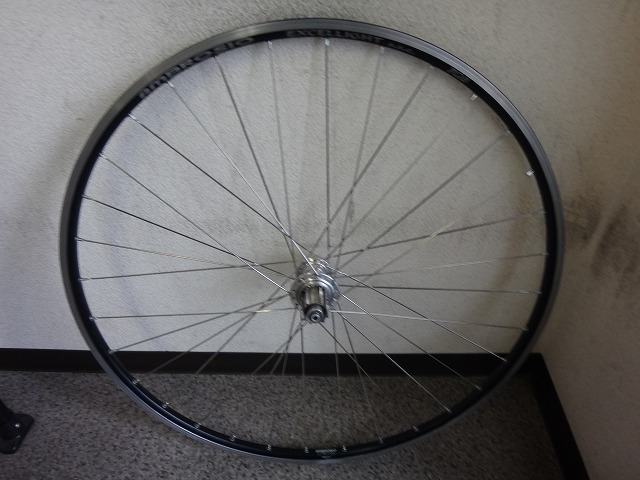
Built.

T11 hub, 32H, semi-four-cross 4-6 lacing with spoke-crossing.
With perfect centering and no spoke-crossing,
the customer confirmed the non-drive side has more tension than before the rebuild.
They also got to see how much it transforms after adding the spoke-crossings.
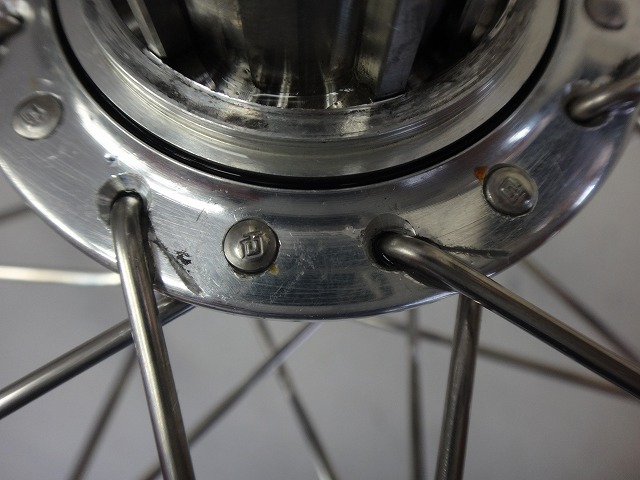
↑Drive-side flange exterior.
I'm threading inpoke spokes through the original inpoke holes,
but since the four-cross and six-cross paths are different, you can see the old inpoke marks.
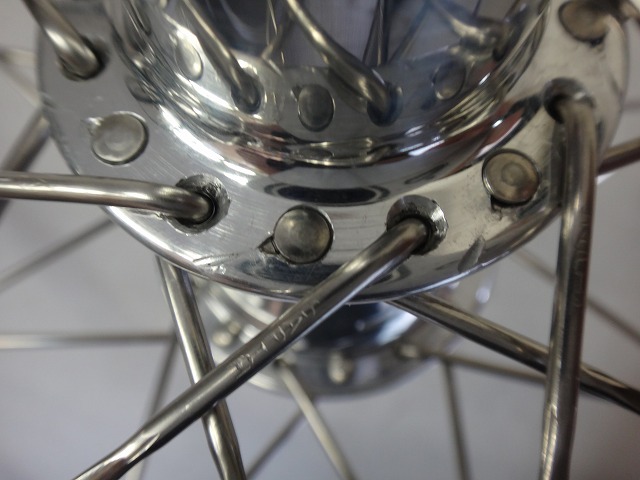
↑Non-drive-side flange exterior.
I'm threading inpoke spokes through the original outpoke holes,
so you can see the old inpoke marks in the hole next to each inpoke spoke.