Another day with wheels (and so on).

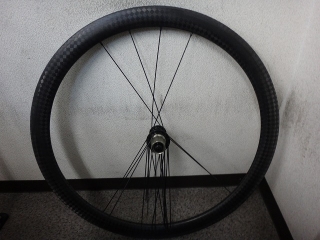
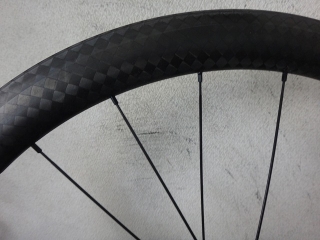
A customer brought me a rear wheel with a carbon WO rim that has a cosmetic carbon outer layer that looks like a Kolima (Kolima).
It's a Mechanieco rim, apparently.
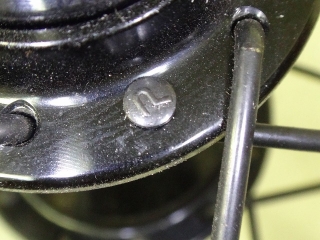
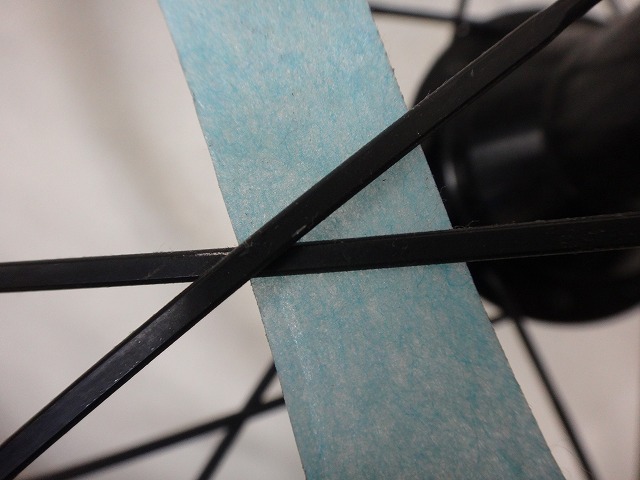
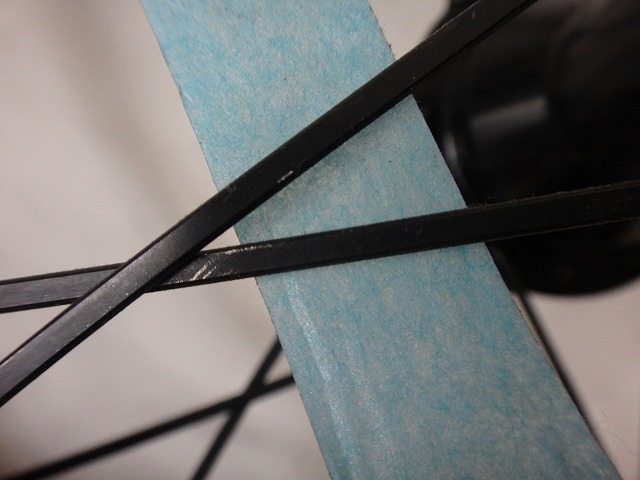
24H hub, four-cross Italian lacing,
built with Pillar square aerospokes.
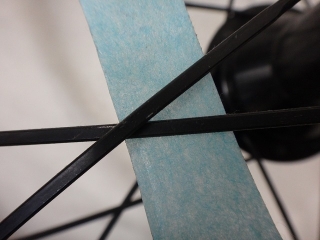
The non-drive side was
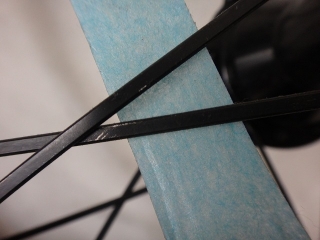
loose, apparently.
Actually, compared to hand-built wheels that are much looser, or even worse wheel-like contraptions,
it's not abnormally loose.
According to the customer, compared to a rear wheel I built in the past (itself a rebuild of someone else's hand-built wheel),
it's still looser. Is that so? Fufufufu (V)0¥0(V) ← Baltans
I was taking notes on the rebuild with a black half-Campagnolo,
and these Pillar square aerospokes
can be used as a partner to the CX-RAY's left-right differential lacing.
So I thought, if we just change the non-drive side from Pillar's 4-cross lacing to
CX-RAY's 6-cross lacing...
Separately today, I was truing a rear wheel built with a Mechanieco red hub, black CX-RAY, and red nipples
in 24H four-zero lacing,
and the looseness in the nipples of the non-drive side radial lacing was
the main cause of the lateral runout. Radial lacing tends to loosen more easily than tangent lacing.
But that aside, there was a center offset on the side that doesn't come from long-term use,
and when I checked the tightening allowance for the nipples to correct it,
the spoke length was flush with the nipple slot.
By my standards it's short, but it's not a deal-breaker.
I've seen complete wheels made with similar lengths.
Starting from the valve hole and going counterclockwise as viewed from the drive side, I carefully disassembled the wheel,
leaving the last 4 spokes completely without loosening any nipples.
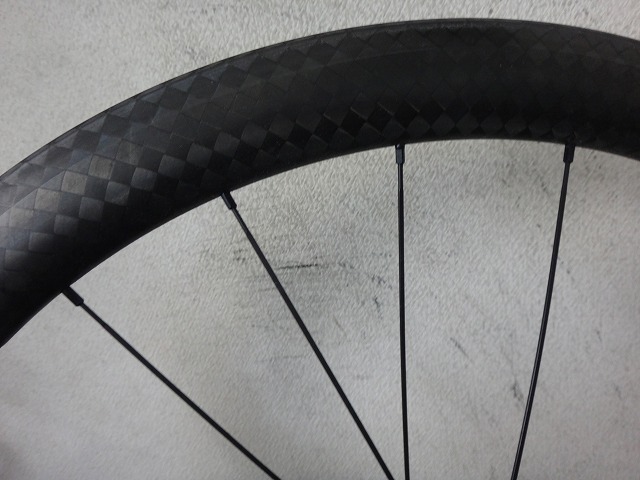
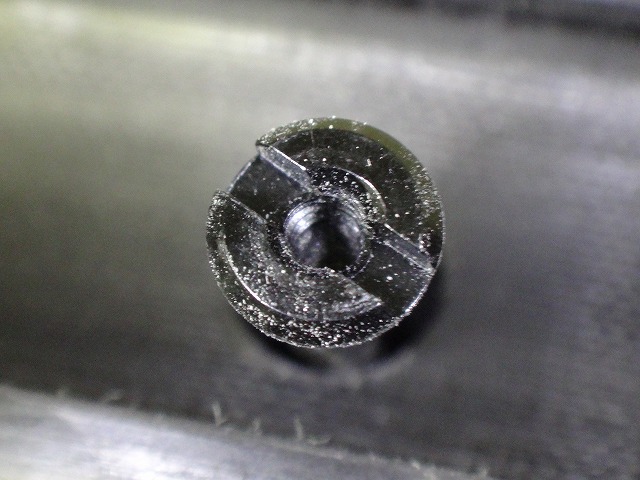
The nipple threads inside the rim are visible to the eye, but I can't photograph them well.
From the left side of this bundle, I'll pull the spokes out of the rim and photograph the thread condition.

↑Non-drive side

↑Drive side

↑Non-drive side
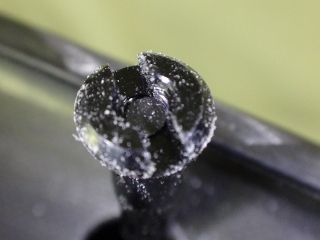
↑Drive side
The drive side is about flush with the slot, but the non-drive side is clearly short.
With a hub having equal-diameter flanges and equal-number lacing on both sides,
the left-right spoke length difference comes to around 2mm.
So when only the non-drive side is short, we can often say with near certainty "they used the same spoke length and cut corners,"
but this rear hub has quite prominent high-low flanges, so
the non-drive side spokes are actually longer, meaning they didn't cut corners.
They simply calculated wrong.
So I thought,
"If we cut the non-drive side spokes and use them on the drive side,
we could rebuild with the nipple end face flush,"
but that would mean using up all these Pillar spokes we can't get here at the shop.
In any case, the drive side already reaches the slot in its current state,
and the tension was a little short of maximum, so
if we rebuild it, the threads won't reach the nipple end face, but
we'll advance the threads further than the original state.
In a matter of weighing pros and cons,
considering maintenance as part of performance, and looking at major and minor factors,
I thought the best approach would be
"reuse the drive-side spokes and return the non-drive side spokes to the customer as a spare for the drive side."
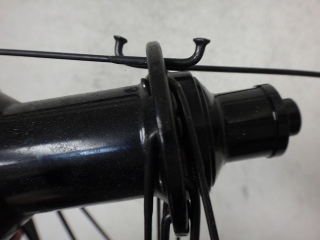
So I removed the spokes from the non-drive side only.
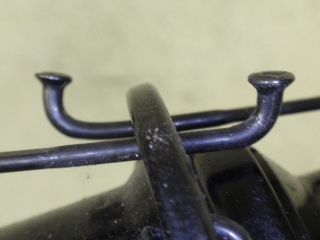
↑The left side of the image shows an inpoke neck, the right side an outpoke neck.

I washed the hub without removing any of the drive-side spokes.
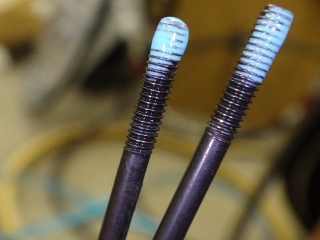
You can apply threadlocker even without having the spokes as individual pieces.
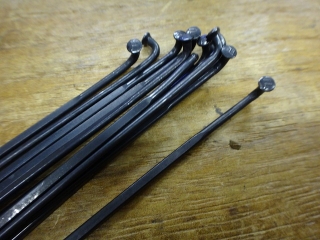
I also washed the 12 spokes from the former non-drive side.
Without even consciously separating them into 6 each
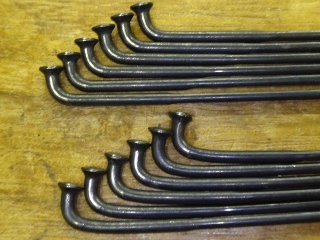
distinguishing the former inpokes from the former outpokes is easy.
The bundle in the upper part of the image is the outpokes.
Even when using them as spares, it's better to match this distinction if possible.
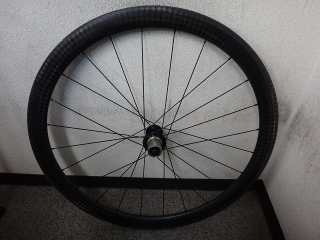
It's built.
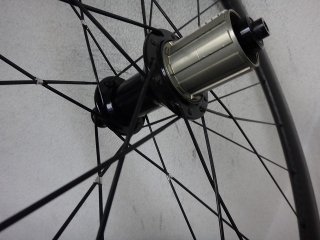
24H hub, black Pillar square aero / black CX-RAY, four-six lacing with cross-connections.
The non-drive side spoke length was determined not by calculating from rim inner diameter or hub dimensions,
but from experience-based length differences.
For example, the length difference between 24H radial lacing and 4-cross lacing
is about 10mm, as long as the hub dimensions aren't extreme.
In this case, I took the length difference between 4-cross and 6-cross lacing,
and the correction value for extending the clearly short spokes to the end face rather than the slot,
and added that to the original length to determine the spoke length.
As a result, after rebuilding, the drive side is between the slot and end face,
and the non-drive side is end face to flush.
If I had skipped the image-taking process steps,
loosened the drive side evenly from the original state to where about 3 thread pitches showed,
applied threadlocker to the threads,
and carefully disassembled only the non-drive side spokes,
I could have rebuilt it more easily.
But that would make it a "rim relocation" job, and this wheel build couldn't stay in the
"another day with wheels (and so on)" frame,
so I completely disassembled it.
(Although I didn't remove the drive-side spokes from the hub,
as long as the hub and rim connection is separated, that's fine.)
One more thing: the original 14mm black aluminum nipples didn't sit right with me,
so I switched to DT's 12mm black aluminum nipples.
If I replaced them one at a time going clockwise,
it would become the same as a "rim relocation" job, so I went with the complete disassembly approach.
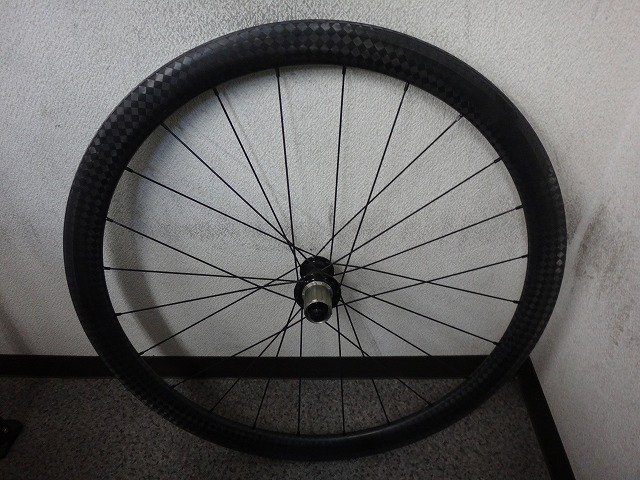
A customer brought me a rear wheel with a carbon WO rim that has a cosmetic carbon outer layer that looks like a Kolima (Kolima).
It's a Mechanieco rim, apparently.
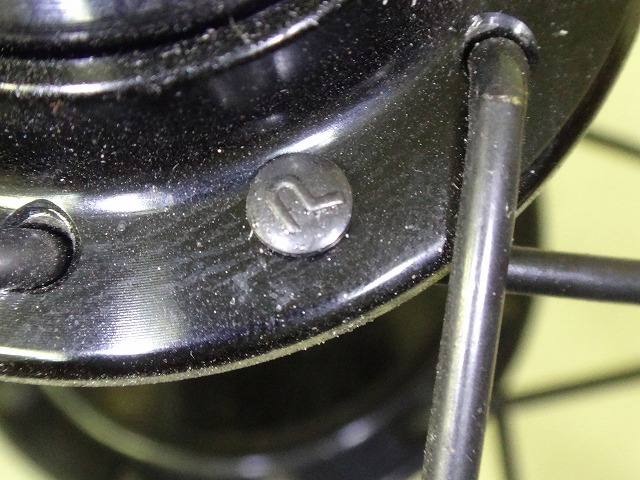
24H hub, four-cross Italian lacing,
built with Pillar square aerospokes.
The non-drive side was
loose, apparently.
Actually, compared to hand-built wheels that are much looser, or even worse wheel-like contraptions,
it's not abnormally loose.
According to the customer, compared to a rear wheel I built in the past (itself a rebuild of someone else's hand-built wheel),
it's still looser. Is that so? Fufufufu (V)0¥0(V) ← Baltans

I was taking notes on the rebuild with a black half-Campagnolo,
and these Pillar square aerospokes
can be used as a partner to the CX-RAY's left-right differential lacing.
So I thought, if we just change the non-drive side from Pillar's 4-cross lacing to
CX-RAY's 6-cross lacing...
Separately today, I was truing a rear wheel built with a Mechanieco red hub, black CX-RAY, and red nipples
in 24H four-zero lacing,
and the looseness in the nipples of the non-drive side radial lacing was
the main cause of the lateral runout. Radial lacing tends to loosen more easily than tangent lacing.
But that aside, there was a center offset on the side that doesn't come from long-term use,
and when I checked the tightening allowance for the nipples to correct it,
the spoke length was flush with the nipple slot.
By my standards it's short, but it's not a deal-breaker.
I've seen complete wheels made with similar lengths.

Starting from the valve hole and going counterclockwise as viewed from the drive side, I carefully disassembled the wheel,
leaving the last 4 spokes completely without loosening any nipples.
The nipple threads inside the rim are visible to the eye, but I can't photograph them well.
From the left side of this bundle, I'll pull the spokes out of the rim and photograph the thread condition.
↑Non-drive side

↑Drive side
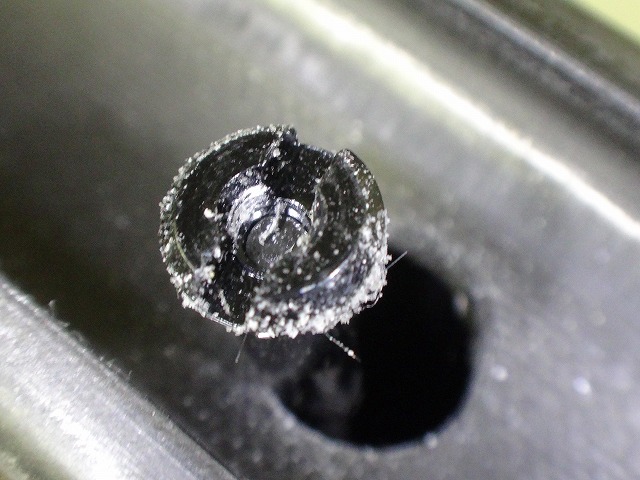
↑Non-drive side
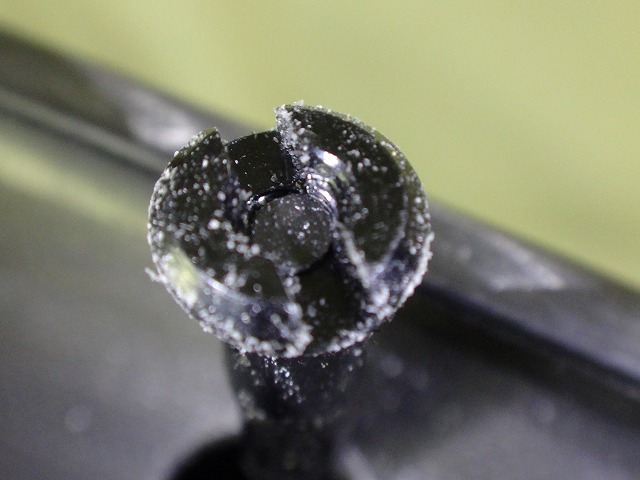
↑Drive side
The drive side is about flush with the slot, but the non-drive side is clearly short.
With a hub having equal-diameter flanges and equal-number lacing on both sides,
the left-right spoke length difference comes to around 2mm.
So when only the non-drive side is short, we can often say with near certainty "they used the same spoke length and cut corners,"
but this rear hub has quite prominent high-low flanges, so
the non-drive side spokes are actually longer, meaning they didn't cut corners.
They simply calculated wrong.
So I thought,
"If we cut the non-drive side spokes and use them on the drive side,
we could rebuild with the nipple end face flush,"
but that would mean using up all these Pillar spokes we can't get here at the shop.
In any case, the drive side already reaches the slot in its current state,
and the tension was a little short of maximum, so
if we rebuild it, the threads won't reach the nipple end face, but
we'll advance the threads further than the original state.
In a matter of weighing pros and cons,
considering maintenance as part of performance, and looking at major and minor factors,
I thought the best approach would be
"reuse the drive-side spokes and return the non-drive side spokes to the customer as a spare for the drive side."

So I removed the spokes from the non-drive side only.

↑The left side of the image shows an inpoke neck, the right side an outpoke neck.
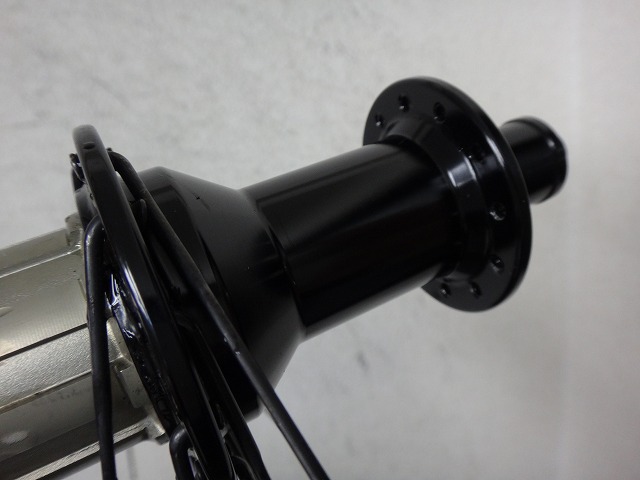
I washed the hub without removing any of the drive-side spokes.
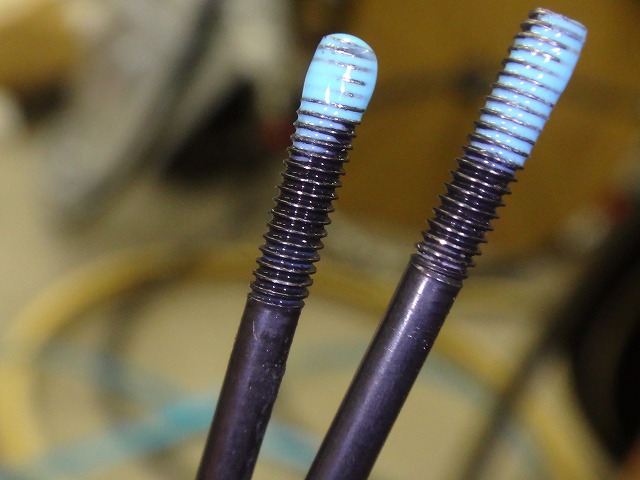
You can apply threadlocker even without having the spokes as individual pieces.
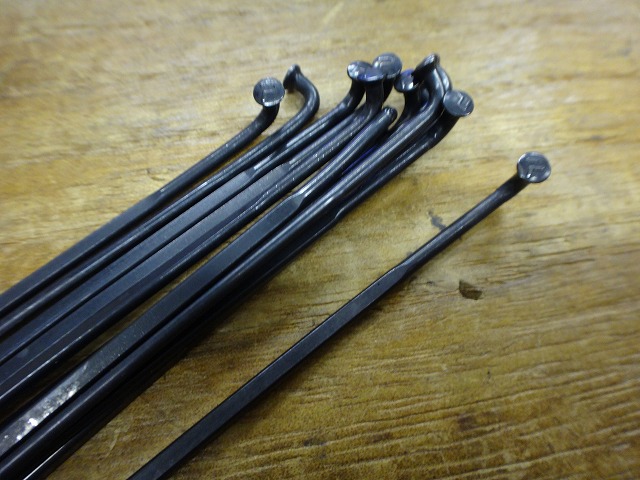
I also washed the 12 spokes from the former non-drive side.
Without even consciously separating them into 6 each
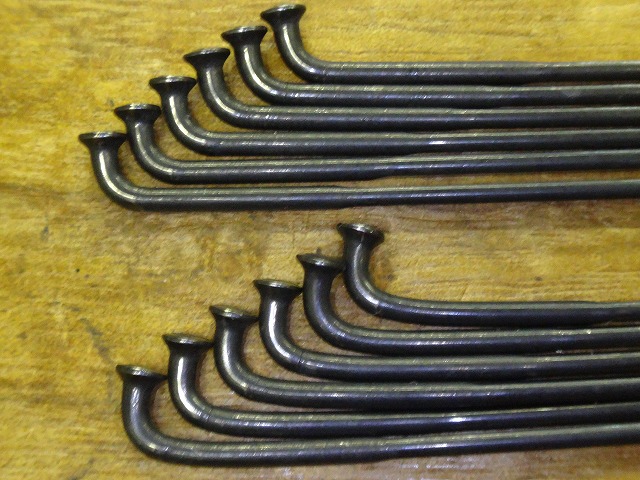
distinguishing the former inpokes from the former outpokes is easy.
The bundle in the upper part of the image is the outpokes.
Even when using them as spares, it's better to match this distinction if possible.
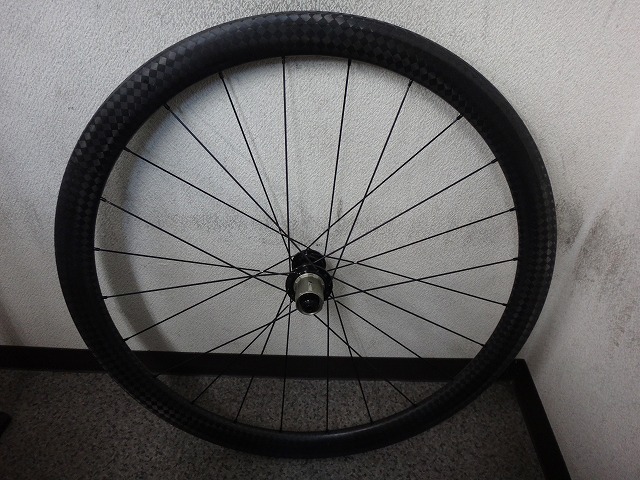
It's built.

24H hub, black Pillar square aero / black CX-RAY, four-six lacing with cross-connections.
The non-drive side spoke length was determined not by calculating from rim inner diameter or hub dimensions,
but from experience-based length differences.
For example, the length difference between 24H radial lacing and 4-cross lacing
is about 10mm, as long as the hub dimensions aren't extreme.
In this case, I took the length difference between 4-cross and 6-cross lacing,
and the correction value for extending the clearly short spokes to the end face rather than the slot,
and added that to the original length to determine the spoke length.
As a result, after rebuilding, the drive side is between the slot and end face,
and the non-drive side is end face to flush.
If I had skipped the image-taking process steps,
loosened the drive side evenly from the original state to where about 3 thread pitches showed,
applied threadlocker to the threads,
and carefully disassembled only the non-drive side spokes,
I could have rebuilt it more easily.
But that would make it a "rim relocation" job, and this wheel build couldn't stay in the
"another day with wheels (and so on)" frame,
so I completely disassembled it.
(Although I didn't remove the drive-side spokes from the hub,
as long as the hub and rim connection is separated, that's fine.)
One more thing: the original 14mm black aluminum nipples didn't sit right with me,
so I switched to DT's 12mm black aluminum nipples.
If I replaced them one at a time going clockwise,
it would become the same as a "rim relocation" job, so I went with the complete disassembly approach.
Products Mentioned in This Article
* Amazon affiliate links — prices may vary
Original Japanese post: のむラボ日記 #4221