Before I get to the main story.
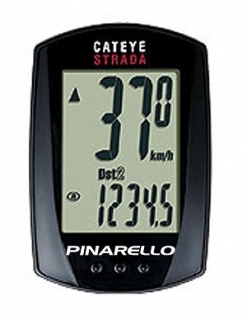
I really liked the CC-RD100 (wired, no cadence), the first model in CatEye's "Strada" series,
but the click-tech mechanism adopted after this model—where the buttons are on the underside instead of the top and the device itself moves to click them—has a problem.
With regular use, the body gets wobbly relative to the mount.
With my usage frequency, it doesn't last two years.
To put it another way, about three battery lifespans.
Even if you replace the mount-side parts, the grooves that are actually worn are on the device body itself,
so it doesn't solve the problem. And this issue remains unresolved to this day.
The CC-RD200, the wired version with cadence of this same line, is still going strong for some reason,
but the CC-RD300W (wireless, no cadence) and CC-RD400DW (dual wireless, with cadence) are discontinued.
The 300 and 400 are models from around 2008.
This is just speculation, but when a high-brightness LED front light and wireless cycle computer are positioned too close,
the cycle computer's reception gets blocked and speed information and such disappear.
Maybe the 300 and 400's radio method was especially prone to this, so they discontinued them quickly.
The fact that the CC-RD200—the wired model that came before them—is still around seems to support this theory.
If CatEye only made lights or only made cycle computers, they could've brushed it off,
but their own products were fighting each other, which was probably bad for business.
I liked the RD100 because it worked fine even when used alongside heart rate monitors, which were unstable on almost every brand back then.
By the time the RD100 was discontinued, simple single-function wired cycle computers from other makers too were becoming an endangered species.
That's when I happened to notice the cycle computer in the image above.
It's literally a CC-RD100 model, but it came out as a Pinarello accessory,
and even years after the RD100 was discontinued, you could still get it
(though it's impossible to find now).
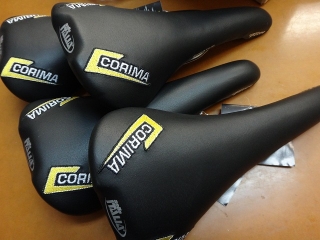
I got in some Colima saddles.
Looking at the catalog images, the base model is Selle Italia's Flite,
with Colima's logo embroidered on it.
I'd been wondering about it for a while, and I thought,
"Wait, could this actually be a Flite?" So I decided to order some.
I know this sounds weird, but the Flite in the line above refers to the Flite in the broad sense, and the Flite refers to the narrow sense.
Since I wasn't sure if it was truly a Flite, I started cautiously with just one.
Once I confirmed it was a Flite, I went bold and ordered plenty more.
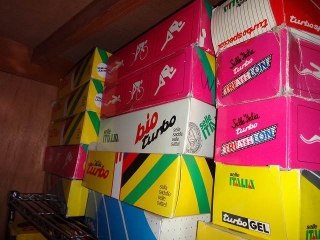
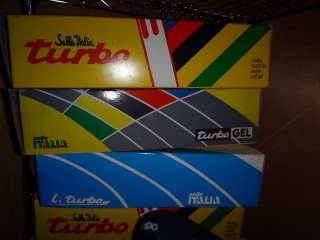
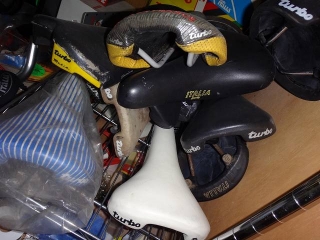
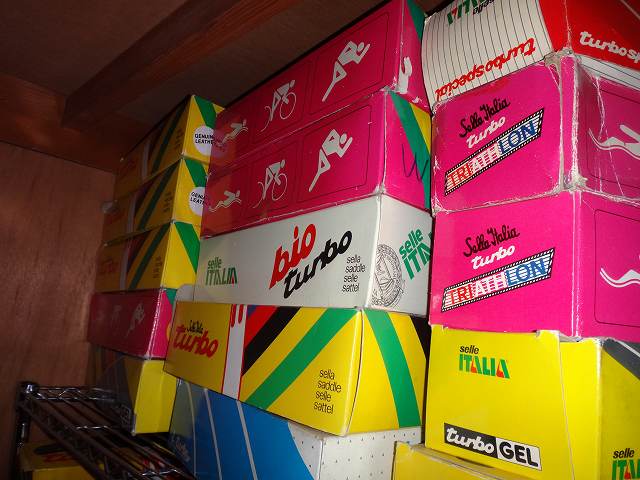
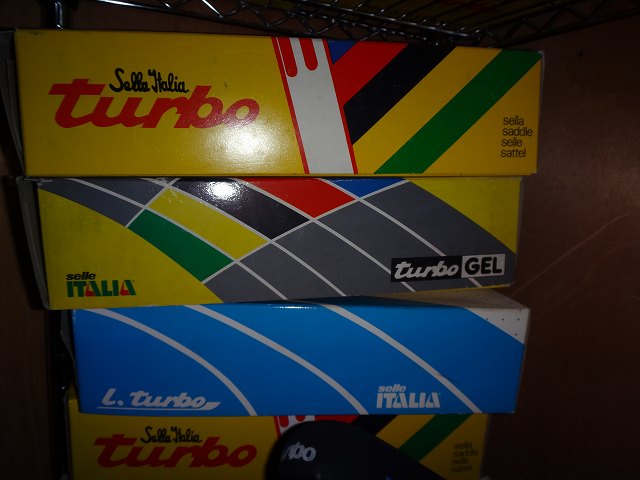
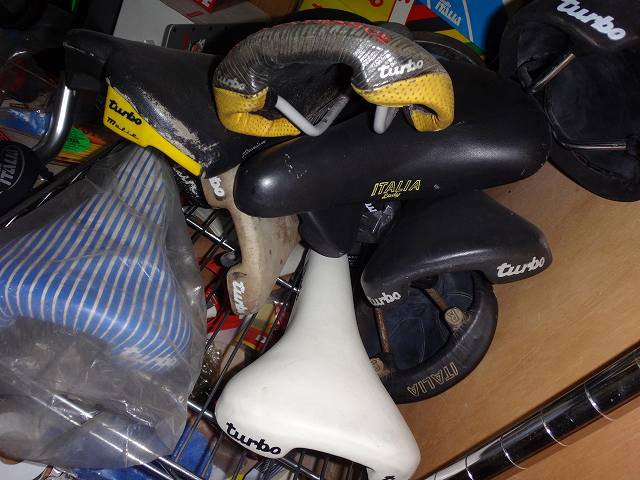
Now, shifting gears—I'm a collector of Selle Italia Turbos,
and I said way back early in this blog that I'd write about it eventually,
but I still haven't.
I have regular Turbos, striped Bie Turbos, squishy gel Turbo Gels,
Turbo Specials with metal like San Marco Rolls on the front and rear,
Turbo Triathlons with a center groove, Lady Turbos with a wider rear,
Lady Turbo Specials (Turbo Special construction but wider rear),
Turbo Juniors for younger riders with short front and rear, aluminum-rail Turbo SLG (Super Leggera),
manganese-rail Pro Team Turbos, and so on.
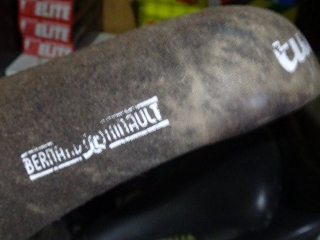
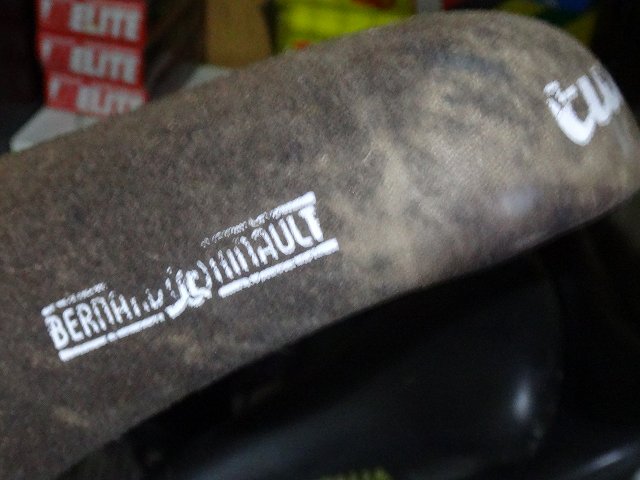
↑This is an Inoue Turbo with Bernard Inoue's name on the nose,
and I also have a regular Turbo Inoue, but this one is a Turbo Junior Inoue.
Back in the day, it was on my mentor's bike, and I begged him relentlessly—stole it... got him to give it to me.
The drawing between Bernard and Inoue is a badger.
Inoue's nickname was "The Badger of Brittany."
But actually, Inoue mostly used Selle SanMarco Rolls at the time.
As examples of signature models a manufacturer prepared for riders that didn't actually get used,
there's Mario Cipollini's lion-embroidered Selle Italia Century
(he only used Selle SanMarco Regals)
and Eddy Merckx's 3T handlebar named "Merckx"
(he mainly used Cinelli Number 64).
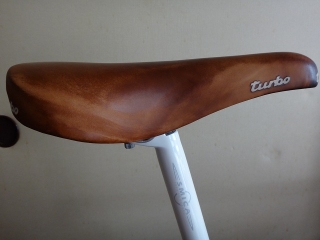
The Turbo has a reissue model called "Turbo 1980," and the one in the image above is my personal one with brown nubuck that's aged nicely.
The Turbo 1980 is so expertly reissued that even I—a Turbo expert (not an official certification)—have a hard time judging from the side view whether it's a reissue or not.
Well, the vast majority of Turbos you see these days are Turbo 1980s unless they're clearly on a vintage bike.
The Flite saddle has gone through major shape changes that make it a different product, which counts as three generations now.
The second generation has a hole in the nose with a plastic "Flite" nameplate insert.
I personally think that if a saddle changes this drastically, the brand shouldn't keep the same model name.
I've never tried the third generation, but when I used the second-gen Flite,
I thought, "This isn't a Flite at all."
That's not to say the second-gen Flite is a bad saddle.
I just wanted it to carry forward most of what the original Flite represented.
Among Selle Italia saddles, maybe only the SLR maintains that philosophy without bending too much.
The second-gen Flite is discontinued, but the original Flite, like the Turbo, has a reissue called Flite 1990.
But unlike Turbo 1980, Flite 1990 is hard to call a worthy recreation of the original—it's kind of awkward.
So I decided to write an article about it and asked friend A,
"You had a bike with a Flite 1990 on it, right? Bring it by,"
and he came right over. But...
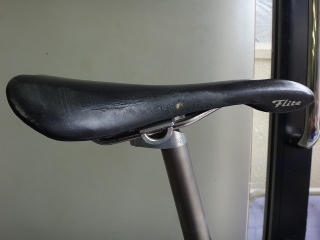
Hey! This isn't a Flite 1990—this is an original Flite!
That's no good for an article! (Though it is, actually.)
Friend A definitely has a Flite 1990 too.
Since the original Flite became unavailable,
I remember him reluctantly buying it as a substitute, thinking it might not be adequate.
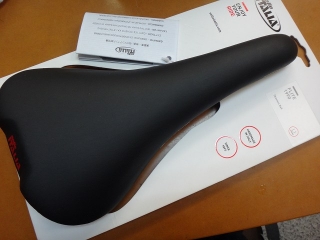
So,

I ordered some for the article.
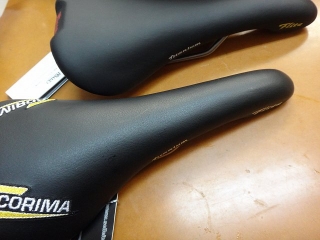
Can you spot the difference?
↑This is a Colima Flite.
The Flite was groundbreakingly thin for its time,
and switching to one from a traditional saddle let you get 2–3 cm more seatpost setback.
Back then, only horizontal frames existed, so lots of people cared about how minimal seatpost exposure looked.
To maximize seatpost extension, you need not just a thin base but also
a shape that doesn't "lift" the rails.
The original Flite has the base and rails very close together,
thinner than most saddles you see today.
The cushioning (padding) on the base is thick, so it's slightly thicker than a carbon-fiber-like spatula saddle, but still.
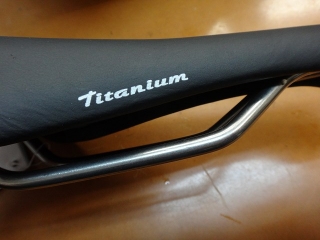
With Flite 1990, they've switched to raised rails.
I understand this was unavoidable.
The original Flite's base and rails are so close
that if the seatpost clamp assembly's parts above the rails are thick,
they interfere right away.
They probably switched to raised rails to avoid that,
but, well, calling it an "original Flite reissue" feels like a stretch.
To be clear, Flite 1990 isn't a bad saddle.
Some people have found Flite 1990 to be the most comfortable saddle they've ever used.
That's separate from the point that treating Flite 1990 as identical to the original Flite is unreasonable.

Thinking it might be useful for the article, friend A also brought a Pinarello-embroidered Flite, so
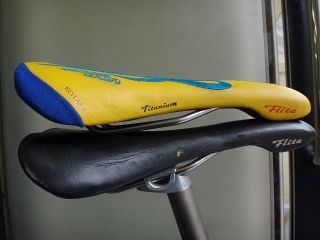
I stacked them for comparison.
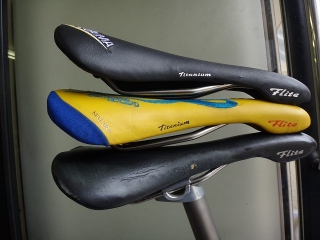
I stacked the Colima saddle too.
By the way, one Colima saddle sold to friend A as a replacement for the worn-out Flite at the bottom.
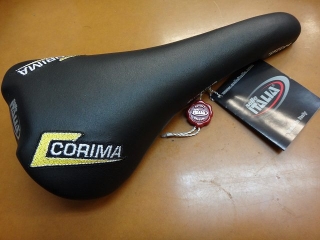
↑Jumping back in the timeline here,
this is the very first Colima saddle I cautiously ordered, thinking,
"Could this actually be an original Flite?"

With Colima embroidery.
Honestly, I would've preferred a printed logo.
When there's embroidery on the seat area, cycling shorts wear out faster.
The Selle SMP embroidered-version period was especially bad for this.
If you've used one, you know the cycling shorts don't just get fuzzy—the damage goes right through to your skin.
Hold on—don't say the embroidery is a waste!
It's because of this embroidery that brand-new original Flites are available in 2018!
Exactly. This is the same flow I wanted to mention—just like the CC-RD100 was obtainable years after discontinuation because it was a Pinarello accessory,
the original Flite can be found now thanks to this embroidery.
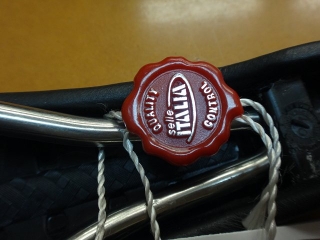
That wax-seal-looking thing tied to the rails brings back memories.

The Marco Pantani model Flite shown here has the later embroidery style.
My first Flite was a Pantani embroidery, early style.
That was around 1996.
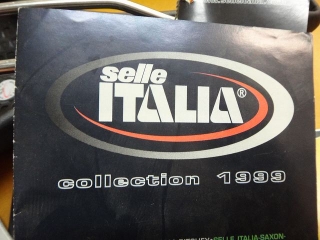
The included mini-catalog says 1999, but this Colima saddle is from 2001 (more on that later).
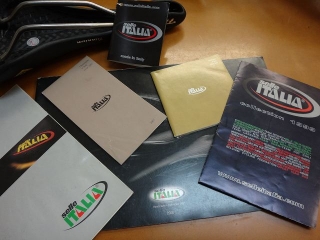
I found a 1999 full-size catalog.

Wow! (Sorry, just getting excited on my own.)
The original Pantani Flite is owned by—from left to right—Fausto Coppi, Eddy Merckx, Francesco Moser,
Miguel Indurain, and Marco Pantani. Quite the roster.
By the way, the first saddle to ever get the Pantani embroidery wasn't a Flite.
It was a model called Sintesi TCS.
If you're interested, search "SINTESI TCS PANTANI."
I should have one too, but I can't find it.
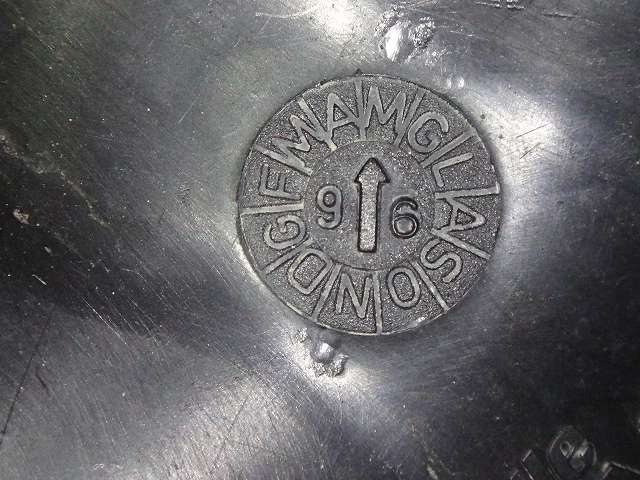
Anyway, Selle Italia saddles can have their manufacturing date pinned down.
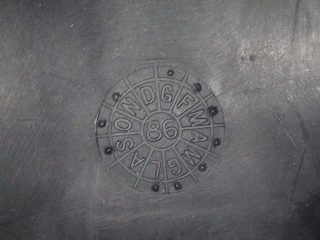
This is that Inoue Turbo Junior from earlier.
The number in the center is the manufacturing year, and the letters around it represent the month.
It has nothing particularly to do with the Sanctuary hourglasses from Saint Seiya.
In the order G·F·M·A·M·G·L·A·S·O·N·D, these are the first letters of the months 1–12 in Italian,
but since months 2, 3, 4, 5, 8, 9, 10, 11, and 12 match English month initials,
you can figure it out pretty easily.
A missing dot for a month means either the manufacturing month
or—if dots are missing starting from G through, say, A—it's April,
but for some reason this 1986 model is only missing August and December dots.
That's pretty sloppy!
Maybe in 1986 they concentrated Turbo production only in August and December.
By the way, pre-1985 models sometimes lack this date mark entirely.
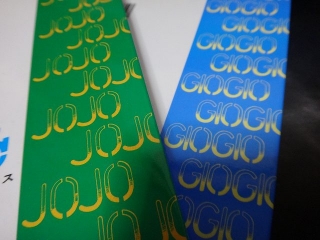
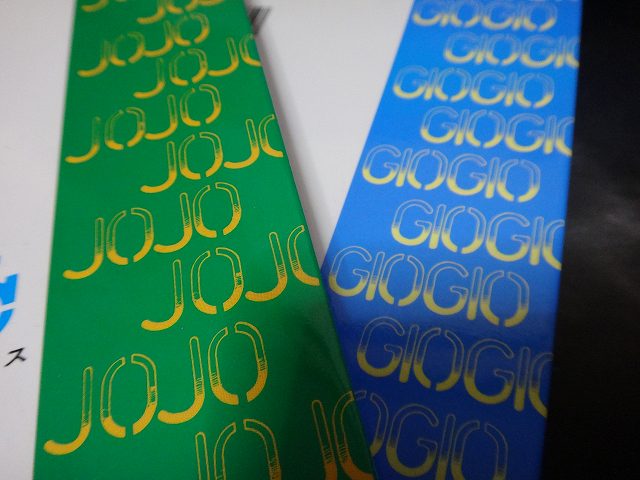
January, June, and July start with G because Italian has no J.
It's used in foreign words like Jeep, judo, and jazz, but.
So JoJo's Bizarre Adventure Part 5, set in Italy, is GIOGIOS, not JOJO.
Though honestly, nobody calls Giorno "JoJo" anyway,
and that's not unique to Part 5, so let's not worry about it.
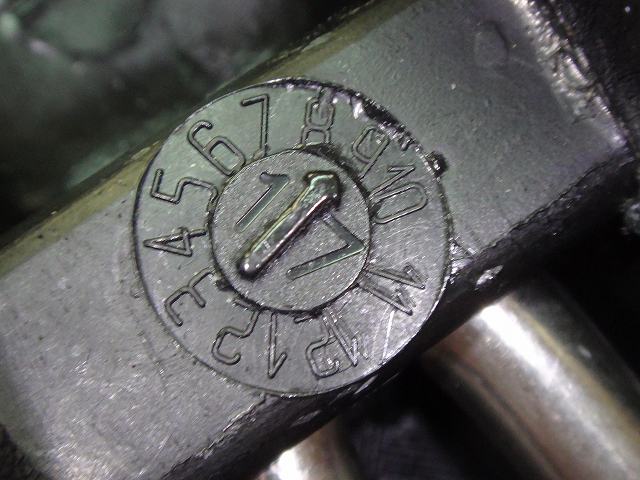
The date marking system on current models has changed to
"an arrow pointing across the year indicates the manufacturing month,"
but
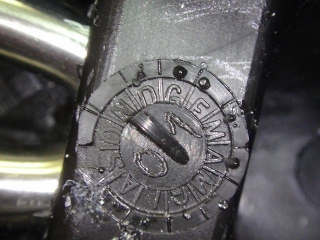
this Colima Flite has both the dot system and arrow marked together.
It looks like November 2001, but in any case, 2001 is certain.
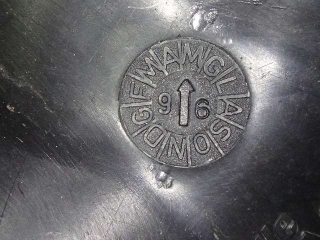
Friend A's black Flite was May 1996.
Why the 2001 model lacks the dot marks that the 1996 model has is unclear.

The Flite 1990 in the article is September 2017.
Also, the months are now in Arabic numerals.
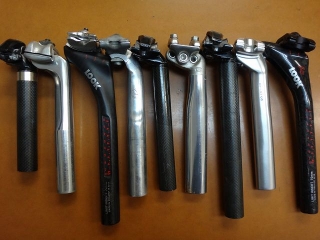
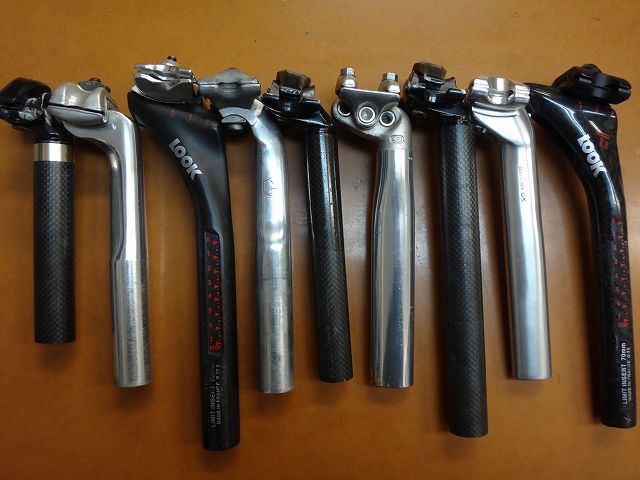
I laid out the seatposts from one of our drawers.
From left: Sugino 75, 3T Criterium Aero, LOOK Ergopost,
Campagnolo C Record Aero, Sugino 75, Sugino Aero Mighty,
Sugino 75, Dura-Ace AX, and LOOK Ergopost.
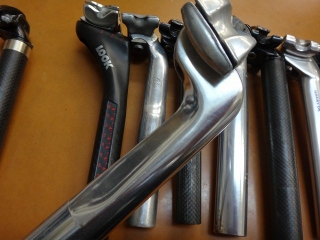
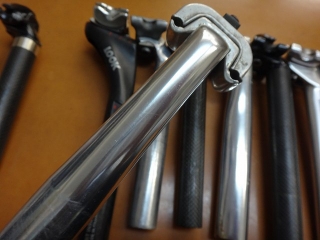
The 3T Criterium seatpost has a round cross-section with a groove,
but the Aero has no groove, with the front half round
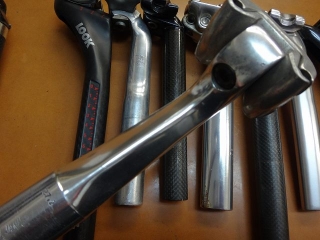
and the rear half aero-shaped,
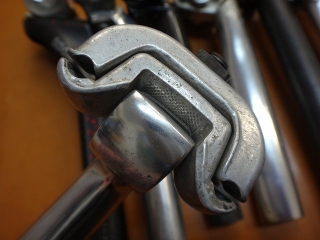
and the clamp is the same as the Criterium.
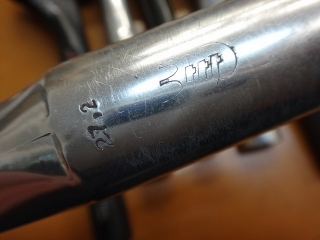
↑This is an old 3T logo. There are even older generations too.
27.2mm diameter is rare for the era, but it exists because
Columbus SLX seat tubes are 27.2mm ID.
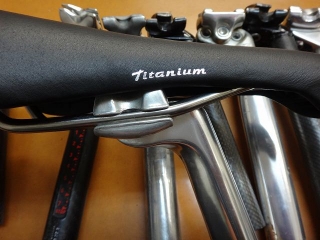
With the thick clamp at the top, I installed it at full extension.
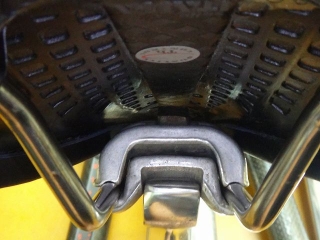
Close, but not quite—the nut above the clamp is actually touching the saddle base.
This is why the original Flite is picky about seatposts, and why
Flite 1990 got nervous and switched to raised rails.
Even in close situations, flex causes contact.
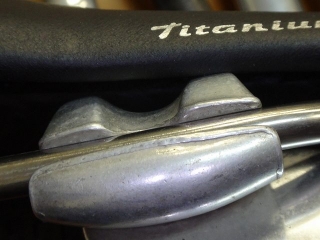
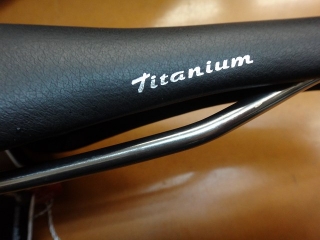
Also, the back side of the "Titanium" marking contacts the clamp, and
this area of leather alone gets a squared-off indentation mark from habit—
a common sight on original Flites.

Campagnolo's MTB component—a Euclid seatpost.

My LOOK seatpost is 25.0mm diameter, and
the fact that Euclid has a 25mm seatpost makes me wonder if
TVT made MTBs back then.
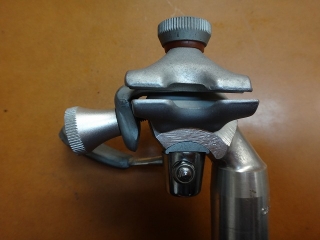
You can adjust saddle fore/aft while the quick-release is loose, and
adjust angle with the rear dial.
Of course, this thing won't bolt to an original Flite.
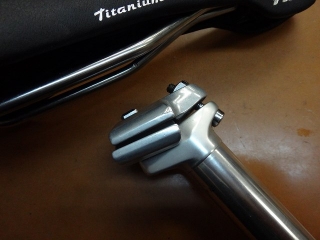
For 25mm seatpost candidates, a Suntour Superbe (not Superbe Pro) also came up.
That earlier image's Sugino 75 and LOOK Ergopost also come in both 27.2mm and 25mm diameters.
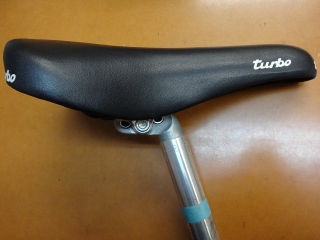
This is a seatpost with a Turbo 1980 attached, for use when I know I'm doing long distance the next day.
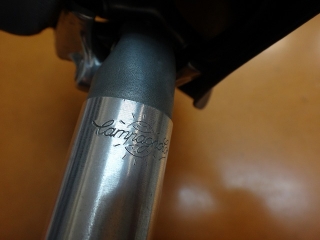
A Campagnolo two-bolt frosted clamp earth-mark seatpost,
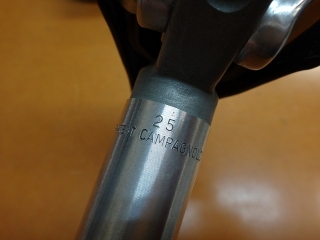
and the 25mm diameter likely came from TVT use.
Well, LOOK is a successor to TVT, so matching frame construction is natural.
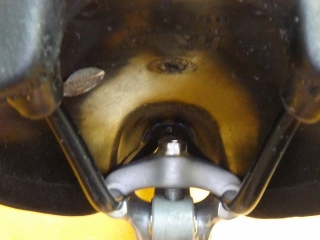
The clamp and base are quite far apart.
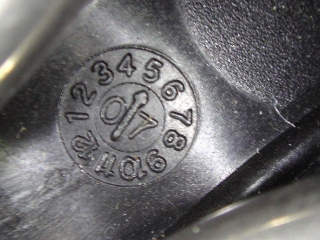
By the way, this Turbo 1980 was from May 2007.
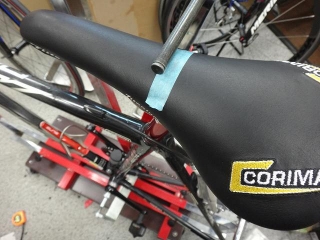
Installing it...

I went with a USE Alien, aluminum red anodized, 25mm diameter seatpost
(there's also an Alien Carbon, but it doesn't come in 25mm).
This is a late-model Alien, but the early model had two parallel M3 long bolts to clamp it—ridiculous—
and the late model has one M4 long bolt to clamp it—also ridiculous.
I might switch to a Thomson Elite eventually.
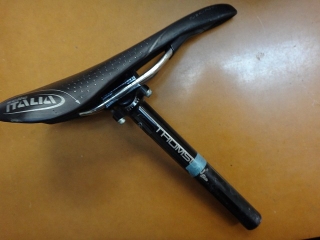
The saddle and seatpost I used before were a Selle Italia Signo and Thomson Elite.
The Signo—measured at the most forward graspable part of the saddle rails
with calipers from above and below—
is less than 40mm thick. Pretty thin.
The thinnest are Selle Italia's original SLR titanium rails and Specialized's original Toup, at around 35mm.
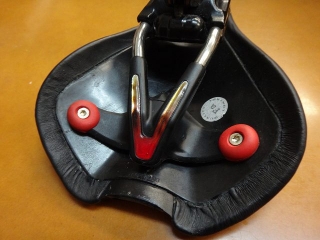
The Selle Italia Signo and Thorak have an AVS (Axial Pivot System)—
where two rails are first combined and then connected to the base via elastomer—structure.
They flex side-to-side even in your grip, and you feel it in actual comfort too.
The Thorak has carbon rail models, but those don't use AVS.
With AVS, saddle bags can be problematic, and when
securing tubular tires with toe straps, the tire slides forward,
causing slight contact with your hamstring during pedaling.
You can avoid it by not strapping a spare tire to the saddle.

Thomson Elite seatposts have thick front and rear walls,
which was a company patent. Kalloy made a complete knockoff
(I called it "Thomson's Tooth-Wah" to mean "not a Thomson Seatpillar"),
but it disappeared from the market at a speed that can only be explained politically.
Something happened.
Recently I installed a PRO aluminum seatpost with similarly thick front and rear walls—not as extreme,
but—maybe the patent expired, or maybe Kalloy's knockoff violated the clamp design, not the wall thickness.
Thomson Elite normally doesn't have this much wall thickness difference.
This 25.0mm, the thinnest in the lineup, is probably why it's like this.
I did a night ride on the Colima Flite,
and I can confirm—this is the real deal. Hehehehe. ← Stop treating Flite 1990 like a knockoff
Looking back at earlier photos, I basically always set saddles dead level.
Occasionally I'll go up to 1° nose-up.
Of course, for saddles designed to be tilted nose-up like old Selle San Marco Concor or Strada models,
I'll follow the maker's intent, but
those "practical front-riding saddles" aren't for me.
If I set the saddle level on the fitting bench and match height and reach,
I get nearly 100% repeatability.
I'm not dismissing the idea of trying slight nose-down tilts for potential improvement,
but if I commit to only level setup,
any saddle I've used before is instantly usable with the same feel.
The original Flite—haven't used it in like 10 years—brought back the feeling of
that rear-seat position and bottom grip on the drops locking in perfectly.
The saddle nose clearance with my thigh is exactly as I remember.
It's the same as instantly recalling the best brake lever position and grip style
when using a handlebar you've ridden before.
So it's not that the original Flite clicks for everyone—
if you know the original Flite, your muscle memory snaps back instantly.
You might say the same applies to Flite 1990, but
the padding feel on the Colima saddle versus Flite 1990 is totally different.
The rebound when you press your thumb on the rear—the tactile sensation—is completely different.
Original Flites do vary in padding across years, but
at least this Colima saddle falls within the realm of evoking the original Flite.
In other words, this IS an original Flite.
For those who understand that, or for original Flite refugees,
I've basically bought out all the Colima Flites—that's the point of this post.
I left just one with the distributor.
So they can't say "our store bought them all out," and
because stock hasn't moved in at least two years, a sudden disappearance would prove this article's impact. It's an experiment.
And I'm confident we'll sell through our current inventory. Hehehehe.
Extras
I did a lot of research for this Colima and Flite piece,
and it seems wrong not to include it, plus I still want to write about other stuff, so I'll continue.
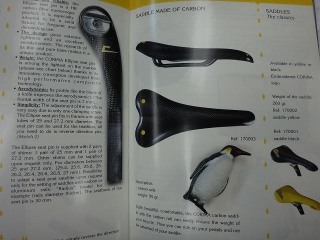
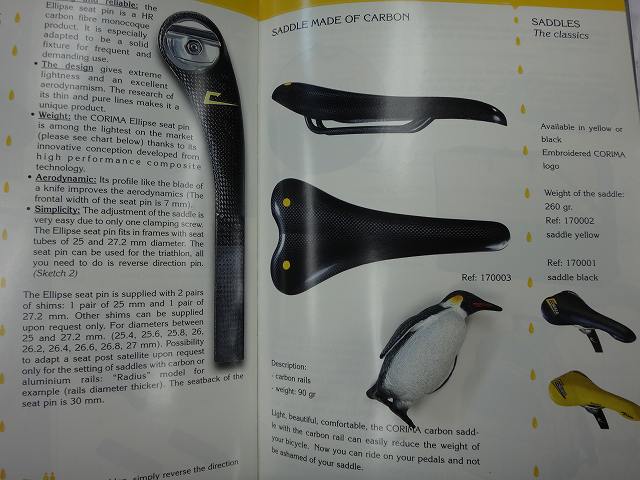
This Colima catalog shows a discontinued carbon saddle.
This carbon saddle has a unique structure not seen elsewhere, and
I've never seen an identical model without the Colima brand, so
I believe it's in-house design.
The Colima Flite on the bottom right—
based on the rail profile, I've long thought this is definitely an original Flite.
Currently the home site shows black and yellow Colima Flites.
The Japanese distributor has yellow out of stock and black... somehow (wink) one left.
If the home country still has Colima Flites, maybe they'll suddenly (wink) restock,
but the Colima original Flite is just leftover inventory from an order of dozens or hundreds
made around 2001 with embroidery, so stock is definitely limited.
And since Selle Italia stopped making the original Flite,
this might be the last chance to get one.
Or one day the Colima Flite might quietly switch to Flite 1990-based specs.
Though I'm worried they'd reuse the same photo.
Also, in that image, a bird in Colima's corporate color (flightless) is mixed in
and looks oddly flat, but
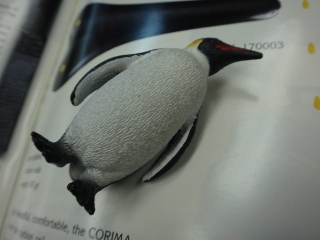
this friend is a 3D resident.
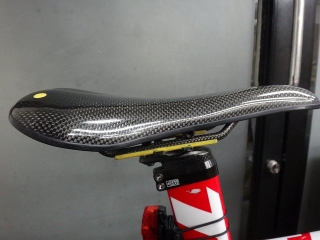
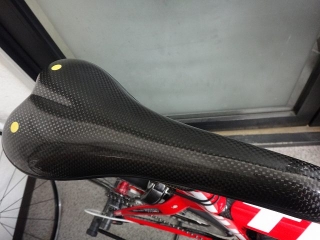
I got permission to photograph the real Colima carbon saddle
from a customer.
Frame discretion wasn't prioritized in the cropping.
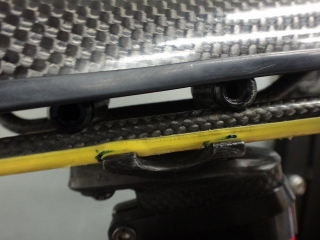
Yellow elastomer is adhered to the saddle rails,
reducing clamp damage.
The saddle base edge is sharp, so
it's carefully covered and glued.
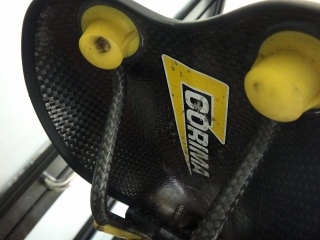
The two yellow dots at the saddle rear are elastomer
cushioning the saddle rails.
The clever bit: carbon rails insert from the side, not from underneath the elastomer.
The base is somewhat compliant rather than fully rigid,
giving it a ride feel you wouldn't expect from a no-padding saddle.
Why this was discontinued is a mystery. A shame.
The Japanese distributor also doesn't have inventory.
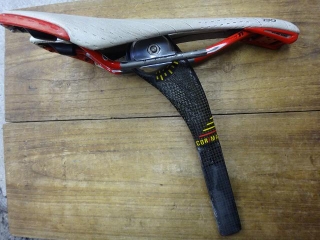
I asked friend B if I could shoot a Colima seatpost for the article,
and he brought one right over.
Much appreciated(Genroh Discussed Maoh Arc).
But wow, that's an old logo compared to that catalog.
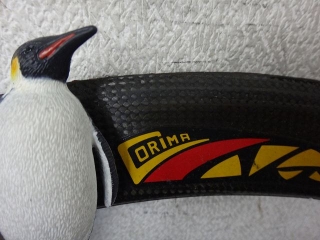
Dating by rim standards, probably around the same era.
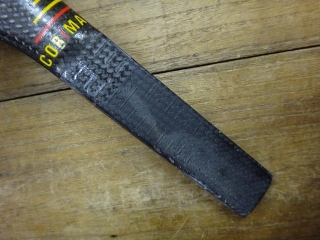
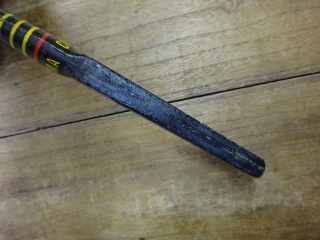
This seatpost's tube isn't a round cross-section where it enters the frame.
Colima carbon frames have seat tubes with matching square cross-sections.
Though not exclusive to Colima frames—
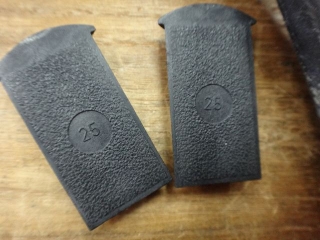
it comes with 25mm and 27.2mm shims so
it works with either diameter frame.
That's the 25mm shim, and

this is how you sandwich it.
The seatpost length comes in S, M, L—this is M.

Ah! The clamp is deliberately mounted backward to maximize seatpost setback!
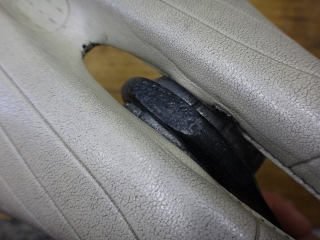
I asked if the flat top of the post was machined, and he said it came that way.
Also, this seatpost can mount front-to-back reversed
for triathlon front-riding position.
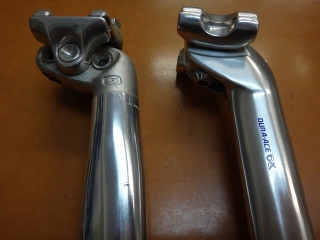
Continuing from the Colima seatpost being frame-specific: earlier, the Sugino Aero Mighty and Shimano Dura-Ace AX
are also frame-specific, but
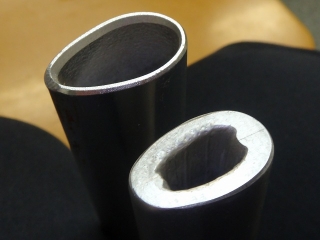
they each fit different seat tubes.
The thinner one is Sugino.
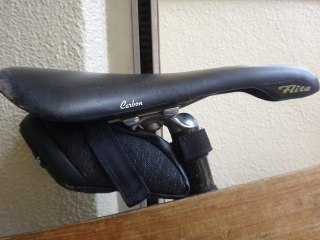
Friend B also owns multiple original Flites. This is a carbon-rail "Flite Carbon" (self-explanatory).
Flite Carbon has even more rail-base integration than Flite Titanium,
and here it's mounted with a Record carbon seatpost, which just barely works—skirting the edge.
I forgot to photograph it, but this Flite Carbon was from 1991.
Now I remember: about that Euclid seatpost.
TVT MTBs do exist—friend B had one.
TVT is French, so French MTB = VTT, meaning TVT's VTT can be stated to exist.
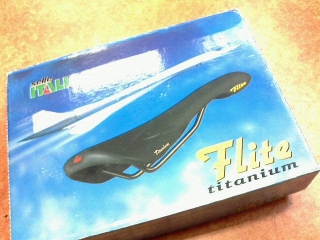
Finally, I remembered a box at a shop I've been loyal to since high school—
a Flite box used to organize tags and labeling tools for hanging apparel.
I asked if they still use it and could I shoot it,
and they not only agreed—they said I could name the shop.
Much appreciated(Genroh Discussed Maoh Arc).
Photo cooperation: Kawahara da Cycle
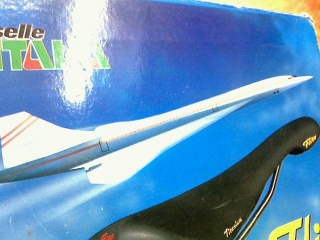
The model name "Flite" apparently came from the Tupolev Tu-144 supersonic airliner.
... I'm lying. Sorry.
Based on the lack of ears (canards) on the nose and the two black dots below the front door,
it's definitely the Concorde.
I really liked the CC-RD100 (wired, no cadence), the first model in CatEye's "Strada" series,
but the click-tech mechanism adopted after this model—where the buttons are on the underside instead of the top and the device itself moves to click them—has a problem.
With regular use, the body gets wobbly relative to the mount.
With my usage frequency, it doesn't last two years.
To put it another way, about three battery lifespans.
Even if you replace the mount-side parts, the grooves that are actually worn are on the device body itself,
so it doesn't solve the problem. And this issue remains unresolved to this day.
The CC-RD200, the wired version with cadence of this same line, is still going strong for some reason,
but the CC-RD300W (wireless, no cadence) and CC-RD400DW (dual wireless, with cadence) are discontinued.
The 300 and 400 are models from around 2008.
This is just speculation, but when a high-brightness LED front light and wireless cycle computer are positioned too close,
the cycle computer's reception gets blocked and speed information and such disappear.
Maybe the 300 and 400's radio method was especially prone to this, so they discontinued them quickly.
The fact that the CC-RD200—the wired model that came before them—is still around seems to support this theory.
If CatEye only made lights or only made cycle computers, they could've brushed it off,
but their own products were fighting each other, which was probably bad for business.
I liked the RD100 because it worked fine even when used alongside heart rate monitors, which were unstable on almost every brand back then.
By the time the RD100 was discontinued, simple single-function wired cycle computers from other makers too were becoming an endangered species.
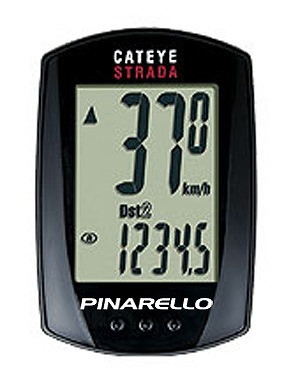
That's when I happened to notice the cycle computer in the image above.
It's literally a CC-RD100 model, but it came out as a Pinarello accessory,
and even years after the RD100 was discontinued, you could still get it
(though it's impossible to find now).
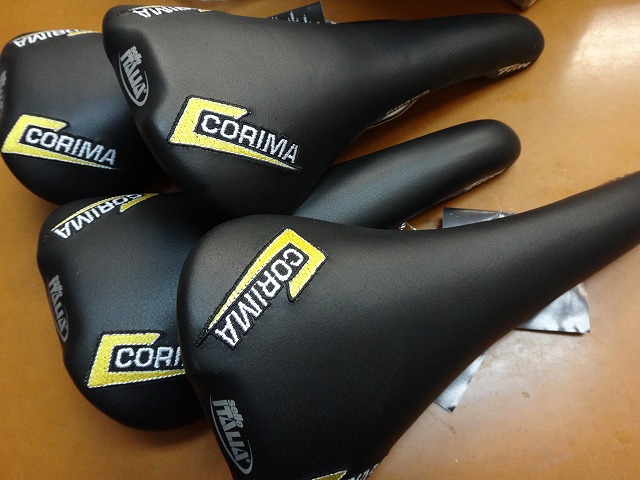
I got in some Colima saddles.
Looking at the catalog images, the base model is Selle Italia's Flite,
with Colima's logo embroidered on it.
I'd been wondering about it for a while, and I thought,
"Wait, could this actually be a Flite?" So I decided to order some.
I know this sounds weird, but the Flite in the line above refers to the Flite in the broad sense, and the Flite refers to the narrow sense.
Since I wasn't sure if it was truly a Flite, I started cautiously with just one.
Once I confirmed it was a Flite, I went bold and ordered plenty more.
Now, shifting gears—I'm a collector of Selle Italia Turbos,
and I said way back early in this blog that I'd write about it eventually,
but I still haven't.
I have regular Turbos, striped Bie Turbos, squishy gel Turbo Gels,
Turbo Specials with metal like San Marco Rolls on the front and rear,
Turbo Triathlons with a center groove, Lady Turbos with a wider rear,
Lady Turbo Specials (Turbo Special construction but wider rear),
Turbo Juniors for younger riders with short front and rear, aluminum-rail Turbo SLG (Super Leggera),
manganese-rail Pro Team Turbos, and so on.
↑This is an Inoue Turbo with Bernard Inoue's name on the nose,
and I also have a regular Turbo Inoue, but this one is a Turbo Junior Inoue.
Back in the day, it was on my mentor's bike, and I begged him relentlessly—
The drawing between Bernard and Inoue is a badger.
Inoue's nickname was "The Badger of Brittany."
But actually, Inoue mostly used Selle SanMarco Rolls at the time.
As examples of signature models a manufacturer prepared for riders that didn't actually get used,
there's Mario Cipollini's lion-embroidered Selle Italia Century
(he only used Selle SanMarco Regals)
and Eddy Merckx's 3T handlebar named "Merckx"
(he mainly used Cinelli Number 64).

The Turbo has a reissue model called "Turbo 1980," and the one in the image above is my personal one with brown nubuck that's aged nicely.
The Turbo 1980 is so expertly reissued that even I—a Turbo expert (not an official certification)—have a hard time judging from the side view whether it's a reissue or not.
Well, the vast majority of Turbos you see these days are Turbo 1980s unless they're clearly on a vintage bike.
The Flite saddle has gone through major shape changes that make it a different product, which counts as three generations now.
The second generation has a hole in the nose with a plastic "Flite" nameplate insert.
I personally think that if a saddle changes this drastically, the brand shouldn't keep the same model name.
I've never tried the third generation, but when I used the second-gen Flite,
I thought, "This isn't a Flite at all."
That's not to say the second-gen Flite is a bad saddle.
I just wanted it to carry forward most of what the original Flite represented.
Among Selle Italia saddles, maybe only the SLR maintains that philosophy without bending too much.
The second-gen Flite is discontinued, but the original Flite, like the Turbo, has a reissue called Flite 1990.
But unlike Turbo 1980, Flite 1990 is hard to call a worthy recreation of the original—it's kind of awkward.
So I decided to write an article about it and asked friend A,
"You had a bike with a Flite 1990 on it, right? Bring it by,"
and he came right over. But...

Hey! This isn't a Flite 1990—this is an original Flite!
That's no good for an article! (Though it is, actually.)
Friend A definitely has a Flite 1990 too.
Since the original Flite became unavailable,
I remember him reluctantly buying it as a substitute, thinking it might not be adequate.
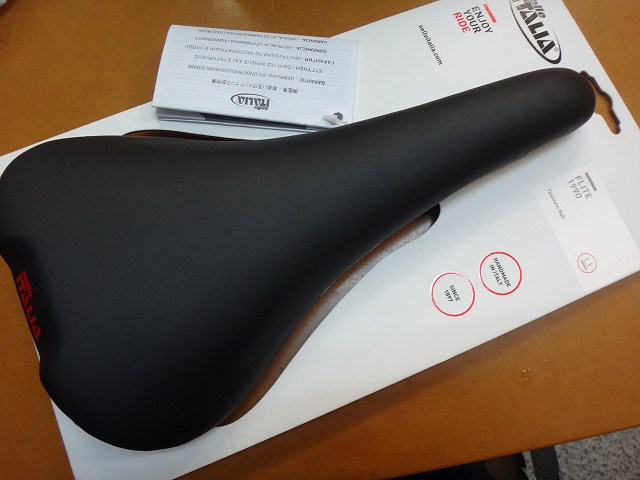
So,

I ordered some for the article.
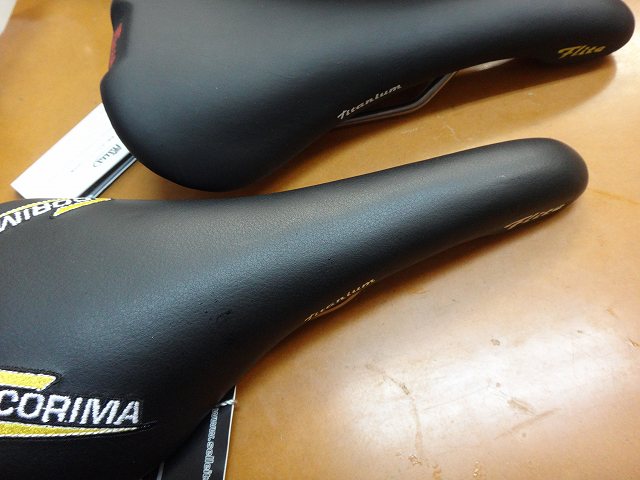
Can you spot the difference?
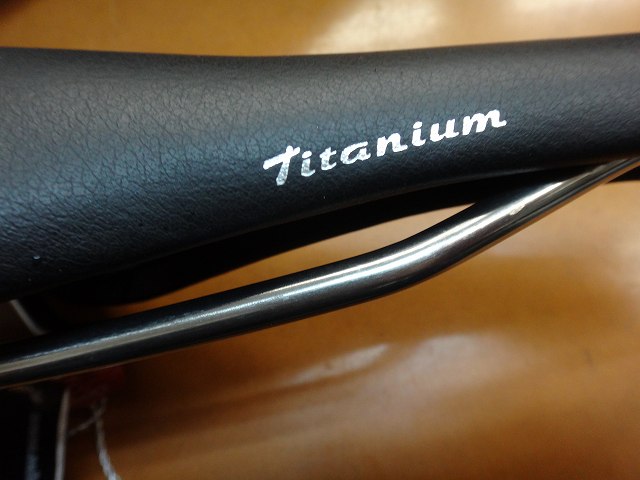
↑This is a Colima Flite.
The Flite was groundbreakingly thin for its time,
and switching to one from a traditional saddle let you get 2–3 cm more seatpost setback.
Back then, only horizontal frames existed, so lots of people cared about how minimal seatpost exposure looked.
To maximize seatpost extension, you need not just a thin base but also
a shape that doesn't "lift" the rails.
The original Flite has the base and rails very close together,
thinner than most saddles you see today.
The cushioning (padding) on the base is thick, so it's slightly thicker than a carbon-fiber-like spatula saddle, but still.
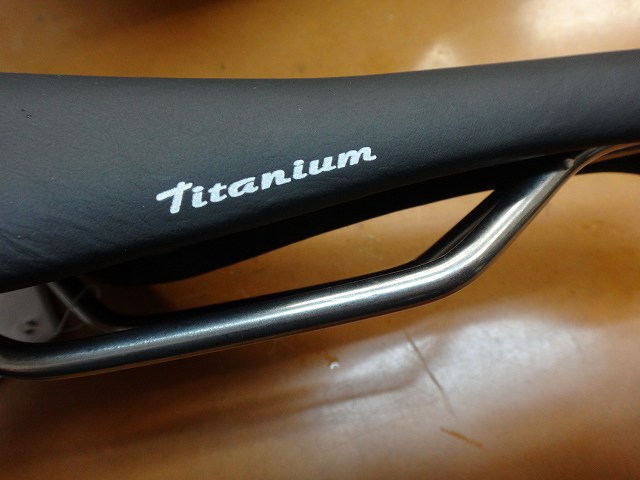
With Flite 1990, they've switched to raised rails.
I understand this was unavoidable.
The original Flite's base and rails are so close
that if the seatpost clamp assembly's parts above the rails are thick,
they interfere right away.
They probably switched to raised rails to avoid that,
but, well, calling it an "original Flite reissue" feels like a stretch.
To be clear, Flite 1990 isn't a bad saddle.
Some people have found Flite 1990 to be the most comfortable saddle they've ever used.
That's separate from the point that treating Flite 1990 as identical to the original Flite is unreasonable.
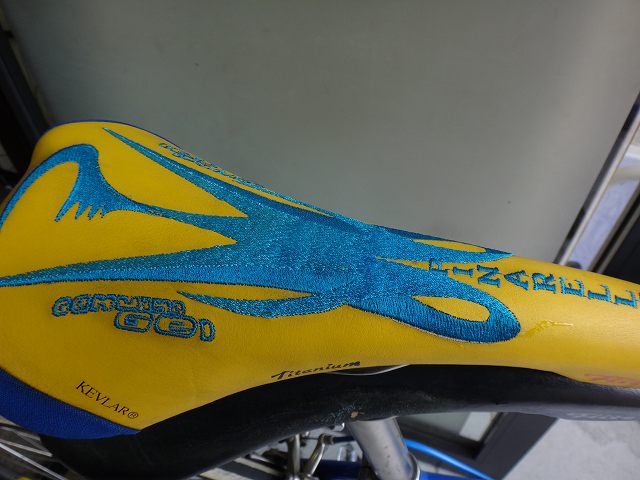
Thinking it might be useful for the article, friend A also brought a Pinarello-embroidered Flite, so
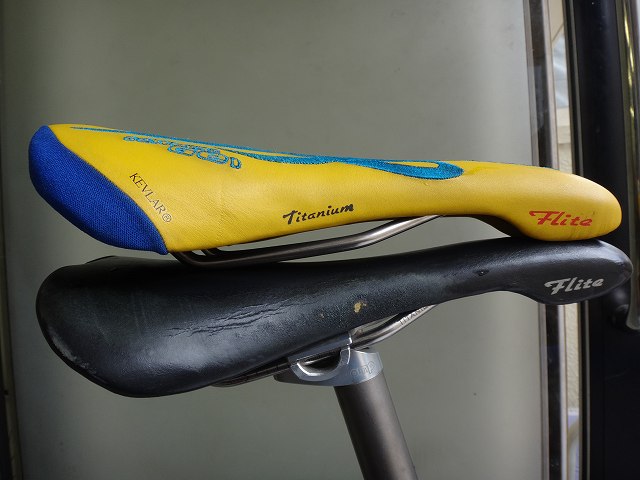
I stacked them for comparison.

I stacked the Colima saddle too.
By the way, one Colima saddle sold to friend A as a replacement for the worn-out Flite at the bottom.

↑Jumping back in the timeline here,
this is the very first Colima saddle I cautiously ordered, thinking,
"Could this actually be an original Flite?"
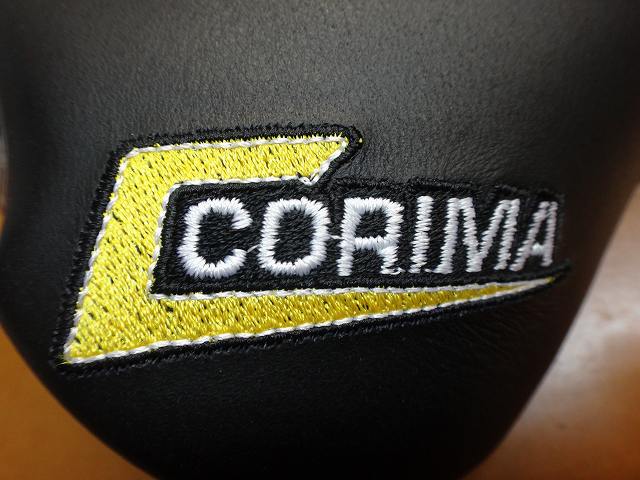
With Colima embroidery.
Honestly, I would've preferred a printed logo.
When there's embroidery on the seat area, cycling shorts wear out faster.
The Selle SMP embroidered-version period was especially bad for this.
If you've used one, you know the cycling shorts don't just get fuzzy—the damage goes right through to your skin.
Hold on—don't say the embroidery is a waste!
It's because of this embroidery that brand-new original Flites are available in 2018!
Exactly. This is the same flow I wanted to mention—just like the CC-RD100 was obtainable years after discontinuation because it was a Pinarello accessory,
the original Flite can be found now thanks to this embroidery.
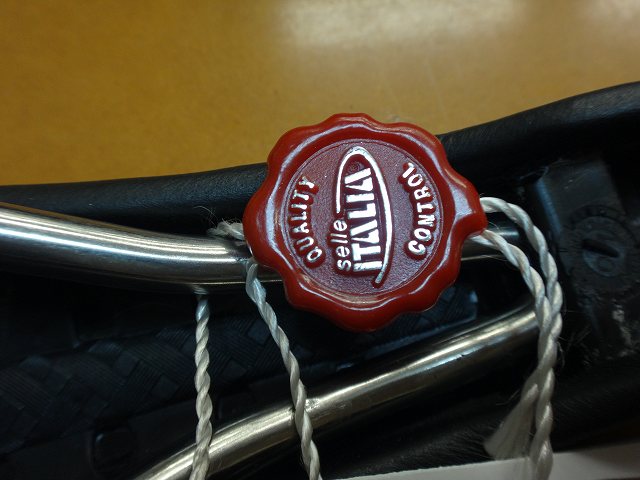
That wax-seal-looking thing tied to the rails brings back memories.
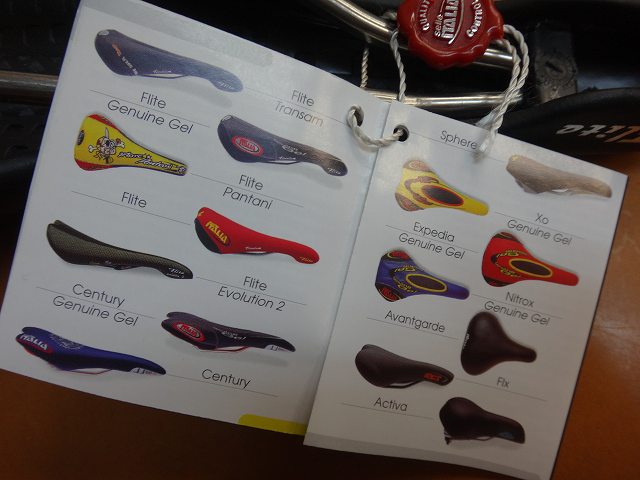
The Marco Pantani model Flite shown here has the later embroidery style.
My first Flite was a Pantani embroidery, early style.
That was around 1996.
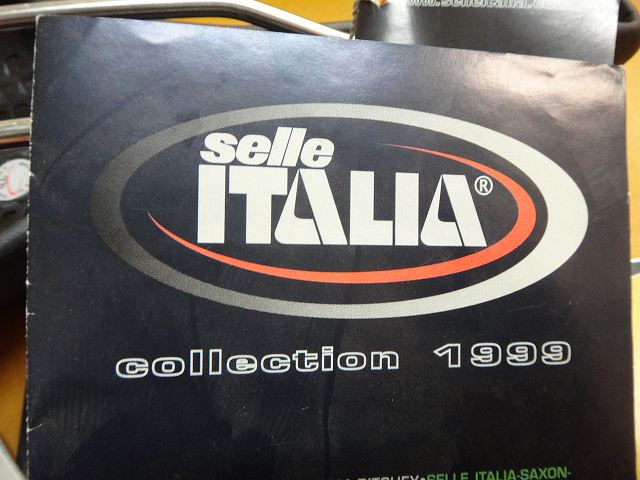
The included mini-catalog says 1999, but this Colima saddle is from 2001 (more on that later).
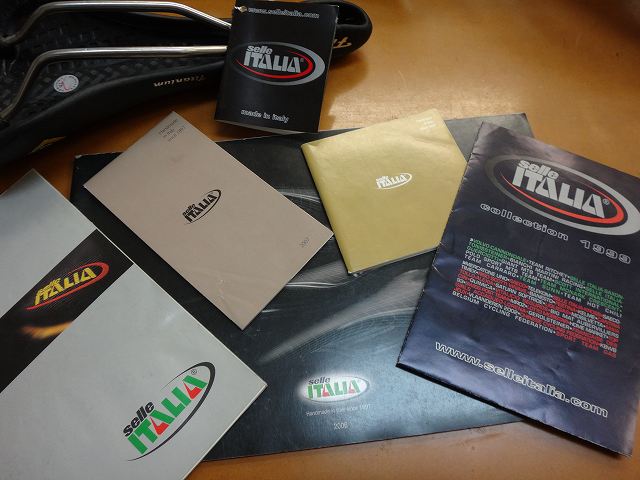
I found a 1999 full-size catalog.

Wow! (Sorry, just getting excited on my own.)
The original Pantani Flite is owned by—from left to right—Fausto Coppi, Eddy Merckx, Francesco Moser,
Miguel Indurain, and Marco Pantani. Quite the roster.
By the way, the first saddle to ever get the Pantani embroidery wasn't a Flite.
It was a model called Sintesi TCS.
If you're interested, search "SINTESI TCS PANTANI."
I should have one too, but I can't find it.
Anyway, Selle Italia saddles can have their manufacturing date pinned down.
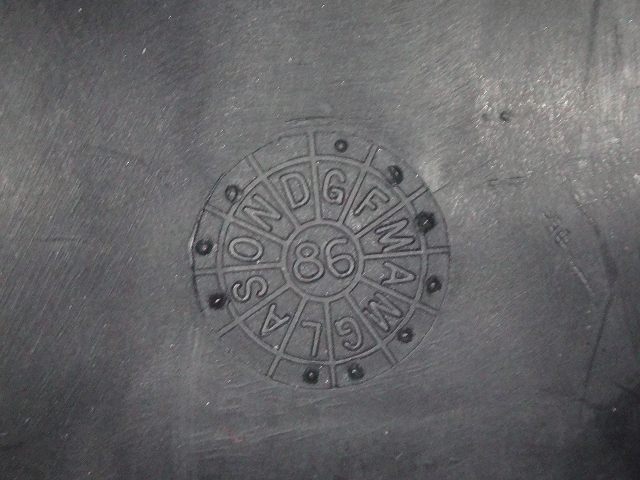
This is that Inoue Turbo Junior from earlier.
The number in the center is the manufacturing year, and the letters around it represent the month.
In the order G·F·M·A·M·G·L·A·S·O·N·D, these are the first letters of the months 1–12 in Italian,
but since months 2, 3, 4, 5, 8, 9, 10, 11, and 12 match English month initials,
you can figure it out pretty easily.
A missing dot for a month means either the manufacturing month
or—if dots are missing starting from G through, say, A—it's April,
but for some reason this 1986 model is only missing August and December dots.
That's pretty sloppy!
Maybe in 1986 they concentrated Turbo production only in August and December.
By the way, pre-1985 models sometimes lack this date mark entirely.
January, June, and July start with G because Italian has no J.
It's used in foreign words like Jeep, judo, and jazz, but.
So JoJo's Bizarre Adventure Part 5, set in Italy, is GIOGIOS, not JOJO.
Though honestly, nobody calls Giorno "JoJo" anyway,
and that's not unique to Part 5, so let's not worry about it.
The date marking system on current models has changed to
"an arrow pointing across the year indicates the manufacturing month,"
but

this Colima Flite has both the dot system and arrow marked together.
It looks like November 2001, but in any case, 2001 is certain.
Friend A's black Flite was May 1996.
Why the 2001 model lacks the dot marks that the 1996 model has is unclear.
The Flite 1990 in the article is September 2017.
Also, the months are now in Arabic numerals.
I laid out the seatposts from one of our drawers.
From left: Sugino 75, 3T Criterium Aero, LOOK Ergopost,
Campagnolo C Record Aero, Sugino 75, Sugino Aero Mighty,
Sugino 75, Dura-Ace AX, and LOOK Ergopost.
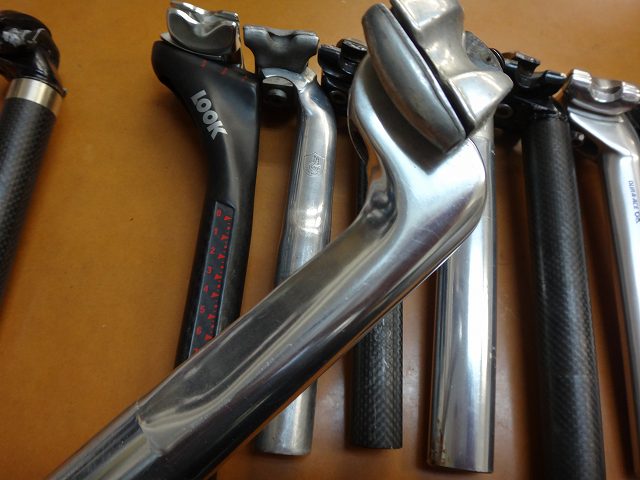
The 3T Criterium seatpost has a round cross-section with a groove,
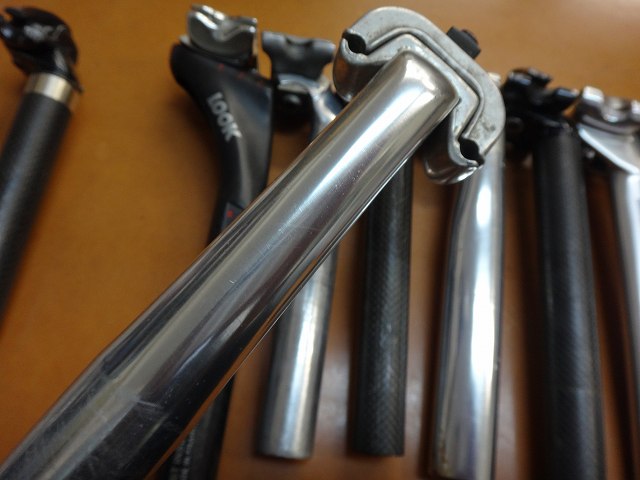
but the Aero has no groove, with the front half round

and the rear half aero-shaped,
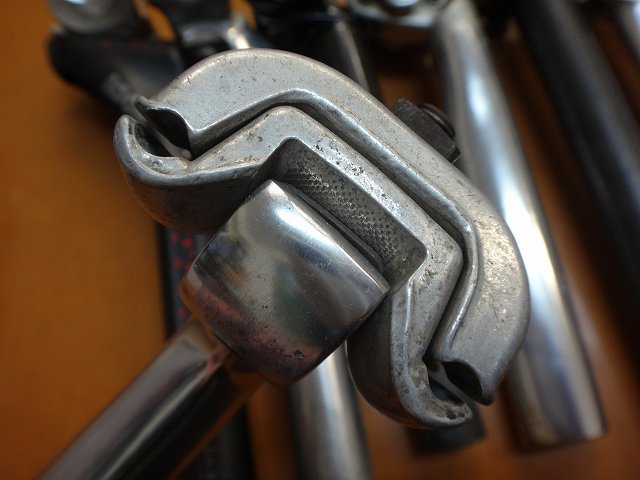
and the clamp is the same as the Criterium.

↑This is an old 3T logo. There are even older generations too.
27.2mm diameter is rare for the era, but it exists because
Columbus SLX seat tubes are 27.2mm ID.
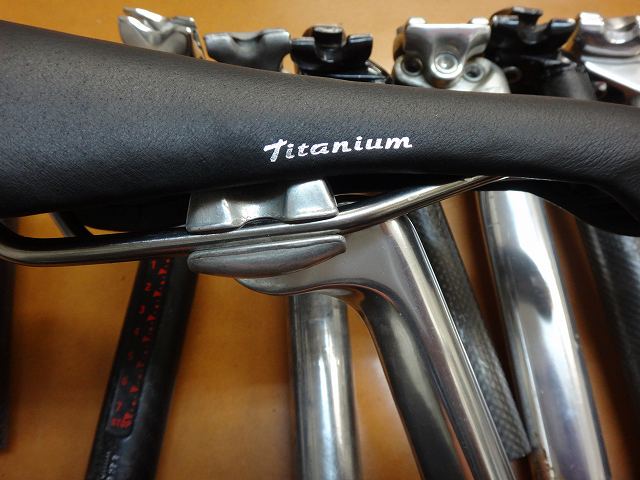
With the thick clamp at the top, I installed it at full extension.

Close, but not quite—the nut above the clamp is actually touching the saddle base.
This is why the original Flite is picky about seatposts, and why
Flite 1990 got nervous and switched to raised rails.
Even in close situations, flex causes contact.
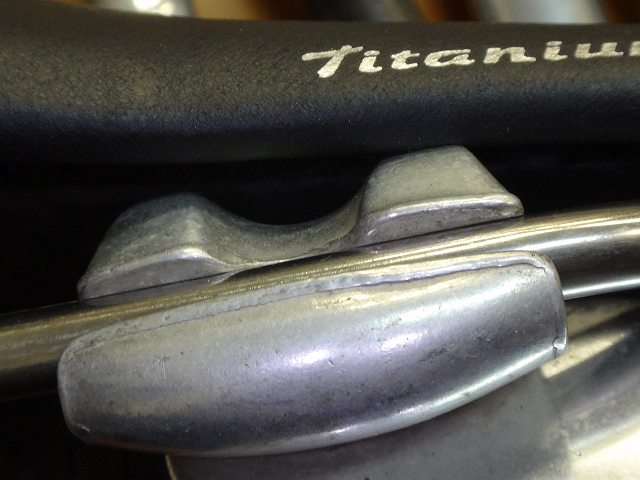
Also, the back side of the "Titanium" marking contacts the clamp, and
this area of leather alone gets a squared-off indentation mark from habit—
a common sight on original Flites.
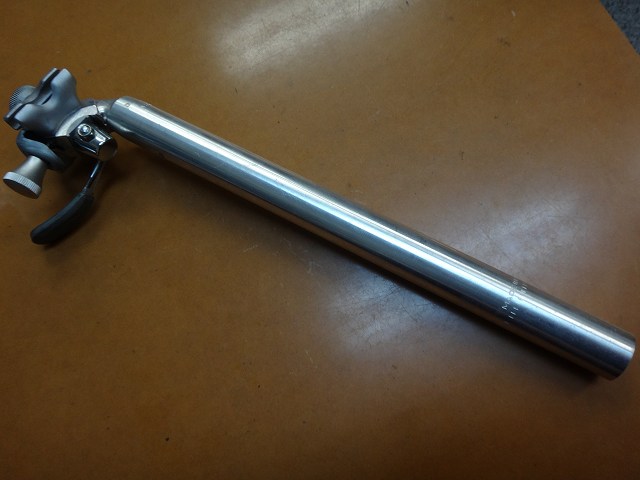
Campagnolo's MTB component—a Euclid seatpost.
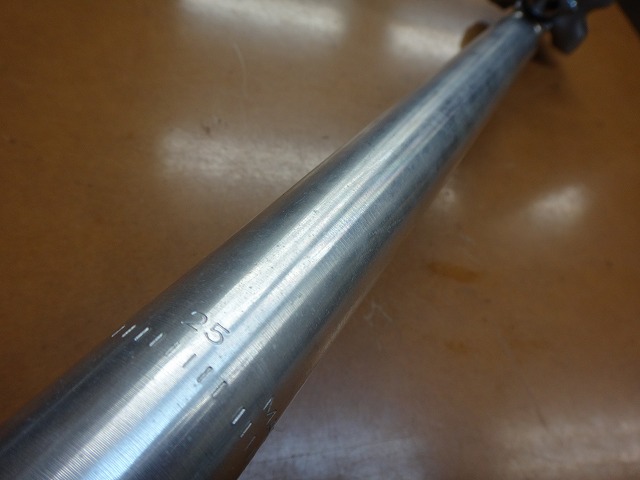
My LOOK seatpost is 25.0mm diameter, and
the fact that Euclid has a 25mm seatpost makes me wonder if
TVT made MTBs back then.
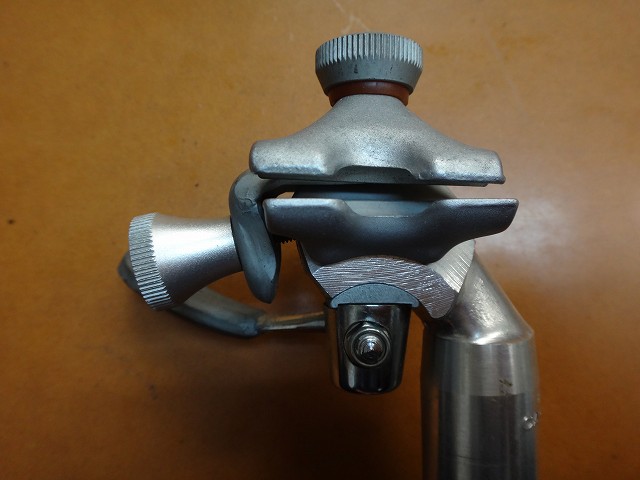
You can adjust saddle fore/aft while the quick-release is loose, and
adjust angle with the rear dial.
Of course, this thing won't bolt to an original Flite.
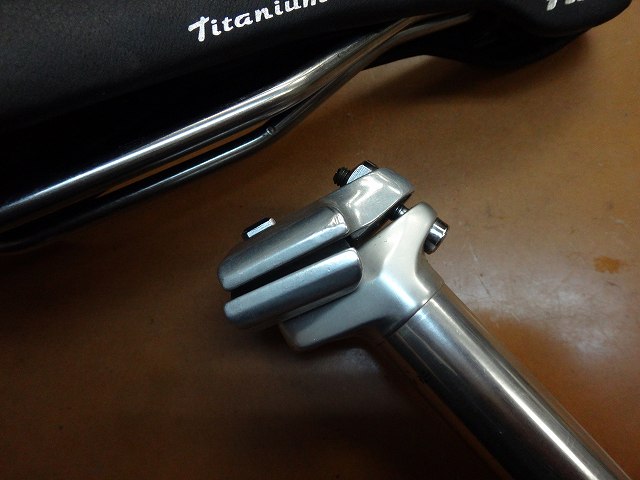
For 25mm seatpost candidates, a Suntour Superbe (not Superbe Pro) also came up.
That earlier image's Sugino 75 and LOOK Ergopost also come in both 27.2mm and 25mm diameters.

This is a seatpost with a Turbo 1980 attached, for use when I know I'm doing long distance the next day.

A Campagnolo two-bolt frosted clamp earth-mark seatpost,
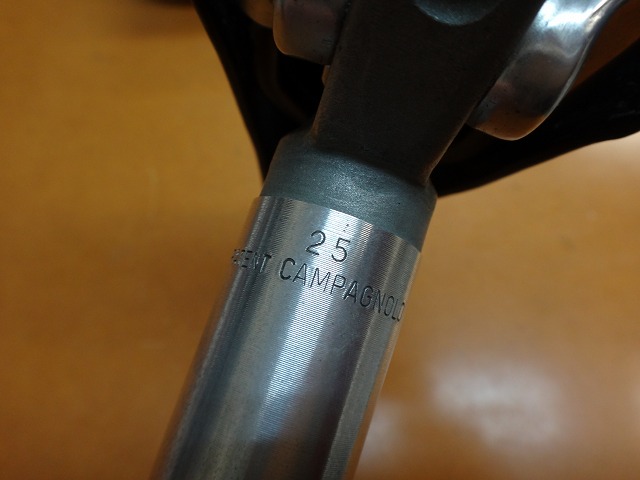
and the 25mm diameter likely came from TVT use.
Well, LOOK is a successor to TVT, so matching frame construction is natural.
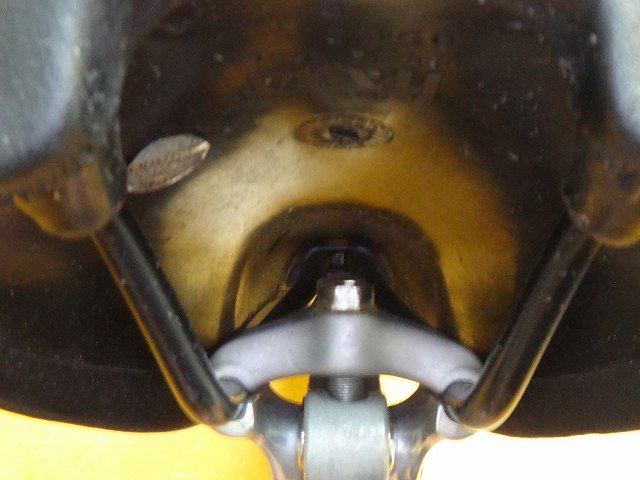
The clamp and base are quite far apart.
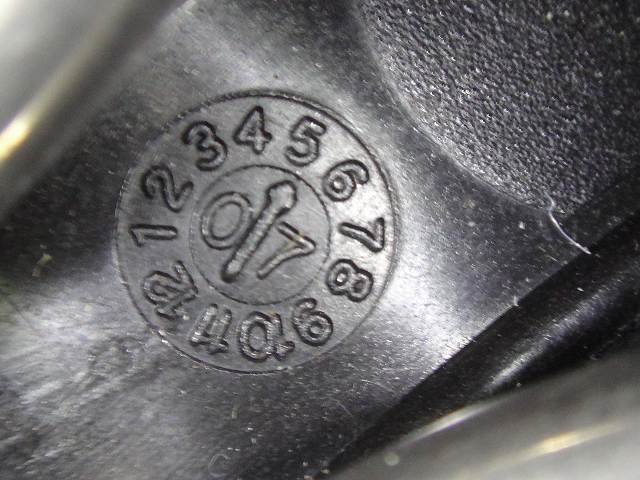
By the way, this Turbo 1980 was from May 2007.
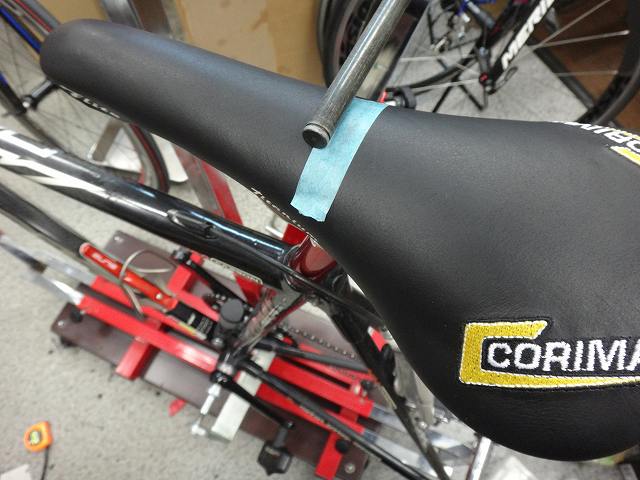
Installing it...
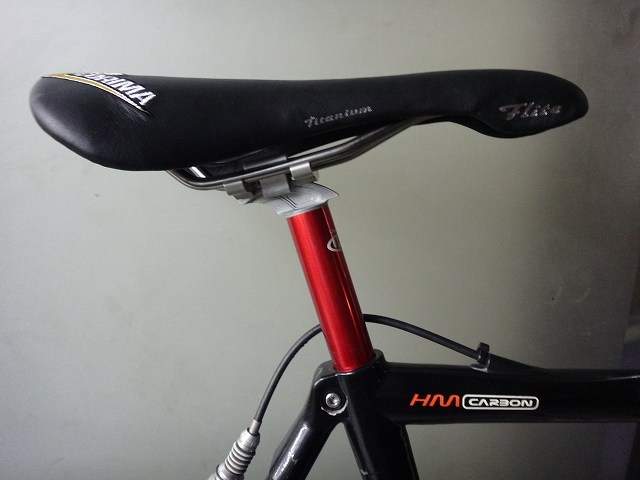
I went with a USE Alien, aluminum red anodized, 25mm diameter seatpost
(there's also an Alien Carbon, but it doesn't come in 25mm).
This is a late-model Alien, but the early model had two parallel M3 long bolts to clamp it—ridiculous—
and the late model has one M4 long bolt to clamp it—also ridiculous.
I might switch to a Thomson Elite eventually.
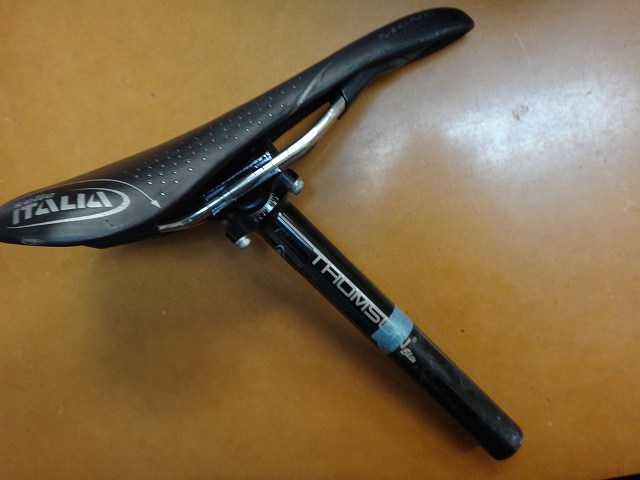
The saddle and seatpost I used before were a Selle Italia Signo and Thomson Elite.
The Signo—measured at the most forward graspable part of the saddle rails
with calipers from above and below—
is less than 40mm thick. Pretty thin.
The thinnest are Selle Italia's original SLR titanium rails and Specialized's original Toup, at around 35mm.
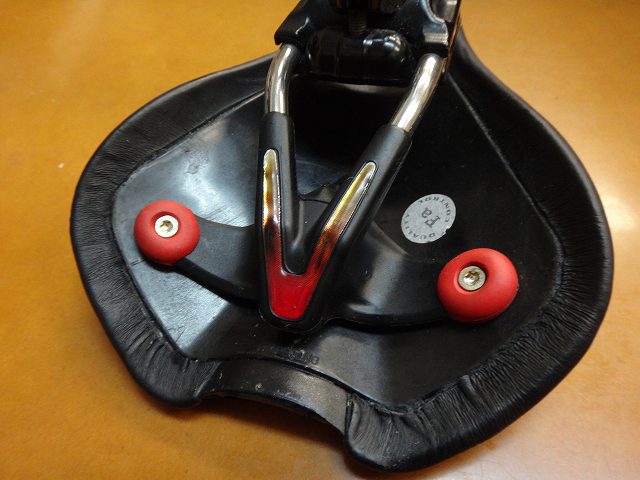
The Selle Italia Signo and Thorak have an AVS (Axial Pivot System)—
where two rails are first combined and then connected to the base via elastomer—structure.
They flex side-to-side even in your grip, and you feel it in actual comfort too.
The Thorak has carbon rail models, but those don't use AVS.
With AVS, saddle bags can be problematic, and when
securing tubular tires with toe straps, the tire slides forward,
causing slight contact with your hamstring during pedaling.
You can avoid it by not strapping a spare tire to the saddle.
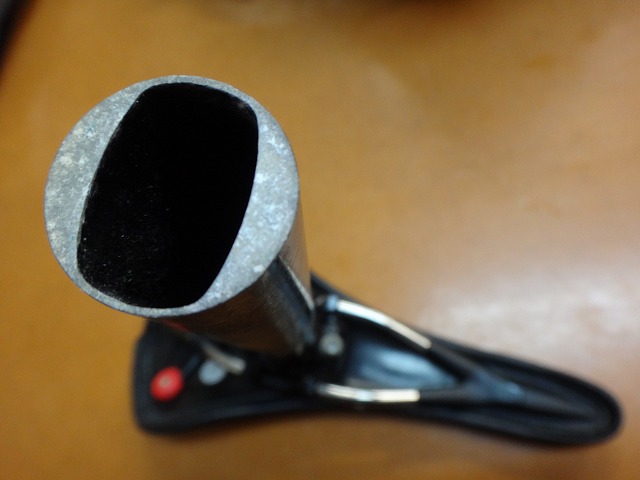
Thomson Elite seatposts have thick front and rear walls,
which was a company patent. Kalloy made a complete knockoff
(I called it "Thomson's Tooth-Wah" to mean "not a Thomson Seatpillar"),
but it disappeared from the market at a speed that can only be explained politically.
Something happened.
Recently I installed a PRO aluminum seatpost with similarly thick front and rear walls—not as extreme,
but—maybe the patent expired, or maybe Kalloy's knockoff violated the clamp design, not the wall thickness.
Thomson Elite normally doesn't have this much wall thickness difference.
This 25.0mm, the thinnest in the lineup, is probably why it's like this.
I did a night ride on the Colima Flite,
and I can confirm—this is the real deal. Hehehehe. ← Stop treating Flite 1990 like a knockoff
Looking back at earlier photos, I basically always set saddles dead level.
Occasionally I'll go up to 1° nose-up.
Of course, for saddles designed to be tilted nose-up like old Selle San Marco Concor or Strada models,
I'll follow the maker's intent, but
those "practical front-riding saddles" aren't for me.
If I set the saddle level on the fitting bench and match height and reach,
I get nearly 100% repeatability.
I'm not dismissing the idea of trying slight nose-down tilts for potential improvement,
but if I commit to only level setup,
any saddle I've used before is instantly usable with the same feel.
The original Flite—haven't used it in like 10 years—brought back the feeling of
that rear-seat position and bottom grip on the drops locking in perfectly.
The saddle nose clearance with my thigh is exactly as I remember.
It's the same as instantly recalling the best brake lever position and grip style
when using a handlebar you've ridden before.
So it's not that the original Flite clicks for everyone—
if you know the original Flite, your muscle memory snaps back instantly.
You might say the same applies to Flite 1990, but
the padding feel on the Colima saddle versus Flite 1990 is totally different.
The rebound when you press your thumb on the rear—the tactile sensation—is completely different.
Original Flites do vary in padding across years, but
at least this Colima saddle falls within the realm of evoking the original Flite.
In other words, this IS an original Flite.
For those who understand that, or for original Flite refugees,
I've basically bought out all the Colima Flites—that's the point of this post.
I left just one with the distributor.
So they can't say "our store bought them all out," and
because stock hasn't moved in at least two years, a sudden disappearance would prove this article's impact. It's an experiment.
And I'm confident we'll sell through our current inventory. Hehehehe.
Extras
I did a lot of research for this Colima and Flite piece,
and it seems wrong not to include it, plus I still want to write about other stuff, so I'll continue.
This Colima catalog shows a discontinued carbon saddle.
This carbon saddle has a unique structure not seen elsewhere, and
I've never seen an identical model without the Colima brand, so
I believe it's in-house design.
The Colima Flite on the bottom right—
based on the rail profile, I've long thought this is definitely an original Flite.
Currently the home site shows black and yellow Colima Flites.
The Japanese distributor has yellow out of stock and black... somehow (wink) one left.
If the home country still has Colima Flites, maybe they'll suddenly (wink) restock,
but the Colima original Flite is just leftover inventory from an order of dozens or hundreds
made around 2001 with embroidery, so stock is definitely limited.
And since Selle Italia stopped making the original Flite,
this might be the last chance to get one.
Or one day the Colima Flite might quietly switch to Flite 1990-based specs.
Also, in that image, a bird in Colima's corporate color (flightless) is mixed in
and looks oddly flat, but
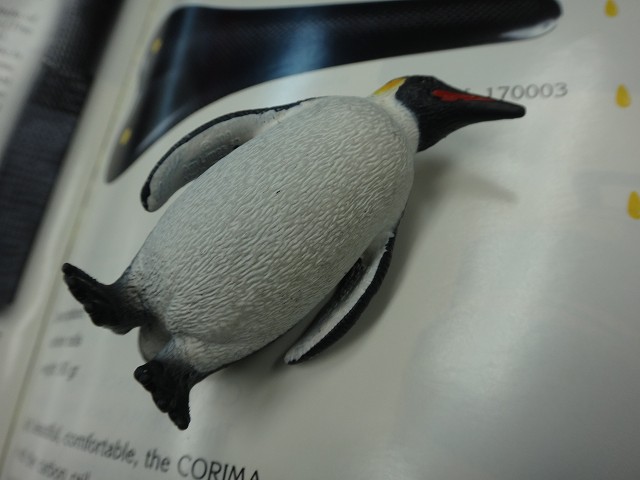
this friend is a 3D resident.

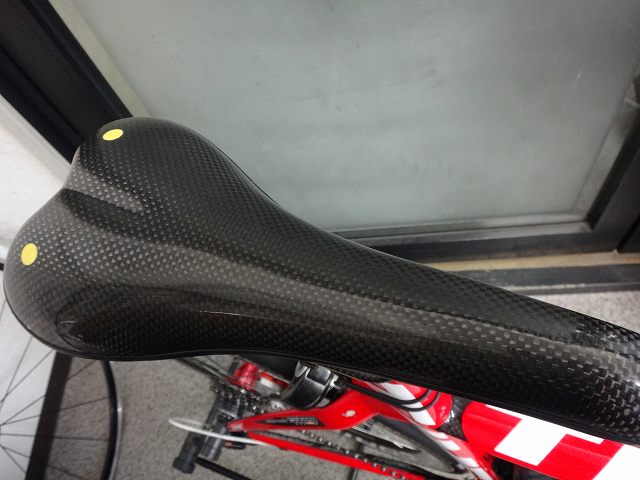
I got permission to photograph the real Colima carbon saddle
from a customer.
Frame discretion wasn't prioritized in the cropping.

Yellow elastomer is adhered to the saddle rails,
reducing clamp damage.
The saddle base edge is sharp, so
it's carefully covered and glued.
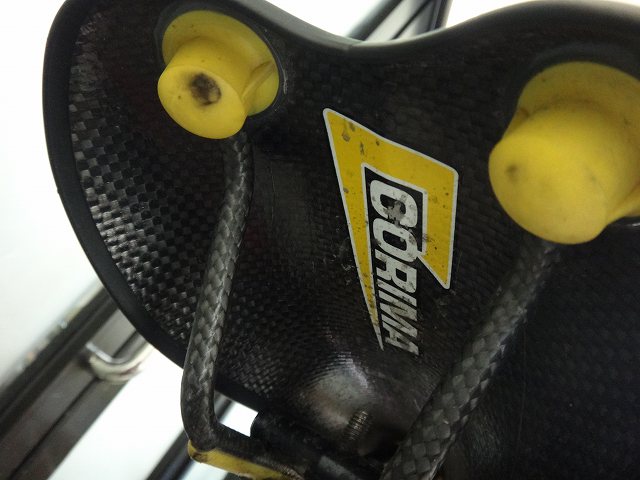
The two yellow dots at the saddle rear are elastomer
cushioning the saddle rails.
The clever bit: carbon rails insert from the side, not from underneath the elastomer.
The base is somewhat compliant rather than fully rigid,
giving it a ride feel you wouldn't expect from a no-padding saddle.
Why this was discontinued is a mystery. A shame.
The Japanese distributor also doesn't have inventory.

I asked friend B if I could shoot a Colima seatpost for the article,
and he brought one right over.
Much appreciated
But wow, that's an old logo compared to that catalog.
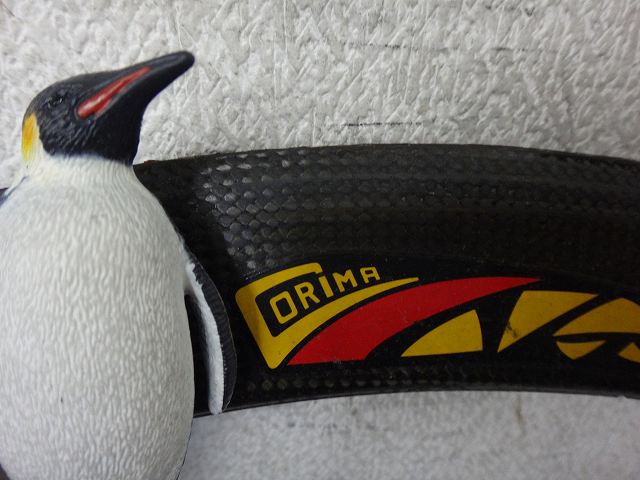
Dating by rim standards, probably around the same era.
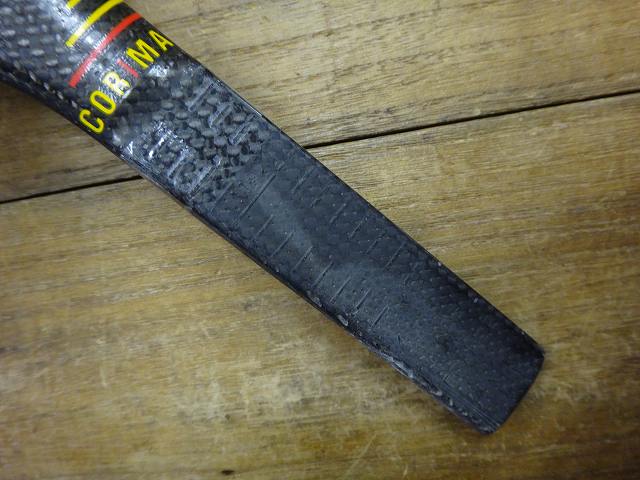
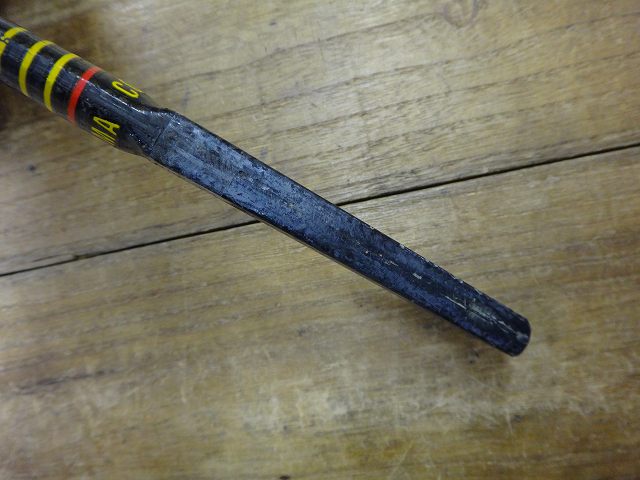
This seatpost's tube isn't a round cross-section where it enters the frame.
Colima carbon frames have seat tubes with matching square cross-sections.
Though not exclusive to Colima frames—
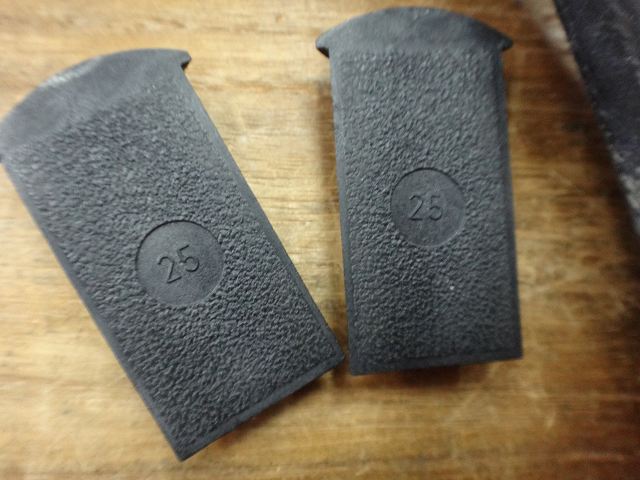
it comes with 25mm and 27.2mm shims so
it works with either diameter frame.
That's the 25mm shim, and

this is how you sandwich it.
The seatpost length comes in S, M, L—this is M.
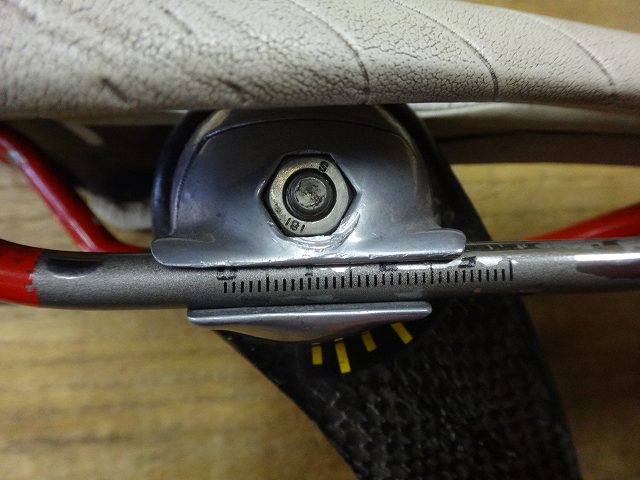
Ah! The clamp is deliberately mounted backward to maximize seatpost setback!

I asked if the flat top of the post was machined, and he said it came that way.
Also, this seatpost can mount front-to-back reversed
for triathlon front-riding position.
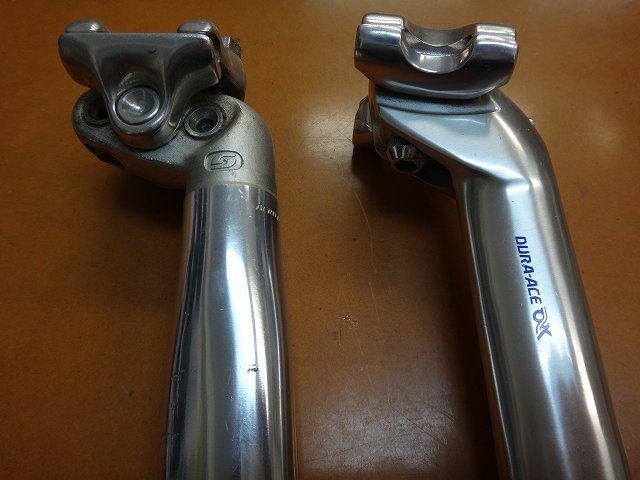
Continuing from the Colima seatpost being frame-specific: earlier, the Sugino Aero Mighty and Shimano Dura-Ace AX
are also frame-specific, but
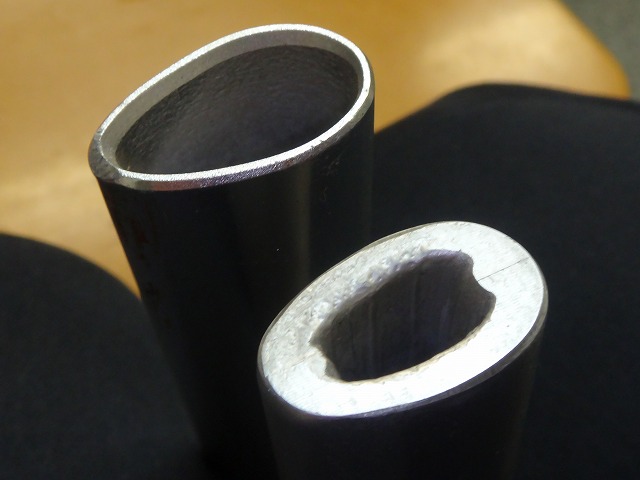
they each fit different seat tubes.
The thinner one is Sugino.
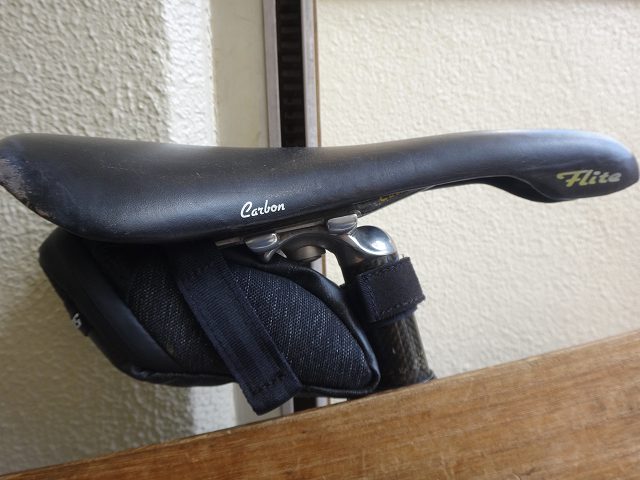
Friend B also owns multiple original Flites. This is a carbon-rail "Flite Carbon" (self-explanatory).
Flite Carbon has even more rail-base integration than Flite Titanium,
and here it's mounted with a Record carbon seatpost, which just barely works—skirting the edge.
I forgot to photograph it, but this Flite Carbon was from 1991.
Now I remember: about that Euclid seatpost.
TVT MTBs do exist—friend B had one.
TVT is French, so French MTB = VTT, meaning TVT's VTT can be stated to exist.
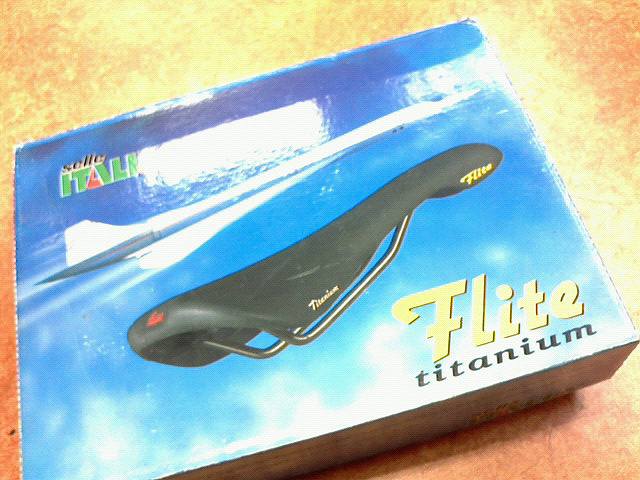
Finally, I remembered a box at a shop I've been loyal to since high school—
a Flite box used to organize tags and labeling tools for hanging apparel.
I asked if they still use it and could I shoot it,
and they not only agreed—they said I could name the shop.
Much appreciated
Photo cooperation: Kawahara da Cycle
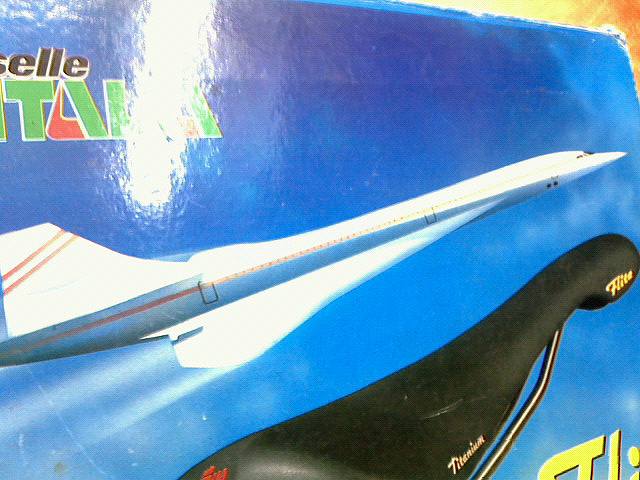
The model name "Flite" apparently came from the Tupolev Tu-144 supersonic airliner.
... I'm lying. Sorry.
Based on the lack of ears (canards) on the nose and the two black dots below the front door,
it's definitely the Concorde.
Products Mentioned in This Article
- 🛒 Selle Italia Flite saddle
- 🛒 Selle Italia Turbo saddle
- 🛒 Selle Italia Turbo 1980 reissue saddle
- 🛒 Selle Italia Flite 1990 saddle
* Amazon affiliate links — prices may vary
Original Japanese post: のむラボ日記 #4245