Another day, another wheel (abbreviated from here on).

A customer dropped off a rear wheel built with Ambrosio Nemesis Rim components.
The hub is a Record 32H.
They wanted me to rebuild it with a different Nemesis Rim,
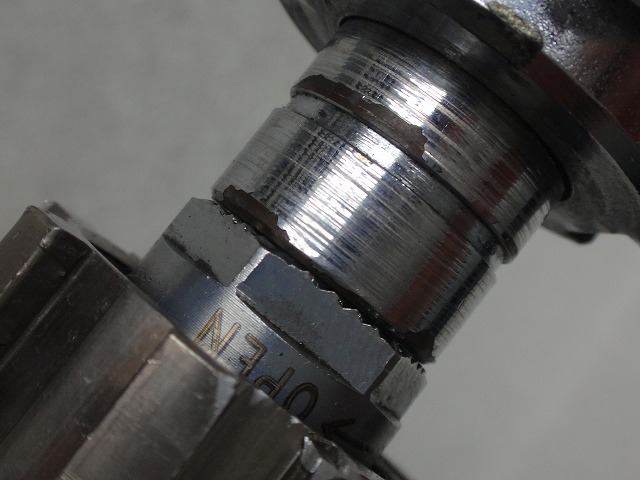
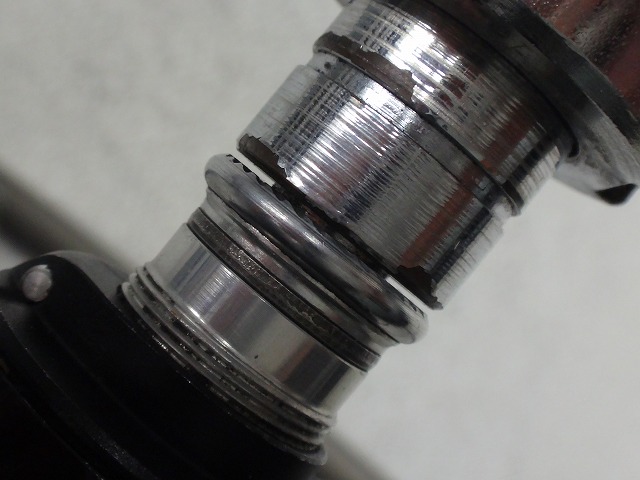
but since I was peeling off the tubular tire that was glued on at the point shown in the image above,
let me rewind the timeline a bit.


Pinarello's parts brand "Most" makes something called a tubular tire-specific tire lever,
but production has already been discontinued.
The wholesaler still has some stock, though it will be gone once supplies run out,
and when I checked the inventory, there were 929 pieces in stock.
I abandoned the idea of monopolizing the supply for our shop.
If you want one, I think you can still get it in time,
so please order through your nearest shop that carries Pinarello or Fizik.
As for how well it works—it's excellent.
Back to the wheel.
The rim is shifted toward the non-freewheel side.
That would suggest the non-freewheel side has more tension than a properly centered rear wheel,
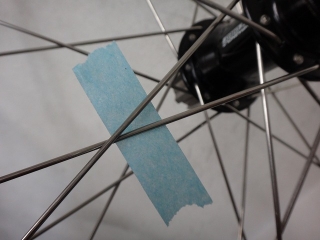
but actually,
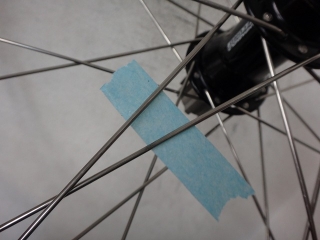
it was abnormally loose.
The freewheel side tension isn't tensioned to the limit,
so tightening both sides would help somewhat, but
there are definite limits under these conditions.
Another reason it's loose:
the spokes on both sides of this rear wheel are DT Competition,
but they're 15-gauge (1.8–1.7–1.8mm) rather than
14-gauge (2.0–1.8–2.0mm) competition spokes.
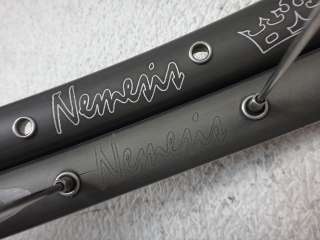
The replacement Nemesis Rim not only has a darker anodize color,
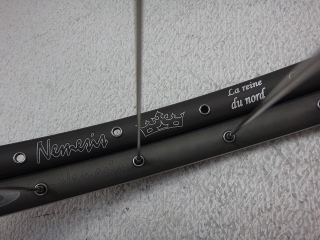
it also has "Queen of the North" printed on it, so it's from a more recent era.
The Record hub will be disassembled—both per the customer's request and because
the bearing feel is distinctly suspect.
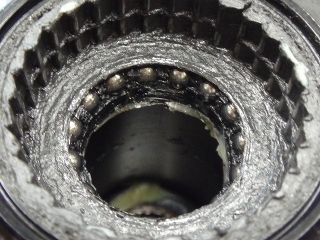
↑Right-side bearing on the hub body
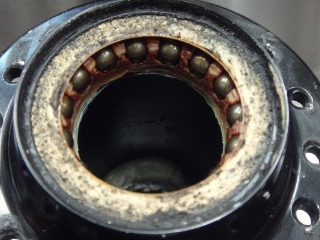
↑Left-side bearing on the hub body
The left side is clearly shot.
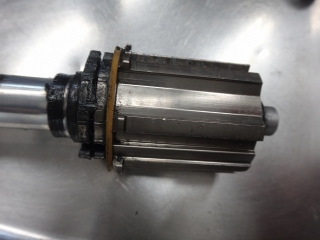
Normally, I'd remove the freewheel body before pulling the hub axle out of the hub body,
but it wouldn't come out, so I removed the axle assembly from the hub body altogether.
Usually in cases like this, there's secondary rust transfer from the freewheel bearing
onto the hub axle, but
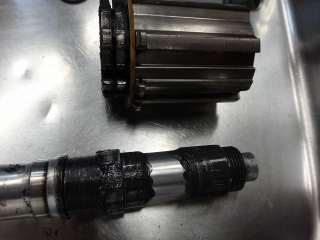

there's no secondary rust.
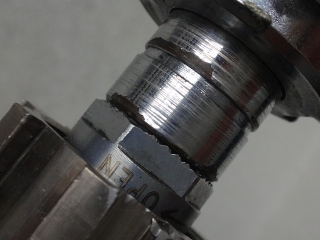
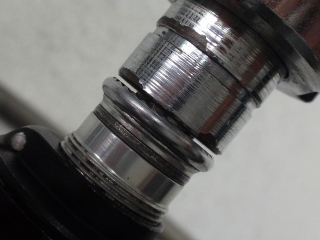
There are just an abnormal number of scoring marks.
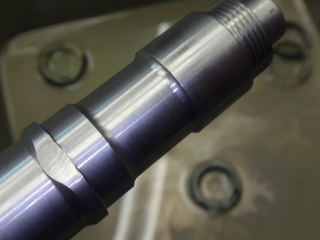
↑For reference, here's the hub axle from the original Racing Zero I wrote about recently.
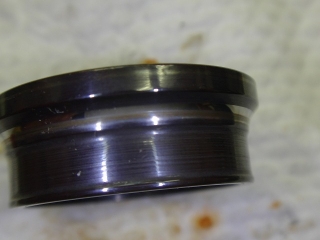
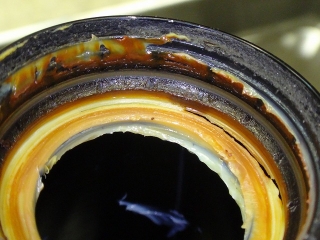
As for the bearing cups and races on the left side of the hub,
while there's no pitting, the wear on the contact points with the balls is severe—
you can feel the step when you run your fingernail across it.
I replaced only the left-side bearing with a new one (silver ball race).
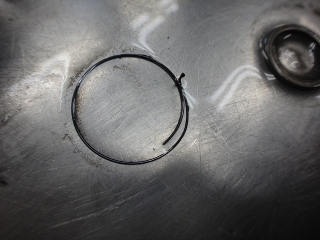
The freewheel pawl return spring was bent, so I replaced it.
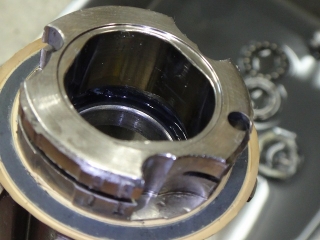
I cleaned the freewheel body, but
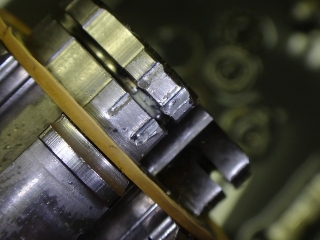
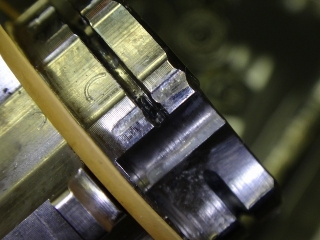
the right end cap nut was so loose it could be turned by hand, and related to that,
the freewheel body was rocking eccentrically and had been striking
the ratchet teeth on the hub body.

The outer bearing on the freewheel body had turbid rotation, so I replaced it.
The image above shows the inner bearing of the freewheel body,
but the snap ring retainer isn't in a form that can be easily removed.
That makes sense—at the time this freewheel body was made,
freewheel bearings weren't supplied as spare parts.
Since they're a standard 6803 size bearing (one-side open/one-side contact-free seal),
I've long used 6803 bearings for repairs
(double-side non-contact seals, used without the open side)
but now that genuine spare parts are available, I basically use those instead.
That's what I did this time too.

I pressed in a silver race on the left side.

Assembled.
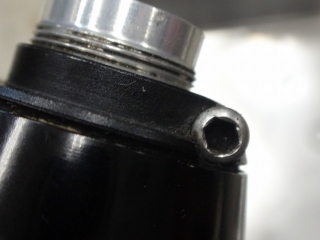
Before
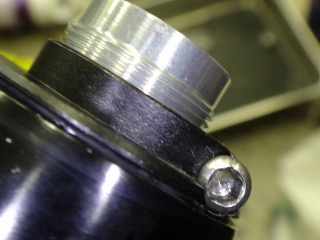
After
When cleaning, I'm particular about two things for some reason:
making sure there's no dirt jammed in the threads of the hub axle,
and that the hexagon socket in the ball-race adjustment nut's fixing bolt is clean.
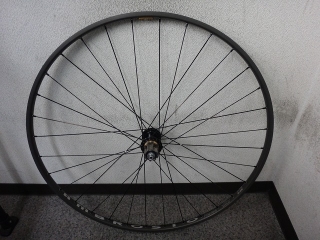
Wheel built.
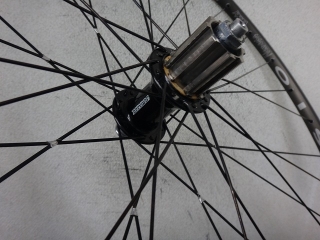
FH7-RE2 hub (※) 32H black half-comp, 4-cross lacing pattern, with solder joints.
※This is the official designation for this Record hub.
Based on the model number, it's been in continuous production since 2007.
Campagnolo has discontinued the 1-inch Italian-threaded threadless headset, the 1-inch Italian-threaded integrated headset, and the O.S. integrated headset,
but they still carry the Record 1-inch Italian-threaded
headset in the lineup under model number HS7-RE,
so that's also been in continuous production since 2007.
Campagnolo released carbon bottle cages starting in 2004, with
a full-carbon Record version and a Chorus version with aluminum base plate,
but as the current model with the same shape as the traditional Record, the
BC12-SRC has been available since 2012 as the Super Record grade model.
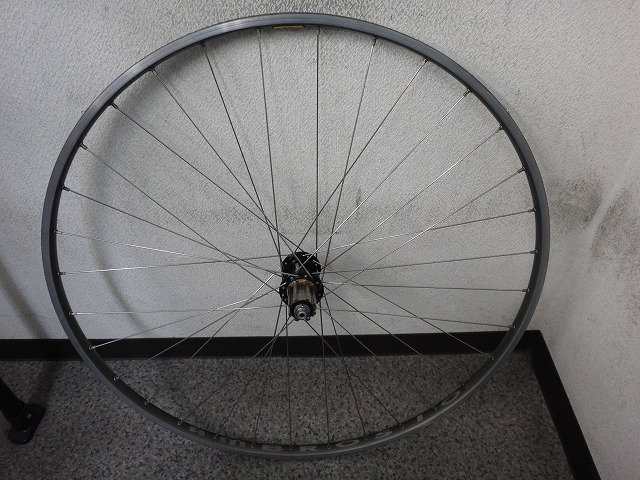
A customer dropped off a rear wheel built with Ambrosio Nemesis Rim components.
The hub is a Record 32H.
They wanted me to rebuild it with a different Nemesis Rim,
but since I was peeling off the tubular tire that was glued on at the point shown in the image above,
let me rewind the timeline a bit.
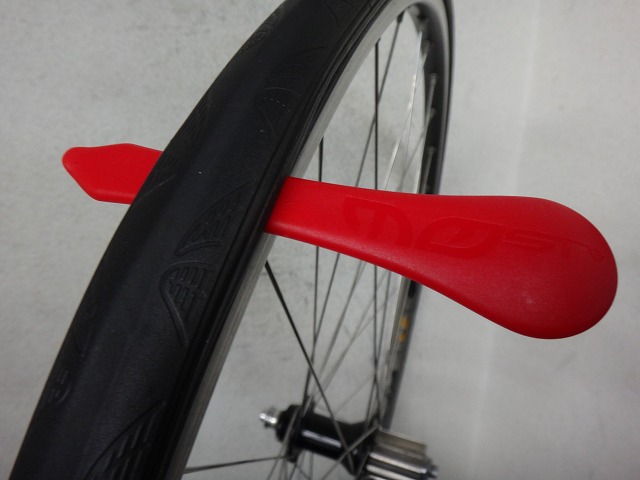
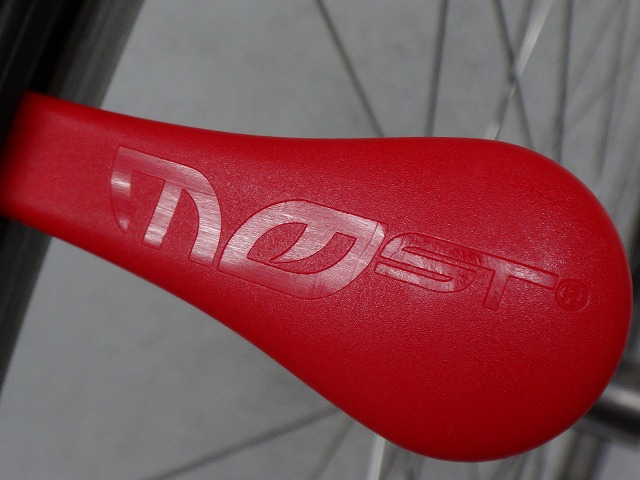
Pinarello's parts brand "Most" makes something called a tubular tire-specific tire lever,
but production has already been discontinued.
The wholesaler still has some stock, though it will be gone once supplies run out,
and when I checked the inventory, there were 929 pieces in stock.
I abandoned the idea of monopolizing the supply for our shop.
If you want one, I think you can still get it in time,
so please order through your nearest shop that carries Pinarello or Fizik.
As for how well it works—it's excellent.
Back to the wheel.
The rim is shifted toward the non-freewheel side.
That would suggest the non-freewheel side has more tension than a properly centered rear wheel,

but actually,
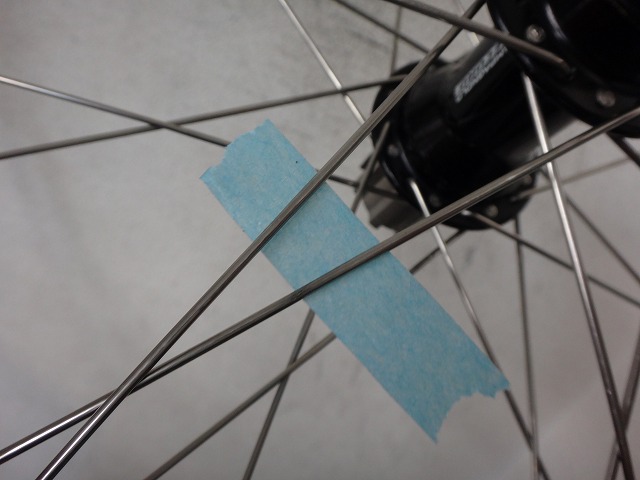
it was abnormally loose.
The freewheel side tension isn't tensioned to the limit,
so tightening both sides would help somewhat, but
there are definite limits under these conditions.
Another reason it's loose:
the spokes on both sides of this rear wheel are DT Competition,
but they're 15-gauge (1.8–1.7–1.8mm) rather than
14-gauge (2.0–1.8–2.0mm) competition spokes.

The replacement Nemesis Rim not only has a darker anodize color,
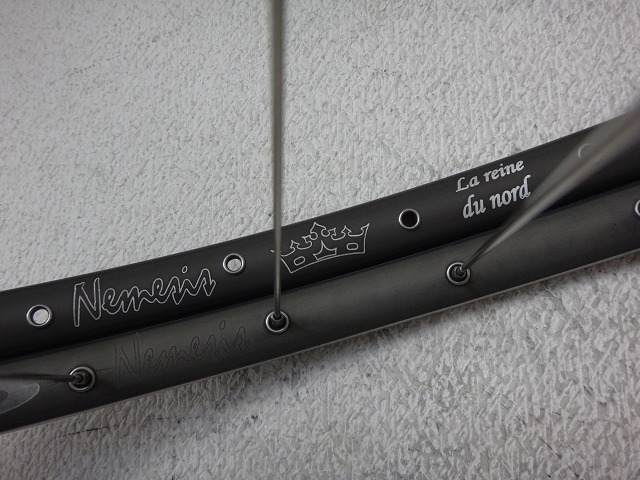
it also has "Queen of the North" printed on it, so it's from a more recent era.
The Record hub will be disassembled—both per the customer's request and because
the bearing feel is distinctly suspect.

↑Right-side bearing on the hub body

↑Left-side bearing on the hub body
The left side is clearly shot.
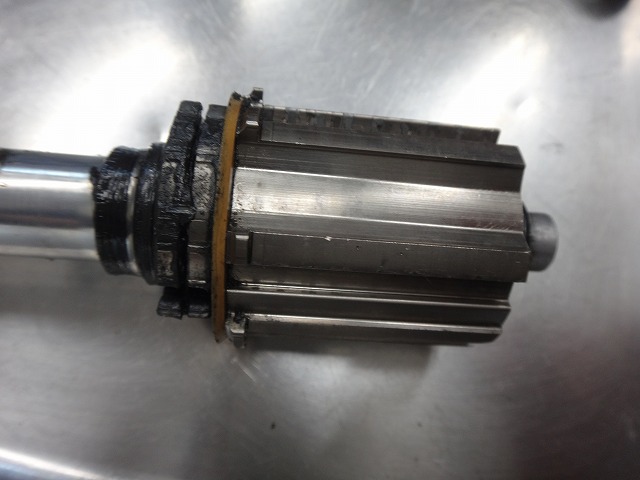
Normally, I'd remove the freewheel body before pulling the hub axle out of the hub body,
but it wouldn't come out, so I removed the axle assembly from the hub body altogether.
Usually in cases like this, there's secondary rust transfer from the freewheel bearing
onto the hub axle, but
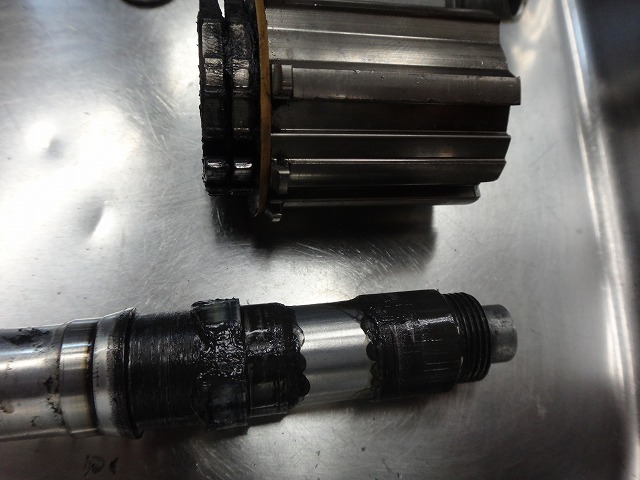
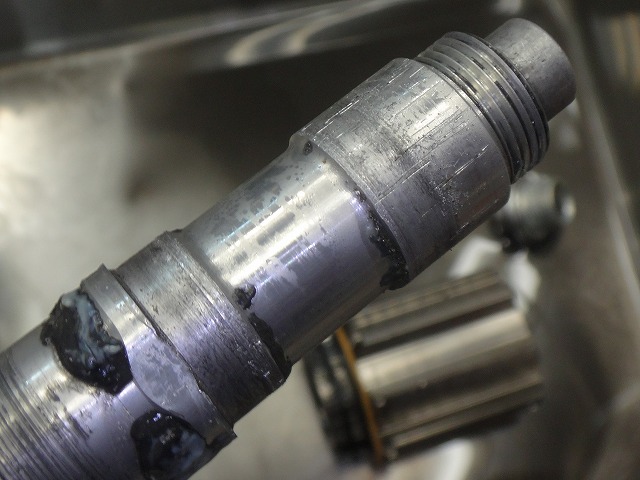
there's no secondary rust.
There are just an abnormal number of scoring marks.
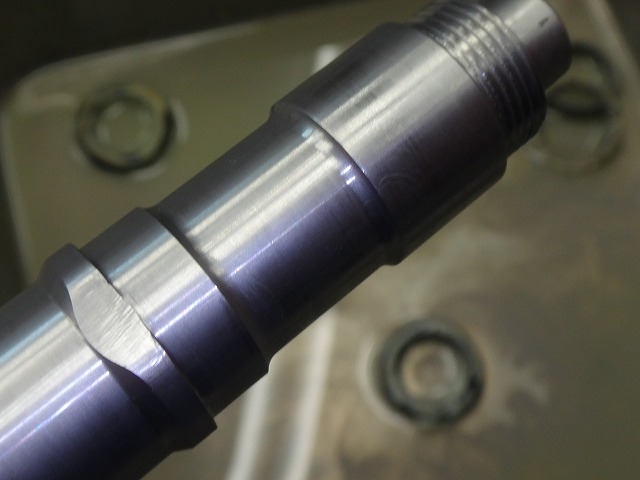
↑For reference, here's the hub axle from the original Racing Zero I wrote about recently.

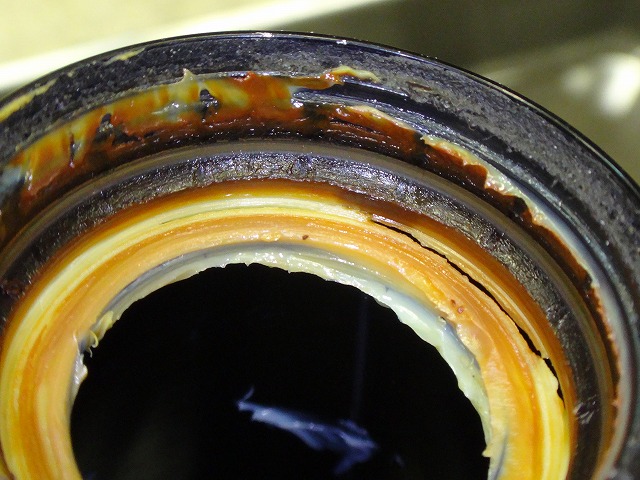
As for the bearing cups and races on the left side of the hub,
while there's no pitting, the wear on the contact points with the balls is severe—
you can feel the step when you run your fingernail across it.
I replaced only the left-side bearing with a new one (silver ball race).
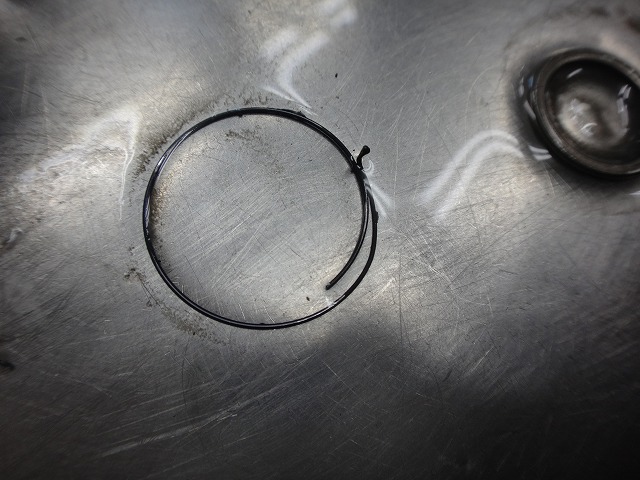
The freewheel pawl return spring was bent, so I replaced it.

I cleaned the freewheel body, but
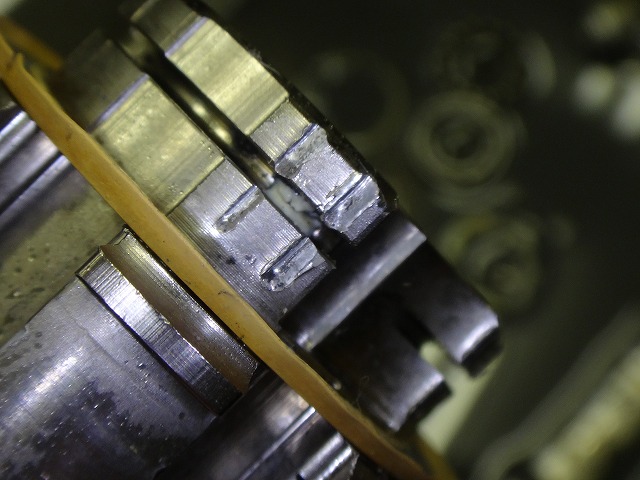

the right end cap nut was so loose it could be turned by hand, and related to that,
the freewheel body was rocking eccentrically and had been striking
the ratchet teeth on the hub body.
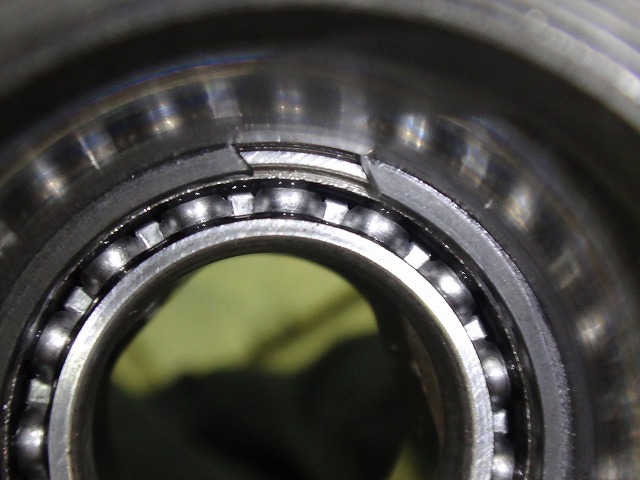
The outer bearing on the freewheel body had turbid rotation, so I replaced it.
The image above shows the inner bearing of the freewheel body,
but the snap ring retainer isn't in a form that can be easily removed.
That makes sense—at the time this freewheel body was made,
freewheel bearings weren't supplied as spare parts.
Since they're a standard 6803 size bearing (one-side open/one-side contact-free seal),
I've long used 6803 bearings for repairs
(double-side non-contact seals, used without the open side)
but now that genuine spare parts are available, I basically use those instead.
That's what I did this time too.
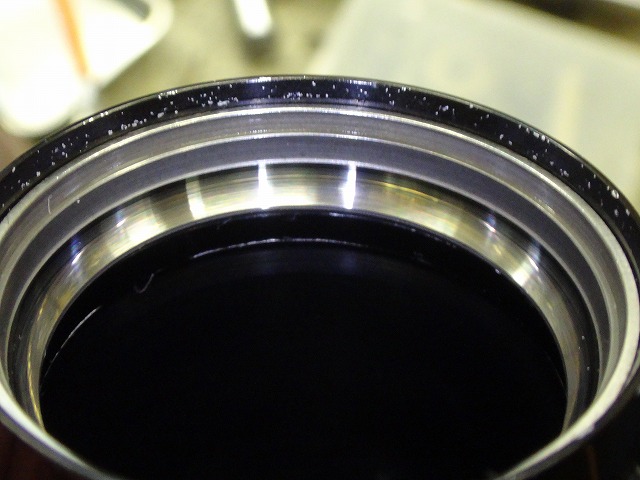
I pressed in a silver race on the left side.

Assembled.
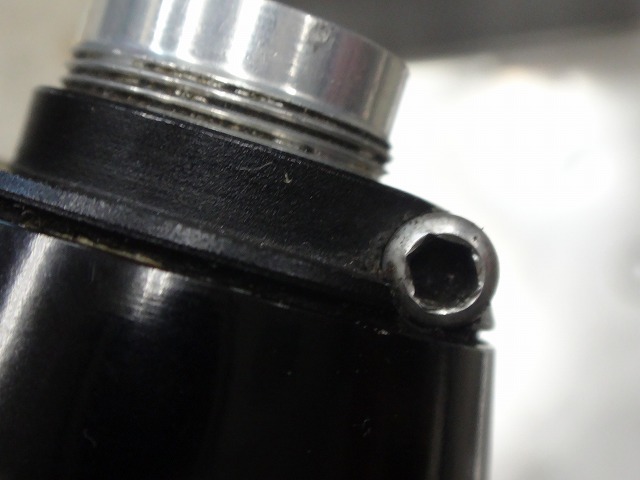
Before
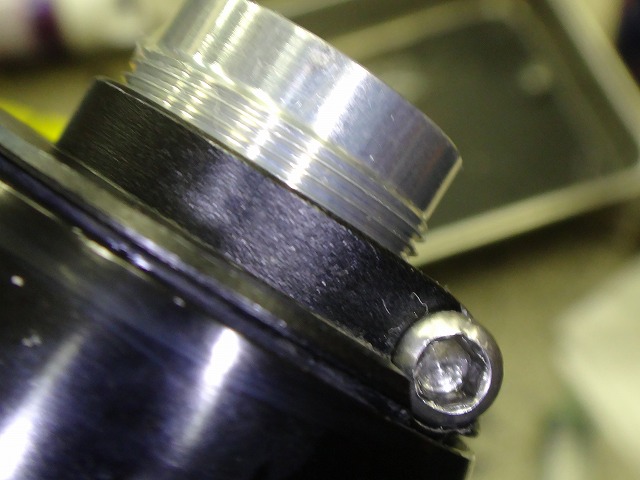
After
When cleaning, I'm particular about two things for some reason:
making sure there's no dirt jammed in the threads of the hub axle,
and that the hexagon socket in the ball-race adjustment nut's fixing bolt is clean.
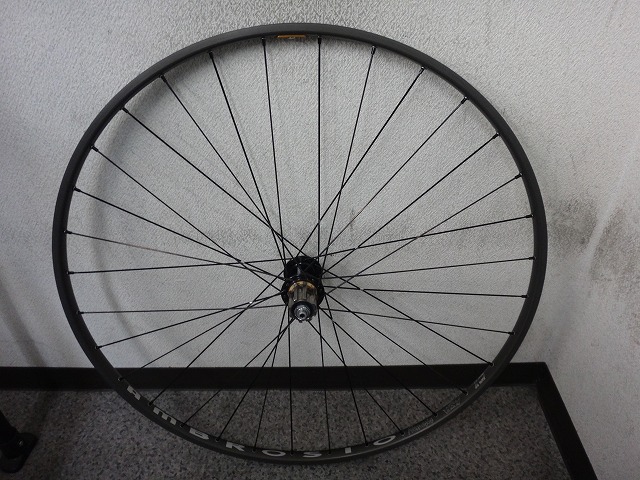
Wheel built.
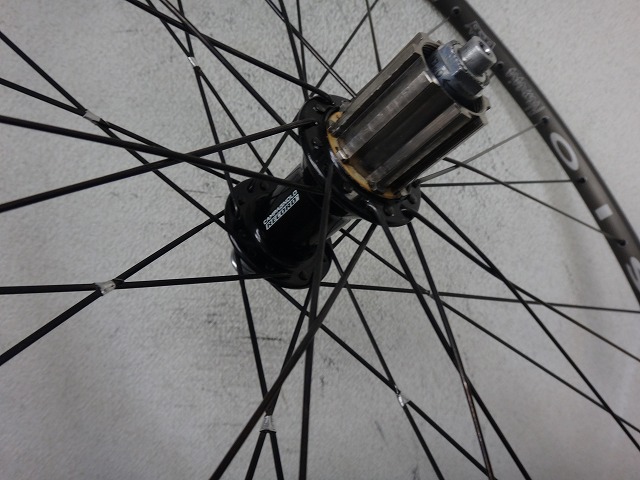
FH7-RE2 hub (※) 32H black half-comp, 4-cross lacing pattern, with solder joints.
※This is the official designation for this Record hub.
Based on the model number, it's been in continuous production since 2007.
Campagnolo has discontinued the 1-inch Italian-threaded threadless headset, the 1-inch Italian-threaded integrated headset, and the O.S. integrated headset,
but they still carry the Record 1-inch Italian-threaded
headset in the lineup under model number HS7-RE,
so that's also been in continuous production since 2007.
Campagnolo released carbon bottle cages starting in 2004, with
a full-carbon Record version and a Chorus version with aluminum base plate,
but as the current model with the same shape as the traditional Record, the
BC12-SRC has been available since 2012 as the Super Record grade model.