I went to Koyasan.
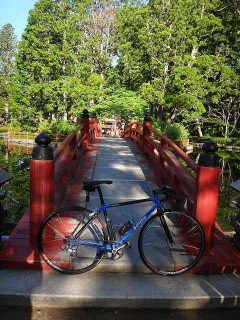
I was planning to write an article about this, but
the composition of the images in the article was completely ripped off.
The article that ripped it off is (→here)
I was planning to write about it, but
thinking about the timeline, it was actually me who ripped it off.
Rather, this is Nabeyast respect. Sorry about that.
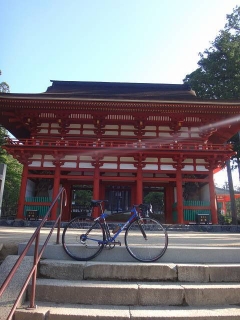
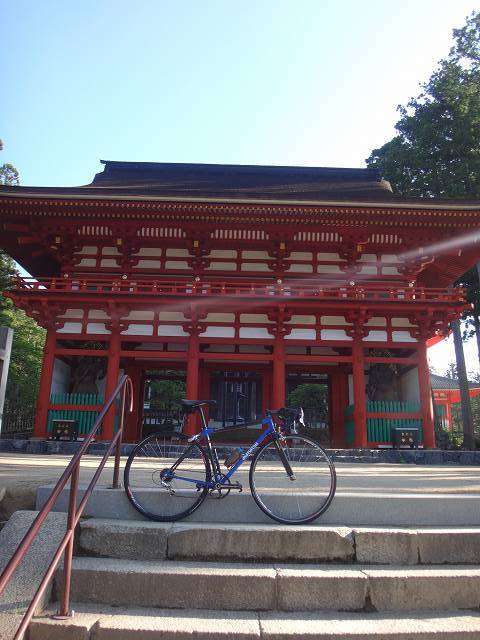
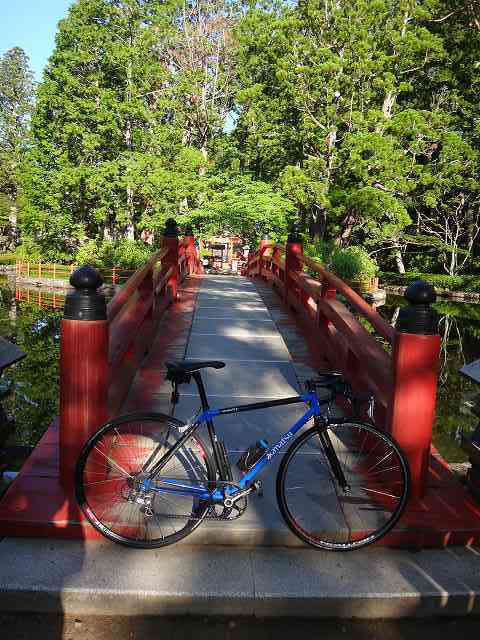
About the opening image, it's not the Daimon (Great Gate) of Koyasan, also known as the Kongōbu-ji Daimon,
but the Chūmon (Middle Gate) of Danjo Garan.
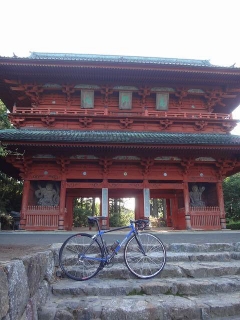
↑The Daimon is this one
Below, I'll be talking about things like highways around Osaka and Wakayama
that only people in the area will understand, so please bear with me.
I was planning to go to Koyasan on June 12th (Wednesday) yesterday,
but I did high-intensity training on Route 170 (the Outer Loop) from Kishiwada to around Tōhara
and my legs were completely shot, so I gave up on going to Koyasan.
According to my Polar V800 2,
the training load was "Extreme," and
the estimated recovery period was 4 days and 16 hours.
In terms of distance, I only rode about 70km,
but "Extreme" for training load is the highest out of five levels,
and if you do high-intensity riding for a little over 2 hours or even low-intensity for about 3 hours
it gets classified as Extreme.
Even if you do training that's far more intense than that,
Extreme is the upper limit, so there's no higher rating.
The lower limit of the top rating is too low.
Using boxing as an analogy, it's like "anyone 55kg or heavier is in the heavyweight division, with no upper limit from there,"
so any decent training above a certain level all becomes Extreme.
The five-level training load ratings are
in Finnish, English, and Japanese respectively:
Äärimmäinen / Extreme / Extremely heavy (48 hours or more)
Erittäin rankka / Very demanding / Very heavy (25–48 hours)
Rankka / Demanding / Heavy (13–24 hours)
Kohtalainen / Reasonable / Moderate (7–12 hours)
Lievä / Mild / Light (0–6 hours)
I included the Finnish because
Polar is a(※)manufacturer, but there's no deeper meaning.
※I mistakenly said Finland when it should have been Sweden, so I'm correcting it.
Thank you for pointing that out in the comments.
The word "demanding" in English means intense.
The fourth one from the top, which corresponds to "Reasonable" in English, has the Japanese equivalent
"moderate," but not just with that one—
Polar's Japanese translations are suspicious in various places, so
I have my device set to English.
The time written after indicates the estimated recovery period,
which determines the training load.
If recovery is determined to require 48 hours (2 days) or more,
it's classified as Extreme,
but if you ride for even 3 hours, you'll almost certainly get Extreme even at low intensity.
From experience, the middle "Demanding" is the hardest rating to achieve.
Looking at my past logs,
I have a record of 42 minutes of exercise classified as Demanding,
but I also have records of 1 hour 30 minutes classified as Reasonable.
My impression is that about 50 minutes at somewhat high intensity
gets classified as Demanding, but
my bike commute is about 35 minutes one way,
and I get either Mild or Reasonable about half the time (I must be right on the borderline),
and when I actually ride outside of that, I rarely stop at 50 minutes,
so Demanding is the hardest rating for me to achieve.
So, out of respect for Nabeyast,
I went to Koyasan to photograph content for an article,
and that ended up being today, June 14th (Friday).
My legs were shot from yesterday's training, so I was consciously riding at low intensity.
The average heart rate for the whole workout was 133 bpm,
and even looking just at the climbing section to Koyasan, it was 142 bpm.
I left home around 3:30 AM,
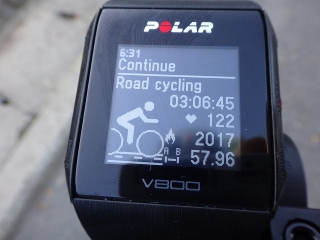
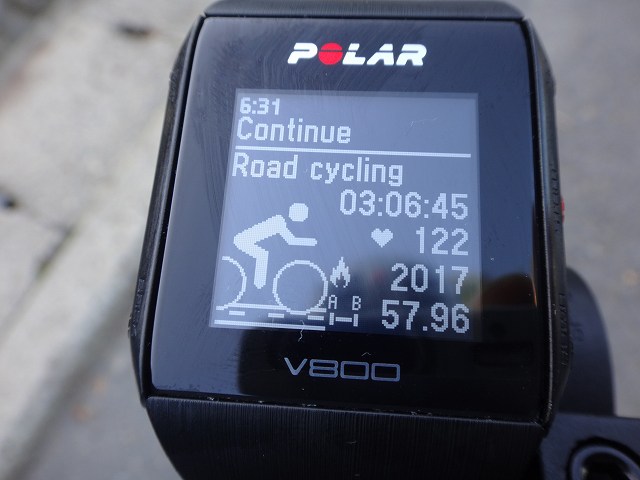
and I paused the measurement at the Daimon of Koyasan at 6:31 AM.
The riding time shows 3 hours and 6 minutes,
but since I don't have auto-stop/start enabled,
it uses the same measurement method as a stopwatch,
so the clock doesn't stop even when I'm waiting at traffic lights.
That's why my average speed decreases at traffic lights, but
with Polar's average speed display, when you stop completely, the number doesn't gradually decrease,
rather it's calculated the moment you accelerate again and shows 0 km/h, dropping sharply at that instant.
From my home in Sakai to the Daimon is about 58km, and my route was just heading south on Route 310,
then when I hit Route 371, I went straight over Kimi Pass, and to Koyasan via the Kudoyama route.
My crankset is a single 46T, and my cassette is 11–28T, so
the easiest gear of 46×28T theoretically equals 39×23.4T or 34×20.7T,
and since both Kimi Pass and the climb from Kudoyama to Koyasan have gentle gradients,
I was able to ride without pushing hard and without raising my heart rate much.
Since I turned around at Koyasan's Daimon,
the return leg would have about 20km of descent,
so the return shouldn't have taken 3 hours and 6 minutes.
I expected about 2 hours and 20 minutes,
thinking the whole thing would take about 5.5 hours,
but it actually took 5 hours and 57 minutes.
The distance wasn't 58km times two, which would be 116km... it was 119.2km.
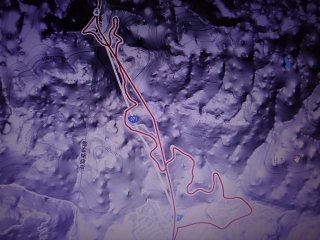
That's because on the outbound route, I went through the Kimi tunnel.
The Kimi Tunnel from Osaka to Wakayama
is almost all downhill, and there weren't many cars at that time,
so I used the tunnel.
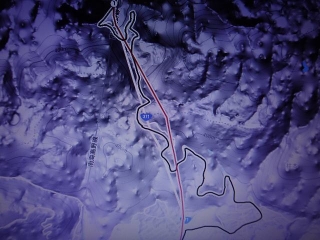
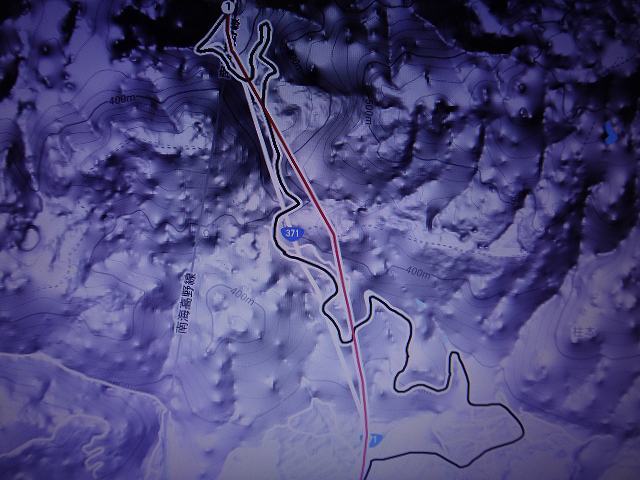
↑The red is the outbound route, black is the return.
On the return, I rode the old road over Kimi Pass.
Since I left Sakai city limits in the early morning (around 4 AM),
I barely encountered any cars and didn't hit many red lights,
but the return route wasn't like that,
so it took more time than I expected.
As for Polar's GPS measurement, when entering a long tunnel,
it loses satellite signal within a few dozen meters.
It re-acquires the signal not a few dozen meters before exiting the tunnel,
but only after completely exiting.
So of the 1453m length of the Kimi Tunnel,
about 1400m minus the first few dozen meters gets added to the distance all at once
the moment the device reacquires satellites after exiting,
which I think draws a straight line between the point where it was lost and where it was reacquired.
However, in the map image above, the trajectory during the GPS loss
is map-matched to the curve of the Kimi Tunnel
and isn't a straight line.
The V800 2 main unit doesn't have map data in it,
so map-matching must be applied when projecting the GPS coordinates onto a map.
Regarding Polar's distance measurement,
when using GPS measurement only without a speed sensor,
there tends to be a smaller value compared to actual measurement from a cycle computer.
By actual measurement here, I mean the tire circumference measured in 1mm units
when the tire has the proper air pressure, entered into a
CatEye wired cycle computer.
From experience, if Polar says 119.2km,
CatEye will definitely show 120km or more.
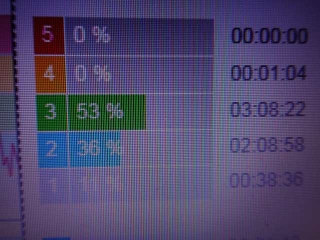
↑This is the breakdown of heart rate zones for today's workout.
Almost all of it was zones 3 and 2, so I wasn't pushing hard at all.
Separate from the five-level "training load" I mentioned earlier,
there's also a 17-level "training effect,"
and Polar evaluates this workout with a comment
on what will improve with this type of training.
With high intensity, you get improvements in muscle neural coordination and fatigue resistance,
a bit lower and you get improvements in aerobic capacity and muscular endurance,
even lower and you get improvements in base endurance and fat-burning ability.
Listing the 17 levels from the top:
Maximum Training+
Maximum Training
Maximum and Tempo Training
Tempo and Maximum Training
Tempo Training+
Tempo Training
Tempo and Steady State Training
Steady State and Tempo Training
Steady State Training+
Steady State Training
Steady State and Base Training, Long
Steady State and Base Training
Base and Steady State Training, Long
Base and Steady State Training
Base Training, Long
Base Training
Recovery Training
and today's Koyasan ride was classified as "Steady State Training+."
This is higher than I expected.
No matter how slowly I ride, the hill itself presents resistance,
so it apparently doesn't get classified as that low.
Setting aside the five-level training load,
this 17-level training effect is fairly reliable.
I was planning to write an article about this, but
the composition of the images in the article was completely ripped off.
The article that ripped it off is (→here)
I was planning to write about it, but
thinking about the timeline, it was actually me who ripped it off.
Rather, this is Nabeyast respect. Sorry about that.
About the opening image, it's not the Daimon (Great Gate) of Koyasan, also known as the Kongōbu-ji Daimon,
but the Chūmon (Middle Gate) of Danjo Garan.

↑The Daimon is this one
Below, I'll be talking about things like highways around Osaka and Wakayama
that only people in the area will understand, so please bear with me.
I was planning to go to Koyasan on June 12th (Wednesday) yesterday,
but I did high-intensity training on Route 170 (the Outer Loop) from Kishiwada to around Tōhara
and my legs were completely shot, so I gave up on going to Koyasan.
According to my Polar V800 2,
the training load was "Extreme," and
the estimated recovery period was 4 days and 16 hours.
In terms of distance, I only rode about 70km,
but "Extreme" for training load is the highest out of five levels,
and if you do high-intensity riding for a little over 2 hours or even low-intensity for about 3 hours
it gets classified as Extreme.
Even if you do training that's far more intense than that,
Extreme is the upper limit, so there's no higher rating.
The lower limit of the top rating is too low.
Using boxing as an analogy, it's like "anyone 55kg or heavier is in the heavyweight division, with no upper limit from there,"
so any decent training above a certain level all becomes Extreme.
The five-level training load ratings are
in Finnish, English, and Japanese respectively:
Äärimmäinen / Extreme / Extremely heavy (48 hours or more)
Erittäin rankka / Very demanding / Very heavy (25–48 hours)
Rankka / Demanding / Heavy (13–24 hours)
Kohtalainen / Reasonable / Moderate (7–12 hours)
Lievä / Mild / Light (0–6 hours)
I included the Finnish because
Polar is a(※)manufacturer, but there's no deeper meaning.
※I mistakenly said Finland when it should have been Sweden, so I'm correcting it.
Thank you for pointing that out in the comments.
The word "demanding" in English means intense.
The fourth one from the top, which corresponds to "Reasonable" in English, has the Japanese equivalent
"moderate," but not just with that one—
Polar's Japanese translations are suspicious in various places, so
I have my device set to English.
The time written after indicates the estimated recovery period,
which determines the training load.
If recovery is determined to require 48 hours (2 days) or more,
it's classified as Extreme,
but if you ride for even 3 hours, you'll almost certainly get Extreme even at low intensity.
From experience, the middle "Demanding" is the hardest rating to achieve.
Looking at my past logs,
I have a record of 42 minutes of exercise classified as Demanding,
but I also have records of 1 hour 30 minutes classified as Reasonable.
My impression is that about 50 minutes at somewhat high intensity
gets classified as Demanding, but
my bike commute is about 35 minutes one way,
and I get either Mild or Reasonable about half the time (I must be right on the borderline),
and when I actually ride outside of that, I rarely stop at 50 minutes,
so Demanding is the hardest rating for me to achieve.
So, out of respect for Nabeyast,
I went to Koyasan to photograph content for an article,
and that ended up being today, June 14th (Friday).
My legs were shot from yesterday's training, so I was consciously riding at low intensity.
The average heart rate for the whole workout was 133 bpm,
and even looking just at the climbing section to Koyasan, it was 142 bpm.
I left home around 3:30 AM,
and I paused the measurement at the Daimon of Koyasan at 6:31 AM.
The riding time shows 3 hours and 6 minutes,
but since I don't have auto-stop/start enabled,
it uses the same measurement method as a stopwatch,
so the clock doesn't stop even when I'm waiting at traffic lights.
That's why my average speed decreases at traffic lights, but
with Polar's average speed display, when you stop completely, the number doesn't gradually decrease,
rather it's calculated the moment you accelerate again and shows 0 km/h, dropping sharply at that instant.
From my home in Sakai to the Daimon is about 58km, and my route was just heading south on Route 310,
then when I hit Route 371, I went straight over Kimi Pass, and to Koyasan via the Kudoyama route.
My crankset is a single 46T, and my cassette is 11–28T, so
the easiest gear of 46×28T theoretically equals 39×23.4T or 34×20.7T,
and since both Kimi Pass and the climb from Kudoyama to Koyasan have gentle gradients,
I was able to ride without pushing hard and without raising my heart rate much.
Since I turned around at Koyasan's Daimon,
the return leg would have about 20km of descent,
so the return shouldn't have taken 3 hours and 6 minutes.
I expected about 2 hours and 20 minutes,
thinking the whole thing would take about 5.5 hours,
but it actually took 5 hours and 57 minutes.
The distance wasn't 58km times two, which would be 116km... it was 119.2km.

That's because on the outbound route, I went through the Kimi tunnel.
The Kimi Tunnel from Osaka to Wakayama
is almost all downhill, and there weren't many cars at that time,
so I used the tunnel.
↑The red is the outbound route, black is the return.
On the return, I rode the old road over Kimi Pass.
Since I left Sakai city limits in the early morning (around 4 AM),
I barely encountered any cars and didn't hit many red lights,
but the return route wasn't like that,
so it took more time than I expected.
As for Polar's GPS measurement, when entering a long tunnel,
it loses satellite signal within a few dozen meters.
It re-acquires the signal not a few dozen meters before exiting the tunnel,
but only after completely exiting.
So of the 1453m length of the Kimi Tunnel,
about 1400m minus the first few dozen meters gets added to the distance all at once
the moment the device reacquires satellites after exiting,
which I think draws a straight line between the point where it was lost and where it was reacquired.
However, in the map image above, the trajectory during the GPS loss
is map-matched to the curve of the Kimi Tunnel
and isn't a straight line.
The V800 2 main unit doesn't have map data in it,
so map-matching must be applied when projecting the GPS coordinates onto a map.
Regarding Polar's distance measurement,
when using GPS measurement only without a speed sensor,
there tends to be a smaller value compared to actual measurement from a cycle computer.
By actual measurement here, I mean the tire circumference measured in 1mm units
when the tire has the proper air pressure, entered into a
CatEye wired cycle computer.
From experience, if Polar says 119.2km,
CatEye will definitely show 120km or more.

↑This is the breakdown of heart rate zones for today's workout.
Almost all of it was zones 3 and 2, so I wasn't pushing hard at all.
Separate from the five-level "training load" I mentioned earlier,
there's also a 17-level "training effect,"
and Polar evaluates this workout with a comment
on what will improve with this type of training.
With high intensity, you get improvements in muscle neural coordination and fatigue resistance,
a bit lower and you get improvements in aerobic capacity and muscular endurance,
even lower and you get improvements in base endurance and fat-burning ability.
Listing the 17 levels from the top:
Maximum Training+
Maximum Training
Maximum and Tempo Training
Tempo and Maximum Training
Tempo Training+
Tempo Training
Tempo and Steady State Training
Steady State and Tempo Training
Steady State Training+
Steady State Training
Steady State and Base Training, Long
Steady State and Base Training
Base and Steady State Training, Long
Base and Steady State Training
Base Training, Long
Base Training
Recovery Training
and today's Koyasan ride was classified as "Steady State Training+."
This is higher than I expected.
No matter how slowly I ride, the hill itself presents resistance,
so it apparently doesn't get classified as that low.
Setting aside the five-level training load,
this 17-level training effect is fairly reliable.