Another day, another wheel build (and so on).
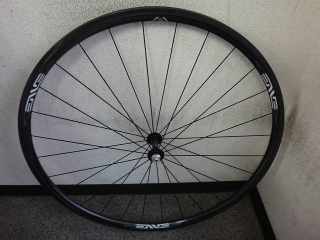
A customer brought in a wheel built with an ENVE 25 rim—now considered a classic Envy model, though all versions have been discontinued.
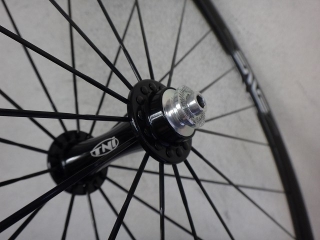
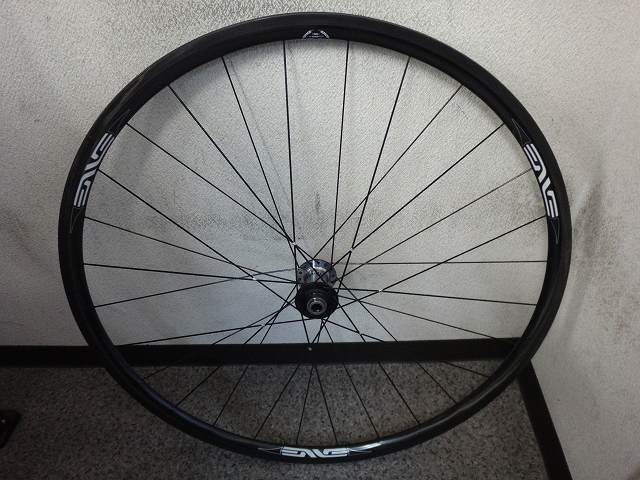
It's a TNI Wing Hub 28H, black, CX-RAY outpoke radial laced wheel.
Since the Classic Envy is fragile against brake heat, he wanted it rebuilt with a disc brake hub.
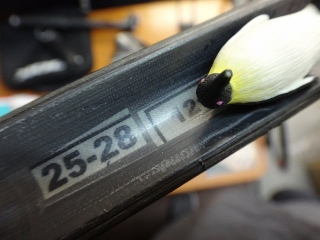
The marking "25-28" on the rim means "25 rim with 28 holes." The Classic Envy's other rim sizes—45 and 65—each come in a light version "1" and a sturdy (heavier) version "2," marked on the rim as "1-45" and so on. But the 25 rim doesn't have a "2" specification. Including myself, people often call it "1-25" anyway. As for tire compatibility, there are two specs: tubular and clincher (WO).
The serial number is in the 1.2 million range with seven digits, though I've confirmed examples up to the 1.4 million range. The catalog weight of the 25 tubular rim evolved from EDGE through ENVE as 195g → 215g → 250g, but in the final year the 25 was produced, the catalog weight was updated to 274g. That's nearly the same weight as the lighter "1-45."
For reference, the clincher rim from the same era was 402g. So if a 25mm-deep / 402g rim costs tens of thousands of yen per piece, there's an aluminum rim out there that's 22mm-deep / 384g for around ¥4,000 (XR200). I personally think, why not just use that? The 25 doesn't support tubeless tires, so it doesn't have that added value either. Plus there's the low brake heat tolerance, poor buckling resistance, expensive brake pad running costs, and you can't true it without removing the tire. But some people insist they want a carbon rim look, so there's nothing to be done about it.
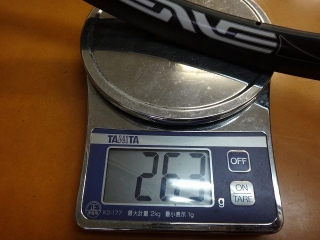
This is the front rim, and both wheels had about this rim weight. Both front and rear had the third generation of the built-in nipples (out of four generations), so this appeared to be a heavier example of the nominal 250g rim. The serial number in the 1.2 million range should have had the fourth-generation nipple, but it seems unlikely they'd deliberately install a third-generation nipple on a rim that should have the fourth. It was probably right at the edge of when the third-gen nipple was still supplied.
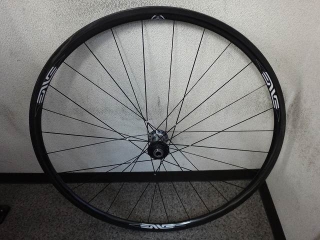
Built.
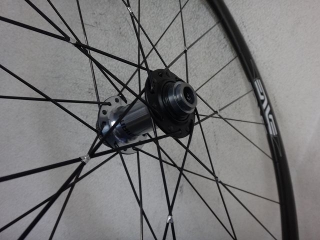
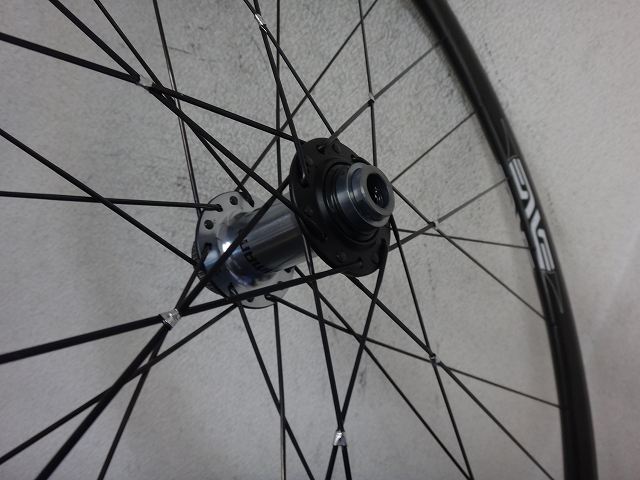
HB-RS770 28H, black, semi-competition 46-cross reverse Italian laced with nipple wire.
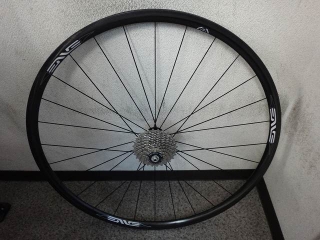
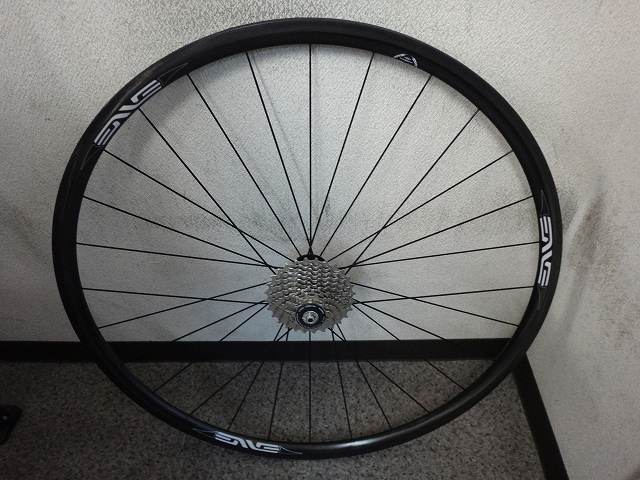
Next, the rear wheel.
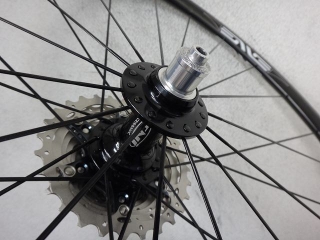
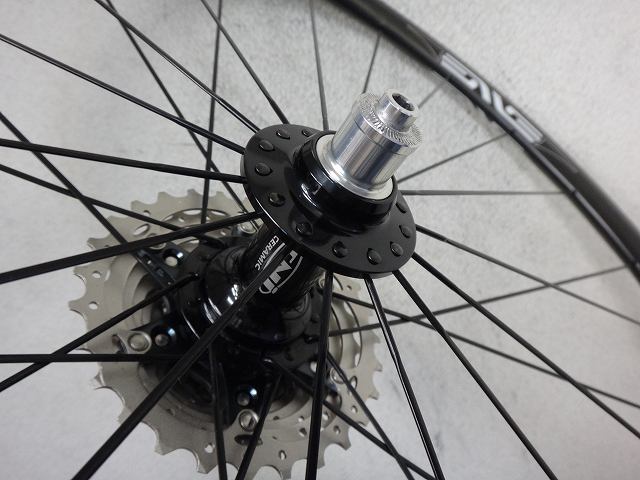
TNI Wing Hub 28H, black, CX-RAY 40-cross laced. Both wheels showed almost no signs of use (though there are some sprocket marks on the freewheel body, so they weren't unused),
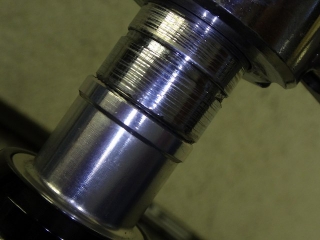
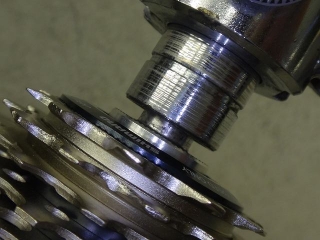
but the rim was significantly offset to the right. While that's a direction rims can shift with age, this wasn't from use—it was like that from the start. This is the level of defect that would be rejected in quality control on a mamachari wheel, but apparently a shop built this one, not the customer.
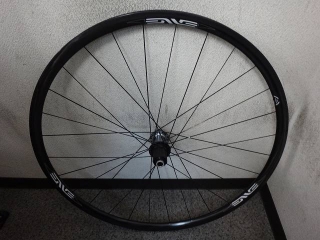
Built.

FH-RS770 28H, black, semi-competition 46-cross JIS laced with nipple wire.
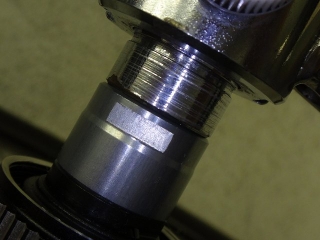
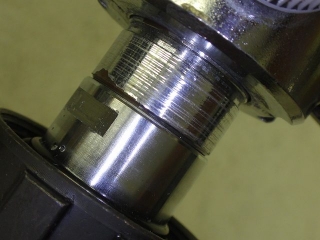
Not that it's worth mentioning, but I centered them up just to be safe.
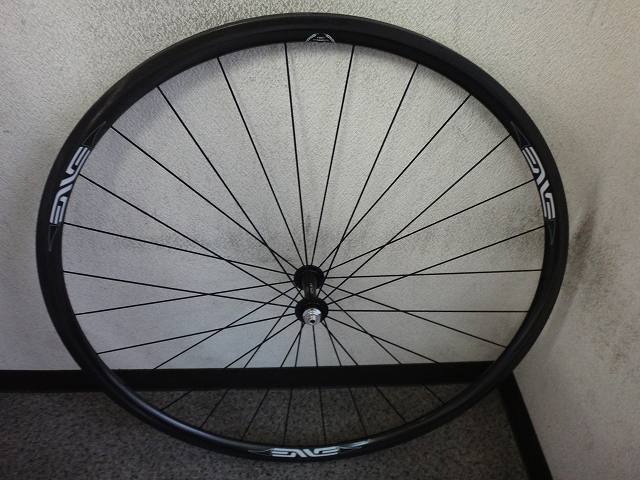
A customer brought in a wheel built with an ENVE 25 rim—now considered a classic Envy model, though all versions have been discontinued.

It's a TNI Wing Hub 28H, black, CX-RAY outpoke radial laced wheel.
Since the Classic Envy is fragile against brake heat, he wanted it rebuilt with a disc brake hub.
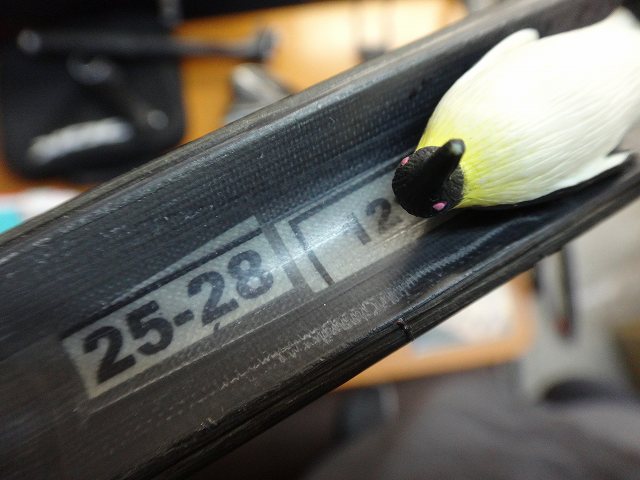
The marking "25-28" on the rim means "25 rim with 28 holes." The Classic Envy's other rim sizes—45 and 65—each come in a light version "1" and a sturdy (heavier) version "2," marked on the rim as "1-45" and so on. But the 25 rim doesn't have a "2" specification. Including myself, people often call it "1-25" anyway. As for tire compatibility, there are two specs: tubular and clincher (WO).
The serial number is in the 1.2 million range with seven digits, though I've confirmed examples up to the 1.4 million range. The catalog weight of the 25 tubular rim evolved from EDGE through ENVE as 195g → 215g → 250g, but in the final year the 25 was produced, the catalog weight was updated to 274g. That's nearly the same weight as the lighter "1-45."
For reference, the clincher rim from the same era was 402g. So if a 25mm-deep / 402g rim costs tens of thousands of yen per piece, there's an aluminum rim out there that's 22mm-deep / 384g for around ¥4,000 (XR200). I personally think, why not just use that? The 25 doesn't support tubeless tires, so it doesn't have that added value either. Plus there's the low brake heat tolerance, poor buckling resistance, expensive brake pad running costs, and you can't true it without removing the tire. But some people insist they want a carbon rim look, so there's nothing to be done about it.
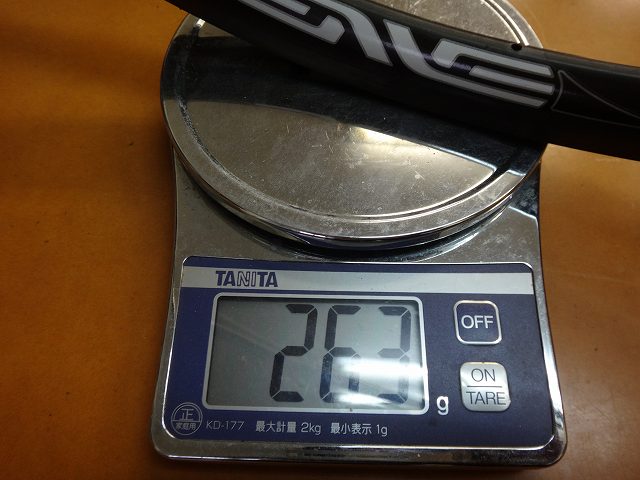
This is the front rim, and both wheels had about this rim weight. Both front and rear had the third generation of the built-in nipples (out of four generations), so this appeared to be a heavier example of the nominal 250g rim. The serial number in the 1.2 million range should have had the fourth-generation nipple, but it seems unlikely they'd deliberately install a third-generation nipple on a rim that should have the fourth. It was probably right at the edge of when the third-gen nipple was still supplied.
Built.
HB-RS770 28H, black, semi-competition 46-cross reverse Italian laced with nipple wire.
Next, the rear wheel.
TNI Wing Hub 28H, black, CX-RAY 40-cross laced. Both wheels showed almost no signs of use (though there are some sprocket marks on the freewheel body, so they weren't unused),
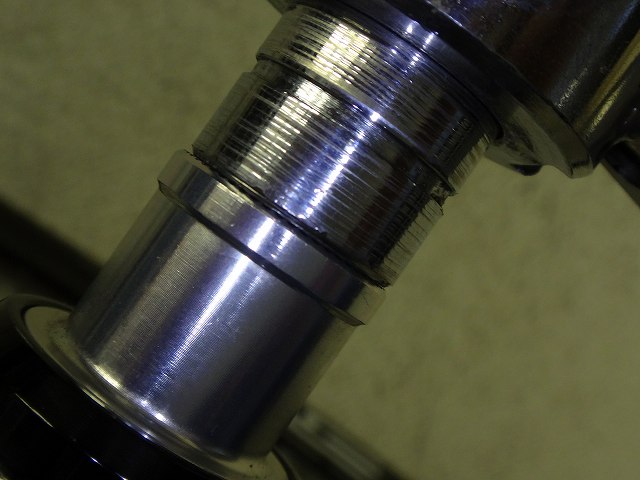
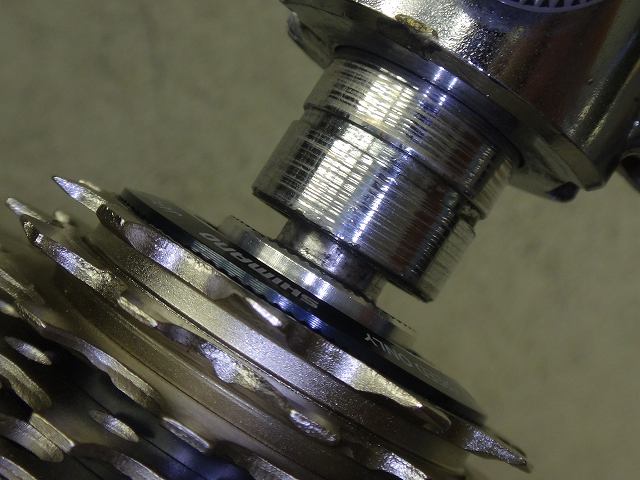
but the rim was significantly offset to the right. While that's a direction rims can shift with age, this wasn't from use—it was like that from the start. This is the level of defect that would be rejected in quality control on a mamachari wheel, but apparently a shop built this one, not the customer.
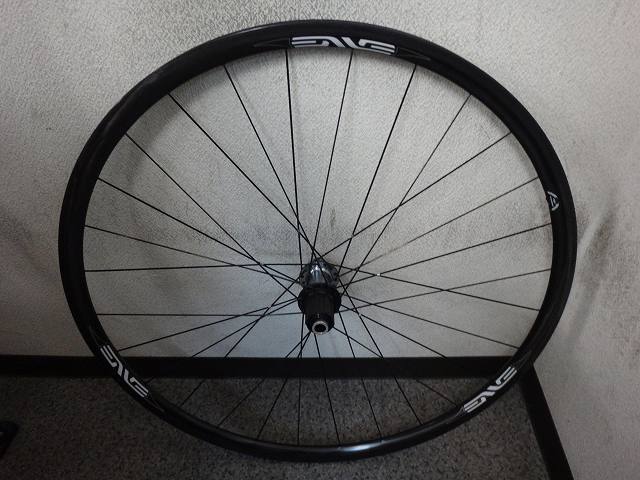
Built.
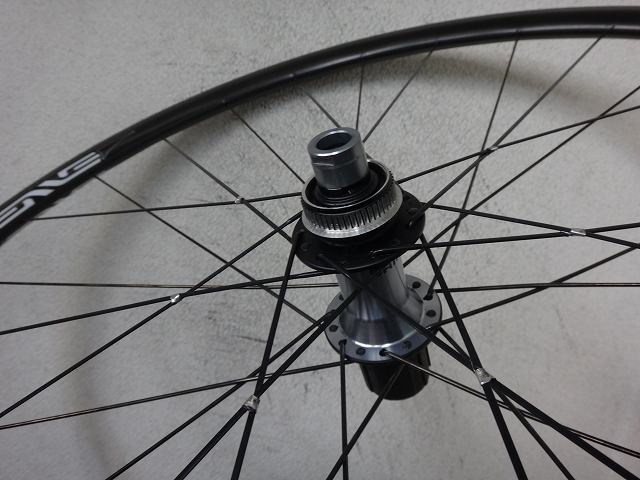
FH-RS770 28H, black, semi-competition 46-cross JIS laced with nipple wire.

Not that it's worth mentioning, but I centered them up just to be safe.