So, another day of wheels (and so on).
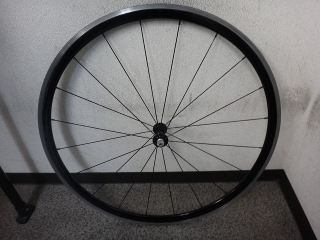
A customer brought in the front wheel of Nomu Lab Wheel No. 1 for work.
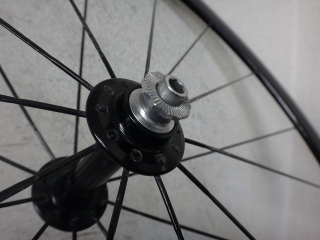
It's a Reife hub, 20H, black CX-RAY, built with outpoke radial lacing
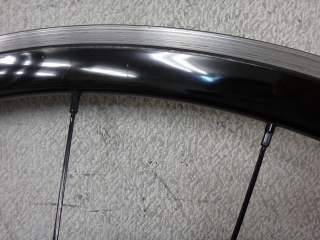
with black aluminum nipples,
but these Sapim 14mm nipples (included with the black CX-RAY) were used for the build.
Based on the timeline—the Reife hub first appeared in November 2013—I'd guess this was around 2014,
but we wouldn't have been using Sapim nipples by then,
so there must have been some reason—maybe DT black nipples were out of stock.
The reason for the service was
that the tire kept getting similar punctures at the same location, slightly away from the valve hole.
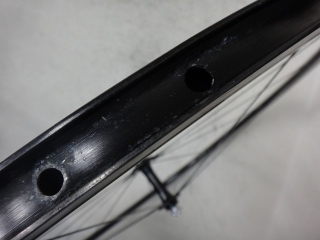
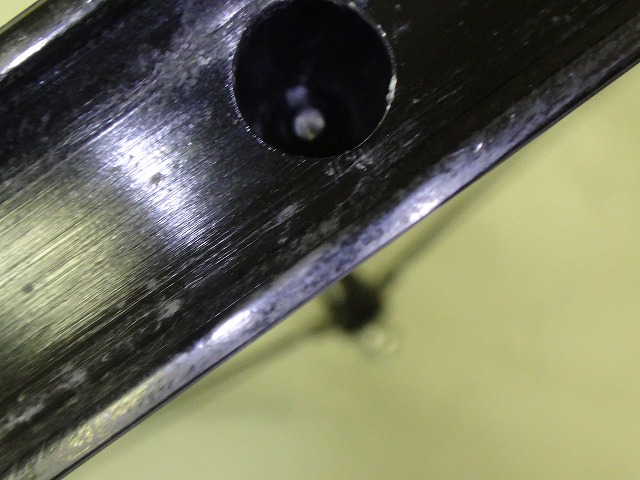
The hole on the left side of the image is the valve hole,
and white corrosion is visible from the galvanic potential difference with the brass valve—
but that's pretty common and not really a problem.
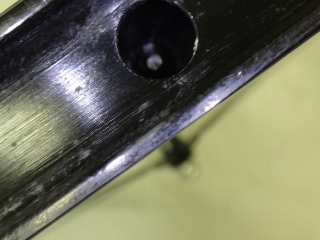
Hard to photograph properly,
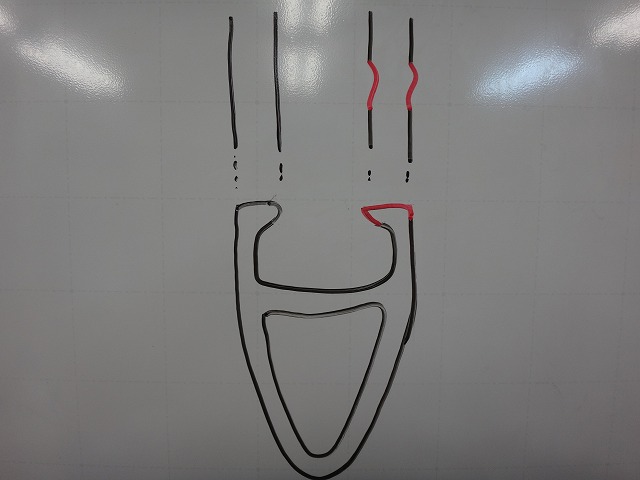
but one side of the bead hook near the rim hole close to the valve hole
was subtly bent out of shape

and the edge of the hook had become sharp.
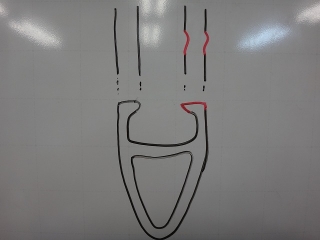
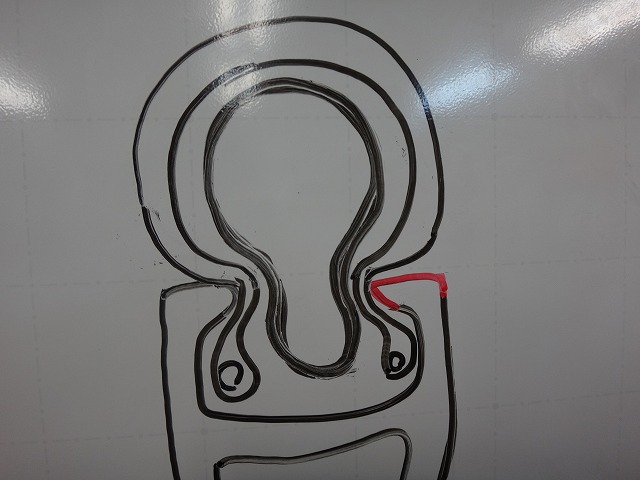
↑The deformed area is marked in red, and
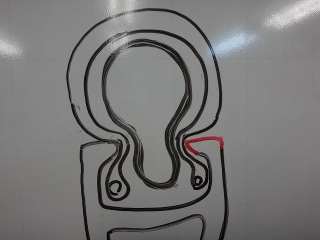
this is how it was causing damage.
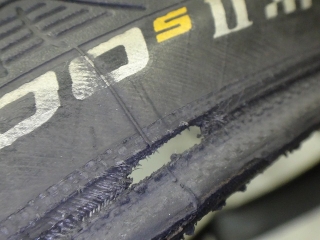
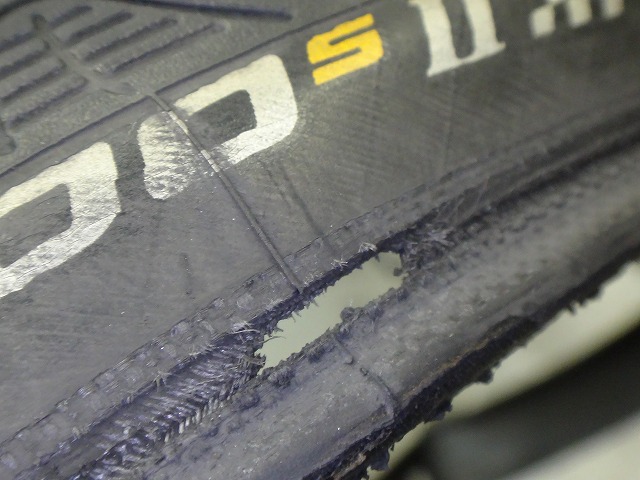
There was a hole in the tire.
The label center is aligned with the valve hole phase,
so the hole location matches the bead hook deformation spot.
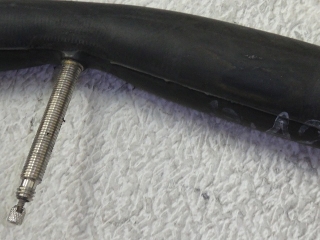
This is the tube that was in the tire.
It was installed after a puncture repair, and this one isn't punctured, but
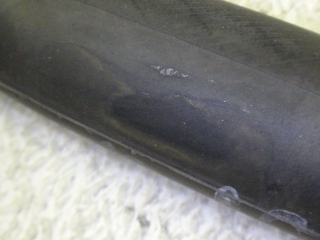
there are marks where it was protruding from the tire hole.
At this point you might think: the tire hole was probably torn by accident first,
the tube puncture is a result of that, and the rim's bead hook is unrelated.
But

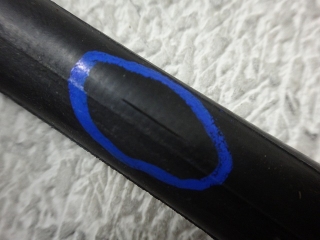
the customer brought in tube scraps from another puncture with the same pattern,
which confirmed that the cause is on the rim side.
If the puncture were from the tube protruding through the tire hole,
it would usually burst rather than cut like this,
and since the tube puncture location and the bead hook deformation location align perfectly,
coincidence is extremely unlikely—pretty much impossible, really.
So we decided to replace the rim. But
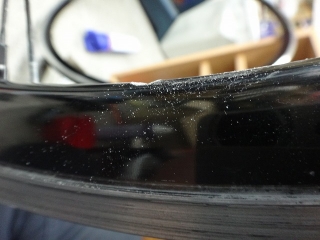
white corrosion was flaking out of the spoke holes

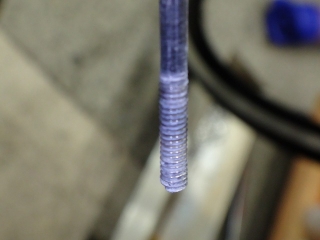
and the nipples had become abnormally difficult to unscrew.
Sapim nipples tend to do this much more frequently and severely than DT nipples,
and this is one of the reasons I don't use Sapim aluminum nipples
(even though they come with the CX-RAY).
I'd planned to just swap the rim,
but since the nipples wouldn't unscrew easily, I had to disassemble the whole wheel.
Thus, "another day of wheels (and so on)" stands.
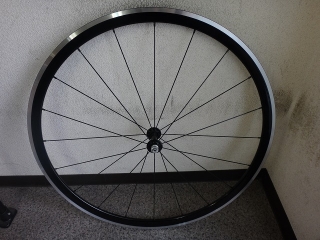
Built it up.
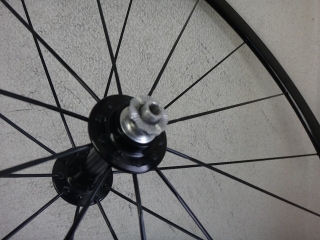
Turned out I replaced the spokes too, which wasn't in the original plan.
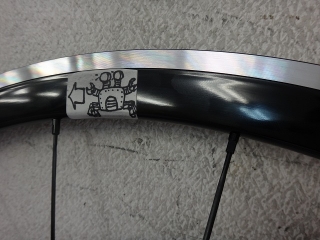
The nipples are now DT 12mm aluminum nipples,
so it's actually a full replacement of everything except the hub.
The mysterious seal on the left side of the rim is there because
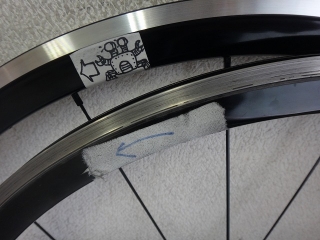
the old rim had a "this side is left" sticker on it.
The Grand Prix 4000S II tire mounted on it does have a directional specification,
but the Reife hub has no markings on the shell,
and the rim has no serial numbers or the like,
so the wheel itself doesn't have left/right attributes.
Maybe that sticker should have been applied after mounting the tire instead.
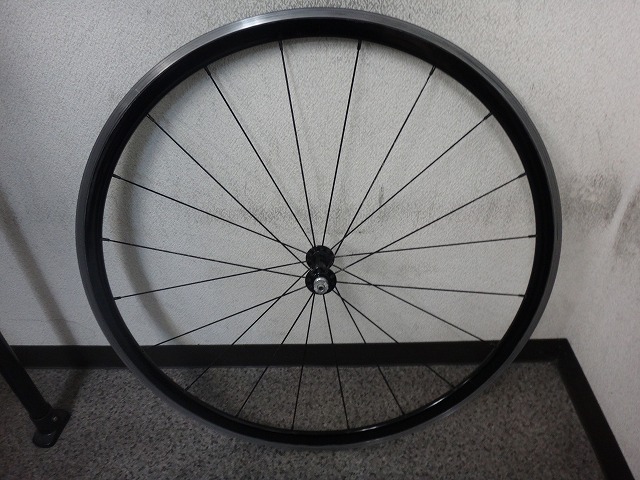
A customer brought in the front wheel of Nomu Lab Wheel No. 1 for work.

It's a Reife hub, 20H, black CX-RAY, built with outpoke radial lacing
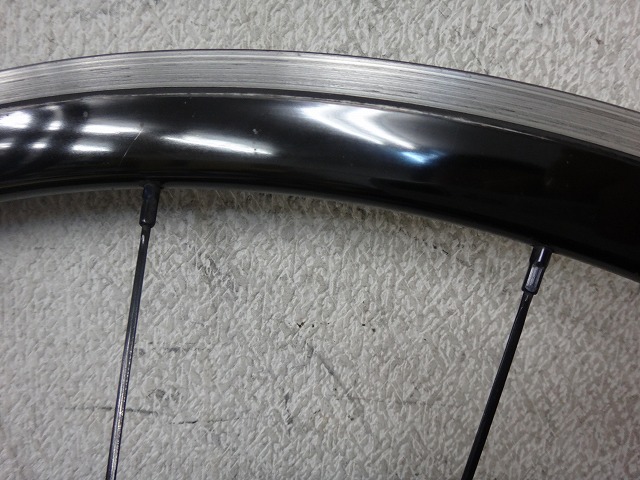
with black aluminum nipples,
but these Sapim 14mm nipples (included with the black CX-RAY) were used for the build.
Based on the timeline—the Reife hub first appeared in November 2013—I'd guess this was around 2014,
but we wouldn't have been using Sapim nipples by then,
so there must have been some reason—maybe DT black nipples were out of stock.
The reason for the service was
that the tire kept getting similar punctures at the same location, slightly away from the valve hole.
The hole on the left side of the image is the valve hole,
and white corrosion is visible from the galvanic potential difference with the brass valve—
but that's pretty common and not really a problem.
Hard to photograph properly,
but one side of the bead hook near the rim hole close to the valve hole
was subtly bent out of shape

and the edge of the hook had become sharp.
↑The deformed area is marked in red, and
this is how it was causing damage.
There was a hole in the tire.
The label center is aligned with the valve hole phase,
so the hole location matches the bead hook deformation spot.
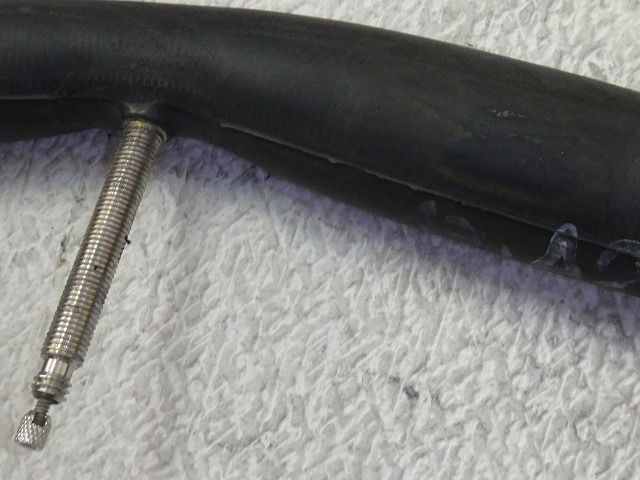
This is the tube that was in the tire.
It was installed after a puncture repair, and this one isn't punctured, but
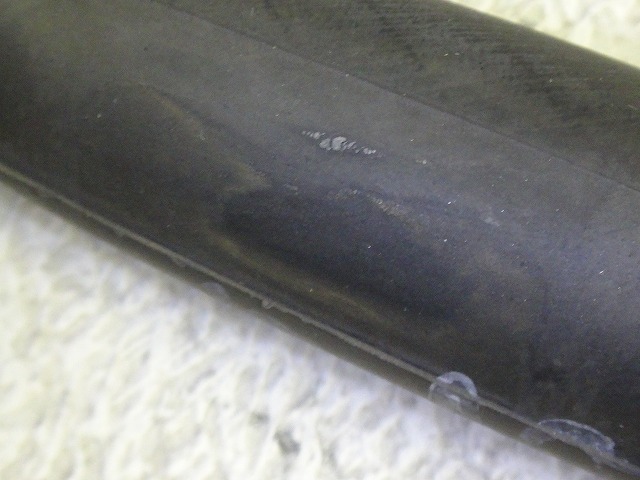
there are marks where it was protruding from the tire hole.
At this point you might think: the tire hole was probably torn by accident first,
the tube puncture is a result of that, and the rim's bead hook is unrelated.
But
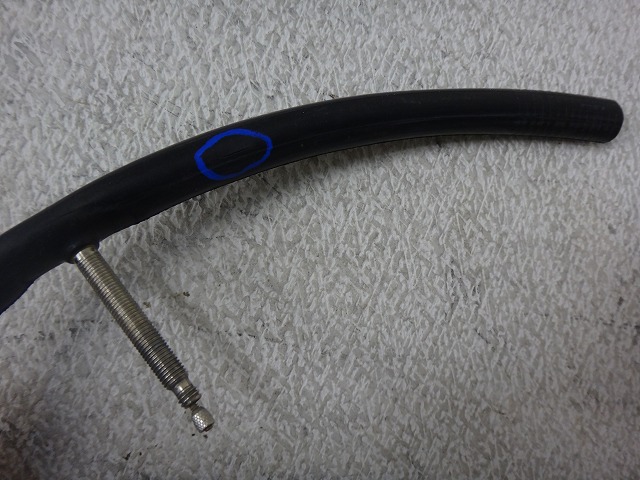

the customer brought in tube scraps from another puncture with the same pattern,
which confirmed that the cause is on the rim side.
If the puncture were from the tube protruding through the tire hole,
it would usually burst rather than cut like this,
and since the tube puncture location and the bead hook deformation location align perfectly,
coincidence is extremely unlikely—pretty much impossible, really.
So we decided to replace the rim. But

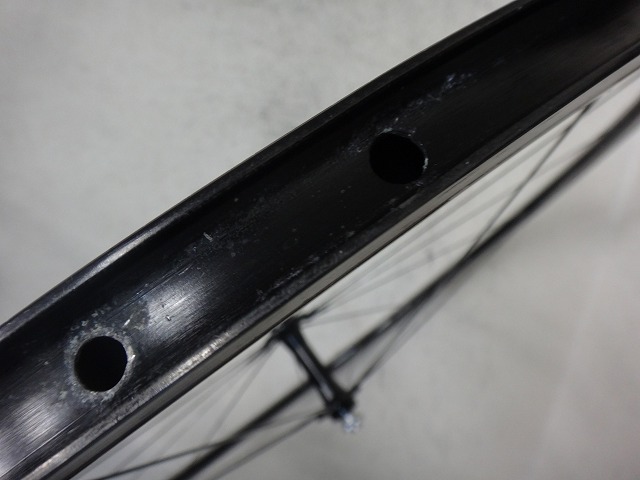
white corrosion was flaking out of the spoke holes
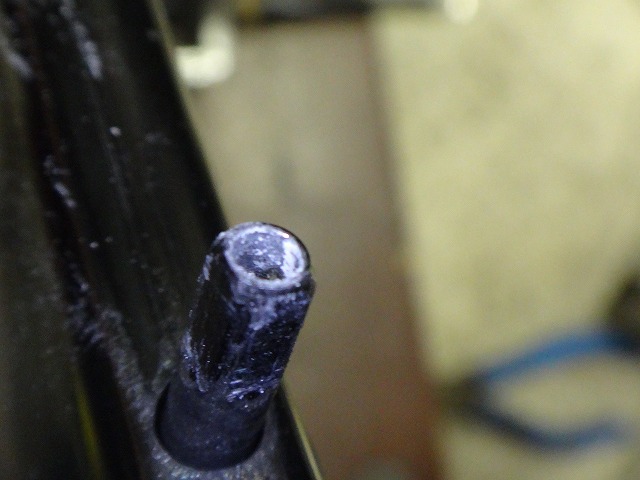
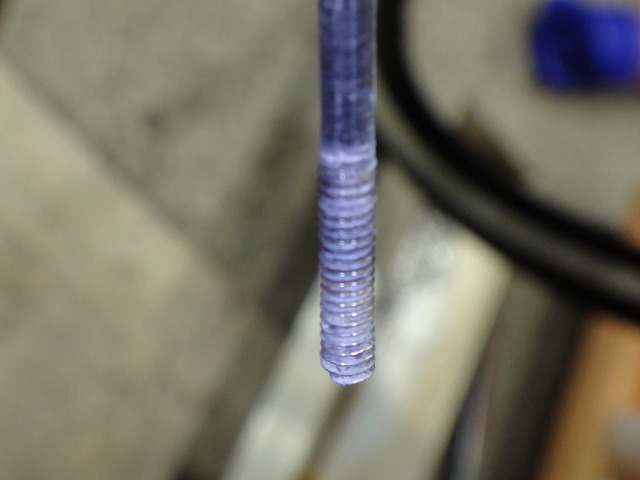
and the nipples had become abnormally difficult to unscrew.
Sapim nipples tend to do this much more frequently and severely than DT nipples,
and this is one of the reasons I don't use Sapim aluminum nipples
(even though they come with the CX-RAY).
I'd planned to just swap the rim,
but since the nipples wouldn't unscrew easily, I had to disassemble the whole wheel.
Thus, "another day of wheels (and so on)" stands.
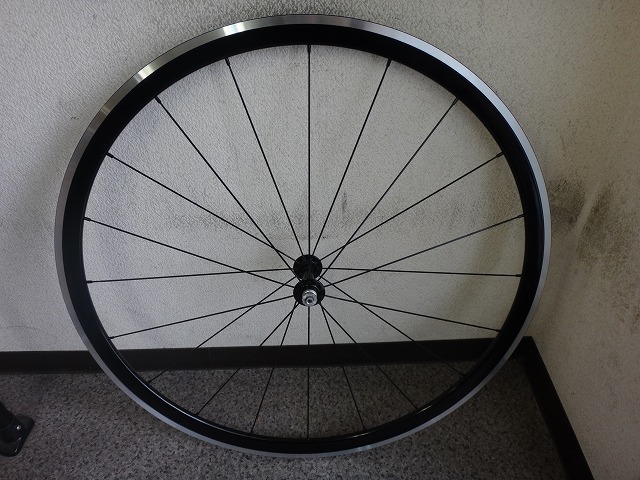
Built it up.
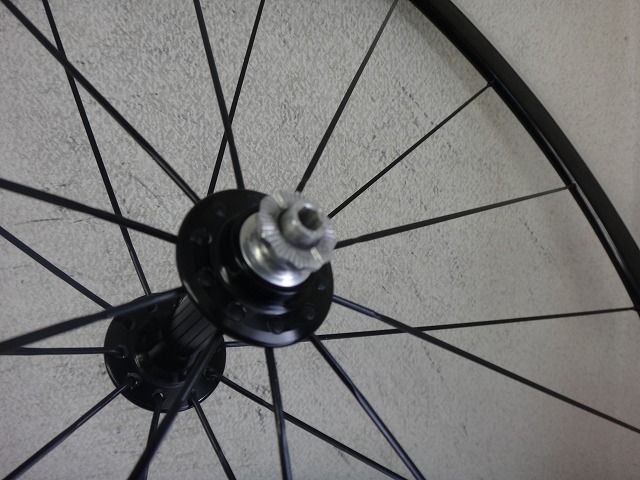
Turned out I replaced the spokes too, which wasn't in the original plan.

The nipples are now DT 12mm aluminum nipples,
so it's actually a full replacement of everything except the hub.
The mysterious seal on the left side of the rim is there because
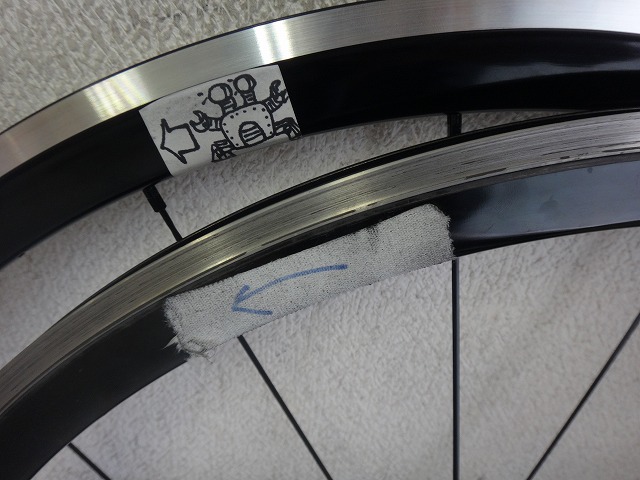
the old rim had a "this side is left" sticker on it.
The Grand Prix 4000S II tire mounted on it does have a directional specification,
but the Reife hub has no markings on the shell,
and the rim has no serial numbers or the like,
so the wheel itself doesn't have left/right attributes.
Maybe that sticker should have been applied after mounting the tire instead.