I've taken in a Colima MCC S+ from a customer.

Since it has carbon spokes, I can't true it.

Both front and rear wheels use carbon spokes in only the porcupine direction—
an idea that's been thought of, but actually executed by only Colima, basically.
(Reynolds' RZR has a third spoke just below the rim with torque flange hub technology
that also uses carbon spokes exclusively in the porcupine direction.)


There's a center offset.
The rim is shifted toward the freewheel side (important).
Since the wheel can't be trued,
logically speaking, correction isn't possible.
This isn't the first time I've seen this wheel, but

I had to disassemble the hub, and when I did,
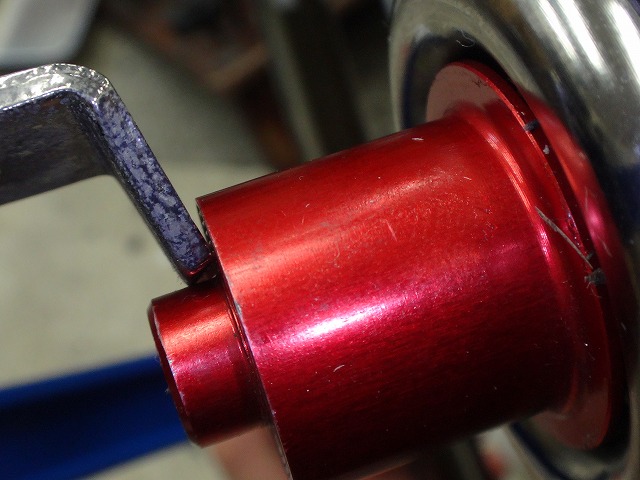
I noticed there were two spacers on the non-freewheel side.

The rear hub axle is a 17mm diameter threaded end on the non-freewheel side,

and a 10mm diameter quick-release end on the freewheel side.
The reason this side is unusually thin is likely to allow for larger ball bearings
inside the freewheel body bearing.


When I reduced it to one spacer, it happened to be perfectly centered.
The threaded left end is designed with thread depth that accounts for
spacer addition or removal, and like Reynolds' RZR,
it follows the structure of:
"Without spacers, the rim is always offset toward the non-freewheel side,
and with all included spacers installed, it's always offset toward the freewheel side,
so adjust the number of spacers to center the wheel."
Since the freewheel-side dimension doesn't change,
shifting adjustment won't be affected by centering.
But as I said, "it happened to,"
the thickness of the included spacers is
far too coarse for proper centering.
It's likely the case that they pursued "the number of spacers among 0–2 that resulted in the least center offset,
but that still falls far short of the dead-on centering possible with adjustable wheels."
I was just lucky this time.
With the RZR, there are so many ultra-thin spacers included
that you could call it pseudo-centering—very fine adjustment is possible.
To do that with this MCC, you'd need a thin spacer with a 17mm inner diameter,
preferably one made from rust-resistant material.

The front wheel can't be center-adjusted, and it was slightly misaligned.
Lightweight and Cosmic Carbon Ultimate front wheels
are virtually always misaligned, so there's probably nothing to be done about it.

Next, I received another job from the same customer:
the gauge section of an old Silca floor pump from the Italian brand era,
the "Pista."
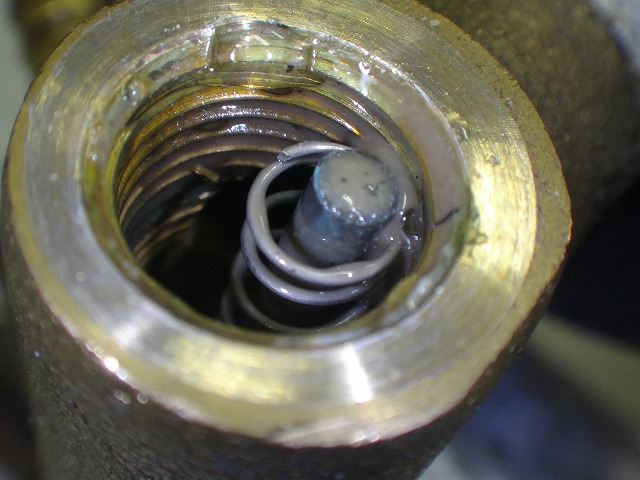
There was suspicion that the check valve was off, so I looked inside,
but found water that had gotten cloudy.
Water doesn't enter easily, but it does enter, and
it's a structure where it doesn't come out easily once it's in,
so this happens frequently.

There was verdigris, so I wiped it off.
I have a before-work photo, but it's gratuitously gross, so I held back.
I determined that the gauge malfunction is primarily caused by water ingress into the pump
and that parts replacement isn't necessarily required, but
since the customer is from far away and it's not an especially expensive part,


I sourced one.
It's from the new Silca brand (now American),
but it's compatible.

The washer on the check valve cap was severely deformed, but

the manufacturer appears to be aware of this tendency,
and it came included with the check valve set.

Here are the old and new check valves. Strictly speaking, they're not identical;
the new one has a thicker flange section and more spring coils.
The old part has wider spring spacing—
that's from my own futile attempt to stretch it out and boost spring power.

Since it has carbon spokes, I can't true it.
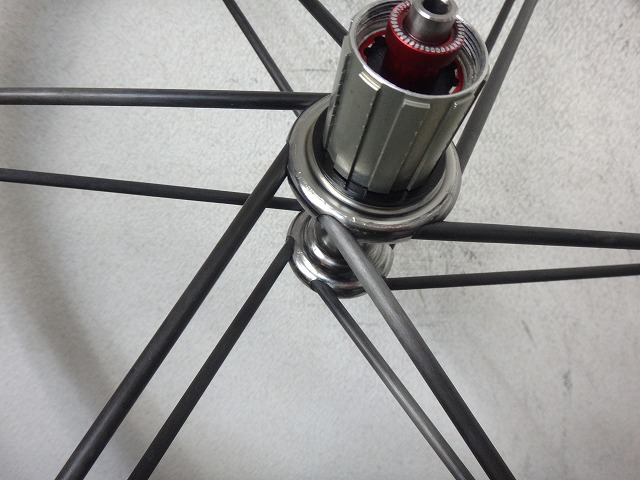
Both front and rear wheels use carbon spokes in only the porcupine direction—
an idea that's been thought of, but actually executed by only Colima, basically.
(Reynolds' RZR has a third spoke just below the rim with torque flange hub technology
that also uses carbon spokes exclusively in the porcupine direction.)

There's a center offset.
The rim is shifted toward the freewheel side (important).
Since the wheel can't be trued,
logically speaking, correction isn't possible.
This isn't the first time I've seen this wheel, but
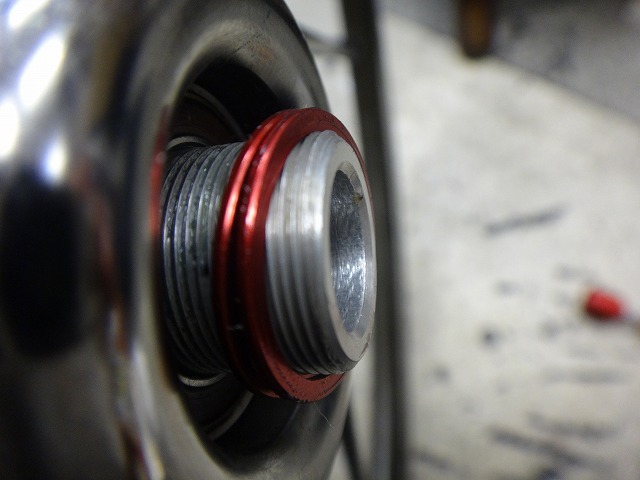
I had to disassemble the hub, and when I did,
I noticed there were two spacers on the non-freewheel side.

The rear hub axle is a 17mm diameter threaded end on the non-freewheel side,
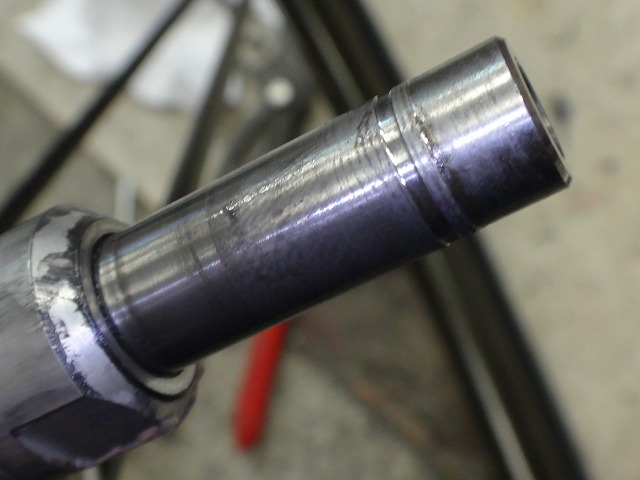
and a 10mm diameter quick-release end on the freewheel side.
The reason this side is unusually thin is likely to allow for larger ball bearings
inside the freewheel body bearing.

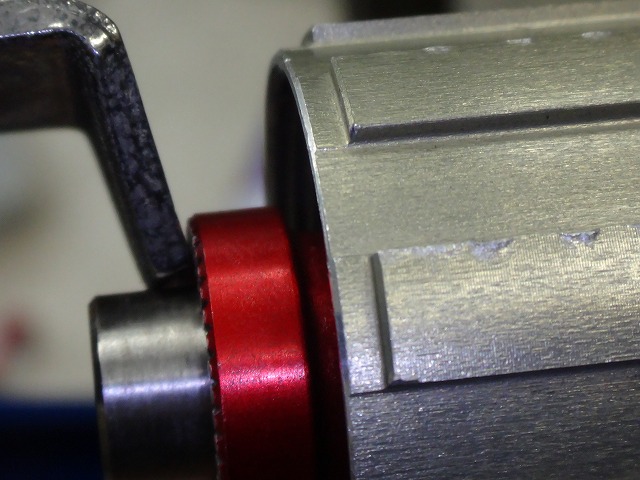
When I reduced it to one spacer, it happened to be perfectly centered.
The threaded left end is designed with thread depth that accounts for
spacer addition or removal, and like Reynolds' RZR,
it follows the structure of:
"Without spacers, the rim is always offset toward the non-freewheel side,
and with all included spacers installed, it's always offset toward the freewheel side,
so adjust the number of spacers to center the wheel."
Since the freewheel-side dimension doesn't change,
shifting adjustment won't be affected by centering.
But as I said, "it happened to,"
the thickness of the included spacers is
far too coarse for proper centering.
It's likely the case that they pursued "the number of spacers among 0–2 that resulted in the least center offset,
but that still falls far short of the dead-on centering possible with adjustable wheels."
I was just lucky this time.
With the RZR, there are so many ultra-thin spacers included
that you could call it pseudo-centering—very fine adjustment is possible.
To do that with this MCC, you'd need a thin spacer with a 17mm inner diameter,
preferably one made from rust-resistant material.

The front wheel can't be center-adjusted, and it was slightly misaligned.
Lightweight and Cosmic Carbon Ultimate front wheels
are virtually always misaligned, so there's probably nothing to be done about it.
Next, I received another job from the same customer:
the gauge section of an old Silca floor pump from the Italian brand era,
the "Pista."
There was suspicion that the check valve was off, so I looked inside,
but found water that had gotten cloudy.
Water doesn't enter easily, but it does enter, and
it's a structure where it doesn't come out easily once it's in,
so this happens frequently.
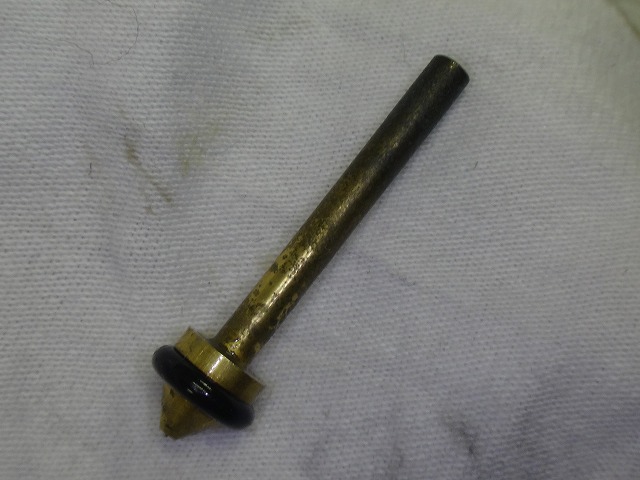
There was verdigris, so I wiped it off.
I have a before-work photo, but it's gratuitously gross, so I held back.
I determined that the gauge malfunction is primarily caused by water ingress into the pump
and that parts replacement isn't necessarily required, but
since the customer is from far away and it's not an especially expensive part,
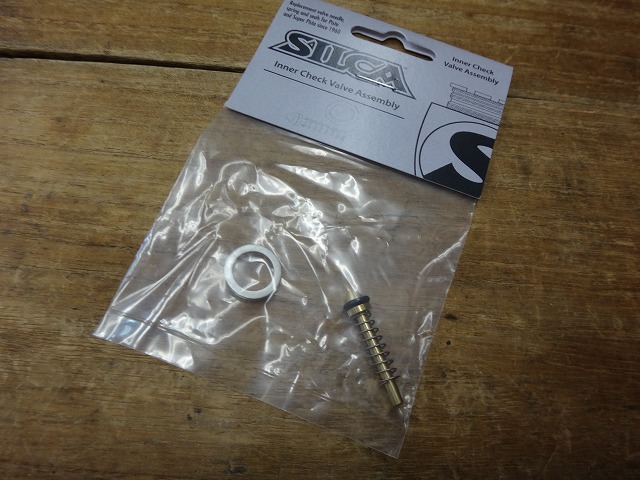
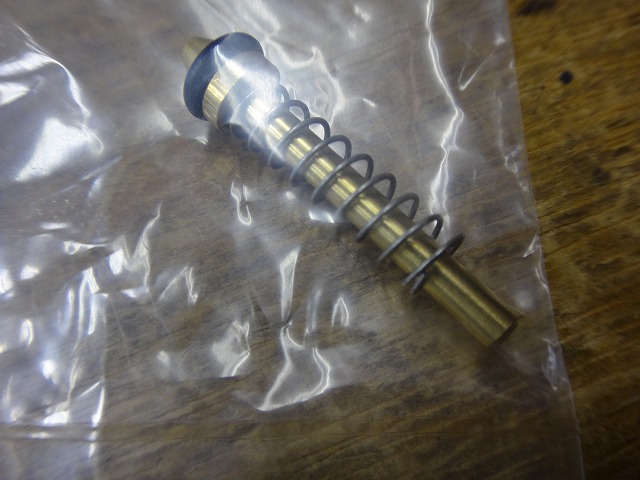
I sourced one.
It's from the new Silca brand (now American),
but it's compatible.

The washer on the check valve cap was severely deformed, but
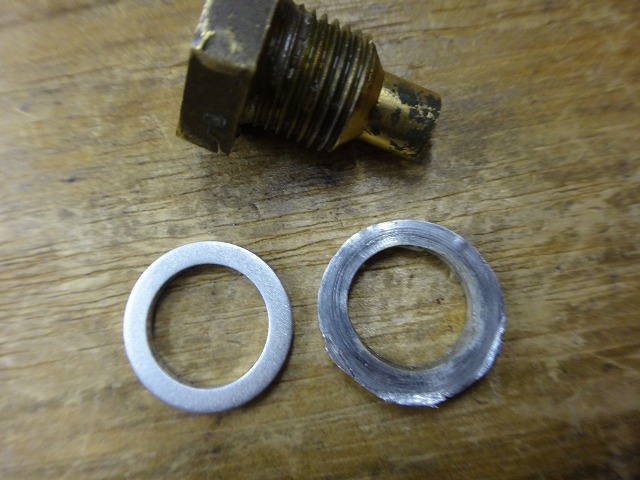
the manufacturer appears to be aware of this tendency,
and it came included with the check valve set.
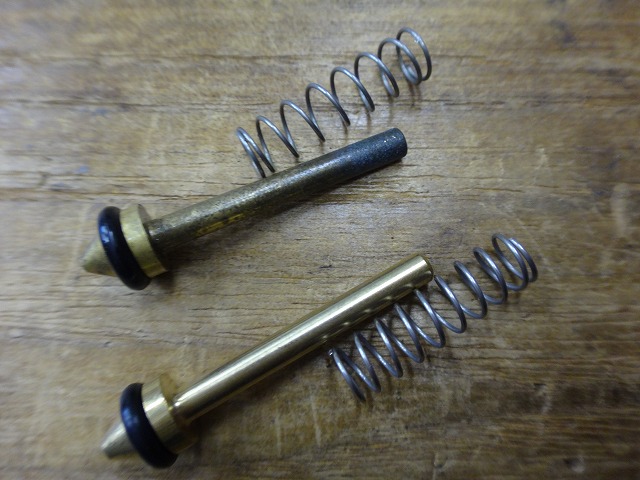
Here are the old and new check valves. Strictly speaking, they're not identical;
the new one has a thicker flange section and more spring coils.
The old part has wider spring spacing—
that's from my own futile attempt to stretch it out and boost spring power.