I received a rear wheel from a Zentis Squad 2.5 from a customer.
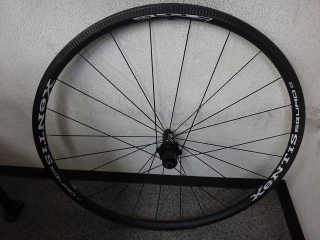
It's loose, so they want it rebuilt.
Loose compared to what? Compared to Nomu Lab Wheel No. 5.
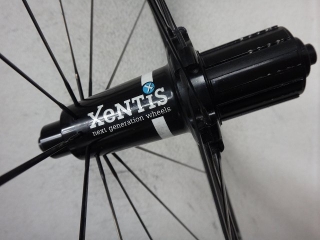
All-black CX-RAY straight 4x lacing equivalent,
but because the spoke head phases on the freewheel side overlap,
the spoke length calculation differs from the standard single-side 12H x 4-spoke pattern.
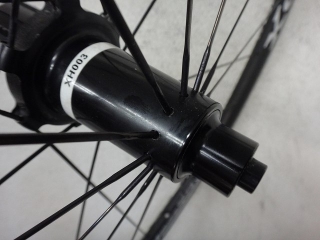
The hub is XH003—XH presumably stands for Zentis Hub.
I don't need this hub, but to recover the spokes on the non-freewheel side,
I had to remove the non-freewheel side hub bearing.
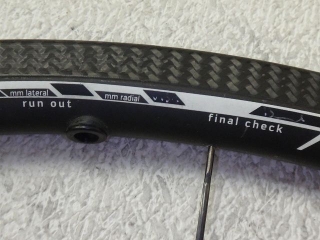
The signature's fading, but
Zentis has a space on the rim for recording maximum radial and lateral runout values,
plus the signature of whoever did the final check—shows they're confident in their precision.
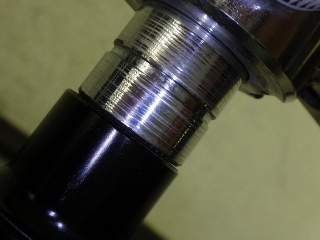
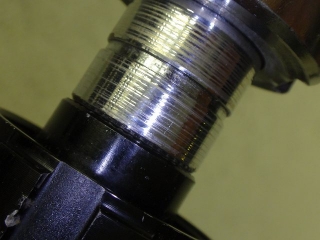
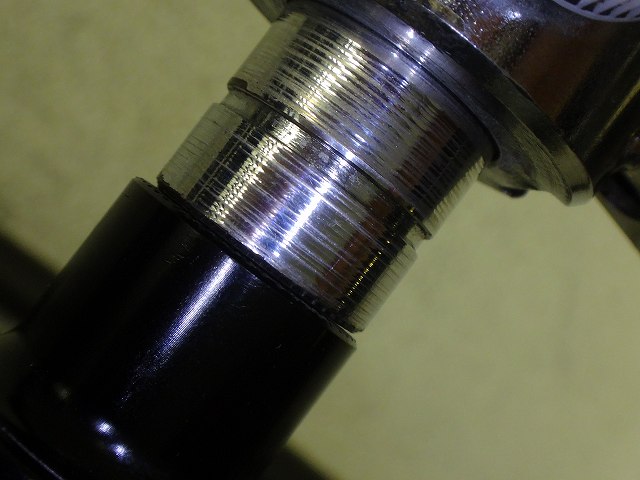
This one had no centering error.
A rear wheel with non-freewheel side radial lacing can arrive perfectly centered from the factory
yet drift by about a paper thickness toward the freewheel side with age—so that's a mark in their favor here.
Though it's possible it left the factory shifted a paper thickness the other direction.
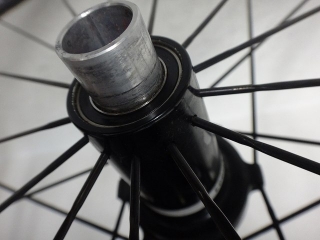
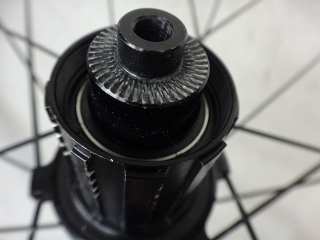
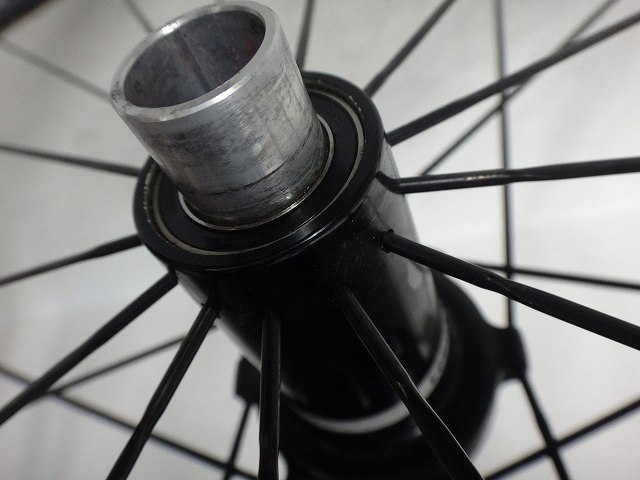
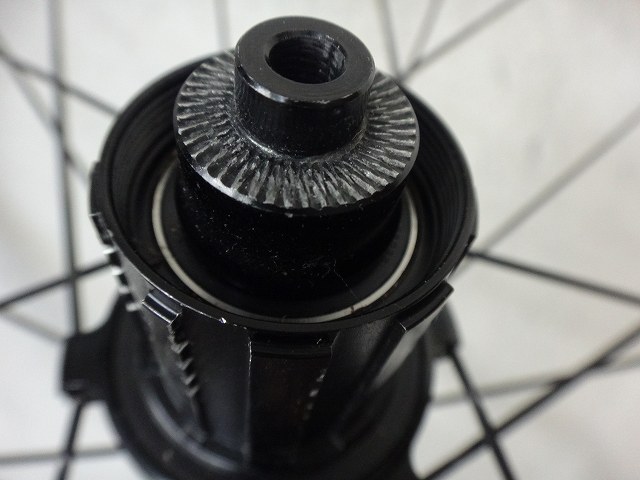
Both sides have quick-release dropouts, but this situation is bad.
Turning the left dropout makes the hub axle slip, so it's hard to tell,
but when you remove the left dropout and try to turn the axle directly,
it spins backward easily but won't go forward at all.
The freewheel body bearing is so rusted that
the hub axle and freewheel body have become a single seized unit,
and it only rotates in the ratchet's coasting direction.
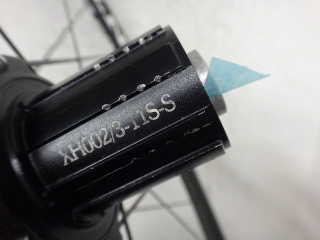
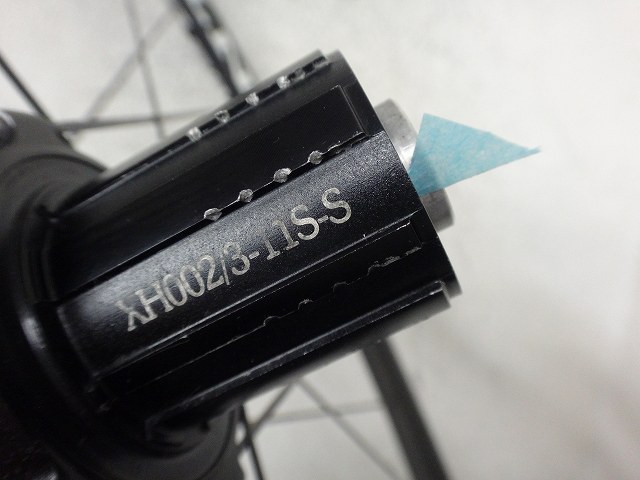
I put a reference tape near the indexing on the freewheel body's spline,
which reads "XH002 and XH003 hub, 11-speed, Shimano."

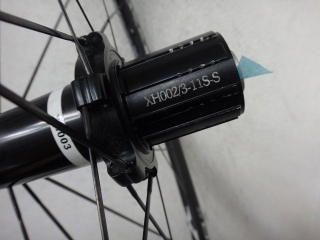
↑Like this—the freewheel body and hub axle are rusted solid,
so their phases are synchronized.
If you clamp the rear wheel in the frame with a quick-release and pedal,
the rust bond will crack with a "crunch" and release,
so it's technically usable with an abnormally gritty feel.
Either it wasn't ridden much, or the rust seized up during shipping to my shop.
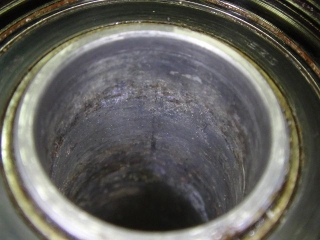
I tried pulling the freewheel body off the axle,
but for some reason it won't come out any further. I can push it back in.
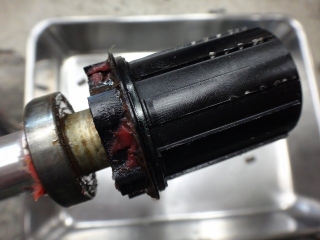
↑That's as far as it goes.
I tried both bearing puller method (steady load) and impact puller method (shock load),
but it won't budge, so I gave up.
My goal was just to recover the spokes from the hub anyway.

I removed the non-freewheel side bearing with a puller.
Normally this should come out by hand, like removing a ring.
The anodizing on the hub axle is thin with terrible finish,
so it's got the same rust pattern as a corroded yen coin spreading all over it.
I've never seen Campagnolo wheel axles rust like this,
so the axle corrosion doesn't seem unrelated to the bearing's extreme rust and seizure.
Campagnolo does sometimes have the outer freewheel body bearing rust and seize to the axle,
but those aren't impossible to remove, and you can clean the axle's galling nicely.
And the area right under the hub body never corrodes this badly.
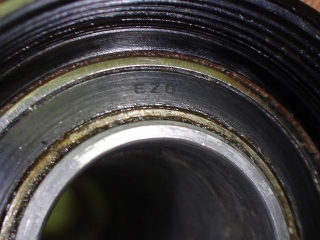
The bearing seal says EZFO—
that's Ezo, meaning Hokkaido, home of Hokkaido Machine Bearings—
but EZFO bearings aren't bad. They're actually pretty good.
I've even seen them used in Pinarello headset bearings when the headset used
standard industrial bearings like 6806 (top) and 6807 (bottom, for mismatched heights)
instead of tapered bearing races.
6806 is also the bearing for BB30 with a 42mm frame inner diameter, by the way.
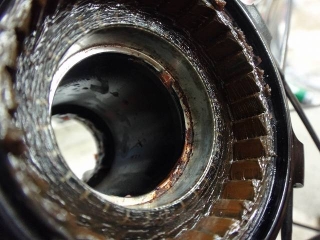
↑Freewheel side ratchet area
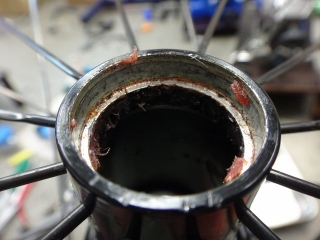
↑Non-freewheel side
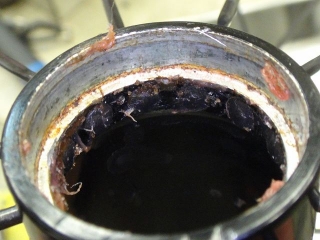
I disassembled the hub to pull these spokes.
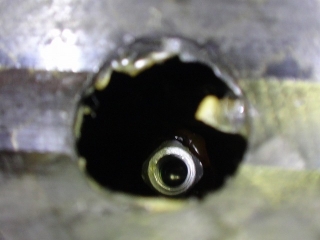
Non-freewheel side
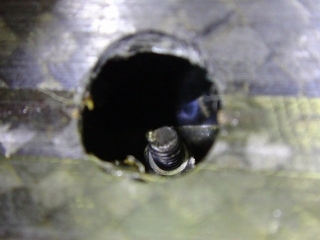
Freewheel side
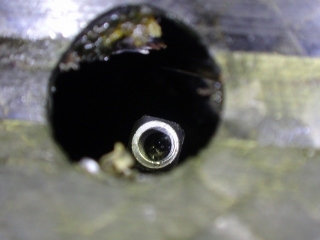
Non-freewheel side
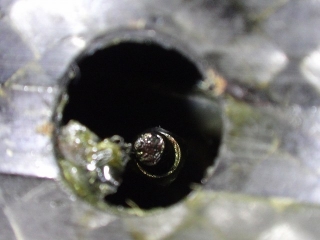
Freewheel side
I've got a bad feeling about this…
The freewheel side spokes look too long.
The non-freewheel side aren't critically short, but they're on the short side.
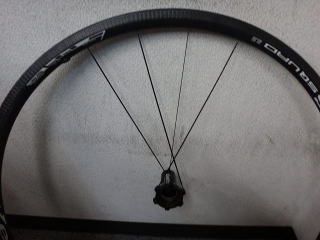
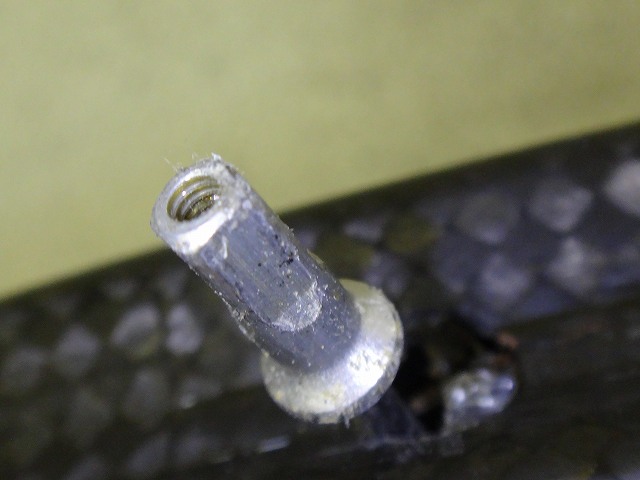
I carefully disassembled 20 of the 24 spokes, counting from the valve hole.
None of these four spokes' nipples were loosened at all.
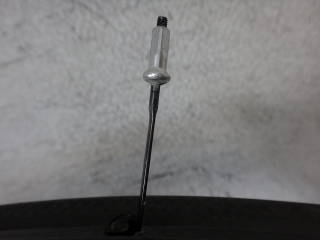
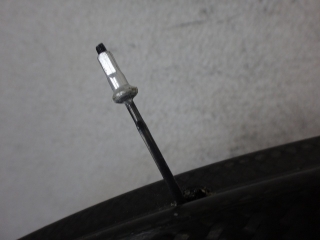
↑Freewheel side
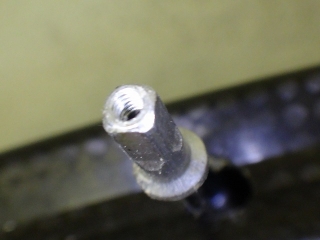

↑Non-freewheel side
I mentioned earlier how the freewheel side flange holes overlap in phase,
but if you build with standard single-side 12H hub calculations for such a hub,
the spokes actually come out too short for the nipples.
Anyone building would notice if spokes were too long
(if they didn't, the Zentis builder would be an idiot),
and if both sides matched in their excess or shortfall,
I'd think they had philosophy behind that spoke length choice.
But since left and right differ, that's not it.
There's no way they'd use "make freewheel side longer and non-freewheel shorter" as philosophy.
And since they're not building single wheels but production runs,
if the first one looked wrong, just dial it in for the next batch—yet they didn't.
This isn't unique to Zentis (Reynolds, ENVE, ZIPP all do it),
but despite having decent rims, they build garbage wheels
through clueless spoke selection—not understanding spoke proportion—and outdated methods.
The fact they make obviously bad choices without a second thought
suggests they don't think about wheels, or just don't know.
The fact they do this even on hubs that could do other lacing patterns
(→see here) is hopeless.
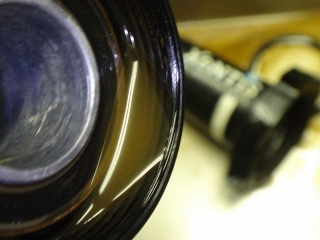
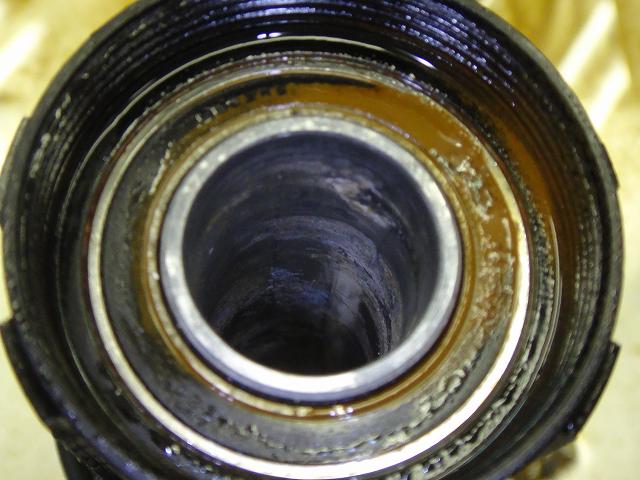
The bearing rust has loosened enough that it spins independently from the axle.

Turning the hub axle produces awful rust liquid
grinding out like a millstone.
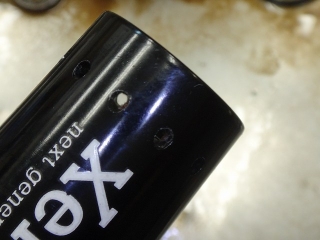
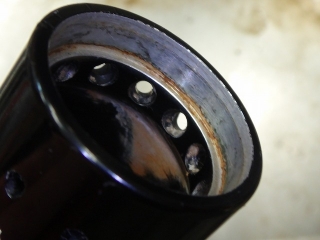
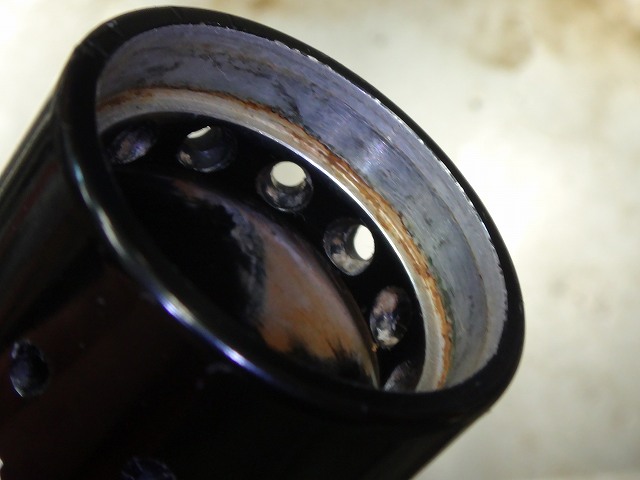
I'm not wild about this flange hole position either.
They've badly misunderstood what matters more for rear wheel lateral stiffness:
the left-right width of the bearing position, or the left-right position of the spoke heads.
It's frustrating that they clearly did this deliberately,
but the real problem is that it's limited to non-freewheel radial lacing in the first place.
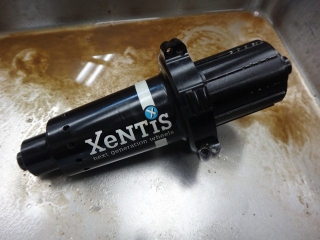
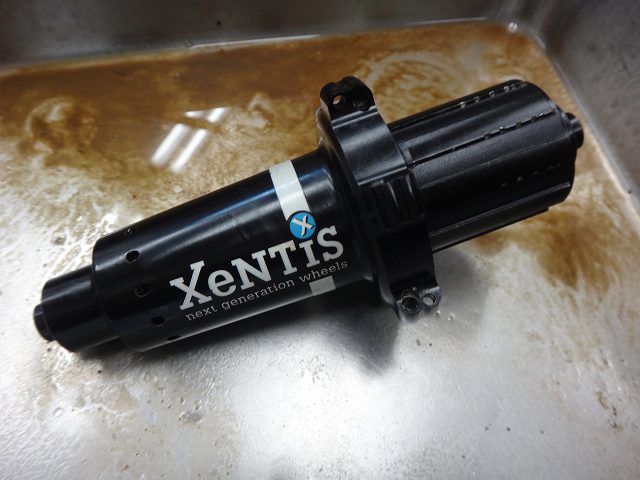
I reassembled the rear hub as if nothing happened.
For now it spins with an abnormal grinding feel.
It might seize up again eventually.
Today too, wheel—(you know the rest).

Getting back to the title:
I built the front wheel for Nomu Lab Wheel No. 5.
The hub took so long I didn't get to the rear wheel rebuild.
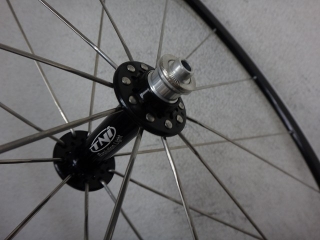
Evolite hub 20H, CX-RAY outpoke radial lacing.

It's loose, so they want it rebuilt.
Loose compared to what? Compared to Nomu Lab Wheel No. 5.
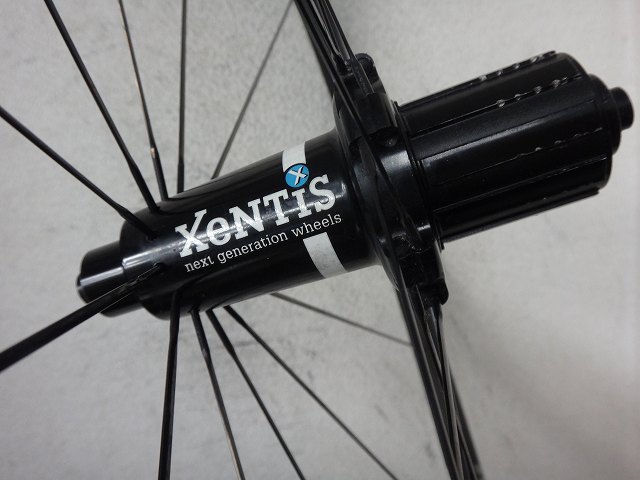
All-black CX-RAY straight 4x lacing equivalent,
but because the spoke head phases on the freewheel side overlap,
the spoke length calculation differs from the standard single-side 12H x 4-spoke pattern.
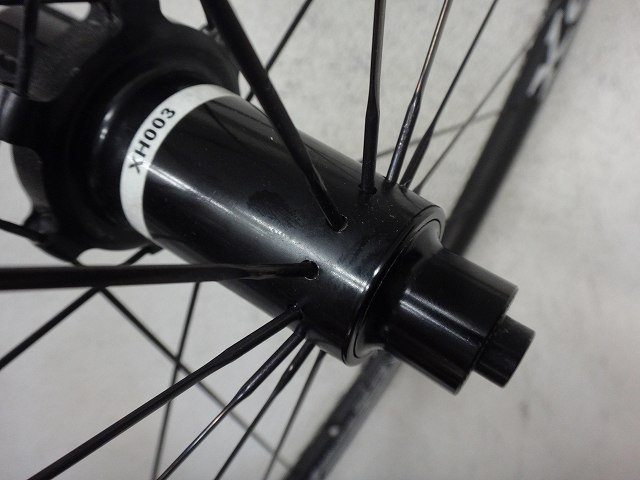
The hub is XH003—XH presumably stands for Zentis Hub.
I don't need this hub, but to recover the spokes on the non-freewheel side,
I had to remove the non-freewheel side hub bearing.
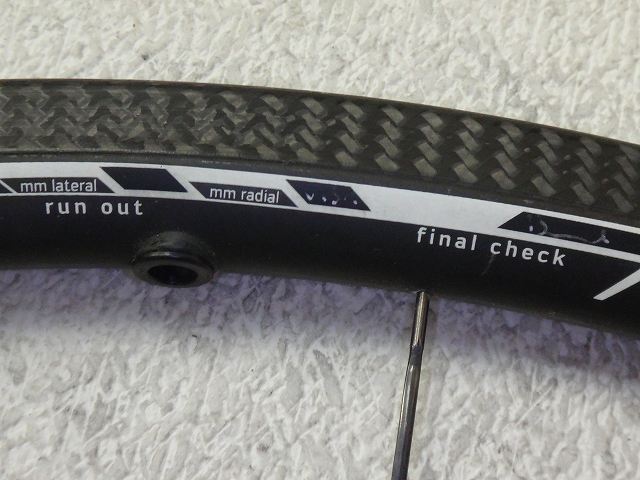
The signature's fading, but
Zentis has a space on the rim for recording maximum radial and lateral runout values,
plus the signature of whoever did the final check—shows they're confident in their precision.

This one had no centering error.
A rear wheel with non-freewheel side radial lacing can arrive perfectly centered from the factory
yet drift by about a paper thickness toward the freewheel side with age—so that's a mark in their favor here.
Though it's possible it left the factory shifted a paper thickness the other direction.
Both sides have quick-release dropouts, but this situation is bad.
Turning the left dropout makes the hub axle slip, so it's hard to tell,
but when you remove the left dropout and try to turn the axle directly,
it spins backward easily but won't go forward at all.
The freewheel body bearing is so rusted that
the hub axle and freewheel body have become a single seized unit,
and it only rotates in the ratchet's coasting direction.
I put a reference tape near the indexing on the freewheel body's spline,
which reads "XH002 and XH003 hub, 11-speed, Shimano."
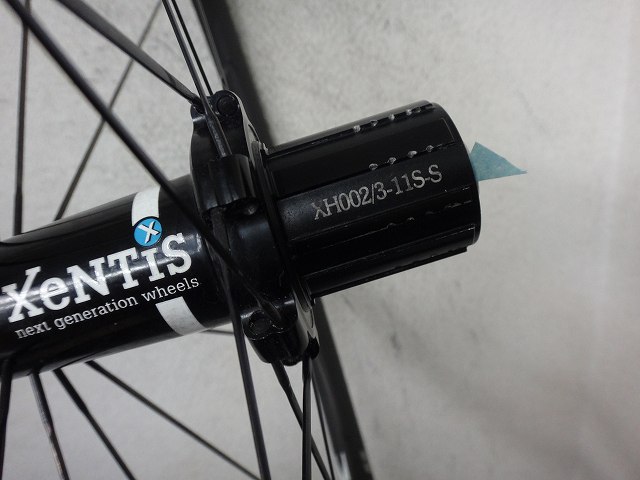
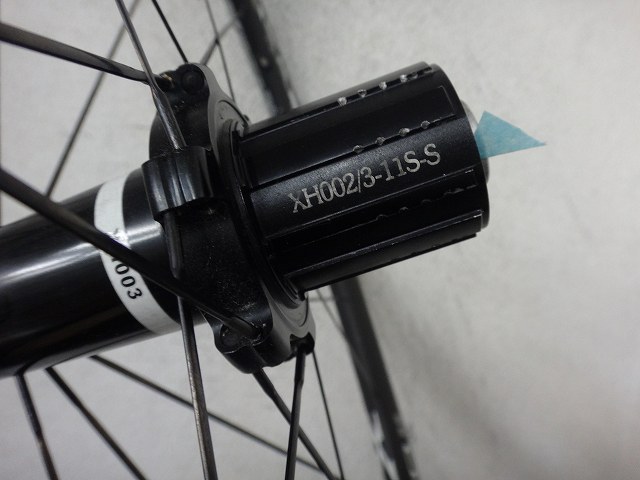
↑Like this—the freewheel body and hub axle are rusted solid,
so their phases are synchronized.
If you clamp the rear wheel in the frame with a quick-release and pedal,
the rust bond will crack with a "crunch" and release,
so it's technically usable with an abnormally gritty feel.
Either it wasn't ridden much, or the rust seized up during shipping to my shop.

I tried pulling the freewheel body off the axle,
but for some reason it won't come out any further. I can push it back in.
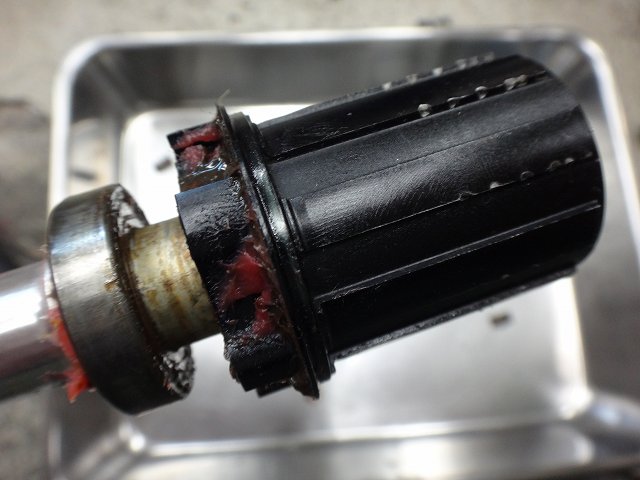
↑That's as far as it goes.
I tried both bearing puller method (steady load) and impact puller method (shock load),
but it won't budge, so I gave up.
My goal was just to recover the spokes from the hub anyway.

I removed the non-freewheel side bearing with a puller.
Normally this should come out by hand, like removing a ring.
The anodizing on the hub axle is thin with terrible finish,
so it's got the same rust pattern as a corroded yen coin spreading all over it.
I've never seen Campagnolo wheel axles rust like this,
so the axle corrosion doesn't seem unrelated to the bearing's extreme rust and seizure.
Campagnolo does sometimes have the outer freewheel body bearing rust and seize to the axle,
but those aren't impossible to remove, and you can clean the axle's galling nicely.
And the area right under the hub body never corrodes this badly.
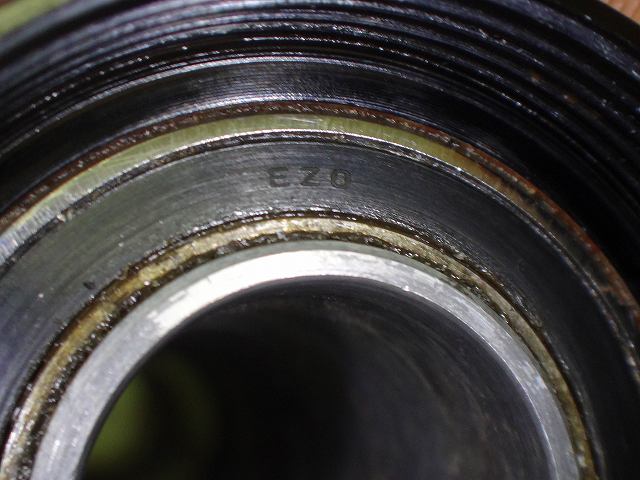
The bearing seal says EZFO—
that's Ezo, meaning Hokkaido, home of Hokkaido Machine Bearings—
but EZFO bearings aren't bad. They're actually pretty good.
I've even seen them used in Pinarello headset bearings when the headset used
standard industrial bearings like 6806 (top) and 6807 (bottom, for mismatched heights)
instead of tapered bearing races.
6806 is also the bearing for BB30 with a 42mm frame inner diameter, by the way.
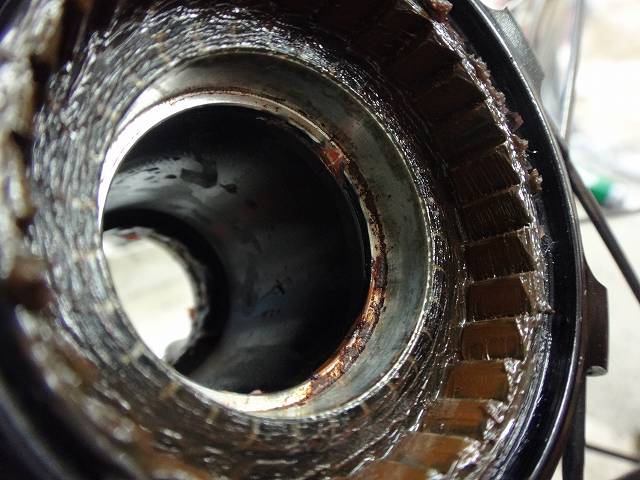
↑Freewheel side ratchet area
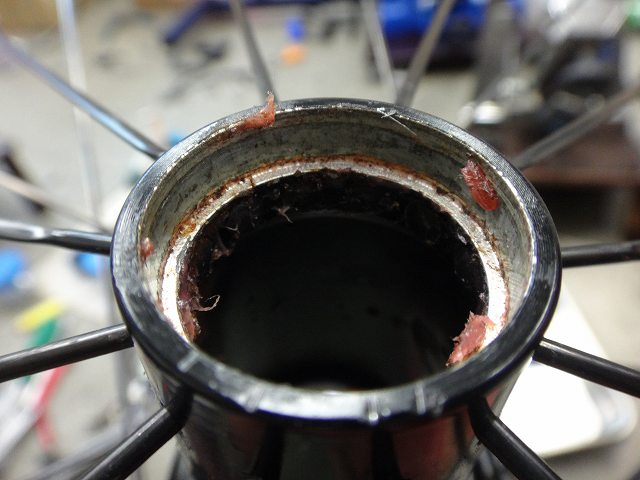
↑Non-freewheel side
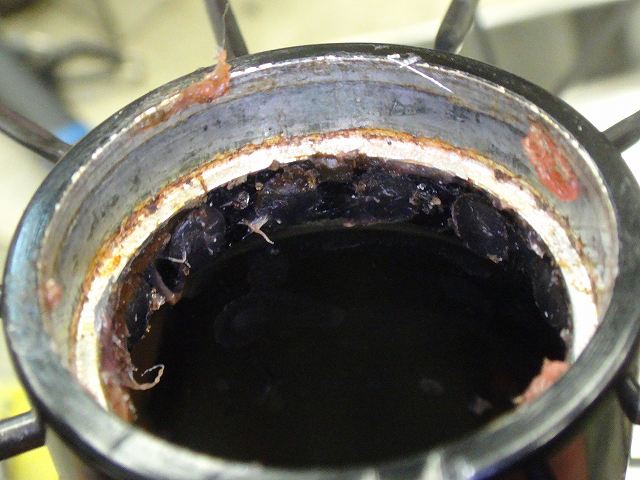
I disassembled the hub to pull these spokes.
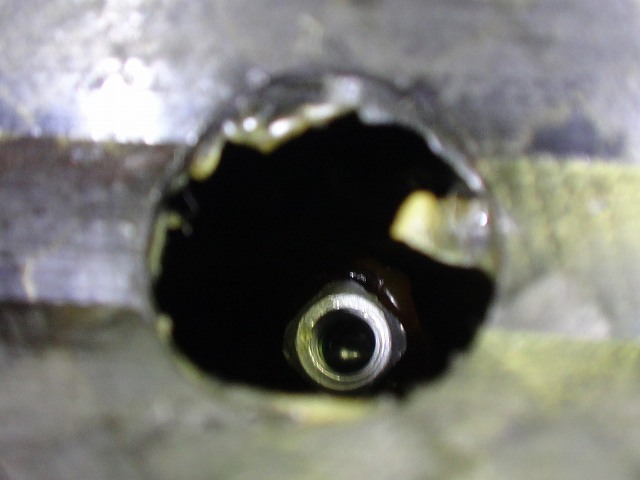
Non-freewheel side

Freewheel side
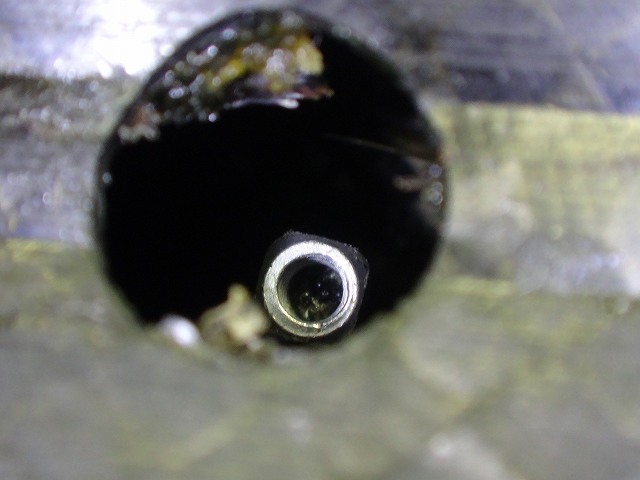
Non-freewheel side

Freewheel side
I've got a bad feeling about this…
The freewheel side spokes look too long.
The non-freewheel side aren't critically short, but they're on the short side.
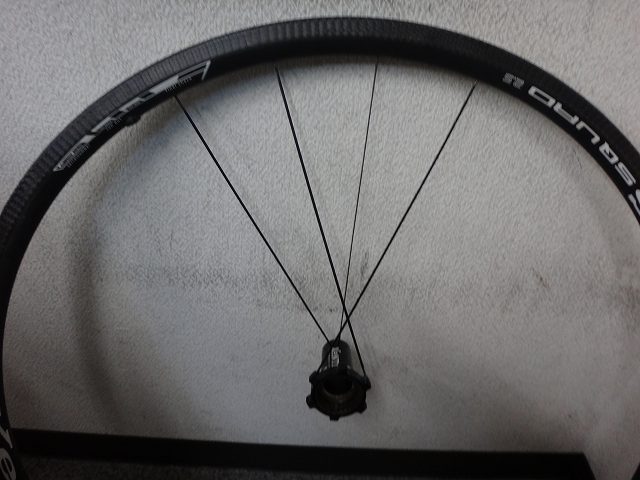
I carefully disassembled 20 of the 24 spokes, counting from the valve hole.
None of these four spokes' nipples were loosened at all.

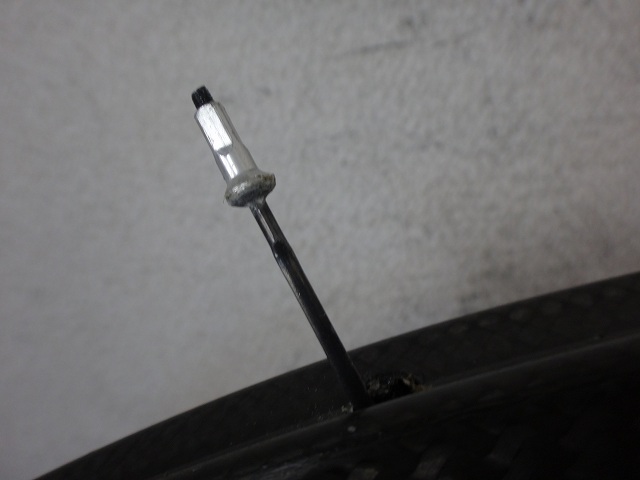
↑Freewheel side
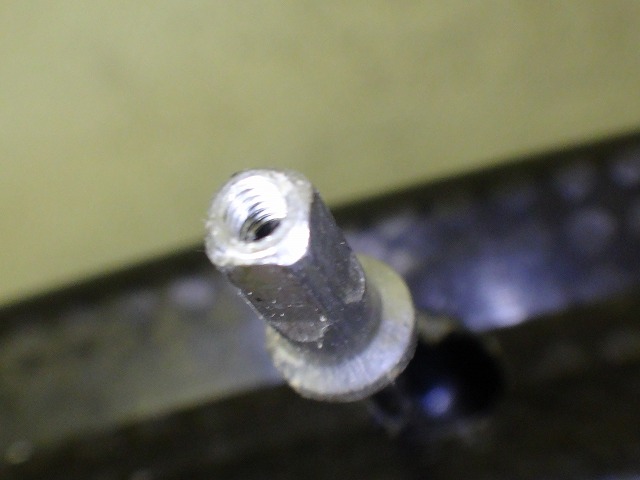
↑Non-freewheel side
I mentioned earlier how the freewheel side flange holes overlap in phase,
but if you build with standard single-side 12H hub calculations for such a hub,
the spokes actually come out too short for the nipples.
Anyone building would notice if spokes were too long
(if they didn't, the Zentis builder would be an idiot),
and if both sides matched in their excess or shortfall,
I'd think they had philosophy behind that spoke length choice.
But since left and right differ, that's not it.
There's no way they'd use "make freewheel side longer and non-freewheel shorter" as philosophy.
And since they're not building single wheels but production runs,
if the first one looked wrong, just dial it in for the next batch—yet they didn't.
This isn't unique to Zentis (Reynolds, ENVE, ZIPP all do it),
but despite having decent rims, they build garbage wheels
through clueless spoke selection—not understanding spoke proportion—and outdated methods.
The fact they make obviously bad choices without a second thought
suggests they don't think about wheels, or just don't know.
The fact they do this even on hubs that could do other lacing patterns
(→see here) is hopeless.

The bearing rust has loosened enough that it spins independently from the axle.
Turning the hub axle produces awful rust liquid
grinding out like a millstone.

I'm not wild about this flange hole position either.
They've badly misunderstood what matters more for rear wheel lateral stiffness:
the left-right width of the bearing position, or the left-right position of the spoke heads.
It's frustrating that they clearly did this deliberately,
but the real problem is that it's limited to non-freewheel radial lacing in the first place.
I reassembled the rear hub as if nothing happened.
For now it spins with an abnormal grinding feel.
It might seize up again eventually.
Today too, wheel—(you know the rest).

Getting back to the title:
I built the front wheel for Nomu Lab Wheel No. 5.
The hub took so long I didn't get to the rear wheel rebuild.
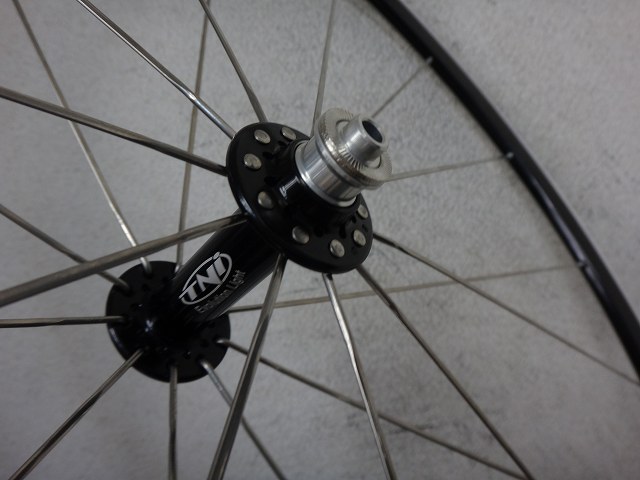
Evolite hub 20H, CX-RAY outpoke radial lacing.