Regarding the DT star ratchet,
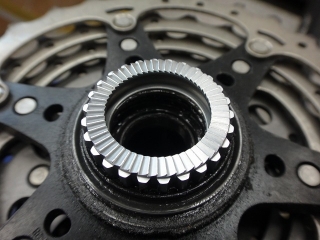
In addition to the standard 18-tooth ratchet per revolution,
there's a 36-tooth ratchet with double the number of teeth,
and recently a 54-tooth ratchet came out with triple the teeth,
so I decided to install it on the rear hub of my everyday bike.
After that I apply the dedicated grease generously,
but if I skimp on it or the amount decreases with use over time,
during freewheel coasting you get a ratchet noise similar to a Chris King R45 hub,
but noticeably more unpleasant than that (←this is just my personal opinion)
a loud "zzzzzz" sound.
As for whether there's any perceptible change from having more teeth,
I'd like to write that during low-cadence climbing, the sensation of my feet wanting to move in the crank's reverse direction has disappeared,
so I can feel the reduction in power loss—but
honestly, I couldn't feel any effect at all.
With trial bikes and such, the number of ratchet teeth becomes important,
but with road bikes I honestly couldn't tell.
However, with components, the effect is usually more noticeable when you switch back from a change rather than when you first make it,
so if I were to revert to 18 teeth, I might notice something then.
By the way, the star ratchet kit with ratchet parts + spring + dedicated grease (priced at ¥2,340 excluding tax)
(the following all exclude tax):
18 teeth at ¥10,000,
24 teeth at ¥7,000,
36 teeth at ¥15,000,
54 teeth at ¥17,000.
Regarding the 24 teeth—for reasons unclear, but likely because the distributor's catalog
directly translated whatever was mentioned on the manufacturer's site or official catalog—it says "optimal for e-bikes."
The reason it's cheaper is that, like the 18-tooth ratchet that comes stock
in 350 hubs or certain OEM wheels,
the internal parts have no lightening holes.
※The ratchet parts themselves are ridiculously overpriced
They cost more than some entire hubs, which is fair criticism I'll set aside

This morning, just after 5 AM during my morning ride, I got a flat.
It was around Kishiwada on the outer ring road (National Route 170).
A pinch flat, and I felt the rear wheel rim bead hook buckle,
but there was no rim deformation and no wobble.
I won't say why, but the fact that there are three valve holes in the rear rim
is related to switching to the 54-tooth ratchet (I wouldn't do this with 18 teeth).
I switched to the 54-tooth ratchet on September 6th (based on camera data),
and I changed the tire at the same time,
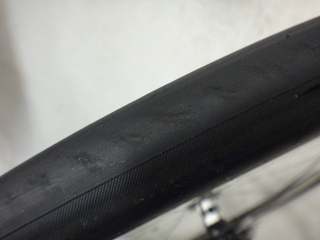
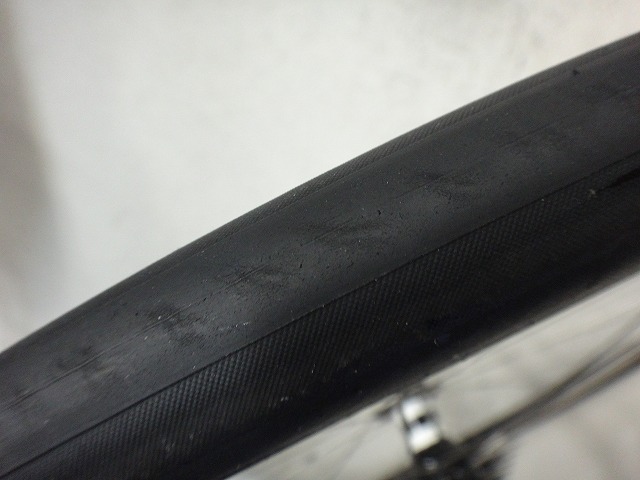
With my usage frequency, the Grand Prix TT shows the outermost diagonal casing
of the carcass starting to lift and become visible in less than two months.
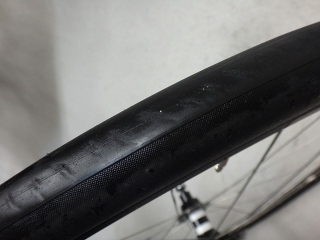
↑This photo was taken after riding in rain, so it's wet
It's not quite as bad as the Super Sonic,
but I'm well aware this tire is also light but doesn't last long.
By the way, when using tires like this for regular riding outside of racing,
I only use them on the rear wheel.
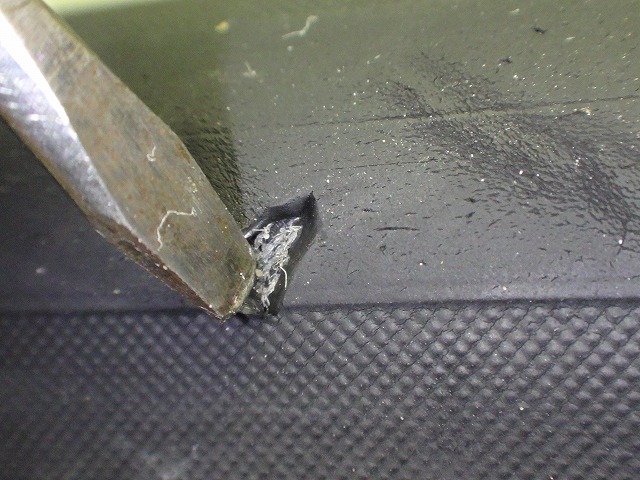
I was planning to use it a bit longer,
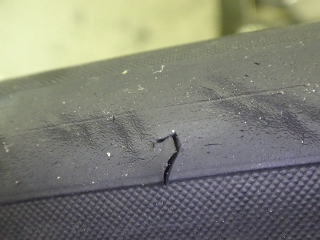
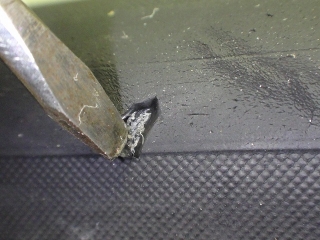
but there were several spots that looked sketchy, so I decided to replace it.
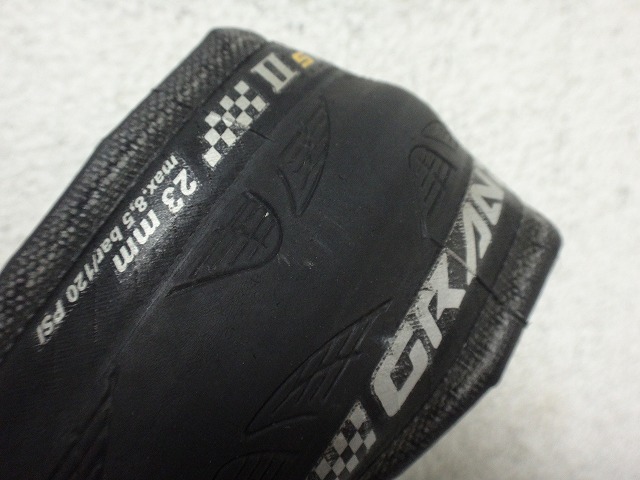
I have spare new 23C Grand Prix TT on hand,

the last of my personal Grand Prix 4000S II 23C tires, and
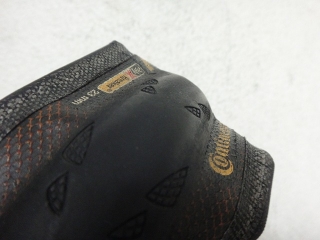
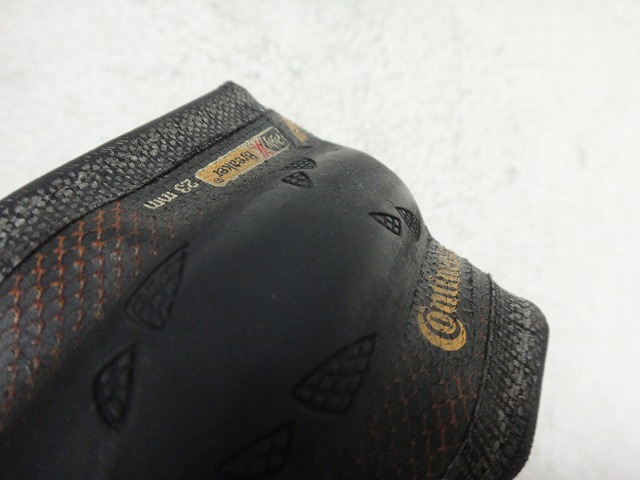
a partially-used 23C Gator Skin in my possession,
so I'll start by using these up.
It's hard to tell in the photos,
but the center tread thickness of the Gator Skin is truly reassuring.
When running light clincher (WO) tires, the bike weight approaches
that of training tubular wheels (though it loses out slightly),
but compared to carrying two spare tubular tires,
the total bike weight is marginally lighter with the light WO tire setup.
In terms of performance—rolling ease, ride comfort, cornering limit, etc.—
I think tubulars (excluding budget models) are superior across the board,
so I don't actually worry much about the bike weight difference.
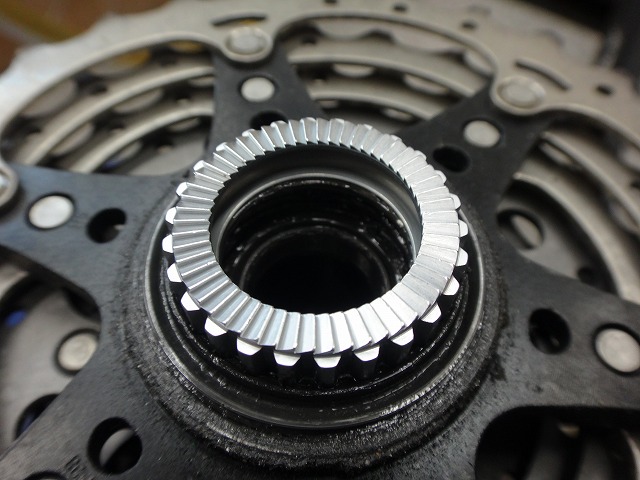
In addition to the standard 18-tooth ratchet per revolution,
there's a 36-tooth ratchet with double the number of teeth,
and recently a 54-tooth ratchet came out with triple the teeth,
so I decided to install it on the rear hub of my everyday bike.
After that I apply the dedicated grease generously,
but if I skimp on it or the amount decreases with use over time,
during freewheel coasting you get a ratchet noise similar to a Chris King R45 hub,
but noticeably more unpleasant than that (←this is just my personal opinion)
a loud "zzzzzz" sound.
As for whether there's any perceptible change from having more teeth,
I'd like to write that during low-cadence climbing, the sensation of my feet wanting to move in the crank's reverse direction has disappeared,
so I can feel the reduction in power loss—but
honestly, I couldn't feel any effect at all.
With trial bikes and such, the number of ratchet teeth becomes important,
but with road bikes I honestly couldn't tell.
However, with components, the effect is usually more noticeable when you switch back from a change rather than when you first make it,
so if I were to revert to 18 teeth, I might notice something then.
By the way, the star ratchet kit with ratchet parts + spring + dedicated grease (priced at ¥2,340 excluding tax)
(the following all exclude tax):
18 teeth at ¥10,000,
24 teeth at ¥7,000,
36 teeth at ¥15,000,
54 teeth at ¥17,000.
Regarding the 24 teeth—for reasons unclear, but likely because the distributor's catalog
directly translated whatever was mentioned on the manufacturer's site or official catalog—it says "optimal for e-bikes."
The reason it's cheaper is that, like the 18-tooth ratchet that comes stock
in 350 hubs or certain OEM wheels,
the internal parts have no lightening holes.
※The ratchet parts themselves are ridiculously overpriced
They cost more than some entire hubs, which is fair criticism I'll set aside
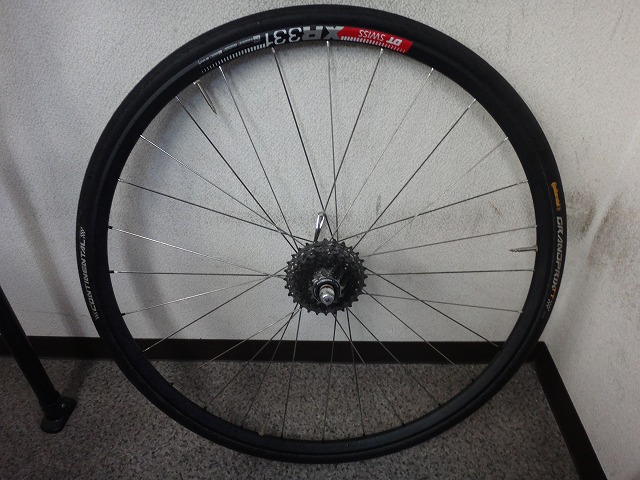
This morning, just after 5 AM during my morning ride, I got a flat.
It was around Kishiwada on the outer ring road (National Route 170).
A pinch flat, and I felt the rear wheel rim bead hook buckle,
but there was no rim deformation and no wobble.
I won't say why, but the fact that there are three valve holes in the rear rim
is related to switching to the 54-tooth ratchet (I wouldn't do this with 18 teeth).
I switched to the 54-tooth ratchet on September 6th (based on camera data),
and I changed the tire at the same time,
With my usage frequency, the Grand Prix TT shows the outermost diagonal casing
of the carcass starting to lift and become visible in less than two months.

↑This photo was taken after riding in rain, so it's wet
It's not quite as bad as the Super Sonic,
but I'm well aware this tire is also light but doesn't last long.
By the way, when using tires like this for regular riding outside of racing,
I only use them on the rear wheel.
I was planning to use it a bit longer,

but there were several spots that looked sketchy, so I decided to replace it.
I have spare new 23C Grand Prix TT on hand,
the last of my personal Grand Prix 4000S II 23C tires, and
a partially-used 23C Gator Skin in my possession,
so I'll start by using these up.
It's hard to tell in the photos,
but the center tread thickness of the Gator Skin is truly reassuring.
When running light clincher (WO) tires, the bike weight approaches
that of training tubular wheels (though it loses out slightly),
but compared to carrying two spare tubular tires,
the total bike weight is marginally lighter with the light WO tire setup.
In terms of performance—rolling ease, ride comfort, cornering limit, etc.—
I think tubulars (excluding budget models) are superior across the board,
so I don't actually worry much about the bike weight difference.