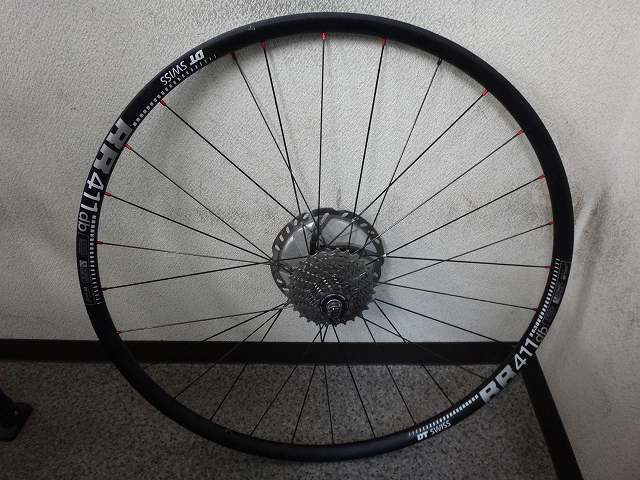
A customer brought me a wheel built with an RR411db rim.
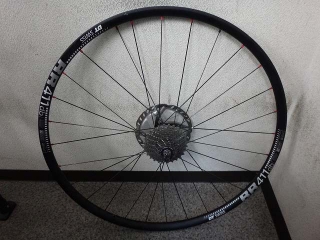
It's a wheel I built in the past, but
because I used generic colored nipples,
the nipples have broken prematurely.
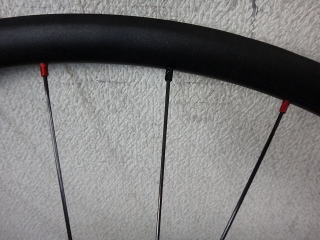
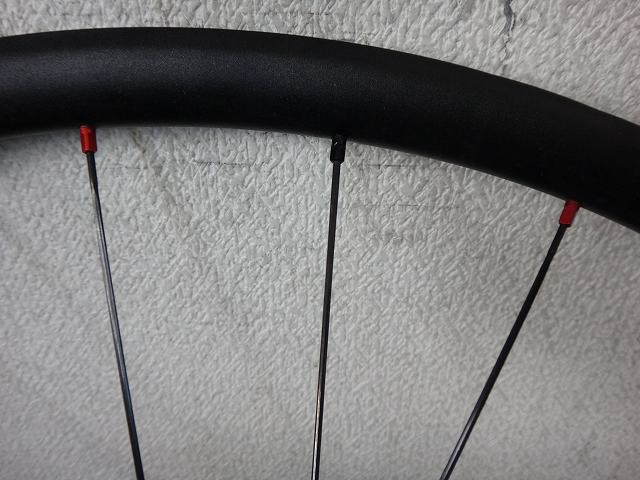
Squorx nipples only come in silver or black,
so I made a quick fix by replacing just the broken spot with black ones...
but if I stop there,
there's a high probability that other nipples will break soon.

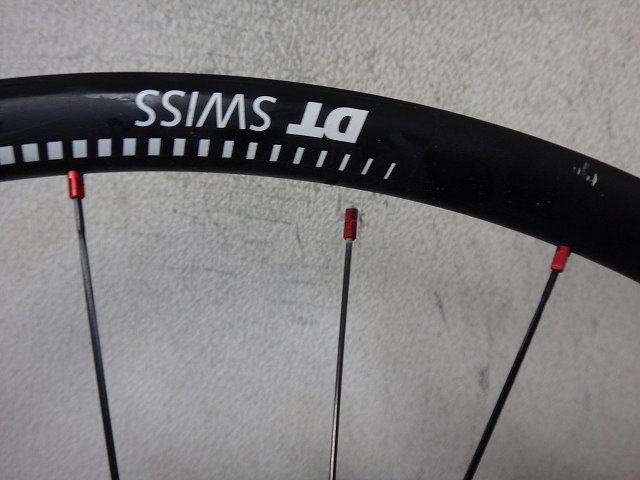
So I tried loosening what I suspected would be a problem nipple (※),
and sure enough—crack—it broke right away.
※I'll explain the reasoning later
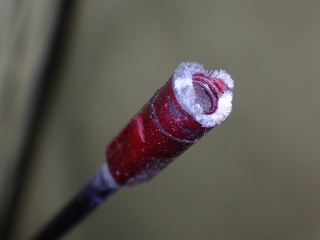
↑like this
The spokes look short because they're loosened,
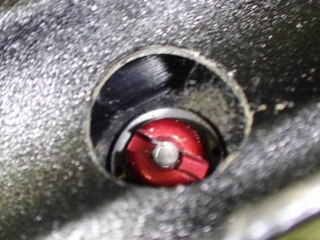
but the actual length is correct.
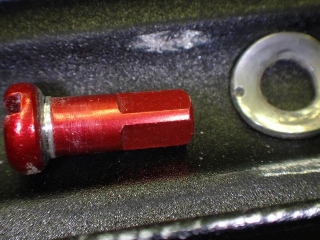
DT rims have the spec where R (Road) has no eyelets,
and RR (Road Racing) has eyelets on one side,
but the current RR uses a dedicated washer inserted between the rim and nipple
to be considered equivalent to single-eyelet construction.
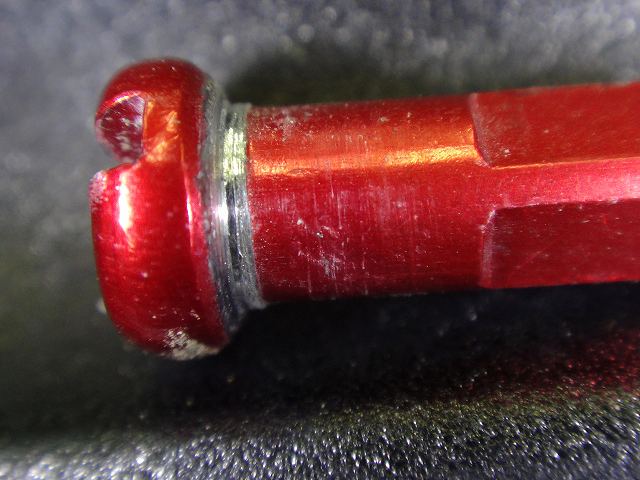
The sliding resistance between this washer and Squorx nipples is very high,
making generic nipples easier to work with when building wheels,
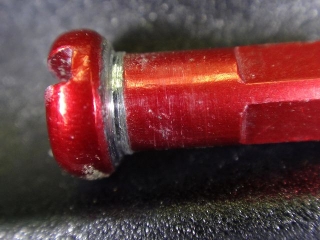
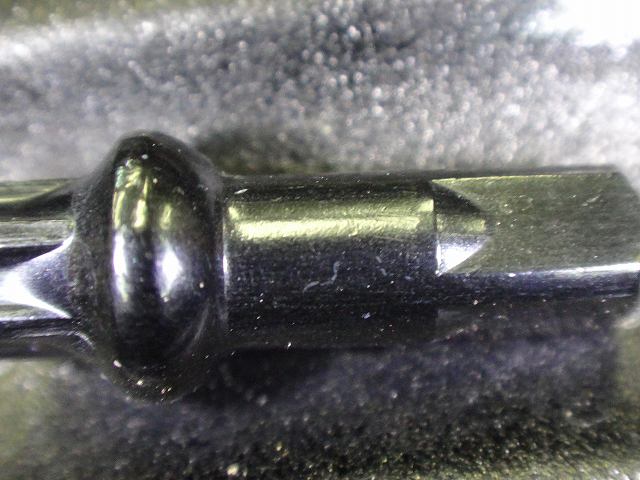
but with generic nipples, the contact surface gets scratched like this.
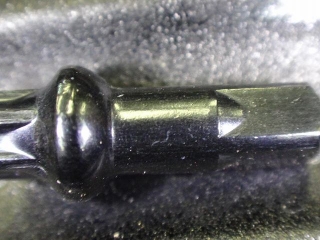
With Squorx nipples,
the shape and thickness are matched to the dedicated washer.

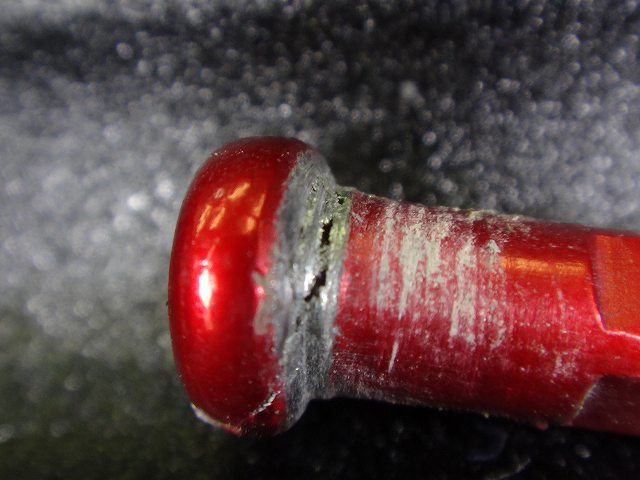
While gradually replacing the nipples with Squorx ones,
I found one on the verge of breaking.
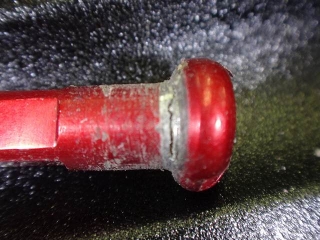
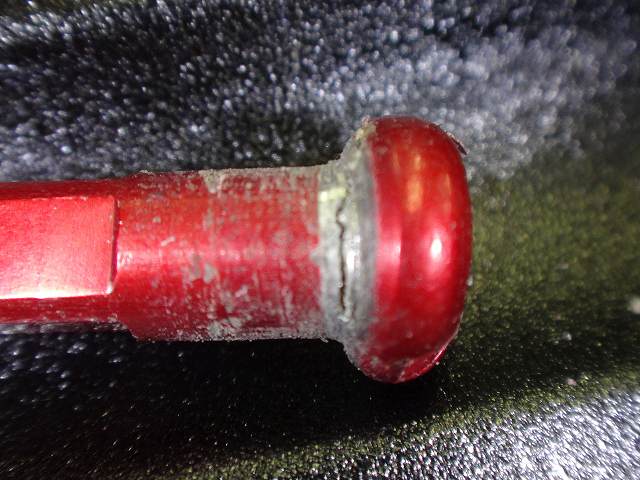
And then found another one, separately.
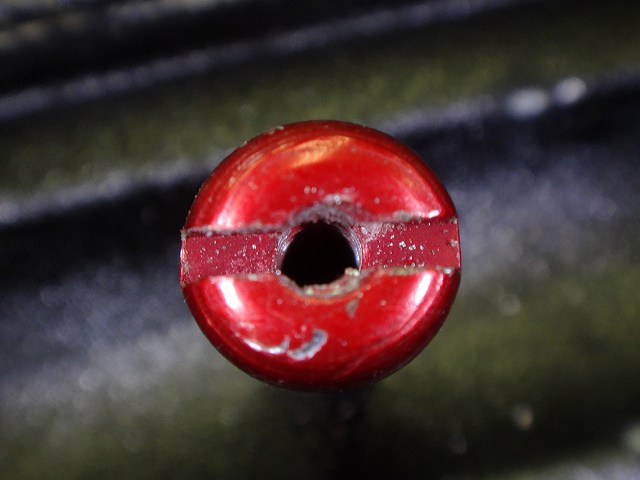
When nipples get to this state,
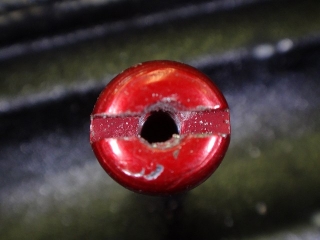
the slot on the end face becomes narrower.
This is the basis for what I said earlier about "this looks risky."
Cracks before fracture seem to occur only in the horizontal direction relative to the slot,
so if we used aluminum nipples without a slot,
maybe fractures wouldn't happen so frequently.
Squorx nipples have a Torx drive on the end face,
so of course there's no slot.
Even before considering the shape of the contact surface with the washer,
just that alone makes them much more resistant to fracture.
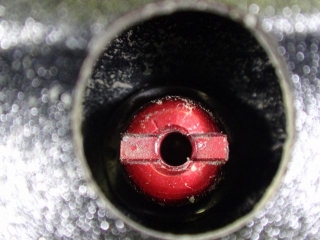
↑the slot on a nipple without cracks looks like this
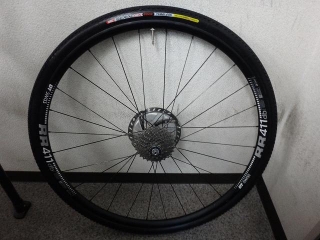
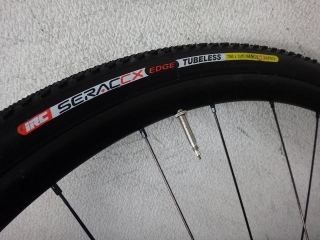
Rebuilt.
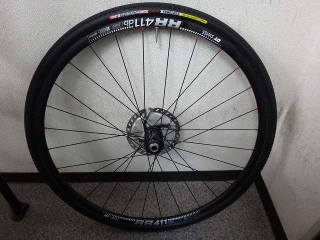
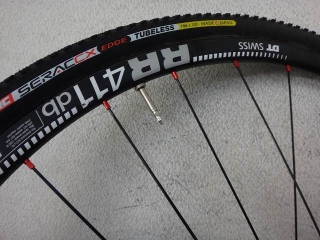
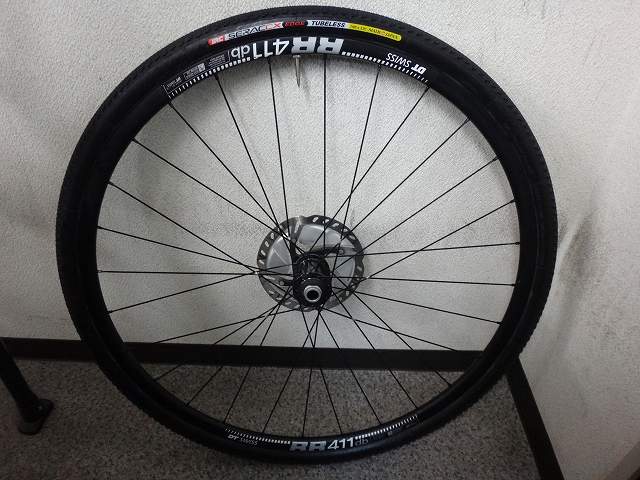
Next, the front wheel.
Where there's a rear wheel, there's usually a front wheel too.
Building a rim that requires Squorx nipples with generic nipples
causes early fracture—I didn't know that beforehand, so this is my mistake.
I'm rebuilding it for free.
I didn't need to post about it here—I could've kept it as a trade secret—but
I figured it would be better to share it as a cautionary tale for others.
I've had about 8 cases of this kind of nipple fracture overall
(I say "total" because I dealt with some as quick fixes,
so the same wheel fractured more than once in some instances),
but all of them were on rear wheels. I haven't seen it happen on a front wheel.
But that's not a reason to skip the rebuild, so
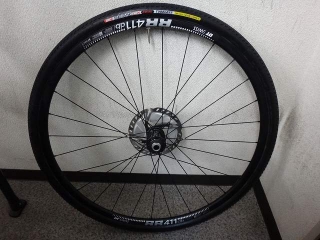
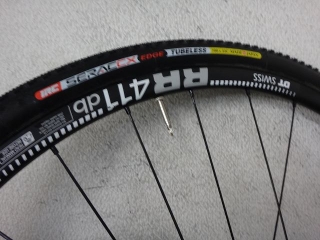
I rebuilt it.
It was fortunate that this fell during a gap in the customer's cyclocross race schedule.
It's a wheel I built in the past, but
because I used generic colored nipples,
the nipples have broken prematurely.
Squorx nipples only come in silver or black,
so I made a quick fix by replacing just the broken spot with black ones...
but if I stop there,
there's a high probability that other nipples will break soon.
So I tried loosening what I suspected would be a problem nipple (※),
and sure enough—crack—it broke right away.
※I'll explain the reasoning later

↑like this
The spokes look short because they're loosened,

but the actual length is correct.

DT rims have the spec where R (Road) has no eyelets,
and RR (Road Racing) has eyelets on one side,
but the current RR uses a dedicated washer inserted between the rim and nipple
to be considered equivalent to single-eyelet construction.
The sliding resistance between this washer and Squorx nipples is very high,
making generic nipples easier to work with when building wheels,
but with generic nipples, the contact surface gets scratched like this.
With Squorx nipples,
the shape and thickness are matched to the dedicated washer.
While gradually replacing the nipples with Squorx ones,
I found one on the verge of breaking.
And then found another one, separately.
When nipples get to this state,
the slot on the end face becomes narrower.
This is the basis for what I said earlier about "this looks risky."
Cracks before fracture seem to occur only in the horizontal direction relative to the slot,
so if we used aluminum nipples without a slot,
maybe fractures wouldn't happen so frequently.
Squorx nipples have a Torx drive on the end face,
so of course there's no slot.
Even before considering the shape of the contact surface with the washer,
just that alone makes them much more resistant to fracture.
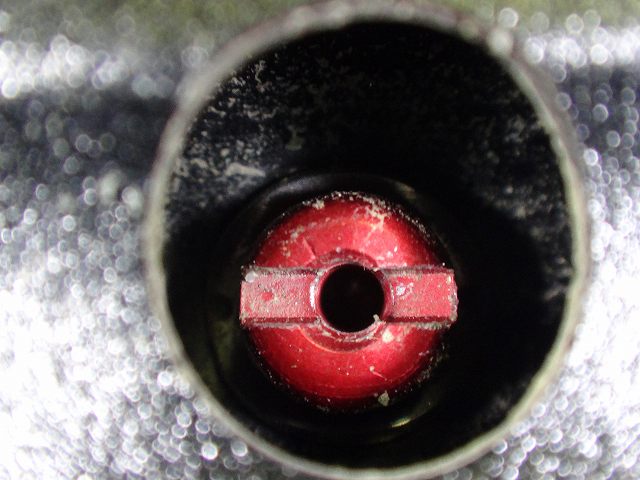
↑the slot on a nipple without cracks looks like this
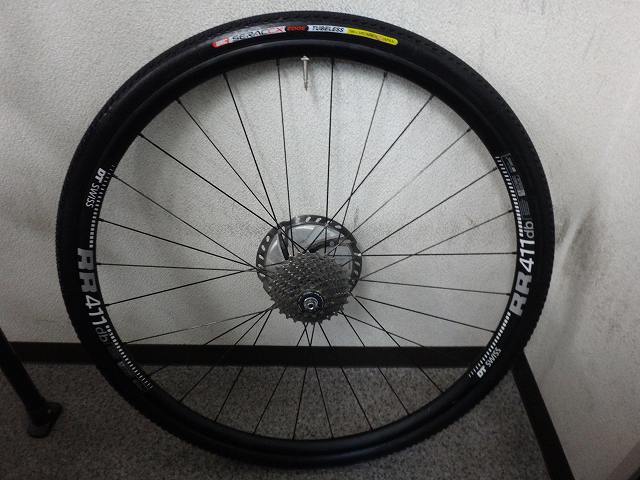
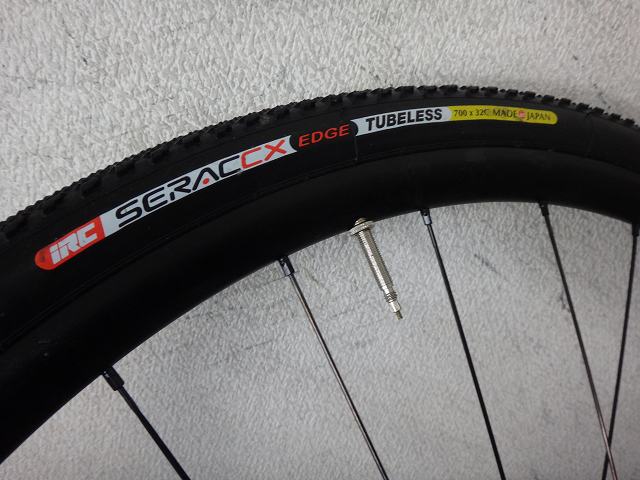
Rebuilt.

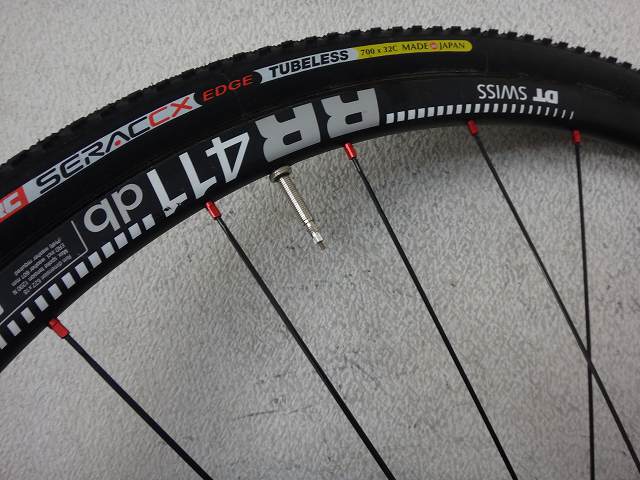
Next, the front wheel.
Where there's a rear wheel, there's usually a front wheel too.
Building a rim that requires Squorx nipples with generic nipples
causes early fracture—I didn't know that beforehand, so this is my mistake.
I'm rebuilding it for free.
I didn't need to post about it here—I could've kept it as a trade secret—but
I figured it would be better to share it as a cautionary tale for others.
I've had about 8 cases of this kind of nipple fracture overall
(I say "total" because I dealt with some as quick fixes,
so the same wheel fractured more than once in some instances),
but all of them were on rear wheels. I haven't seen it happen on a front wheel.
But that's not a reason to skip the rebuild, so

I rebuilt it.
It was fortunate that this fell during a gap in the customer's cyclocross race schedule.